
Rishikesh sits at the point where the Ganges leaves the Himalayas and enters the plains — a transition so dramatic it feels almost theatrical. The river here is fast, cold, and a vivid green-blue colour that seems impossible for water. The town climbs the steep valley walls on both sides, a dense tangle of ashrams, temples, cafes, guesthouses, and ancient ghats connected by two famous suspension bridges.
It has been a centre of Hindu pilgrimage and spiritual practice for thousands of years. Shankaracharya is said to have meditated here. The Beatles came in 1968 and changed the way the Western world thought about Indian spirituality. Today it draws yoga teachers, pilgrims, backpackers, adventure seekers, sadhus, and everyone in between.
The yoga retreat version of Rishikesh — wellness tourism, sound baths, detox menus — is real and has its place. But underneath it, and around it, and long predating it, is a city of genuine complexity and genuine spiritual power. This guide is about that city.
The Ganges: The Centre of Everything
Nothing in Rishikesh makes sense without the Ganges. The river is not backdrop here — it is protagonist. Everything in the city orients around it, faces it, listens to it.
The Ganges at Rishikesh is different from the wide, slow river most people picture. Here it is narrow, fast, and extraordinarily powerful — fed directly by glacial melt from the high Himalayas, running cold even in summer, and producing a constant roar that you can hear from almost anywhere in the city. Standing at the river’s edge and feeling the spray and the sound and the sheer physical force of it is one of those experiences that resets something in you.
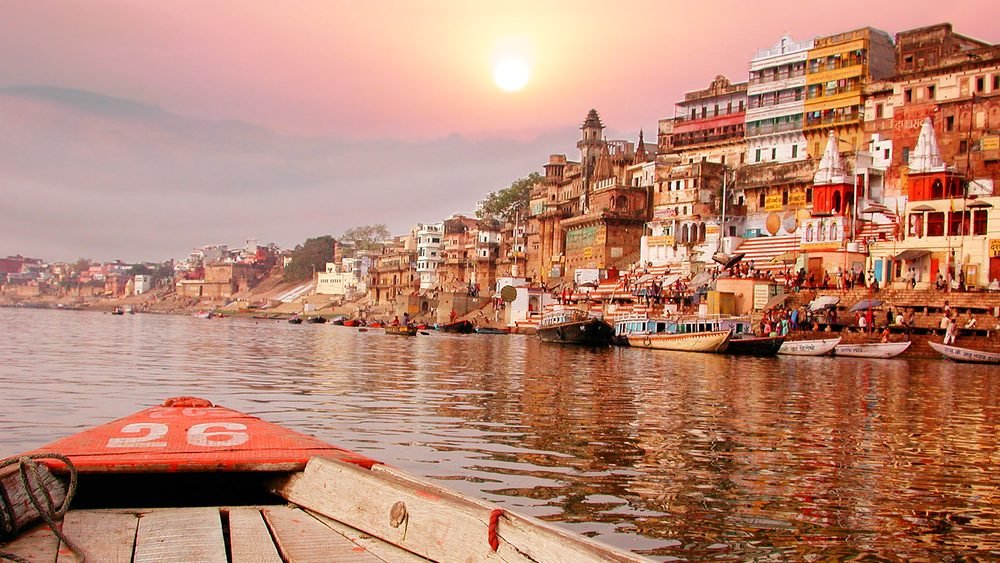
The ghats — stone steps leading down to the water — are where Rishikesh’s daily life plays out most visibly. Pilgrims bathe in the freezing water at dawn. Priests perform rituals on the steps. Children play on the rocks. Sadhus sit in meditation. Tourists watch. The ghats are simultaneously a sacred space, a social space, and a completely ordinary neighbourhood — people washing clothes, drinking chai, conducting business — all within metres of one of the world’s holiest rivers.
Key ghats to visit:
Triveni Ghat is the most sacred and most visited — the confluence point where three rivers are said to meet, and the site of Rishikesh’s main evening aarti. The morning ritual bathing here, when dozens of pilgrims enter the cold river at sunrise, is one of the most visually and spiritually powerful things you will witness in India.
Ram Jhula Ghat sits below the Ram Jhula suspension bridge and is slightly less crowded than Triveni — a better spot for sitting quietly at the river’s edge and simply being present with the water.
Swarg Ashram Ghat on the east bank is one of the older ghats in Rishikesh and lined with small temples, sadhus, and flower sellers. The walk along this ghat in the early morning is extraordinary.
The Evening Aarti: Rishikesh at Its Most Powerful
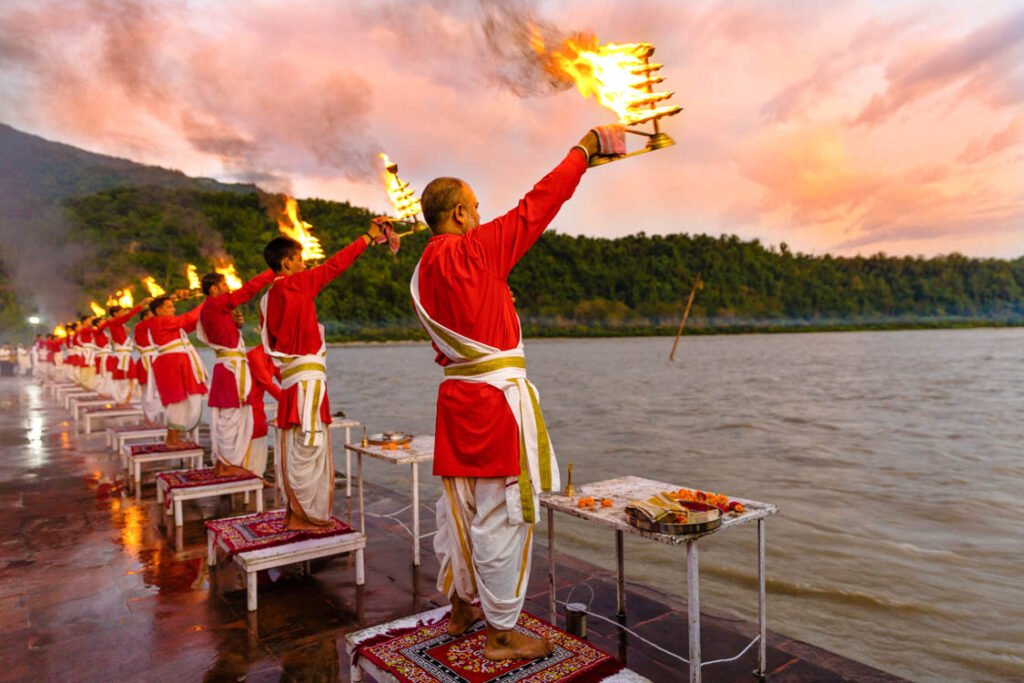
If you do one thing in Rishikesh, it is this. Every evening at sunset, priests perform the Ganga aarti at Triveni Ghat — a fire ritual in which large brass lamps are lit and waved in circular patterns over the river while priests chant mantras, bells ring, and the crowd — hundreds of pilgrims, locals, and visitors — watches in complete collective absorption.
The combination of the river, the fire, the sound, the gathered humanity, and the quality of the light at dusk creates an atmosphere that is genuinely overwhelming the first time you experience it. Many visitors — religious and non-religious alike — describe it as one of the most moving experiences of their lives.
Practical notes: Arrive 30 minutes early to get a good position near the river. Sit on the ghat steps rather than standing behind the crowd. Remove shoes. Participate if you feel moved to — buying a flower boat (diyas) from vendors and releasing it onto the river is a beautiful act regardless of your beliefs. The aarti lasts approximately 45 minutes.
A smaller, less crowded aarti also takes place at Parmarth Niketan ashram on the east bank — equally beautiful and attended by a more intimate crowd.
The Temples: Ancient, Continuous, Alive
Rishikesh’s temples are not monuments or museums. They are active, living centres of worship that have been in continuous use for centuries — and in some cases millennia. Walking through them as a respectful visitor, you are witnessing something unbroken.
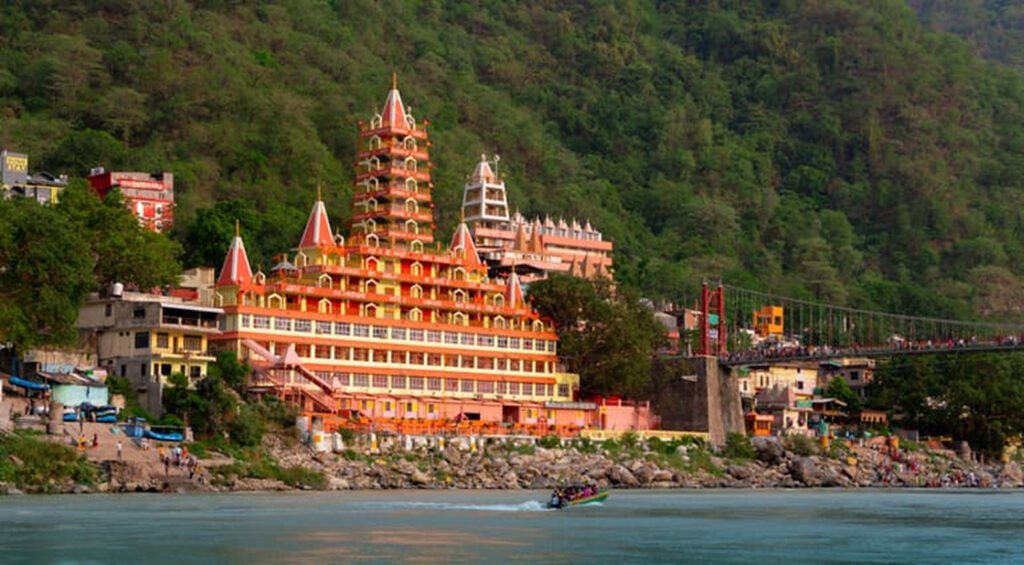
Trayambakeshwar Temple One of Rishikesh’s most important Shiva temples — a multi-storey structure near Ram Jhula that is covered floor to ceiling in painted murals depicting scenes from Hindu mythology. The colour, detail, and sheer visual density of these murals is extraordinary. Pilgrims come here continuously throughout the day and the temple has a charged, devotional atmosphere unlike anywhere else in Rishikesh.
Bharat Mandir The oldest temple in Rishikesh — believed to have been established by Adi Shankaracharya in the 9th century and continuously active since. Located in the old part of town near Triveni Ghat, it is dedicated to Lord Vishnu and draws serious pilgrims rather than tourists. The atmosphere is reverent and unperformed. Go early in the morning during puja for the most authentic experience.
Neelkanth Mahadev Temple Located 32 km from Rishikesh in the forested hills above the town — a significant Shiva temple built at the spot where, according to Hindu mythology, Shiva drank the poison that emerged from the churning of the cosmic ocean. The drive through the forest is beautiful and the temple itself, set in a narrow valley with streams running around it, is architecturally and atmospherically remarkable. Go on a weekday to avoid the weekend crowds.
Kunjapuri Devi Temple A hilltop temple dedicated to the goddess Kunjapuri, approximately 25 km from Rishikesh — one of the 52 Shakti Peethas (sacred goddess sites) scattered across the subcontinent. The trek to the temple takes about 45 minutes from the road and rewards you with panoramic Himalayan views that on clear days extend to Gangotri, Kedarnath, and Badrinath peaks. Sunrise here is spectacular.
Geeta Bhawan A massive ashram complex near Ram Jhula — not strictly a temple but a place of enormous religious significance, with thousands of rooms for pilgrims, a large temple hall, and the walls of every corridor covered floor to ceiling in hand-painted murals depicting the entire Mahabharata and Ramayana. Walking through these corridors is like walking through a visual encyclopaedia of Hindu mythology. Free to enter, free to stay for pilgrims.
The Sadhus: Rishikesh’s Most Misunderstood Residents
Rishikesh has always been home to sadhus — Hindu holy men who have renounced worldly life in pursuit of spiritual liberation. Some have lived in caves in the hillsides above the river for decades. Some wander continuously. Some are scholars of extraordinary depth. Some are simply men who found in the Ganges valley a place that felt like home.
They are also, inevitably, a tourist attraction — and the line between genuine renunciant and photo-opportunity performer is not always clear. The sadhus in orange robes sitting at prime ghat positions for photographs are not necessarily representative of the tradition’s depth.
The more genuine encounters happen in unexpected places — a cave above the river reached by a steep path, an early morning temple where a sadhu sits in meditation before the tourists arrive, a conversation begun simply because you sat down in the same place and showed genuine curiosity rather than a camera.
Be respectful. Ask before photographing. Understand that you are in the presence of a tradition of extraordinary antiquity. And be appropriately sceptical of anyone whose primary activity seems to be performing spirituality for foreign visitors.
Adventure Sports: The Other Rishikesh
Rishikesh is also the adventure sports capital of India — a fact that sits in interesting tension with its spiritual identity but somehow makes complete sense given the river and the terrain.
White Water Rafting The Ganges between Shivpuri and Rishikesh is one of the best rafting rivers in Asia — fast, technical, and extraordinarily beautiful. The 16 km stretch from Shivpuri to Nim Beach takes 2–3 hours and passes through rapids ranging from Grade II to Grade IV. The 36 km stretch from Marine Drive is for experienced rafters and includes some of the most challenging white water in India.
The rafting season runs from September to June — avoid July and August when monsoon flooding makes the river dangerous. Numerous operators offer trips ranging from ₹600–1,500 per person. Go with an established operator — check safety equipment carefully and ensure guides are certified.
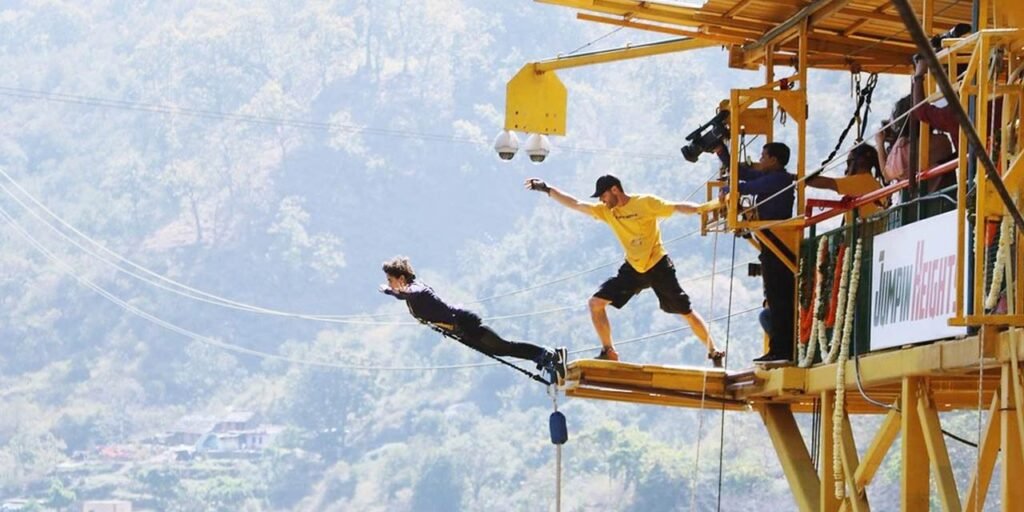
Bungee Jumping At 83 metres, Rishikesh’s bungee jump at Jumping Heights is the highest in India — a cantilever jump over a rocky gorge above the Ganges. Not for the faint-hearted. For everyone else, genuinely extraordinary. Book in advance — slots fill up quickly on weekends. Cost: approximately ₹3,550.
Giant Swing and Flying Fox Also operated by Jumping Heights — the giant swing covers a 55-metre arc over the gorge and the flying fox is a 1 km zip line across the valley. All three can be combined into a package for serious adrenaline seekers.
Rock Climbing and Rappelling The rocky hillsides above Rishikesh offer good climbing and rappelling terrain. Several operators offer half and full-day sessions for beginners through to experienced climbers. The views from the rock faces over the valley and river are remarkable.
Trekking The hills above Rishikesh are the gateway to some of the most significant trekking terrain in India — the Char Dham pilgrimage route, the Valley of Flowers, Kedarnath, and Badrinath are all accessible from here. Even day treks into the forested hills above the town reward you with extraordinary views and a complete escape from the crowds below.
Camping Several operators offer riverside camping in the forested areas above Rishikesh — sleeping in tents on the Ganges bank, waking to the sound of the river, with bonfires and basic meals included. A perfect way to experience the valley away from the town’s tourist infrastructure.
The Real Local Life: Beyond the Ashram Belt
The Rishikesh that most tourists see — the ashrams, yoga studios, and cafes of the Ram Jhula and Lakshman Jhula areas — is a relatively recent overlay on a much older city. The real local life of Rishikesh happens in places most visitors never reach.
The old market area near Triveni Ghat is where Rishikesh actually shops, eats breakfast, and conducts daily business. Small shops selling puja supplies, sweet shops, chai stalls, and vegetable markets line the lanes in a density and authenticity that the Ram Jhula cafe strip cannot replicate. Walk here at 8 AM and you are in a completely different city from the one the tourist infrastructure presents.
The local dhabas — small, basic restaurants with no English menus and plastic chairs — serve the food that Rishikesh actually eats. Aloo puri, dal fry, sabzi, chapati, and unlimited chai. No quinoa bowls, no wellness menus. Enormously good, extraordinarily cheap, and a complete tonic after too many days of the tourist circuit.
The residential neighbourhoods on the hillsides above the river — reached by steep lanes that most tourists never climb — are where ordinary Rishikesh families live ordinary lives, and where the views back down over the river valley and the Himalayas beyond are genuinely breathtaking.
Food in Rishikesh: Vegetarian and Proud of It
Rishikesh is a completely vegetarian and alcohol-free city — a fact that surprises visitors expecting the relaxed hippie vibe to extend to the menu. It does not. The city takes its sacred status seriously and the result is a food scene that is entirely plant-based and, at its best, extraordinary.
What to eat:
Aloo Puri — the classic North Indian breakfast of spiced potato curry and deep-fried bread — is done superbly at the local dhabas near Triveni Ghat. Eaten standing at a stall at 7 AM it is one of the great breakfast experiences in northern India.
Thali at a local dhaba — dal, sabzi, rice, roti, and pickle at a plastic table for ₹80–120. Simple, honest, and deeply satisfying. The best thalis in Rishikesh are not in restaurants — they are in the small dhabas near the bus stand and the old market that feed pilgrims and locals rather than tourists.
Lassi — thick, cold, and made fresh at the lassi shops near Ram Jhula. The plain and saffron versions are the best. Avoid anything with too many additions — the base lassi here is good enough to need nothing.
Chole Bhature — large, puffy fried bread with spiced chickpeas — available at street stalls near the ghats and deeply satisfying after a morning of temple visits and river watching.
The cafe scene — the Ram Jhula and Lakshman Jhula areas are lined with cafes serving international food alongside Indian options. The quality ranges widely — some are genuinely good, others trade entirely on their river views. Little Buddha Cafe and Cafe de Goa are consistently well-reviewed. For breakfast with a river view, they are hard to beat.
Ayurvedic food — several restaurants in Rishikesh serve meals designed around Ayurvedic principles — seasonal, digestive, balanced. Madras Cafe and Oasis Restaurant are popular options. The food is lighter and more nuanced than standard North Indian fare and worth experiencing at least once.
The Suspension Bridges: More Than a Photo Opportunity
Ram Jhula and Lakshman Jhula are Rishikesh’s two famous suspension bridges — crossing the Ganges between the east and west banks and offering vertiginous views of the river racing below. They are genuinely beautiful structures and the views from the middle, looking upstream into the Himalayan valley, are extraordinary.
But they are also working infrastructure — pilgrims, sadhus, motorcycles, and cattle cross them continuously throughout the day. Standing in the middle of Ram Jhula at dawn, watching a sadhu walk across in one direction while a family of pilgrims crosses in the other, with the river 30 metres below and the Himalayas visible upstream, is one of those images of India that stays permanently.
Note: Lakshman Jhula has been closed for reconstruction in recent years — check current status before visiting.
The Beatles Ashram: A Strange and Beautiful Ruin
The Maharishi Mahesh Yogi Ashram — universally known as the Beatles Ashram — is where John, Paul, George, and Ringo spent several weeks in early 1968 studying Transcendental Meditation. The visit produced a creative outpouring that included most of the White Album and changed the trajectory of Western popular culture’s relationship with Eastern spirituality.
The ashram has been abandoned since the 1990s and is now administered by the forest department as a fee-paying attraction. The buildings are in various states of beautiful decay — meditation domes covered in murals, overgrown pathways, crumbling lecture halls where the Beatles once sat. Street artists have added layers of graffiti that somehow enhance rather than diminish the atmosphere.
It is a strange, melancholy, fascinating place — simultaneously a piece of rock and roll history, a relic of the global yoga movement, and a meditation on impermanence that feels entirely appropriate given its original purpose.
Entry: ₹150 for Indian nationals, ₹600 for foreign nationals. Timing: 8 AM – 5 PM daily. Time needed: 1.5–2 hours.
Practical Information
Getting there: Rishikesh is 240 km from Delhi — approximately 5–6 hours by road or train to Haridwar (25 km away) then bus or taxi. The nearest airport is Jolly Grant Airport, 18 km from Rishikesh, with connections to Delhi.
Best time to visit: October to March for the most pleasant weather and clear Himalayan views. March to May is warmer but manageable. July and August bring heavy monsoon rain — the river floods, rafting stops, and many roads become difficult. September sees the river beginning to calm and the landscape extraordinarily green.
Getting around: The Ram Jhula and Lakshman Jhula areas are best explored on foot. Auto-rickshaws and shared jeeps connect the main areas. For temples outside the town — Neelkanth, Kunjapuri — hire a taxi or join a tour.
Where to stay: The east bank (Swarg Ashram side) is quieter, more atmospheric, and closer to the ghats and temples. The west bank has better transport connections and more accommodation variety. Budget guesthouses from ₹400/night. Mid-range hotels from ₹1,500. Several well-reviewed boutique properties have opened in recent years for ₹4,000–8,000.
Dress code: Rishikesh is a sacred city — dress conservatively, particularly near temples and ghats. Shoulders and knees covered is the minimum standard. Remove shoes at all temple entrances.
Alcohol and meat: Both are prohibited in Rishikesh proper. Respect this — it is not a suggestion.
A Suggested Three-Day Itinerary
Day 1 — The River and the Ghats Dawn: Sunrise at Triveni Ghat — watch the morning bathing ritual. Morning: Walk the east bank ghats from Triveni to Swarg Ashram. Late morning: Bharat Mandir during morning puja. Afternoon: Cross Ram Jhula — explore the west bank temples and lanes. Evening: Ganga aarti at Triveni Ghat. Dinner at a local dhaba.
Day 2 — Temples and Hills Early morning: Sunrise trek to Kunjapuri Temple — Himalayan panorama. Late morning: Trayambakeshwar Temple and Geeta Bhawan murals. Afternoon: Beatles Ashram. Evening: Parmarth Niketan aarti on the east bank.
Day 3 — Adventure and Local Life Morning: White water rafting from Shivpuri — 16 km on the Ganges. Afternoon: Old market area near Triveni — local food and puja shops. Late afternoon: Bungee jumping at Jumping Heights or riverside camping. Evening: Final sunset at the river.
Final Thoughts: The Rishikesh Beneath the Surface
Rishikesh is a city that gives you exactly what you bring to it. Come for yoga and you will find extraordinary yoga. Come for adventure and you will find some of the best white water in Asia. Come for spiritual experience and you will find — if you look beyond the surface — something ancient, continuous, and genuinely powerful.
The Ganges does not care about your wellness retreat or your Instagram content. It runs cold and fast and indifferent, exactly as it has for millennia, and that indifference is its gift. Stand at the river’s edge in the early morning, before the town wakes up, and feel it.
That is the real Rishikesh.