
If you’ve ever dreamed of walking through streets that witnessed the rise and fall of empires, standing where prophets once stood, or touching walls that are thousands of years old — the ancient cities of Israel will leave you speechless.
Israel is one of the most historically rich countries on Earth. Every stone, every alley, and every ruin tells a story that stretches back millennia. Among all its treasures, three ancient cities stand out as absolute must-visits: Jerusalem, Masada, and Caesarea.
Whether you’re a history enthusiast, a spiritual seeker, or simply a curious traveler, this guide will take you on a journey through these legendary destinations — with everything you need to plan an unforgettable trip.
Why Visit the Ancient Cities of Israel?
The ancient cities of Israel are not just tourist attractions — they are living, breathing chapters of human civilization. From biblical stories to Roman architecture, from Jewish heritage to Christian and Islamic history, Israel packs thousands of years of culture into a relatively small land.
Visiting these cities means:
- Walking paths mentioned in ancient scriptures
- Seeing some of the world’s best-preserved Roman ruins
- Understanding how multiple civilizations shaped one region
- Experiencing culture, spirituality, and adventure all in one trip
Now, let’s explore each ancient city in detail.
1. Jerusalem — The Eternal City
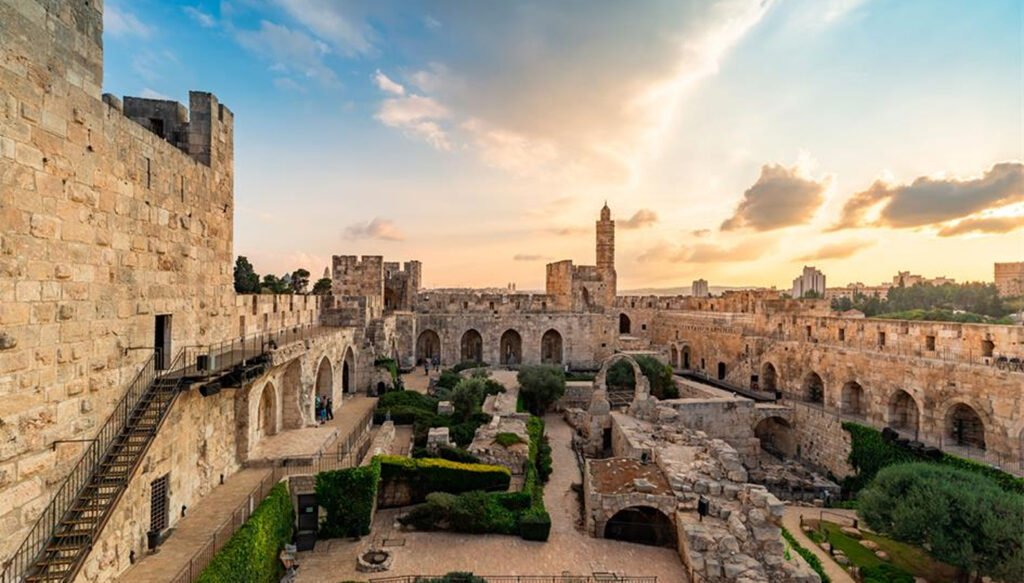
A City Like No Other
No list of ancient cities of Israel is complete without Jerusalem — one of the oldest and most significant cities in the entire world. Jerusalem holds deep religious importance for three major world religions: Judaism, Christianity, and Islam. It has been conquered, destroyed, and rebuilt countless times over thousands of years, yet it stands today as one of the most powerful places on the planet.
The Old City of Jerusalem
The heart of Jerusalem is its Old City, a UNESCO World Heritage Site divided into four historic quarters:
The Jewish Quarter — Home to the iconic Western Wall (Kotel), the holiest site in Judaism. Millions of people from around the world come here to pray and place written wishes between the ancient stones. The Jewish Quarter also houses the ruins of the Hurva Synagogue and the Cardo, an ancient Roman street.
The Christian Quarter — Here you’ll find the Church of the Holy Sepulchre, one of the most sacred sites in Christianity. Believed to be the location of Jesus Christ’s crucifixion, burial, and resurrection, this church draws pilgrims from every corner of the world.
The Muslim Quarter — The largest and most bustling quarter, home to the stunning Dome of the Rock and the Al-Aqsa Mosque, both located on the Temple Mount — one of the most contested and revered sites in the world.
The Armenian Quarter — A quieter part of the Old City with deep cultural significance and beautiful architecture reflecting centuries of Armenian Christian presence.
Must-See Attractions in Jerusalem
- Via Dolorosa — Walk the path Jesus is believed to have carried the cross, passing through 14 Stations of the Cross
- Tower of David — An ancient citadel offering a stunning night show and panoramic views of Jerusalem
- Yad Vashem — Israel’s official Holocaust memorial and museum, a deeply moving and important experience
- Mount of Olives — Offering one of the most breathtaking panoramic views of Jerusalem’s Old City
- Garden of Gethsemane — The ancient olive grove where Jesus is said to have prayed before his arrest
Travel Tips for Jerusalem
- Best time to visit: Spring (March–May) and Autumn (September–November) for pleasant weather
- Dress code: Modest clothing is required at religious sites — cover shoulders and knees
- Getting around: Walking is the best way to explore the Old City
- Avoid: Visiting during major Jewish holidays if you prefer smaller crowds
- Stay: The Old City has charming guesthouses; modern hotels are available in West Jerusalem
2. Masada — The Fortress in the Sky
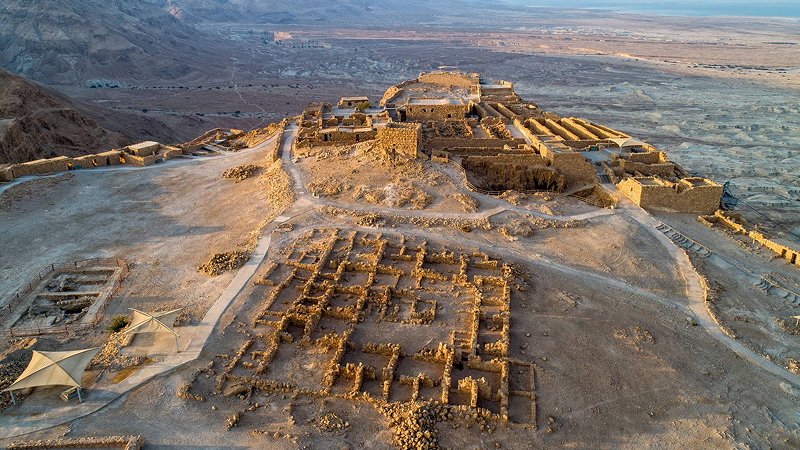
The Legend of Masada
Perched dramatically on top of an isolated rock plateau in the Judean Desert, overlooking the Dead Sea, Masada is one of the most awe-inspiring ancient cities of Israel — and one of the most emotionally powerful sites in the world.
Built by King Herod the Great between 37–31 BCE, Masada was a magnificent desert palace-fortress. But it is best known for the final chapter of the First Jewish–Roman War in 73 CE, when nearly 1,000 Jewish rebels (the Sicarii) chose death over Roman slavery in one of history’s most dramatic last stands.
Today, Masada is a UNESCO World Heritage Site and a symbol of Jewish courage, resilience, and national identity. The phrase “Masada shall not fall again” remains deeply embedded in Israeli culture.
What to See at Masada
Herod’s Northern Palace — A breathtaking three-tiered palace built into the cliff’s northern edge, with stunning frescoes and mosaics still visible today.
The Roman Siege Ramp — On the western side of the plateau, you can still see the massive ramp built by Roman soldiers to breach Masada’s walls — an incredible feat of ancient engineering.
The Synagogue — One of the oldest synagogues ever discovered, dating back to the time of the Second Temple period.
Ancient Bathhouses — Remarkably preserved Roman-style bathhouses with original mosaic floors, used by King Herod’s court.
The Storerooms and Water Cisterns — A testament to Herod’s genius — massive cisterns carved into the rock allowed Masada to store enough water to survive long sieges in the desert.
The Snake Path Gate — The main ancient entrance to the fortress, once used by defenders and now by modern hikers.
Masada Sunrise Hike — A Bucket List Experience
One of the most popular and rewarding experiences at Masada is the sunrise hike. Thousands of visitors, mostly young travelers and backpackers, hike up the Snake Path in the dark before dawn to reach the summit just in time for sunrise.
Watching the sun rise over the Dead Sea and Jordanian mountains from the top of Masada is an experience you will never forget.
- Snake Path hike: About 1.5–2 hours up, moderately difficult
- Cable car: Available for those who prefer an easier ascent, operating from 8:00 AM
- Tip: Bring water, a flashlight, and comfortable shoes if hiking before dawn
Travel Tips for Masada
- Best time to visit: Early morning to beat the desert heat
- Combined trip: Pair Masada with a visit to the Dead Sea — they are only 20 minutes apart
- Sound & Light Show: A spectacular evening show projected on Masada’s western wall (seasonal)
- Entry fee: Check the Israel Nature and Parks Authority website for current pricing
3. Caesarea — Rome on the Mediterranean
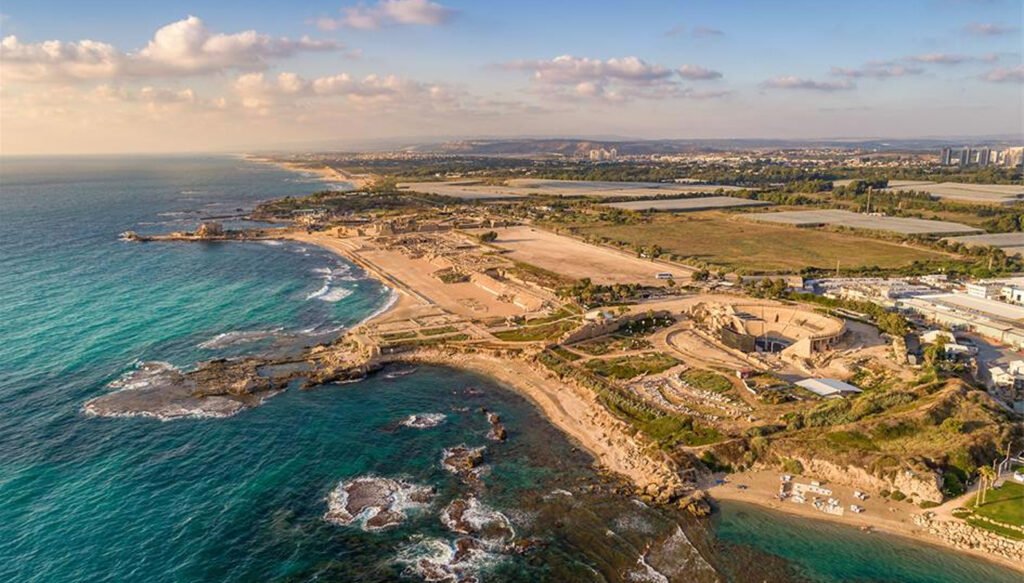
Israel’s Ancient Roman Jewel
If Jerusalem represents spiritual history and Masada represents heroic history, then Caesarea represents the grandeur of the ancient world’s greatest empire — Rome.
Located on Israel’s Mediterranean coastline, Caesarea was built by King Herod the Great (yes, the same Herod!) around 25–13 BCE as a magnificent port city dedicated to the Roman Emperor Augustus Caesar — hence the name. It quickly became one of the most important cities in the Roman Empire’s eastern Mediterranean territory.
Caesarea is today home to the Caesarea National Park, one of the most impressive archaeological sites in the entire Middle East.
Must-See Attractions in Caesarea
The Roman Amphitheater — One of the oldest and best-preserved amphitheaters in the world, this stunning 2,000-year-old structure still functions as a concert and events venue today. Imagine watching a live performance in a theater built by Herod himself!
Herod’s Harbor (Sebastos) — In its time, this was one of the largest and most technologically advanced harbors in the ancient world. Today, you can explore the ruins above water and even take a glass-bottom boat tour or scuba dive to see the submerged ancient ruins beneath the Mediterranean.
The Crusader City — Built during the medieval Crusader period, these walls, moat, and city gate are remarkably well preserved and give Caesarea yet another fascinating historical layer.
The Roman Hippodrome — Once used for chariot races and public spectacles, this ancient track is one of the few surviving hippodromes from the Roman world.
The Aqueduct Beach — A long stretch of beautiful Mediterranean beach running alongside the ancient High-Level Aqueduct built by Herod to bring fresh water to the city from Mount Carmel. It’s one of the most photogenic spots in all of Israel.
The Caesarea Museum — Discover thousands of artifacts excavated from the site, including statues, coins, and everyday objects from Roman and Byzantine times.
Unique Experience: Underwater Archaeology
Caesarea is one of the very few places in the world where you can scuba dive through an ancient Roman harbor. The sunken ruins of Herod’s port lie just beneath the surface of the Mediterranean — columns, anchors, and ancient breakwaters are all visible underwater, making it a paradise for history-loving divers.
Travel Tips for Caesarea
- Best time to visit: Spring and autumn; summer is great if you want to combine beach and history
- Location: About 50 km north of Tel Aviv — easy day trip
- Combine with: Haifa and the Bahá’í Gardens for a full northern day trip
- Dining: Caesarea has excellent waterfront restaurants inside the ancient port area
- Entry: The national park has an entry fee; the aqueduct beach is free
How to Plan Your Ancient Cities of Israel Trip
Suggested Itinerary
Day 1–3: Jerusalem Spend at least 2–3 days in Jerusalem. Explore the Old City on Day 1, visit Yad Vashem and the Mount of Olives on Day 2, and take day trips to Bethlehem or the Dead Sea on Day 3.
Day 4: Masada + Dead Sea Start before sunrise for the Masada hike, then head to the Dead Sea for an afternoon float. Stay overnight near the Dead Sea or return to Jerusalem.
Day 5: Caesarea Drive north along the coast toward Caesarea. Spend the day exploring the national park, then continue to Tel Aviv for the evening.
Getting Around Israel
- Car rental is the most flexible option and highly recommended
- Trains and buses connect major cities efficiently
- Guided tours are available for all three sites and are excellent for deeper historical context
Best Time to Visit Ancient Cities of Israel
- Spring (March–May): Perfect weather, blooming landscapes — highly recommended
- Autumn (September–November): Warm and dry — ideal for hiking
- Summer (June–August): Very hot, especially in Masada and the Dead Sea area — go very early in the morning
- Winter (December–February): Cool and sometimes rainy in Jerusalem; quieter crowds
Final Thoughts
The ancient cities of Israel — Jerusalem, Masada, and Caesarea — are more than just destinations. They are windows into the story of humanity itself. Each city carries layers of history, faith, conflict, and triumph that will move you, challenge you, and inspire you long after you return home.
Whether you stand at the Western Wall at dusk, watch the sun rise over the Dead Sea from the top of Masada, or walk through a 2,000-year-old Roman amphitheater on the shores of the Mediterranean — Israel’s ancient cities will give you memories that last a lifetime.
Start planning your journey to the ancient cities of Israel today — history is waiting for you.