India is not just a country you visit — it is a country you feel. Every region has its own rhythm, every season brings a new reason to celebrate, and every festival opens a door into a culture that is ancient, vibrant, and deeply alive. If there is one thing that truly sets India apart as a travel destination, it is the sheer scale and soul of its festivals.
Whether you are a first-time visitor or a seasoned traveller, experiencing India during one of its grand celebrations is something that will stay with you for the rest of your life. This guide covers the best festivals to experience in India, with everything you need to know — dates, locations, what to expect, and practical travel tips.
Why Visit India During a Festival?
Most travellers visit India for its monuments, food, and landscapes. But those who time their trip around a festival discover something far deeper. Indian festivals are not performances put on for tourists — they are real, living traditions celebrated with full heart and soul by millions of people.
You will witness centuries-old rituals, taste food prepared only once a year, hear music that sends chills down your spine, and be welcomed into moments of joy, prayer, and community that few other travel experiences can match.
Festivals in India engage all five senses at once. The sound of temple bells and dhol drums. The smell of marigolds, incense, and freshly made sweets. The sight of thousands of earthen lamps glowing on a riverbank. The taste of traditional food made from seasonal ingredients. The feeling of being part of something much larger than yourself.
If you are wondering when to visit India, the answer is simple: plan around a festival.
1. Holi — Festival of Colours
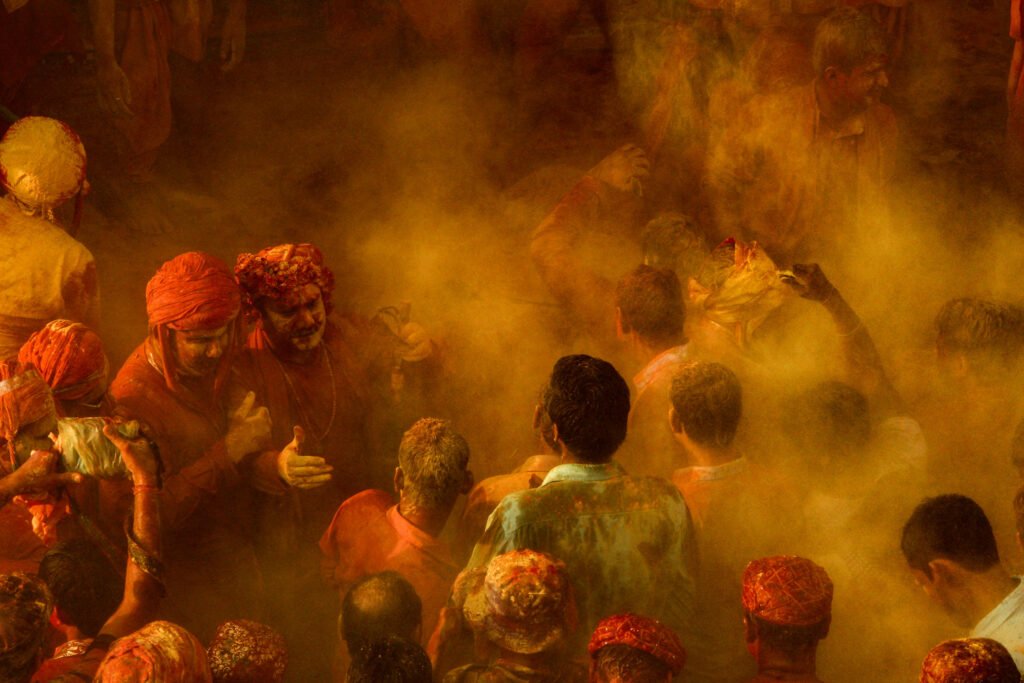
Best Places to Celebrate: Mathura, Vrindavan, Barsana, Jaipur When: March (date changes yearly based on the Hindu lunar calendar) Duration: 2 days (Holika Dahan + main Holi day)
Holi is perhaps the most internationally recognised festival of India, and for good reason. On this day, the streets of India explode in a riot of colour as people drench each other in bright powders and water. It is joyful, chaotic, photogenic, and completely unforgettable.
Holi marks the arrival of spring and the victory of good over evil, rooted in the legend of Prahlad and Holika. The night before Holi, bonfires called Holika Dahan are lit across the country to symbolise the burning of evil.
The most authentic and spectacular Holi celebrations happen in the Braj region of Uttar Pradesh. In Barsana, women chase and playfully beat men with sticks in the famous Lathmar Holi, a centuries-old tradition connected to the love story of Radha and Krishna. In Vrindavan, flowers are used instead of colours in the beautiful Phoolon wali Holi. And in Mathura, the festival lasts nearly a week.
Jaipur also hosts a grand Holi celebration with elephant processions, folk performances, and rooftop parties at heritage hotels.
What to Expect: Crowds, colour, music, dancing, and an atmosphere of pure joy. Strangers become friends instantly.
Travel Tips: Wear old clothes you do not mind throwing away. Apply coconut or mustard oil to your hair and skin before going out to make the colours easier to wash off. Protect your camera with a plastic cover or use a waterproof phone. Book accommodation at least two to three months in advance as hotels fill up fast.
2. Diwali — Festival of Lights
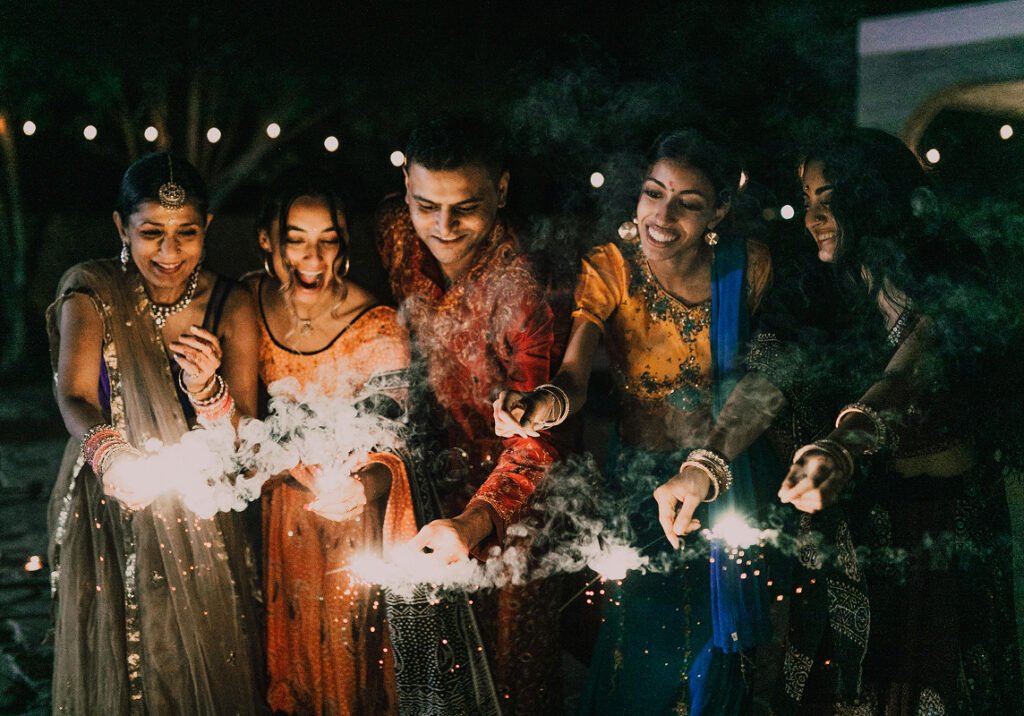
Best Places to Celebrate: Varanasi, Ayodhya, Jaipur, Amritsar, Mumbai When: October or November (date changes yearly) Duration: 5 days
Diwali is India’s most beloved festival and one of the most visually stunning celebrations anywhere in the world. For five days, homes, temples, markets, and streets are decorated with millions of oil lamps, candles, and fairy lights. The night sky fills with fireworks. Markets overflow with sweets, gifts, and decorations. The air carries the warm scent of ghee lamps and marigold garlands.
At its heart, Diwali celebrates the return of Lord Ram to Ayodhya after 14 years of exile and his victory over the demon king Ravana. It is also the festival of Goddess Lakshmi, the deity of wealth and prosperity, and families perform Lakshmi Puja on the main night.
Ayodhya has become the most spectacular place to experience Diwali. Every year, the banks of the Saryu River are lit with hundreds of thousands of earthen lamps in a ceremony called Deepotsav — a sight that is genuinely breathtaking. Varanasi offers a deeply spiritual Diwali experience with ghats glowing along the Ganges. Jaipur and Mumbai bring a grand, festive energy with elaborate decorations and vibrant street life.
What to Expect: Decorated streets, fireworks, sweets shared between neighbours, Lakshmi Puja ceremonies, and a general atmosphere of warmth and celebration.
Travel Tips: Try as many types of homemade mithai (Indian sweets) as you can — each region has its own specialities. Ask a local family if you can witness or join their Lakshmi Puja. Book travel and accommodation very early as Diwali is peak travel season across India.
3. Pushkar Camel Fair
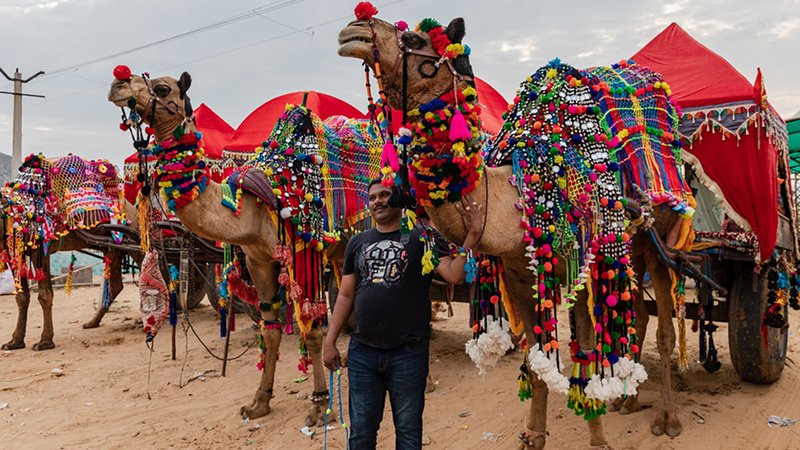
Best Place to Celebrate: Pushkar, Rajasthan When: November (Kartik Purnima, the full moon of November) Duration: 5 to 7 days
The Pushkar Camel Fair is one of the most iconic and photographed travel events in all of India. What began as a livestock trading fair — where farmers and herders would bring tens of thousands of camels, horses, and cattle to trade — has grown into a grand cultural festival that attracts travellers and photographers from every corner of the globe.
The fairgrounds are a feast for the eyes. Camels decorated with embroidered blankets, colourful necklaces, and intricate henna designs. Rajasthani folk musicians playing late into the night. Turbaned men and women in vivid traditional dress. Puppet shows, camel races, moustache competitions, and turban-tying contests. Hot air balloons drifting over the desert at sunrise.
The fair culminates on the night of the full moon with a sacred dip at Pushkar Lake, one of the holiest water bodies in Hinduism. The combination of the spiritual and the spectacular makes Pushkar Camel Fair a truly one-of-a-kind experience.
What to Expect: Dusty, colourful, loud, and magical. This is old Rajasthan at its most alive.
Travel Tips: Sunrise at the fairgrounds is the best time for photography — the light is golden and the crowds are thinner. Book accommodation months in advance as the entire town fills up completely. Stay in one of the traditional guesthouses or camps near the fairground for the full experience.
4. Durga Puja — Kolkata’s Grand Festival
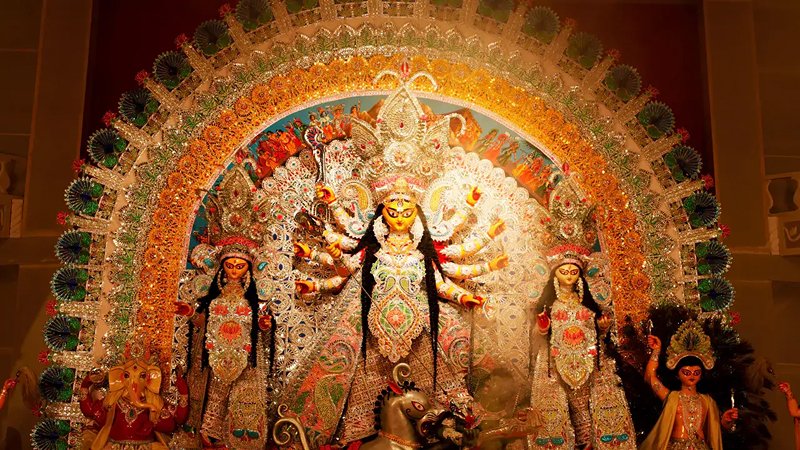
Best Places to Celebrate: Kolkata, West Bengal When: October (five days during Ashwin month) Duration: 5 days
Durga Puja is not just a religious festival in Kolkata — it is the cultural heartbeat of the city. For five days, Kolkata transforms into an open-air art gallery, fashion runway, and cultural carnival all at once. The festival celebrates the homecoming of Goddess Durga and her victory over the demon Mahishasura.
The centrepiece of Durga Puja is the pandal — a temporary structure built to house a beautifully crafted idol of Goddess Durga. Thousands of pandals go up across the city, each one competing to outdo the others in creativity, craftsmanship, and scale. Themes range from recreations of ancient temples and world heritage sites to futuristic and avant-garde artistic installations. Some pandals take months to build and employ hundreds of artisans.
The streets between pandals fill with food stalls, music, cultural performances, and millions of people dressed in their best traditional clothes. Pandal hopping — moving from one to another through the night — is the quintessential Durga Puja experience.
What to Expect: Art, devotion, street food, crowds, colour, and an energy in Kolkata that has to be felt to be believed.
Travel Tips: Hire a local guide who knows the best and most creative pandals — you will cover far more ground than on your own. Night visits between 9pm and 3am are the most atmospheric. Try local street food like kathi rolls, jhal muri, and mishti doi during your pandal hop.
5. Navratri and Garba — Nine Nights of Dance
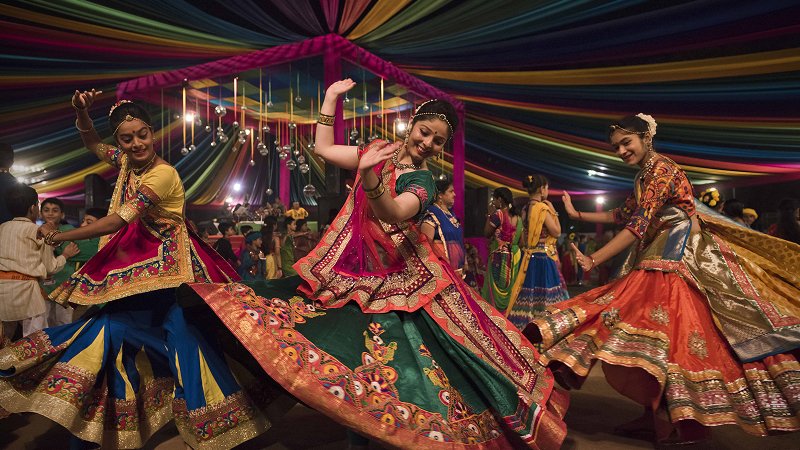
Best Places to Celebrate: Ahmedabad, Vadodara (Gujarat); Mysuru (Karnataka) for Dasara When: September or October (nine nights before Dussehra) Duration: 9 nights
Navratri means nine nights, and in Gujarat those nine nights are filled with some of the most joyful and energetic dancing you will ever witness. The festival honours the nine forms of Goddess Durga, and every evening enormous grounds fill with thousands of people performing Garba and Dandiya Raas — traditional circular folk dances performed to devotional music.
What makes Gujarat’s Navratri so visually extraordinary is the traditional dress. Women wear heavily embroidered chaniya cholis in jewel-bright colours. Men wear traditional kediyu and dhoti with colourful turbans and dupattas. The swirling patterns of colour created by thousands of dancers moving in unison are genuinely mesmerising.
Ahmedabad hosts some of the world’s largest Garba events, attracting hundreds of thousands of participants each night. The event has grown so culturally significant that it was inscribed on the UNESCO Intangible Cultural Heritage list.
In Karnataka and parts of Tamil Nadu, the same period is marked by Mysuru Dasara — a royal festival featuring a spectacular grand procession of decorated elephants through the streets of Mysuru, lit up with over 100,000 bulbs.
What to Expect: Dancing, music, brilliant colour, and an atmosphere of pure celebration that goes on until midnight and beyond.
Travel Tips: Wear traditional Indian dress to participate in Garba — locals genuinely appreciate it and you will feel far more connected to the celebration. Learn a few basic Garba steps before you go. Carry comfortable footwear as you will be on your feet for hours.
6. Onam — Kerala’s Harvest Festival
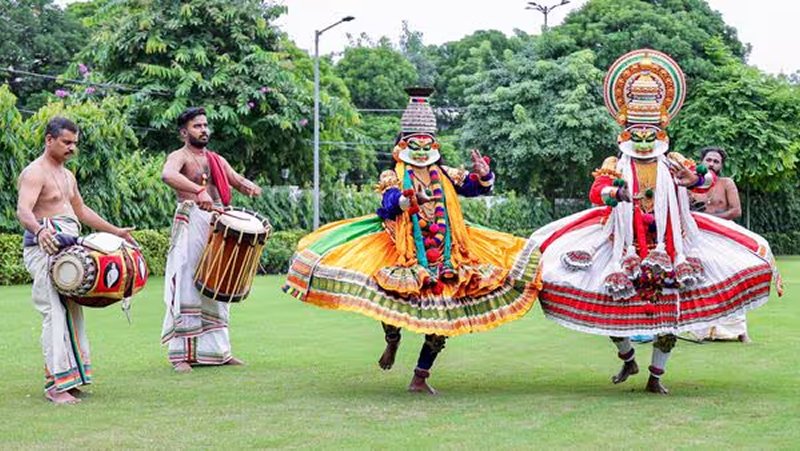
Best Places to Celebrate: Thrissur, Kochi, Alappuzha (Alleppey), Kerala When: August to September (10 days during the Malayalam month of Chingam) Duration: 10 days
Onam is Kerala’s most important festival and one of the most joyful harvest celebrations in all of India. It marks the annual return of the legendary King Mahabali, a beloved ruler whose spirit is believed to visit Kerala during this time to see his people thriving.
The most famous event of Onam is the Vallamkali or snake boat race — a breathtaking spectacle held on the backwaters where teams of over 100 oarsmen power long, elaborately decorated boats to the rhythm of traditional chants and cheering crowds. The Nehru Trophy Boat Race at Alappuzha is the most famous of these races and draws enormous crowds.
Homes are decorated with Pookalam — intricate floral carpets made from fresh flowers laid out each day, growing more elaborate as the festival progresses. Families gather for the Onam Sadya — a grand vegetarian feast of over 25 dishes served on a banana leaf, considered one of the finest traditional meals in India.
What to Expect: Lush green Kerala at its most beautiful, boat races, floral art, traditional dance performances, and extraordinary food.
Travel Tips: A houseboat stay in the backwaters of Alappuzha during Onam is one of the most magical travel experiences in India. Do not miss the full Onam Sadya meal — try to have it at a local home or traditional restaurant rather than a tourist hotel for the authentic experience.
7. Hemis Festival — Ladakh’s Mountain Celebration
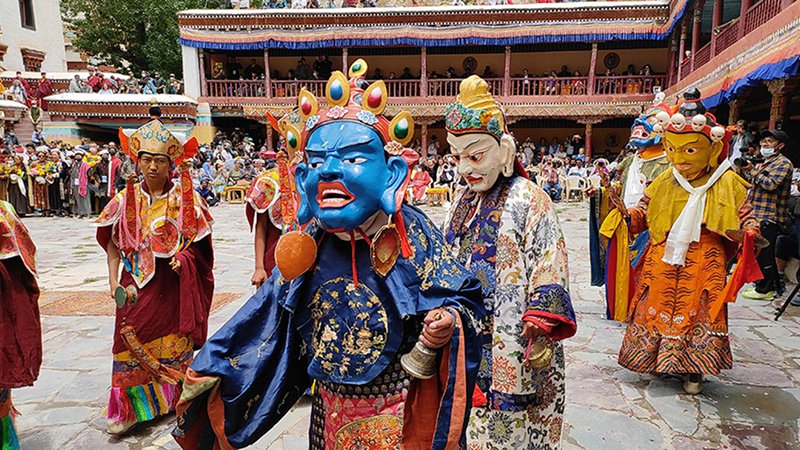
Best Place to Celebrate: Hemis Monastery, Leh, Ladakh When: June or July (12th month of the Tibetan lunar calendar) Duration: 2 days
High in the Himalayas, far from the mainstream tourist trail, the Hemis Festival offers one of the most unique and visually striking festival experiences in India. Held at the ancient Hemis Monastery near Leh, the festival celebrates the birth anniversary of Guru Padmasambhava, the founder of Tibetan Buddhism.
The centrepiece of the festival is the Cham dance — a sacred masked dance performed by monks in elaborate, colourful costumes representing deities and protective spirits. The performances are accompanied by traditional Tibetan instruments including long horns, cymbals, and drums.
The setting alone makes this festival extraordinary. The whitewashed monastery walls rise against a backdrop of rugged Himalayan peaks. Monks in crimson and gold robes move in ancient, rhythmic patterns in the courtyard. Colourful prayer flags flutter in the mountain breeze. It is an experience that feels both timeless and deeply sacred.
What to Expect: Spiritual, serene, visually spectacular, and culturally profound. Very different from the grand scale of festivals elsewhere in India — but no less memorable.
Travel Tips: Acclimatise in Leh for at least two full days before attending any events as the altitude is significant. Combine the Hemis Festival with a Leh-Ladakh road trip for the complete Himalayan experience. Arrive early at the monastery to get a good viewing position in the courtyard.
8. Kumbh Mela — The World’s Largest Human Gathering
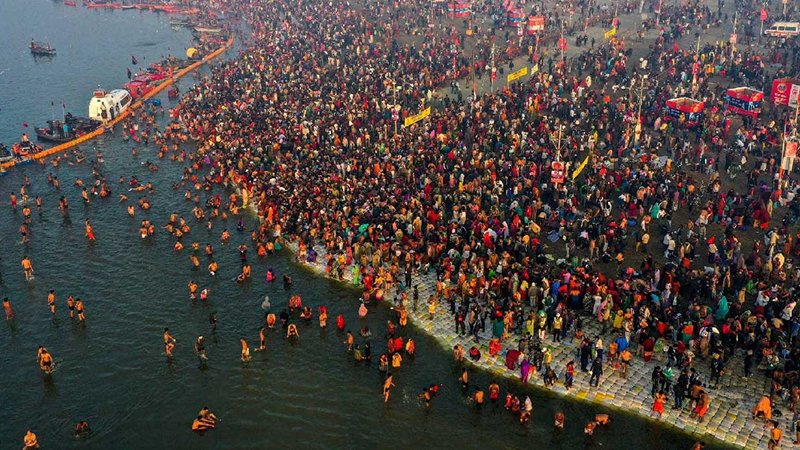
Best Places to Celebrate: Prayagraj, Haridwar, Ujjain, Nashik When: Rotates every three years between four cities; Maha Kumbh every 12 years Duration: Several weeks to months
Nothing in the world quite prepares you for Kumbh Mela. It is the largest peaceful gathering of human beings on the planet — an event so vast that it is visible from space via satellite imagery. Millions of Hindu pilgrims converge on a sacred river confluence to bathe in the holy waters, believing that doing so will cleanse them of all sins and help them attain moksha — spiritual liberation.
Beyond the religious significance, Kumbh Mela is a spectacular human event. You will see ash-covered Naga Sadhus who have renounced all worldly possessions, massive religious processions with chanting and drumming, tent cities that become temporary towns, and an overwhelming collective energy unlike anything else on earth.
The most sacred moments are the Shahi Snan — the royal bathing days — when different orders of saints and sadhus enter the river in grand processions.
What to Expect: Overwhelming crowds, deep spirituality, extraordinary photography opportunities, and a profound sense of collective human faith.
Travel Tips: Visiting one or two days around the main bathing dates rather than on the exact day gives you a powerful experience with slightly more manageable crowds. Hire a local guide or contact a reputable tour operator who knows the layout of the mela grounds. Keep your belongings secure in large crowds.
Indian Festival Calendar — Month by Month
January: Pongal, Lohri, Makar Sankranti, Republic Day Parade (New Delhi)
February / March: Holi, Maha Shivaratri
April: Baisakhi, Ram Navami, Vishu (Kerala)
June / July: Hemis Festival, Rath Yatra (Puri, Odisha)
August: Janmashtami, Independence Day, Onam begins
September: Ganesh Chaturthi (Mumbai), Onam, Navratri begins
October: Navratri, Durga Puja, Dussehra
November: Diwali, Pushkar Camel Fair, Guru Nanak Jayanti
December: Christmas in Goa, Hornbill Festival (Nagaland)
Which Festival Should You Visit First?
If you are visiting India for the first time and can only experience one festival, here is a simple guide:
If you want colour and energy — go to Holi in Vrindavan or Jaipur. If you want light and beauty — go to Diwali in Varanasi or Ayodhya. If you want culture and spectacle — go to Durga Puja in Kolkata. If you want adventure and desert magic — go to Pushkar Camel Fair. If you want dance and celebration — go to Navratri in Ahmedabad. If you want spirituality and scale — go to Kumbh Mela. If you want nature and tradition — go to Onam in Kerala. If you want mountains and mysticism — go to Hemis Festival in Ladakh.
Final Thoughts
India’s festivals are not events that happen in India — they are events that India becomes. The country does not simply hold a celebration; it transforms entirely. Streets change, people change, the air changes. For a traveller willing to step into that transformation, the rewards are beyond anything a guidebook can fully describe.
Plan your visit around one of these festivals and you will not just see India. You will feel it.