
There are destinations where the timing of your visit is a minor consideration — where the weather is broadly predictable, the crowds manageable year-round, and the experience reliably good regardless of the month you choose. Torres del Paine is not one of those destinations.
Torres del Paine National Park sits in the southern tip of Chilean Patagonia — at a latitude of approximately 51 degrees south, in a region where the geography of the continent creates some of the most extreme and most unpredictable weather conditions on earth. The Andes mountains to the west force moisture-laden Pacific air upward, producing extraordinary precipitation on the Chilean side. The vast open plains of Argentine Patagonia to the east create wind corridors of extraordinary power. The proximity to Antarctica means temperatures can plunge at any time of year. And the park itself — with its 242,242 hectares of granite towers, glaciers, lakes, and ancient forest — creates its own microclimates that can produce four seasons in a single day.
The Patagonian saying — if you do not like the weather, wait five minutes — is not an exaggeration. It is a literal description of daily meteorological reality in Torres del Paine. On any given day in any given season you may experience brilliant sunshine, driving rain, horizontal sleet, warm calm, and howling wind — sometimes within a single hour.
This meteorological reality means that the timing of a Torres del Paine visit matters enormously — not because some seasons are entirely good and others entirely bad, but because different seasons deliver fundamentally different experiences of the park. Understanding those differences is the most important thing you can do before booking.
This guide covers every month of the year — honestly, specifically, and without the promotional optimism that characterises most destination guides. It tells you what each season actually delivers, what it demands, what it costs, and who it suits. By the end you will know exactly when to go — and why.
Understanding Torres del Paine: The Park Itself
Before diving into the seasonal guide it is worth establishing what Torres del Paine actually is — because understanding the park’s geography and infrastructure is essential context for understanding how seasons affect the experience.
The Geography
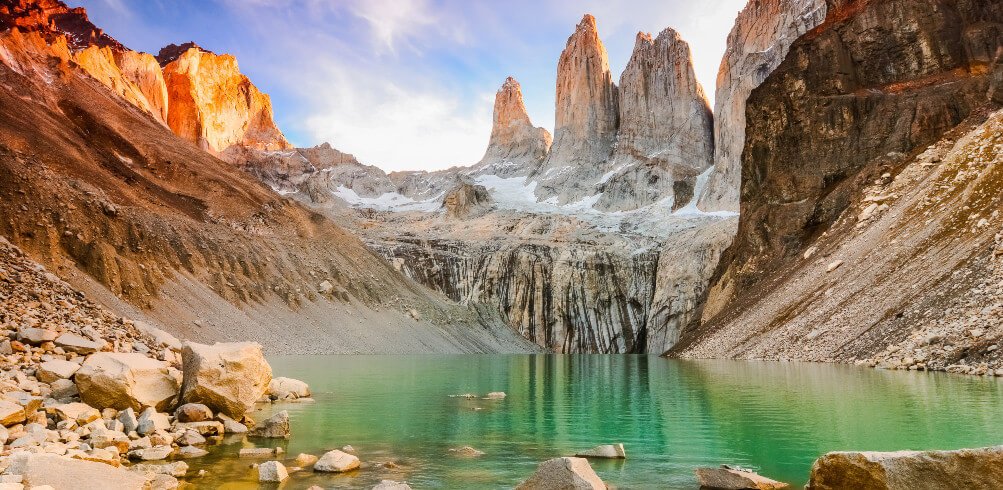
Torres del Paine National Park is organised around a central massif — the Paine Massif — whose most famous feature is the three granite towers (the Torres) that rise 2,500 metres above the Patagonian steppe in vertical walls of extraordinary drama. Around the massif are arranged a series of lakes of extraordinary beauty — Lago Pehoé, Lago Nordenskjöld, Lago Grey, Lago Sarmiento — whose colours shift between turquoise, jade green, and deep blue depending on the light and the season.
The Glacier Grey — a massive outlet glacier of the Southern Patagonian Ice Field — descends from the west into Lago Grey, calving icebergs that drift across the lake’s surface in all seasons. The Mirador Las Torres — the viewpoint at the base of the three towers — is the most celebrated single destination in the park and the goal of the majority of trekkers who visit.
The Trails — W Trek and O Circuit
The park is primarily experienced on foot — the two principal trekking routes being the W Trek and the O Circuit.
The W Trek is the most popular route — a 70 to 80 kilometre trail that takes its name from the W-shaped path it traces across the southern part of the park over four to five days. The W Trek visits the three principal viewpoints of the park — the Mirador Las Torres, the Valle del Francés, and the Glacier Grey — and is the route most visitors choose as their primary Torres del Paine experience.
The O Circuit is the full circuit of the Paine Massif — approximately 130 kilometres completed in eight to ten days. The O Circuit includes all the W Trek terrain plus the more remote and more dramatic northern side of the massif — the back side of the Torres, the Paso John Gardner (the highest point of the circuit at 1,241 metres), and the Valle del Río de los Perros. The O Circuit is significantly more demanding and significantly more rewarding than the W Trek — the northern section sees far fewer visitors and delivers wilderness experiences of extraordinary quality.
The Infrastructure
Torres del Paine has a well-developed accommodation and services infrastructure by Patagonian standards — a network of refugios (mountain huts), camping sites, and two luxury hotels within the park, supplemented by hotels and hostels in Puerto Natales (three hours away by bus) and Punta Arenas (five hours away).
The refugio system — operated primarily by the Vertice and Las Torres companies — provides dormitory accommodation, meals, and equipment rental at key points along the W Trek and O Circuit. Booking refugio accommodation is essential during the high season months and strongly recommended in shoulder season. The booking system opens several months in advance and the most popular refugios — particularly those at Las Torres and at Paine Grande — sell out extremely quickly for peak season dates.
Understanding that the infrastructure capacity of the park is finite — and that the season you choose directly affects your ability to book the accommodation you want at an accessible price — is an important practical reality of Torres del Paine planning.
The Four Seasons: An Overview
Torres del Paine experiences four distinct seasons whose timing differs from the Northern Hemisphere calendar because the park is in the Southern Hemisphere.
Summer runs from December through February — the warmest months, the longest days, the busiest period, and the most expensive.
Autumn runs from March through May — cooling temperatures, dramatically reduced crowds, extraordinary autumn colours, and some of the most beautiful light of the year.
Winter runs from June through August — cold, frequently snowy, dramatically reduced visitor numbers, many refugios closed, and a stark, silent beauty that rewards the small number of visitors who choose it.
Spring runs from September through November — warming temperatures, wildflowers, increasing visitor numbers, and the beginning of the trekking season with facilities gradually reopening.
Each season has its specific character, its specific rewards, and its specific challenges. None is without value. None is without difficulty.
Month by Month Guide: The Complete Honest Breakdown
January — The Peak of Peak Season: Crowds, Heat and Extraordinary Beauty
Weather: Warm, long days, and the highest percentage of calm sunny weather of the year — but also the windiest month on average. January in Torres del Paine is famous for its wind — the Patagonian westerlies reach their greatest average strength in January, with gusts regularly exceeding 100 kilometres per hour on exposed ridges and valley floors. The combination of warm temperatures, long days, and extraordinary wind creates conditions that are simultaneously the most exhilarating and the most physically demanding of the year.
Crowds: The maximum of the year. January — particularly the second half of January when Argentine and Chilean school holidays are at their peak — is the busiest month in Torres del Paine. The park receives its highest daily visitor numbers in January. The Mirador Las Torres trail is genuinely crowded — you will share the viewpoint with dozens or hundreds of other visitors. The refugios are at absolute capacity every night.
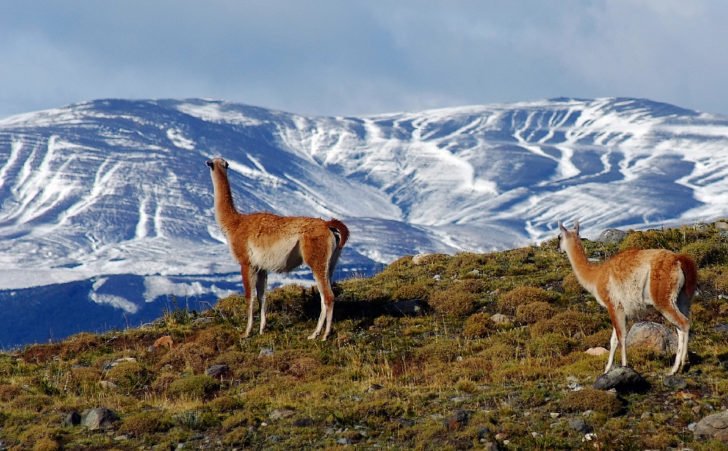
Wildlife: Good but less distinctive than November and December. The guanaco calves are older and less charming. Puma sightings continue but the increased human activity in the park means pumas are less visible in the most popular areas. The birdlife remains excellent.
Trekking Conditions: Excellent by objective standards — all trails open, no snow on lower trails, long daylight. The wind is the primary challenge and it is not to be underestimated. Trekking in 80 kilometre per hour gusts on exposed ridges is genuinely dangerous and genuinely exhausting. The wind also affects the famous reflections in the park’s lakes — the perfectly still turquoise lake surfaces that appear in every Torres del Paine photograph are most achievable in the early morning before the daily wind builds.
Costs: Absolute peak. Every accommodation category is at maximum price. Last minute availability is essentially non-existent. January Torres del Paine visits require booking six to twelve months in advance for any accommodation within the park or in Puerto Natales during the peak period.
Honest Assessment: January is the most popular month to visit Torres del Paine and it delivers genuinely extraordinary experiences — the long days, the dramatic light, the wildlife, and the sheer visual impact of the park in its summer fullness are all at their best. But it is also the month that most honestly tests whether the Torres del Paine experience you are seeking is compatible with the crowds and the wind. If you have visited national parks in peak season before and found the crowd levels acceptable — Yosemite in August, for example, or the Dolomites in July — then January Torres del Paine will not disappoint. If you are seeking wilderness and solitude January is the wrong choice.
Best for: Visitors who have no choice of timing. Families with school-age children. Visitors who prioritise reliable weather above all else.
Not ideal for: Solo travellers seeking solitude. Wildlife photographers. Budget travellers. Anyone who has not booked many months in advance.
February — The Shoulder of Peak Season: The Best Balance
Weather: Very similar to January — warm temperatures, long days, significant wind. February typically has slightly less wind than January on average — the very slight easing of the westerlies makes February marginally more comfortable for exposed ridge walking and for photographing the park’s lakes in calm conditions. Temperatures remain warm. Days remain long. The overall conditions are excellent.
Crowds: High but slightly reduced from the January peak. The Argentine and Chilean school holidays end in early February and visitor numbers drop noticeably from the second week of the month onward. By late February the park feels significantly less crowded than January — the refugios are still busy but last-minute availability occasionally becomes possible.
Wildlife: Good. The guanaco population is active and visible. Puma sightings are reliable for dedicated wildlife watchers who rise early and concentrate their searching in the less-visited areas of the park. The autumn migration of some bird species begins — adding interest for birdwatchers.
Trekking Conditions: Excellent. All trails open, good weather percentage, long days, and slightly less wind than January on average. February is arguably the finest month for the actual trekking experience — conditions are excellent and the crowds are slightly reduced from the January maximum.
Costs: Peak season prices continue through February — slightly lower than January in some accommodation categories but not dramatically so. Booking well in advance remains essential.
Honest Assessment: February is the month that many experienced Torres del Paine visitors — those who have done their research and who have the flexibility to choose — select as their preferred timing. The conditions are excellent, the crowds are slightly reduced from the January peak, and the combination of good weather and manageable visitor numbers delivers the closest thing to an ideal Torres del Paine experience that the high season offers.
Best for: Experienced trekkers who want peak season conditions with slightly reduced crowds. The best month for combining excellent conditions with a marginally more wilderness-like experience than January delivers.
Not ideal for: Budget travellers — prices remain high. Visitors seeking genuine solitude.
March — Autumn Arrives: The Hidden Gem Month
Weather: The transition month — temperatures begin to drop, days shorten noticeably, and the character of the light changes from the bright intensity of summer to the softer, more golden quality of autumn. Average temperatures range from approximately 4°C to 12°C. Rain becomes more frequent. Wind eases compared to the summer peak. Snow becomes possible at higher elevations by late March.
Crowds: Dropping significantly from the summer peak. March is the beginning of the shoulder season — visitor numbers fall dramatically after the southern hemisphere summer school holidays end in early March. By mid-March the park feels genuinely quieter than it has since October. Refugios have availability without the months-in-advance booking pressure of the peak season.
Wildlife: Exceptional. March is arguably the finest wildlife month in Torres del Paine — the park’s pumas are at their most active and most visible as they begin to concentrate their hunting in response to the cooler conditions and the changing behaviour of the guanaco herds. The Torres del Paine puma population — estimated at approximately 30 to 50 individuals — is the most photographed and most studied wild puma population in the world and March offers some of the finest puma watching opportunities of the year.
Autumn Colours: The beginning of one of the most beautiful natural displays in Torres del Paine — the lenga beech forests that cover the lower slopes of the Paine Massif begin their autumn colour change in March, turning from summer green through yellow, orange, and deep red. The combination of the granite towers, the turquoise lakes, and the autumn forest colours creates a visual palette of extraordinary beauty that is entirely absent from the summer experience.
Trekking Conditions: Good in early to mid March. All major trails remain open. The O Circuit’s Paso John Gardner becomes more challenging as the month progresses — snow is possible by late March and cold weather gear becomes essential. The W Trek remains highly accessible throughout March.
Costs: Dropping from the summer peak. March prices are generally 20 to 30 percent lower than January prices for equivalent accommodation. The luxury hotels begin to offer early autumn rates. Last-minute booking becomes more feasible.
Honest Assessment: March is one of the finest months to visit Torres del Paine and is criminally undervisited relative to its quality. The puma watching is extraordinary, the autumn colours are beginning their extraordinary display, the crowds are dramatically reduced from the summer peak, and the prices are dropping. The weather is less reliably good than January or February — rain is more frequent and cold weather gear is essential — but experienced travellers who have come prepared find March conditions entirely manageable and the experience genuinely superior to the crowded summer months.
Best for: Wildlife photographers — particularly puma photographers. Autumn colour enthusiasts. Experienced trekkers who want quality conditions without crowds. Photography-focused visitors who want the autumn palette.
Not ideal for: First-time visitors who prioritise weather reliability. Visitors planning the O Circuit — the Paso John Gardner becomes challenging by late March.
April — Autumn Peak: The Most Beautiful Month
Weather: Cooling temperatures, frequent rain, occasional snow at higher elevations, shorter days. Average temperatures range from 2°C to 10°C. The wind eases further from the summer maximum — April is generally one of the calmer months in Torres del Paine. The quality of light in April is extraordinary — the low angle of the autumn sun combined with the frequently dramatic cloud formations produces photographic conditions of rare beauty.
Crowds: Low. April is one of the quietest months in the park — visitor numbers are a fraction of the summer peak. The refugios are operating on reduced schedules — some facilities are closed or closing for the winter. The park feels close to genuine wilderness in April — the silence and the solitude are real.
Wildlife: Outstanding. April is the finest puma watching month of the year. The park’s puma population is at its most active and most visible — the combination of cooler weather, reduced human activity, and the natural hunting rhythms of autumn makes puma encounters more frequent in April than in any other month. Multi-day puma watching experiences — rising before dawn and spending the day systematically covering the park’s most productive puma habitat with experienced guides — can produce extraordinary results in April.
Autumn Colours: Peak. The lenga beech forests are at the height of their autumn display in April — the slopes of the Paine Massif are covered in a blaze of orange, red, and gold that transforms the visual experience of the park completely. The combination of the autumn forest, the granite towers, the turquoise lakes, and the dramatic autumn skies is the most photographically extraordinary version of Torres del Paine available in any season.
Trekking Conditions: Challenging and increasingly limited. The W Trek remains accessible in April with appropriate cold weather gear and preparation — waterproof layers, warm base layers, and good boots are essential rather than optional. The O Circuit’s Paso John Gardner is likely to have snow and ice and requires ice axes and crampons — most trekkers choose not to attempt the O Circuit in April. Day walks within the park remain excellent.
Costs: Significantly lower than peak season — 30 to 50 percent reductions in many accommodation categories. Some of the luxury properties offer their most attractive autumn rates in April. The overall cost of a Torres del Paine visit in April is dramatically lower than an equivalent summer visit.
Honest Assessment: April is the month that experienced Torres del Paine visitors — particularly photographers and wildlife enthusiasts — consider the finest of the year. The autumn colours are at their absolute peak, the puma watching is extraordinary, the crowds are minimal, the prices are significantly lower than summer, and the quality of light is unlike anything the summer months produce. The trade-offs — colder weather, more frequent rain, reduced facilities — are real but manageable for prepared visitors. If you have flexibility in your travel dates and wildlife or photography is important to your Torres del Paine experience April deserves serious consideration.
Best for: Wildlife photographers — the finest month for puma photography. Autumn colour photography. Experienced trekkers comfortable with cold and wet conditions. Budget-conscious travellers who want quality without peak prices.
Not ideal for: First-time visitors who want reliable sunshine. Visitors planning the full O Circuit. Families with young children — the cold and wet conditions are challenging.
May — Late Autumn: The Closing Season
Weather: Cold, frequently wet, increasingly snowy at higher elevations. Average temperatures range from 0°C to 8°C. Snow is common above 500 metres. Days are short — by late May daylight is reduced to approximately 8 hours. Wind is variable — May can have very calm days and very windy days without predictable pattern.
Crowds: Very low. May is one of the quietest months in Torres del Paine — the park is approaching its winter minimum visitor numbers. Many refugios and some park facilities are closed or closing. The park has a genuine wilderness quality in May that the busier months cannot replicate.
Wildlife: Excellent for puma watching — the cooler conditions and minimal human activity make puma encounters very possible for visitors working with experienced local guides. The autumn bird migration is continuing — some species are leaving while others are arriving from further south.
Autumn Colours: Fading from the April peak but still present in the most sheltered forest areas. The late autumn palette — the deep gold and brown of the declining leaves against the snow-dusted peaks — has a beauty of its own that is entirely different from the blazing colour of April.
Trekking Conditions: Limited and requiring significant preparation. The W Trek is possible for experienced trekkers with full winter kit but the conditions are challenging and the reduced facilities mean greater self-sufficiency is required. The higher passes are snow-covered and require technical gear.
Costs: Low — among the most affordable months to visit Torres del Paine. Accommodation prices in Puerto Natales are at their lowest. Park entrance fees are unchanged year-round.
Honest Assessment: May is a month for experienced and self-sufficient visitors who genuinely want the park in its most solitary and most raw form. The beauty is real — the late autumn colours, the snow-dusted peaks, the extraordinary silence — but the conditions require preparation and the reduced facilities mean May is not appropriate for inexperienced visitors. For the right visitor — experienced, prepared, seeking genuine solitude — May offers an extraordinary Torres del Paine experience at the lowest cost of the year.
Best for: Experienced adventurers seeking genuine solitude. Puma watching with local expert guides. Budget travellers with wilderness skills.
Not ideal for: First-time visitors. Inexperienced trekkers. Families. Anyone without full cold weather and wet weather kit.
June — Winter Begins: The Silent Season
Weather: Cold, frequently snowy, short days. Average temperatures range from -2°C to 6°C. Snow is common at all elevations. The park is in full winter condition — the lakes may have ice at their edges, the higher trails are snow-covered, and the Paso John Gardner on the O Circuit is completely impassable without specialist mountaineering equipment.
Crowds: Minimum of the year. June is the quietest month in Torres del Paine — visitor numbers are a tiny fraction of the summer peak. The park has a genuine and profound solitude that is unlike any other season.
Wildlife: The finest month for puma watching in the entire year. June is when Torres del Paine’s pumas are at their most active, most visible, and most concentrated — the winter reduction in prey availability means pumas are hunting more actively and covering more ground, and the minimal human presence in the park means they are far less cautious than during the busy summer months. Dedicated puma watching expeditions in June — spending multiple days with expert local guides in the park’s most productive puma areas — produce puma encounter rates that are extraordinary by any standard.
Infrastructure: Significantly reduced. Most refugios within the park are closed. The Vertice and Las Torres companies operate on skeleton schedules if at all. Self-sufficiency in camping and food is required for multi-day visits. The park headquarters at the Administration building remains open and park rangers are present year-round.
Costs: Minimum of the year. Accommodation in Puerto Natales is at its lowest prices. Some hotels in Puerto Natales and Punta Arenas close entirely in June.
Honest Assessment: June is a month for a very specific type of visitor — experienced, self-sufficient, and drawn to the park specifically for its winter character and its puma watching opportunities. The experience it delivers — the silent, snow-covered park, the extraordinary puma encounters, the profound solitude — is genuinely unlike anything the summer months offer. But it requires genuine preparation and genuine experience. This is not a month for beginners or for visitors who want comfort.
Best for: Dedicated puma watching. Experienced winter wilderness visitors. Photographers seeking the winter Torres del Paine aesthetic. Visitors who want genuine solitude above all else.
Not ideal for: Virtually everyone else.
July and August — Deep Winter: For the Committed Few
Weather: The coldest months of the year. Average temperatures range from -4°C to 5°C. Snow is frequent and heavy at all elevations. Daylight is at its minimum — approximately 7 to 8 hours per day. Wind is variable but can be extreme. The park in July and August is a winter wilderness of extraordinary beauty and extraordinary severity.
Crowds: Absolute minimum. July and August are the quietest months of the year — the park is essentially empty of tourists. On any given day in July or August you may have entire sections of the park entirely to yourself.
Wildlife: Outstanding for puma watching — July and August continue the excellent puma conditions of June. The winter concentration of guanacos and the minimal human disturbance make these months the most reliably productive for puma encounters of any time of year. Some trekking companies and wildlife tour operators offer dedicated winter puma watching experiences specifically in July and August.
Infrastructure: Minimal. Most park facilities are closed. A small number of specialist operators — including Fantastico Sur and some Puerto Natales based adventure companies — offer guided winter experiences with appropriate support.
Costs: Minimum of the year.
Honest Assessment: July and August are for the genuinely adventurous and genuinely experienced — visitors who want the park at its most raw, most silent, and most challenging, and who are specifically drawn by the puma watching opportunities and the winter wilderness aesthetic. For that visitor the experience is extraordinary and irreplaceable. For the vast majority of visitors July and August are not appropriate months.
Best for: Dedicated puma watching expeditions. Winter wilderness photography. The most adventurous and most experienced visitors.
Not ideal for: Anyone seeking standard trekking or sightseeing experience.
September — Winter Turns: The First Signs of Spring
Weather: Still cold but warming — average temperatures range from 1°C to 9°C. Snow is still present at higher elevations. Days are lengthening. The first signs of spring appear — the lenga beech trees begin to show the pale green of new leaves in the most sheltered locations. Wind begins to increase from the winter minimum toward the spring maximum.
Crowds: Very low but beginning to increase. The first advance-planning visitors begin arriving in September — particularly those planning O Circuit treks who want to complete the full circuit before the summer crowds arrive.
Wildlife: Still excellent for puma watching. The spring wildlife activity — young animals, mating behaviours, increased movement — begins to emerge in late September.
Trekking Conditions: Improving but still challenging. The W Trek becomes increasingly accessible through September. The O Circuit remains challenging with snow on the Paso John Gardner requiring appropriate gear.
Costs: Low but rising from the winter minimum.
Honest Assessment: September is a transition month — neither the profound winter solitude of the deep winter months nor the spring vibrancy of October. It suits experienced visitors who want good puma watching, minimal crowds, and acceptable trekking conditions without the full severity of the winter months.
Best for: Experienced trekkers who want minimal crowds. Puma watching. Budget-conscious visitors who want reasonable conditions at low prices.
Not ideal for: First-time visitors. Families. Anyone wanting reliable warm weather.
October — Spring Arrives: The Wildflower Season
Weather: Warming and increasingly variable. Average temperatures range from 3°C to 12°C. The wind builds significantly — October and November are among the windiest months in Torres del Paine as the spring weather systems establish themselves. Rain is frequent. Snow at higher elevations. But the increasing frequency of sunny days, the lengthening daylight, and the emergence of the spring wildflowers transform the character of the park.
Crowds: Low to moderate. October is the beginning of the genuine tourist season — visitor numbers increase steadily through the month. The first trekking groups arrive in significant numbers. Refugios begin reopening their full service schedules.
Wildlife: Excellent. The spring wildlife awakening is one of the most compelling reasons to visit in October — guanacos are beginning their breeding season, the puma watching remains very good, and the spring bird activity — nesting, displaying, migrating — adds an additional dimension to the wildlife experience.
Wildflowers: The Torres del Paine wildflower display is one of the finest in Patagonia — the spring flush of calafate, mutisia, and dozens of other native species transforms the Patagonian steppe and the forest margins into a carpet of extraordinary colour. October is the peak of the wildflower display and it is one of the most underappreciated visual experiences that Torres del Paine offers.
Trekking Conditions: Good and improving. The W Trek is fully accessible in October. The O Circuit’s Paso John Gardner requires careful timing — early October may still have significant snow requiring crampons while late October is generally passable with good gear and preparation.
Costs: Rising from the winter minimum but still below peak season levels. October offers genuinely good value — reasonable conditions at prices significantly below the December to February peak.
Honest Assessment: October is one of the most compelling months to visit Torres del Paine for visitors who have done their research. The wildflowers are extraordinary, the wildlife is excellent, the crowds are manageable, and the prices are significantly below peak. The wind is a genuine challenge and the weather is unpredictable — but prepared visitors who embrace rather than resist the Patagonian conditions find October a deeply rewarding month.
Best for: Wildlife enthusiasts. Wildflower photography. Experienced trekkers who want good conditions at below-peak prices. Visitors planning the O Circuit who want the full circuit without snow gear.
Not ideal for: First-time visitors who want guaranteed sunshine. Visitors who struggle with strong winds.
Season Summary: The Honest Comparison Table
| Month | Weather | Crowds | Wildlife | Trekking | Cost | Overall |
| January | Best | Maximum | Good | Excellent | Peak | ⭐⭐⭐ |
| February | Very Good | High | Good | Excellent | Peak | ⭐⭐⭐⭐ |
| March | Good | Low | Outstanding | Good | Lower | ⭐⭐⭐⭐⭐ |
| April | Variable | Very Low | Outstanding | Limited | Low | ⭐⭐⭐⭐⭐ |
| May | Cold | Minimal | Excellent | Challenging | Lowest | ⭐⭐⭐ |
| June | Winter | Minimum | Best | Expert Only | Lowest | ⭐⭐ |
| July | Winter | Minimum | Best | Expert Only | Lowest | ⭐⭐ |
| August | Winter | Minimum | Best | Expert Only | Lowest | ⭐⭐ |
| September | Cold | Very Low | Very Good | Challenging | Low | ⭐⭐⭐ |
| October | Variable | Low | Excellent | Good | Moderate | ⭐⭐⭐ |
| November | Good | Moderate | Excellent | Good | High | ⭐⭐⭐⭐ |
| December | Very Good | High | Good | Excellent | Peak | ⭐⭐⭐⭐ |
Choosing Your Season: The Decision Guide
Choose Summer (December to February) If:
You are visiting Torres del Paine for the first time and want the best possible chance of the weather cooperating. You have children or travelling companions who are not experienced trekkers. You have fixed holiday dates that fall in these months. You are primarily motivated by the classic Torres del Paine experience — the turquoise lakes, the granite towers, the long days — and are prepared to share it with other visitors. You have booked well in advance — six months minimum, twelve months for the best accommodation.
The honest summer reality: The park is beautiful, the conditions are the most reliably good of the year, and the crowds are real but manageable if your expectations are calibrated correctly. Do not expect solitude in summer. Do not expect the park’s lakes to be calm for photography in January — the wind destroys the reflections for most of the day. Rise early — the best light, the calmest conditions, and the lowest crowd levels are all in the hours immediately after dawn.
Choose Autumn (March to May) If:
You have flexibility in your travel dates and are not constrained to school holiday periods. Wildlife — particularly pumas — is an important part of your Torres del Paine motivation. Photography is a significant part of your experience and the autumn colour palette is more interesting to you than the summer palette. You want to reduce the cost of your visit significantly without sacrificing quality. You are an experienced traveller comfortable with variable weather and cold temperatures.
The honest autumn reality: March and April are genuinely extraordinary months in Torres del Paine — the combination of autumn colours, puma watching, reduced crowds, and lower prices makes them arguably the finest months of the year for the right visitor. The weather is less reliable than summer and the cold is real — but the experience is frequently more rewarding than the crowded summer peak. April is the month that experienced Torres del Paine visitors most often cite as their favourite.
Choose Winter (June to August) If:
You are an experienced wilderness traveller with full cold weather and navigation skills. Puma watching is your primary motivation and you want the best possible chance of extraordinary encounters. You want genuine solitude and are prepared for the infrastructure limitations of the winter season. You are travelling with an experienced local guide or specialist operator who knows the park in winter conditions.
The honest winter reality: Winter Torres del Paine is not for most visitors and there is no shame in acknowledging this. The experience it offers — profound solitude, extraordinary puma encounters, the stark beauty of a snow-covered wilderness — is genuinely extraordinary but genuinely demanding. Do not attempt winter Torres del Paine without proper preparation, proper gear, and ideally an experienced local guide.
Choose Spring (September to November) If:
You want good trekking conditions without the full summer crowds. The wildflower display is an important part of your motivation. You are planning the O Circuit and want to complete it before the summer visitor peak. You want a genuine balance between quality conditions and value for money — October and early November offer this balance more successfully than any other period.
The honest spring reality: October and November are the most underrated months in Torres del Paine — the wildflowers, the wildlife, the improving conditions, and the still-manageable crowds make them genuinely excellent months that receive far less attention than the summer peak. The wind is challenging but it is challenging in all seasons. Prepare for it and embrace it rather than fighting it.
Practical Planning: What You Need to Know Before Booking
Booking the W Trek — How Far in Advance
The refugio system on the W Trek has finite capacity and the booking pressure during the peak season is extreme.
For December and January visits booking twelve months in advance is not excessive — the most popular refugios at Las Torres and Paine Grande sell out for prime dates within hours of the booking system opening. Attempting to plan a December or January W Trek with less than six months lead time risks finding no refugio availability and having to either camp (requiring full camping equipment) or pay very high last-minute prices.
For February and November visits six to nine months advance booking is recommended.
For March and October visits three to six months advance booking is generally sufficient.
For April through September visits last-minute booking is often possible — but confirm facility opening schedules as many refugios are closed or on reduced service in the off-season.
Park Entrance Fees
Torres del Paine charges an entrance fee year-round — currently approximately USD 35 per person for foreign visitors during the peak season and USD 18 during the off-season. The fee is paid at the park entrance and receipts are checked at various points within the park. Payment is in cash (Chilean pesos or US dollars) or by card.
Getting to Torres del Paine
The standard access point is Puerto Natales — a small city three hours by bus from the park entrance. Puerto Natales is connected to Punta Arenas (the nearest international airport, five hours away) by frequent bus services and to Santiago by daily flights. Several bus companies operate daily services between Puerto Natales and the park during the peak season — frequency reduces significantly in the off-season.
The nearest international airport is Punta Arenas — served by LATAM and Sky Airline from Santiago with connections to international destinations. The flight from Santiago to Punta Arenas takes approximately three hours.
The Wind: The One Constant That Never Changes
No guide to Torres del Paine seasons is complete without an honest discussion of the wind — because the wind is the one meteorological reality that is present in every season, at every time of day, and that no amount of seasonal planning eliminates.
The Patagonian wind is legendary and the legend is accurate. Torres del Paine sits in a geographical corridor that channels the westerly winds of the Southern Ocean with extraordinary concentration — the mountains to the west and the open plains to the east create conditions that accelerate and amplify the already powerful westerlies into something that is genuinely unlike what most visitors have experienced as wind anywhere else.
Gusts of 100 kilometres per hour are common on exposed ridges in all seasons. Gusts of 150 kilometres per hour have been recorded in the park. On the most exposed sections of the W Trek — particularly the Valle del Francés and the approach to the Grey Glacier — strong winds can make forward progress physically impossible and can knock an unprepared walker off their feet.
The wind is not a reason not to visit Torres del Paine. It is part of what the park is — part of its character, part of its drama, and in the right frame of mind part of its extraordinary appeal. But it requires preparation — windproof outer layers are essential in every season, poles are valuable for stability on exposed ridges, and the ability to find beauty in conditions that are genuinely challenging rather than merely uncomfortable is the single most important mindset to bring to Torres del Paine regardless of when you go.
The calmest wind conditions in Torres del Paine occur in the early morning — the hours between dawn and approximately 10 AM are consistently calmer than the rest of the day in most seasons. This is the best time for lake photography, for bird watching, and for the most exposed sections of the trek. Plan your daily schedule around this reality and you will be rewarded.
Final Thoughts: There Is No Wrong Time — Only Wrong Preparation
Every month in Torres del Paine offers something genuinely extraordinary. The summer months offer the best trekking conditions and the most reliable weather. The autumn months offer the finest wildlife watching and the most beautiful colours. The winter months offer profound solitude and the finest puma encounters. The spring months offer wildflowers and the park awakening from its winter quiet.
The question is never whether Torres del Paine is worth visiting in a given month. It always is. The question is whether you are prepared for what that month actually delivers — the specific combination of conditions, challenges, and rewards that each season brings.
Prepare properly. Pack the right gear. Calibrate your expectations to the season you have chosen. Embrace the wind rather than fighting it. Rise early every day — the early morning hours in Torres del Paine are the most beautiful of any time of day in any season.
And remember what the park itself teaches every visitor who pays attention — that extraordinary beauty is not the same as comfortable beauty, that the most memorable experiences are rarely the easiest, and that a landscape powerful enough to produce towers of granite three kilometres tall is powerful enough to deliver weather conditions that demand something real from the people who come to witness them.
Go to Torres del Paine. Choose your season with honesty about what you want and what you are prepared for. And let the park show you what it has chosen to be on the day you arrive.
That is always enough. It is always more than enough.