
The Atacama Desert is unlike anywhere else on the planet.
Stretching across northern Chile between the Andes mountains and the Pacific coast, the Atacama Desert is the driest non-polar desert on Earth — a place where some weather stations have never recorded a single drop of rainfall in recorded history. And yet, far from being a barren wasteland, the Atacama is strikingly, impossibly beautiful.
Picture endless white salt flats that shimmer like mirrors under a blazing sun. Turquoise lagoons crowded with pink flamingos. Ancient volcanoes rising above 6,000 metres into cloudless skies. Geysers exploding from the frozen earth at dawn. And at night — a sky so thick with stars it looks like a painting.
The Atacama Desert in Chile is a destination that genuinely changes people. Whether you are an adventure traveller, a photographer, an astronomer, or simply someone searching for a landscape that feels completely alien to everyday life, the Atacama delivers in ways that are impossible to describe until you experience them.
This complete travel guide covers everything you need to plan your Atacama Desert trip — what to see, where to stay, when to go, and how to make every single day count.
Where Is the Atacama Desert?
The Atacama Desert is located in northern Chile, running roughly 1,000 kilometres along the Pacific coast from the Chilean-Peruvian border in the north to the Atacama Region in the south. To the east, the Andes mountains form a dramatic natural wall.
The main gateway for travellers is San Pedro de Atacama, a small, sun-baked town of adobe buildings sitting at 2,400 metres above sea level in the Antofagasta Region. Nearly all tours and desert excursions depart from here, making San Pedro the perfect base.
The nearest airport is Calama El Loa Airport (CJC), approximately 100 km from San Pedro. From Calama, shared shuttles and private transfers cover the journey in about 1.5 hours.
Best Time to Visit the Atacama Desert
The Atacama Desert is a year-round destination, but each season offers a different experience.
March to May — Autumn (Best Overall) Pleasant daytime temperatures, clear skies, and very low tourist numbers make autumn the sweet spot for most travellers. Ideal for all activities.
June to August — Winter (Best for Stargazing) Winter nights are bitterly cold but the air is at its driest and clearest. If stargazing is your priority, this is your season. Pack serious layers.
September to November — Spring (Best for Wildlife) Flamingo breeding season peaks in spring, making this the best time to spot large flocks at Laguna Chaxa and other salt flat lagoons.
December to February — Summer (Bolivian Winter) The summer months can occasionally bring afternoon clouds and brief rains from Bolivia (known as invierno boliviano). Still mostly dry and warm, but some high-altitude roads may be temporarily affected.
Key Tip: Regardless of season, the Atacama Desert temperature swings dramatically — from 25°C (77°F) during the day to near freezing at night. Always pack warm layers.
How to Get to the Atacama Desert
By Air: Fly from Santiago to Calama (CJC) — approximately 2 hours. LATAM Airlines and Sky Airline run daily flights. From Calama, take a shared transfer or private vehicle to San Pedro de Atacama (1.5 hours).
By Bus: Long-distance buses connect Santiago, Antofagasta, and Arica to Calama or directly to San Pedro. The journey from Santiago takes around 20–24 hours — best done overnight.
By Car: Renting a car in Calama gives you maximum flexibility. The road to San Pedro is paved and smooth. For off-road desert excursions, a 4WD vehicle is recommended.
Top Things to Do in the Atacama Desert
1. Stargazing in the Atacama Desert
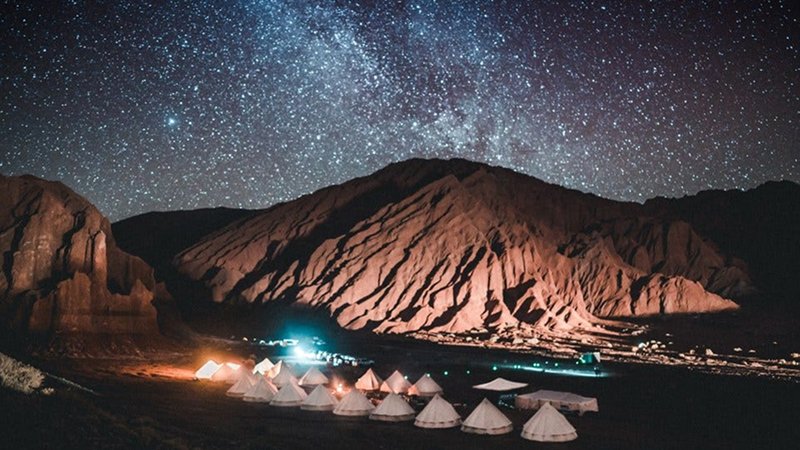
The Atacama Desert is the best place on Earth for stargazing. The combination of extreme altitude, almost zero humidity, minimal cloud cover, and no light pollution creates astronomical conditions that are unmatched anywhere on the planet. Some of the world’s most powerful telescopes are located here — including the ALMA Observatory and the Very Large Telescope (VLT) at Cerro Paranal.
For travellers, stargazing options include:
- SPACE Atacama Observatory — The most popular traveller-friendly observatory in San Pedro, offering nightly guided tours with powerful telescopes.
- Guided night excursions — Many operators drive you deep into the desert, far from any artificial light, for naked-eye Milky Way viewing.
- Full Moon tours at Valle de la Luna — An unforgettable experience under a white lunar sky.
The Milky Way is visible with the naked eye on most clear nights throughout the year. The winter months produce the clearest, most dramatic skies.
2. Salar de Atacama — Salt Flats
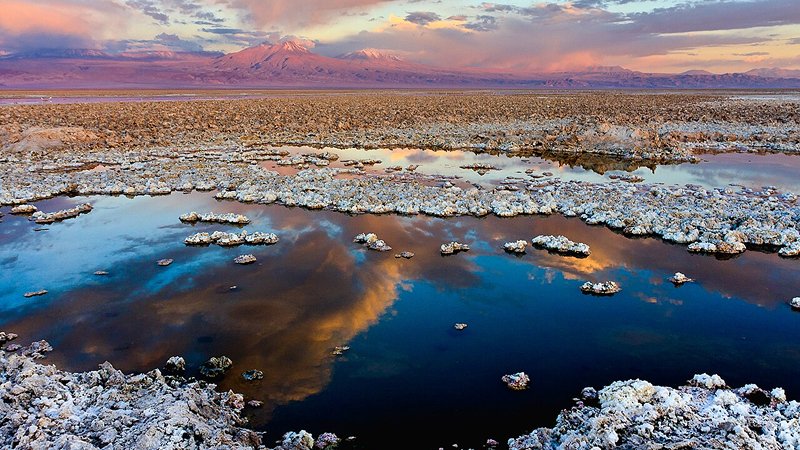
The Salar de Atacama is Chile’s largest salt flat, stretching across approximately 3,000 square kilometres. Over millions of years, mineral-rich water has evaporated in this closed basin, leaving behind a crust of salt, lithium, and other minerals that glitter in the sunlight.
Key highlights at the Atacama salt flats:
- Laguna Chaxa — A flamingo reserve within the salt flat where Chilean, Andean, and James’s flamingos gather in large numbers. Sunrise here is breathtaking.
- Laguna Cejar — A dense, salty lagoon where you can float on the surface like a cork. Swimming here is a surreal, memorable experience.
- Ojos del Salar — Two natural freshwater pools bubbling up through the salt crust — a fascinating geological oddity.
3. Valle de la Luna (Valley of the Moon)
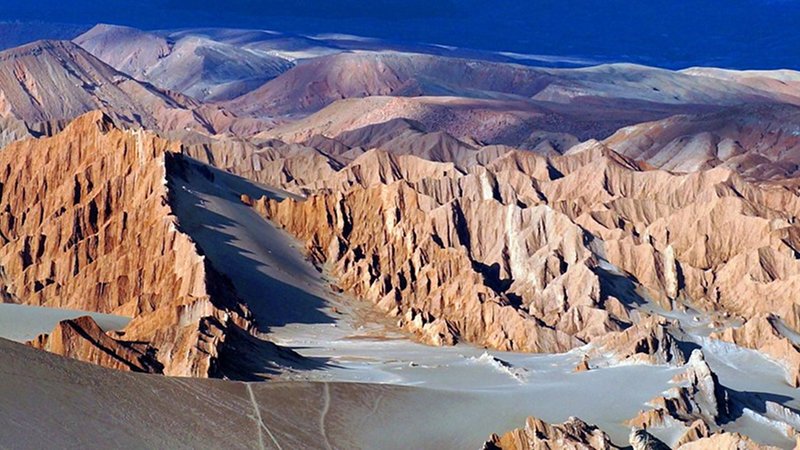
Just 15 km from San Pedro lies the Valle de la Luna, a landscape so alien and dramatic that NASA has used it for Mars surface research. Wind and water erosion over millennia have sculpted the salt, clay, and rock into sweeping dunes, ridges, and caverns unlike anything else on Earth.
Highlights inside Valle de la Luna:
- Las Tres Marías — Three iconic rock and salt formations rising from the valley floor.
- Gran Duna — A towering sand dune you can climb for panoramic desert views.
- Salt caves — Natural caves carved from pure salt, large enough to explore on foot.
Visit in the late afternoon for the most dramatic lighting. Sunsets in Valle de la Luna paint the landscape in shades of deep orange, red, and violet — one of South America’s most iconic sunset experiences.
4. El Tatio Geysers
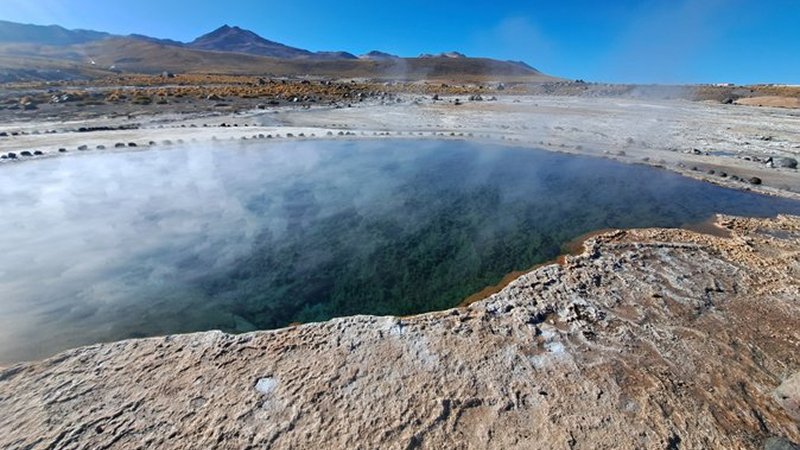
At 4,320 metres above sea level, the El Tatio Geyser Field is the highest geyser field in the world. More than 80 active geysers and 60 hot springs erupt and bubble across the high Andean plateau, releasing columns of steam into the freezing morning air.
Tours depart San Pedro at around 4 AM to arrive at El Tatio at first light — when the geysers are most active and the contrast between the cold air and hot steam is at its most dramatic. After watching the geysers, most tours stop at a natural hot spring for a warming soak at high altitude — a truly memorable experience.
Essentials: Bring extremely warm layers, a good camera, snacks, and sunscreen. The sun at 4,300m is intense even in winter.
5. Flamingo Watching in the Atacama Desert
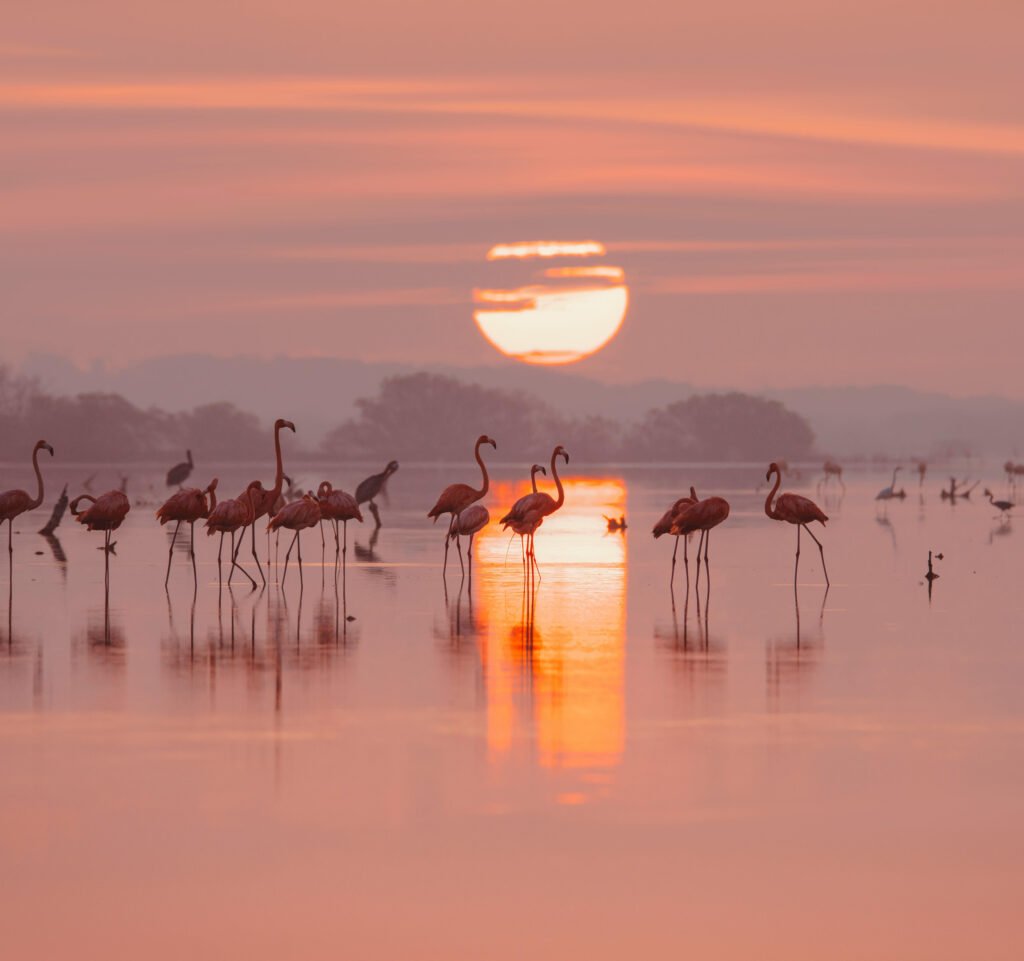
The Atacama Desert is home to three species of flamingo — the Chilean Flamingo, the Andean Flamingo, and the rare James’s Flamingo. These elegant birds gather at saline lagoons across the region, feeding on algae and brine shrimp in the mineral-rich waters.
Best flamingo watching spots:
- Laguna Chaxa (Salar de Atacama)
- Laguna Miscanti & Laguna Miñiques (at 4,200m altitude)
- Laguna Tebinquinche (stunning sunset views)
Flamingos are present year-round, but the highest concentrations are seen from September to November during breeding season.
6. Piedras Rojas & High-Altitude Lagoons
One of the most visually stunning excursions in the Atacama Desert takes you up to 4,200 metres altitude to see the Piedras Rojas — vivid red rock formations reflected in a perfectly still, icy lagoon. Combine this with visits to the Salar de Tara and Laguna Miscanti for a full-day high-altitude adventure.
The colours here — deep red rock, electric blue water, white salt, and green Andean grass — create a landscape that seems almost computer-generated. It is one of the most photographed destinations in all of Chile.
Food & Drink in the Atacama Desert
San Pedro de Atacama has a surprisingly rich food scene. Do not leave without trying:
- Llama steak — Lean, tender Andean meat, often served with quinoa and local vegetables
- Quinoa soup — Warming and hearty, perfect for cold desert nights
- Empanadas — Chile’s iconic baked pastries, stuffed with cheese, meat, or vegetables
- Humitas — Steamed corn parcels, a traditional Andean dish
- Pisco Sour — Chile’s national cocktail, best enjoyed on a rooftop terrace at sunset
Hydration is critical. At altitude and in extreme dryness, your body loses moisture rapidly. Drink a minimum of 2–3 litres of water per day and limit alcohol, especially in your first 48 hours.
Essential Atacama Desert Travel Tips
Altitude Acclimatisation: San Pedro is at 2,400m, and many excursions go to 4,000m+. Rest on your first day, drink plenty of water, and avoid strenuous activity. Consider altitude medication if you are prone to altitude sickness.
Sun Protection: UV radiation in the Atacama Desert is extreme due to the high altitude and thin atmosphere. Use SPF 50+ sunscreen, wear a wide-brimmed hat, UV-protective sunglasses, and lightweight long sleeves.
Book Tours Early: Popular excursions like El Tatio and stargazing tours fill up days in advance in peak season. Book ahead.
Bring Cash: Many local businesses in San Pedro do not accept credit cards. Withdraw Chilean pesos in Calama or Santiago before arriving.
Respect the Desert: The Atacama Desert ecosystem is extremely fragile. Stay on marked paths, never remove salt formations or rocks, and carry all rubbish out with you.
Connectivity: Download offline maps before you arrive. Mobile data is limited outside of San Pedro town.
Perfect 3-Day Atacama Desert Itinerary
Day 1 — Arrive, Acclimatise & Valle de la Luna Sunset
Your Atacama Desert adventure begins the moment you land at Calama Airport. Board your shuttle and enjoy the 1.5-hour drive into San Pedro de Atacama — even from the window, the desert landscape is already extraordinary, with wide open plains, dusty red earth, and Licancabur Volcano rising dramatically on the horizon. Check into your accommodation, unpack, and take your first hours slow — altitude is real at 2,400 metres.
Spend your late morning gently exploring San Pedro town on foot. Visit the 17th-century Iglesia San Pedro built from adobe and cactus wood, browse the fascinating Museo Arqueológico with its ancient Atacameño mummies and ceramics, and walk down Calle Caracoles — the lively main street packed with craft stalls, tour agencies, and warm local cafes. Drink plenty of water, eat something light, and book your excursions for the next two days.
In the late afternoon, head to Valle de la Luna — just 15 km from San Pedro. Climb the Gran Duna for sweeping panoramic views, explore the natural salt caves, and photograph the iconic Las Tres Marías rock formations. Then stay for the sunset. As the sun drops behind Licancabur Volcano, the entire valley erupts in shades of deep orange, burgundy, and violet — one of the most breathtaking sunsets in all of South America and the perfect welcome to the Atacama Desert.
What You Will See on Day 1:
- Licancabur Volcano — rising dramatically on the horizon during your drive into San Pedro
- Gran Duna — a towering sand dune with sweeping panoramic views across Valle de la Luna
- Las Tres Marías — three iconic salt and rock formations rising from the valley floor
- Valle de la Luna Sunset — the valley glowing deep orange and violet as the sun drops behind the Andes
Day 2 — Flamingos at Sunrise, Salt Flat Swimming & Stargazing
Wake at 5:30 AM and depart for Laguna Chaxa just as the sun breaks over the Andes. This protected flamingo reserve within the Salar de Atacama is home to all three flamingo species found in the region — Chilean, Andean, and the rare James’s flamingo. At sunrise, the lagoon is perfectly still, sometimes hundreds of flamingos are wading in the shallow water, and their pink reflections shimmer across the glassy surface in golden morning light.
After the flamingos, your tour continues into the heart of the Salar de Atacama — Chile’s largest salt flat. Walk across the crunching white salt crust, marvel at vivid mineral pools of turquoise and green, and visit the Ojos del Salar — two perfectly circular freshwater pools bubbling up mysteriously through the salt. Then head to Laguna Cejar, where the salt concentration is so high that your body floats effortlessly on the surface. Swimming weightlessly in the middle of the Atacama Desert is an experience you will never forget.
The evening belongs entirely to the stars. At 9 PM, your stargazing tour drives you deep into the desert — far from any light source — and the sky that greets you is simply overwhelming. The Milky Way stretches from horizon to horizon like a river of white fire, Saturn’s rings are sharp and clear through the telescope, and the Magellanic Clouds — two satellite galaxies visible only from the Southern Hemisphere — glow softly above you. The Atacama Desert night sky is the finest on Earth, and tonight you will see exactly why.
What You Will See on Day 2:
- Chilean, Andean & James’s Flamingos — all three species wading and feeding in Laguna Chaxa at golden sunrise
- Salar de Atacama Salt Flat — an endless white crust with vivid turquoise mineral pools stretching to the horizon
- Laguna Cejar — a dense salt lagoon where your body floats completely effortlessly on the surface
- The Milky Way & Saturn’s Rings — the most spectacular night sky on Earth seen with naked eye and telescope
Day 3 — El Tatio Geysers, Hot Springs & Piedras Rojas
Set two alarms — your tour departs at 4 AM. The drive to El Tatio climbs steeply into the Andes in complete darkness, with temperatures dropping to -10°C or below by the time you arrive at the world’s highest geyser field at 4,320 metres. As dawn breaks, more than 80 active geysers erupt simultaneously across the plateau — thick columns of white steam catching the first golden light of the sun against a deep blue Andean sky. It is one of the most dramatic natural spectacles in all of South America.
After exploring the geyser field, your tour stops at the El Tatio natural hot spring pool — and after the biting pre-dawn cold, sliding into warm thermal water at 4,300 metres altitude is one of the great simple pleasures of any Atacama Desert trip. Soak, warm up, and enjoy a hot breakfast served beside the steaming geysers. On the drive back to San Pedro, stop at the tiny village of Machuca for grilled llama skewers, and keep your camera ready for vicuñas, vizcachas, and Andean condors along the road.
Your final afternoon takes you to the most visually stunning landscape of the entire trip — Piedras Rojas. At 4,200 metres, vivid red and orange volcanic rock formations rise from a white salt flat and reflect perfectly in an electric-blue lagoon beside them. From there, continue to Laguna Miscanti and Laguna Miñiques — two high-altitude lagoons of deep blue-green water framed by towering snow-capped volcanoes. Andean flamingos feed quietly along the shore, the silence is absolute, and the beauty is almost impossible to describe. It is the perfect final chapter of your Atacama Desert journey.
What You Will See on Day 3:
- El Tatio Geysers — 80+ geysers erupting simultaneously with golden steam columns at sunrise
- Natural Thermal Pool — warm geothermal water surrounded by steaming geysers and Andean volcanoes
- Piedras Rojas — vivid red volcanic rocks reflected perfectly in an electric-blue lagoon
- Laguna Miscanti & Miñiques — deep blue-green lagoons framed by towering snow-capped volcanoes
Final Thoughts on the Atacama Desert
The Atacama Desert is one of those rare destinations that genuinely exceeds expectations — no matter how high you set them.
It is a place of extremes. The driest. The highest. The clearest skies. The most otherworldly landscapes. And somehow, within all that harshness and emptiness, it is also staggeringly alive — with wildlife, colour, geology, and a silence so complete it becomes its own kind of sound.
Whether you spend three days or three weeks in the Atacama Desert in Chile, you will leave changed. You will see the sky differently. You will understand the planet a little better. And you will almost certainly start planning your return trip before you even get home.