
Planning a trip to Costa Rica and struggling to choose between the Pacific Coast vs Caribbean Coast? You are not alone. This is one of the most common questions every traveler asks before visiting this stunning Central American country.
Costa Rica is uniquely blessed with two completely different coastlines — the Pacific Coast to the west and the Caribbean Coast to the east. Both are breathtakingly beautiful, but they offer very different experiences in terms of beaches, weather, wildlife, food, culture, and vibe.
In this complete guide, we compare the Pacific Coast vs Caribbean Coast of Costa Rica across every important factor — so you can confidently choose the right coast for your dream trip.
Let’s dive in.
What Makes Pacific Coast vs Caribbean Coast So Different?
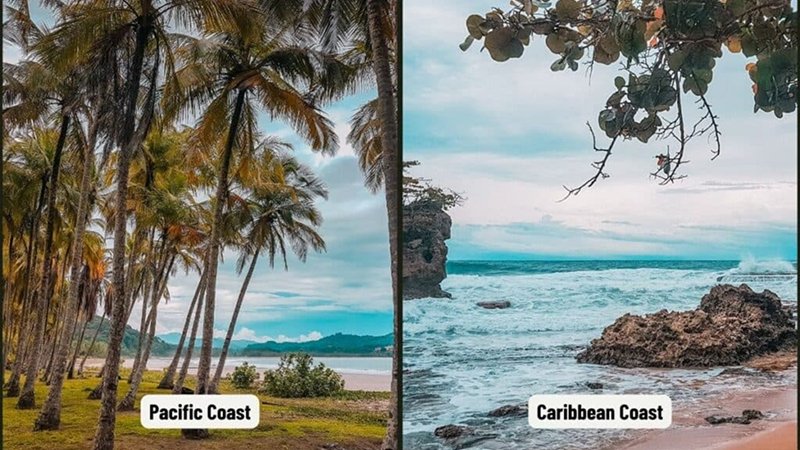
Before we get into the detailed comparison, it helps to understand why these two coasts feel like entirely different destinations — even though they are part of the same small country.
The Pacific Coast faces the Pacific Ocean to the west. It is Costa Rica’s most developed and visited coastline, stretching over 1,000 kilometers from the Nicaraguan border in the north to the Panamanian border in the south. It is home to famous national parks, world-class surf breaks, luxury resorts, and lively beach towns.
The Caribbean Coast faces the Caribbean Sea to the east. It is shorter, less commercialized, and carries a deeply distinct Afro-Caribbean culture. It feels wilder, more soulful, and beautifully authentic — the kind of place that gets under your skin and stays there.
Understanding the Pacific Coast vs Caribbean Coast difference is the first step to planning the perfect Costa Rica itinerary.
Pacific Coast vs Caribbean Coast: Beaches
Pacific Coast Beaches
The Pacific Coast is home to some of the most diverse and dramatic beaches in all of Central America. From golden sand beaches backed by jungle to wild rocky coves with crashing waves, the variety here is extraordinary.
Best beaches on the Pacific Coast:
- Manuel Antonio Beach — Stunning white sand beach inside a national park, surrounded by monkeys and sloths
- Santa Teresa Beach — A bohemian surfer paradise with beautiful sunsets and a laid-back vibe
- Tamarindo Beach — One of the most popular beaches in Costa Rica, great for surfing and nightlife
- Nosara Beach — A wellness hub with pristine, uncrowded beach perfect for yoga retreats
- Dominical Beach — A raw, wild surf beach in the southern Pacific with amazing scenery
- Pavones Beach — Remote and world-famous for one of the longest left-hand surf waves on the planet
One of the biggest advantages of Pacific Coast beaches is the stunning sunset views. Since you are facing west, every evening ends with a spectacular sky show over the ocean.
Caribbean Coast Beaches
Caribbean Coast beaches have a completely different personality. They are wilder, less crowded, fringed with swaying coconut palms and dense jungle vegetation. The water is warmer and calmer in many areas, making it excellent for swimming, snorkeling, and simply floating in peace.
Best beaches on the Caribbean Coast:
- Punta Uva — Widely considered one of the most beautiful and unspoiled beaches in all of Costa Rica
- Playa Cocles — A stunning stretch of beach near Puerto Viejo, popular with surfers
- Cahuita Beach — Calm, golden sand beach next to a national park with a living coral reef
- Puerto Viejo Beach — The heart of Caribbean beach life with a cool reggae atmosphere
- Tortuguero Beach — Wild and remote beach famous as one of the world’s most important sea turtle nesting sites
Pacific Coast vs Caribbean Coast Beaches Verdict: Choose Pacific for dramatic scenery, variety, and legendary sunsets. Choose Caribbean for untouched beauty, warm calm waters, and a truly off-the-beaten-path experience.
Pacific Coast vs Caribbean Coast: Weather
Weather is one of the most important factors when comparing the Pacific Coast vs Caribbean Coast — and the difference here is significant.
Pacific Coast Weather
The Pacific Coast follows a classic tropical weather pattern with two distinct seasons:
- Dry Season (December to April): Clear blue skies, low humidity, little to no rain — ideal for a beach holiday
- Green Season / Rainy Season (May to November): Afternoon showers, lush green landscapes, fewer tourists and lower prices
- The Guanacaste region in the northern Pacific is the driest part of Costa Rica — perfect for guaranteed sunshine
Caribbean Coast Weather
The Caribbean Coast runs on a completely different weather system driven by Caribbean trade winds:
- Rain falls year-round, but the coast is never truly closed for tourism
- Driest months on the Caribbean: September and October — this is the opposite of the Pacific!
- February and March are also relatively dry on the Caribbean side
- Mornings tend to be bright and sunny with afternoon tropical showers
- The landscape stays lush, green, and intensely tropical all year long
Important Travel Tip: Many tourists make the mistake of visiting the Caribbean Coast in December or January and expecting dry weather. The driest time on the Caribbean is September and October — when the Pacific is at its wettest. Plan accordingly!
Pacific Coast vs Caribbean Coast Weather Verdict: Choose Pacific for reliable dry season sunshine (December–April). Choose Caribbean for the best weather in September–October.
Pacific Coast vs Caribbean Coast: Wildlife
Costa Rica is one of the most biodiverse countries on Earth, and both coasts deliver incredible wildlife experiences. But the Pacific Coast vs Caribbean Coast wildlife comparison reveals some interesting differences.
Pacific Coast Wildlife
- Manuel Antonio National Park — Capuchin monkeys, sloths, and iguanas share the beach with visitors
- Corcovado National Park — One of the most biodiverse places on the entire planet; jaguars, tapirs, scarlet macaws
- Carara National Park — One of the best places in the world to see scarlet macaws in the wild
- Tarcoles River Bridge — Famous for American crocodile sightings right from the roadside
- Whale watching — Humpback whales visit the Pacific Coast twice a year (longest season of any country in the world)
- Dolphins are commonly spotted on boat tours along the Pacific
- Sea turtle nesting at Ostional Wildlife Refuge (olive ridley turtles)
- Palo Verde National Park — Exceptional bird watching with massive waterbird colonies
Caribbean Coast Wildlife
- Tortuguero National Park — The most important green sea turtle nesting site in the Western Hemisphere (July–October)
- Sloths are incredibly easy to spot in trees around Puerto Viejo, Cahuita, and Punta Uva
- Howler monkeys and white-faced capuchin monkeys are very common
- Cahuita National Park — Home to Costa Rica’s most accessible and vibrant coral reef, full of colorful tropical fish
- Poison dart frogs can be found on the jungle floor — the Caribbean has the highest concentration in Costa Rica
- Toucans, parrots, kingfishers, and trogons are spotted with ease along jungle trails
- Manatees are occasionally spotted in the Caribbean canals near Tortuguero
Pacific Coast vs Caribbean Coast Wildlife Verdict: Both coasts are world-class for wildlife. Choose Pacific for big national parks, whale watching, and diverse ecosystems. Choose Caribbean for sea turtle nesting, coral reef snorkeling, and sloth spotting.
Pacific Coast vs Caribbean Coast: Surfing & Water Sports
Surfing is a huge draw for both coastlines, but the wave types and difficulty levels differ significantly.
Pacific Coast Surfing
The Pacific is Costa Rica’s undisputed surfing capital:
- Tamarindo — Perfect beach break for beginner and intermediate surfers
- Santa Teresa — Consistent, powerful waves in a beautiful setting, great for intermediate surfers
- Dominical — Fast, hollow beach break for advanced surfers
- Pavones — World-famous point break producing some of the longest rides in the world
- Nosara (Playa Guiones) — Consistent, friendly waves ideal for lessons and beginners
- Witch’s Rock & Ollie’s Point — Legendary remote surf spots only accessible by boat in Santa Rosa National Park
Water sports on the Pacific also include:
- Scuba diving at Isla del Caño and the Catalina Islands
- Sportfishing — some of the best offshore fishing in Central America
- Whale watching tours
- Stand-up paddleboarding on calm bays
Caribbean Coast Surfing
The Caribbean is less known for surfing but has one legendary wave:
- Salsa Brava in Puerto Viejo — One of the most powerful and dangerous reef breaks in Central America, strictly for experienced surfers
- Playa Cocles — A more forgiving wave great for intermediate surfers
- Cahuita — Calm waters better suited to snorkeling and swimming than surfing
Other water activities on the Caribbean:
- Snorkeling at Cahuita reef
- Kayaking and paddleboarding through calm coastal lagoons
- Boat tours through the jungle canals of Tortuguero
Pacific Coast vs Caribbean Coast Surfing Verdict: Choose Pacific for variety and beginner-friendly waves. Choose Caribbean if you are an advanced surfer seeking the challenge of Salsa Brava.
Pacific Coast vs Caribbean Coast: Food & Culture
This is where the Pacific Coast vs Caribbean Coast comparison becomes truly fascinating — the cultural difference between the two sides is dramatic.
Pacific Coast Food & Culture
The Pacific Coast reflects mainstream Costa Rican culture with a strong international tourism influence:
- Gallo pinto (rice and black beans) is the national breakfast staple
- Casados — a traditional plate of rice, beans, meat, salad, and plantains
- Ceviche — fresh raw fish marinated in lime juice, a Costa Rican favorite
- International restaurants, sushi bars, vegan cafes, and pizza joints are common in tourist towns
- Guanacaste has a proud cowboy (sabanero) culture with its own regional music and traditions
- Lively nightlife in Tamarindo, Jacó, and Manuel Antonio
- Coffee culture — the nearby Central Valley produces some of the world’s finest coffee
Caribbean Coast Food & Culture
The Caribbean Coast has an extraordinarily distinct Afro-Caribbean identity rooted in Jamaican and West Indian heritage — and the food reflects this beautifully:
- Rice and beans cooked in coconut milk — this is NOT the same as gallo pinto; it is richer, creamier, and deeply flavorful
- Rondón — a slow-cooked stew of seafood, root vegetables, and coconut milk; the signature dish of the Caribbean Coast
- Fresh lobster, shrimp, red snapper, and crab at surprisingly affordable prices
- Patacones (fried green plantains) with everything
- Reggae and Rastafarian influence is strong, particularly in Puerto Viejo
- Chocolate tours — Talamanca is one of Costa Rica’s top organic cacao growing regions; chocolate farm tours are a cultural highlight
- Afro-Caribbean festivals celebrate music, dance, and heritage in a way you will not experience anywhere else in Costa Rica
Pacific Coast vs Caribbean Coast Food & Culture Verdict: The Caribbean Coast wins for the most unique and memorable food and cultural experience in Costa Rica.
Pacific Coast vs Caribbean Coast: Budget & Cost
Pacific Coast Costs
The Pacific Coast is generally more expensive due to higher tourism development:
- Budget hostel: $15–$35 per night
- Mid-range hotel: $80–$180 per night
- Luxury resort: $200–$600+ per night
- Meals at a local soda (diner): $5–$10
- Restaurant meal: $12–$28
- Surf lesson: $45–$65
- National park entrance: $18–$20 per person
Caribbean Coast Costs
The Caribbean is noticeably more affordable:
- Budget hostel: $12–$25 per night
- Mid-range guesthouse: $50–$110 per night
- Meals: $6–$16 (including fresh seafood!)
- Activities and tours are generally cheaper
- Less commercial pressure means better value across the board
Pacific Coast vs Caribbean Coast Budget Verdict: The Caribbean Coast offers significantly better value for money — especially for food and accommodation.
Final Thoughts: Pacific Coast vs Caribbean Coast Costa Rica
When it comes to the Pacific Coast vs Caribbean Coast, there is truly no wrong answer — both sides of Costa Rica are extraordinary in their own way.
- Choose the Pacific Coast if you want easy access, reliable sunny weather, world-class surfing, diverse national parks, and a wide range of luxury and mid-range accommodation options.
- Choose the Caribbean Coast if you want an authentic, affordable, culturally rich experience full of Afro-Caribbean flavor, sea turtle encounters, unspoiled beaches, and a soulful reggae vibe that is unlike anywhere else in the world.
And if you can manage it — visit both coasts. The contrast between them is part of what makes Costa Rica one of the most rewarding and memorable travel destinations on the planet.