
Costa Rican food is one of the most misunderstood cuisines in Latin America. Visitors who arrive expecting the fiery complexity of Mexican food or the sophisticated technique of Peruvian cuisine sometimes find themselves surprised — even underwhelmed — by what appears on the table at first glance. Rice and beans again. A simple piece of grilled chicken. A salad of fresh vegetables dressed with nothing more than lime and salt.
What takes longer to understand — and what reveals itself gradually over the course of a visit rather than immediately — is that the apparent simplicity of Costa Rican food is not a limitation. It is a philosophy. A deliberate and deeply rooted approach to eating that prioritises the quality of the ingredient over the complexity of the preparation, the freshness of the produce over the elaborateness of the technique, and the nourishment of the body over the performance of the cook.
Costa Rica sits in a geographical position of extraordinary agricultural privilege. The combination of volcanic soils of exceptional fertility, a tropical climate that produces year-round growing conditions, two coastlines providing extraordinary marine diversity, and an agricultural tradition that has maintained remarkable biodiversity in its crop varieties means that the raw ingredients available to Costa Rican cooks are among the finest in the Americas.
The corn that goes into the tortillas has been cultivated in Central America for thousands of years. The beans that form the foundation of virtually every Costa Rican meal are varieties developed and refined over centuries of agricultural tradition. The tropical fruits — mangoes, papayas, pineapples, passion fruits, mamonchinos, guanabanas — grow in abundance and are eaten at a ripeness that imported fruit in other countries never achieves. The fish and seafood from both the Pacific and Caribbean coasts are extraordinarily fresh. The coffee is among the finest in the world.
Understanding Costa Rican food means understanding this relationship between the country and its ingredients. The cuisine is not trying to transform or transcend its raw materials — it is trying to express them as directly and as honestly as possible. And when you understand that intention the food reveals itself as something of genuine and distinctive quality.
The soda — the small, family-run restaurant that is the backbone of Costa Rican food culture — is where this philosophy is most purely expressed. The soda is not a restaurant in the performance sense — it is a kitchen that happens to have a few tables, where the cooking is done by the family who owns it, where the menu changes daily based on what is fresh and available, and where the food is served with the straightforward generosity of someone feeding people they care about. Eating at a good soda is the most authentic and most rewarding Costa Rican food experience available — more honest and more nourishing than any tourist-oriented restaurant regardless of its price point.
These are the fifteen dishes that reveal what Costa Rican food culture actually is — from the foundational classics that appear at every table to the regional specialties that reward the traveller who ventures beyond the obvious.
1. Gallo Pinto — The National Soul
If Costa Rica has a national dish it is gallo pinto — and if you spend more than twenty-four hours in the country you will eat it, love it, and understand immediately why it occupies the central position it does in Costa Rican food culture.
Gallo pinto is rice and black beans cooked together — but describing it as rice and beans is like describing a symphony as organised noise. The preparation transforms the two ingredients into something entirely distinct from either of them separately. The beans are cooked first until soft and their cooking liquid — dark, flavoursome, deeply coloured — is reserved. The cooked rice is then fried in oil with onion, garlic, sweet pepper, and fresh coriander until the grains separate and begin to toast. The beans are added with their liquid and the whole mixture is cooked together until the rice has absorbed the bean liquid and turned a deep speckled brown — the mottled appearance that gives the dish its name. Gallo pinto translates as spotted rooster — the black flecks of bean against the white rice resembling the colouring of a speckled bird.
The key flavouring that distinguishes Costa Rican gallo pinto from similar dishes elsewhere in Central America is Salsa Lizano — a mild, slightly sweet, slightly tangy bottled sauce made from vegetables and spices that has been produced in Costa Rica since 1920 and that is as essential to Costa Rican cooking as Worcestershire sauce is to British cuisine. A splash of Salsa Lizano added to the gallo pinto during cooking gives it a depth and roundness of flavour that is entirely characteristic and entirely Costa Rican.
Gallo pinto is eaten at breakfast — the primary occasion for its consumption — typically accompanied by scrambled or fried eggs, natilla (soured cream), fresh white cheese, and ripe plantain. The combination is one of the finest breakfasts in Central America — filling, deeply flavoursome, and sustaining in a way that fuels a full day of activity in the Costa Rican heat.
It is also eaten at lunch and dinner — appearing as a side dish alongside virtually every main course in the sodas and family restaurants that form the backbone of Costa Rican food culture. By the end of a week in Costa Rica you will have eaten gallo pinto perhaps a dozen times. You will not be tired of it.
Where to eat it: Any soda in the country. The best gallo pinto is always the home-cooked version — ask your hotel or hostel if breakfast is included and what it involves. If the answer is gallo pinto you are in exactly the right place.
What makes it extraordinary: The Salsa Lizano. The quality of the beans. The way the rice absorbs the bean liquid and becomes something entirely new. And the fact that no two versions are exactly the same — every cook has their own proportion, their own seasoning, their own particular touch that makes their gallo pinto distinctly theirs.
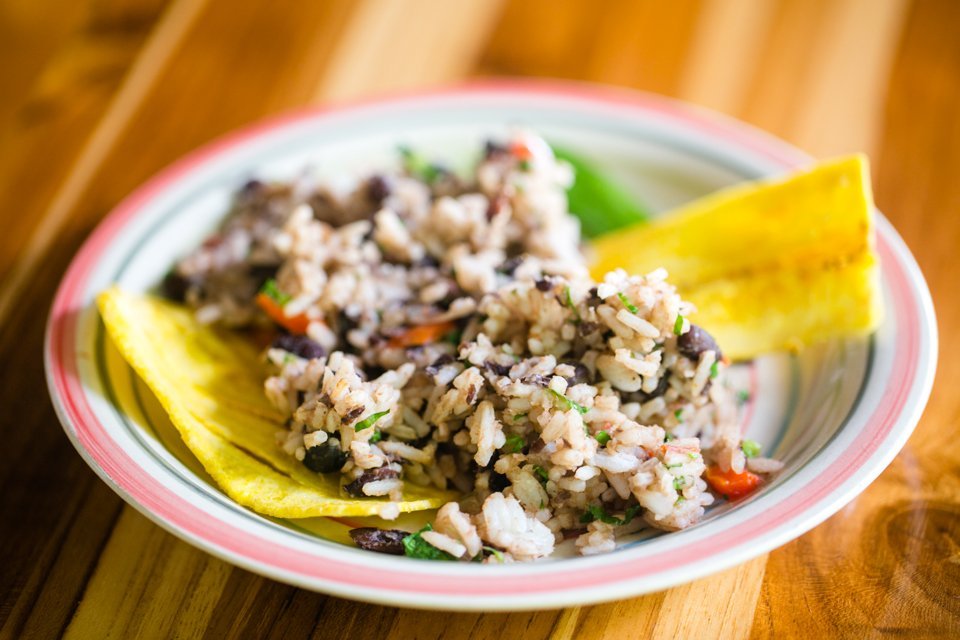
2. Casado — The Complete Costa Rican Meal
The casado is not a single dish — it is a complete meal served on a single plate, and it is the foundation of Costa Rican lunch culture. The name means married man in Spanish — the suggestion being that this is the kind of complete, nourishing, well-balanced meal that a married man comes home to at midday.
A traditional casado consists of rice, black beans (cooked separately rather than combined as in gallo pinto), a protein — typically grilled chicken, beef, pork, or fish — a simple salad of shredded cabbage, tomato, and carrot dressed with lime juice, fried ripe plantains (maduros), and often a small portion of pasta or a fried egg. Everything arrives together on a single large plate — a complete nutritional portrait of the Costa Rican approach to a proper meal.
The casado is served at virtually every soda in the country for lunch — typically for between 2,500 and 5,000 colones (approximately USD 5 to 10) — making it the best value complete meal in Costa Rica and the most reliable option for a traveller who wants to eat well without spending significant money.
The quality of a casado varies enormously between establishments — the difference between a casado at a good family-run soda and a casado at a tourist-oriented restaurant serving pre-cooked rice and frozen protein is the difference between genuine Costa Rican food culture and a simulation of it. The best casados are found at sodas where the rice is freshly cooked, the beans are made from scratch, the protein is grilled to order, and the plantains are fried from ripe fruit rather than from frozen slices.
Where to eat it: The best casados in Costa Rica are found at small sodas in non-tourist areas — ask locals where they eat lunch. In tourist areas look for sodas with handwritten menus, full tables of local workers at midday, and the smell of fresh cooking rather than reheated food.
What to order with it: A glass of fresh fruit juice — the tropical fruit juices available at sodas are extraordinary. Natural (with water) or con leche (with milk) — both are excellent.
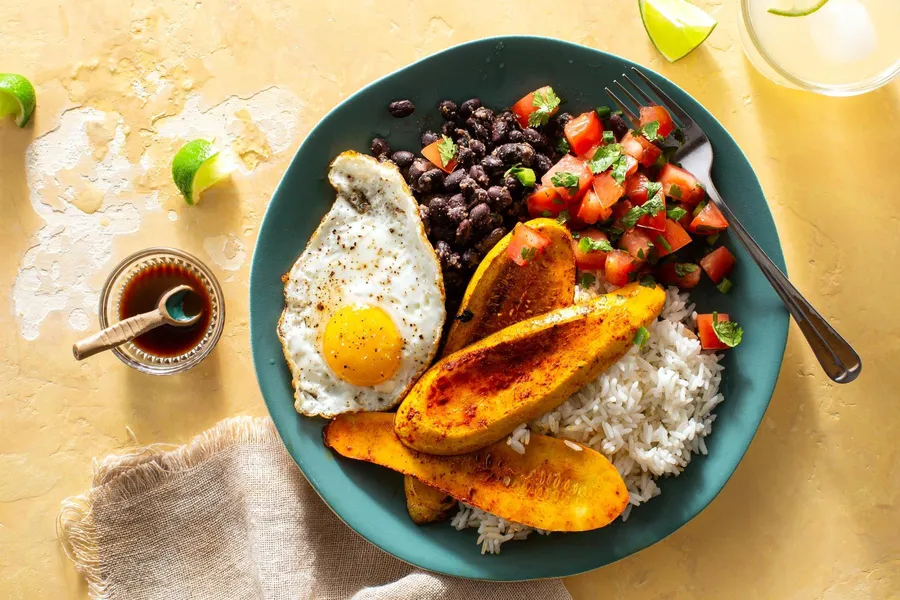
3. Ceviche — The Pacific Perfection
Costa Rican ceviche is one of the finest versions of this extraordinary dish available anywhere in Latin America — and it differs significantly from the Peruvian original in ways that reflect the specific character of Costa Rican ingredients and Costa Rican taste.
Costa Rican ceviche is made from fresh white fish — typically corvina (sea bass) or tilapia — cut into small cubes and marinated in fresh lime juice until the acid denatures the proteins and gives the fish the texture of cooked flesh. To the lime-marinated fish is added finely diced white onion, fresh coriander, and fresh sweet pepper — and nothing else. The seasoning is salt only. The result is a dish of extraordinary cleanliness and freshness — the citrus acid, the fresh fish, and the herbs creating a combination that is simultaneously intensely flavoured and remarkably delicate.
What distinguishes Costa Rican ceviche from Peruvian ceviche is primarily the absence of heat — chilli is not used in the traditional Costa Rican version, which reflects the general mildness of the country’s cuisine. The focus is entirely on the freshness of the fish and the quality of the lime juice — and with fish of the quality available from both the Pacific and Caribbean coasts the result is remarkable.
Ceviche is served as a snack or starter — typically in a small bowl or cup with crackers or fried plantain chips on the side. It is eaten at beach sodas, in the markets of San José, at roadside stands near the coast, and at virtually every celebration from a family gathering to a national holiday.
The ceviche at the Mercado Central in San José — served at the small seafood counters in the market’s interior — is among the finest in the country and is one of the great budget food experiences available in Costa Rica.
Where to eat it: Mercado Central San José, any good beach soda on the Pacific coast, fish markets in coastal towns. The freshness of the fish is everything — if the ceviche does not smell clean and marine it is not worth eating.
The variation to try: Ceviche de camarón — made with fresh shrimp rather than fish — is equally excellent and widely available at coastal sodas.
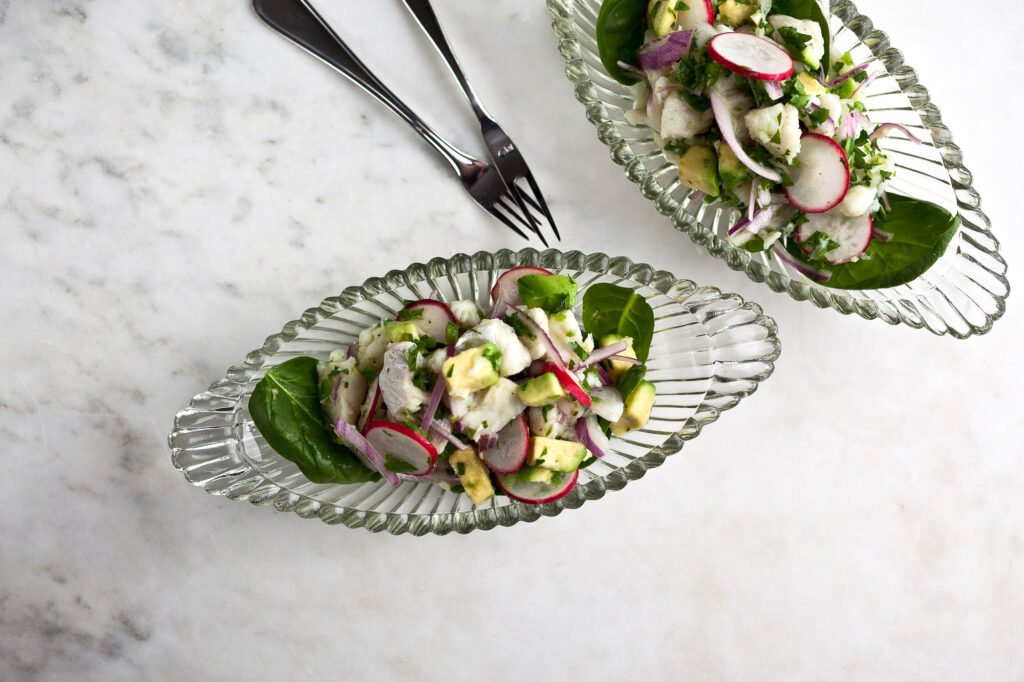
4. Chifrijo — The Bar Food Masterpiece
Chifrijo is one of Costa Rica’s most beloved and most ingenious dishes — a layered combination of ingredients that manages to be simultaneously a bar snack, a complete meal, and one of the most satisfying things you will eat in Central America.
The name is a portmanteau of chicharrón and frijoles — the two primary components of the dish. A bowl of chifrijo is constructed in layers from the bottom up — a base of cooked white rice, then a generous layer of seasoned black or red beans in their cooking liquid, then a topping of chicharrón (fried pork skin and meat — crispy, rich, deeply flavoured), then a spoonful of pico de gallo (fresh tomato, onion, and coriander salsa), then a drizzle of Salsa Lizano. The whole construction is eaten with tortilla chips for scooping.
The combination of textures and flavours in a good chifrijo is extraordinary — the soft rice, the rich beans, the explosive crunch of the chicharrón, the fresh acidity of the pico de gallo, and the savoury depth of the Salsa Lizano all working together in a way that is greater than the sum of its parts. It is the kind of dish that makes you understand immediately why it became a national institution.
Chifrijo was reportedly invented in the 1990s at a San José bar called Cordero’s — its creator, Miguel Cordero, is said to have developed the dish as a bar snack that would keep customers eating and drinking through the evening. Whether or not the attribution is precisely accurate the dish has spread throughout the country and is now one of the defining foods of Costa Rican bar culture.
Where to eat it: Any good bar or cantina in Costa Rica — chifrijo is bar food in its natural habitat. In San José the bars of the Barrio La California and the Mercado de la Artesanía area serve good chifrijo. In tourist beach towns look for local bars rather than tourist-oriented establishments.
The drink pairing: Imperial beer — Costa Rica’s most popular lager — is the traditional accompaniment and the correct one. The cold, crisp lager cuts through the richness of the chicharrón perfectly.
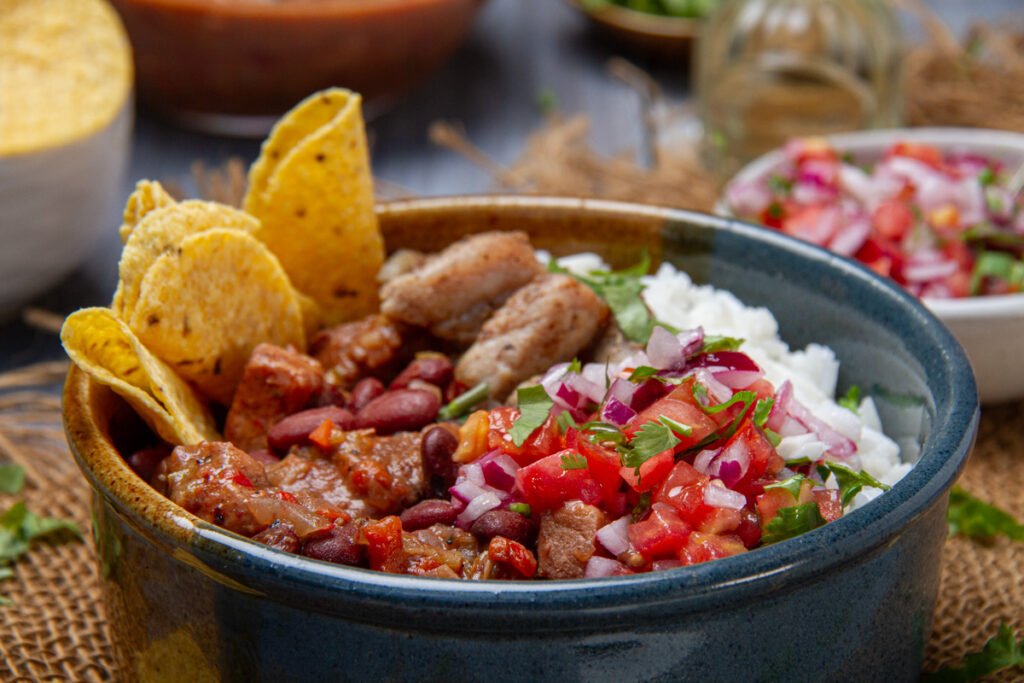
5. Olla de Carne — The Sunday Soup
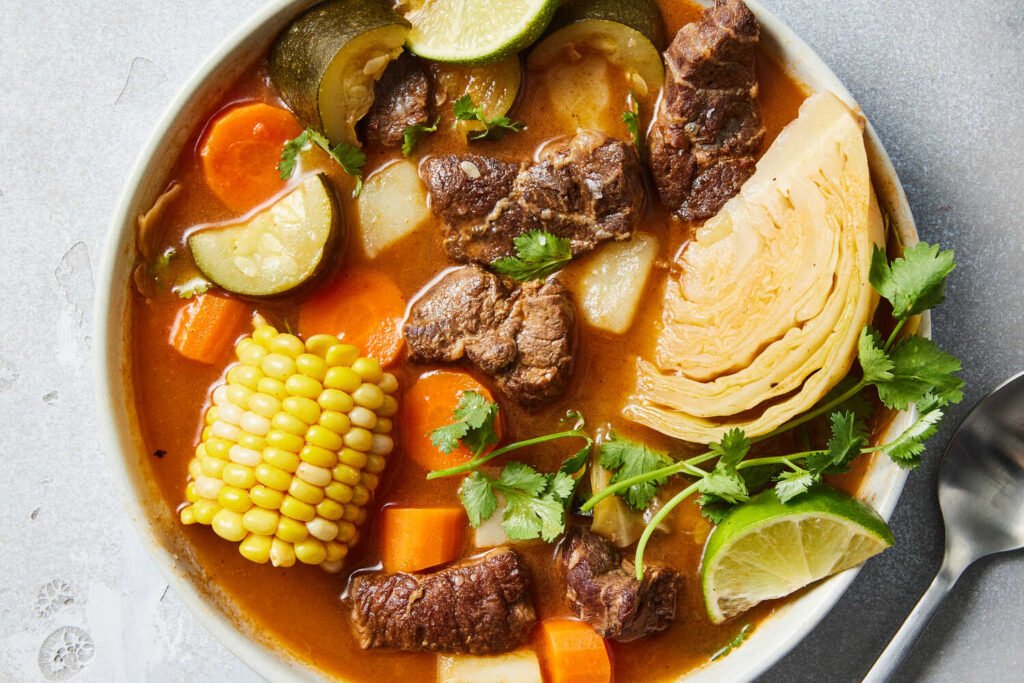
Olla de carne is the great Costa Rican comfort dish — a substantial beef and vegetable soup that is the traditional Sunday lunch of the Costa Rican family and one of the most deeply nourishing dishes in the country’s food culture.
The name translates simply as pot of meat — and the dish is exactly what the name suggests. A large pot in which beef (typically a combination of cuts — bone-in pieces for flavour, meaty cuts for substance) is simmered for hours with a collection of root vegetables and tropical tubers that reflects the extraordinary diversity of Costa Rican agriculture. The vegetables typically include yuca (cassava), ñame (yam), tiquisque (a root vegetable native to Central America), chayote (a mild green squash), corn on the cob cut into sections, plantain, potato, and sweet potato — each contributing its own texture and flavour to the deeply flavoured broth that results from hours of slow cooking.
Olla de carne is served as a complete meal — the broth first as a soup, then the meat and vegetables as the main course, accompanied by white rice and sometimes by a small salad. The cooking time — typically three to four hours for a proper olla de carne — produces a broth of extraordinary depth and a beef that falls from the bone with the pressure of a spoon.
The dish is fundamentally a home cooking preparation — it is rarely found at its best in restaurants but is the dish that Costa Rican families cook on Sundays when time allows the slow preparation it demands. Finding olla de carne at a family-run soda is a genuine discovery — it means the cook has made it from scratch that morning and it will be unlike anything served at a tourist restaurant.
Where to eat it: Family-run sodas that post handwritten daily specials. Sundays are the most likely day to find it. Ask locals where to find the best olla de carne in any town you visit — the answer will lead you to genuine Costa Rican food culture.
What makes it extraordinary: The tiquisque and ñame — the tropical root vegetables that are difficult to find outside Central America — give the broth a starchiness and a particular flavour that is entirely distinctive and entirely Costa Rican.
6. Arroz con Leche — The Sweet Comfort
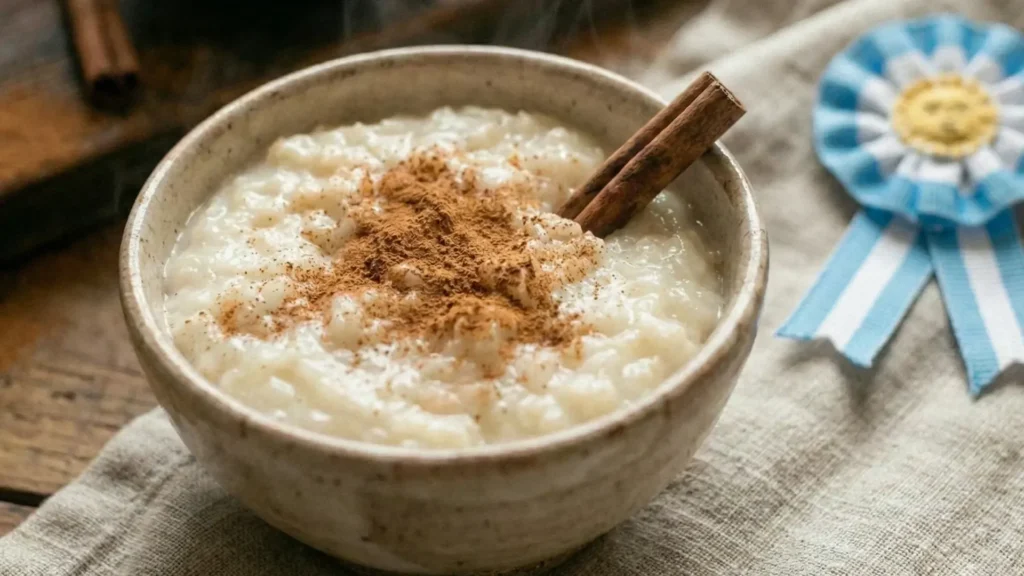
Arroz con leche is Costa Rica’s most beloved dessert — a rice pudding of extraordinary simplicity and extraordinary comfort that appears at every celebration, every family meal, and every soda dessert menu in the country.
The Costa Rican version is made by simmering white rice in whole milk with sugar, cinnamon, and vanilla until the rice is completely soft and the milk has thickened to a creamy consistency. The result is served warm or at room temperature — never cold — with a dusting of ground cinnamon on top and sometimes with a drizzle of condensed milk for additional sweetness.
What distinguishes the Costa Rican arroz con leche from versions found elsewhere in Latin America is its particular creaminess — achieved through the use of full-fat milk and a patient cooking process that allows the rice starches to fully dissolve into the liquid rather than remaining separate from it. The best arroz con leche has a consistency that is simultaneously liquid enough to pour and thick enough to coat a spoon — a balance achieved only through careful attention to the cooking process and the quality of the milk.
Arroz con leche is eaten at any time of day — as a breakfast dish, as a midday dessert at the soda, or as an evening comfort food. It is one of the most universal foods in Costa Rica — eaten by every age group, at every economic level, and in every region of the country.
Where to eat it: Any soda that makes it fresh — the arroz con leche that has been sitting in a refrigerator since the morning is significantly inferior to the version served warm from the pot. Ask whether it is fresh and warm before ordering.
The variation to try: Arroz con leche made with coconut milk rather than dairy milk — a Caribbean coast variation that reflects the Afro-Costa Rican culinary tradition and is extraordinary in its own right.
7. Tamales — The Christmas Tradition
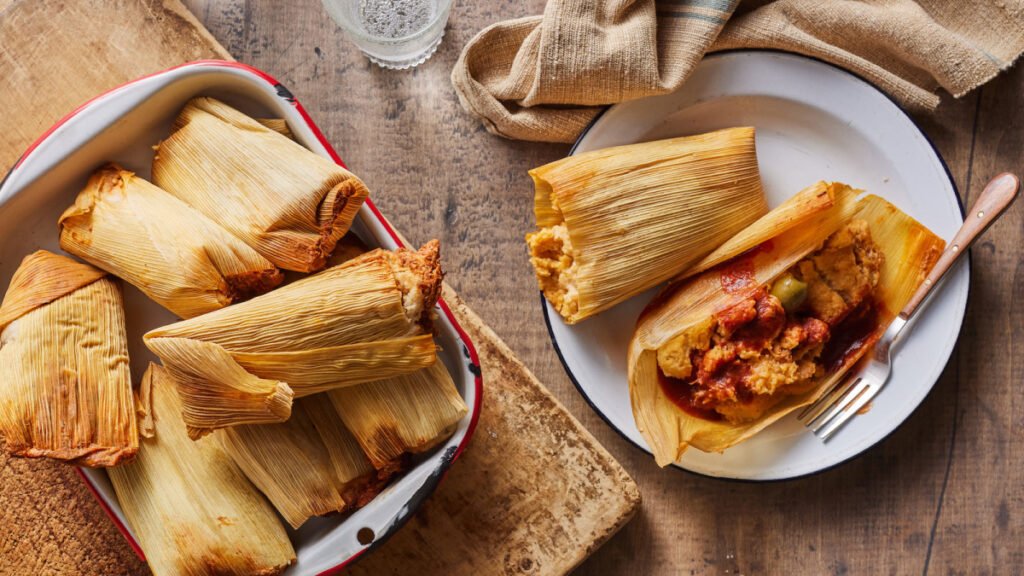
Costa Rican tamales are among the finest in Central America and are the dish most deeply associated with the country’s Christmas and New Year celebrations — a preparation so labour-intensive and so central to the cultural life of the holiday season that the making of tamales is itself a family event, involving multiple generations working together over an entire day.
The Costa Rican tamal differs significantly from the Mexican version. Rather than a corn masa filled with meat or cheese and steamed in a corn husk the Costa Rican tamal uses a masa made from corn flour mixed with lard and chicken broth to a soft, almost liquid consistency — this softer masa is spread onto a banana leaf rather than a corn husk, filled with a combination of seasoned pork or chicken, rice, a piece of potato or carrot, an olive, a prune, and sometimes a small piece of sweet pepper, then wrapped tightly in the banana leaf and tied with string before being cooked in boiling water.
The banana leaf imparts a subtle flavour to the masa during cooking that is entirely characteristic of Costa Rican tamales — a faint green, slightly grassy note that is impossible to replicate with any other wrapping material. The masa itself is extraordinarily soft and rich — the lard gives it a flavour and a texture that is simultaneously indulgent and comforting.
Tamales in Costa Rica are always made in large quantities — the minimum unit of production is the piña, a pair of tamales tied together and cooked as a unit. A family making tamales for Christmas will typically produce dozens of piñas — enough to feed the extended family over several days and to give as gifts to neighbours and friends.
Where to eat them: The finest tamales in Costa Rica are always home-made. If you are fortunate enough to be invited to share tamales with a Costa Rican family during the December holiday season the experience is genuinely irreplaceable. Outside the holiday season tamales are available at sodas and markets year-round — look for the handmade versions rather than the commercially produced ones.
When to eat them: December and January are the primary tamal season — the combination of the holiday tradition and the cooler temperatures of the dry season beginning make this the time when tamales are at their most culturally significant and most widely available.
8. Patacones — The Addictive Side Dish
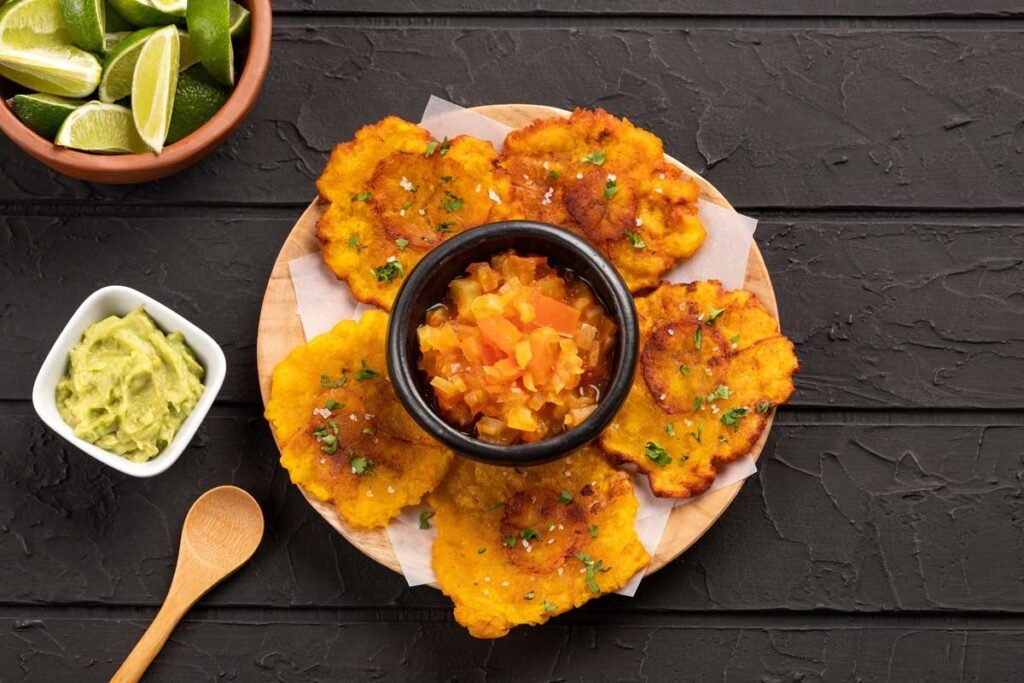
Patacones are twice-fried green plantain — one of the most satisfying, most versatile, and most universally loved foods in Costa Rica and throughout Central America and the Caribbean. They are simultaneously a side dish, a snack, a vehicle for toppings, and in their most elaborate form a complete meal in their own right.
The preparation is simple but technique-dependent. Green plantains — unripe, starchy, and completely unlike the sweet ripe plantains used in other preparations — are cut into thick rounds and fried in oil until golden but not yet crispy. They are then removed from the oil, pressed flat with a heavy object (traditionally the flat of a kitchen mallet or the bottom of a heavy glass) until they are thin discs, then returned to the hot oil and fried again until deeply golden and completely crispy on the outside while remaining slightly soft in the centre.
The result is a disc of compressed, twice-fried plantain with a texture that combines the crunch of a chip with the substance of a proper starch — sturdy enough to hold toppings but light enough to eat by the plateful without heaviness. The flavour is mildly savoury with the characteristic starchiness of unripe plantain and the deep toasty note that comes from the double frying.
Patacones are served as a side dish alongside fish, chicken, or ceviche at beach sodas throughout Costa Rica. They are served as a topping vehicle — piled with black beans, avocado, fresh cheese, and pico de gallo as a snack or light meal. And they are served plain with a sprinkle of salt as a bar snack that disappears within minutes of arrival at the table.
Where to eat them: Any beach soda on either coast. The finest patacones in Costa Rica are found at small fish restaurants on the Pacific coast — served alongside a whole fried fish with a wedge of lime and a cold Imperial.
The topping to try: Patacones con frijoles negros y queso — patacones topped with seasoned black beans and fresh white cheese — is the most satisfying and most Costa Rican of all the topping combinations.
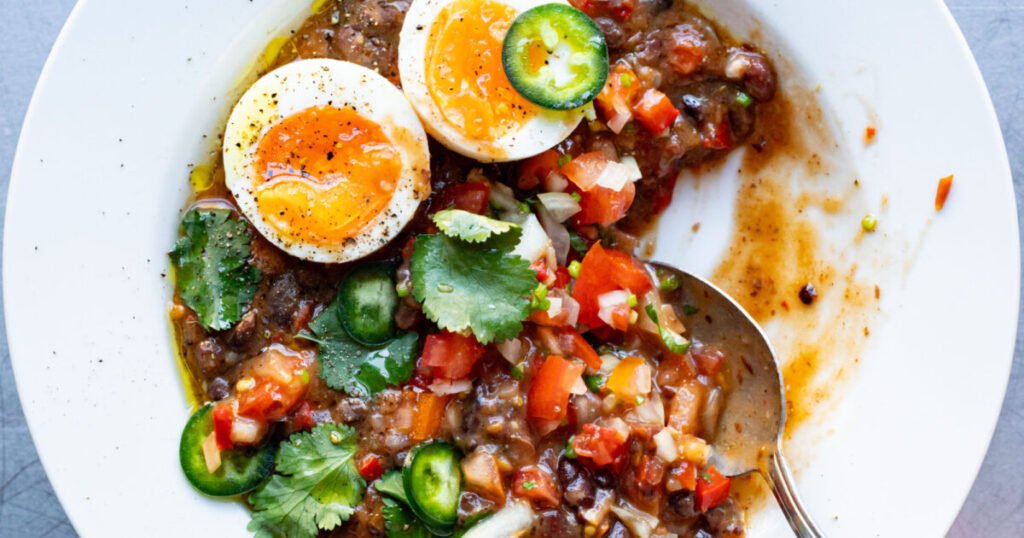
9. Sopa Negra — The Black Bean Meditation
Sopa negra is one of the most quietly extraordinary dishes in Costa Rican food culture — a black bean soup of remarkable depth and flavour that is simultaneously one of the simplest and one of the most sophisticated preparations in the country’s culinary repertoire.
The soup is made by cooking black beans from scratch with garlic, onion, sweet pepper, fresh coriander, and culantro (a herb related to coriander but more intensely flavoured) until completely soft, then blending a portion of the beans to thicken the broth while leaving the remainder whole to give the soup body and texture. The resulting liquid is a deep, almost black colour — hence the name — with a flavour of extraordinary complexity and depth that speaks of the hours of slow cooking and the quality of the beans.
A traditional serving of sopa negra is completed at the table — a soft-poached egg is added to the bowl of hot soup and sinks beneath the surface, cooking gently in the residual heat. The egg is broken at the table by the diner — the yolk running into the dark soup and enriching it further. The combination of the deeply flavoured black bean broth and the soft poached egg is one of the most satisfying and most comforting food experiences available in Costa Rica.
Sopa negra is served with a garnish of finely chopped white onion, fresh coriander, and a squeeze of lime — the fresh acidity of the lime cutting through the richness of the soup and bringing the flavours into balance.
Where to eat it: Sodas throughout the country serve sopa negra — it is one of the most reliable menu items at any good soda because the quality of the soup reveals immediately the quality of the kitchen. A soda that makes good sopa negra makes good food generally.
What makes it extraordinary: The culantro — the fresh herb that is more intensely flavoured than ordinary coriander and that gives the Costa Rican sopa negra its distinctive character. Without culantro the soup is good. With it the soup is extraordinary.
10. Maduros — The Sweet Counterpoint
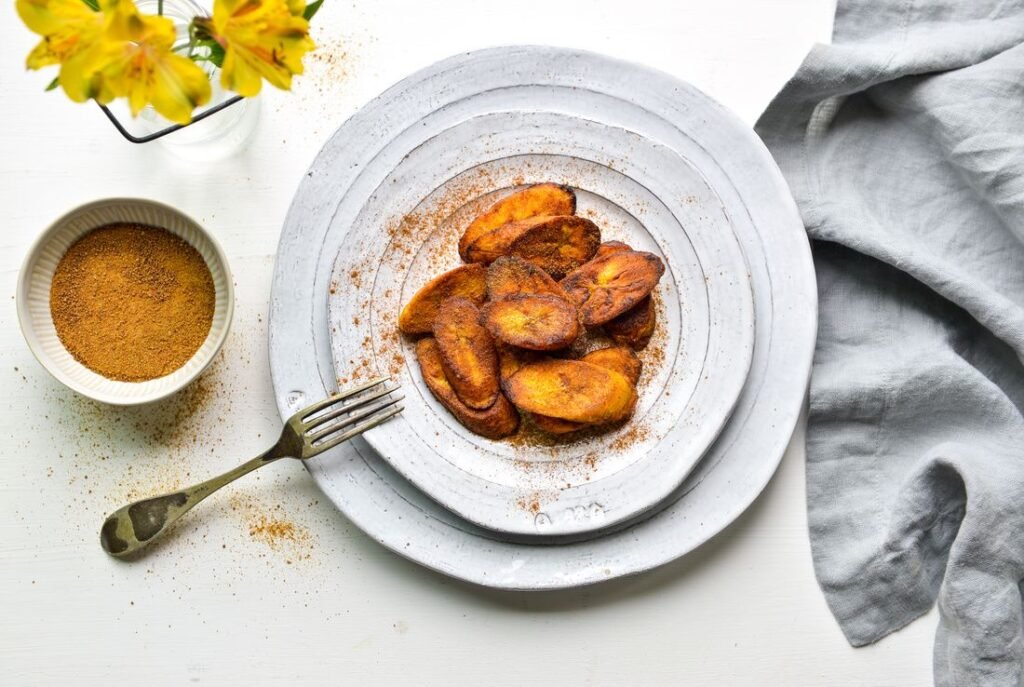
Maduros are fried ripe plantains — one of the most universally present foods in Costa Rican cuisine and one of the most misunderstood by visitors who encounter them for the first time.
The maduro is made from a fully ripe plantain — not the green, starchy fruit used for patacones but the deeply yellow, almost black-skinned fruit that has been allowed to ripen until its starches have converted almost entirely to sugars and its flesh is soft, sweet, and intensely flavoured. The ripe plantain is cut diagonally into thick slices and fried in oil until caramelised on the outside — the natural sugars darkening and intensifying against the heat of the pan — while remaining soft and almost custardy in the centre.
The result is a food that occupies the space between a side dish and a dessert — sweet but not sugar-sweet, rich but not heavy, with a depth of flavour that comes entirely from the quality of the fruit and the caramelisation of its natural sugars. Maduros appear at virtually every Costa Rican meal — alongside gallo pinto at breakfast, as part of the casado at lunch, as an accompaniment to grilled fish at dinner.
The best maduros are made from plantains that have been allowed to ripen to the edge of overripeness — almost black skinned, extremely soft to the touch — a degree of ripeness that many visitors to markets mistake for spoilage. The more ripe the plantain the sweeter and more flavourful the maduro.
Where to eat them: Everywhere. Maduros appear at every soda in the country. The finest versions are made with plantains ripened to their maximum sweetness and fried in fresh oil at high temperature for maximum caramelisation.
The version to seek: Maduros con queso — ripe plantain fried with a slice of white cheese melted on top — is an extraordinarily good combination that appears at some sodas and is one of the finest simple food pleasures available in Costa Rica.
11. Ceviche de Palmito — The Rainforest Ceviche
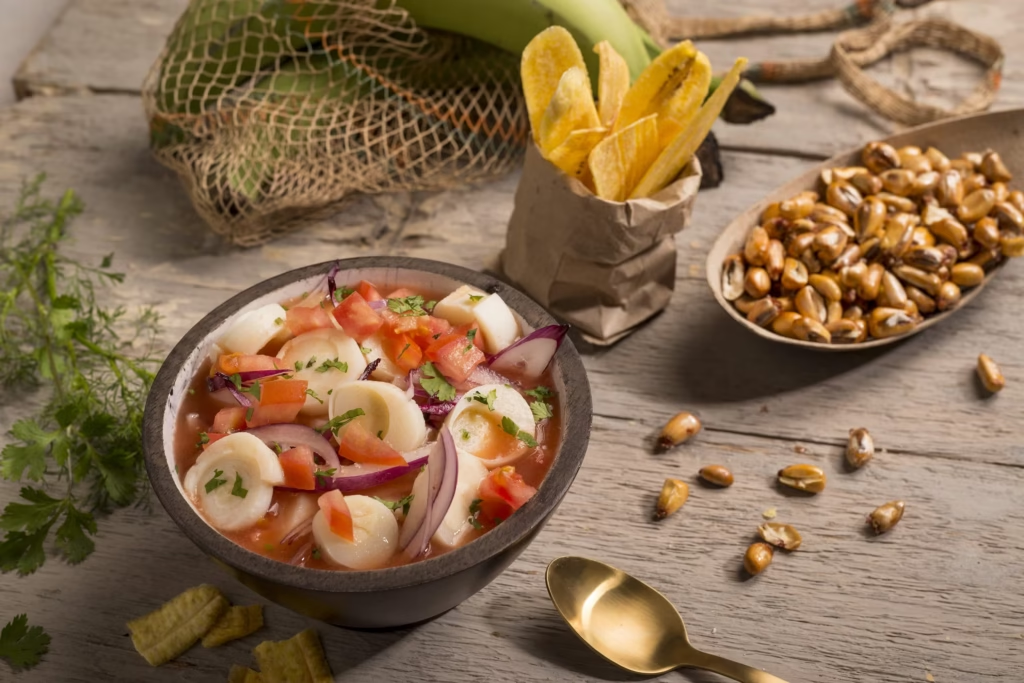
Palmito ceviche is one of the most distinctive and most interesting dishes in Costa Rican cuisine — a preparation that replaces the fish of the standard ceviche with heart of palm, creating a dish that is simultaneously thoroughly Costa Rican and entirely plant-based.
Heart of palm — the soft inner core of certain palm trees, harvested from cultivated palmito palms in the Costa Rican countryside — has a texture and a mild, slightly nutty flavour that makes it an extraordinary vehicle for the lime, coriander, onion, and sweet pepper marinade of the traditional ceviche preparation. The palmito absorbs the lime juice and the herb flavours in a way that is remarkably similar to the way fresh fish does — the result is a dish that satisfies the same craving as fish ceviche while offering an entirely different and entirely plant-based flavour profile.
Palmito ceviche is served at sodas and restaurants throughout Costa Rica — it appears on menus both as a standalone dish and as an option for vegetarians at establishments that otherwise serve fish ceviche. It is one of the finest examples of Costa Rican culinary creativity — a dish that takes an extraordinary local ingredient and applies the techniques of the country’s most beloved preparation to produce something genuinely new.
Where to eat it: Sodas and restaurants throughout the country. The Mercado Central in San José has excellent palmito ceviche at the market’s vegetable and prepared food counters.
Why it matters: Palmito ceviche is evidence that Costa Rican cuisine has a depth and creativity that extends beyond its foundational dishes. It is also evidence of the extraordinary quality of Costa Rica’s agricultural produce — heart of palm fresh from a local plantation is utterly different from the canned version available internationally.
12. Arroz con Pollo — The Celebration Rice
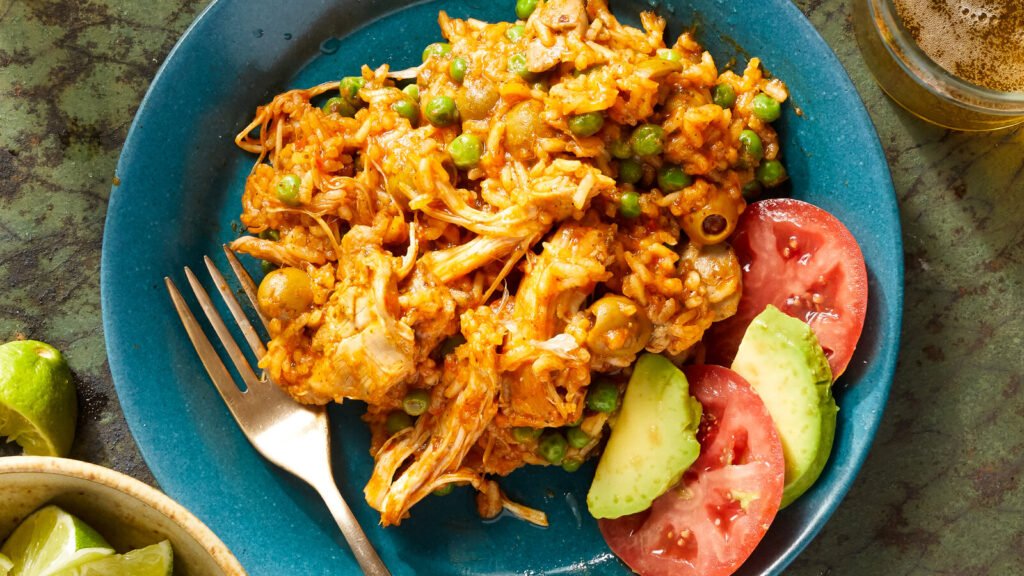
Arroz con pollo is one of the most beloved dishes in Costa Rican family cooking — a rice and chicken preparation that appears at celebrations, family gatherings, and Sunday lunches throughout the country and that reveals the Costa Rican ability to transform simple ingredients into something of genuine warmth and depth.
The Costa Rican version differs significantly from similar dishes elsewhere in Latin America. The chicken is cooked first — simmered with onion, garlic, sweet pepper, tomato, and fresh herbs until tender and deeply flavoured. The chicken is removed and shredded. The cooking broth is used to cook the rice — absorbing all the flavour of the chicken cooking liquid and turning a deep golden colour. The shredded chicken is returned to the rice along with a mixture of finely diced vegetables — carrot, sweet pepper, onion, peas — and the whole dish is finished with fresh coriander and a seasoning of Salsa Lizano.
The result is a dish of considerable flavour and considerable comfort — the rice deeply flavoured from the chicken broth, the shredded chicken distributed throughout giving every spoonful a combination of rice and meat, and the vegetables adding colour, texture, and freshness. It is served at room temperature or slightly warm — never piping hot — which makes it ideal for buffet service at parties and family gatherings.
Where to eat it: Family-run sodas throughout the country. Arroz con pollo is a reliable indicator of a kitchen that cooks from scratch — it cannot be effectively made from pre-cooked components and a soda that serves good arroz con pollo is cooking everything from scratch.
What makes it extraordinary: The use of the chicken cooking broth to cook the rice — the technique that transforms plain rice into something deeply flavoured and entirely distinctive.
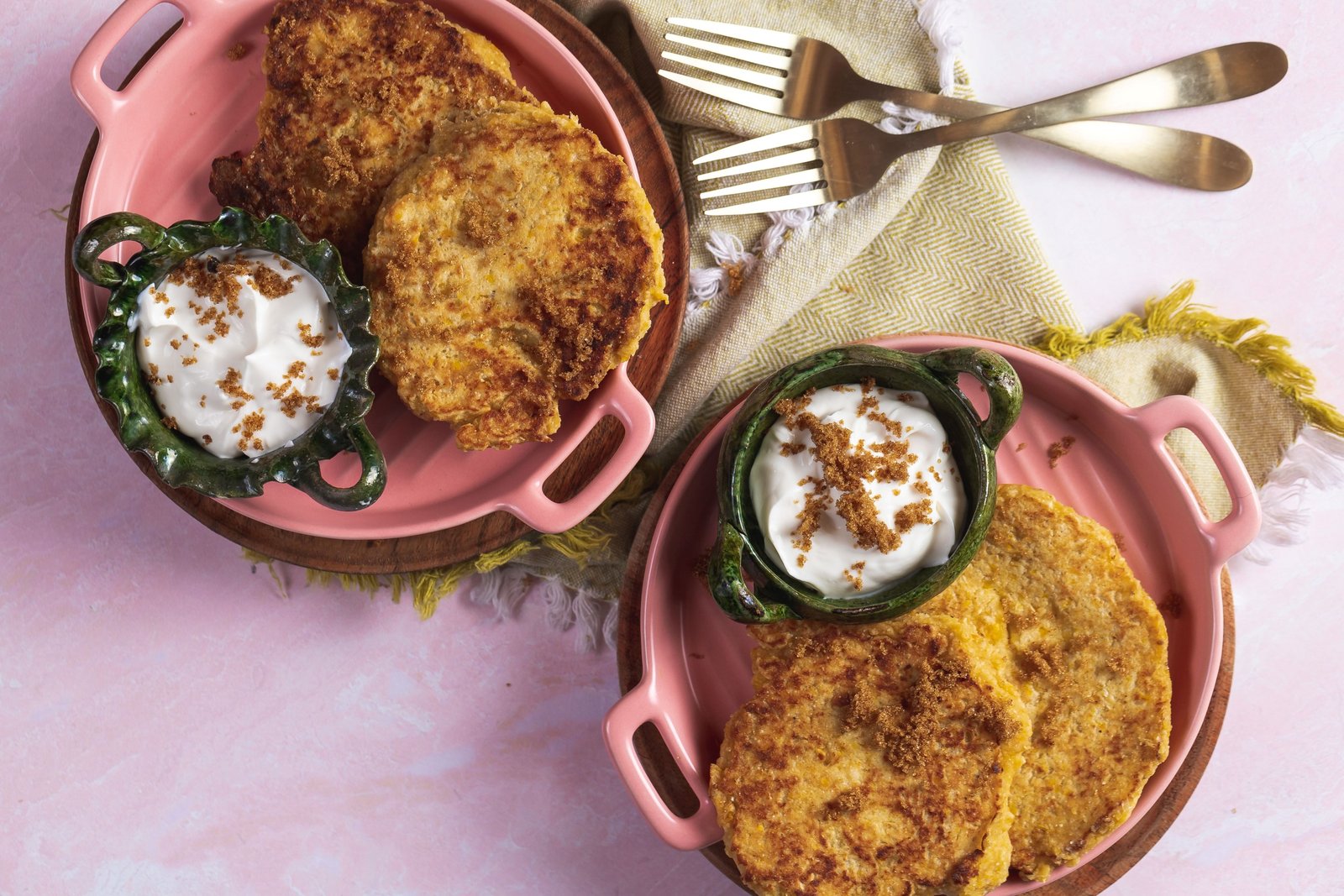
13. Chorreadas — The Corn Pancake
Chorreadas are Costa Rica’s most beloved corn pancake — a slightly sweet, slightly crispy, entirely addictive corn-based preparation that is eaten at breakfast, as a snack, and as a side dish throughout the country and that is one of the most distinctively Costa Rican foods available.
Chorreadas are made from fresh corn — grated directly from the cob to produce a wet, sweet batter — mixed with a small amount of flour, sugar, and salt. The batter is poured onto a griddle or comal and cooked until the edges set and the surface develops a light golden colour, then flipped and cooked briefly on the second side. The result is a pancake with a texture that is simultaneously slightly crispy at the edges and soft in the centre — with the sweetness and the characteristic flavour of fresh corn in every bite.
The finest chorreadas are made with fresh corn at the height of the season — when the corn is sweet, moist, and intensely flavoured. The batter should be made immediately before cooking — chorreadas made from fresh-grated corn that has been sitting for hours are significantly inferior to those made from batter prepared moments before cooking.
Chorreadas are served with natilla — soured cream — on the side for dipping or spreading. The combination of the sweet corn pancake and the tart, creamy natilla is one of the most distinctive and most satisfying flavour combinations in Costa Rican food culture.
Where to eat them: Sodas and markets throughout the country. The Feria del Agricultor — the Saturday farmers market held in many Costa Rican towns — is one of the finest places to eat chorreadas made with the freshest possible corn by vendors who have been perfecting their recipe for decades.
When to eat them: At breakfast, with a cup of Costa Rican coffee. The combination of freshly made chorreadas, natilla, and excellent coffee is one of the finest breakfast experiences available in Central America.
14. Rondon — The Caribbean Coast Treasure
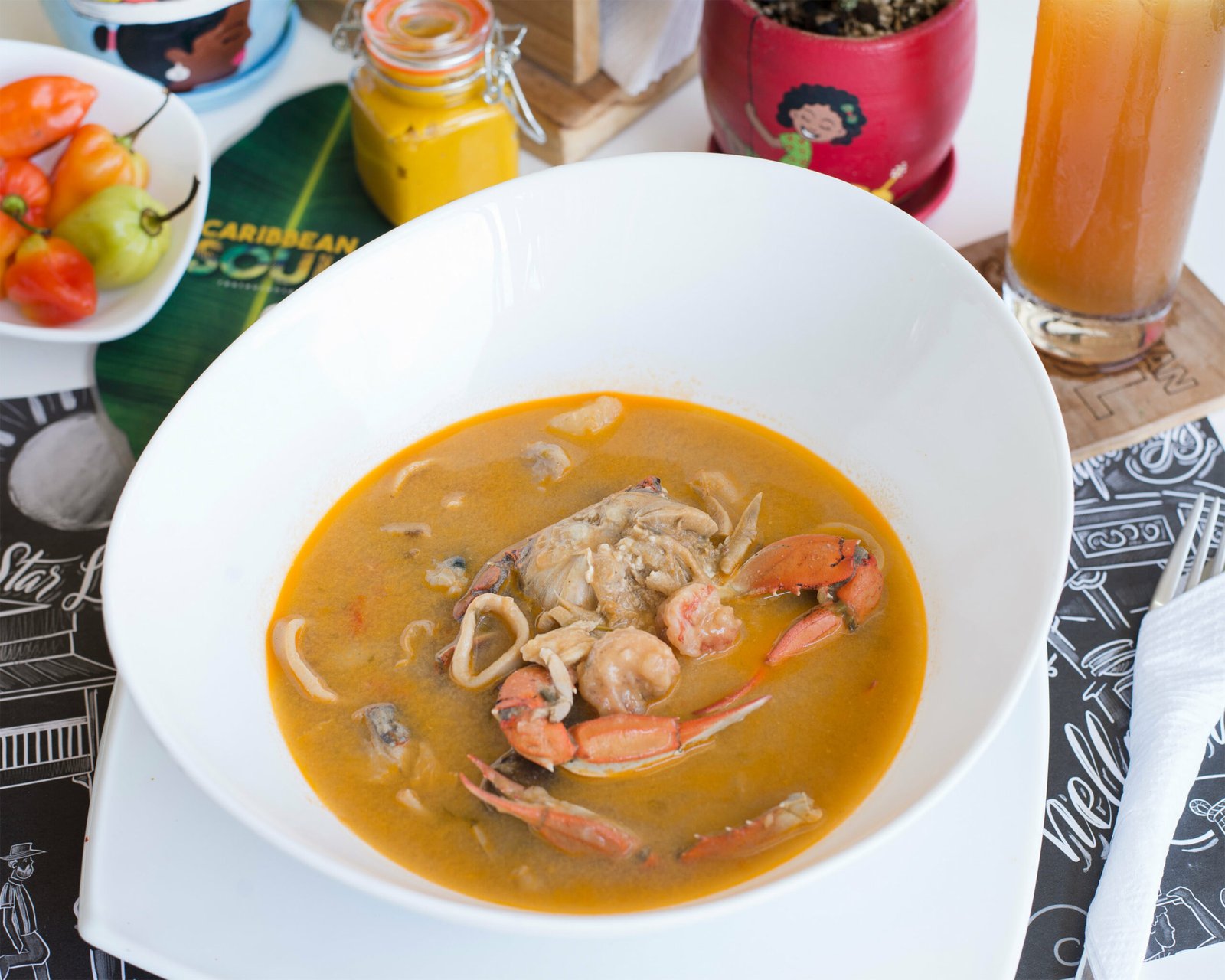
Rondon is the defining dish of Costa Rica’s Caribbean coast — a rich, coconut milk-based seafood and root vegetable stew that reflects the Afro-Caribbean culinary tradition of the Limón province and that is entirely distinct from anything found on the Pacific side of the country.
The name comes from the English phrase run down — a reference to the technique of running down or reducing coconut milk to concentrate its flavour before adding the other ingredients. The dish was brought to Costa Rica’s Caribbean coast by Afro-Caribbean workers who came to the region in the 19th century to build the Atlantic railroad and stayed, establishing communities whose culinary traditions remain distinct and extraordinarily vibrant more than a century later.
A traditional rondon begins with fresh coconut milk — not canned but extracted from freshly grated coconut — which is simmered until it reduces and begins to separate slightly. Into this rich, concentrated coconut base go whatever fish and shellfish are freshest from the Caribbean that day — typically a combination of whole fish, shrimp, crab, and sometimes lobster. Then come the root vegetables — yuca, ñame, breadfruit, green plantain, and whatever other tubers the cook has available — which absorb the extraordinary flavour of the coconut-seafood broth during the slow cooking process. The seasoning is Caribbean — fresh thyme, garlic, scotch bonnet pepper (used with restraint to add warmth rather than heat), and salt.
The result is one of the most complex and most deeply flavoured dishes in all of Costa Rica — a stew of extraordinary richness and Caribbean character that tastes entirely different from anything available on the Pacific coast. The coconut milk, the combination of seafood and root vegetables, and the Caribbean herb and spice profile create a dish that is immediately recognisable as belonging to a distinct and distinguished culinary tradition.
Where to eat it: Puerto Viejo de Talamanca and the surrounding Caribbean coast communities. The finest rondon is cooked by families of Afro-Caribbean heritage in the communities around Puerto Viejo — ask locally for the best home-style rondon rather than relying on tourist-oriented restaurants.
What makes it extraordinary: The fresh coconut milk — extracted from coconuts that were growing on the tree yesterday — gives the rondon a freshness and a coconut flavour of extraordinary intensity that canned coconut milk cannot replicate. If you see someone selling fresh coconut milk near a restaurant or soda selling rondon on the Caribbean coast you are in exactly the right place.
15. Tres Leches — The Cloud Cake
Tres leches — three milks — is Costa Rica’s most beloved celebration cake and one of the finest desserts in Latin American food culture. It is a dish of extraordinary simplicity in concept and extraordinary indulgence in reality — a light sponge cake soaked in a combination of three dairy liquids until it becomes something between a cake and a pudding, simultaneously the lightest and the most luxurious dessert imaginable.
The three milks of the name are evaporated milk, condensed milk, and heavy cream — combined in specific proportions and poured over the freshly baked sponge while it is still warm, allowing the liquid to penetrate completely through the cake and transform every cell of the sponge from a dry, airy structure into a saturated, custardy, extraordinarily tender vehicle for the combined flavours of the three dairy components.
The soaked cake is then refrigerated — the cold temperature helping the liquid set slightly and the flavours to develop and combine — before being topped with a layer of lightly sweetened whipped cream and served cold. The combination of the liquid-saturated cake and the airy cream topping creates a texture that is unlike any other dessert — extraordinarily moist without being wet, sweet without being cloying, rich without being heavy.
Tres leches in Costa Rica is made for birthdays, for quinceañeras, for weddings, for national holidays, and for any occasion significant enough to warrant a proper celebration cake. The quality varies enormously — the finest versions are made with high-quality dairy, a properly aerated sponge, and the patience to allow the soaking liquid to penetrate fully. The inferior versions — dense sponge incompletely soaked and topped with commercial whipped cream — give little indication of how extraordinary the dish can be at its best.
Where to eat it: Sodas and bakeries that make it fresh — tres leches is one of the easiest desserts to make badly and one of the most rewarding to make well. Look for bakeries in residential neighbourhoods rather than tourist areas for the finest versions.
The variation to try: Tres leches flavoured with coffee — using strong Costa Rican coffee as a fourth liquid in the soaking mixture — is an extraordinarily good version that combines two of Costa Rica’s finest food traditions in a single extraordinary dessert.

The Ingredients That Make Costa Rican Food Extraordinary
Salsa Lizano
No guide to Costa Rican food is complete without a dedicated discussion of Salsa Lizano — the bottled condiment that has been produced in Costa Rica since 1920 and that is as fundamental to the country’s food culture as soy sauce is to Japanese cooking or fish sauce is to Thai.
Salsa Lizano is a thin, dark brown sauce made from water, sugar, salt, vegetables, and spices — mild, slightly sweet, with a complex savoury depth that is difficult to define but immediately identifiable once you have tasted it. It is added to gallo pinto during cooking, splashed over casados at the table, drizzled over chifrijo, mixed into marinades for grilled meat, and used as a condiment for virtually everything in Costa Rican food culture.
Bottles of Salsa Lizano are available at every supermarket in Costa Rica and make the finest food souvenir available — genuinely useful, entirely authentic, and capable of recreating the flavour of Costa Rican food at home more effectively than any other single ingredient.
Culantro
Culantro — not to be confused with cilantro — is a herb related to coriander but significantly more intense in flavour, with long serrated leaves and an aroma that is simultaneously similar to and more powerful than ordinary fresh coriander. It is used throughout Costa Rican cooking — in sopa negra, in gallo pinto, in bean preparations, and in soups — and gives Costa Rican food a herbal character that is distinctive and irreplaceable.
Culantro is difficult to find outside Central America and the Caribbean — one of the reasons that Costa Rican food prepared abroad rarely tastes precisely like Costa Rican food prepared in Costa Rica.
Chayote
Chayote is a mild, slightly crisp green squash that appears in Costa Rican cooking in an extraordinary variety of contexts — in olla de carne, in salads, in gratins, as a side vegetable, and in some sweet preparations. Its mild flavour and adaptable texture make it one of the most versatile vegetables in the Costa Rican kitchen and its appearance at virtually every soda is one of the clearest markers of genuinely Costa Rican cooking.
Where to Eat: The Honest Guide
The Soda — The Foundation
The soda is the most important food institution in Costa Rica — a small, family-run restaurant serving home-style Costa Rican food at prices accessible to working people. The best sodas cook everything from scratch daily, change their menu based on what is fresh and available, and serve food with the straightforward generosity of home cooking.
Identifying a good soda is straightforward. Full tables of local workers at midday. A handwritten or simple printed daily menu. The sound and smell of active cooking. A proprietor who is also the cook. Prices that reflect local rather than tourist economics.
The Mercado Central — San José
The Mercado Central in San José is the finest single food destination in Costa Rica — a covered market in the heart of the capital where dozens of small food counters and stalls serve an extraordinary variety of Costa Rican food at prices that are among the lowest in the city. The ceviche counters, the casado stalls, the fruit juice vendors, and the coffee bars of the Mercado Central represent Costa Rican food culture at its most authentic and most accessible.
The Feria del Agricultor — Farmers Markets
The Saturday farmers markets held in towns throughout Costa Rica are extraordinary food destinations — fresh produce of remarkable quality sold directly by the farmers who grow it, alongside prepared food vendors selling everything from chorreadas to tamales to fresh fruit juices.
Final Thoughts: Eating in Costa Rica
Costa Rican food rewards patience and rewards the willingness to eat where Costa Ricans eat rather than where tourists are expected to eat. The finest food in the country is served at small sodas in non-tourist neighbourhoods, at farmers markets on Saturday mornings, at family celebrations to which visitors are occasionally and generously invited, and at beach-side stands where the fish was caught this morning and the ceviche was made an hour ago.
The philosophy of Costa Rican food — honest ingredients, straightforward preparation, generous serving — is the same philosophy that defines the country’s broader approach to life. The Pura Vida that Costa Ricans use to greet each other, to farewell each other, and to describe everything from good weather to good fortune is expressed in the food as much as anywhere else.
Eat the gallo pinto. Order the casado. Find the soda where the locals eat lunch. Ask for the sopa negra. Try the rondon on the Caribbean coast. And accept the arroz con leche when it is offered — because in Costa Rica food is never just food. It is hospitality. It is community. It is the most direct expression of Pura Vida available to anyone fortunate enough to be at the table.