
Costa Rica punches well above its weight in almost every category of adventure travel — and white water rafting is no exception. Despite covering less than 0.03% of the earth’s surface, this small Central American nation contains an extraordinary concentration of world-class rivers, shaped by two mountain ranges, eleven active volcanoes, and some of the highest rainfall totals on earth.
The rivers here drop fast and hard from the volcanic highlands to the coast — carving through dense rainforest, past towering canyon walls, and through landscapes of breathtaking natural beauty that make every rafting trip something more than just an adrenaline experience. You might paddle past troops of howler monkeys crashing through the canopy, spot a resplendent quetzal perched above a waterfall, or glide through a cathedral of tropical vegetation so dense it blocks out the sky.
Costa Rica’s rafting scene caters to every level of experience and every kind of traveller. Families with young children can enjoy gentle floats through wildlife-rich jungle. Couples looking for a shared adventure can tackle moderate Class III rapids with confidence. Hardcore paddlers can test themselves on some of the most technically demanding whitewater in Central America. And everyone, regardless of experience level, gets to experience the singular magic of moving through a Costa Rican river landscape at water level.
This guide will walk you through the best rivers in the country, explain what each one offers, and help you choose the perfect rafting experience for your trip.
Understanding Whitewater Classifications
Before diving into the specific rivers, it helps to understand the international whitewater classification system, which rates rapids from Class I to Class VI:
Class I — Easy Gentle, moving water with small waves and no significant obstacles. Suitable for everyone including young children and non-swimmers with life jackets. Minimal paddling skill required.
Class II — Novice Straightforward rapids with clear channels. Some maneuvering required but easy to navigate. Suitable for beginners with basic instruction.
Class III — Intermediate Moderate, irregular waves and more complex rapids requiring maneuvering. Some experience or a good guide is helpful. The most popular level for recreational rafting — exciting but manageable for most physically fit adults.
Class IV — Advanced Powerful, turbulent rapids with large waves, holes, and constricted passages requiring precise boat control. Prior rafting experience recommended. Not suitable for children or weak swimmers.
Class V — Expert Extremely difficult, violent, and unpredictable rapids. Long, powerful sequences with unavoidable obstacles. Suitable only for experienced paddlers in excellent physical condition with professional guides.
Class VI — Extreme/Unrunnable Generally considered unraftable. Attempted only by elite specialists under perfect conditions with full rescue support.
Most Costa Rican rivers offer a mix of classifications within a single trip, providing variety and a natural rhythm of excitement and recovery throughout the day.
The Best Rafting Rivers in Costa Rica
1. Río Pacuare — The Crown Jewel of Costa Rican Rafting
Difficulty: Class III–IV Best For: Intermediate to advanced paddlers, adventure seekers, nature lovers Location: Caribbean slope, Turrialba region Trip Duration: Full day (one-day) or 2–3 day multi-day expedition Season: Year-round, best October–March
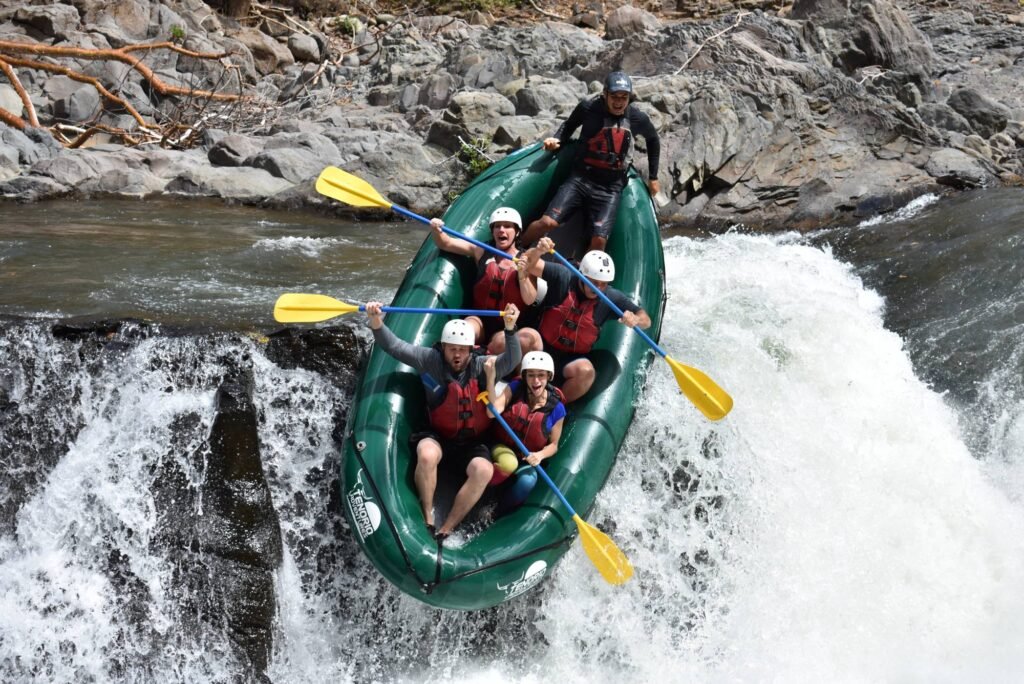
If there is one river in Costa Rica that every serious rafter should experience at least once, it is the Río Pacuare. Consistently ranked among the top ten whitewater rivers in the world by international rafting organisations and adventure travel publications, the Pacuare is a 28-kilometre stretch of Class III–IV rapids set within one of the most spectacularly beautiful river canyons in Central America.
The Pacuare drops through a narrow, densely forested gorge where sheer canyon walls rise up to 100 metres on either side, waterfalls cascade directly into the river from the jungle above, and the entire corridor feels remote, wild, and completely untouched by the modern world. The river passes through indigenous Cabécar territory and flows through a protected biodiversity corridor that is home to jaguars, tapirs, river otters, poison dart frogs, and dozens of species of birds found nowhere else.
The rapids themselves are outstanding — a series of technical Class III and IV sections with evocative names like Upper Huacas, Magnetic Rock, and the Double Drop that provide genuine challenge and excitement without being recklessly dangerous. Between rapids, the river settles into long, peaceful pools where you can float on your back, look up at the jungle canopy, and feel the particular, profound stillness of being deep in a tropical wilderness with no road access and no phone signal.
The Multi-Day Pacuare Experience The most memorable way to experience the Pacuare is on a 2 or 3-day expedition that includes overnight camping or lodge stays on the river. Several tour operators offer overnight packages at remote jungle lodges — most notably Pacuare Lodge, one of the most acclaimed eco-lodges in Central America — reachable only by raft or a long jungle walk. Spending a night deep in the Pacuare canyon, falling asleep to the sound of the river and waking to the calls of howler monkeys and toucans, is an experience that ranks among the finest in Costa Rican adventure travel.
Operators to Consider: Rios Tropicales — the pioneer of Pacuare rafting — and Exploradores Outdoors are both highly regarded operators with excellent safety records, knowledgeable guides, and outstanding service on the river.
Practical Tips: Book well in advance during peak season (December–March). Most operators include transport from San José or La Fortuna, a riverside lunch, and all equipment. Bring a waterproof bag for valuables, a change of dry clothes, and sunscreen. The put-in is approximately 2.5 hours from San José.
2. Río Reventazón — Costa Rica’s Most Varied River
Difficulty: Class II–V (multiple sections) Best For: All levels — different sections suit beginners through experts Location: Caribbean slope, Turrialba region Trip Duration: Half day to full day Season: Year-round
The Río Reventazón — whose name translates as “the bursting river” — flows parallel to the Pacuare through the Caribbean slopes of the Talamanca mountain range and offers Costa Rica’s most varied single-river rafting experience. Different sections of the Reventazón cater to dramatically different skill levels, making it possible for families, beginners, and expert paddlers to all find their ideal experience on the same river.
The Pejibaye Section (Class II–III) The gentlest and most family-friendly section of the Reventazón, the Pejibaye offers easy Class II–III rapids through beautiful agricultural valleys and secondary forest. Suitable for children as young as six and anyone looking for a fun, accessible introduction to whitewater rafting in a scenic setting.
The Pascua Section (Class III–IV) The most popular intermediate section, combining exciting Class III–IV rapids with impressive canyon scenery and excellent wildlife viewing opportunities. This is a full-day trip that represents a genuinely satisfying middle ground between the gentleness of the Pejibaye and the intensity of the expert sections.
The Peralta Section (Class IV–V) The most technically demanding section of the Reventazón — a 14-kilometre stretch of powerful, continuous Class IV–V rapids that represents one of the most challenging commercial rafting experiences in Central America. Suitable only for experienced paddlers in excellent physical condition. The Peralta Section was a venue for whitewater events at the 1996 Atlanta Olympics, which gives some indication of its calibre.
Important Note: The construction of the Cachí Dam has reduced water flow in some sections of the Reventazón during dry season. Check current conditions with operators before booking, particularly for the more demanding sections.
3. Río Sarapiquí — Jungle Rafting for All Levels
Difficulty: Class II–IV Best For: Beginners, intermediate paddlers, wildlife enthusiasts, families Location: Northern lowlands, Sarapiquí region Trip Duration: Half day to full day Season: Year-round, best during rainy season (May–November) for higher water
The Sarapiquí is Costa Rica’s most underrated rafting river — a beautiful, wildlife-rich waterway flowing through the lowland rainforests of the northern Caribbean slope that offers excellent rafting in one of the most biodiverse regions in the country.
The river flows through a landscape of primary and secondary rainforest that forms part of a vital biological corridor connecting the Central Volcanic Mountain Range with the Caribbean lowlands. Rafting the Sarapiquí means paddling past riverbanks alive with wildlife — basilisk lizards running across the water surface, caimans sunbathing on sandy beaches, kingfishers diving from overhanging branches, and troops of spider and howler monkeys crashing through the canopy above.
The rafting itself is a wonderful mix of exciting Class III–IV rapids and long, peaceful stretches of flat water — making it ideal for those who want a good balance of adrenaline and relaxed wildlife observation. The river is also one of the best in Costa Rica for beginners, with the easier upper sections offering a gentle and confidence-building introduction to whitewater.
The Sarapiquí region is increasingly popular as a standalone eco-tourism destination — combining a rafting trip with a visit to the La Selva Biological Station (one of the most studied rainforest ecosystems in the world) or a night at one of the excellent eco-lodges along the river makes for one of the most complete and rewarding regional experiences in Costa Rica.
Best Operators: Hacienda Pozo Azul and Aguas Bravas both offer excellent guided trips on the Sarapiquí with knowledgeable naturalist guides who enhance the wildlife viewing dimension of the experience.
4. Río Tenorio — A Hidden Gem for Intermediate Paddlers
Difficulty: Class III–IV Best For: Intermediate paddlers seeking less crowded alternatives Location: Guanacaste, near Tenorio Volcano National Park Trip Duration: Half day to full day Season: Rainy season (May–November) when water levels are adequate
The Río Tenorio flows from the slopes of Tenorio Volcano — famous for the extraordinary turquoise blue waters of Río Celeste, whose colour is caused by a chemical reaction between volcanic minerals — through the remote Guanacaste highlands before descending through dramatic gorges and dense forest to the lowlands.
The Tenorio is one of Costa Rica’s least crowded rafting rivers — a significant advantage for those who have found the more popular rivers on the Pacific side increasingly busy during peak season. The scenery is outstanding — the river cuts through a remote and largely pristine landscape with spectacular basalt rock formations, hidden waterfalls, and a genuine sense of wilderness that is becoming harder to find on the more developed Pacific coast.
The rapids are a satisfying mix of technical Class III manoeuvring sections and powerful Class IV drops that provide genuine excitement without being overwhelming for competent intermediate paddlers. Combined with a visit to Río Celeste and the Tenorio Volcano National Park, a Tenorio rafting trip makes an excellent addition to a Guanacaste itinerary.
5. Río General — The Expert’s Challenge
Difficulty: Class IV–V Best For: Experienced paddlers only Location: Southern Costa Rica, San Isidro de El General region Trip Duration: Full day to multi-day Season: Rainy season (May–November) for optimal water levels
For serious whitewater paddlers looking for the most technically demanding and adrenaline-charged river experience in Costa Rica, the Río General in the country’s remote south is the answer. Flowing from the high Talamanca mountains through the valleys of the General region, this powerful river offers sustained Class IV–V whitewater through an extraordinarily remote and beautiful landscape.
The General sees a fraction of the tourist traffic of the Pacuare or Reventazón — making it a genuinely adventurous proposition for experienced paddlers willing to travel further and work harder for their river experience. The surrounding landscape is spectacular — the river flows through the foothills of the Talamanca Range, one of the most biodiverse mountain ranges in Central America, passing through indigenous territories and areas of pristine primary forest rarely visited by tourists.
Multi-day expeditions on the General are possible and represent some of the finest wilderness rafting available in Central America — combining outstanding technical whitewater with extraordinary natural and cultural remoteness.
Important: The Río General should only be attempted with highly experienced guides and operators who know the river intimately. Self-guided trips are not recommended.
6. Río Corobicí — Scenic Float for Beginners & Wildlife Lovers
Difficulty: Class I–II Best For: Beginners, families, seniors, birdwatchers, wildlife enthusiasts Location: Guanacaste, near Cañas Trip Duration: 2–3 hours Season: Year-round
Not every river experience needs to be an adrenaline rush. The Río Corobicí in the dry northwest of Guanacaste offers one of the most peaceful and wildlife-rich floating experiences in Costa Rica — a gentle Class I–II drift through tropical dry forest that is perfect for families with young children, seniors, birdwatchers, or anyone who wants to enjoy the river at a leisurely pace.
The Corobicí flows through Palo Verde National Park — one of Costa Rica’s most important wetland and dry forest ecosystems — and the riverbanks are alive with wildlife at every turn. Howler monkeys hang from riverside trees, basilisk lizards sprint across the water, Jesus Christ-style, iguanas bask on sun-warmed rocks, and the birdlife is exceptional — with kingfishers, herons, anhingas, ospreys, and dozens of other species easily spotted from the raft.
The trip is typically 2–3 hours long and requires no prior experience whatsoever. Children as young as four can participate safely. It is one of the most accessible and genuinely enjoyable nature experiences in Guanacaste and pairs perfectly with a visit to the nearby Rincón de la Vieja or Tenorio volcanoes.
Best Operators: Ríos Tropicales and local Guanacaste operators offer excellent guided floats on the Corobicí with naturalist guides who bring the wildlife experience to life.
7. Río Savegre — Remote Rafting in the Mountains
Difficulty: Class III–IV Best For: Intermediate to advanced paddlers seeking remote experiences Location: Pacific slope, San Gerardo de Dota region Trip Duration: Full day Season: Rainy season (May–November)
The Río Savegre flows from one of the highest and most pristine ecosystems in Costa Rica — the oak cloud forests of the San Gerardo de Dota valley, famous as one of the best places in the world to see the resplendent quetzal — through steep mountain gorges to the Pacific lowlands.
The rafting section of the Savegre combines exciting Class III–IV rapids with scenery that is genuinely spectacular — sheer canyon walls, pristine cloud forest, and a sense of complete remoteness that is becoming increasingly rare in Costa Rica’s more developed regions. The river is also exceptionally clean and clear — a reflection of the largely undisturbed watershed that feeds it.
Combining a Savegre rafting trip with a stay in San Gerardo de Dota — spending the early morning looking for quetzals in the cloud forest before spending the afternoon on the river — makes for one of the most rewarding and diverse single-day or weekend experiences in the entire country.
When to Go: Best Season for Rafting in Costa Rica
Costa Rica’s two seasons — dry (December–April) and wet (May–November) — affect river conditions significantly, and the best time to raft depends on which river you choose and what kind of experience you’re looking for.
Dry Season (December–April) Lower water levels on most rivers, producing more technical rapids with exposed rocks and tighter lines — challenging and exciting in a different way from high-water season. The Pacuare and Reventazón remain excellent year-round. Some rivers — particularly the Tenorio and General — may have insufficient water for rafting during the driest months (February–April).
Wet Season (May–November) Higher water levels produce bigger, faster, more powerful rapids — generally considered the most exciting conditions for experienced paddlers. Waterfalls are at their most spectacular, the jungle is lush and intensely green, and the rivers are at their fullest and most dramatic. Most operators consider October and November — when rainfall peaks — to produce the finest conditions on the major rivers.
Year-Round Rivers: The Pacuare, Reventazón (Pascua section), Sarapiquí, and Corobicí can all be rafted enjoyably year-round.
Where to Base Yourself for Rafting
Turrialba is the undisputed rafting capital of Costa Rica — a small city in the central Caribbean highlands that serves as the base for most Pacuare and Reventazón trips. It has a good selection of accommodation ranging from budget guesthouses to comfortable mid-range hotels, several excellent local restaurants, and a laid-back adventure sports atmosphere. Located approximately 2 hours from San José.
La Fortuna / Arenal is an excellent base for Sarapiquí and Tenorio rafting trips and combines perfectly with visits to Arenal Volcano, the hot springs, and the Monteverde cloud forest. The most popular adventure sports hub in Costa Rica with extensive accommodation options for all budgets.
San José works as a base for day trips to the Pacuare and Reventazón — most operators offer transport from the capital — though staying in Turrialba overnight allows for earlier starts and a more immersive experience.
Puerto Viejo / Caribbean Coast is within reasonable distance of the Pacuare put-in and combines a rafting day trip with a Caribbean beach stay for a perfect adventure-relaxation balance.
What to Wear & Bring
What to Wear: Wear a swimsuit or quick-dry shorts as your base layer — you will get wet regardless of conditions. A quick-dry rash guard or synthetic t-shirt provides UV protection and dries fast. Avoid cotton clothing as it becomes cold and heavy when wet. Secure sandals or water shoes with heel straps are ideal — flip flops will be lost immediately in the first rapid. Leave jewellery, watches, and anything you can’t afford to lose at the hotel.
What to Bring: A waterproof dry bag (most operators provide these or rent them) for your camera, phone, and valuables. Sunscreen applied before getting on the river. A spare set of dry clothes and shoes for after the trip. A small amount of cash for tips and any additional purchases. A reusable water bottle — staying hydrated on the river is essential.
What Operators Provide: All reputable operators provide helmets, life jackets, paddles, wetsuits or splash jackets where appropriate, safety equipment, experienced guides, riverside lunch on full-day trips, and transport from major hub towns.
Safety on Costa Rican Rivers
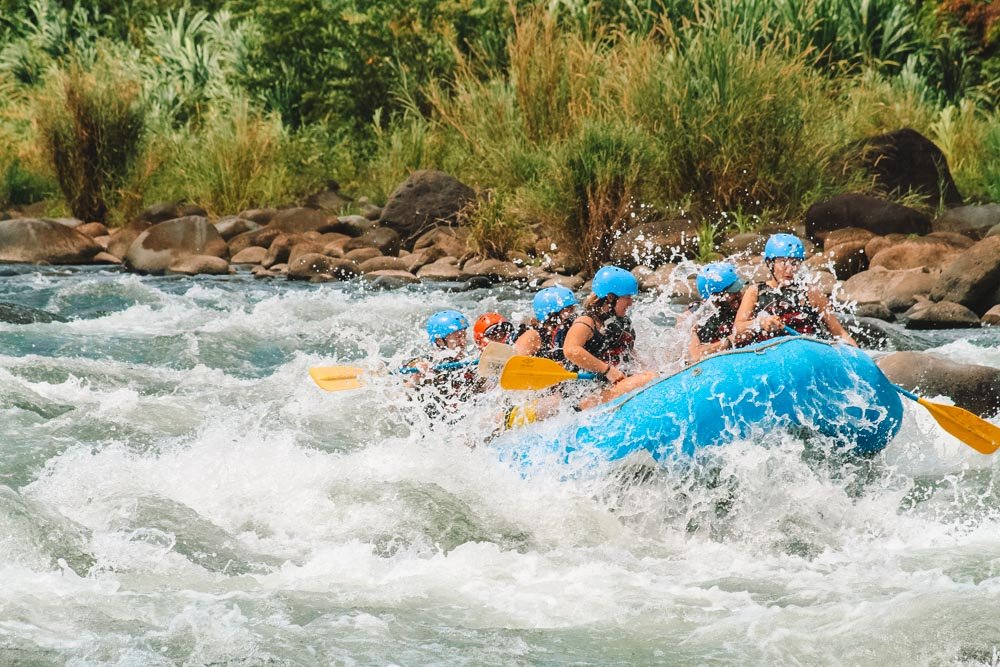
Costa Rica’s commercial rafting industry is well-regulated and has an excellent overall safety record. That said, whitewater rafting always carries inherent risks and choosing a reputable, safety-conscious operator is the single most important decision you’ll make.
Choosing a Safe Operator: Look for operators affiliated with the Instituto Costarricense de Turismo (ICT) — the national tourism authority — which requires licensed guides, inspected equipment, and adherence to safety standards. Ask about guide certification, rescue training, and group-to-guide ratios before booking. Avoid the cheapest possible options — budget operators sometimes cut corners on equipment maintenance and guide training.
Physical Requirements: Most Class III–IV trips require participants to be able to swim, be in reasonable physical fitness, and be at least 12 years old (age requirements vary by operator and section). Class IV–V trips typically require prior whitewater experience and set minimum age and fitness requirements. Always disclose any medical conditions to your operator before booking.
Listen to Your Guide: Your river guide’s instructions are not suggestions — they are safety protocols developed from extensive experience on that specific river. Pay attention during the pre-trip safety briefing, follow paddle commands immediately and precisely, and ask questions if anything is unclear before you get on the water.
How Much Does Rafting Cost in Costa Rica?
Rafting prices in Costa Rica vary by river, trip duration, operator quality, and what’s included. As a general guide:
Half-Day Trip (Class II–III): USD $45–75 per person Full-Day Trip (Class III–IV): USD $75–120 per person Multi-Day Pacuare Expedition: USD $250–600+ per person depending on accommodation
Most full-day trips include transport from the nearest hub town, all equipment, a riverside lunch, and photos or video of your trip. Higher-priced operators generally offer smaller groups, better-quality equipment, more experienced guides, and superior food — the additional cost is usually worth it.
Booking Tips: Book directly with operators or through their official websites for the best rates. Avoid booking through hotel front desks or commission-based middlemen who add significant markups. Booking in advance is strongly recommended during peak season (December–March) when the most popular rivers and operators sell out weeks ahead.
Top Rafting Operators in Costa Rica
Rios Tropicales — The gold standard of Costa Rican rafting, operating since 1985. Unmatched experience on the Pacuare and Reventazón with outstanding safety record and exceptional guides. Offers the finest multi-day Pacuare expeditions in the country.
Exploradores Outdoors — Excellent operator particularly known for their Pacuare trips and seamless logistics connecting San José, La Fortuna, and the Caribbean coast in a single adventure day.
Hacienda Pozo Azul — The best operator for Sarapiquí rafting, combining the river experience with their outstanding wildlife reserve and eco-lodge on the river.
Desafío Adventure Company — Based in La Fortuna, offering excellent trips on multiple rivers with particularly strong safety protocols and knowledgeable bilingual guides.
H2O Adventures — Turrialba-based specialists offering excellent value and deep local knowledge of the Pacuare and Reventazón.
Combining Rafting with Other Costa Rica Adventures
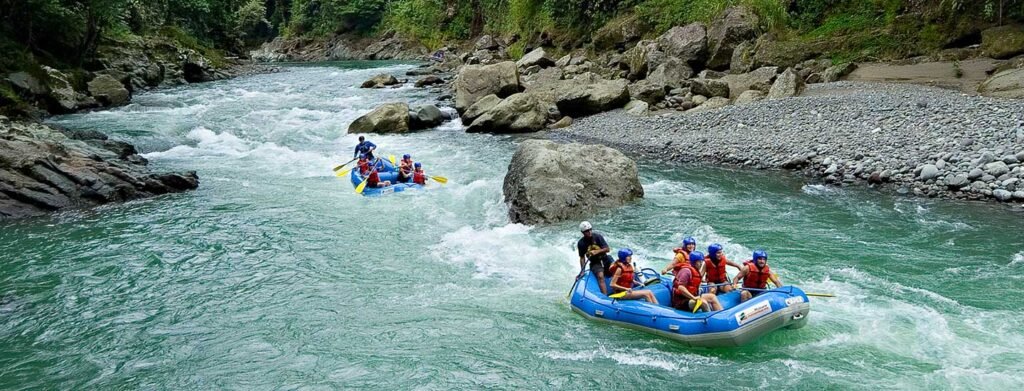
One of the great advantages of Costa Rica’s compact size is the ease with which a rafting trip can be combined with other adventures to create a truly unforgettable multi-activity itinerary.
Rafting + Hot Springs: Combining a Pacuare or Reventazón trip with an evening at one of the natural hot spring complexes near Arenal Volcano is one of the classic Costa Rica adventure combinations — the contrast between the cold river and the warm mineral waters is deeply satisfying.
Rafting + Wildlife: The Sarapiquí combines perfectly with a visit to the La Selva Biological Station or a night tour in the rainforest for an immersive nature and adventure experience.
Rafting + Zip Lining: La Fortuna offers both excellent rafting on the Sarapiquí and world-class canopy zip-lining tours — combining both in a single day is entirely feasible and enormously enjoyable.
Rafting + Beach: The Pacuare put-in on the Caribbean side makes it perfectly logical to combine a rafting day with a few nights on the Caribbean coast at Puerto Viejo or Cahuita.
Rafting + Volcano: Turrialba sits in the shadow of two active volcanoes — Turrialba and Irazú — and combining a river day with a volcano visit makes for an outstanding two-day itinerary in the region.
Essential Tips for First-Time Rafters in Costa Rica
Listen carefully to your pre-trip safety briefing — the information given is directly relevant to your safety and enjoyment on the river. Never stand up in moving water if you fall out of the raft — keep your feet up and pointed downstream, on your back, until you reach calmer water or your guide reaches you. Trust your guide completely — they know the river, they know the rapids, and their commands are based on experience and your safety. Don’t be afraid to communicate — if you’re nervous, unsure, or struggling, tell your guide immediately. Eat a light meal before rafting — enough to fuel you but not so much that the activity becomes uncomfortable. And perhaps most importantly — enjoy the moments between rapids as much as the rapids themselves. The jungle, the silence, the wildlife, and the sheer beauty of moving through a Costa Rican river canyon are as much a part of the experience as the whitewater.
Conclusion
Costa Rica’s rivers are among the finest whitewater destinations in the world — a fact recognised by international paddling communities, adventure travel organisations, and the millions of visitors who have experienced them over the past four decades. Whether you spend a morning drifting peacefully down the Corobicí watching kingfishers and howler monkeys, a full day battling the technical Class IV sections of the Pacuare, or three days on a multi-day wilderness expedition deep in a jungle canyon with no roads and no phone signal, rafting in Costa Rica will give you something that very few travel experiences can — the sensation of being completely, joyfully, and utterly alive.
Pack your dry bag. Pick your river. And let the current take you.