
Ecuador is a country of extraordinary biological superlatives. Despite covering just 0.2% of the earth’s land surface, it contains approximately 10% of all plant species on the planet, more than 1,600 species of birds — the highest bird diversity per unit area of any country in the world — over 4,000 species of orchids, 450 species of reptiles, and hundreds of mammal species ranging from the tiny pygmy marmoset to the magnificent jaguar.
This extraordinary concentration of life is the result of Ecuador’s unique geography — a small country that manages to compress four completely distinct ecosystems into its borders. The high Andean páramo grasslands, the cloud forests draped across the mountain slopes, the vast Amazon basin stretching to the east, and the tropical Pacific coast to the west each support their own distinct and extraordinary communities of wildlife. The result is a country where you can watch a condor soaring above a volcanic crater in the morning and observe a caiman gliding through an Amazonian river in the afternoon — a degree of wildlife diversity that is almost unparalleled anywhere on earth.
The Galápagos — marvellous as they are — represent just one small piece of Ecuador’s wildlife story. This guide tells the rest of it.
The Amazon Rainforest — Ecuador’s Greatest Wildlife Treasure
Why Ecuador’s Amazon is Special
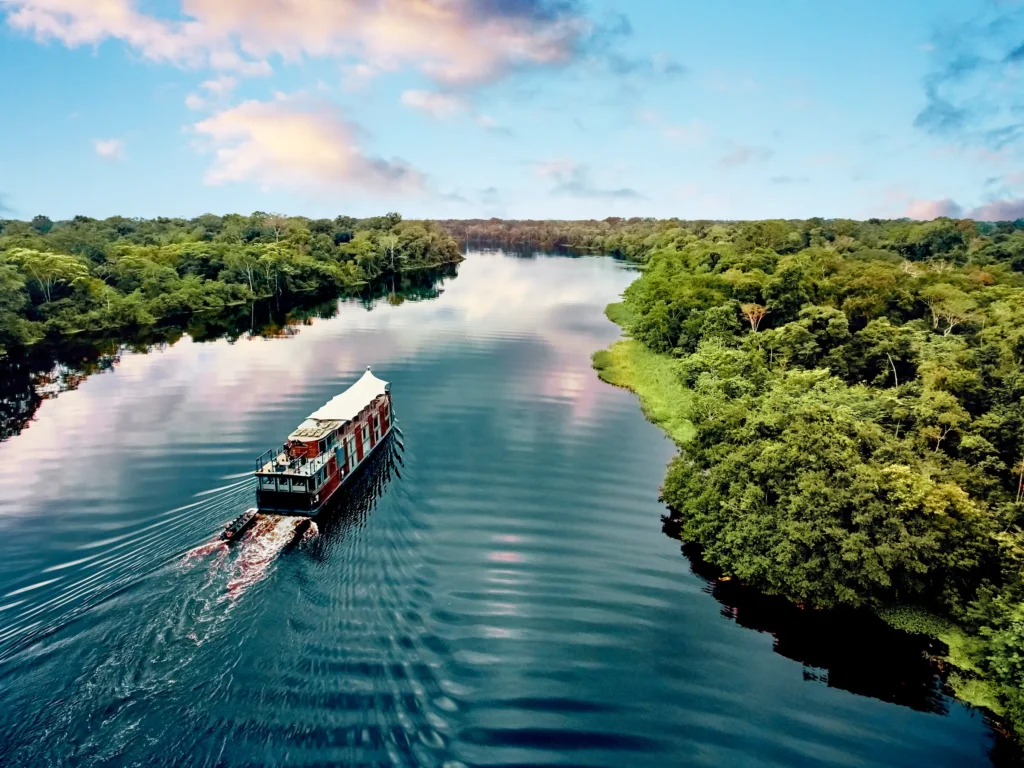
The Ecuadorian Amazon — known locally as the Oriente — covers approximately 120,000 square kilometres of the country’s eastern lowlands and represents one of the most biodiverse regions on the entire planet. The western Amazon, of which Ecuador’s portion forms a part, is considered by many ecologists to be the most species-rich area on earth — with higher concentrations of mammals, birds, amphibians, and plants than virtually anywhere else.
What makes Ecuador’s Amazon particularly special for wildlife watching is its accessibility. The journey from Quito to the Amazon basin takes just 5–8 hours by road or 30–45 minutes by small plane — making it possible to move from a high-altitude Andean city to the heart of one of the world’s great wilderness areas in a single morning. This accessibility, combined with the extraordinary quality of the wildlife lodges and guiding available in the region, makes Ecuador’s Amazon one of the finest wildlife destinations in South America.
Yasuní National Park & Biosphere Reserve
Yasuní National Park is Ecuador’s crown jewel of biodiversity — a UNESCO Biosphere Reserve of 9,823 square kilometres in the heart of the Ecuadorian Amazon that is considered by scientists to be one of the most biodiverse places on earth. Studies have found more tree species in a single hectare of Yasuní than in the entire of North America combined — a statistic that gives some impression of the extraordinary biological richness concentrated within this single protected area.
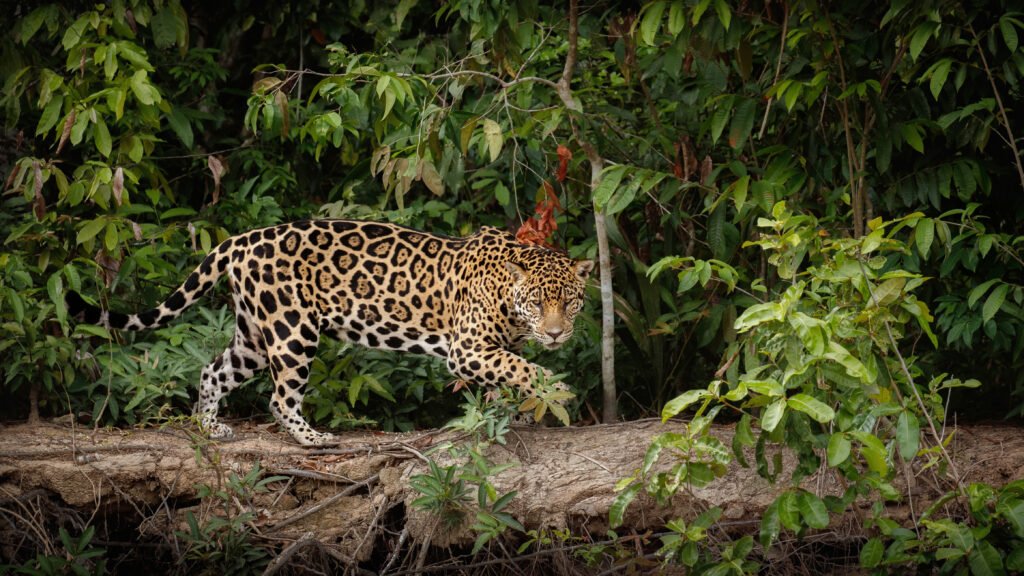
For wildlife watching, Yasuní is simply extraordinary. The park is home to all six species of wild cats found in the Amazon — jaguar, puma, ocelot, margay, oncilla, and jaguarundi — though sightings of the larger cats require patience and luck. More reliably seen are giant river otters, tapirs, giant anteaters, two species of freshwater dolphins (pink and grey), five species of monkeys, electric eels, anacondas, caimans, and an almost bewildering variety of birds — over 600 species have been recorded within the park boundaries, including harpy eagles, scarlet macaws, 11 species of kingfisher, and dozens of parrot species.
The Clay Licks (Collpas) One of the most spectacular wildlife spectacles in the Amazon occurs daily at natural mineral licks (collpas) — exposed riverbank areas where clay rich in sodium and calcium attracts hundreds of parrots and parakeets that gather to consume the mineral-rich earth. At the most productive clay licks in Yasuní, dozens of species and hundreds of individual birds descend simultaneously in a cacophony of colour and sound that is one of the most visually overwhelming wildlife experiences in South America. Dawn is the best time to observe the licks — arrive before first light and wait silently as the forest gradually fills with the sound of approaching birds.
The Añangu Clay Lick The Añangu clay lick, managed by the Kichwa indigenous community in partnership with Napo Wildlife Center, is one of the finest parrot clay lick experiences in the entire Amazon. Species recorded here include mealy parrots, blue-headed parrots, chestnut-fronted macaws, and cobalt-winged parakeets — sometimes in groups exceeding 1,000 individuals.
Where to Stay: Napo Wildlife Center — an outstanding eco-lodge owned and operated entirely by the Kichwa Añangu community — is widely considered one of the finest Amazon wildlife lodges in South America. Located deep within Yasuní, accessible only by motorised canoe, it offers exceptional guiding, outstanding wildlife encounters, and an immersive experience of Kichwa culture and traditional ecological knowledge. Manatee Amazon Explorer and La Selva Amazon Ecolodge are excellent alternatives.
Getting There: Most visitors fly from Quito to Coca (Francisco de Orellana) — a 45-minute flight — and then travel by motorised canoe to their lodge. Road access from Quito via Baeza and Tena is also possible and highly scenic, though significantly longer.
The Cuyabeno Wildlife Reserve
The Cuyabeno Wildlife Reserve in northeastern Ecuador covers 603,000 hectares of flooded Amazon rainforest and is one of the finest aquatic wildlife destinations in the country. The reserve’s network of lakes, rivers, and permanently flooded forest — the largest system of flooded forest in the Amazon — supports an extraordinary concentration of water-dependent wildlife that is unlike anything found in drier Amazon habitats.
Pink River Dolphins (Boto) The pink river dolphin — one of the most extraordinary and charismatic mammals in South America — inhabits the rivers and flooded lakes of Cuyabeno in significant numbers. Swimming with pink dolphins in the clear black waters of Laguna Grande is one of the most memorable wildlife experiences Ecuador offers — the dolphins are curious and relatively unafraid of humans, often approaching canoes and swimmers with apparent interest. The best time for dolphin encounters is the high water season (June–August) when the flooded forest expands and the dolphins range more widely.
Caimans Three species of caiman inhabit Cuyabeno’s waterways — the spectacled caiman (the most common), the black caiman (rarer but occasionally seen), and the dwarf caiman (small and secretive). Night canoe trips are the most reliable way to observe caimans — the guides use torches to spot the distinctive orange-red reflection of caiman eyes in the darkness, allowing close and extraordinary observation of these ancient reptiles.
Other Aquatic Wildlife Giant river otters — among the most charismatic and endangered mammals in South America — inhabit Cuyabeno’s quieter waterways and can occasionally be observed hunting cooperatively in family groups of up to eight individuals. Giant otters are highly vocal, intensely social, and extraordinarily entertaining to watch — a giant otter family hunting in Cuyabeno’s black water lakes is one of the finest wildlife spectacles in Ecuador. Giant arapaima (one of the world’s largest freshwater fish), electric eels, stingrays, and piranhas all inhabit the reserve’s waters.
Five Species of Monkey Cuyabeno supports five species of monkey — pygmy marmoset (the world’s smallest monkey), common squirrel monkey, red howler monkey, white-fronted capuchin, and black-mantled tamarin — all of which can be observed from canoes or on forest walks with knowledgeable local guides.
Where to Stay: Cuyabeno Lodge — operated by Neotropic Turis and widely regarded as one of the finest budget-to-mid-range Amazon lodges in Ecuador — sits directly on Laguna Grande and offers outstanding wildlife guiding at competitive prices. Jamu Lodge and Nicky Amazon Lodge are excellent alternatives for different budget levels.
Getting There: Most visitors travel from Quito to Lago Agrio by bus (8–9 hours) or plane (45 minutes), then continue by motorised canoe to their lodge — a journey of approximately 2.5 hours through the flooded forest.
Tena & the Upper Napo — Accessible Amazon Wildlife
For travellers with limited time or budget who still want a genuine Amazon wildlife experience, the Upper Napo region around the town of Tena offers an accessible and excellent alternative to the more remote lodges of Yasuní and Cuyabeno. Just 5 hours from Quito by road through spectacular Andean scenery, Tena sits at the transition zone between the cloud forest and the lowland Amazon — a position that gives it access to an exceptional diversity of wildlife.
The community-run lodges around Tena — particularly those operated by Kichwa and Huaorani indigenous communities — offer outstanding opportunities for wildlife observation combined with cultural immersion in indigenous Amazonian life. Bird diversity in the Upper Napo is exceptional — this transitional zone between Andean and Amazonian habitats supports many species found nowhere else — and mammals including tapirs, peccaries, and several monkey species are regularly encountered on guided forest walks.
Recommended: Cabañas Aliñahui near Tena offers an excellent combination of riverside location, good guiding, and genuine community involvement at accessible prices.
The Cloud Forests — Ecuador’s Most Spectacular Bird Habitat
Why Cloud Forests Are Unmissable for Wildlife
Ecuador’s cloud forests — the misty, moss-draped forests that cloak the Andean slopes between approximately 1,500 and 3,500 metres — are among the most biodiverse and visually extraordinary habitats on earth. The combination of high rainfall, persistent mist, and dramatic altitude gradients creates conditions in which evolution has proceeded at extraordinary speed, producing an almost bewildering variety of endemic species found nowhere else on the planet.
For wildlife watching — and particularly for birdwatching — Ecuador’s cloud forests are simply world-class. The Chocó bioregion on the western Andean slopes and the eastern cloud forests of the Andes together support more bird species than the entire continent of North America, with exceptionally high levels of endemism — species evolved in isolation that exist nowhere else on earth.
Mindo — Cloud Forest Capital of Ecuador
The small town of Mindo, located in the western cloud forest approximately 2 hours northwest of Quito, is one of the finest birdwatching destinations in the world — a fact recognised by Audubon Society Christmas Bird Counts that have repeatedly recorded more bird species in a single day around Mindo than anywhere else on earth.
The Birds of Mindo Over 560 bird species have been recorded within the Mindo-Nambillo Protected Forest — a number that represents more bird diversity than the entire United Kingdom or France. The star attractions include the cock-of-the-rock (the males of which gather at traditional display grounds called leks, where they perform elaborate courtship displays in breathtaking explosiveness of orange colour), the plate-billed mountain toucan, the toucan barbet, numerous species of brilliantly coloured tanagers, and more than 30 species of hummingbird — the highest hummingbird diversity of any single location on earth.
Hummingbird Gardens Several lodges and private gardens around Mindo maintain hummingbird feeders that attract extraordinary concentrations of these jewel-like birds — sometimes 15 or more species simultaneously hovering around a single feeding station. The Hummingbird Garden (Jardín de los Colibríes) in Mindo town is one of the most accessible and reliable, attracting species including the violet-tailed sylph, booted racket-tail, green-crowned brilliant, and many-spotted hummingbird. Watching dozens of hummingbirds feed simultaneously — their wings invisible in the blur of speed, their colours shifting from green to blue to violet as they catch the light — is one of the most extraordinary wildlife experiences in Ecuador.
Cock-of-the-Rock Leks The Andean cock-of-the-rock — Ecuador’s national bird — is one of the most spectacular birds in the world. The males are brilliant orange-red with a distinctive disc-shaped crest, and they gather at traditional display grounds (leks) in the cloud forest where they perform elaborate competitive displays to attract females. Several locations around Mindo and the western cloud forest offer reliable lek viewing — guided visits to active leks at dawn are one of the most memorable wildlife experiences in Ecuador and should not be missed.
Butterfly Gardens Mindo is also famous for its extraordinary butterfly diversity — the Mindo area supports over 250 species of butterfly, and several dedicated butterfly gardens maintain populations for close observation and photography. The Blue Morpho — one of the most spectacular butterflies in the world, with wings of an iridescent electric blue that seems to pulse with light — is reliably seen in the forest clearings and gardens around Mindo.
Where to Stay: Séptimo Paraíso is one of the finest cloud forest lodges in Ecuador — a beautifully designed property with outstanding guiding and exceptional bird diversity on its grounds. Casa de Cecilia and Mindo Lago are excellent mid-range alternatives in the Mindo valley.
Spectacled Bears — The Andean Cloud Forest’s Most Elusive Mammal
The spectacled bear — the only bear species native to South America and the inspiration for the fictional Paddington Bear — inhabits the cloud forests and páramo grasslands of the Ecuadorian Andes at elevations between 1,800 and 3,500 metres. Shy, solitary, and primarily nocturnal, it is one of the most difficult large mammals to observe in the wild — but also one of the most rewarding.
The Intag Valley in northern Ecuador, the forests around Podocarpus National Park in the south, and the cloud forests of the Reserva Ecológica Cotacachi-Cayapas offer the best chances of spectacled bear observation in Ecuador. Camera trap footage from these areas shows healthy populations of bears going about their largely secretive lives — feeding on bromeliads, climbing trees for fruit, and occasionally descending to lower forest levels. Patient, early morning hikes with knowledgeable local guides offer the best realistic chances of an encounter.
Bellavista Cloud Forest Reserve
Located in the western Andes approximately 2.5 hours from Quito, Bellavista Cloud Forest Reserve is one of Ecuador’s premier cloud forest wildlife destinations — a 700-hectare private reserve of pristine cloud forest managed specifically for conservation and wildlife tourism.
More than 330 bird species have been recorded at Bellavista — an extraordinary number for a single reserve — including the golden-headed quetzal, the plate-billed mountain toucan, the lyre-tailed nightjar, and numerous species of antpitta that are notoriously difficult to observe anywhere else. The reserve’s network of well-maintained trails, combined with outstanding guiding from resident naturalists, makes Bellavista one of the most productive and enjoyable birdwatching destinations in Ecuador.
The lodge at Bellavista — a distinctive geodesic dome structure in the heart of the cloud forest — offers accommodation from budget dormitories to comfortable private rooms, with resident naturalists available for guided walks at dawn, during the day, and for spectacular night walks when the forest reveals its nocturnal wildlife in all its extraordinary variety.
The Tandayapa Valley
The Tandayapa Valley — adjacent to Mindo and equally extraordinary — is home to the Tandayapa Bird Lodge, one of the most celebrated birdwatching lodges in South America. The lodge’s feeders attract a spectacular diversity of hummingbirds and tanagers, and the surrounding cloud forest offers access to species including the long-wattled umbrellabird, the Ecuadorian piedtail, and the rare giant antpitta.
The Andean Páramo — High-Altitude Wildlife Wonders
What is the Páramo?
The páramo — the high-altitude grassland ecosystem above the cloud forest treeline and below the permanent snowline, typically between 3,500 and 4,800 metres — is one of South America’s most distinctive and threatened ecosystems. This windswept, otherworldly landscape of tussock grasses, giant groundsels (frailejones), and cushion plants supports a remarkable community of specialised wildlife adapted to extreme cold, intense UV radiation, and dramatic daily temperature fluctuations.
Andean Condor — The King of the Páramo
The Andean condor — with a wingspan of up to 3.2 metres the largest flying bird in the world by combined wingspan and weight — is the iconic wildlife encounter of Ecuador’s high Andes. Once widespread across the length of the Andes, it has suffered severe population declines due to hunting, poisoning, and habitat loss and is now classified as Vulnerable on the IUCN Red List — making every sighting a genuinely significant and moving experience.
Best Places to See Condors in Ecuador:
Antisana Ecological Reserve — Located approximately 2 hours east of Quito on the slopes of Antisana volcano, this is considered the finest condor-watching site in Ecuador and one of the best in South America. A resident population of approximately 50 condors uses the reserve’s volcanic slopes and páramo grasslands as foraging territory, and patient waiting at known roost and thermals sites — particularly in the early morning when the birds begin to soar on the warming air — can produce extraordinarily close encounters with multiple individuals simultaneously. The sight of a condor soaring directly overhead at close range — the massive black wings with their white upper surface patches catching the Andean light, the naked red head scanning the ground below — is one of the most powerful wildlife moments Ecuador offers.
Papallacta Pass — The high-altitude pass on the road between Quito and the Amazon basin is a reliable condor-watching location where birds are frequently observed soaring on thermal currents above the páramo on clear mornings.
Cayambe-Coca Ecological Reserve — Another excellent location for condor observation, particularly in the northern páramo sections of the reserve accessible from the Oyacachi valley.
Vicuñas & Other Páramo Mammals
The vicuña — the wild ancestor of the alpaca and one of the most elegant and graceful mammals in South America — was reintroduced to Ecuador’s high Andes after being hunted to local extinction and now inhabits the páramo of Chimborazo Fauna Production Reserve in healthy numbers. Visiting Chimborazo — at 6,263 metres the highest point in Ecuador and the farthest point from the earth’s centre of any place on the planet — offers the opportunity to observe vicuñas grazing on the high-altitude grasslands at the foot of the great volcano, often at surprisingly close range.
White-tailed deer, llamas (both domesticated and feral), Andean foxes (culpeos), and the extraordinary marsupial shrew-opossums also inhabit the páramo, and patient observation from the road or on foot with a guide regularly produces sightings of several of these species.
Andean Waterbirds at Papallacta & Cuycocha
The high-altitude lakes of the Ecuadorian páramo support remarkable concentrations of specialised waterbirds. The thermal springs and lake at Papallacta — famous primarily as a hot spring resort — attract Andean teal, yellow-billed pintail, speckled teal, and the extraordinary Andean ruddy duck. Laguna de Cuycocha — a spectacular crater lake within an extinct volcano in Imbabura province — supports nesting populations of Andean gulls and various wading birds and offers a magnificent circular hiking trail around the crater rim.
The Pacific Coast — Marine Wildlife Beyond the Galápagos
Humpback Whale Watching at Puerto López
Every year between June and September, humpback whales migrate from their Antarctic feeding grounds to the warm waters off Ecuador’s Pacific coast to breed and give birth — passing through the Machalilla National Park marine protected area in numbers that make this one of the finest whale-watching destinations in South America.
Puerto López — a small fishing town on the central Ecuadorian coast — is the base for whale-watching excursions into the Machalilla marine protected area, where humpbacks are observed breaching, tail-slapping, spy-hopping, and nursing their calves in waters close enough to shore to create a genuinely thrilling and accessible wildlife experience.
The sheer scale of humpback whale behaviour in these waters is extraordinary — individuals and groups are regularly observed performing the full repertoire of surface behaviours, including full breaches (leaping completely clear of the water), pectoral fin slapping, and the hauntingly beautiful fluke displays as they dive. Mother and calf pairs are particularly common in July and August, and the sight of a calf learning to breach under the guidance of its enormous mother is one of the most moving wildlife spectacles on Ecuador’s coast.
Getting There and Logistics: Puerto López is approximately 4 hours south of Manta by bus or 3 hours north of Guayaquil. Most whale-watching tours depart at 9am and return by 1pm, lasting 3–4 hours on the water. Book through reputable operators who follow responsible whale-watching guidelines — maintaining appropriate distances and not approaching whales head-on.
Best Time: Mid-June through September, with July and August typically offering the highest density of whales and the most active surface behaviour.
Sea Turtle Nesting at Machalilla National Park
Machalilla National Park — Ecuador’s only coastal national park — protects an extraordinary stretch of Pacific coastline, dry tropical forest, and marine habitat that supports nesting populations of four sea turtle species. Olive ridley turtles nest in modest numbers along the park’s beaches throughout the year, while Pacific green turtles, leatherbacks, and hawksbills occur less frequently.
The beaches around Los Frailes — considered one of the most beautiful beaches in Ecuador — offer the possibility of sea turtle encounters during nesting season, and the Isla de la Plata (Poor Man’s Galápagos) within the park supports nesting populations of blue-footed boobies, frigatebirds, and red-billed tropicbirds that create a taste of Galápagos-style seabird spectacle at a fraction of the cost.
Isla de la Plata — The Poor Man’s Galápagos: Isla de la Plata deserves special mention as one of Ecuador’s finest and most accessible wildlife destinations. Located 24 km offshore from Puerto López and accessible by boat tour from the town, this small island supports nesting colonies of blue-footed boobies — the birds that have become iconic symbols of Galápagos wildlife — as well as Nazca boobies, magnificent frigatebirds, and red-billed tropicbirds. The boobies nest directly on the walking trails and can be observed at distances of less than a metre — creating wildlife encounters of extraordinary intimacy. Humpback whale sightings on the boat journey are virtually guaranteed between June and September.
Mangrove Wildlife at Isla Santay & the Gulf of Guayaquil
The mangrove ecosystems of Ecuador’s Pacific coast — particularly around Isla Santay in the Gulf of Guayaquil and the extensive mangroves of the Cayapas-Mataje Ecological Reserve in the north — support a fascinating community of wildlife including American crocodiles, river otters, howler monkeys, and exceptional concentrations of wading birds.
Isla Santay — accessible by bridge from Guayaquil and managed as an ecological reserve — offers easy walking and cycling trails through mangrove forest where frigatebirds, herons, egrets, roseate spoonbills, and black-necked stilts can be observed at close range. American crocodiles inhabit the mangrove channels and are regularly observed from the wooden walkways that wind through the reserve — often at surprisingly close range.
Specialised Wildlife Destinations
Podocarpus National Park — Ecuador’s Most Biodiverse National Park
Podocarpus National Park in southern Ecuador — named after the podocarpus trees, the southernmost conifers in the Americas — encompasses an extraordinary range of altitude zones from 1,000 to over 3,600 metres, creating exceptional habitat diversity and extraordinary wildlife richness.
The park is considered one of the most important bird areas in South America, with over 600 species recorded — including the endemic Podocarpus poison-arrow frog, numerous species of antpitta and tapaculo that are among the most sought-after birds for dedicated birdwatchers, and healthy populations of spectacled bear, mountain tapir, and puma.
The area around Loja city serves as the main gateway, with the Cajanuma entrance on the western slopes offering excellent cloud forest birdwatching and the Bombuscaro entrance in the lower subtropical forest providing access to different habitat and species composition.
Reserva Ecológica Manglares Churute
Located south of Guayaquil, the Churute mangroves reserve protects one of the last intact Pacific mangrove ecosystems in Ecuador and supports a remarkable concentration of wildlife including American crocodiles, bottle-nosed dolphins that enter the mangrove channels, howler monkeys — unusually finding their western range limit here — and exceptional birdlife including scarlet macaws, which have been successfully reintroduced to the area.
Guided canoe tours through the mangrove channels at dawn or dusk offer some of the finest wildlife photography opportunities on the Ecuadorian coast — the combination of golden light, mirror-still water, and extraordinary wildlife density creates conditions of exceptional beauty.
Sumaco Biosphere Reserve — The Forgotten Amazon
The Sumaco Biosphere Reserve in the Upper Amazon — centred on the remote Sumaco volcano — is one of Ecuador’s least visited and most extraordinary wildlife areas. Straddling the transition zone between the Andes and the Amazon, it supports an almost incomprehensible diversity of life — over 500 bird species, all five Amazon cat species, giant otters, tapirs, and one of the world’s highest concentrations of orchid species. Its remoteness makes access challenging but enormously rewarding for dedicated wildlife travellers.
When to Go: Best Season for Wildlife in Ecuador
Ecuador’s wildlife watching opportunities are largely year-round due to the country’s equatorial position — but timing can significantly enhance specific experiences.
Dry Season (June–September) The best time for Amazon wildlife watching — lower water levels concentrate wildlife around remaining water sources, making mammals and birds easier to observe. Also the prime whale-watching season on the Pacific coast. Cloud forests can be misty and atmospheric year-round but may receive less rain during these months.
Rainy Season (October–May) Higher water levels in the Amazon allow canoe access to flooded forest areas inaccessible during dry season — opening up extraordinary aquatic wildlife encounters. Pink dolphins range more widely and are more easily observed. Cloud forest birds are highly active during the breeding season (February–April). Condors at Antisana are reliable year-round.
Galápagos vs. Mainland: Unlike the Galápagos where specific months align with specific wildlife events, mainland Ecuador’s wildlife watching is more consistently rewarding throughout the year — making it an excellent destination regardless of when your trip falls.
Best Wildlife Lodges in Ecuador
Amazon: Napo Wildlife Center — Yasuní — the finest community-owned lodge in the Ecuadorian Amazon. Cuyabeno Lodge — outstanding value in the Cuyabeno Reserve. La Selva Amazon Ecolodge — a long-established classic in the Napo River area.
Cloud Forest: Séptimo Paraíso — exceptional birding near Mindo. Bellavista Cloud Forest Reserve — one of Ecuador’s finest cloud forest lodges. Tandayapa Bird Lodge — world-renowned birdwatching facility.
Andes & Páramo: Hacienda Zuleta — a working cattle hacienda in the northern Andes with outstanding condor watching and Andean wildlife programs. Tambopaxi — a comfortable mountain refuge at the foot of Cotopaxi volcano offering excellent páramo wildlife access.
Pacific Coast: Hostería Mandala — Puerto López — the finest accommodation base for humpback whale watching. Aqua Lodge — a floating lodge in the Gulf of Guayaquil mangroves.
Essential Wildlife Watching Tips for Ecuador
Hire local guides. Ecuador’s wildlife — particularly in the Amazon and cloud forest — reveals itself most completely to those with knowledgeable local guides who know the trails, know the species, and know the behaviours to look for. A skilled Amazonian guide or cloud forest birding guide will show you ten times more wildlife than independent exploration.
Start every morning early. The first two hours of daylight are the most productive for wildlife observation in virtually every Ecuadorian ecosystem. Birds are most active at dawn, mammals move before the heat of the day, and the light is at its most beautiful. Set your alarm for 5am and you will be rewarded.
Carry good optics. Binoculars are essential for cloud forest birdwatching and condor observation. An 8×42 or 10×42 configuration offers the best balance of magnification and light-gathering for Ecuador’s varied conditions. A spotting scope adds significant value for specific situations such as condor watching and clay lick observation.
Pack for all conditions. Ecuador’s diverse altitude zones mean temperatures can range from 35°C in the Amazon lowlands to near-freezing in the páramo within the space of a single day. Pack waterproof layers, sun protection, insect repellent, and comfortable walking shoes suitable for both forest trails and high-altitude terrain.
Support community-based tourism. Many of Ecuador’s finest wildlife lodges and guiding operations are owned and operated by indigenous communities — the Kichwa at Napo Wildlife Center, the Cofán at Zabalo, the Siona and Secoya communities in Cuyabeno. Choosing community-based operators ensures that wildlife tourism benefits local communities directly and creates genuine economic incentives for conservation.
Be patient. Wildlife watching in Ecuador — as everywhere — rewards patience above all else. The jaguar that appears briefly on a riverbank at dusk, the spectacled bear observed feeding in the cloud forest canopy, the condor that drops from a thermal to eye level — these encounters happen to those who sit quietly and wait, not to those who rush through the forest looking at their watch.
Conclusion
Ecuador is one of the world’s great wildlife destinations — a country whose extraordinary biological diversity, compact geography, and outstanding combination of accessible and remote wilderness areas creates wildlife watching opportunities of breathtaking variety and quality. The Galápagos are magnificent — but they are just the beginning. From the flooded Amazon of Cuyabeno where pink dolphins and giant otters inhabit black-water lakes, to the cloud forests of Mindo where more hummingbird species hover around a single feeder than exist in the whole of North America, to the volcanic páramo where Andean condors soar on thermals above ancient craters — mainland Ecuador offers a wildlife experience that is, in its own different and extraordinary way, every bit as remarkable as the famous islands that bear the country’s name. Come with your binoculars, your patience, and your sense of wonder. Ecuador will do everything else.