
Have you ever dreamed of standing in two hemispheres at the same time? At Mitad del Mundo — Spanish for “Middle of the World” — that dream becomes a reality. Located just 26 kilometers north of Quito, Ecuador, this iconic landmark sits directly on the equator line at 0° latitude, making it one of the most unique travel destinations in all of South America.
Whether you are a first-time visitor to Ecuador or a seasoned traveler ticking off bucket-list experiences, Mitad del Mundo is an absolute must-visit. This guide covers everything you need to know — from what to see and do, to how to get there, entry fees, and insider tips to make the most of your visit.
What Is Mitad del Mundo?
Mitad del Mundo is a large tourist complex and monument built to mark the equatorial line that divides the Earth into the Northern and Southern Hemispheres. The centerpiece of the complex is a 30-meter-tall monument topped with a large stone globe, constructed in 1979 to honor the French Geodesic Mission that calculated the exact location of the equator in the 18th century.
Millions of visitors travel here every year to take that iconic photograph — one foot in the north, one foot in the south — standing exactly at the center of the Earth.
But Mitad del Mundo is far more than just a photo opportunity. The site is a full complex packed with museums, cultural exhibits, restaurants, and fascinating science experiments that make it a worthwhile half-day or full-day experience.
Where Is Mitad del Mundo Located?
Mitad del Mundo is situated in the San Antonio de Pichincha parish, in the Pichincha Province of Ecuador, approximately 26 km (16 miles) north of Quito. It sits at an altitude of around 2,483 meters (8,146 feet) above sea level.
Its location on the equatorial line was determined by the French Geodesic Mission in 1736, led by Charles-Marie de La Condamine. Today, GPS technology confirms the monument is just a few hundred meters off the true equatorial line — but more on that shortly.
Top Things to Do at Mitad del Mundo
Mitad del Mundo is far more than a single photo stop — it is a complete destination packed with history, science, culture, and hands-on experiences that appeal to every type of traveler. From standing on the equator line to exploring indigenous culture museums, there is genuinely something here for everyone. Plan to spend at least half a day to do it justice.
1. Stand on the Equator Line
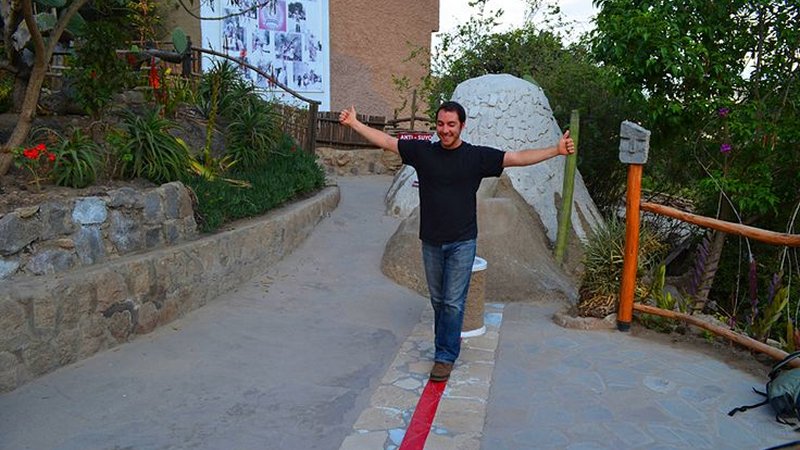
This is the moment every visitor comes for. Walk the painted yellow line that represents 0° latitude and straddle both hemispheres simultaneously. It is simple, free once inside the complex, and endlessly satisfying. Bring your camera — this is one of the most photographed spots in all of Ecuador.
The equator line at Mitad del Mundo is more than just a painted stripe on the ground — it is a powerful symbol of Earth’s geography that has drawn curious travelers from every corner of the world. Standing here, you instantly feel the weight of what it means to be at the precise midpoint of our planet, where north and south meet in perfect balance.
For families traveling with children, this spot is pure magic. Kids absolutely love the idea of jumping back and forth between hemispheres, and the excitement is completely contagious. It is one of those rare travel moments that sparks genuine curiosity and wonder in visitors of all ages, making it a memory that lasts far beyond the trip itself.
Photography lovers will find this spot endlessly creative. Whether you shoot a classic straddle pose, a dramatic wide-angle shot of the line stretching into the distance, or a fun jumping photo mid-hemisphere, the equator line offers countless compositions. Morning light is especially beautiful here, casting long golden shadows along the painted line.
Highlights:
- Stand with one foot in the Northern Hemisphere and one in the Southern Hemisphere simultaneously
- One of the most photographed and iconic spots in all of South America
- Completely free to experience once inside the complex — no extra ticket needed
2. Visit the Monument Museum
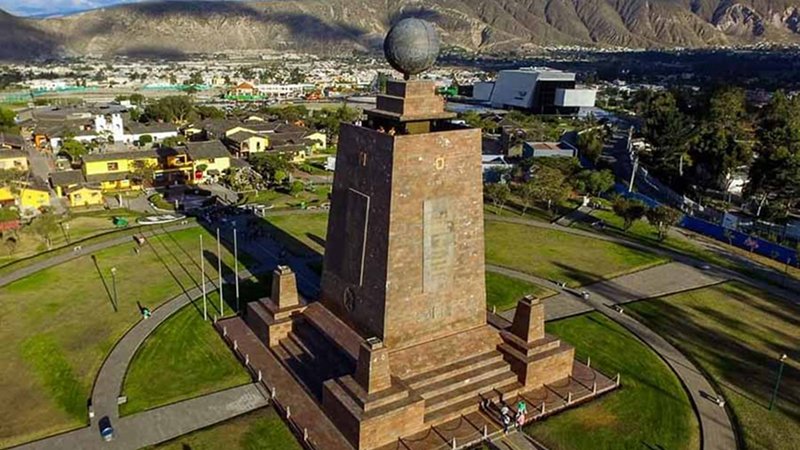
Inside the towering Mitad del Mundo Monument, you will find a museum spread across multiple floors accessible by elevator. Each floor showcases exhibits on the culture, traditions, and indigenous communities of Ecuador, including costumes, artifacts, and ethnographic displays. The rooftop offers a sweeping panoramic view of the surrounding Andean landscape.
Entry fee: Approximately $4 USD for adults (subject to change — always verify locally).
The monument itself is an architectural statement that commands attention the moment you enter the complex. Standing 30 meters tall and crowned with a massive stone globe, it was built in 1979 and remains the most recognizable symbol of Ecuador’s equatorial identity. Walking toward it for the first time is a genuinely impressive experience that sets the tone for everything that follows.
Inside, each floor of the museum tells a different story about Ecuador’s extraordinary cultural diversity. From the colorful traditional costumes of Andean communities to ancient ceremonial objects and historical photographs, the exhibits paint a vivid portrait of a country with an incredibly rich and layered human history. Allow at least 30 to 40 minutes to explore the floors properly.
The rooftop is the crown jewel of the monument visit. From up here, you are treated to a sweeping 360-degree panorama of the Andean highlands, with volcanic peaks, rolling green hills, and the sprawling complex below. On a clear day, the views are absolutely breathtaking and make for some of the best landscape photographs of your entire Ecuador trip.
Highlights:
- 30-meter-tall iconic monument topped with a stone globe — one of Ecuador’s most recognized landmarks
- Multi-floor museum covering Ecuador’s indigenous cultures, traditions, costumes, and history
- Rooftop terrace with stunning 360-degree panoramic views of the Andean highlands
3. Explore the Intiñan Solar Museum
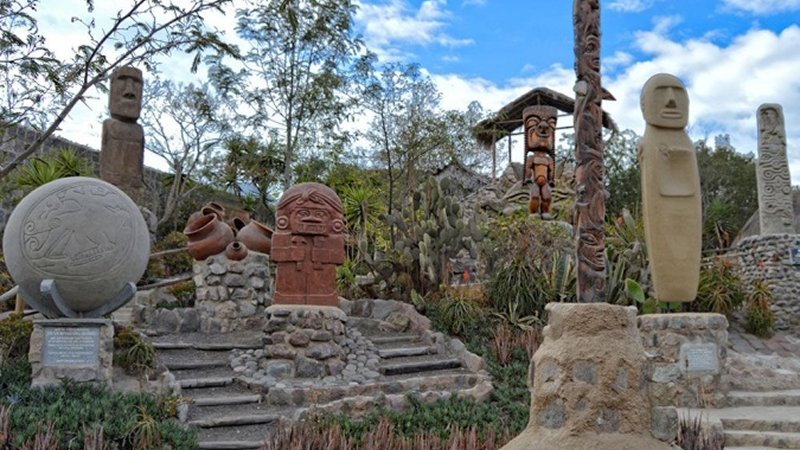
This is arguably the highlight of the entire visit for most travelers. Located just a short walk from the main monument, the Intiñan Solar Museum sits on what GPS confirms to be the true equatorial line.
Here, enthusiastic guides lead you through a series of fascinating hands-on experiments that demonstrate the effects of being on the equator, including:
- Balancing an egg on a nail — reportedly easier to do on the equator due to gravitational forces
- Water draining in different directions — north and south of the line, water spirals in opposite directions, while directly on the equator it drains straight down
- Walking the equatorial line blindfolded — harder than it sounds due to the balance effect
- Weighing yourself — you technically weigh slightly less on the equator because the Earth bulges here
The museum also features exhibits on Amazonian indigenous culture, shrunken heads (tsantsas), traditional blowguns, and medicinal plants used by jungle tribes.
Entry fee: Approximately $4–5 USD for adults. Guided tours are included in the price.
What truly sets Intiñan apart from the rest of the complex is the quality of its guided experience. The guides here are passionate, knowledgeable, and genuinely entertaining — they turn each experiment into a mini-performance that keeps the whole group laughing and engaged. Even the most skeptical traveler walks away impressed and slightly amazed by what the equator can do.
Beyond the science experiments, the cultural exhibits inside Intiñan offer a fascinating window into the Amazon’s indigenous world. The displays of tsantsas (shrunken heads), traditional blowguns, and medicinal jungle plants are thought-provoking and unlike anything you will find in a standard museum. It is raw, authentic, and deeply compelling.
Pro Tip: Visit Intiñan Museum before the main monument — guides here are incredibly engaging and the experience is more interactive and memorable.
Highlights:
- Sits on the GPS-confirmed true equatorial line at 0°0’0″ — more accurate than the main monument
- Hands-on science experiments including egg balancing, water draining, and blindfolded equator walking
- Fascinating Amazonian cultural exhibits including tsantsas, blowguns, and medicinal jungle plants
4. Stroll the Ciudad Mitad del Mundo Complex
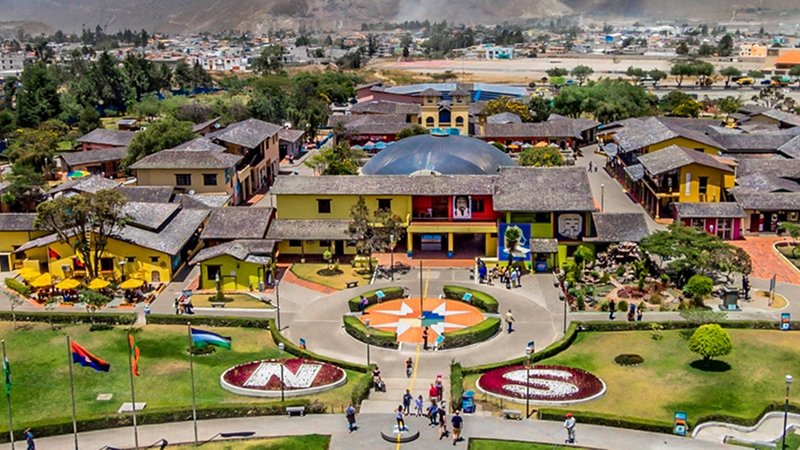
The broader complex functions almost like a small open-air village. You will find:
- Scale model of colonial Quito — a detailed miniature of the historic old city
- Planetarium — shows on astronomy and the equatorial geography
- Cultural pavilions representing different countries with embassies or diplomatic ties to Ecuador
- Restaurants and food stalls serving Ecuadorian cuisine
- Souvenir shops selling local handicrafts, Panama hats, jewelry, and keepsakes
It is a pleasant area to walk around, especially in the late morning when crowds are thinner.
The open-air layout of the Ciudad Mitad del Mundo complex makes it a genuinely enjoyable place to simply wander without a strict agenda. The wide pedestrian streets, colorful facades, and relaxed atmosphere give it an almost festival-like feel on weekends, while weekday mornings offer a quieter, more contemplative experience ideal for travelers who prefer to take their time.
The scale model of colonial Quito is a hidden gem that many visitors walk right past. This incredibly detailed miniature captures the architecture, plazas, and street layout of Quito’s UNESCO-listed historic center in remarkable detail. If you are heading to Quito old town after your visit, this model gives you a wonderful preview of what to look for and appreciate when you get there.
Souvenir shopping at Mitad del Mundo is genuinely worthwhile. The shops inside the complex stock a solid range of authentic Ecuadorian crafts including hand-woven textiles, genuine Panama hats, locally made jewelry, and equator-themed keepsakes. Prices are reasonable and quality is generally good, making this one of the better spots in the Quito area to pick up meaningful gifts and mementos.
Highlights:
- Free entry to the broader complex — explore pavilions, scale models, and street vendors at no cost
- Detailed miniature scale model of Quito’s UNESCO colonial historic center
- Wide variety of authentic Ecuadorian souvenirs including Panama hats, textiles, and local crafts
5. Visit the Ethnographic Museum
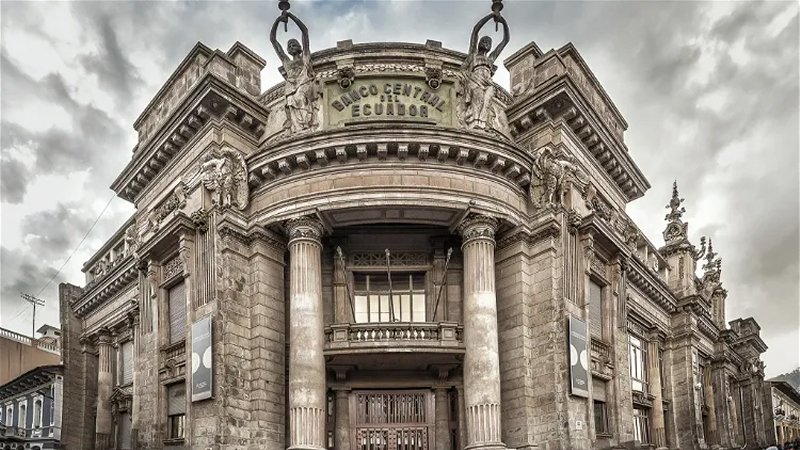
Inside the complex, the Ethnographic Museum dives deep into the diverse indigenous cultures of Ecuador. Displays include traditional clothing, tools, musical instruments, and ceremonial objects from communities across the Amazon, Andes, and coastal regions. It is a rich cultural experience that adds important context to your Ecuadorian journey.
Ecuador is home to over a dozen recognized indigenous nationalities, each with its own language, traditions, and way of life. The Ethnographic Museum brings this remarkable diversity into focus through carefully curated exhibits that go well beyond surface-level displays. It is the kind of museum that changes how you see the country and its people as you continue your travels.
The musical instruments on display are a particular highlight — hearing recordings of traditional Andean and Amazonian music while viewing the instruments up close creates a genuinely immersive cultural moment. From panpipes and drums to ceremonial rattles, the collection reveals how deeply music is woven into the spiritual and social life of Ecuador’s indigenous communities.
What makes this museum especially valuable is the context it provides for the rest of your Ecuador trip. After visiting, you will notice indigenous influences everywhere — in the markets, the food, the festivals, and the architecture. The Ethnographic Museum does not just inform; it transforms the way you experience an entire country.
Highlights:
- Covers indigenous cultures from across Ecuador — Amazon, Andes, and coastal regions all represented
- Unique collection of traditional musical instruments, ceremonial objects, and cultural artifacts
- Provides deep cultural context that enriches your entire Ecuador travel experience
How to Get to Mitad del Mundo from Quito
Getting to Mitad del Mundo from Quito is straightforward and affordable. Here are your main options:
By Public Bus
The most budget-friendly option. Take the Metrobús from La Ofelia terminal in northern Quito to San Antonio de Pichincha. From there, local buses or taxis take you the remaining few kilometers to the complex. Total journey time is approximately 1 to 1.5 hours each way. Cost is under $1 USD.
By Taxi or Rideshare
A private taxi or Uber from central Quito takes about 40–50 minutes depending on traffic. Expect to pay around $15–$25 USD each way. Many drivers will offer a round-trip rate and wait for you — negotiate before you go.
By Organized Tour
Many Quito-based tour operators offer half-day or full-day tours to Mitad del Mundo, often combined with other nearby attractions like the Pululahua Geobotanical Reserve or Rumicucho Ruins. Prices typically range from $25–$60 USD per person depending on what is included. This is the most convenient option for first-time travelers.
Best Time to Visit Mitad del Mundo
Ecuador sits on the equator, which means weather near Quito is relatively consistent year-round. That said, here are a few tips:
- Dry season (June to September and December to January) is generally the best time to visit — clearer skies, less rain, and better views of the surrounding volcanoes.
- Mornings are ideal for visiting — fewer crowds, cooler temperatures, and better lighting for photos.
- Weekdays are quieter than weekends, which can get busy with local visitors.
- Avoid visiting during major Ecuadorian public holidays if you prefer smaller crowds.
Is the Monument Actually on the Equator?
Here is a fun fact that surprises many visitors — the main Mitad del Mundo monument is actually about 240 meters off the true GPS-confirmed equatorial line. This is because the French Geodesic Mission in the 18th century made a slight miscalculation with the technology available at the time.
The Intiñan Solar Museum, located nearby, is confirmed by modern GPS to sit directly on the true equatorial line at 0°0’0″. This is why the hands-on equator experiments at Intiñan are considered more scientifically accurate — and why most travelers find it the more compelling experience of the two.
Does this make the main monument less special? Not at all — it remains a powerful symbol and a deeply meaningful landmark. But now you know the full story.
Nearby Attractions to Combine with Your Visit
Make the most of your trip by combining Mitad del Mundo with nearby attractions:
- Pululahua Geobotanical Reserve — A stunning volcanic caldera just 5 km away, with hiking trails and incredible panoramic views. One of only two inhabited volcanic craters in the world.
- Rumicucho Ruins — Pre-Inca archaeological ruins located close to the equatorial complex, offering insight into ancient Ecuadorian civilizations.
- Quito Historic Old Town — A UNESCO World Heritage Site just 26 km south, with stunning colonial architecture, churches, and plazas perfect for an afternoon exploration.
What to Eat Near Mitad del Mundo
Inside the complex, you will find several restaurants and food stalls serving traditional Ecuadorian dishes. Do not leave without trying:
- Seco de pollo — a rich, slow-cooked chicken stew
- Llapingachos — pan-fried potato and cheese patties
- Caldo de gallina — hearty chicken soup, a local comfort food
- Fresh fruit juices made with tropical Ecuadorian fruits
For a sit-down meal, restaurants inside the Ciudad Mitad del Mundo complex offer both Ecuadorian and international options at reasonable prices.
Final Thoughts: Is Mitad del Mundo Worth Visiting?
Absolutely — yes. Mitad del Mundo is one of those rare travel experiences that combines science, history, culture, and pure joy into a single destination. Whether you are marveling at the towering monument, laughing through the equator experiments at Intiñan Museum, or simply standing quietly on the line that divides the world in two — this place leaves a lasting impression.
It is not just a tourist attraction. It is a reminder of how extraordinary our planet is, and how remarkable it feels to stand at its very center.
Mitad del Mundo is Ecuador at its most iconic. Do not miss it.