
When the first European scientists examined a preserved specimen of the platypus in 1799 they concluded it was a hoax — a bizarre fabrication assembled from parts of different animals by someone attempting to deceive them. A beaver’s body. A duck’s bill. Webbed feet. A venomous spur on the hind leg. It seemed impossible that nature could produce something so apparently contradictory.
They were wrong. The platypus is entirely real — and it is one of the most extraordinary animals on earth. But more than that it is a perfect symbol of what makes Australian wildlife so unique and so endlessly astonishing. Australia is a continent that spent approximately 50 million years in almost complete biological isolation — separated from the rest of the world’s landmasses by the movements of tectonic plates — and in that isolation developed an entirely separate evolutionary pathway that produced animals found nowhere else on earth.
The result is a wildlife collection of extraordinary diversity and extraordinary strangeness — animals that solve the challenges of survival in ways that no other evolutionary history has produced. Marsupials that carry their young in pouches. Monotremes that lay eggs despite being mammals. Birds that cannot fly but run faster than most land animals. Fish that breathe air. Spiders whose venom can kill a human in minutes. Reptiles of extraordinary size and variety. Marine life of incomparable diversity and beauty.
Australia has more unique animal species — species found nowhere else on earth — than any other continent. Approximately 83 percent of Australia’s mammals, 89 percent of its reptiles, 90 percent of its fish, and 93 percent of its amphibians are endemic — meaning they exist only in Australia and nowhere else on the planet.
This guide covers the most extraordinary of those animals — what they are, why they are so remarkable, where they live, and where visitors have the best chance of encountering them in the wild or in high-quality wildlife sanctuaries.
The Marsupials: Australia’s Most Famous Animal Family
Marsupials are mammals that give birth to extremely underdeveloped young — the embryo is born at a very early stage of development and completes its growth attached to a nipple inside the mother’s pouch. The marsupial evolutionary line separated from the placental mammal line approximately 180 million years ago and while marsupials once existed across much of the world they now survive almost exclusively in Australia and South America.
Australia has approximately 200 species of marsupials — more than any other country on earth and representing the most complete surviving marsupial fauna in the world.
1. Kangaroo — The Icon
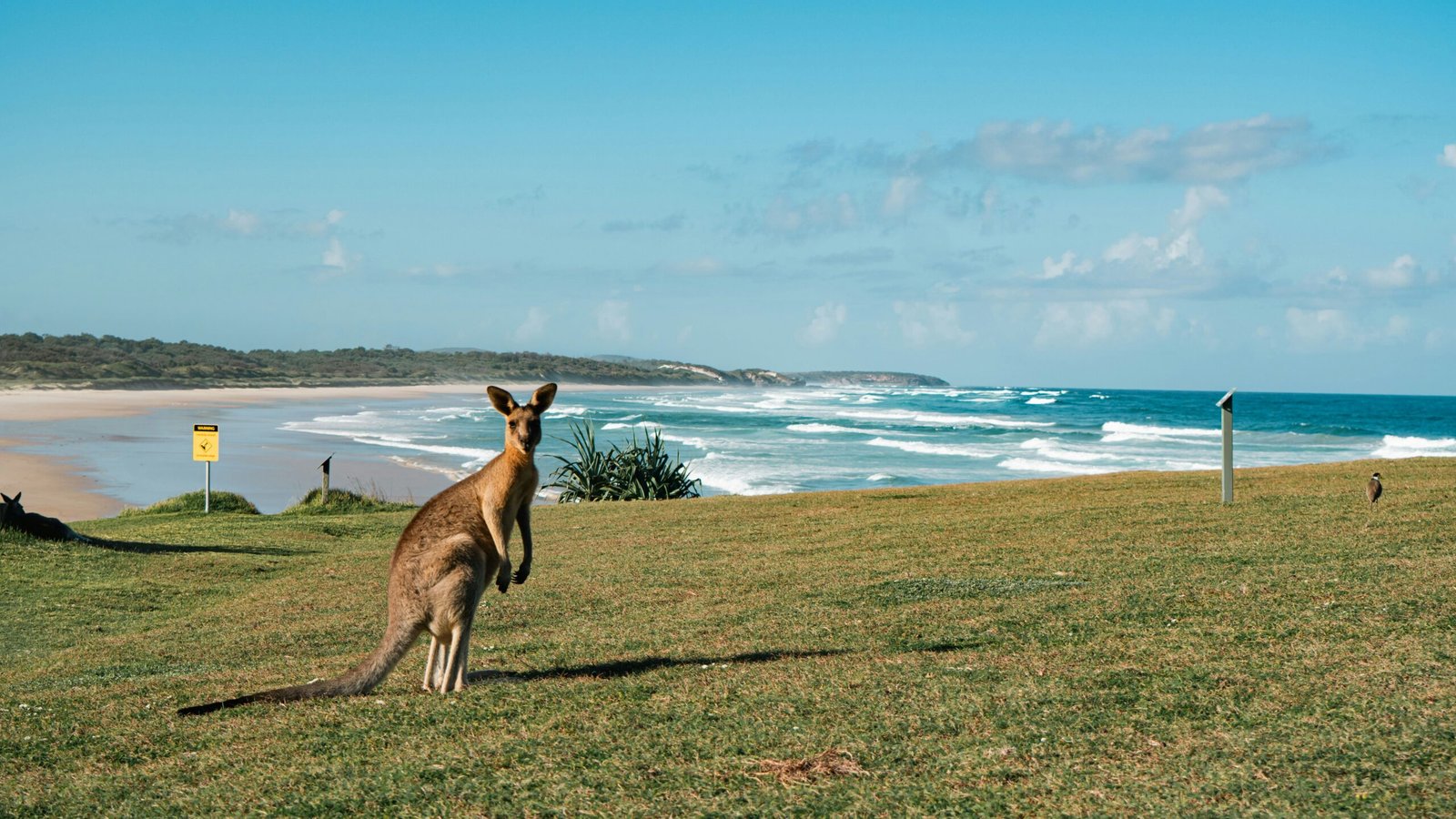
The kangaroo is the most recognisable Australian animal and the one that most visitors most want to see — and seeing a mob of kangaroos in the wild for the first time is genuinely as extraordinary as the anticipation suggests.
Australia has four species of kangaroo — the red kangaroo, the eastern grey kangaroo, the western grey kangaroo, and the antilopine kangaroo — each occupying different geographical ranges and different habitats across the continent.
The Red Kangaroo is the largest marsupial on earth and one of the most physically impressive animals in Australia. Adult males — known as boomers — can stand 1.8 metres tall and weigh up to 90 kilograms. The red kangaroo is built for the Australian outback — its extraordinary hopping locomotion is the most energy-efficient form of movement available at high speed of any land animal, allowing it to travel vast distances across arid landscape at speeds of up to 70 kilometres per hour while consuming less energy per kilometre than a walking human.
The red kangaroo is found across the arid interior of Australia — the vast red desert that covers most of the continent’s centre. Seeing a large male red kangaroo in the outback landscape — the rust coloured body against the red earth and blue sky — is one of the great wildlife encounters available in Australia.
The Eastern Grey Kangaroo is the most commonly encountered kangaroo for visitors to Australia’s east coast cities and nature reserves. Mobs of eastern greys graze in the late afternoon and early evening in open grassland adjacent to woodland across southeastern Australia — in national parks near Sydney, Melbourne, Brisbane, and Canberra they are easily and regularly seen by visitors without any specialist wildlife knowledge or equipment.
What makes kangaroos extraordinary beyond their appearance:
The female kangaroo has the remarkable ability to pause the development of an embryo — a process called embryonic diapause — allowing her to have a joey in the pouch, a fertilised embryo in suspended development, and a fertile egg simultaneously. This extraordinary reproductive strategy allows kangaroos to respond immediately to improved environmental conditions — when rainfall ends a drought the paused embryo resumes development immediately, allowing the population to recover rapidly.
The kangaroo’s tail is not just a balancing organ — it functions as a third leg when the animal is moving slowly, supporting weight in a tripod stance with the hind legs. At high speed the tail acts as a counterbalance and a springboard, storing and releasing energy with each stride.
Best places to see kangaroos in the wild: Murramarang National Park (New South Wales), Wilson’s Promontory (Victoria), Lone Pine Koala Sanctuary (Brisbane), Pebbly Beach (New South Wales — kangaroos on the beach), Grampians National Park (Victoria), and virtually any rural area of southeastern Australia at dawn or dusk.
2. Koala — The Eucalyptus Specialist
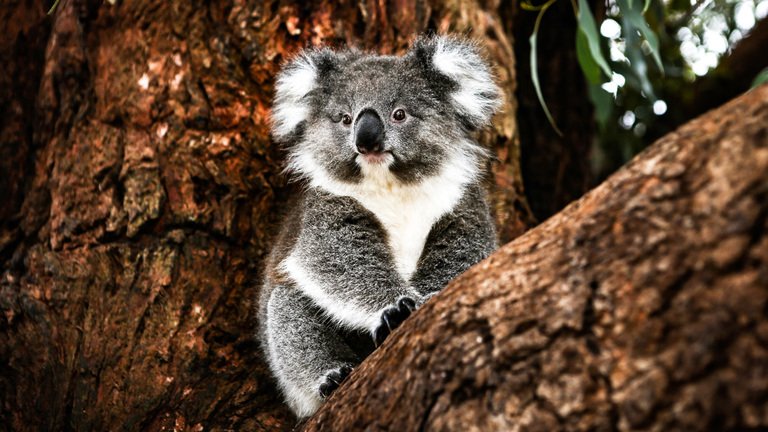
The koala is arguably the most beloved animal in Australia — a marsupial of extraordinary cuteness whose entire existence is organised around a single food source so toxic that virtually no other animal on earth can eat it.
Koalas eat eucalyptus leaves — almost exclusively and in quantities of up to one kilogram per day. Eucalyptus leaves are highly toxic, extraordinarily fibrous, extremely low in nutrition, and so difficult to digest that the koala has developed a digestive system of remarkable specialisation — an extraordinarily long caecum (up to two metres) that breaks down the toxins through bacterial fermentation, combined with the lowest metabolic rate of any mammal of comparable size, allowing the koala to conserve the minimal energy provided by its difficult food source.
The result of this dietary strategy is the koala’s most famous characteristic — it sleeps for up to 22 hours per day. This is not laziness. It is metabolic efficiency — the koala conserving every possible calorie from food that provides almost none.
Koalas are not bears — despite the common misnomer. They are marsupials, more closely related to wombats than to any bear species. The joey is born after a gestation of just 35 days — at birth it is less than two centimetres long and weighs half a gram. It crawls unassisted from the birth canal to the pouch where it attaches to a nipple and spends the next six to seven months completing its development.
The koala’s fingerprints are one of the most remarkable and most unsettling facts about the species — koala fingerprints are virtually identical to human fingerprints, to the point where forensic investigators have found koala prints at crime scenes. The two species are not closely related — the similarity is an extraordinary case of convergent evolution, suggesting that the ridge pattern on fingertips serves a function important enough to have evolved independently in two completely unrelated lineages.
The conservation reality:
Koalas are listed as vulnerable in Queensland and New South Wales and endangered in some local populations. Habitat loss through land clearing, disease — particularly chlamydia, which affects a significant proportion of wild koala populations — and vehicle strikes are the primary threats. The 2019-2020 Australian bushfire season burned approximately 30 percent of koala habitat in New South Wales and killed an estimated 60,000 koalas — a devastating impact on an already vulnerable population.
Best places to see koalas: Magnetic Island (Queensland — one of the highest wild koala densities in Australia), Raymond Island (Victoria — walk-in wild koala colony), Tidbinbilla Nature Reserve (ACT), Kennett River (Victoria — roadside koalas easily visible), Lone Pine Koala Sanctuary (Brisbane — world’s largest koala sanctuary), and the You Yangs Regional Park (Victoria).
3. Wombat — The Underground Engineer
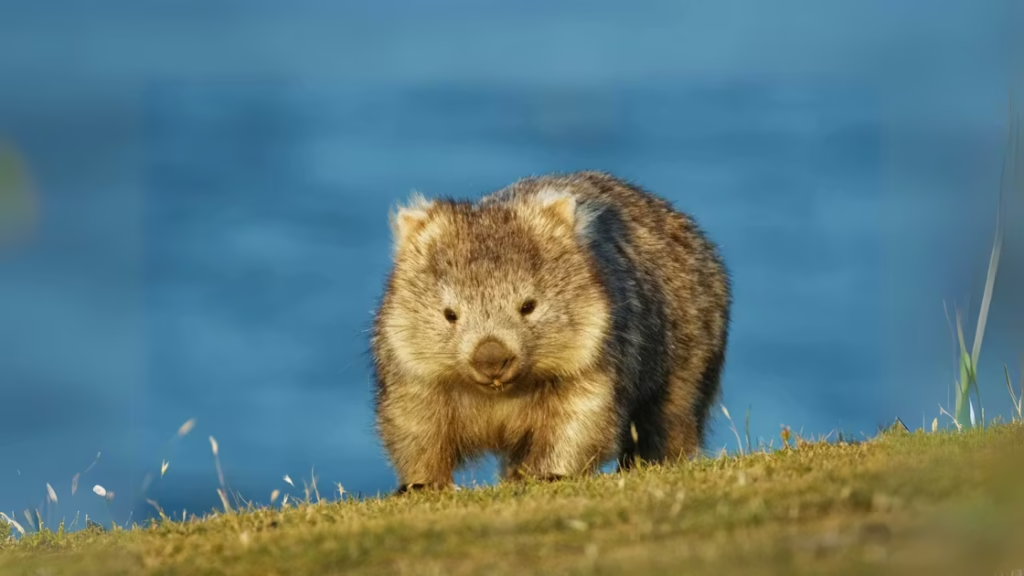
The wombat is one of Australia’s most endearing and most underappreciated animals — a compact, powerfully built marsupial that is the world’s largest burrowing mammal and the only animal on earth to produce cubic faeces.
The cubic dropping — a unique biological achievement produced by the wombat’s extraordinarily long and muscular digestive tract, which shapes the faeces into cubes as it dries — is used for scent marking. The cubic shape prevents the droppings from rolling off rocks and logs, keeping them exactly where the wombat places them as territorial markers. It is simultaneously one of the most bizarre and most ingenious waste management systems in the animal kingdom.
Wombats are built for digging — their skeletal structure, muscular density, and physical toughness are extraordinary. The wombat’s rear end is armoured with thick cartilage and skin — when threatened the wombat retreats into its burrow and presents this armoured rump to the entrance, capable of crushing a predator’s skull against the burrow ceiling. Wombat burrows can extend up to 30 metres in length and 3.5 metres in depth — creating underground systems of remarkable complexity that also provide shelter for many other Australian species.
Australia has three species of wombat — the common wombat, the northern hairy-nosed wombat, and the southern hairy-nosed wombat.
The northern hairy-nosed wombat is one of the rarest large mammals on earth — with a population of approximately 300 individuals restricted to a single national park in Queensland. It is protected with extraordinary care and the small population is slowly recovering under intensive conservation management.
Best places to see wombats: Cradle Mountain National Park (Tasmania — common wombats very approachable), Wilson’s Promontory (Victoria), Kosciuszko National Park (New South Wales), and Maria Island (Tasmania — particularly excellent wombat population).
4. Quokka — The World’s Happiest Animal
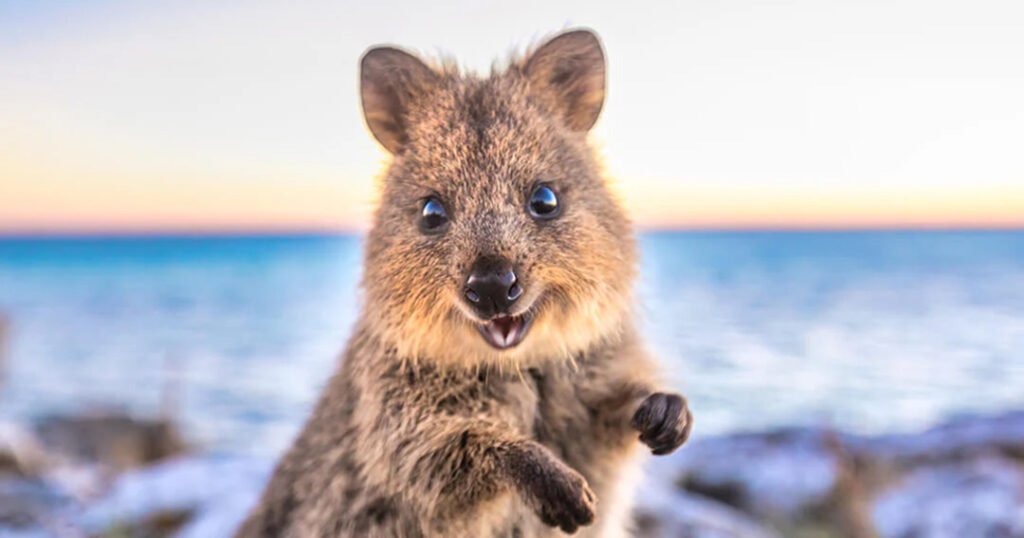
The quokka is a small wallaby-sized marsupial that has become one of the most photographed animals in the world — not because of its rarity or its biological remarkability but because of its facial expression. The quokka’s mouth curves naturally upward in what appears to be a permanent cheerful smile — earning it the title of the world’s happiest animal and making it the subject of an extraordinary volume of selfie photography.
Beyond the smile the quokka is a genuinely remarkable animal. It is one of the only mammals that can climb trees despite having no tree-climbing adaptations. It can go for extended periods without water — extracting moisture from its food with extraordinary efficiency. And it has developed a remarkable if startling survival strategy — when threatened by a predator a mother quokka will drop the joey from her pouch to distract the predator while she escapes. The joey, meanwhile, may survive by hiding.
Quokkas exist in small populations on the Australian mainland — largely in southwestern Western Australia — but the most accessible and most famous quokka population is on Rottnest Island, a small island 18 kilometres off the coast of Perth.
Rottnest Island is named after the quokka — the Dutch explorer Willem de Vlamingh, who visited in 1696, described the island’s quokkas as giant rats and named the island Rotte Nest — rat’s nest. The quokkas on Rottnest Island are extraordinarily unafraid of humans — they will approach visitors, accept (though ideally should not receive) food from hands, and pose with apparent willingness for the selfies that have made the species internationally famous.
Best places to see quokkas: Rottnest Island (Western Australia — the only place in the world where quokka encounters are essentially guaranteed), Bald Island (Western Australia), and selected areas of southwestern Western Australia mainland.
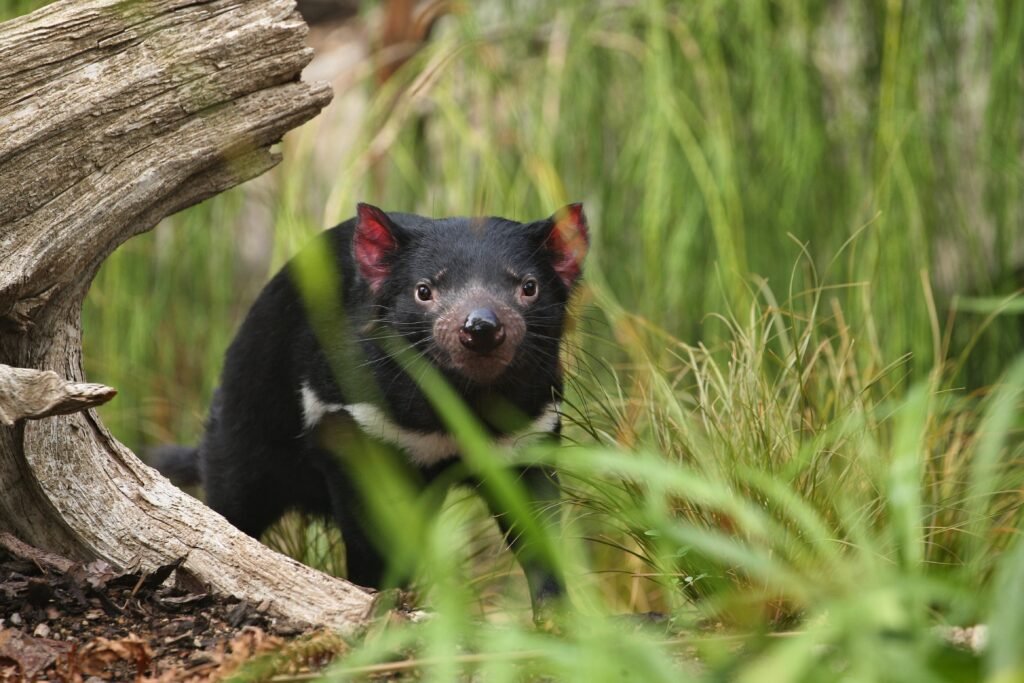
5. Tasmanian Devil — The Ferocious Scavenger
The Tasmanian devil is the world’s largest surviving carnivorous marsupial — a compact, powerfully built animal with a bite force proportional to body size that exceeds that of any other living mammal. The devil’s jaws can crush through bone with a force that has been measured at 553 newtons — extraordinary for an animal weighing only 8 to 14 kilograms.
The Tasmanian devil is named for its extraordinary vocalisation — a blood-curdling shriek and growl that early European settlers found genuinely terrifying when heard emerging from the Tasmanian forest at night. The vocalisation is used primarily in feeding disputes — Tasmanian devils are communal scavengers and the noise produced by a group of devils competing over a carcass is one of the most extraordinary and most unsettling sounds in the Australian wilderness.
The devil is primarily a scavenger — its extraordinarily powerful jaws and digestive system allow it to consume an entire carcass including bones, fur, and organs, leaving nothing behind. This ecological role makes it one of the most important animals in the Tasmanian ecosystem — a natural sanitation service that prevents the spread of disease from rotting carcasses.
The Devil Facial Tumour Disease crisis:
Tasmanian devils have been devastated by Devil Facial Tumour Disease — a contagious cancer spread by biting during feeding disputes that has killed more than 80 percent of the wild Tasmanian devil population since its discovery in 1996. The disease is one of only a handful of naturally occurring transmissible cancers known in any species and has brought the Tasmanian devil to the edge of extinction.
Intensive conservation programmes — including insurance populations in mainland Australian zoos and wildlife sanctuaries, and a reintroduction programme in New South Wales where devils were recently returned to the Australian mainland for the first time in 3,000 years — are working to preserve the species.
Best places to see Tasmanian devils: Cradle Mountain National Park (Tasmania — wild devil spotting possible at night), Devils @ Cradle sanctuary (Cradle Mountain), Tasmanian Devil Unzoo (Taranna, Tasmania), and Healesville Sanctuary (Victoria — mainland insurance population).
6. Echidna — The Spiny Anteater
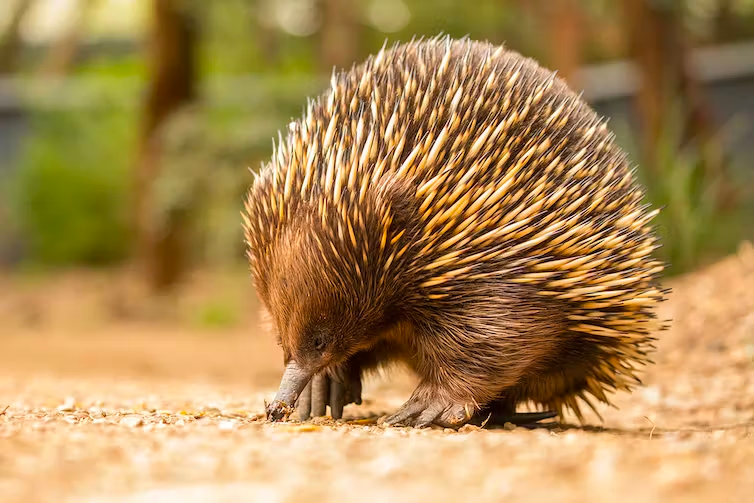
The echidna is one of only five surviving species of monotreme — the most ancient and most extraordinary branch of the mammal family tree. Monotremes are mammals that lay eggs — a characteristic they share with reptiles and birds and that no other living mammals possess.
The echidna is found throughout Australia and Papua New Guinea — making it the most widespread native mammal in Australia. Despite this distribution it is less commonly seen than its ubiquity suggests because of its defensive strategy: when threatened the echidna curls into a ball of spines or digs straight down into the soil, disappearing in seconds.
The echidna’s tongue is one of the most remarkable feeding organs in the animal kingdom — a long, sticky, rapidly moving tongue that can extend 18 centimetres beyond the snout tip and move at five times per second, extracting ants and termites from their tunnels with extraordinary efficiency. The echidna has no teeth — food is ground between the tongue and a hard pad on the roof of the mouth.
The male echidna’s penis is one of nature’s most extraordinary structures — a four-headed organ, only two heads of which are used at any one time, alternating between uses. It is the only four-headed penis known in any mammal and its function remains the subject of ongoing scientific research.
The echidna’s lactation is equally remarkable — lacking nipples, the mother secretes milk through patches of specialised skin and the puggle — the newly hatched young — laps the milk directly from the skin surface.
Best places to see echidnas: Echidnas are found throughout Australia in appropriate habitat. Kangaroo Island (South Australia) has one of the highest echidna densities in the country. They are also regularly seen in the Blue Mountains (New South Wales), Grampians National Park (Victoria), and Cradle Mountain (Tasmania).
7. Platypus — Nature’s Most Extraordinary Animal
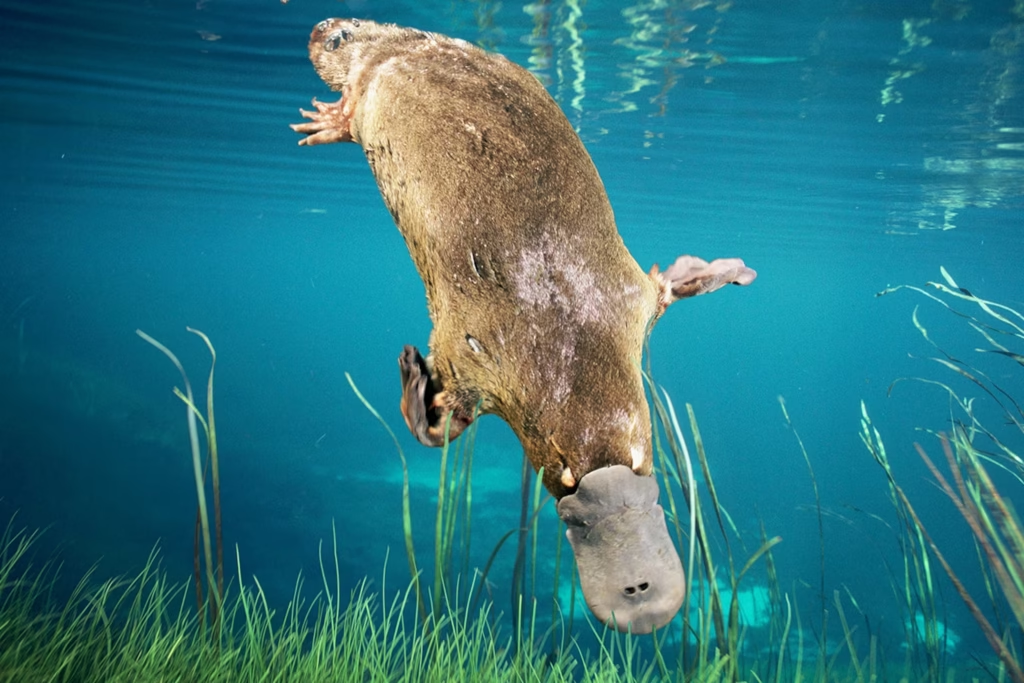
The platypus is the most remarkable animal in Australia — and possibly the most remarkable animal on earth. A mammal that lays eggs. That has a duck-like bill covered in electroreceptors capable of detecting the electrical fields generated by the muscle contractions of its prey. That navigates and hunts entirely by electroreception — swimming with its eyes, ears, and nostrils closed, detecting prey through electrical sense alone. That has venomous spurs on its hind legs — the only venomous mammal in Australia. That stores fat in its tail rather than throughout its body. That has ten sex chromosomes rather than the two that all other mammals possess.
The platypus is what 50 million years of isolated evolution produces when it starts from the most ancient mammal lineage still surviving and adds challenges that require extraordinary biological solutions.
The electroreceptive bill is the platypus’s most extraordinary feature. The bill contains approximately 40,000 electroreceptors and 60,000 mechanoreceptors — allowing the platypus to detect the minute electrical fields generated by the muscle movements of shrimps, insect larvae, and worms buried in the riverbed mud. While diving — typically for 30 to 40 seconds before surfacing — the platypus sweeps its bill from side to side through the mud, triangulating the position of prey with extraordinary accuracy.
The venom — delivered through spurs on the hind legs of males — is not lethal to humans but produces pain of extraordinary intensity that can last for months and is resistant to standard pain medication. The venom is used in competition between males during breeding season and has no defensive function.
The conservation situation:
The platypus has declined significantly across its range due to habitat degradation, water extraction, and climate change affecting river systems. It is now classified as near threatened and some local populations have disappeared entirely from rivers where they were once common.
Best places to see platypus: Eungella National Park (Queensland — one of the most reliable platypus viewing locations in Australia), Broken River (Queensland), Tidbinbilla Nature Reserve (ACT), Tharwa Valley (ACT), and the Snowy Mountains rivers (New South Wales). Platypus are crepuscular — most active at dawn and dusk — and are best seen by sitting quietly beside a clear river and watching the surface.
8. Numbat — The Termite Specialist
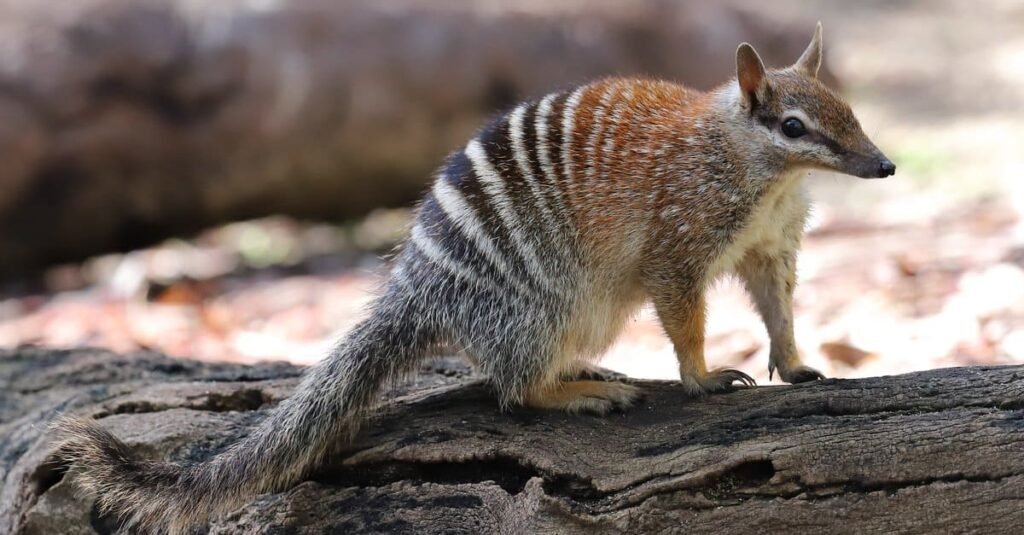
The numbat is one of Australia’s most beautiful and most endangered marsupials — a small, fox-sized animal with a striking rust and white striped coat and a long pointed snout specifically adapted for termite feeding.
The numbat is one of only two marsupials that are exclusively diurnal — active only during the day. This is directly linked to its food source — termites are only active in their surface tunnels during the warmth of daylight hours and the numbat’s activity pattern follows theirs precisely.
A single numbat consumes approximately 20,000 termites per day — located by smell and extracted from shallow tunnels with a long sticky tongue. Unlike most termite-eating animals the numbat does not break open termite mounds — it feeds exclusively from the shallow surface tunnels where termites travel between their mound and feeding sites.
The numbat population was devastated by the introduction of foxes and cats to Australia — by the 1980s fewer than 1,000 individuals survived, restricted to two small areas of Western Australia. Intensive conservation management including fox and cat control programmes has allowed the population to recover to approximately 1,000 individuals — still critically small and still requiring active management.
Best places to see numbats: Dryandra Woodland (Western Australia) and Perup Nature Reserve (Western Australia) — the only reliable wild numbat viewing locations. Perth Zoo has a successful breeding programme with viewing opportunities.
9. Bilby — The Easter Animal
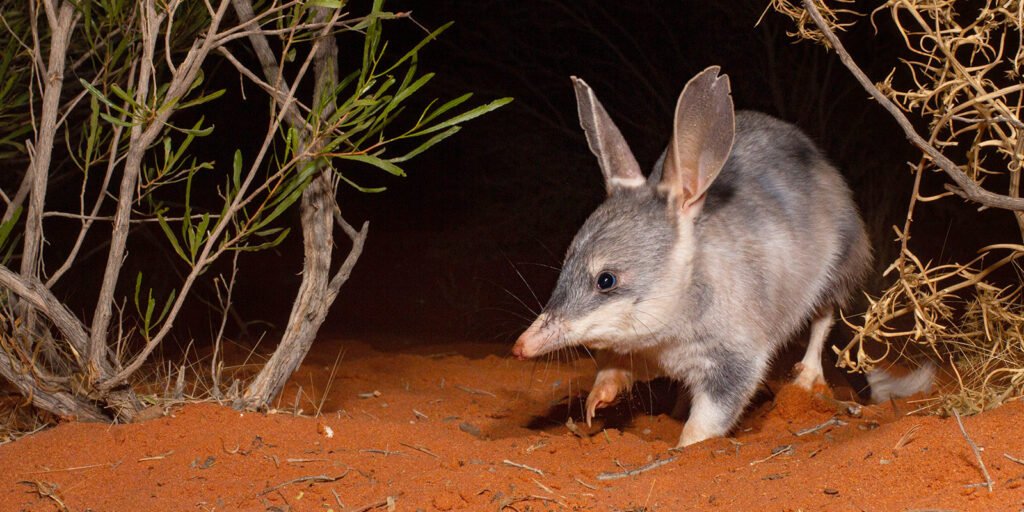
The bilby — also known as the greater bilby — is a large-eared marsupial omnivore that has replaced the rabbit as Australia’s Easter animal in a conservation-conscious cultural shift — chocolate bilbies are sold alongside chocolate rabbits at Easter with proceeds supporting bilby conservation.
The bilby’s ears are extraordinary — large, bat-like structures that provide exceptional hearing in the dark desert environment where the bilby is nocturnal and fossorial. The bilby digs spiral burrows up to two metres deep — the spiral design making the burrow difficult for predators to enter and providing insulation from the extreme temperature fluctuations of the desert surface.
The bilby once ranged across 70 percent of Australia — today it is restricted to less than 20 percent of its former range, surviving in remote arid areas of Queensland, the Northern Territory, and Western Australia. The primary threats are the same that have devastated most of Australia’s small and medium-sized mammals — feral cats and foxes introduced by European settlers.
Best places to see bilbies: Wild Deserts project (Sturt National Park, New South Wales — feral predator-free enclosure), Currawinya National Park (Queensland), and several predator-free wildlife sanctuaries including Taronga Zoo (Sydney) and the Australian Wildlife Conservancy sanctuaries.
10. Sugar Glider — The Flying Marsupial
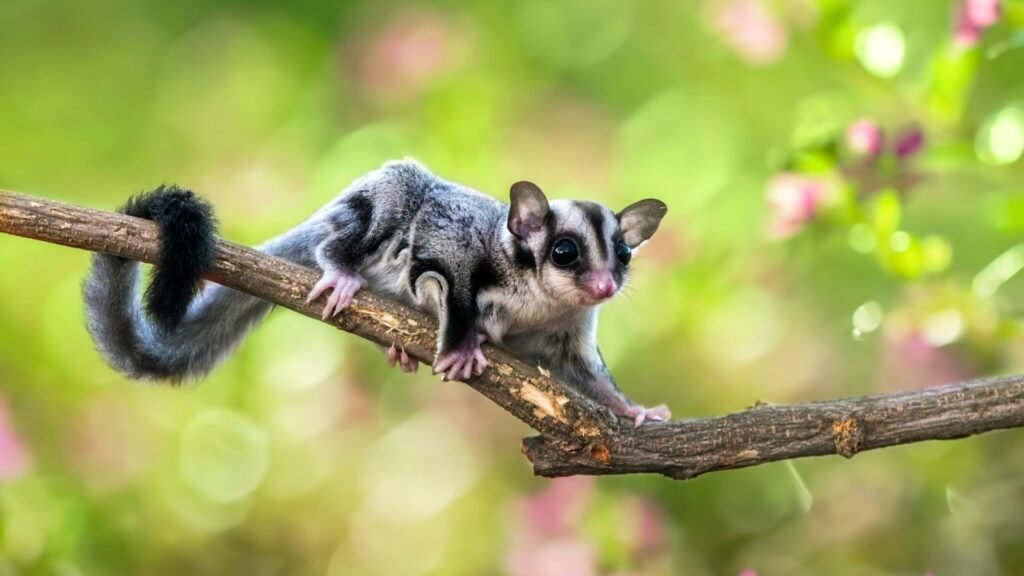
The sugar glider is a small possum that has developed a gliding membrane — the patagium — stretching from its wrists to its ankles that allows it to glide between trees for distances of up to 50 metres. It is one of several Australian marsupials that have independently evolved gliding — the squirrel glider, mahogany glider, feathertail glider, and greater glider are all unrelated species that evolved the same adaptation for moving through the forest canopy.
Sugar gliders are social animals — living in family groups of up to 10 individuals that share a nest hollow and scent mark their territory collectively. They feed on nectar, pollen, insects, and tree sap — the name comes from their preference for sweet foods.
Best places to see sugar gliders: Any suitable woodland habitat in eastern Australia — they are nocturnal and best seen with a torch at night. Lamington National Park (Queensland), Border Ranges National Park (New South Wales), and Grampians National Park (Victoria) are all reliable locations.
The Birds: Australia’s Extraordinary Avifauna
11. Emu — The Continent’s Largest Bird
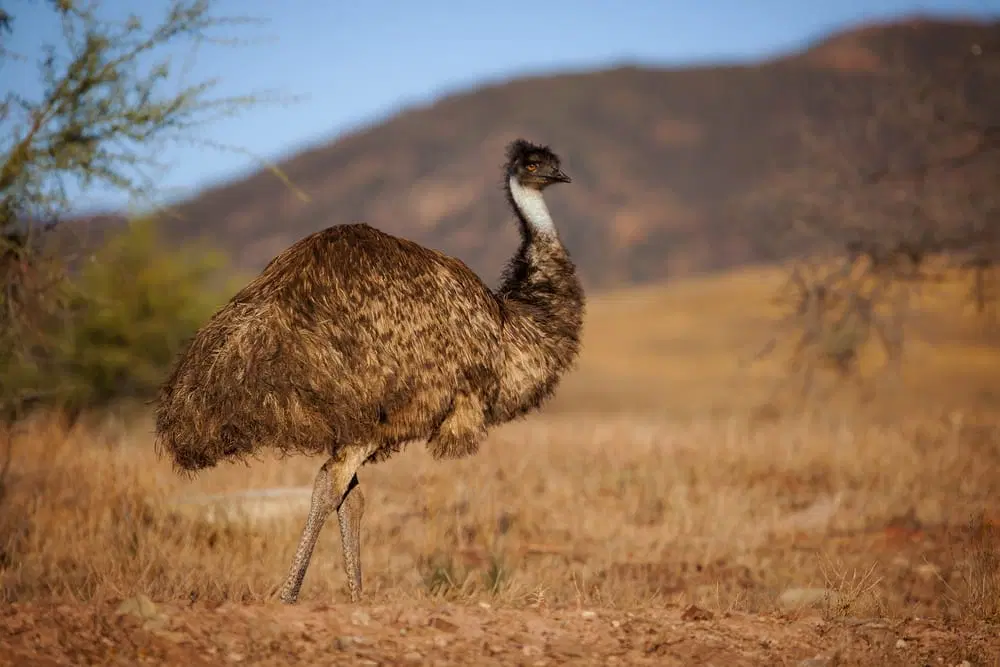
The emu is the world’s second largest bird by height and the largest bird in Australia — a flightless ratite that stands up to 1.9 metres tall and can run at speeds of up to 50 kilometres per hour. Like the kangaroo it is one of Australia’s national symbols — appearing alongside the kangaroo on the Australian coat of arms.
The emu’s most extraordinary characteristic is its reproductive role reversal — the female emu is larger and more aggressive than the male, courts the male during breeding season, and then leaves the male to incubate the eggs and raise the chicks entirely alone. The male incubates the eggs for 56 days without eating, drinking, or defecating — losing up to one third of his body weight during the incubation period.
The Great Emu War of 1932 — in which the Australian military deployed soldiers with machine guns to cull a population of approximately 20,000 emus causing agricultural damage in Western Australia — ended in effective defeat for the military. The emus’ resilience, their tendency to scatter and regroup, and their remarkable ability to absorb gunfire without immediately dying proved too much for the military operation. The programme was abandoned after six weeks having killed fewer than 1,000 emus.
Best places to see emus: Emus are found throughout mainland Australia in open habitats. Kangaroo Island (South Australia) and Flinders Ranges National Park (South Australia) offer reliable sightings. They are also common in many rural areas of inland Australia.
12. Cassowary — The World’s Most Dangerous Bird
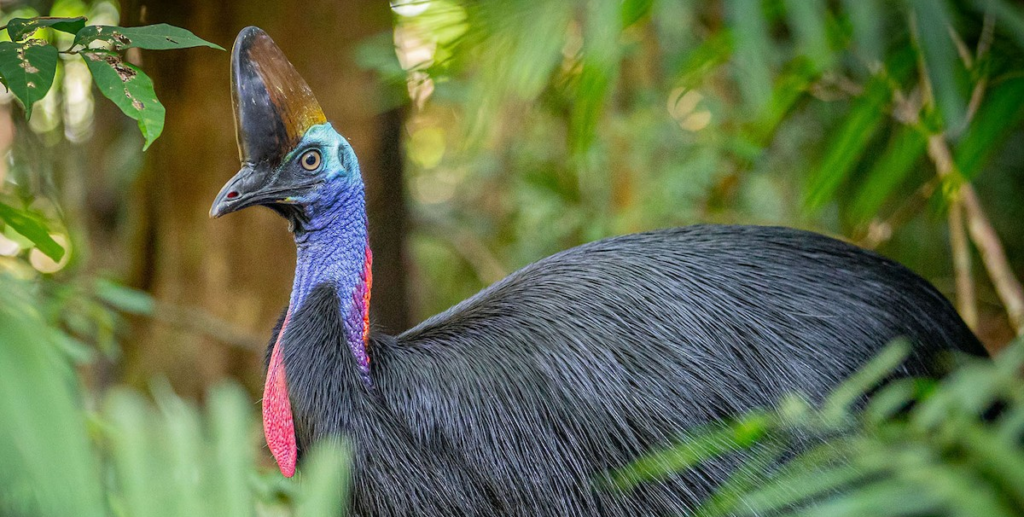
The cassowary is found in the tropical rainforests of far north Queensland — a large, flightless bird of extraordinary appearance and formidable physical power that is widely considered the most dangerous bird in the world.
The southern cassowary stands up to 1.8 metres tall and weighs up to 85 kilograms — the second heaviest bird on earth after the ostrich. Its most distinctive feature is the casque — a tall, helmet-like structure of keratin and bone on top of the head whose function is debated but may assist in pushing through dense vegetation, amplifying low-frequency vocalisations, or as a display structure.
The cassowary’s danger comes from its feet — each foot has three toes, the inner toe bearing a dagger-like claw up to 12 centimetres long. When threatened the cassowary kicks with extraordinary force — the combination of powerful legs and the dagger claw can disembowel a human or large animal in a single strike. The cassowary is responsible for the only recorded fatal bird attack on a human in the 20th century — a 16-year-old boy killed in Florida in 1926 by a captive bird.
In the wild cassowaries are shy — they avoid humans and attacks are almost exclusively the result of humans feeding them, which causes them to associate humans with food and become aggressive.
Best places to see cassowaries: Daintree National Park (Queensland), Mission Beach (Queensland — one of the most accessible cassowary viewing locations), and Etty Bay (Queensland). The Wet Tropics World Heritage Area of far north Queensland is the primary cassowary habitat.
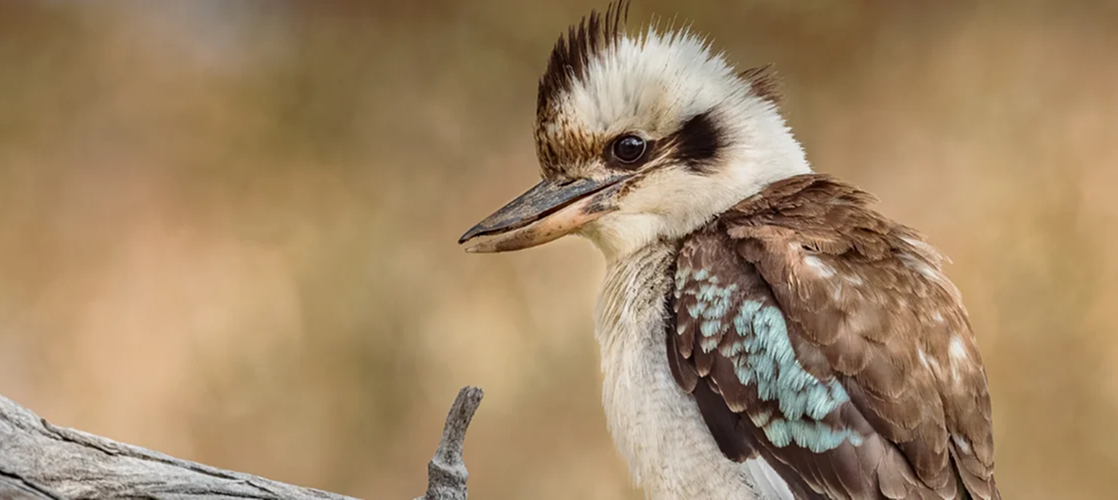
13. Kookaburra — The Laughing Bird
The laughing kookaburra is the world’s largest kingfisher — a bird whose extraordinary territorial call sounds exactly like human laughter and has been used as the stereotypical sound of the Australian bush in films and television programmes worldwide.
The kookaburra’s laugh is not an expression of joy — it is a territorial declaration, establishing the boundaries of the family group’s territory at dawn, dusk, and intermittently throughout the day. The sound carries remarkably far through forest and is one of the most distinctive and most recognisable sounds in the Australian natural world.
Kookaburras are ambush predators — sitting motionless on a prominent perch watching for movement below, then dropping to seize prey. They eat snakes — including venomous species — lizards, mice, and large insects, beating them against a branch to kill them before swallowing whole. A kookaburra family group will cooperatively mob and attack snakes significantly larger than themselves.
Best places to see kookaburras: Kookaburras are found throughout eastern and southwestern Australia and are one of the easiest Australian birds to see — they are common in suburban gardens, city parks, and any forested area of eastern Australia. They are often bold enough to approach humans for food.
14. Lyrebird — Nature’s Greatest Mimic
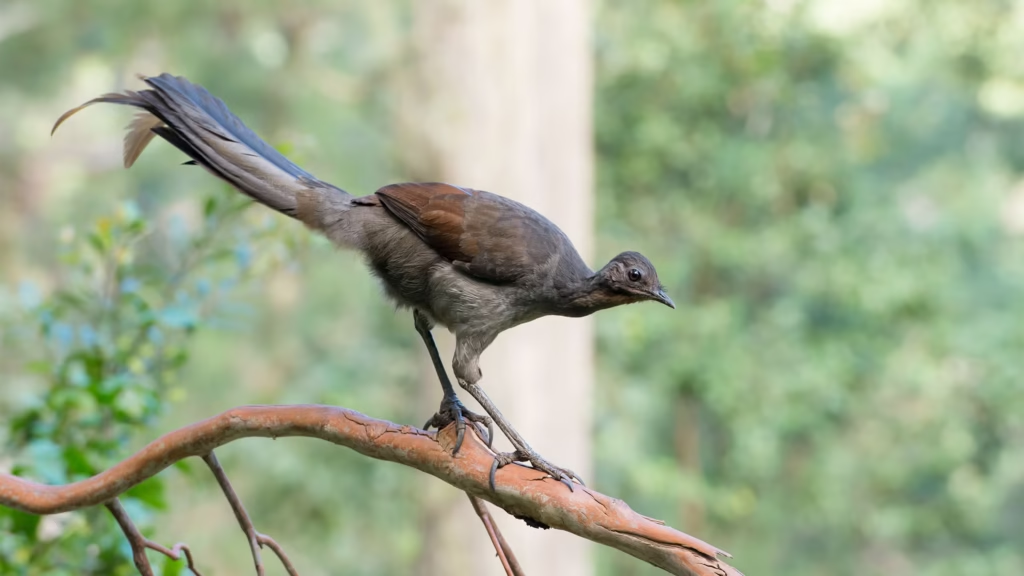
The superb lyrebird is one of the most extraordinary birds on earth — a ground-dwelling bird of the forest floor found in southeastern Australia that possesses the most remarkable vocal mimicry ability of any bird known to science.
The male lyrebird’s song incorporates not only its own natural vocalisations but exact reproductions of the calls of every other bird species in its territory — often 20 or more species reproduced with perfect accuracy simultaneously. But the mimicry extends far beyond bird calls — lyrebirds have been recorded reproducing the sounds of chainsaws, camera shutters, car alarms, crying babies, construction equipment, and virtually any other sound heard in their environment with uncanny accuracy.
The male lyrebird’s tail — the feature that gives the species its name — is one of the most spectacular displays in the bird world. During the breeding season the male spreads the tail over his body during display — the central feathers forming a lyre shape while the outer feathers create a shimmering silver canopy. The display is accompanied by the full vocal performance — a combination of the bird’s own song and the complete repertoire of its environmental mimicry.
Best places to see lyrebirds: Sherbrooke Forest (Victoria — one of the most reliable and most accessible lyrebird viewing locations in Australia), O’Reilly’s Rainforest Retreat (Queensland), Lamington National Park (Queensland), and the Royal National Park (New South Wales).
15. Black Swan — The Philosophical Bird
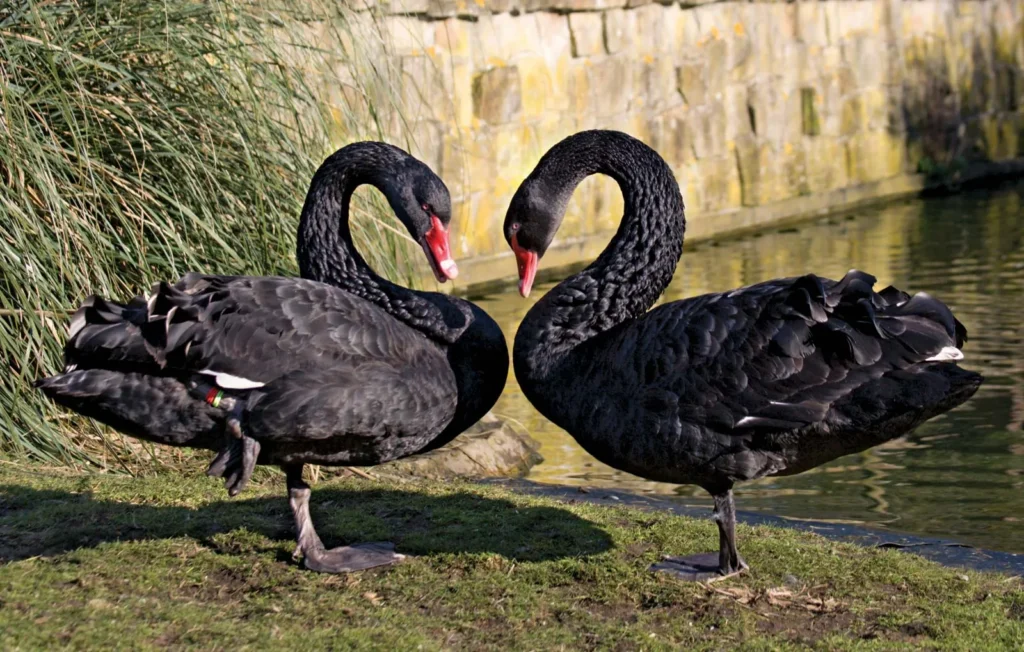
The black swan of Western Australia gave the world one of its most important philosophical concepts — before European exploration of Australia all swans known to science were white and the existence of a black swan was considered an impossibility, a metaphor for something that could not exist. When Dutch explorer Willem de Vlamingh encountered black swans on the Swan River in 1697 the discovery became a landmark moment in the philosophy of science — demonstrating that no number of confirming observations can prove a theory but a single disconfirming observation can disprove it.
The black swan is now the state emblem of Western Australia — a fitting symbol for a continent that has repeatedly produced things that the rest of the world considered impossible.
Best places to see black swans: Perth’s foreshore and parks, Rottnest Island (Western Australia), and wetland areas throughout southern Australia.
The Reptiles: Ancient and Extraordinary
16. Saltwater Crocodile — The World’s Largest Reptile
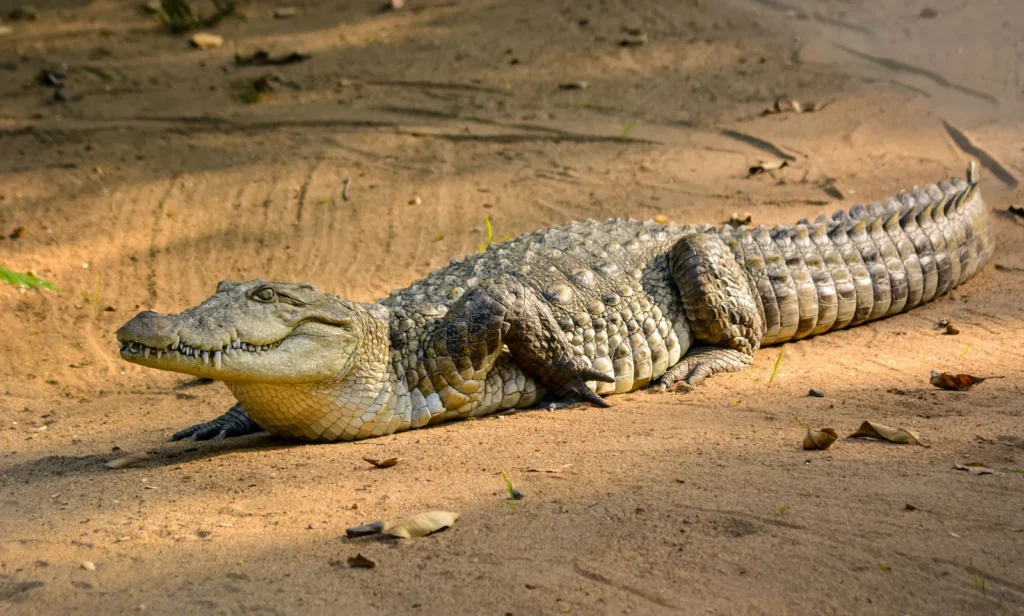
The saltwater crocodile is the largest living reptile on earth — adult males regularly exceed five metres in length and the largest verified specimens have reached seven metres. In Australia saltwater crocodiles are found in the tropical north — from Broome in Western Australia across the Northern Territory to the north Queensland coast — in rivers, estuaries, coastal wetlands, and open sea.
The saltwater crocodile is an apex predator of extraordinary capability — capable of explosive speed over short distances, able to remain submerged for up to one hour, and possessing the strongest bite force of any animal measured by science. It is genuinely dangerous to humans — fatal attacks occur in northern Australia every few years and the precautions required in crocodile country are serious and non-negotiable.
The recovery of saltwater crocodiles in Australia is one of conservation history’s greatest successes — hunted almost to extinction by the 1960s the saltwater crocodile was protected in 1971 and the population has recovered to an estimated 100,000 individuals in the Northern Territory alone.
Best places to see saltwater crocodiles: Yellow Water Billabong (Kakadu National Park, Northern Territory), Adelaide River (Northern Territory — famous jumping crocodile cruise), Mary River (Northern Territory), and the Daintree River (Queensland).
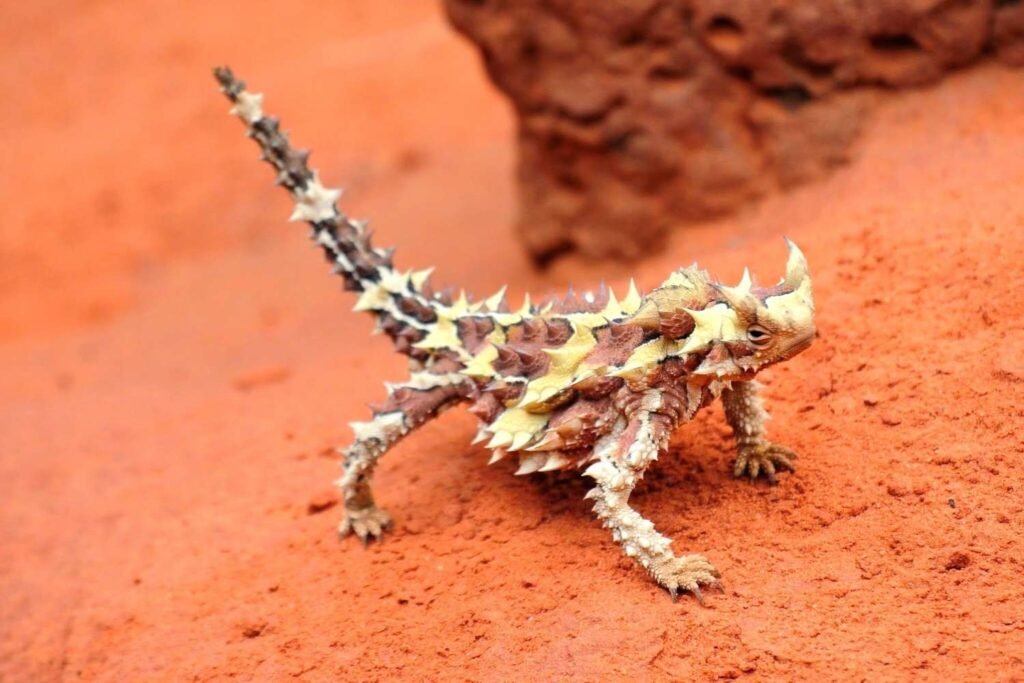
17. Thorny Devil — The Desert Specialist
The thorny devil is a small lizard of the Australian desert — covered entirely in conical spines that serve both as camouflage and as a water collection system of remarkable ingenuity. The thorny devil’s skin is covered in hygroscopic scales that channel water — from dew, from rain, from moist sand — along microscopic channels between the scales to the corners of the mouth where it is drunk. The thorny devil can absorb water through any part of its skin surface in contact with moisture — an extraordinary adaptation to one of the most arid environments on earth.
The thorny devil’s false head — a spiny knob on the back of the neck — is presented to predators when the animal tucks its real head between its forelegs, confusing the predator about where to strike.
Best places to see thorny devils: The Australian desert interior — particularly the Simpson Desert, Uluru-Kata Tjuta National Park (Northern Territory), and the red sand deserts of Western Australia.
The Marine Life: The Great Barrier Reef and Beyond
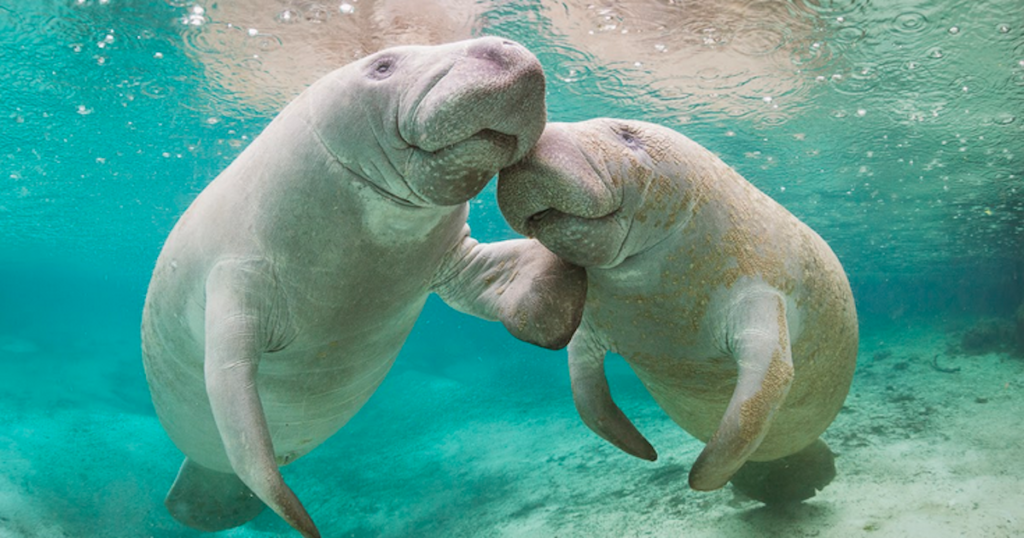
19. Dugong — The Sea Cow
The dugong is a large marine mammal — a herbivore that grazes on seagrass meadows in the shallow tropical and subtropical waters of the Indo-Pacific. Australia has the largest dugong population in the world — an estimated 85,000 individuals in Australian waters, representing the majority of the global population.
The dugong’s slow, gentle, bottom-feeding lifestyle — grazing seagrass with a muscular downward-flexed snout — gave rise to the mermaid legends of sailors in tropical waters. A dugong seen from a distance, occasionally surfacing to breathe, its large grey form moving slowly through shallow water — it is possible to understand, generously, how a sailor who had been at sea for months might have misidentified one.
Best places to see dugongs: Shark Bay World Heritage Area (Western Australia — one of the world’s most important dugong habitats), Moreton Bay (Queensland), and the waters around the Whitsunday Islands (Queensland).
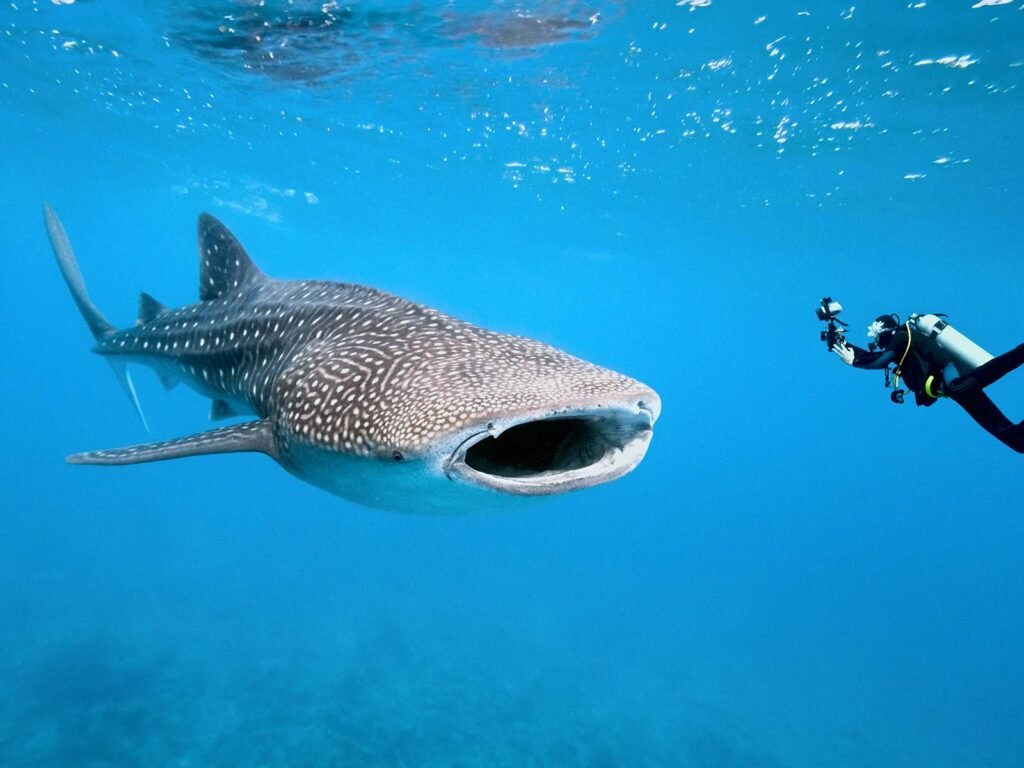
20. Whale Shark — The Ocean’s Gentle Giant
The whale shark is the largest fish in the ocean — reaching up to 12 metres in length — and a filter feeder that moves slowly through the water with its enormous mouth open, straining plankton and small fish from the water. Despite its size the whale shark is entirely harmless to humans — the most gentle of the ocean’s largest animals.
Ningaloo Reef in Western Australia offers the most reliable and most accessible whale shark snorkelling experience in the world — between March and July each year whale sharks aggregate at Ningaloo to feed on the annual coral spawning and snorkelling with them is offered by licensed operators under strict management guidelines.
Best places to see whale sharks: Ningaloo Reef, Exmouth (Western Australia) — the best whale shark snorkelling destination in the world.
Where to See Australian Wildlife: The Best Destinations
Kangaroo Island, South Australia
Kangaroo Island is one of the finest wildlife destinations in Australia — an island of 4,400 square kilometres off the South Australian coast that has been largely spared the introduced predators (foxes in particular) that have devastated wildlife populations on the mainland. The island has outstanding populations of kangaroos, koalas, echidnas, platypus, sea lions, little penguins, and fur seals — all viewable in genuinely wild conditions without the need for specialist knowledge or extensive effort.
Kakadu National Park, Northern Territory
Kakadu is Australia’s largest national park — a UNESCO World Heritage Area of extraordinary ecological and cultural significance containing saltwater crocodiles, freshwater crocodiles, frilled-neck lizards, hundreds of bird species, and some of the most dramatic and most biodiverse landscapes in Australia.
Daintree National Park, Queensland
The Daintree Rainforest is the oldest tropical rainforest on earth — older than the Amazon — and the only place in Australia where two UNESCO World Heritage Areas meet (the Wet Tropics and the Great Barrier Reef). It contains cassowaries, tree kangaroos, Boyd’s forest dragons, and an extraordinary density of endemic species found nowhere else on earth.
Tasmania
Tasmania is Australia’s wildlife island — geographically isolated from the mainland, with endemic species including the Tasmanian devil, the eastern quoll, the Tasmanian pademelon, and the eastern barred bandicoot. The island’s national parks are among the finest wildlife watching destinations in Australia.
Ningaloo Reef, Western Australia
Ningaloo offers the most accessible coral reef experience in Australia — snorkelling directly from the beach onto the reef — combined with whale shark encounters, manta ray aggregations, and humpback whale migrations. It is arguably the finest all-round marine wildlife destination in Australia.
Conservation: The Honest Reality
Australia has one of the worst mammal extinction records of any country on earth. Since European settlement in 1788 Australia has lost more mammal species than any other continent — 34 mammal species have become extinct, representing approximately 35 percent of all mammal extinctions worldwide in that period.
The primary causes are the introduction of feral cats and foxes — which have devastated populations of small and medium-sized native mammals across the continent — combined with land clearing, changed fire regimes, and climate change.
The feral cat alone is estimated to kill 1.4 billion native animals per year in Australia — a figure of staggering ecological impact. Feral cat control is the single most important conservation challenge in Australian wildlife management and the subject of intensive research and management effort.
The good news is that conservation efforts in Australia are genuinely effective where they are applied with adequate resources. Predator-free sanctuaries — large fenced areas from which cats and foxes have been excluded — have demonstrated dramatic recoveries of species that were approaching extinction in the wild. The return of locally extinct species to areas of their former range is happening across Australia with increasing frequency and increasing success.
Visiting Australian wildlife responsibly — supporting wildlife sanctuaries, choosing operators committed to conservation, and following the guidelines that protect animals from the negative impacts of tourism — is a genuine contribution to the conservation of the extraordinary animals that exist only here.
Final Thoughts: Why Australian Wildlife Changes You
There is a specific quality to encountering Australian wildlife in the wild that is unlike any other wildlife experience on earth — a quality that comes from the animals’ fundamental strangeness, from the knowledge that what you are watching evolved in isolation for 50 million years and arrived at solutions to the challenges of life that no other evolutionary history produced.
Watching a platypus hunting by electroreception in a clear mountain stream. Standing in a eucalyptus forest at dusk as a mob of grey kangaroos moves silently across the edge of the light. Hearing a lyrebird reproduce the exact sound of a chainsaw heard three years earlier in a forest that is now silent. Seeing a Tasmanian devil in the beam of a torch, its eyes reflecting red as it looks directly at you from the darkness.
These encounters are not simply wildlife sightings. They are moments of genuine contact with the most extraordinary product of biological evolution available anywhere on this planet — animals that exist only here, that evolved only here, and that remind every visitor who encounters them that the world is stranger, more creative, and more extraordinary than anything we had imagined.
Go to Australia. Find the animals. And let them change the way you understand what life on earth actually is.