
Italy was made for train travel. The country’s geography — a long peninsula with major cities strung along its spine — is perfectly suited to rail. The distances between Rome, Florence, Venice, Milan, and Naples are short enough to make flying absurd and long enough to make driving exhausting. The train sits in the middle: fast, comfortable, scenic, and cheap when booked correctly.
The high-speed network connecting Italy’s major cities is genuinely world-class — Rome to Florence in 1 hour 30 minutes, Rome to Naples in 1 hour 10 minutes, Milan to Venice in 2 hours 30 minutes. These are journey times that make the train faster than flying when you factor in airport time. And the regional network, slower and more complex but extraordinarily scenic, opens up the smaller cities, coastal towns, and rural landscapes that make Italy inexhaustible.
But Italy’s train system has a learning curve. The ticketing system is confusing. The difference between operators is not obvious. Seat reservations work differently from what most visitors expect. Strikes happen with Italian frequency. Validation machines exist and forgetting to use them is expensive.
This guide covers everything — operators, booking, classes, routes, passes, the regional network, the things that go wrong, and the things nobody tells you that make the difference between a frustrating and a genuinely excellent rail experience in Italy.
The Two Main Operators: Trenitalia vs Italo
Italy’s intercity rail market is served by two competing operators — Trenitalia (the state railway) and Italo (a private competitor). Understanding the difference between them is the first step to navigating the system.
Trenitalia
Trenitalia is Italy’s national rail operator — state-owned, comprehensive, and running everything from high-speed Frecciarossa services between major cities to slow regional trains connecting villages in rural Calabria. It is the only operator on most regional and rural routes and the dominant player on the high-speed network.
The Trenitalia network divides into several service types that are important to understand:
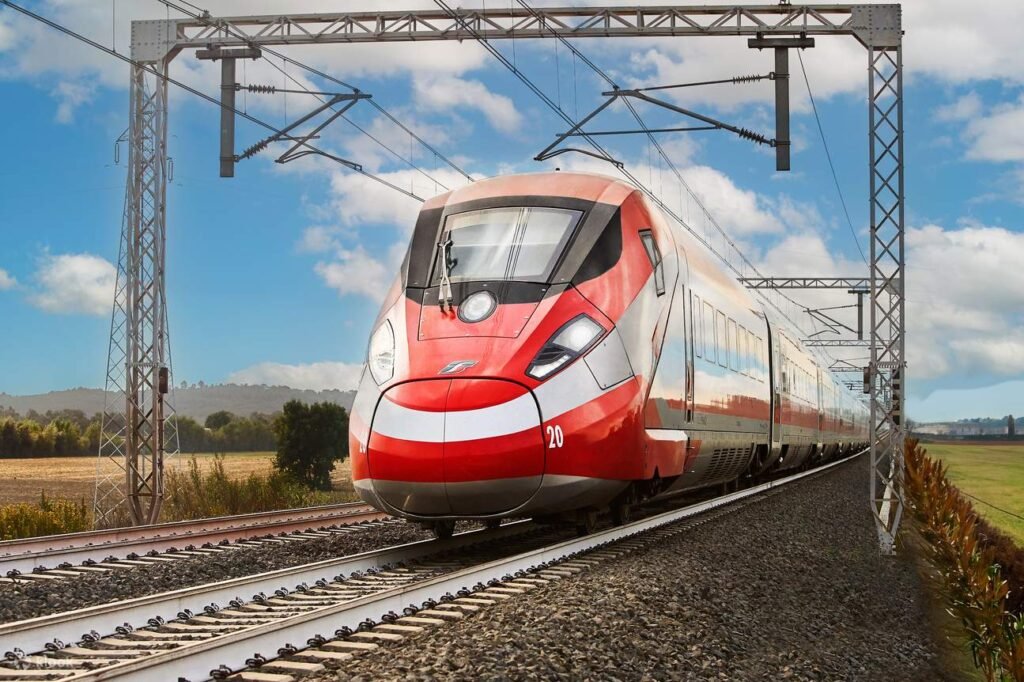
Frecciarossa (Red Arrow) is the flagship high-speed service — Italy’s fastest trains, running at up to 300 km/h on dedicated high-speed track between Milan, Turin, Bologna, Florence, Rome, and Naples. These are modern, comfortable, and the trains most visitors use for intercity travel. Frecciarossa trains require advance booking and seat reservations are mandatory.
Frecciargento (Silver Arrow) runs on a mix of high-speed and conventional track, reaching cities not served by the dedicated high-speed network — including Venezia, Trieste, Ancona, and Reggio Calabria. Slightly slower than Frecciarossa but still significantly faster than regional services.
Frecciabianca (White Arrow) operates on conventional track only — slower than the other Frecce services but reaching a wider range of destinations. Being phased out gradually in favour of other service types.
InterCity trains are Trenitalia’s long-distance conventional services — covering routes not served by the high-speed network, particularly in the south of Italy and on scenic routes through the mountains. Slower, cheaper, and often more atmospheric than the Frecce services.
Regionale trains are the local and regional services — slow, stopping at every station, no seat reservation required, and covering the routes that the high-speed network doesn’t reach. These are the trains for reaching smaller towns and for scenic journeys through the Italian countryside.
Italo
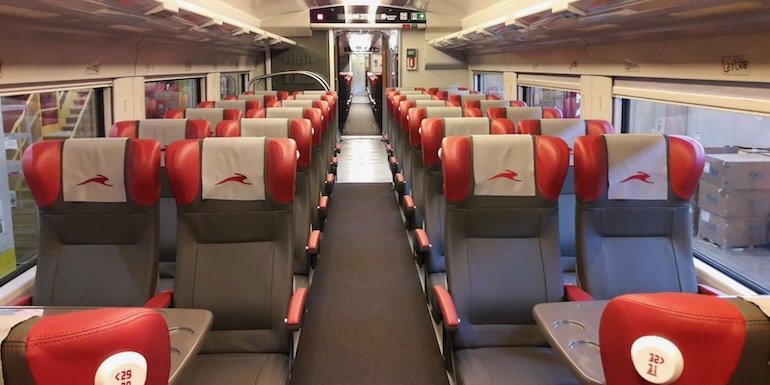
Italo launched in 2012 as Italy’s first private high-speed rail operator and has been a genuine success — running sleek, modern high-speed trains (the AGV and EVO trainsets) on the main intercity corridors in direct competition with Trenitalia’s Frecciarossa.
Italo operates exclusively on the high-speed network — Rome to Naples, Rome to Florence, Florence to Milan, Venice to Milan, and connecting routes. It does not operate regional services.
The key differences between Trenitalia and Italo:
Coverage: Trenitalia covers the entire national network. Italo covers high-speed routes only.
Price: On competing routes, Italo is frequently cheaper than Trenitalia — particularly for advance bookings. The competition between the two operators has driven prices down on the main corridors and this is one of the great advantages of Italy’s liberalised rail market.
Loyalty programs: Both operators have loyalty programs — CartaFRECCIA for Trenitalia, Italo Più for Italo. If you’re making multiple journeys, registering for these is worthwhile for accumulated points and occasional discounts.
Stations: Both operators use the main city stations (Roma Termini, Milano Centrale, Firenze Santa Maria Novella, Napoli Centrale). Check which specific platform your train departs from — this matters in large stations.
Practical recommendation: For high-speed intercity travel, check both operators for each journey and book whichever is cheaper on the day. For any regional or rural travel, Trenitalia is your only option.
Booking Tickets: Everything You Need to Know
Where to Book
Trenitalia: trenitalia.com or the Trenitalia app. Booking opens up to 4 months in advance for high-speed services.
Italo: italotreno.it or the Italo app. Booking opens up to 4 months in advance.
Third party booking platforms: Trainline, Omio, and Rail Europe all aggregate Italian train tickets and are useful for comparing options across operators. They charge a small booking fee but provide a convenient single interface for planning multi-leg journeys.
At the station: Ticket machines at major Italian stations sell both Trenitalia and Italo tickets. Station ticket windows (biglietteria) sell Trenitalia tickets and can handle complex bookings, interrail reservations, and group travel. Queues at ticket windows can be very long — use the machines or book online wherever possible.
How Pricing Works
Italian high-speed train pricing uses a dynamic pricing model — the same seat on the same train can cost dramatically different amounts depending on when you book and how many seats remain. The system rewards advance booking and penalises last-minute travel.
The price tiers on Trenitalia Frecciarossa:
Base fare: The cheapest available ticket — non-refundable, non-changeable. Buy this if you’re certain of your travel plans. Available from approximately €9 for short high-speed routes, €19–29 for Rome-Florence, €29–39 for Rome-Milan.
Economy: Slightly more expensive than Base but with limited change options. Useful if your plans have any flexibility.
Super Economy and Economy are the tiers most budget travellers aim for. Book 4–8 weeks in advance for the best availability.
Standard, Business, and Executive: The progressively more expensive and more flexible ticket classes — fully refundable and changeable at higher tiers. Buy these if your plans are uncertain or if you’re travelling for business.
Italo’s pricing structure is similar — lowest fares in the Low and Economy tiers, progressing through Flex to the most flexible Prima and Club Executive options.
The key booking principle: Book as far in advance as possible for high-speed trains. The cheapest fares disappear quickly and last-minute high-speed tickets can cost three to four times the advance price.
Seat Reservations
On all Trenitalia Frecce services and Italo high-speed trains, seat reservations are mandatory and included in the ticket price. When you book, you choose your seat.
On Trenitalia InterCity trains, seat reservations are required and cost a small supplement if not included in your ticket.
On Trenitalia Regionale trains, no seat reservation is required or available — you board and find any available seat.
Choosing your seat on high-speed trains:
Window vs aisle: The standard choice. Windows offer the best scenery — particularly on the Rome-Florence and Florence-Milan routes through Tuscany and the Po Valley.
Direction of travel: High-speed trains run in both directions and seats face both forward and backward. If motion sickness is an issue, book a forward-facing seat — look for this option when selecting seats.
Quiet zones: Frecciarossa trains have designated quiet carriages — useful for working travellers and worth knowing about if you want a calmer journey.
Families and groups: Table seats (quattro posti con tavolino) accommodate four people facing each other across a table — book these for families or groups travelling together.
Train Classes: What the Difference Actually Means
Frecciarossa Classes
The Frecciarossa has four classes — Standard, Premium, Business, and Executive — which differ in seat comfort, space, and included services rather than in the train itself or journey time.
Standard is perfectly comfortable for most journeys — wider seats than most European trains, adequate legroom, and a pleasant travel experience. For journeys under 2 hours, Standard is entirely sufficient.
Premium offers wider seats with more legroom, a welcome kit, and complimentary water. The upgrade cost is modest and for journeys of 2+ hours it is worth considering.
Business provides larger seats, more personal space, a meal service, and access to the business lounge at major stations. For a full-day journey or business travel, the upgrade is genuinely worthwhile.
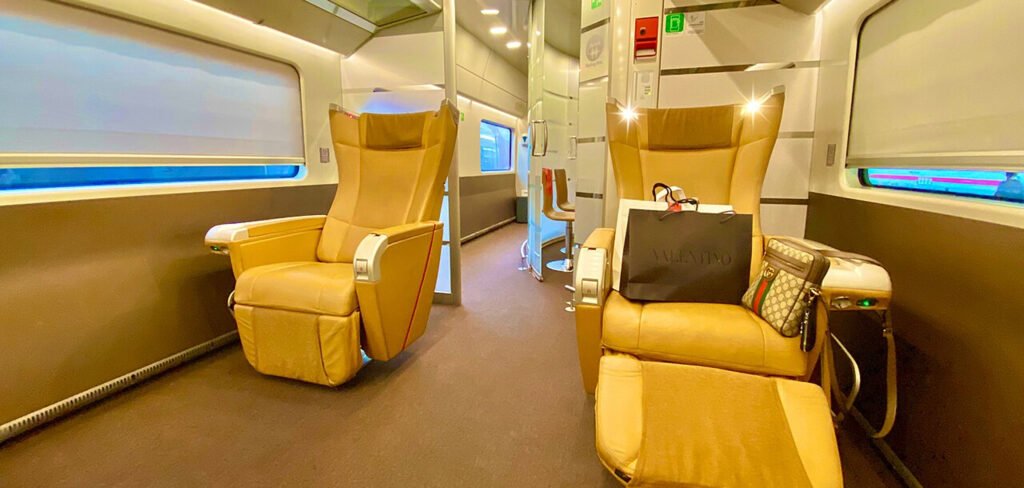
Executive is the top tier — private cabin-style seating for a maximum of four, dedicated service, full meal included, and the most comfortable rail travel experience available in Italy. Expensive but genuinely exceptional for special occasions or long journeys.
Italo Classes
Italo’s class structure is Smart (standard), Prima (business equivalent), and Club Executive (top tier). Smart is comfortable and adequate. Prima offers wider seats, meal service, and lounge access. Club Executive provides private cabin seating for the most premium experience.
Regional Train Classes
Regional trains have a simple first and second class distinction — first class offers slightly wider seats and less crowding but on short regional journeys the difference is minimal. Most travellers use second class on regional trains without any loss of comfort.
The Validation Rule: The Most Important Thing Nobody Tells You
This is critical. Read it carefully.
On Trenitalia Regionale trains and some InterCity services, tickets must be validated before boarding — stamped in one of the small yellow or green machines found on platforms and in station concourses. Failure to validate your ticket before boarding can result in a fine of €50–200 even if you have a valid ticket.
The validation rule applies to:
- All Trenitalia Regionale tickets
- Some InterCity tickets purchased at stations or machines
- Rail pass journey coupons on Regionale services
The validation rule does NOT apply to:
- Trenitalia Frecce tickets booked online or by app (which are linked to your booking reference)
- Italo tickets at any level (all electronically validated at boarding)
- Print-at-home or mobile tickets with QR codes
The confusion arises because the rule applies selectively — high-speed tickets bought online need no validation but regional tickets do. The safest approach: if you have a paper ticket or are unsure, look for a validation machine and stamp it before boarding. If your ticket is already validated or is a mobile ticket with a QR code, do not stamp it again — double stamping can invalidate it.
If you forget to validate: find the train conductor before they find you, explain immediately, and in most cases they will issue a reduced fine or no fine at all. Proactively approaching the conductor is treated very differently from being caught without a valid stamped ticket.
The Italy Rail Pass: Is It Worth It?
The Eurail Italy Pass (and its Interrail equivalent for European residents) allows unlimited travel on Trenitalia services for a set number of days within a defined period. It sounds like excellent value. The reality is more nuanced.
When a Rail Pass Makes Sense
A rail pass offers genuine value if you are making multiple long-distance journeys over a short period — specifically if you are travelling spontaneously without advance booking. The pass allows you to board trains without buying individual tickets, which has real freedom value if your itinerary is fluid.
A pass also makes sense if you are combining multiple countries — a Eurail Global Pass covering several European countries is better value than buying individual tickets country by country.
When a Rail Pass Does Not Make Sense
For most visitors to Italy, individual advance-purchase tickets are cheaper than a rail pass. The cheapest Frecciarossa fares — bought 4–6 weeks in advance — are significantly lower than the cost of using a pass day for the same journey.
Additionally, rail pass holders must still pay seat reservation fees on all Frecce and InterCity services — approximately €10–13 per reservation on high-speed trains. These fees accumulate quickly and significantly reduce the apparent value of the pass.
The honest calculation: Add up the cost of your planned journeys at advance-purchase prices and compare to the cost of a pass plus reservation fees. For most standard Italy itineraries covering 3–5 cities over 1–2 weeks, individual tickets win.
The pass makes sense for: spontaneous travellers, those making 6+ train journeys, travellers combining Italy with other European countries, or those who simply value the freedom of not booking ahead.
Key Routes: What to Expect
Rome to Florence — 1 hour 30 minutes (Frecciarossa)
The most travelled high-speed route in Italy and one of the great train journeys in Europe. The journey cuts through the Apennine mountains via a long tunnel before emerging into the Tuscan landscape south of Florence. Window seats on the right side (travelling north from Rome) offer the best views.
Trains run approximately every 30 minutes throughout the day. Fares from €19 advance purchase. The journey time makes it perfectly viable as a day trip in either direction — many visitors base themselves in one city and day trip to the other.
Station note: Florence has two main stations — Santa Maria Novella (the main city centre station) and Firenze Campo di Marte (further from the centre). Frecciarossa services use Santa Maria Novella. Check your ticket carefully.
Rome to Naples — 1 hour 10 minutes (Frecciarossa)
The fastest intercity route in Italy — 230 km in 70 minutes. Trains run frequently throughout the day. Fares from €19 advance purchase. Naples is perfectly viable as a day trip from Rome, though it deserves much more time than that.
Station note: Naples has two main stations — Napoli Centrale (the main hub, also serving the regional and local network) and Napoli Afragola (a newer out-of-town station served by some Frecciarossa services). Most visitors want Napoli Centrale. Check your ticket.
Rome to Milan — 2 hours 55 minutes (Frecciarossa)
The backbone of the Italian high-speed network — connecting the two largest cities in the country. This is the route where competition between Trenitalia and Italo is most intense and where prices are most competitive. Fares from €29 advance purchase. The journey passes through Bologna and Florence and offers good views of the Apennines.
Milan to Venice — 2 hours 30 minutes (Frecciarossa/Frecciargento)
A beautiful route across the Po Valley with views of the flat agricultural plain of northern Italy. The approach to Venice — across the long causeway over the lagoon — is one of the great train arrival experiences in Europe. Fares from €19 advance purchase.
Station note: Venice Santa Lucia is the main Venice station — the terminus of the causeway, located at the entrance to the city on the Grand Canal. All high-speed services terminate here. Venice Mestre is on the mainland and is not Venice proper — don’t get off here unless you’re staying in Mestre.
Florence to Venice — 2 hours 8 minutes (Frecciarossa)
A route that passes through Bologna — from where you can also branch east to the Adriatic coast. The journey through the Apennines between Florence and Bologna is one of the most scenic on the high-speed network. Fares from €19 advance purchase.
Naples to Palermo (Sicily) — via ferry or overnight train
Sicily is connected to the mainland by a combination of ferry and overnight train — the trains literally board a ferry at Villa San Giovanni, cross the Strait of Messina, and continue on the other side. It is one of the most extraordinary rail experiences in Italy and completely unknown to most visitors. The overnight service from Naples to Palermo (approximately 9–10 hours) includes sleeping berths and is a genuinely memorable journey. Book through Trenitalia.
Regional Trains: The Scenic Network
The regional train network is where Italy’s most beautiful and most unexpected rail experiences are found — slower, cheaper, and opening up landscapes and towns that the high-speed network completely bypasses.
Cinque Terre
The five villages of Cinque Terre are connected by regional train — a short hop between villages that runs several times per hour and is the only practical way to move between them without hiking. Tickets are inexpensive and can be bought at the small station ticket machines. The train ride itself, passing through cliff tunnels with brief glimpses of the Ligurian coast, is spectacular.
The Circumvesuviana — Naples to Pompeii, Herculaneum, and Sorrento
The Circumvesuviana is a narrow-gauge regional railway running from Naples around the base of Vesuvius to Sorrento — passing through Ercolano (for Herculaneum) and Pompeii Scavi (for Pompeii). It is the essential rail connection for visitors to the archaeological sites south of Naples.
The honest assessment of the Circumvesuviana: it is slow, often crowded, and requires vigilance against pickpockets particularly on the Naples-Pompeii section. Carry bags in front of you, be aware of your surroundings, and use it — it is still the best and cheapest way to reach these sites. Tickets cost €2.80–4.50 depending on destination.
Palermo to Agrigento (Sicily)
One of the most scenic regional rail journeys in Italy — a 2-hour journey across the interior of Sicily from the capital to the Valley of the Temples. The landscape is extraordinary — dry, golden, and completely unlike the lush north of Italy. The train is slow and the service infrequent (check schedules carefully) but the journey itself is worth planning around.
The Trenino Verde (Sardinia)
Sardinia’s narrow-gauge “little green train” network connects interior villages through landscapes of extraordinary wild beauty — cork forests, gorges, and hilltop villages that road travel cannot access in the same way. Services are limited and slow (these are not practical transport options for most visitors) but the scenic journeys — particularly the Mandas to Arbatax route — are among the most beautiful rail experiences in all of Italy.
Rome to Orvieto
A 1-hour regional journey from Roma Termini to Orvieto — one of the great day trips from Rome and accessible on any Trenitalia InterCity or Regionale ticket costing €9–12. Orvieto station sits at the base of the cliff on which the medieval city stands — a funicular connects the station to the town above.
Strikes: The Italian Rail Reality
Italian rail strikes — scioperi — are a fact of life and significantly more common than in most other European countries. Rail workers strike with a frequency that visitors find surprising and Italians accept with philosophical resignation.
What you need to know:
Strikes are announced in advance — usually 10 days notice is required. Check trenitalia.com and the Italian news in the days before your travel for strike announcements.
During strikes, a guaranteed minimum service must be maintained — typically 50% of Frecce services during peak morning and evening hours. Regional services are more severely affected.
Italo trains are not bound by Trenitalia strikes — if Trenitalia workers are striking, Italo services generally run normally and book up extremely fast as passengers switch operators.
Practical strategy: If a strike is announced during your travel period, book Italo trains immediately — they will sell out quickly. If you have flexible Trenitalia tickets, wait to see if your specific service is cancelled before rebooking.
Luggage: What the System Actually Allows
Italian trains have no official luggage allowance in the way airlines do — there are no checked bags, no weight limits, and no fees for luggage. You bring your bags onto the train and store them yourself.
Storage on Frecciarossa trains: Each carriage has overhead racks and end-of-carriage luggage areas. Large suitcases go in the luggage areas at the ends of carriages — not in overhead racks. On busy trains these areas fill quickly. Board early if you have large luggage.
Storage on regional trains: Overhead racks and some floor space. Regional trains have less dedicated luggage space than high-speed trains and large bags can be problematic on crowded services.
Left luggage: Major stations have deposito bagagli (left luggage) facilities — typically €6–8 per bag for the first 5 hours. Useful for arrival days when your accommodation isn’t ready or for day trips from a base city.
The Major Stations: What to Know
Roma Termini
Italy’s busiest station and the hub of the national network. Large, busy, and full of services — shops, restaurants, supermarket, left luggage, tourist information. Also known for pickpockets — be vigilant with bags particularly on crowded platforms and in the station concourse.
The Metro (lines A and B intersect here) connects Termini to most major Rome sights. Taxis are available outside the main entrance — use official white taxis with meters only.
Milano Centrale
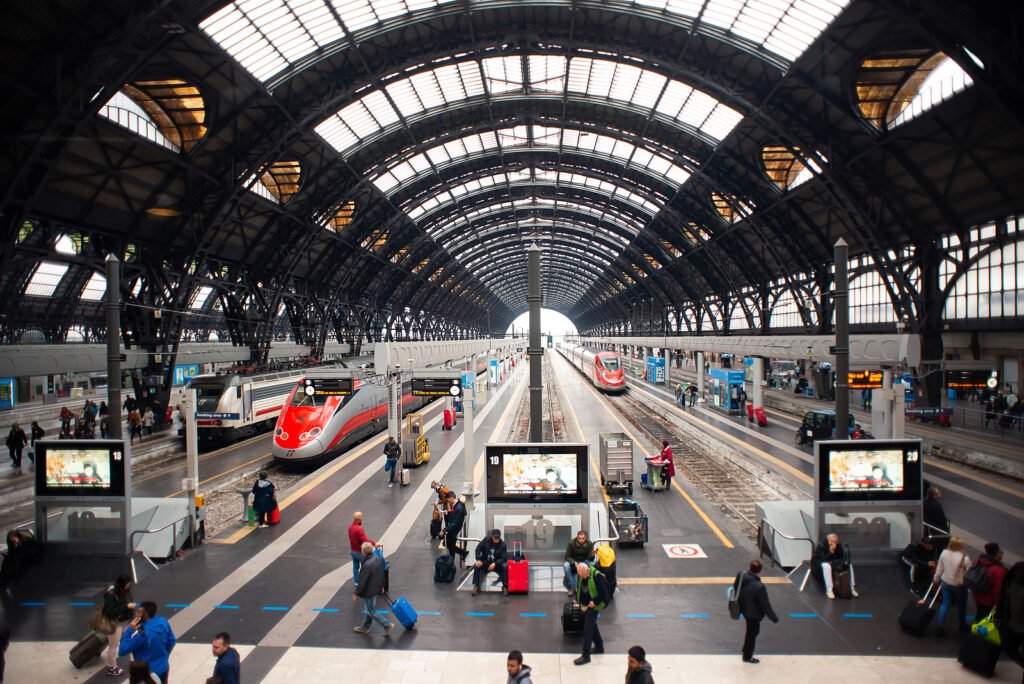
One of the most architecturally extraordinary stations in Europe — a vast, cathedral-like structure built during the Fascist era with soaring stone arches and dramatic proportions. Finding your platform requires some navigation — the station is large and the layout can confuse first-time visitors. Arrive with time to spare.
Firenze Santa Maria Novella
Florence’s main station sits immediately adjacent to the church of Santa Maria Novella and is within walking distance of most central Florence sights. Compact, manageable, and well-connected to the city.
Napoli Centrale
Naples’ main station is large, busy, and chaotic in the best Neapolitan tradition. The Circumvesuviana to Pompeii and Herculaneum departs from the lower level (Piazza Garibaldi station). The Metro and funiculars connect the station to the rest of the city.
Venezia Santa Lucia
The most dramatically situated station in Italy — the terminus at the end of the causeway, opening directly onto the Grand Canal. Step off the train, walk outside, and you are immediately in Venice. Vaporetto (water bus) stops are immediately outside the station entrance.
Common Mistakes and How to Avoid Them
Not booking in advance: The single most expensive mistake on Italian trains. Booking 4–6 weeks ahead for high-speed services saves 50–70% compared to last-minute prices.
Forgetting to validate: On regional trains with paper tickets, validate before boarding without exception. The fine is disproportionate to the error.
Getting on the wrong train: Italian stations serve multiple train types — a Regionale and a Frecciarossa can depart from adjacent platforms at similar times to similar destinations but stop at very different places and have very different tickets. Check your train number against the departure board.
Missing your reservation: High-speed tickets are tied to specific trains — a seat reservation for the 14:05 Frecciarossa cannot be used on the 15:05. If you miss your train, you need a new ticket. Flexible ticket classes allow changes — base fares do not.
Using the wrong station in the same city: Florence, Naples, Rome, and Milan all have multiple stations. Always check which station your train departs from and arrives at — not just which city.
Assuming all trains run on time: Italian high-speed trains are generally punctual. Regional trains are considerably less reliable. Build connection time into your itinerary — if you’re connecting from a regional train to a Frecciarossa, allow at least 30 minutes.
Not checking for strikes: A simple search of Italian news in the days before your journey takes 2 minutes and can save enormous disruption.
A Suggested Italy Rail Itinerary: 10 Days
Day 1–2: Rome Arrive at Roma Termini. Explore Rome.
Day 3: Rome to Naples (1 hr 10 min) Morning Frecciarossa to Naples. Full day in Naples — Spaccanapoli, pizza, the waterfront.
Day 4: Naples base — Pompeii day trip Circumvesuviana from Naples Centrale to Pompeii Scavi (35 minutes, €2.80). Return to Naples for the evening.
Day 5: Naples to Rome to Florence (connect at Rome) Morning train back to Rome (1 hr 10 min). Afternoon Frecciarossa to Florence (1 hr 30 min). Evening in Florence.
Day 6: Florence Full day in Florence. Day trip to Siena possible by regional bus (trains to Siena require a change and are slower than the direct bus).
Day 7: Florence to Cinque Terre (via La Spezia) Regional train from Florence to La Spezia (2 hours), then Cinque Terre regional train to your chosen village. Stay overnight in Cinque Terre.
Day 8: Cinque Terre to Venice (via La Spezia and Milan or Genoa) Morning trains via La Spezia and Milan or Genoa to Venice (approximately 4–5 hours total with connection). Evening in Venice.
Day 9: Venice Full day in Venice. No trains needed — walk and vaporetto only.
Day 10: Venice to Milan (2 hrs 30 min) Morning Frecciarossa to Milan. Afternoon and evening in Milan. Depart from Milano Centrale.
Final Thoughts: Why Italy by Train Is Worth Every Effort
The Italian rail system, for all its complexity and occasional chaos, is one of the great travel experiences in Europe. Arriving in Venice across the lagoon causeway, watching Tuscany pass outside the window between Florence and Rome, eating a cornetto in the dining car somewhere between Naples and Rome with the morning light coming in — these are the moments that make train travel irreplaceable.
The learning curve is real. The advance booking requirement is real. The strikes and the validation rules and the multiple station confusion are all real. And none of it matters very much once you’re on the train, moving through one of the most beautiful countries on earth, at speed, in comfort, with no traffic and no airport and a view that changes every few minutes.
Book early. Validate your ticket. Check the departure board. And enjoy one of the finest rail networks in the world.