
Every country has its romantic moments. France has built an entire civilisation around them.
The candlelit bistro where the waiter knows your name by the second evening. The vineyard at golden hour where the light turns the Bordeaux red and the silence is absolute. The Provençal lavender field in full July bloom, purple to every horizon. The Seine at midnight from a bridge you found by wandering without a map. The ryokan — no, the chambres d’hôtes — where the hostess leaves wildflowers on the pillow and the breakfast takes two hours because there is no reason to rush.
France is the world’s most visited country for reasons that go beyond the Eiffel Tower and the Louvre. It is a country of extraordinary regional diversity — each corner with its own cuisine, its own wine, its own landscape, its own particular beauty — held together by a national conviction that life should be lived well, slowly, and with full attention to pleasure.
For a honeymoon, this philosophy is not just appropriate. It is exactly right.
This guide covers the best honeymoon destinations in France — Paris, Provence, the French Riviera, Bordeaux, the Loire Valley, Normandy, the Dordogne, and the French Alps — with honest advice on where to stay, what to do, when to go, and how to make every day feel like the best day of your life together.
Where Ancient Stones Know Your Name: Rome
Rome is not a city. It is a civilisation that decided to keep going. Layers of history so dense and so present that walking its streets feels like moving through time rather than space — a Baroque fountain around one corner, a 2,000-year-old temple around the next, and everywhere the particular golden light that photographers and painters have been chasing for centuries.
For a honeymoon Rome is not just a backdrop. It is a participant — a city so saturated with beauty, food, wine, and the particular electricity of a place that has been at the centre of the world for millennia that it elevates every experience within it.
The Rome That Belongs to Honeymooners
The Trastevere neighbourhood at night is Rome at its most intimate and most romantic — a tangle of cobbled lanes on the west bank of the Tiber, lit by string lights and candlelit restaurant windows, full of the sound of conversation and the smell of wood-fired cooking. Trastevere has been Rome’s most characterful neighbourhood for centuries and remains the place where the city feels most alive and most itself after dark.
The Pincian Hill at sunset — the terrace above the Borghese Gardens at the top of the Spanish Steps, overlooking the entire western expanse of Rome — offers a view of the city at dusk that is one of the great visual experiences in Europe. The dome of St. Peter’s in the middle distance, the orange glow of the city spreading to every horizon, the sound of the city rising from below. Arrive 30 minutes before sunset and stay through the light change.
The Pantheon at dawn — before the tour groups, before the queues, before the city fully wakes. The Pantheon opens at 9 AM and the first 30 minutes — when the oculus lights the ancient marble and the space is quiet — is one of the most extraordinary interior experiences in Rome.
Aperitivo hour in Prati — the neighbourhood just across the Tiber from the Vatican, overlooked by most tourists, is where Romans do their aperitivo. Pull up a chair at a bar on Via Cola di Rienzo at 7 PM, order a Negroni or a Spritz, and watch Rome’s evening begin. This is not a tourist experience. It is Rome as it actually lives.
The Via Appia Antica on a Sunday morning — the ancient Appian Way, one of the first great roads of the Roman Empire, is closed to traffic on Sunday mornings and cyclists and walkers take over. Rent bikes and ride through 2,000 years of history — past ancient tombs, early Christian catacombs, and crumbling aqueducts — with the Roman countryside extending on all sides. One of Rome’s most extraordinary and least-crowded experiences.
Sleep Like Roman Royalty
J.K. Place Roma — a beautifully designed boutique hotel near the Spanish Steps, with 30 rooms that combine Roman grandeur with contemporary elegance. One of the most consistently praised small luxury hotels in the city. From €400/night.
Palazzo Manfredi — a 16-room hotel directly facing the Colosseum, with a rooftop restaurant where you eat dinner looking directly at the illuminated ancient arena. The proximity to the Colosseum and the quality of the view make it one of the most extraordinary hotel settings in Rome. From €350/night.
Hotel de Russie — a Rocco Forte property in a perfect location between Piazza del Popolo and the Spanish Steps, with beautiful gardens, a spa, and a terrace that is one of Rome’s great outdoor dining settings. From €500/night.
Splurge: The Hotel de la Ville on the Via Sistina — perched at the top of the Spanish Steps with a rooftop terrace offering the finest view in central Rome. From €700/night.
Eat Rome Like You Have Never Eaten Before
La Pergola — Rome’s only three-Michelin-star restaurant, on the roof of the Rome Cavalieri hotel with a panoramic view over the entire city. Chef Heinz Beck’s cuisine is the finest in Rome. Book 6–8 weeks in advance. A once-in-a-lifetime dinner.
Roscioli — the most beloved deli-restaurant in Rome, on Via dei Giubbonari in the Jewish Ghetto. The cacio e pepe is the benchmark by which all others are measured. The wine list is extraordinary. Book in advance — this is one of the hardest tables in Rome.
Da Enzo al 29 — a traditional Roman trattoria in Trastevere where the food is exactly what Roman food should be — honest, generous, deeply flavoured, and served with warmth. The coda alla vaccinara (oxtail) is magnificent.
Forno Campo de’ Fiori — the best pizza bianca in Rome, from a bakery on the Campo de’ Fiori market. Buy a piece warm from the oven, walk to the fountain in the middle of the square, and eat it standing up at 8 AM while the market assembles around you. Free, perfect, and completely Roman.
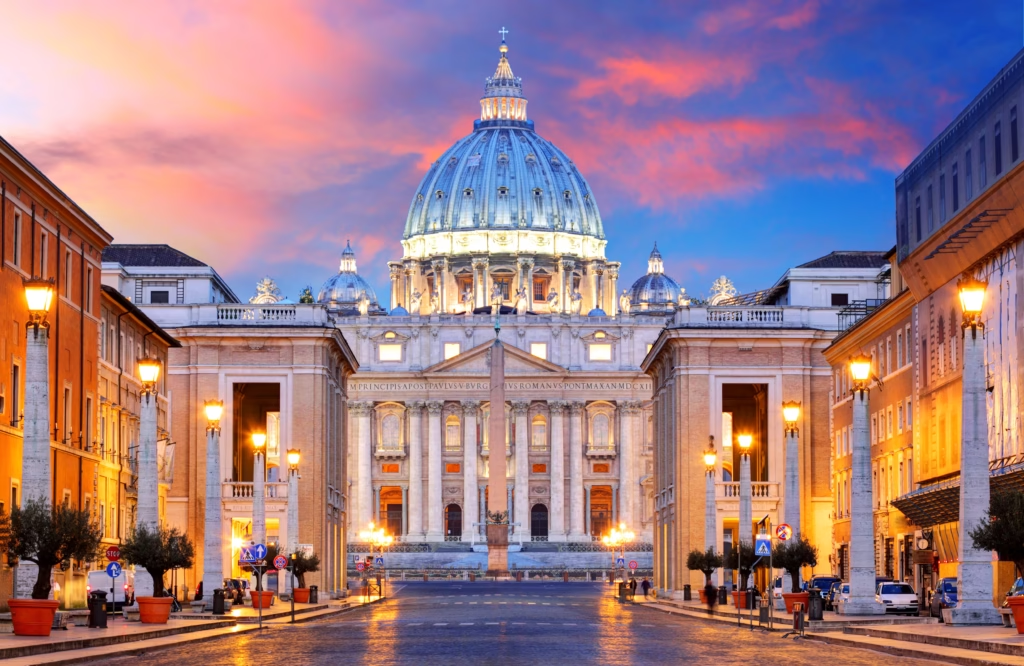
When the Water Whispers Your Secrets: Venice
Venice is the most improbable city on earth — 118 islands, 400 bridges, no roads, no cars, and a beauty so concentrated and so strange that first-time visitors sometimes stand in the middle of a campo (square) and simply cannot believe what they are seeing is real.
For a honeymoon, Venice offers something no other city can: complete disorientation from ordinary life. There are no traffic sounds. No car horns. No buses. The city moves at the pace of footsteps and water — a pace that is, quite literally, medieval — and that pace does something to two people that cannot be replicated elsewhere.
Getting Lost Is the Plan
The single most important piece of advice for Venice on a honeymoon: ignore the map. The city’s famous disorientation — the dead ends that become unexpected campi, the lanes that loop back on themselves, the bridges that lead somewhere you weren’t expecting — is not a problem to be solved. It is the experience.
The tourists who see Venice are the ones who walk from the Rialto to San Marco and back. The people who experience Venice are the ones who turn left when they don’t know what’s there, who cross the bridge to the sestiere (neighbourhood) they haven’t visited yet, who follow the sound of music or the smell of cooking until they find its source.
Dorsoduro is the sestiere for honeymooners who want the real Venice — less crowded than San Marco, with the best aperitivo scene in the city at the Zattere waterfront, excellent art at the Peggy Guggenheim Collection and the Gallerie dell’Accademia, and a residential neighbourhood character that makes it feel like living in Venice rather than visiting it.
Cannaregio — the northern sestiere — is where Venice shops and eats its lunch. The Jewish Ghetto (the oldest in the world) is here, along with the best bacaro (traditional wine bar) scene in the city. The Fondamenta della Misericordia and Fondamenta degli Ormesini are lined with bacari and restaurants where Venetians eat — not tourist menus but cicheti (small bites) with glasses of prosecco or local wine.
The Experiences Nobody Tells You About
A private gondola at 6 AM — before the tourist gondola trade begins for the day, several gondoliers will take private bookings for early morning. The canals at dawn — the light just beginning on the water, no tourist gondolas, the city barely awake, the sound of your gondolier’s oar the only sound — is Venice at its most extraordinary. More expensive than the standard tourist gondola but incomparably more romantic.
The Lido at sunset — Venice’s beach island, accessible by vaporetto in 15 minutes, is where Venetians go to breathe. A bicycle ride along the Lido’s main boulevard, ending with aperitivo at a bar above the Adriatic as the sun sets, is one of Venice’s most peaceful and most underrated experiences.
Torcello island — the most ancient of Venice’s islands, now almost completely uninhabited, with a Byzantine cathedral of extraordinary beauty and a silence that makes you understand what Venice was before Venice existed. Take the vaporetto from Fondamente Nove to Burano (the coloured fishing village) and then to Torcello. Have lunch at the legendary Locanda Cipriani — where Hemingway wrote — and spend the afternoon in the silence.
The vaporetto at night — the number 1 vaporetto runs the entire length of the Grand Canal and costs €9.50. At night, with the palazzos lit and their reflections trembling in the water below, it is one of the most beautiful journeys available in Europe. Sit at the front on the open deck.
Where to Sleep on the Water
Belmond Hotel Cipriani — on the Giudecca island directly across the water from San Marco, with a private boat to the main city, an extraordinary pool (the only outdoor pool in central Venice), and a level of service that has made it the finest hotel in Venice for decades. From €700/night.
Aman Venice — a 16th-century palazzo on the Grand Canal, with 24 rooms of extraordinary grandeur — frescoed ceilings, silk walls, and the most beautiful private garden in Venice. One of the great luxury hotel experiences in the world. From €1,200/night.
Palazzo Venart Luxury Hotel — a 16th-century palazzo with 18 rooms, a beautiful garden on the Grand Canal, and a Michelin-starred restaurant. More intimate than the Cipriani, equally extraordinary. From €500/night.
For romance on a budget: The Oltre il Giardino — a 6-room guesthouse in a Cannaregio garden, once the home of Franz Kafka’s companion, with the most beautiful private garden in Venice and breakfast under a wisteria. From €180/night.
The Food and Wine of Venice
Bacaro culture — the bacaro is Venice’s greatest contribution to food culture — a tiny, ancient wine bar serving cicheti (small snacks) with ombre (small glasses of wine). The correct Venetian evening begins at 6 PM with a bacaro crawl through Cannaregio or the Rialto market area — sarde in saor (sweet and sour sardines), baccalà mantecato (whipped salt cod), polpette (meat balls), and meatball-sized arancini, washed down with Veneto whites.
All’Arco at the Rialto market — the most celebrated cicheti bar in Venice, open from early morning to early afternoon, serving extraordinary small bites made from the morning’s market produce. Arrive early — it fills fast and closes when the food runs out.
Osteria alle Testiere — the finest small restaurant in Venice, with 22 seats, no printed menu (the waiter describes what was bought at the Rialto market that morning), and the best seafood cooking in the city. Book weeks in advance.
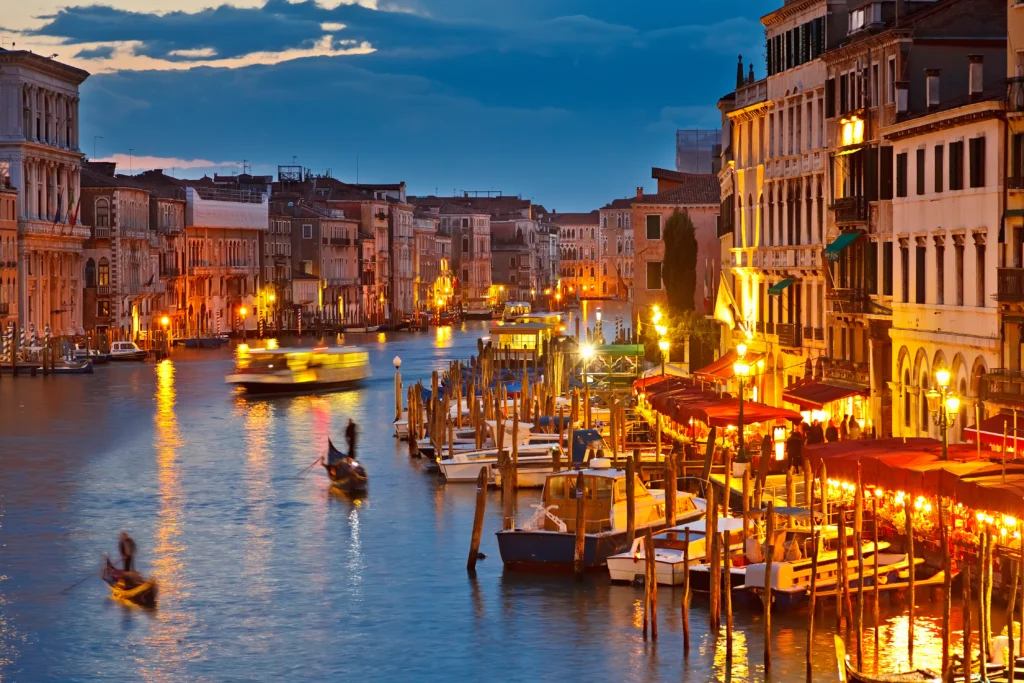
Where Every Hillside Tastes of Something: Tuscany
Tuscany is the Italy of the imagination — the rolling hills, the cypress trees, the stone farmhouses, the vineyards, the medieval hilltop towns, and the extraordinary food and wine that have made it the most visited rural region in Europe. For a honeymoon it offers something cities cannot — space, slowness, and the particular pleasure of having no agenda beyond the next meal, the next glass of wine, and the next sunset.
The Landscapes That Define a Tuscany Honeymoon
The Val d’Orcia — a UNESCO World Heritage landscape south of Siena, with rolling hills of extraordinary formal beauty, the cypress-lined roads, the isolated farmhouses, and the medieval towns of Pienza, Montalcino, and Montepulciano strung along the ridgelines. This is the Tuscany of every photograph you have ever seen and it is more beautiful in reality than in any image.
Chianti — the wine region between Florence and Siena, with a concentration of excellent wineries, beautiful villages (Greve in Chianti, Radda in Chianti, Castelnuovo Berardenga), and agriturismi (farm stays) that offer the most intimate and most authentic Tuscan experience available.
Volterra and San Gimignano — two medieval hilltop towns on the western edge of Tuscany that are less visited than Siena and offer a more authentic experience of medieval Tuscany. Volterra in particular — ancient, austere, and sitting on a plateau above deep valleys — has an atmosphere unlike anywhere else in the region.
The Agriturismo: Tuscany’s Greatest Accommodation Secret
The agriturismo — a working farm that also offers accommodation — is the best and most romantic way to stay in Tuscany. Many are beautifully converted stone farmhouses with pools overlooking vineyards, serving breakfast from their own produce, offering wine tasting from their own cellar, and providing a sense of place and authenticity that no hotel can replicate.
Castello di Velona — a medieval castle near Montalcino, converted into a luxury spa resort with an extraordinary position above the Val d’Orcia. From €400/night.
Borgo Santo Pietro — a 13th-century hamlet near Chiusdino, converted into a remarkable luxury retreat with its own farm, spa, and Michelin-starred restaurant. The most beautiful agriturismo in Tuscany. From €600/night.
Podere Il Casale — a working organic farm near Pienza, with beautiful stone cottages, extraordinary breakfasts from their own produce, and the most genuine agriturismo experience in the Val d’Orcia. From €180/night.
Relais La Suvera — a 12th-century papal villa near Siena, with extraordinary frescoed rooms, a beautiful pool, and the feeling of staying in a private palazzo. From €350/night.
Wine, Truffles, and the Tuscan Table
Brunello di Montalcino is Italy’s greatest red wine — made from Sangiovese Grosso grapes grown in the hills around Montalcino, aged for years in oak, and capable of extraordinary complexity and longevity. Visit the Consorzio del Vino Brunello di Montalcino for a tasting introduction, then visit an estate (Biondi-Santi — the historic originator — or the excellent Poggio di Sotto) by appointment.
White truffle season — October and November bring the white truffle season to Tuscany. The San Miniato truffle fair (November) is one of the finest in Italy. Truffle hunting with a local trifolao (truffle hunter) and his dog, followed by a lunch of freshly shaved truffle on pasta, is one of the great autumn experiences in Italy.
The Mercato Centrale, Florence — the covered market in the San Lorenzo neighbourhood is one of the finest food markets in Italy. Arrive hungry at 10 AM, eat your way through the stalls — lampredotto (tripe), schiacciata (flatbread), aged Pecorino, prosciutto from the Cinta Senese pig — and leave understanding why Florentines eat better than almost anyone else in the world.
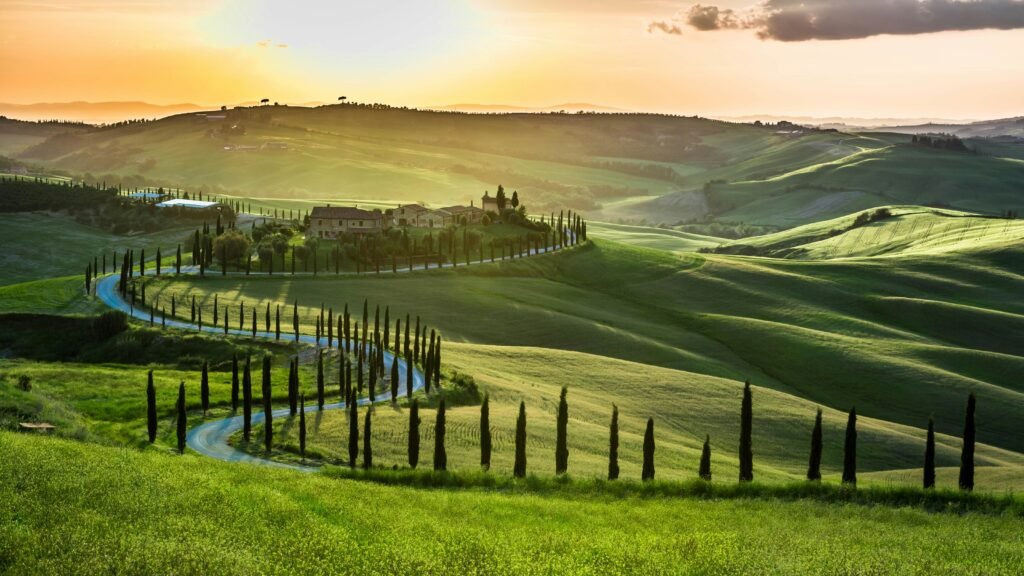
Where the Sea Meets the Sky: The Amalfi Coast
The Amalfi Coast is the most dramatic stretch of coastline in Italy — 50 km of vertical cliffs, turquoise sea, lemon groves, and towns that appear to have been built not by architects but by the cliff face itself, stubbornly clinging to the rock above the Tyrrhenian Sea.
It is also one of the most visited coastlines in Europe, which means the roads are narrow, the traffic is genuine, and the experience requires navigation. But for a honeymoon, the Amalfi Coast delivers a visual and sensory impact that is simply not available elsewhere in Italy.
The Towns That Steal Your Heart
Positano is the jewel — a cascade of pastel buildings tumbling down a cliff to a small beach, with the sea immediately below and the mountains immediately above. The main beach is busy in summer but walk five minutes in either direction and you find quieter coves. The evening, when the day visitors leave and Positano becomes its small-town self, is when it is most beautiful.
Ravello sits 365 metres above the sea on a ridge above Amalfi town — a village of extraordinary calm and beauty, with the Villa Cimbrone and Villa Rufolo (whose gardens Wagner used as inspiration for Parsifal) offering two of the most celebrated terrace views in all of Italy. The Ravello Festival in summer brings world-class classical music to the garden of Villa Rufolo — an experience of profound beauty.
Praiano — between Positano and Amalfi, smaller and less visited — is the Amalfi Coast village that most closely approximates what the coast looked like before tourism. The village cascades down a cliff to a tiny harbour, the church bells mark the hours, and the restaurants serve the freshest seafood on the coast. Stay here to experience the Amalfi Coast as it actually is.
Atrani — just around the headland from Amalfi town, connected by a footpath — is the smallest municipality in Italy by area and completely overlooked by most visitors. A tiny piazza, a medieval church, a beach shared by fishermen and cats, and not a tourist shop in sight. Walk here from Amalfi for the most authentic coastal experience available.
Moving Along the Coast
The SS163 Amalfitana — the coastal road — is one of the most beautiful drives in the world and also, in summer, one of the most congested. The practical solutions for honeymooners:
By boat — hiring a private boat to move between towns along the coast is the finest way to experience it. The perspective from the sea — looking up at the cliffs and villages from the water — reverses the usual relationship between visitor and landscape and is extraordinary. Day boats can be hired from Positano, Amalfi, and Salerno.
By ferry — public ferries connect the main towns at reasonable prices and take the stress of the road entirely out of the equation.
By foot — the Sentiero degli Dei (Path of the Gods) is a cliff-top walking path above the coast between Agerola and Nocelle, with views over the entire coastline that are simply not available from the road. Walk it in the morning before the heat builds and arrive in Positano for lunch having seen the coast from its most extraordinary angle.
Where to Sleep Above the Sea
Le Sirenuse, Positano — the most celebrated hotel on the Amalfi Coast and one of the finest in Italy — a 19th-century palazzo converted into a 58-room hotel of extraordinary elegance, with a pool terrace above the bay and a restaurant (La Sponda) where every table is lit by candlelight and the view is the Mediterranean. From €700/night.
Belmond Hotel Caruso, Ravello — an 11th-century palazzo on the ridge above Amalfi, with an infinity pool suspended above the sea and one of the greatest views in Italy. The most romantic hotel on the Amalfi Coast. From €700/night.
Casa Angelina, Praiano — a contemporary white clifftop hotel above Praiano, with minimalist rooms, a beautiful pool, and a location that offers the Amalfi Coast experience without the Positano crowds. From €350/night.
Villa Treville, Positano — a private villa compound above Positano, with just 9 suites, a pool carved into the rock above the sea, and the most private luxury experience on the coast. Once owned by Franco Zeffirelli. From €900/night.
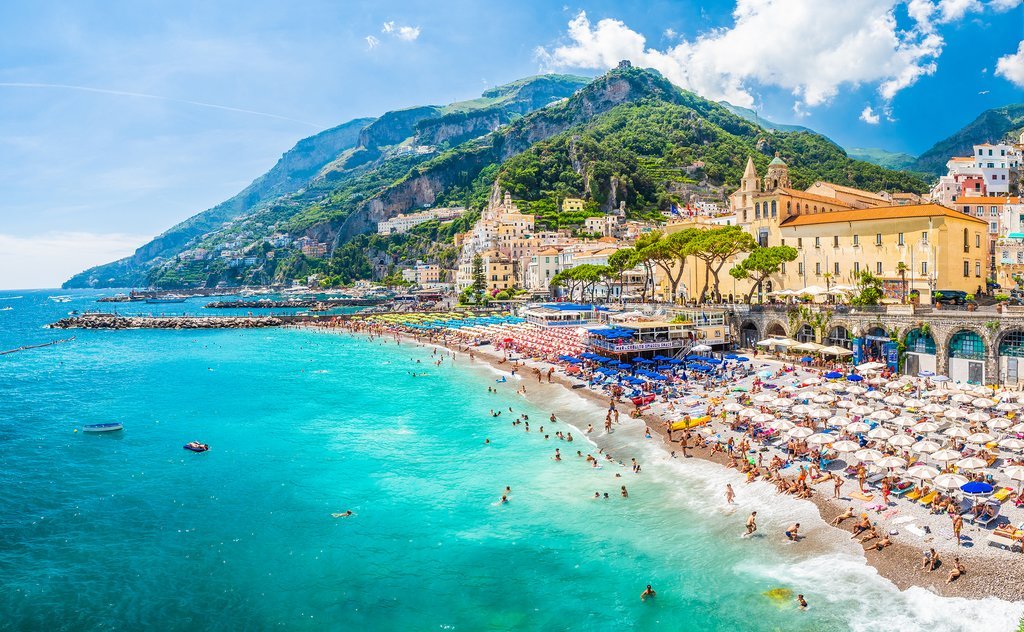
The Island That Time Forgot: Sicily
Sicily is Italy’s most complex and most misunderstood island — a place of Greek temples, Arab-Norman architecture, Baroque city centres, volcanic landscapes, extraordinary food, and a culture that is simultaneously deeply Italian and like nothing else in Italy.
For a honeymoon, Sicily offers a depth and variety that the more conventionally romantic Italian destinations cannot match.
Palermo: The City That Absorbed Everyone
Palermo’s historic centre is one of the most extraordinary urban environments in Italy — a dense accumulation of Greek, Roman, Arab, Norman, Spanish, and Baroque layers that produces a city of sensory intensity unlike anywhere else. The Ballarò and Vucciria street markets are among the finest in Europe. The Arab-Norman cathedral of Monreale, with its 6,000 square metres of Byzantine mosaics, is one of the great interiors in the world.
The Valley of the Temples
The Valley of the Temples at Agrigento — five Greek temples from the 5th century BC standing above the Sicilian countryside — is one of the most extraordinary ancient sites in the Mediterranean. Visit at dawn when the temples are lit gold by the early light and the valley is quiet, and you will understand why the Greeks believed this was where the gods lived.
Mount Etna: The Living Volcano
Europe’s largest active volcano dominates the northeastern corner of Sicily — a presence so enormous it is visible from the entire eastern coast and from the sea for a hundred kilometres in every direction. The slopes of Etna produce some of Italy’s most interesting wines — the volcanic soil and the altitude creating flavours that cannot be replicated elsewhere. Hiking to the summit craters (with a guide — mandatory above 2,900 metres) is one of the great Italian adventures.
Where to Stay in Sicily
Belmond Grand Hotel Timeo, Taormina — perched above Taormina with Mount Etna and the Ionian Sea as its backdrop, this is the most romantic hotel in Sicily and one of the finest in Italy. From €400/night.
Zash Country Boutique Hotel — a beautifully designed contemporary hotel in an 18th-century citrus grove on the slopes of Etna, with an extraordinary restaurant using Etna-region ingredients and the volcanic landscape as its context. From €300/night.
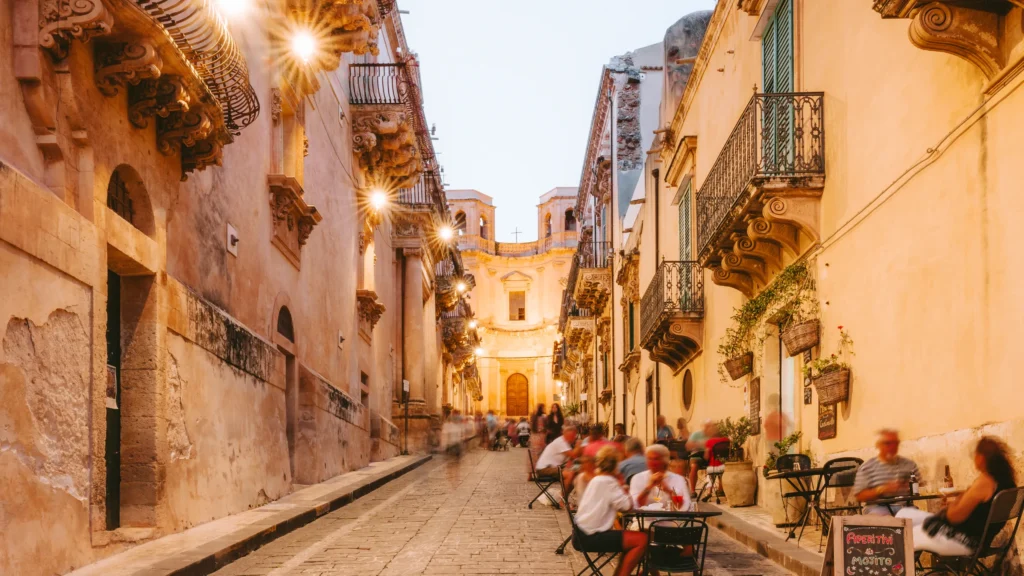
Hidden in Plain Sight: Puglia
Puglia — the heel of Italy’s boot — is the country’s great emerging honeymoon destination. Masserie (fortified farmhouses) converted into extraordinary small hotels, the extraordinary trulli (conical stone houses) of Alberobello, the Baroque excess of Lecce, the turquoise Adriatic, and a food culture built on burrata, orecchiette, and grilled fish that is among the finest in southern Italy.
The Itria Valley
The Valle d’Itria — the area between Alberobello, Locorotondo, and Martina Franca — is Puglia’s most romantic landscape. The trulli appear like something from a fairy tale scattered across the olive groves. The whitewashed towns reflect the afternoon light with an intensity that makes everything look slightly unreal. The masserie in this valley are some of the most beautiful hotels in all of Italy.
Lecce: The Florence of the South
Lecce’s Baroque architecture — built from the local golden limestone that is soft enough to carve like wood and hardens on exposure to air — is the most elaborate and most beautiful in Italy. Every facade is covered with angels, garlands, monsters, and saints in a riot of stone carving that has been compared to the finest Baroque in Rome. The city is also excellent for food — the best pasticciotto (custard pastry) in Italy, exceptional fish, and the most characterful old town in southern Italy.
Where to Stay in Puglia
Masseria Torre Coccaro — a 16th-century masseria near Fasano with a cave spa, extraordinary pool, and the most beautiful garden in Puglia. From €400/night.
Masseria Il Frantoio — a working olive farm near Ostuni, with 14 rooms and the finest dinner table in Puglia — a single sitting each evening of dishes made entirely from the farm’s own produce. From €250/night.
La Sommità Relais — a 16th-century palazzo in Ostuni — the white city — with panoramic views over the Adriatic from a rooftop terrace that is among the most beautiful in southern Italy. From €200/night.
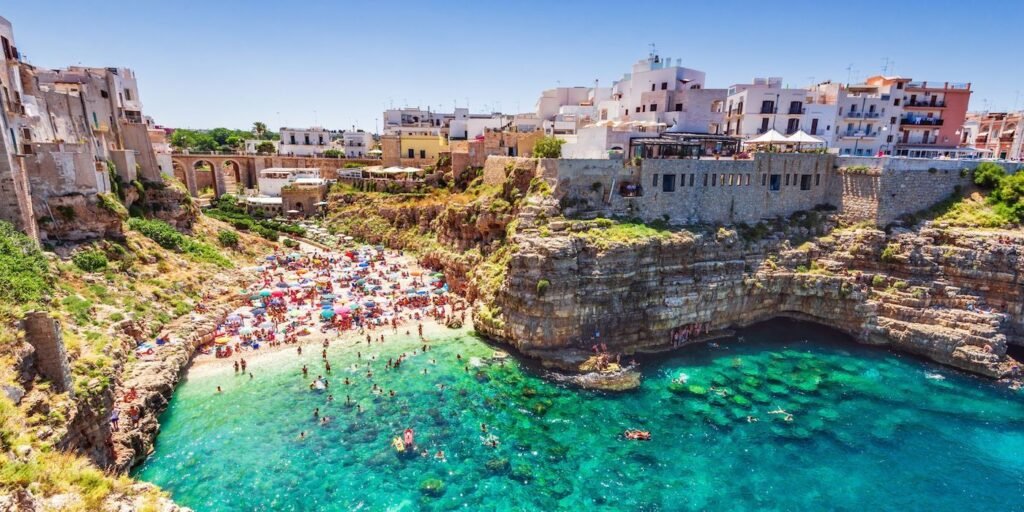
The Lakes of the North: Como, Garda, and Maggiore
The Italian lakes — Como, Garda, Maggiore, and the smaller Orta and Iseo — occupy a landscape of extraordinary beauty in the foothills of the Alps. The combination of the mountains above, the lake below, the villas in their gardens along the shoreline, and the particular northern Italian light produces a setting that has attracted writers, composers, and lovers for centuries.
Lake Como
Lake Como is the most famous and the most glamorous of the Italian lakes — the deep, Y-shaped lake below the Alps, lined with grand villas in their gardens, overlooked by mountain peaks. Bellagio — at the point where the two arms of the lake diverge — is the most beautiful village, with terraced gardens, narrow lanes, and ferries connecting it to the other lakeside towns.
Villa d’Este, Cernobbio — one of the great grand hotels of Europe, a 16th-century cardinal’s villa converted into a palace hotel with extraordinary gardens, a floating pool on the lake, and a level of grandeur that has no equivalent on the Italian lakes. From €700/night.
Belmond Grand Hotel Tremezzo — a Belle Époque palace directly on the lake, with a floating pool, excellent restaurant, and the most beautiful lakeside setting in Como. From €500/night.
Lake Orta: The Undiscovered Lake
Lake Orta — smaller and less visited than Como or Garda — is the most romantic of the Italian lakes. The medieval village of Orta San Giulio, perched on a peninsula above the lake, with the island of San Giulio (an ancient monastery surrounded by water) directly in front, offers a beauty that Como cannot match for intimacy and quiet. Few tourists. Perfect for honeymooners who want discovery.
Villa Crespi — an extraordinary Moorish-style villa near Orta San Giulio, with a two-Michelin-star restaurant and 14 rooms of extraordinary character. The most remarkable hotel on the Italian lakes. From €400/night.
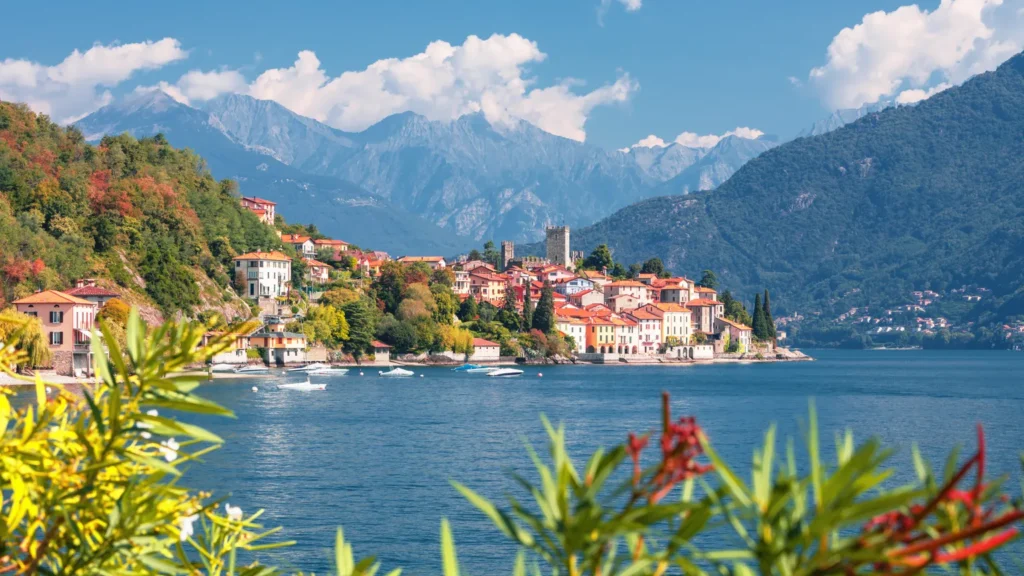
The Eternal Question: Cinque Terre
The five villages of Cinque Terre — Monterosso, Vernazza, Corniglia, Manarola, and Riomaggiore — cling to the Ligurian cliffside above the Ligurian Sea, connected by hiking paths, ferry, and regional train. The coloured buildings above the sea, the vineyards on terraced hillsides, the boats in the tiny harbours — Cinque Terre delivers a specific and extraordinary visual beauty.
The Honest Assessment for Honeymooners
Cinque Terre is extraordinarily crowded in July and August — the villages are small and the number of visitors enormous. The experience during peak season can feel more like a theme park than a discovery.
The solution: visit in May, early June, or September–October. Arrive on a weekday morning before the day-trip crowds. Stay overnight in one of the villages — Vernazza is the most beautiful and the most worth the premium. Walk the coastal path in the early morning before the crowds arrive and the path warms up.
The villages ranked for honeymooners: Vernazza first — the finest harbour, the most beautiful village, the best restaurants. Manarola second — the best sunset views, the most colourful facade, slightly calmer than Vernazza. Monterosso third — the only proper beach, useful for a sea-swimming day. Corniglia and Riomaggiore last — less charming and more crowded relative to what they offer.
Practical Love Notes: Planning Your Italy Honeymoon
When to Go
Rome: April–June and September–October are ideal — warm, manageable crowds, beautiful light. July and August are extremely hot and crowded. February is cold but the city is at its most uncrowded and most atmospheric.
Venice: November–March for the most atmospheric Venice — acqua alta (flooding) possible but the city in mist and winter light is extraordinary. April–June and September–October for the best weather. July and August are intensely crowded.
Tuscany: May–June and September–October — the lavender blooms in June, the harvest is in October, and both ends of summer are extraordinary.
Amalfi Coast: May–June and September — the coast in July and August is very crowded and very hot. June evenings are perfect.
Sicily: April–June and September–October — July and August are extremely hot.
Puglia: May–June and September–October — the most beautiful seasons in the heel of Italy.
Lakes: May–June and September — the lakes at their best before and after the summer crowds.
Getting Around Italy
By train: Italy’s high-speed network connects Rome, Florence, Venice, Milan, Naples, and Bologna with speed and elegance. The Frecciarossa covers Rome to Florence in 1 hour 30 minutes, Rome to Naples in 1 hour 10 minutes. For a multi-city honeymoon, the train is faster, cheaper, and more romantic than flying.
By car: Essential for Tuscany, Puglia, Sicily, and the Dordogne countryside. Rent a car in the nearest major city and drive slowly — the back roads between Tuscan hilltop towns, along the Sicilian coast, and through the Puglian olive groves are the most beautiful in Italy.
By boat: The Amalfi Coast, the Italian lakes, and the Venetian lagoon are all best explored by water. Private boat hire is available at most harbour towns and transforms the coastline experience completely.
Budget Guide
Rome and Florence luxury: €300–600/night for excellent boutique hotels. €80–150 per person for special occasion dining. €30–50/day for casual dining, coffee, and gelato.
Venice: Premium prices — €400–800/night for quality hotels. €60–100 per person for excellent dining. Budget accordingly and treat it as a concentrated luxury experience.
Tuscany agriturismo: €150–400/night for beautiful farmhouse accommodation. Wine at estate prices — €15–40 for excellent bottles bought directly from the producer.
Amalfi Coast: €300–700/night for quality hotels in season. Dining €50–100 per person at the better restaurants.
Sicily and Puglia: Significantly better value than the north — €100–300/night for excellent hotels, €30–60 per person for outstanding food.
Honeymoon Enhancements Worth Arranging
- Private wine tasting at a Tuscan estate — most require appointment and are extraordinarily rewarding.
- Cooking class in Bologna or Florence — learning pasta making together is both intimate and delicious.
- Private boat on the Amalfi Coast — a full day on the water between the villages, with swimming stops and a picnic lunch, is the finest way to experience the coast.
- Hot air balloon over Tuscany — a dawn flight over the Val d’Orcia with Champagne on landing is one of Italy’s great romantic experiences.
- Truffle hunting in Tuscany or Umbria — October and November with a local trifolao and his dog, followed by lunch.
- Private gondola at dawn in Venice — arranged through your hotel, before the tourist trade begins.
- Table at a Michelin-starred restaurant — book 6–8 weeks in advance for the most sought-after tables.
La Dolce Vita Itinerary: Two Perfect Weeks in Italy
Days 1–3: Rome Arrive at Roma Termini. Check into Trastevere or Le Marais. Pantheon at dawn on day 1. Via Appia Antica by bike on day 2 morning. Pincian Hill at sunset. La Pergola dinner on day 3.
Days 4–5: Amalfi Coast High-speed train to Naples (1 hr 10 min). Private transfer to Positano. Boat trip along the coast on day 4. Path of the Gods walk on day 5 morning. Ravello afternoon and Villa Rufolo garden concert.
Days 6–8: Tuscany Drive north through Campania to Tuscany. Agriturismo check-in near Montalcino. Val d’Orcia landscape on day 6. Brunello wine tasting on day 7. Siena afternoon and evening. Florence on day 8 — Uffizi morning, Mercato Centrale lunch, Oltrarno evening.
Days 9–10: Venice High-speed train from Florence to Venice (2 hours). Private gondola at dawn on day 9. Dorsoduro and Cannaregio bacaro crawl. Torcello and Burano on day 10. Osteria alle Testiere dinner.
Days 11–12: Lake Como Train from Venice to Varenna on Lake Como (2 hours 30 min). Bellagio by ferry. Villa del Balbianello gardens on day 11. Lake boat tour on day 12.
Days 13–14: Milan for Departure Train from Como to Milan (1 hour). Pinacoteca di Brera and Navigli canal neighbourhood on day 13. Final dinner at a Navigli osteria. Depart from Malpensa on day 14.
The Last Thing Italy Gives You
A honeymoon in Italy gives you something you will spend the rest of your lives returning to — not just a memory of beautiful places and extraordinary food and wine, but a recalibration of what daily life can feel like when you pay attention to it.
The Italian lesson — absorbed through the food, the pace, the beauty, the conversations, the long evenings that refuse to end — is that life is not something to get through efficiently. It is something to inhabit slowly, with full attention, in the company of someone you love.
The coffee that takes twenty minutes because the conversation is too good to rush. The wine chosen because it matches the landscape outside the window. The walk after dinner that has no destination. The morning that begins without a schedule.
These things are available everywhere. Italy simply makes it impossible to forget that they exist.
Go slowly. Eat everything. Drink better than you planned. And let the most beautiful country on earth show you what the beginning of a life together can taste like.