
Brazil is a continent-sized country with a continent-sized appetite. Stretching from the Amazon rainforest in the north to the wine-producing valleys of Rio Grande do Sul in the south, from the sun-scorched sertão of the northeast to the cosmopolitan mega-cities of Rio and São Paulo, Brazil’s food culture is as vast and varied as its landscape.
What makes Brazilian cuisine so fascinating is its layered complexity. The Indigenous peoples of the Amazon contributed cassava, heart of palm, and countless tropical fruits. The Portuguese colonisers brought olive oil, bacalhau (salt cod), and a love of slow-cooked stews. The millions of Africans brought to Brazil as slaves contributed dendê oil, okra, black-eyed peas, and the bold, spiced cooking of Bahia. Japanese, Italian, German, and Lebanese immigrants added further dimensions to a food culture already bursting with flavour and personality.
The result is a cuisine that defies easy categorisation — simultaneously rustic and refined, deeply comforting and endlessly surprising. Whether you’re eating a paper-thin slice of beef at a rodizio churrascaria in São Paulo, slurping freshly caught moqueca from a clay pot in Salvador, or biting into a warm pão de queijo at a roadside stop in Minas Gerais, every meal in Brazil tells a story of culture, history, and extraordinary culinary creativity.
The Classics: Brazil’s Most Iconic Dishes
1. Feijoada — The National Dish
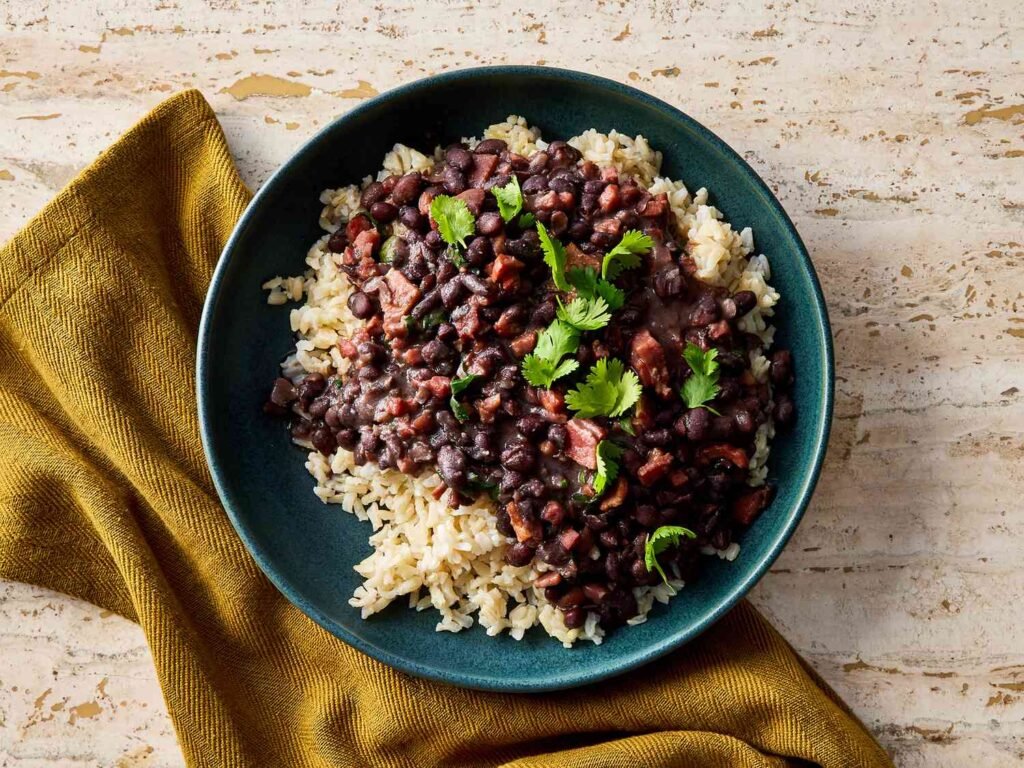
No dish represents Brazil more completely than Feijoada. A rich, slow-cooked black bean stew made with an array of pork cuts — smoked sausage, cured ribs, pork belly, pig’s ear, trotters, and sometimes tongue — simmered together for hours until the beans are silky, the broth is deep and complex, and the meat is falling-off-the-bone tender. It is, without question, one of the great stews of the world.
Feijoada has its roots in the cooking of enslaved Africans in Brazil, who combined the cheaper, less desirable cuts of pork discarded by slave owners with the black beans that formed a staple of their diet — creating a dish of extraordinary depth and flavour from the most humble of ingredients. Today it is eaten across all social classes and considered a symbol of Brazilian national identity.
Traditionally served on Wednesdays and Saturdays — the days most Brazilian restaurants still feature it — Feijoada arrives at the table as an elaborate spread. The stew is served alongside white rice, couve (sautéed kale with garlic), farofa (toasted cassava flour), fresh orange slices to cut through the richness, and a ladle of the cooking liquid poured over everything. A small bowl of molho de pimenta (hot pepper sauce) sits on the side. A caipirinha beforehand is essentially mandatory.
Where to eat the best Feijoada: Casa da Feijoada in Rio de Janeiro’s Ipanema neighbourhood serves one of the most celebrated versions in the country, available daily. In São Paulo, Bolinha in the Jardins neighbourhood has been serving its legendary Feijoada since 1946.
2. Churrasco — Brazilian BBQ
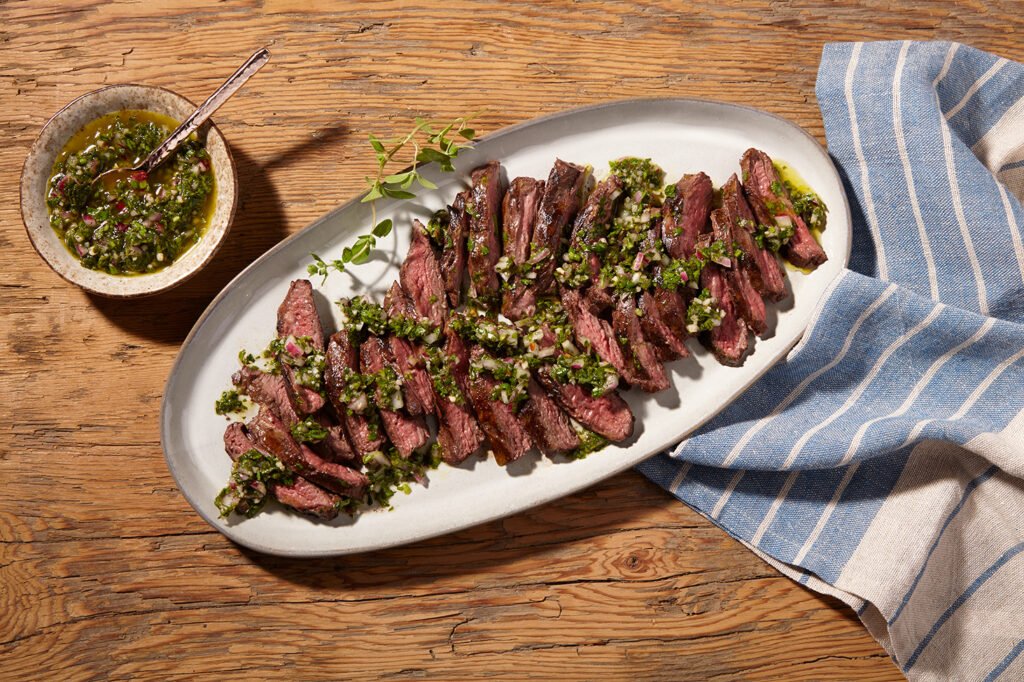
If Feijoada is Brazil’s soul food, Churrasco is its celebration food — and one of the great barbecue traditions of the world. Brazilian churrasco involves large cuts of beef, pork, chicken, and lamb skewered on long metal spears and slow-roasted over open charcoal fires, seasoned with nothing more than coarse rock salt and the patience of an experienced churrasceiro (grill master).
The rodízio format — where waiters circulate the restaurant continuously with skewers of freshly carved meat, slicing directly onto your plate until you signal them to stop — was invented in the southern state of Rio Grande do Sul and has since spread across Brazil and around the world. At a good churrascaria, you might eat fifteen or twenty different cuts over the course of a long, unhurried meal.
The star of any churrasco is the picanha — the rump cap, a triangular cut with a generous layer of fat that melts and bastes the meat as it cooks, producing a juicy, intensely flavoured result that has few equals in the beef world. Other essential cuts include fraldinha (flank steak), costela (beef ribs slow-cooked for up to twelve hours), and linguiça (smoked pork sausage).
Where to eat the best Churrasco: Fogo de Chão began in Rio Grande do Sul and remains one of Brazil’s finest churrascaria chains. In São Paulo, Barbaroi and Dinho’s are legendary local institutions. In Porto Alegre, the birthplace of churrasco culture, virtually every neighbourhood has a traditional grill house worth visiting.
3. Moqueca — Brazil’s Greatest Seafood Stew
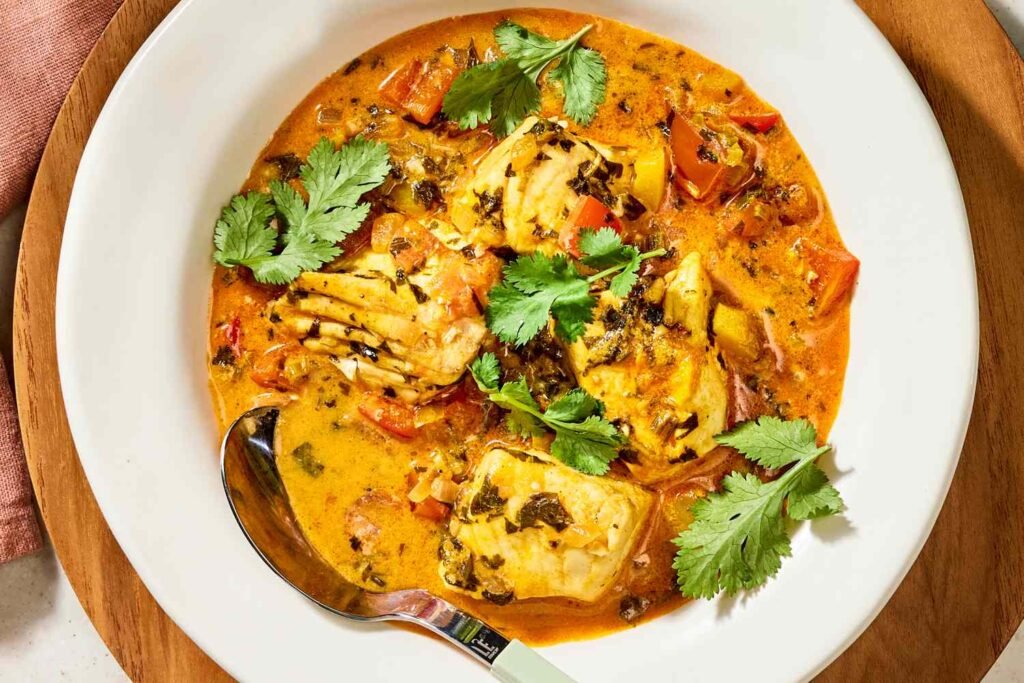
Moqueca is the dish that best captures the soul of coastal Brazil — a fragrant, deeply coloured seafood stew cooked slowly in a traditional clay pot (panela de barro) that has been seasoned over decades of use, imparting a subtle earthiness to everything cooked within it.
There are two great competing versions of Moqueca, and the rivalry between them is taken with considerable seriousness by their respective proponents.
Moqueca Baiana from the state of Bahia is made with dendê oil (red palm oil) and coconut milk, producing a rich, intensely coloured, robustly flavoured stew with strong African influences. Shrimp, fish, or a combination of both are simmered with tomatoes, onions, garlic, coriander, and the essential addition of the dendê oil that gives the dish its distinctive orange-red colour and complex flavour.
Moqueca Capixaba from the neighbouring state of Espírito Santo uses neither dendê oil nor coconut milk — relying instead on annatto (urucum) for colour and a lighter, more delicate flavour profile that lets the quality of the seafood speak for itself. Capixabas will argue passionately that their version is the original and superior preparation.
Both are magnificent. Both are essential. Order whichever you can find and eat it directly from the clay pot with white rice, pirão (a thick fish broth porridge made with cassava flour), and farofa.
Where to eat the best Moqueca: In Salvador, Yemanjá restaurant is the definitive address for Moqueca Baiana. In Vitória, Espírito Santo, Lena Moqueca is considered the finest expression of the Capixaba tradition.
4. Coxinha — Brazil’s Most Beloved Street Food
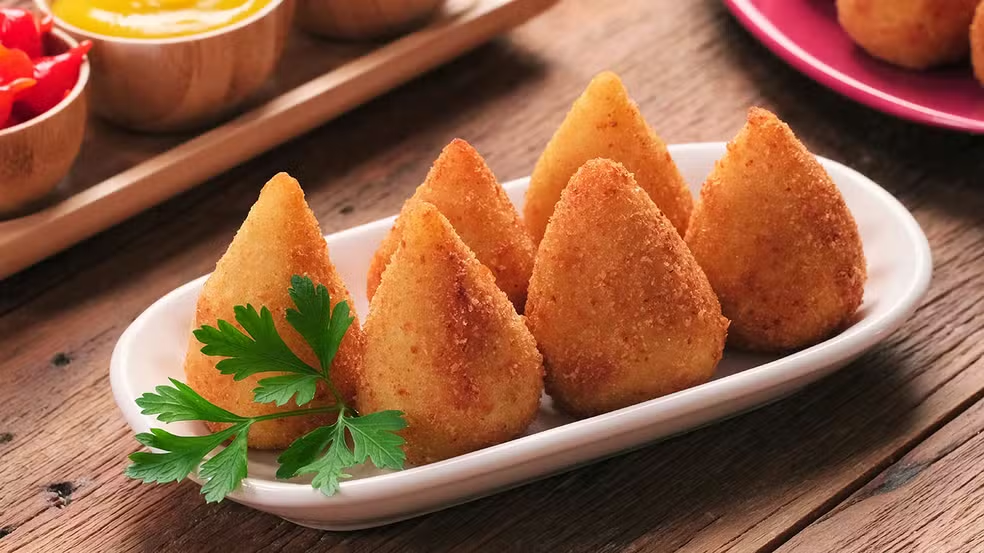
Walk through any Brazilian city and within minutes you will encounter a coxinha — a teardrop-shaped fried snack filled with shredded chicken and cream cheese (requeijão), encased in a smooth, golden dough made from wheat flour and chicken broth, and fried until perfectly crispy. The name means “little thigh” — a reference to the shape, which traditionally resembled a chicken drumstick.
Coxinha is the cornerstone of Brazilian lanche culture — the tradition of eating small savoury snacks at padarias (bakeries) and lanchonetes (snack bars) throughout the day. Brazilians eat coxinha at breakfast, as a mid-morning snack, after school, before dinner, and at midnight after a night out. It is one of the great democratic pleasures of Brazilian food — cheap, satisfying, and available everywhere.
Variations include: Coxinha de bacalhau (salt cod), coxinha de camarão (shrimp), and coxinha vegana (vegan versions with heart of palm) — increasingly common in Brazil’s growing plant-based food scene.
5. Pão de Queijo — Brazilian Cheese Bread
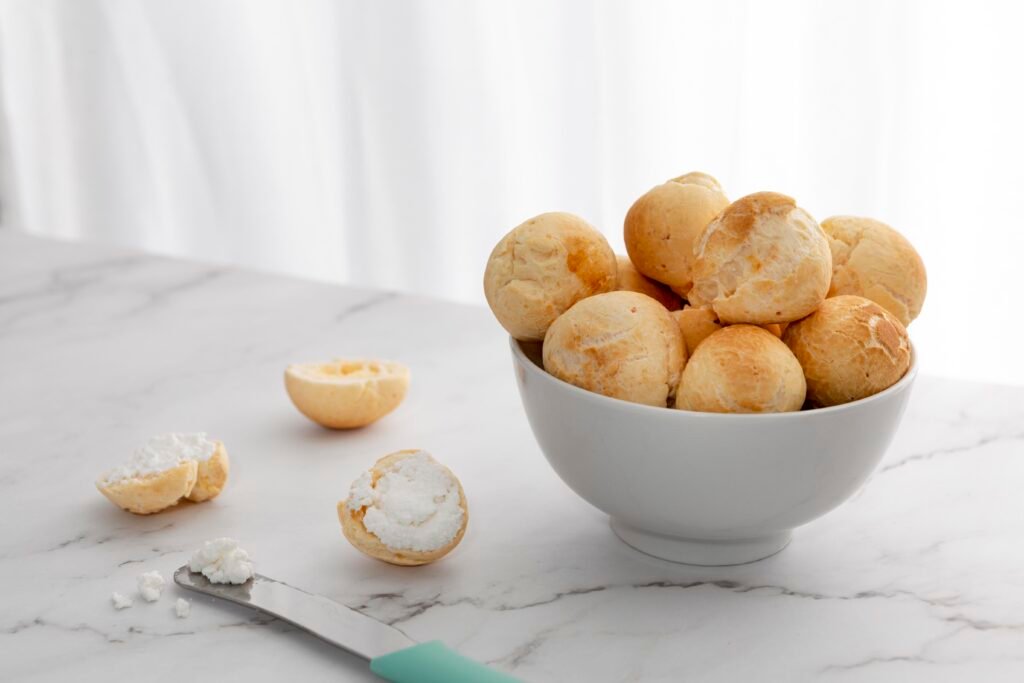
Few things in the world bring as much immediate joy as a freshly baked pão de queijo — a small, pillow-soft cheese bread made from tapioca flour and Minas cheese, with a crispy exterior and an impossibly light, chewy, molten interior. It is gluten-free by nature, requires no leavening agent, and achieves its remarkable texture through the unique properties of tapioca starch.
Pão de queijo originated in the state of Minas Gerais in the 18th century and remains most closely associated with Mineiro culture, though it is now eaten across the entire country. In Minas Gerais, it is eaten warm for breakfast with a strong black coffee. In São Paulo, it is sold from street carts and padaria counters throughout the day. On aeroplanes, it is served as a snack on virtually every domestic Brazilian flight — a small but telling indication of how central it is to Brazilian food culture.
There is no wrong time to eat pão de queijo. There is only the question of how many.
6. Acarajé — The Sacred Street Food of Bahia
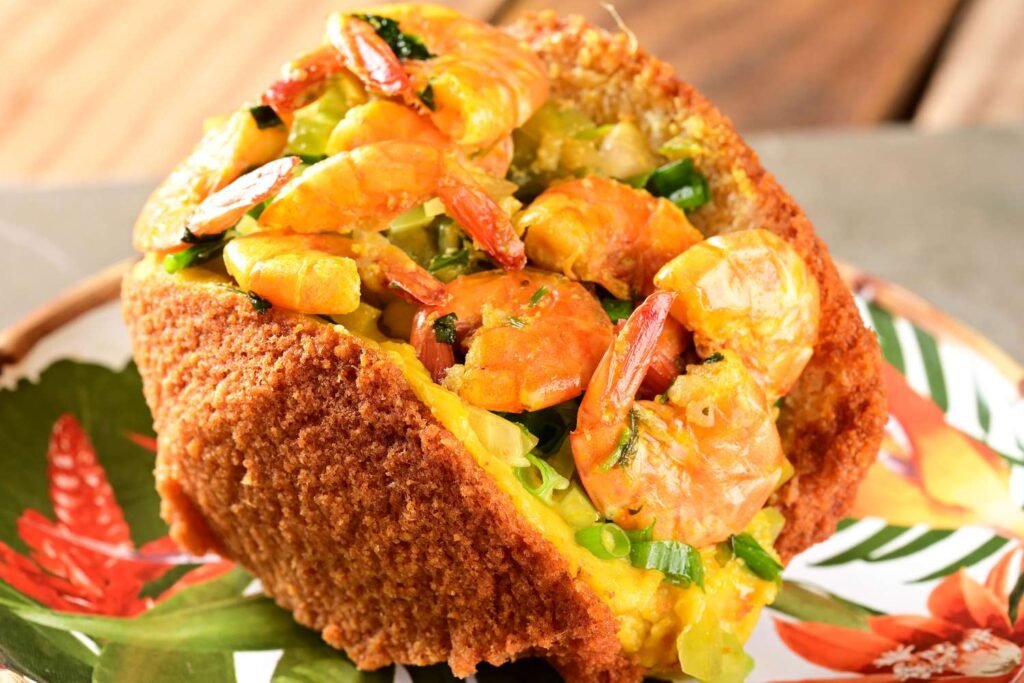
Acarajé is one of the most spiritually significant and culinarily extraordinary street foods in the world. A fritter made from black-eyed peas ground into a paste, seasoned with salt and onion, and deep-fried in bubbling dendê oil — then split open and filled with vatapá (a thick paste of shrimp, bread, peanuts, coconut milk, and dendê oil), caruru (okra stewed with shrimp and dendê), dried shrimp, and fiery pepper sauce.
Acarajé has its roots in West African Yoruba cooking and arrived in Brazil through the slave trade. In the Candomblé religion — a Brazilian faith that blends Yoruba spiritual traditions with Catholicism — Acarajé is considered a sacred offering to Iansã, the deity of winds and storms. The Baianas de acarajé — the women who sell acarajé from large wooden trays on the streets of Salvador wearing traditional white lace dresses — are recognised as guardians of an intangible cultural heritage by UNESCO.
The flavour is extraordinary — the earthy, slightly bitter black-eyed pea fritter against the rich, complex vatapá and the heat of the pepper sauce is one of the most complete and satisfying flavour combinations in all of Brazilian cooking.
Where to eat the best Acarajé: The Feira de São Joaquim in Salvador and the streets of the Pelourinho historic district are the best places to find authentic acarajé prepared by traditional Baianas.
7. Bobó de Camarão — Creamy Shrimp with Cassava
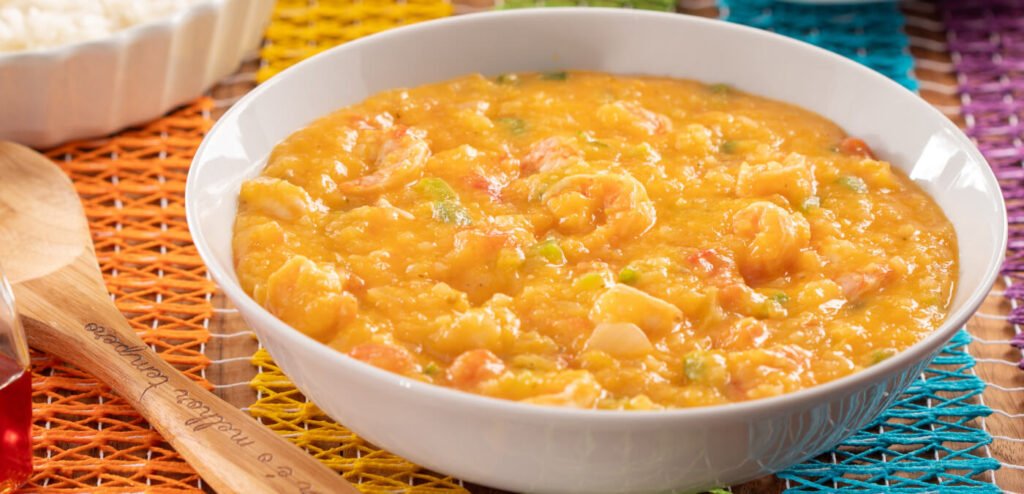
A celebration of two of Brazil’s most essential ingredients — fresh shrimp and cassava — Bobó de Camarão is a luxuriously creamy stew from Bahia in which large prawns are folded into a thick, velvety sauce made from puréed cassava, coconut milk, dendê oil, tomatoes, onions, and coriander. The cassava dissolves into the sauce as it cooks, thickening it to a consistency that is simultaneously light and deeply satisfying.
It is one of the most eloquent expressions of Afro-Brazilian cooking — a dish that transforms simple, widely available ingredients into something of genuine sophistication and beauty. Served over white rice with farofa scattered over the top, it is one of the dishes that best represents the cooking of the Brazilian northeast.
Vegetables, Sides & Staples
Cassava (Mandioca) — Brazil’s Essential Ingredient
Cassava — known variously as mandioca, aipim, or macaxeira depending on which part of Brazil you’re in — is the most important starch in Brazilian cooking and one of the foundational ingredients of the entire cuisine. It appears in more forms than almost any other single ingredient: boiled and served as a side dish, fried into chips, ground into flour for farofa, fermented into tucupi (a yellow broth used extensively in Amazonian cooking), puréed into stews, and processed into tapioca for both savoury and sweet preparations.
Farofa — toasted cassava flour mixed with butter, onions, bacon, or eggs — is the ubiquitous side dish that accompanies virtually every major Brazilian meal. It adds texture, absorbs juices, and provides a subtle nutty flavour that ties the entire plate together. No Feijoada is complete without it.
Tapioca — made from cassava starch hydrated and cooked on a dry skillet until it forms a thin, lacy crepe — is one of Brazil’s most beloved breakfast foods, filled with anything from butter and cheese to banana and honey, or ham and egg for a savoury version.
Rice and Beans — The Daily Foundation
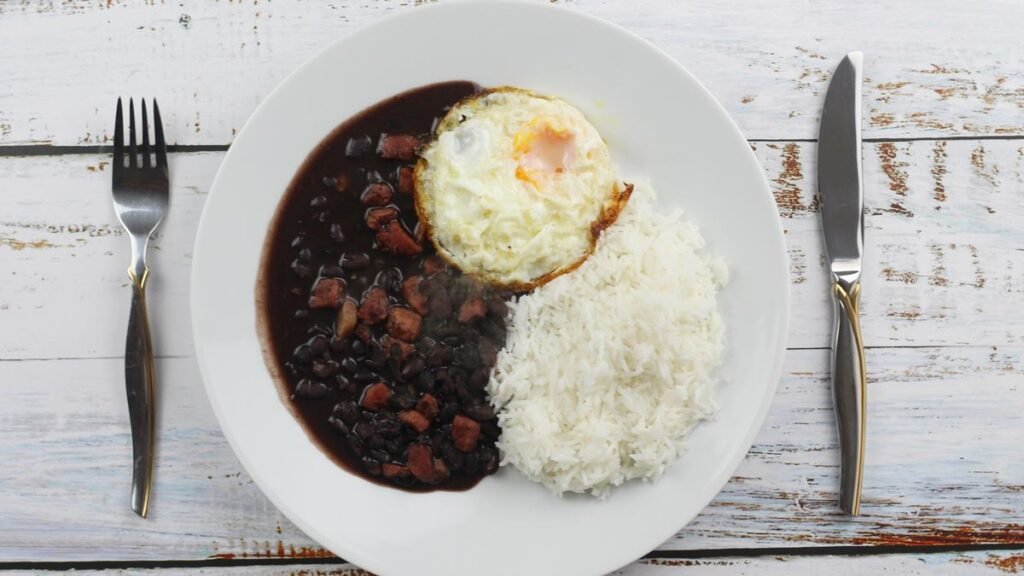
Across all regions and social classes, the combination of white rice and beans (arroz e feijão) forms the bedrock of the Brazilian daily diet. Eaten together at lunch — Brazil’s main meal of the day — this combination provides a complete protein and serves as the foundation upon which everything else is built. The beans vary by region: black beans in Rio de Janeiro and the south, brown carioca beans in São Paulo and the centre, and white beans in parts of the northeast. Each region has its own way of preparing and seasoning them, but the fundamental comfort they provide is universal.
Brazilian Desserts & Sweets
Brigadeiro — Brazil’s Most Beloved Sweet
If Brazil has a national sweet, it is the brigadeiro — a small, intensely chocolatey truffle made from condensed milk, cocoa powder, and butter, cooked until thick and fudgy, rolled into balls, and coated in chocolate sprinkles. Created in the 1940s and named after Brigadeiro Eduardo Gomes — a Brazilian Air Force officer and political candidate — it became an instant national obsession and remains to this day the centrepiece of every Brazilian birthday celebration.
The brigadeiro is deceptively simple to make but endlessly variable in execution. The classic version uses chocolate, but variations include white chocolate (branquinho), passion fruit, pistachio, Nutella, and countless other flavours. Gourmet brigadeiro shops have elevated the humble sweet into an artisanal product, with handcrafted versions sold by the piece in beautiful boxes across Brazil’s major cities.
No Brazilian birthday party exists without a mountain of brigadeiros on the table. It is the taste of childhood, celebration, and home for an entire nation.
Açaí — Brazil’s Superfood Icon
Long before açaí became a global wellness trend, it was simply the staple food of the Amazon — a dense, calorie-rich purple berry from the açaí palm, blended into a thick, frozen purée and eaten for sustenance by riverside communities throughout the Brazilian north.
In the Amazon and Pará state, açaí is eaten very differently from the sweetened bowls found in international health food cafés. It is served almost savoury — as a thick, unsweetened purée alongside fried fish, shrimp, or tapioca. In Belém, the capital of Pará, açaí is consumed in extraordinary quantities — the city gets through an estimated 200,000 litres per day — and forms a central part of the local diet.
In southern Brazil, Rio de Janeiro, and São Paulo — and subsequently around the world — açaí evolved into the sweet frozen bowl topped with granola, banana, and honey that has become globally recognisable. Both versions are valid. Both are delicious. And both are a fraction of the price in Brazil compared to anywhere else in the world.
Quindim — The Golden Custard Tart
One of the great legacies of Portuguese and African culinary influence in Brazil, Quindim is a small, impossibly glossy baked custard tart made from egg yolks, sugar, butter, and shredded coconut — producing a jewel-bright golden surface and a dense, creamy, fragrant interior. The texture sits somewhere between a crème brûlée and a dense custard, with the coconut providing both flavour and a subtle textural contrast.
Quindim originated in the Brazilian northeast and spread throughout the country during the colonial period. It is found in padarias and confeitarias (pastry shops) across Brazil and remains one of the most visually striking and delicious sweets in the entire repertoire of Brazilian confectionery.
Pudim de Leite — Brazilian Caramel Flan
Brazil’s answer to the crème caramel, Pudim de Leite is a silky, trembling flan made from condensed milk, eggs, and whole milk — baked in a caramel-lined mould until set, then unmoulded to reveal a perfectly smooth surface lacquered with golden caramel. It is the definitive Brazilian home dessert — served at Sunday lunches, family gatherings, and celebrations across the country.
The use of condensed milk — a legacy of Portuguese colonial-era preservation techniques — gives Pudim de Leite a richness and sweetness that distinguishes it from its French or Spanish counterparts. It is deeply comforting food and one of the great pleasures of eating in Brazilian homes.
Brazilian Drinks
Caipirinha — The National Cocktail
Brazil’s most famous drink is devastatingly simple and devastatingly effective. Fresh lime muddled with sugar, filled with ice, and topped generously with cachaça — a spirit distilled from fresh sugarcane juice that is Brazil’s most important and distinctive alcoholic product. The caipirinha is tart, sweet, strong, and refreshing — the perfect antidote to Brazil’s tropical heat and the natural companion to virtually every Brazilian meal.
The quality of the caipirinha depends entirely on the quality of the cachaça. Brazil produces thousands of artisanal cachaças — ranging from young, fresh expressions to aged versions rested in native Brazilian wood barrels that develop extraordinary complexity. The cachacería (cachaça bar) is an increasingly respected category of establishment in Brazil’s major cities, offering flights of artisanal spirits and elevated caipirinha preparations.
Variations include the Caipiroska (made with vodka), the Caipisake (with sake — a legacy of Brazil’s large Japanese community), and fruit variations using passion fruit, strawberry, or pineapple.
Guaraná Antarctica — Brazil’s Favourite Soft Drink
Guaraná Antarctica is not merely a soft drink — it is a Brazilian cultural institution. Made from the guaraná berry — a fruit native to the Amazon with naturally high caffeine content — this bright, sweet, mildly caffeinated soda has been produced since 1921 and remains Brazil’s most consumed soft drink by volume, outselling Coca-Cola in many parts of the country. It has a uniquely tropical, slightly floral flavour that is difficult to describe but immediately recognisable and deeply addictive.
Café Brasileiro — Brazilian Coffee Culture
Brazil is the world’s largest coffee producer and takes its coffee with corresponding seriousness. The Brazilian café tradition centres on the cafezinho — a small, strong, sweet black coffee served in a tiny ceramic cup, consumed multiple times throughout the day at padarias, after meals, and at any moment that seems to call for one (which in Brazil is most moments). Coffee is drunk sweet by default — sugar is added during brewing rather than at the table, producing a smooth, integrated sweetness that is fundamental to the flavour.
Brazilian Food by Region
São Paulo is Brazil’s undisputed culinary capital — a city of 12 million with the most diverse and sophisticated restaurant scene in Latin America. Its enormous Japanese community (the largest outside Japan) has given the city an extraordinary sushi and ramen culture. Lebanese, Italian, and Korean communities have all contributed to a food landscape of staggering variety. The city’s high-end restaurant scene is world-class, with chefs like Alex Atala of D.O.M. restaurant placing Brazilian ingredients on the global fine dining map.
Rio de Janeiro is the city of the boteco — the informal neighbourhood bar where cold beer, fried salgadinhos (savoury snacks), and grilled meats are consumed at outdoor tables on warm evenings. Rio is also the city most associated with churrasco culture, the açaí bowl, and the beach food culture of Copacabana and Ipanema — where vendors circulate the sand selling everything from mate tea and biscoito Globo (puffy corn snacks) to fresh coconut water and grilled corn.
Bahia is the heartland of Afro-Brazilian cuisine — the region where dendê oil, coconut milk, fresh seafood, and the bold spicing traditions of West Africa combine to create the most distinctive and arguably the most exciting regional cuisine in Brazil. Salvador’s street food culture — acarajé, abará, cocada, and tapioca — is among the finest in the country.
Minas Gerais is Brazil’s culinary heartland — the state most associated with comfort food, home cooking, and the simple pleasures of the table. Pão de queijo, Romeu e Julieta, frango ao molho pardo (chicken in dark sauce), feijão tropeiro (beans with cassava flour, bacon, and egg), and the extraordinary variety of Minas cheeses define a regional cuisine that is humble, honest, and deeply satisfying.
The Amazon offers the most exotic and least internationally known food culture in Brazil — a world of river fish, tropical fruits, and Amazonian ingredients that have no equivalent anywhere else. Pirarucu (the giant Amazonian river fish), tucupi (fermented manioc broth), jambu (a leaf that causes a gentle numbing sensation on the tongue), and tacacá (a Amazonian street soup of shrimp, tucupi, tapioca, and jambu) represent a food culture of extraordinary uniqueness and fragility.
The South (Rio Grande do Sul, Santa Catarina, Paraná) reflects the strong German, Italian, and Slavic immigrant heritage of the region. Churrasco culture was born here, as was the chimarrão — the traditional gourd of bitter yerba mate tea sipped through a metal straw that is the defining ritual beverage of gaucho culture. The south also produces Brazil’s best wines — particularly from the Serra Gaúcha region, which specialises in Italian varietals including Moscato and Merlot.
Brazilian Food Markets & Street Food Experiences
Mercado Municipal de São Paulo (Mercadão) is one of the great food markets of South America — a magnificent art nouveau building housing hundreds of stalls selling everything from imported cheeses and cured meats to exotic tropical fruits and the market’s legendary mortadella sandwich, a towering construction of thick-sliced mortadella on fresh bread that has achieved iconic status in the city.
Feira de São Joaquim, Salvador is Bahia’s most authentic and atmospheric market — a vast, labyrinthine open-air market selling traditional Afro-Brazilian food products, herbs, spices, dendê oil, fresh seafood, and handcrafted artisanal goods. The food stalls serve some of the best acarajé, moqueca, and abará in the city.
Feira do Produtor, Curitiba is one of Brazil’s finest farmers’ markets — held weekly in the Água Verde neighbourhood and offering exceptional local produce, artisanal cheeses, fresh bread, and traditional southern Brazilian specialties.
Essential Brazilian Food Experiences Not to Miss
Eating a Feijoada completa on a Saturday afternoon in Rio de Janeiro with a caipirinha and cold beer. Sitting at a churrascaria rodízio in Porto Alegre and eating picanha until you physically cannot continue. Buying a freshly made acarajé from a Baiana de acarajé on the streets of Salvador. Eating pão de queijo still warm from the oven at a Minas Gerais padaria at 7am with a tiny sweet cafezinho. Ordering an açaí bowl on Copacabana beach and eating it watching the waves roll in. Visiting the Mercadão in São Paulo and eating a mortadella sandwich standing at the counter. Drinking a caipirinha at a Rio boteco as the sun goes down over the city. And finishing any meal in Belém with a bowl of fresh açaí the way they eat it in Pará — thick, cold, and completely unsweetened alongside fried fish and farinha.
Tips for Eating Well in Brazil
Lunch is the main meal. Most Brazilians eat their largest meal at lunchtime. The prato feito (PF) — a fixed lunch plate of rice, beans, protein, salad, and farofa — is available at millions of small restaurants across the country for very reasonable prices and is almost always freshly cooked and genuinely delicious.
Eat at padarias. The Brazilian padaria is one of the great unsung institutions of urban food culture — a bakery, café, snack bar, and social hub combined, open from early morning until late at night, serving freshly baked bread, pão de queijo, salgadinhos, fresh juice, and excellent coffee at very reasonable prices.
Drink fresh juice. Brazil’s tropical climate produces an extraordinary abundance of exotic fruits — many of which have no direct translation in English. Order sucos (fresh juices) at every opportunity: caju (cashew fruit), cupuaçu, maracujá (passion fruit), goiaba (guava), jaboticaba, and pitanga are just a few of the extraordinary fruits you’ll encounter that are virtually unknown outside the country.
Try everything at least once. Brazilian food culture is generous, exuberant, and deeply welcoming. Trying new dishes, accepting food from strangers, and eating with curiosity and openness is the best possible approach to one of the world’s great culinary adventures.
Conclusion
Brazilian cuisine is one of the world’s great undiscovered culinary treasures — a food culture of extraordinary diversity, depth, and generosity that reflects the country’s unique history, its remarkable geography, and the warmth of its people. From the sacred street food of Salvador to the imperial churrasco traditions of the south, from the Amazonian ingredients that have no equivalent anywhere on earth to the simple, perfect pleasure of a warm pão de queijo with a strong cafezinho — Brazil feeds the body and nourishes the soul in equal measure. Come with an empty stomach, an open mind, and a willingness to eat everything put in front of you. Brazil will do the rest.