Understanding Hanabi: Why Japanese Fireworks Are Different
To understand why Japan’s fireworks festivals are extraordinary you first need to understand what separates Japanese pyrotechnic culture from everything else in the world.
The History
Fireworks arrived in Japan from China in the early 17th century — introduced during the Edo period when the Tokugawa shogunate controlled a country of extraordinary cultural productivity and extraordinary aesthetic ambition. The first recorded large-scale fireworks display in Japan was held on the Sumida River in Edo (modern Tokyo) in 1733 — a display ordered by the eighth shogun Tokugawa Yoshimune as a memorial service for the victims of a great famine and epidemic that had killed tens of thousands of people the previous year.
This origin — fireworks not as celebration but as memorial, as prayer, as the sending of light into the darkness on behalf of the dead — gives Japanese fireworks culture a depth of meaning and a seriousness of purpose that distinguishes it from the purely celebratory pyrotechnic traditions of most other cultures. The Sumida River Fireworks Festival that descends from that 1733 display is still held every year — nearly 300 years of continuous tradition.
The Craft
Japanese fireworks (hanabi) are hand-crafted by master pyrotechnicians (hanabi-shi) who spend years or decades learning their craft in a tradition of workshop apprenticeship that mirrors the training of other Japanese traditional arts — the lacquer worker, the sword polisher, the tea master. The finest hanabi-shi are regarded as living national treasures and their creations — the complex chrysanthemum bursts (kiku), the peony patterns (botan), the willow cascades (yanagi), the precisely timed sequential patterns (kamuro) — are regarded as works of art in the most serious sense.
The competitive element that exists at many major Hanabi Taikai — in which different pyrotechnic companies compete to produce the most technically accomplished and most aesthetically beautiful shells — drives a continuous culture of innovation and excellence that keeps Japanese fireworks at the absolute frontier of the art form.
The Aesthetics
Japanese fireworks aesthetics are inseparable from the broader aesthetic philosophy of Japanese culture — the emphasis on mono no aware (the bittersweet beauty of transience), on wabi-sabi (the beauty of imperfection and impermanence), and on the particular emotional quality of beauty that exists precisely because it does not last.
A firework — beautiful for exactly the duration of its burn, then gone completely — is perhaps the perfect expression of mono no aware. The Japanese crowd watching Hanabi does not simply watch — it responds with a collective aesthetic judgment expressed in the word “tama-ya” or “kagi-ya” (the names of the two ancient rival fireworks houses, shouted by the crowd to acclaim particularly beautiful shells) and in the characteristic sound of appreciation — a sharp, collective intake of breath at the moment of a particularly beautiful burst, followed by a low, sustained “aaah” of genuine aesthetic pleasure.
This is not an audience watching a show. It is an audience participating in a shared aesthetic experience — a cultural practice of collective beauty appreciation that is one of the most distinctively and most movingly Japanese things a visitor can witness.
The Japanese Fireworks Season
Japan’s Hanabi Taikai season runs from late June through early September — concentrated in the hottest months of the Japanese summer. This timing is deliberate and deeply cultural — the summer festival season (matsuri) of which Hanabi Taikai are the most spectacular expression is one of the most important periods in the Japanese cultural calendar, associated with O-Bon (the festival of the dead), with the wearing of yukata (summer kimono), with the eating of cold foods and the particular pleasures of Japanese summer.
The peak of the Hanabi season is July and August — when the largest and most celebrated festivals take place across the country. Planning a Japan trip specifically to coincide with the Hanabi season is one of the finest travel decisions a Japan visitor can make — the combination of the summer festival culture, the yukata-wearing crowds, the food stalls (yatai) that line every festival site, and the extraordinary fireworks themselves creates a travel experience of complete Japanese summer immersion.
The 10 Greatest Hanabi Taikai in Japan 2026
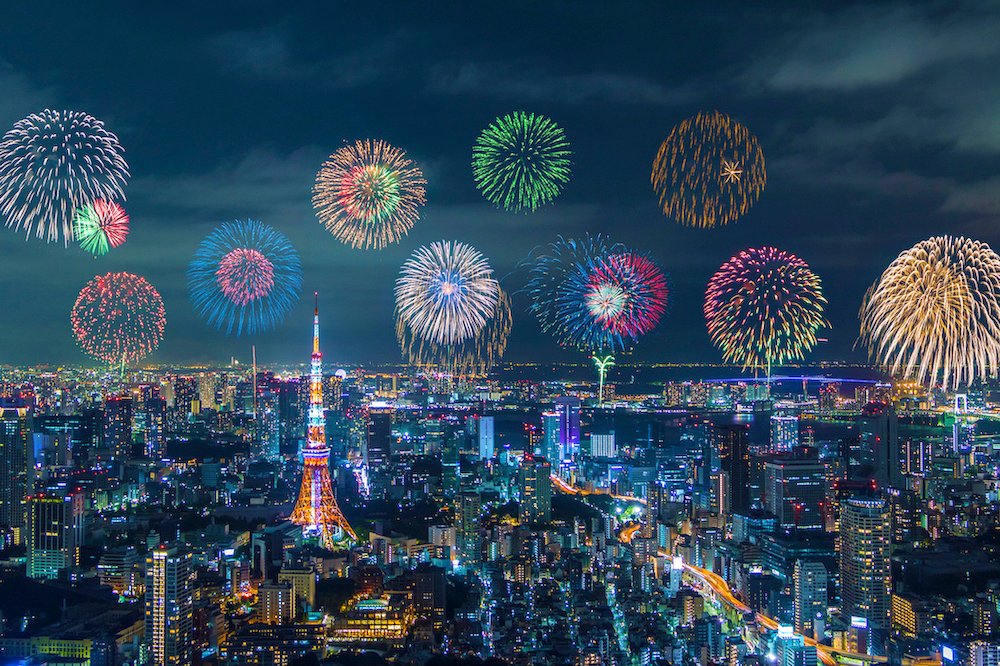
1. Sumida River Fireworks Festival (Sumida Gawa Hanabi Taikai) — Tokyo
Date 2026: Last Saturday of July — 25 July 2026
Location: Sumida River, between Sakurabashi and Kototoibashi bridges, Tokyo
Scale: Approximately 20,000 fireworks shells
Attendance: Approximately 900,000 people
The Sumida River Fireworks Festival is the oldest and most historically significant fireworks festival in Japan — the direct descendant of the 1733 Ryogoku Kawabiraki that began the Japanese Hanabi tradition. Nearly 300 years of continuous history gives this festival a weight and a significance that no other Hanabi Taikai can match.
The Experience
The festival divides its programme between two launch sites along the Sumida River — creating two simultaneous displays that can be viewed from the bridges and riverbanks of Asakusa and Sumida. The competition element — in which different pyrotechnic companies compete in designated sections of the programme — produces displays of extraordinary technical ambition and extraordinary aesthetic beauty.
The setting is inseparable from the experience. The Sumida River flows through the historic shitamachi (downtown) district of Tokyo — the Senso-ji temple of Asakusa visible in one direction, the Tokyo Skytree tower rising above the eastern bank in another — and the combination of this layered urban landscape with the extraordinary fireworks above creates a visual environment of complete and overwhelming beauty.
Practical Information
Getting there: Asakusa station (Tokyo Metro Ginza Line or Tobu Skytree Line) is the primary access point. Expect enormous crowds — arrive at least 2 hours before the 7 PM start time to secure a viewing position.
Viewing options:
- Free riverbank viewing: The Sumida Park riverbank provides free viewing but fills extremely early — arrive by 3 PM for a good position
- Paid reserved seats: Available through the official festival website and authorised ticket agencies — book months in advance
- Restaurant and bar viewing: Restaurants and bars along the Sumida River with river-facing windows offer viewing packages — typically ¥10,000 to ¥30,000 per person including food and drink. Book 2 to 3 months in advance
- Hotel rooms: Hotels along the Sumida River with east or west-facing rooms above the 10th floor provide extraordinary private viewing — the Asakusa View Hotel and the Tobu Hotel Levant Tokyo are the finest positions. Book 6 months in advance
What to wear: The Sumida festival is the most yukata-wearing occasion in Tokyo — renting or buying a yukata for the evening is one of the finest ways to participate in the cultural experience. Yukata rental is available in Asakusa from approximately ¥3,000 to ¥5,000 including dressing assistance.
Honest assessment: The Sumida festival is extraordinarily crowded — 900,000 people in the streets of Asakusa creates a logistical challenge of considerable proportions. The fireworks are genuinely extraordinary and the historical significance is unmatched but the viewing experience requires significant advance planning to be genuinely comfortable.
2. Lake Suwa Fireworks Festival (Suwa-ko Hanabi Taikai) — Nagano
Date 2026: 15 August 2026
Location: Lake Suwa, Suwa City, Nagano Prefecture
Scale: Approximately 40,000 fireworks shells
Attendance: Approximately 500,000 people
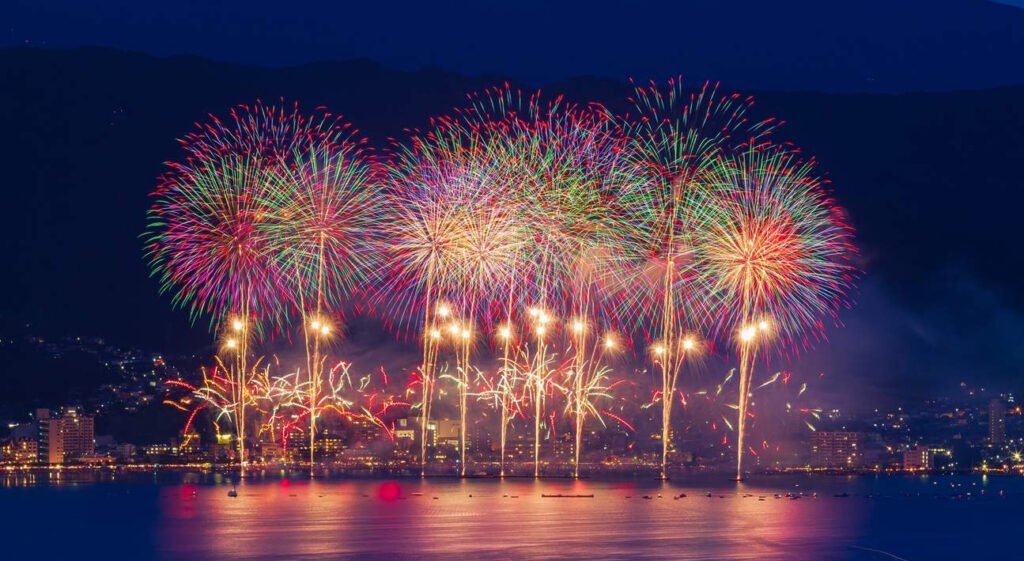
Lake Suwa is the most naturally beautiful setting for any major Hanabi Taikai in Japan — a high-altitude lake in the Japanese Alps of Nagano Prefecture surrounded by mountains on all sides, the fireworks reflected in the still water of the lake in a double display of extraordinary beauty.
The Star Mine and the Niagara
The Lake Suwa festival is famous for two specific elements that make it unique among Japan’s major Hanabi Taikai:
The Star Mine (Hoshi-mine): A rapid sequence of shells fired in coordinated patterns that create moving pictures in the sky — flowers blooming, animals moving, geometric patterns evolving and dissolving — of extraordinary technical complexity and extraordinary visual beauty. The Lake Suwa star mines are consistently rated among the finest in Japan.
The Niagara Falls: A waterfall of golden fire created by cascading sparks suspended on a wire stretched across a section of the lake — the reflection of the golden cascade in the still water below creating the impression of a continuous wall of fire falling from the sky to the lake surface. The Lake Suwa Niagara is the most famous single fireworks effect in Japan and one of the most beautiful pyrotechnic creations available anywhere in the world.
Practical Information
Getting there: Suwa station on the JR Chuo Line from Shinjuku (approximately 2.5 hours) or from Nagoya (approximately 2 hours). The festival site is a 15-minute walk from the station.
Viewing: The lakeside viewing areas fill extremely early on 15 August — one of the most competitive viewing days in the entire Japanese Hanabi season. Paid reserved seating is strongly recommended — book through the official Suwa City website from April onwards.
Where to stay: Suwa has excellent traditional ryokan accommodation along the lakeside — staying in a lakeside ryokan and watching the fireworks from the ryokan garden or private room is the most extraordinary viewing experience available at this festival. Ryokan Hanamaki and Katakura Chikurin-an both offer exceptional lakeside positions. Book 4 to 6 months in advance.
3. Nagaoka Fireworks Festival (Nagaoka Hanabi Taikai) — Niigata
Date 2026: 2 and 3 August 2026
Location: Shinano River, Nagaoka City, Niigata Prefecture
Scale: Approximately 20,000 shells per night over 2 nights
Attendance: Approximately 1,000,000 people over 2 nights
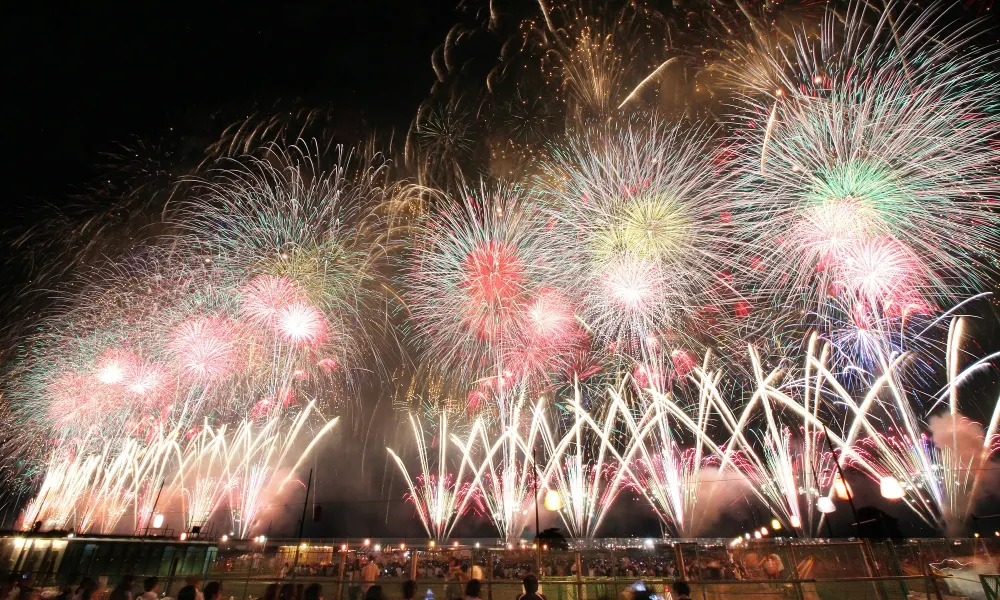
The Nagaoka Fireworks Festival is widely regarded by Japanese fireworks connoisseurs as the finest Hanabi Taikai in Japan — the combination of the scale of the display, the extraordinary technical quality of the shells, the emotional depth of the festival’s narrative, and the unique Phoenix fireworks that have become the most famous single fireworks sequence in Japan makes Nagaoka the most important destination for serious Hanabi enthusiasts.
The Phoenix
The Phoenix (Fushicho) is the signature fireworks sequence of the Nagaoka festival — a 10-minute display of extraordinary technical complexity and extraordinary emotional power that opens the main programme on both festival nights.
The Phoenix was created as a memorial to the victims of the 1945 US bombing of Nagaoka — an air raid that killed approximately 1,500 civilians and destroyed much of the city on 1 August 1945, three days before the atomic bombing of Hiroshima. The festival itself — which had been suspended during the war years — was revived in 1946 as an expression of the city’s determination to rebuild and to mourn its dead simultaneously.
The Phoenix sequence — golden cascades and crimson bursts that rise and fall across the full width of the Shinano River in a sequence of heartbreaking beauty — carries this history in every shell. The Japanese crowd watching the Phoenix is not simply appreciating technical excellence — it is participating in an act of collective memorial that connects the present celebration to 80 years of grief and recovery. For the informed visitor this context transforms what is already an extraordinary piece of pyrotechnic art into something genuinely moving beyond all expectation.
The Three Shakuhachi (Sanshaku-dama)
The Nagaoka festival also features the firing of sanshaku-dama — shells of 30-centimetre diameter that are among the largest fireworks shells fired at any Japanese festival. The burst diameter of a sanshaku-dama reaches approximately 800 metres — creating a chrysanthemum of fire that fills the entire visible sky above the Shinano River. The sound alone — the deep, chest-felt concussion of a 30-centimetre shell detonating at altitude — is an experience of physical as well as visual intensity.
Practical Information
Getting there: Nagaoka station on the JR Joetsu Shinkansen from Tokyo (approximately 75 minutes). The festival site is approximately 20 minutes walk from the station.
Accommodation: Nagaoka fills completely on festival nights — book accommodation 4 to 6 months in advance. Many visitors stay in Niigata City (45 minutes by shinkansen) or commute from Tokyo on festival day.
Viewing: Reserved seating is essential for the Nagaoka festival — standing viewing areas are extremely crowded and the reserved seat areas provide significantly better sightlines. Book through the official Nagaoka City website from April onwards.
Honest assessment: Nagaoka is the finest Hanabi Taikai in Japan for the combination of technical excellence, emotional depth, and the extraordinary Phoenix sequence. If you can attend only one Japanese fireworks festival make it Nagaoka.
4. Tsuchiura All-Japan Fireworks Competition (Tsuchiura Zenkoku Hanabi Kyogi Taikai) — Ibaraki
Date 2026: First Saturday of October — 3 October 2026
Location: Sakura River, Tsuchiura City, Ibaraki Prefecture
Scale: Competitive — approximately 100 competing entries
Attendance: Approximately 800,000 people
Tsuchiura is the most important competitive fireworks event in Japan — the All-Japan Fireworks Competition that determines the finest pyrotechnic teams in the country and that drives the culture of technical innovation and aesthetic ambition that keeps Japanese fireworks at the frontier of the global art form.
The Competition Format
The Tsuchiura competition divides into categories — individual shell competitions (in which single shells of various sizes are judged on their technical accuracy, colour quality, and aesthetic beauty) and creative composition competitions (in which teams create extended sequences judged on their overall artistic merit). The judging is conducted by panels of experienced Hanabi experts whose assessments are taken with the seriousness of a fine art competition.
The competitive format creates a quality of intensity and a quality of technical ambition that distinguishes Tsuchiura from the entertainment-focused major festivals. The teams competing at Tsuchiura are performing at their absolute technical limit — the results are frequently the most technically accomplished single fireworks performances available anywhere in Japan.
Practical Information
Getting there: Tsuchiura station on the JR Joban Line from Ueno, Tokyo (approximately 50 minutes). The festival site is a 15-minute walk from the station.
Timing: October — after the main summer festival season — means cooler and more comfortable viewing conditions than the major summer festivals. This is a significant practical advantage.
5. Omagari All-Japan Fireworks Competition — Akita
Date 2026: Last Saturday of August — 29 August 2026
Location: Omono River, Daisen City (Omagari), Akita Prefecture
Scale: Competitive — approximately 70 competing teams
Attendance: Approximately 800,000 people
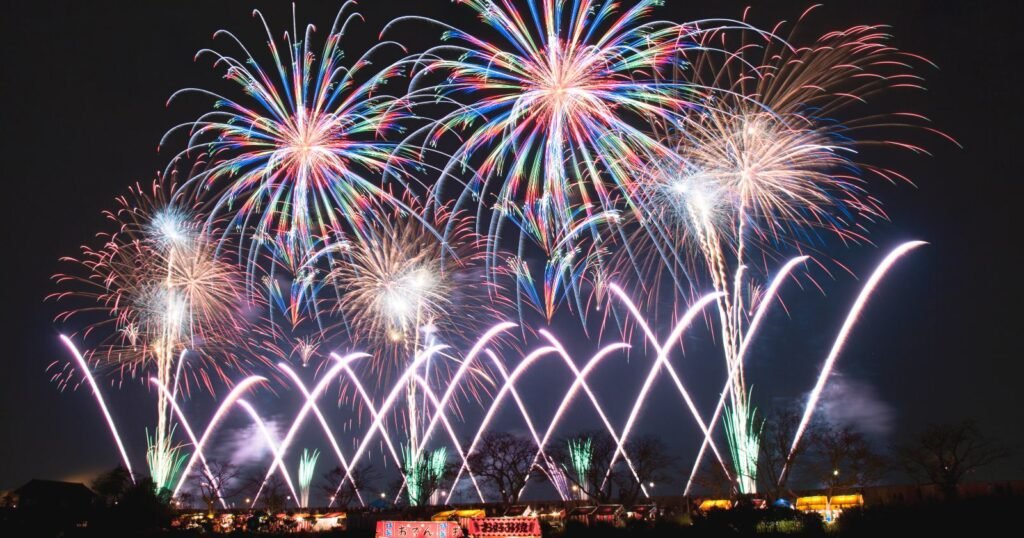
The Omagari competition — held on the Omono River in the rural Akita Prefecture of northern Japan — is the second most important competitive Hanabi event in Japan and the one that most Japanese fireworks connoisseurs regard as the finest venue for appreciating the art of Japanese pyrotechnics at its most serious and most ambitious.
Why Omagari Is Special
The combination of the rural setting (the flat rice fields of Akita providing an unobstructed view of the entire sky above the river), the extraordinary quality of the competing teams, and the particular atmosphere of a competition held in a small city that takes its annual Hanabi festival with extraordinary seriousness creates an experience of genuine and unusual intimacy for a festival of this scale.
The Omagari competition is also the event most associated with the development of new techniques — the creative composition category at Omagari has been the premiere venue for the introduction of new shell types, new colour combinations, and new sequential programming techniques that subsequently become part of the standard vocabulary of Japanese fireworks.
Practical Information
Getting there: Omagari station on the JR Tazawako Line from Akita (approximately 30 minutes) or from Morioka (approximately 45 minutes). The festival site is a 10-minute walk from the station.
Accommodation: Omagari is a small city — book accommodation 4 to 6 months in advance as the town fills completely on festival weekend. Akita City (30 minutes away) provides additional accommodation options.
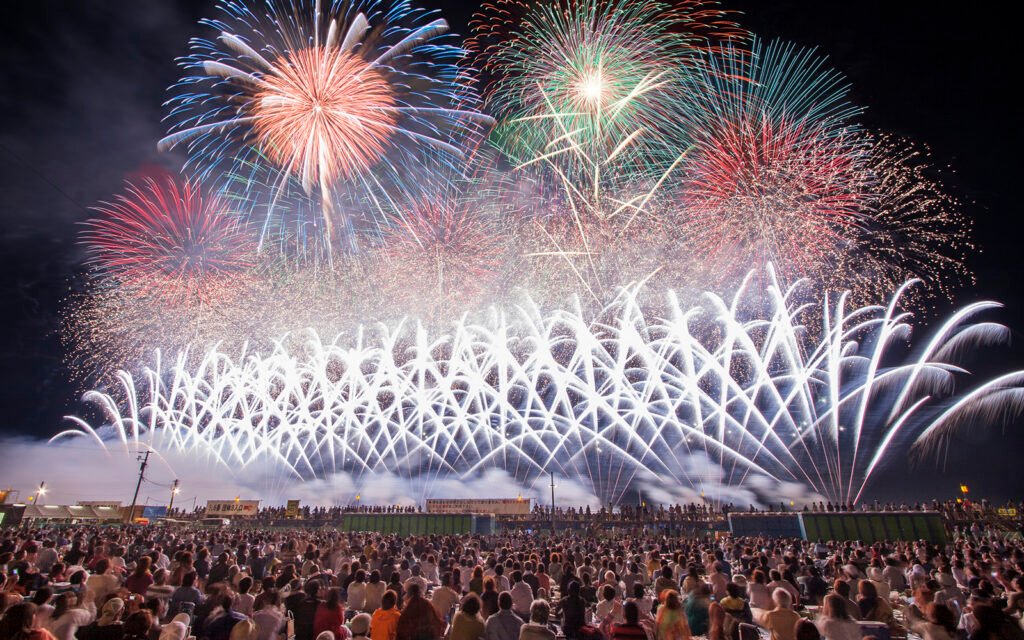
6. Miyajima Water Fireworks Festival — Hiroshima
Date 2026: Mid-August — approximately 13 August 2026 (confirm official date)
Location: Itsukushima Shrine, Miyajima Island, Hiroshima Prefecture
Scale: Approximately 5,000 shells
Attendance: Approximately 50,000 people
The Miyajima Water Fireworks Festival is the most visually extraordinary small-scale Hanabi Taikai in Japan — a festival whose combination of relatively modest scale with an incomparably beautiful setting creates an experience that rivals the largest festivals in overall visual impact.
The Setting
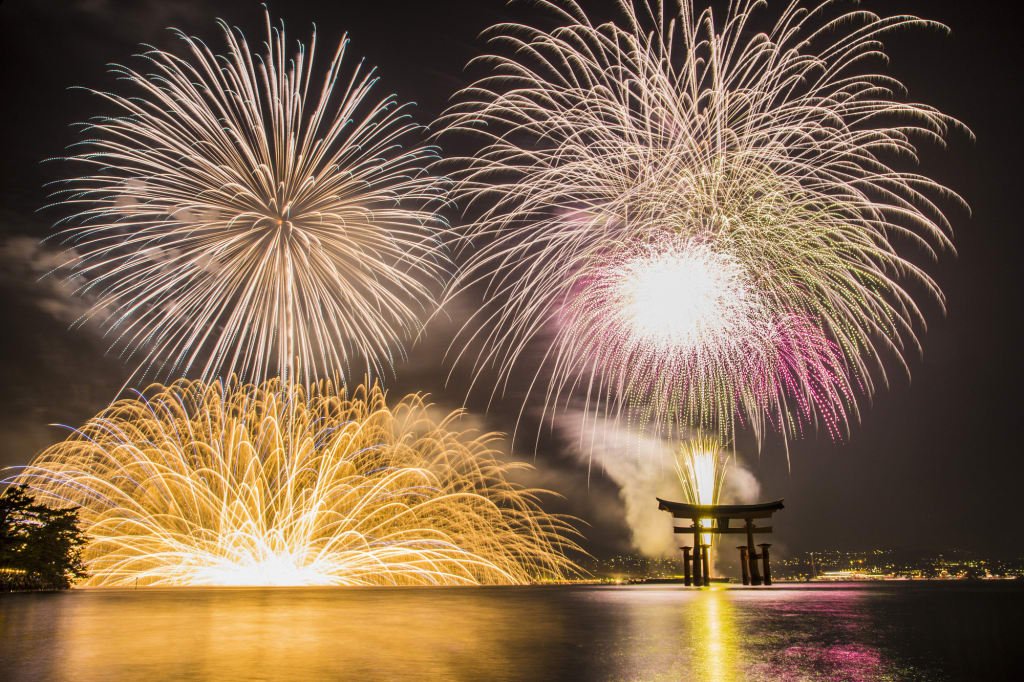
Miyajima Island — famous for the extraordinary Itsukushima Shrine whose iconic orange torii gate appears to float above the sea at high tide — is one of the most beautiful locations in Japan. The fireworks of the Miyajima festival are launched from barges in the Seto Inland Sea directly in front of the shrine — the shells bursting above the illuminated torii gate, their reflections falling simultaneously in the still water below, the sacred island and its ancient architecture providing a foreground of extraordinary beauty.
The combination of the floating torii gate — illuminated in deep orange against the night sky — with the fireworks bursting above it and reflected in the water below creates perhaps the single most beautiful image available at any Japanese fireworks festival.
Practical Information
Getting there: Ferry from Miyajimaguchi (accessible from Hiroshima by JR or tram) — the ferry crossing to Miyajima takes approximately 10 minutes. On festival night the ferries run continuously but expect queues.
Viewing: The beach in front of the Itsukushima Shrine provides the finest viewing position — arrive 2 to 3 hours before the start time (typically 8 PM) for a good position.
Honest assessment: The proximity to Hiroshima gives this festival an additional layer of emotional resonance — visiting the Peace Memorial Park and Museum in Hiroshima on the morning of the festival day, then crossing to Miyajima for the evening fireworks, creates one of the most emotionally complete and most historically layered single-day experiences available in Japan.
7. Akagawa Fireworks Festival — Yamagata
Date 2026: Mid-August — approximately 22 August 2026
Location: Akagawa River, Tsuruoka City, Yamagata Prefecture
Scale: Approximately 18,000 shells
Attendance: Approximately 200,000 people
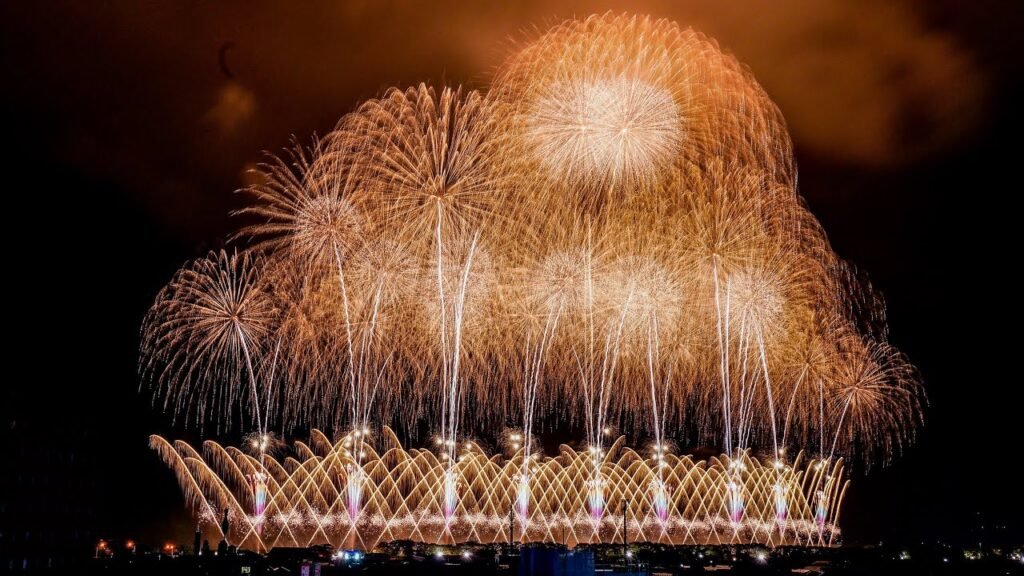
The Akagawa Fireworks Festival is the finest regional Hanabi Taikai in the Tohoku region of northern Japan — a festival of extraordinary quality that has built a national reputation for the technical excellence of its star mine sequences and the beauty of its large-shell programme.
Why Akagawa Deserves Attention
Most international visitors to Japan’s fireworks season focus exclusively on the nationally famous festivals — Sumida, Nagaoka, Lake Suwa. The Akagawa festival represents the extraordinary quality available at the regional level of the Japanese Hanabi tradition — a festival that would be the finest fireworks event in almost any other country but that exists in relative obscurity because the competition within Japan is so extraordinary.
The combination of the smaller crowd (200,000 compared to 1,000,000 at Nagaoka) with the very high quality of the display makes Akagawa one of the finest value Hanabi experiences in Japan — the viewing is more comfortable, the atmosphere is more intimate, and the fireworks are genuinely exceptional.
8. Ise Fireworks Festival — Mie Prefecture
Date 2026: Mid-July — approximately 18 July 2026
Location: Futami, Ise City, Mie Prefecture
Scale: Approximately 10,000 shells
Attendance: Approximately 100,000 people
The Ise Fireworks Festival is the most spiritually resonant Hanabi Taikai in Japan — a festival held in the sacred landscape of the Ise Grand Shrine, the most important Shinto shrine complex in Japan and the spiritual heart of Japanese religious culture.
The fireworks are launched from the beach at Futami — directly in front of the famous Meoto Iwa (Wedded Rocks), the two sacred rocks connected by a shimenawa (sacred rope) that are one of the most iconic images of Japanese spiritual landscape. The combination of the sacred rocks, the sacred landscape of Ise, and the Hanabi above the sea creates an experience of spiritual and aesthetic depth that is unique in the Japanese fireworks calendar.
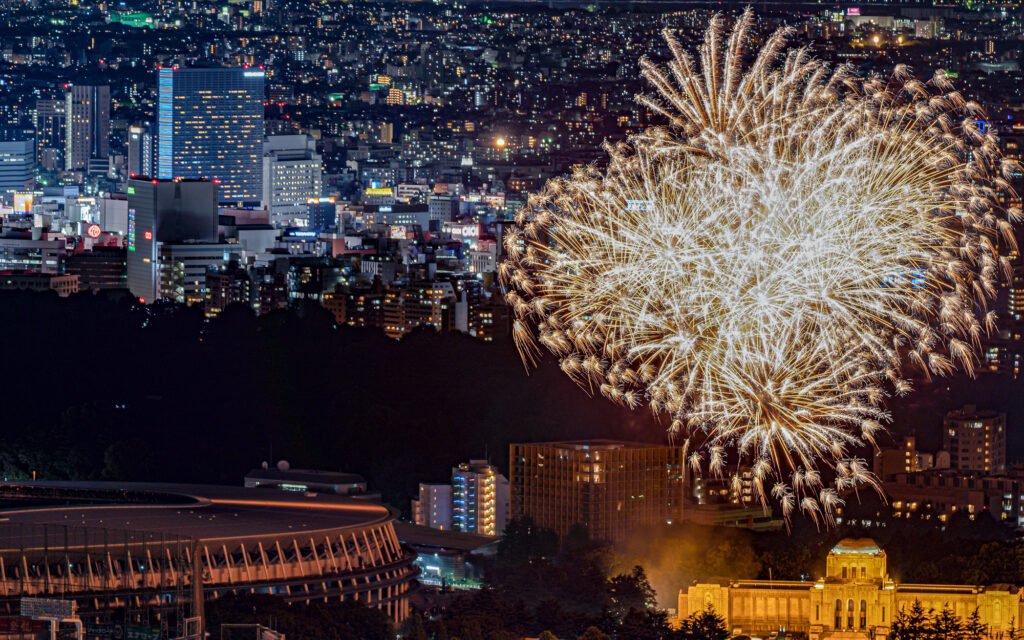
9. Jingu Gaien Fireworks Festival — Tokyo
Date 2026: Mid-August — approximately 8 August 2026
Location: Jingu Gaien, Minato Ward, Tokyo
Scale: Approximately 12,000 shells
Attendance: Approximately 380,000 people
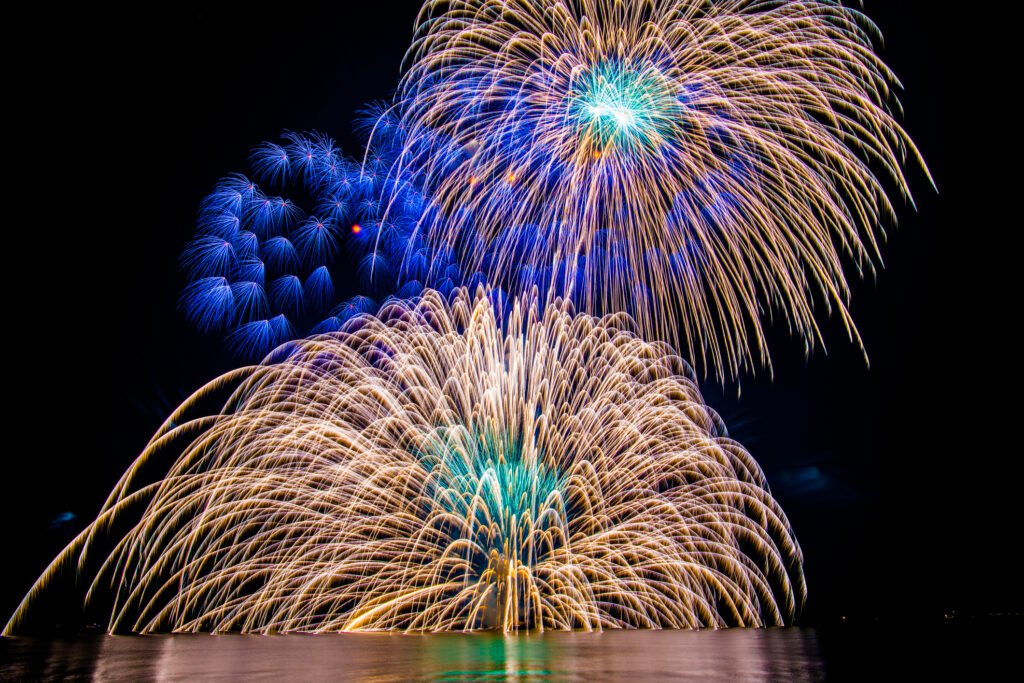
The Jingu Gaien Fireworks Festival is the finest urban Hanabi Taikai in Tokyo — a festival whose combination of a central Tokyo location with genuinely high-quality fireworks and a sophisticated viewing infrastructure makes it the most comfortable and most accessible major fireworks experience in the capital.
The Viewing Infrastructure
Unlike the Sumida festival — where viewing is primarily from riverbanks and public spaces — the Jingu Gaien festival operates a comprehensive reserved seating system from the surrounding baseball stadium and outdoor venues. The combination of reserved seating with excellent sightlines and the proximity to central Tokyo’s entertainment district creates a festival evening that is simultaneously a fine fireworks experience and a genuinely comfortable social occasion.
10. Nishiki Fireworks Festival — Kyoto
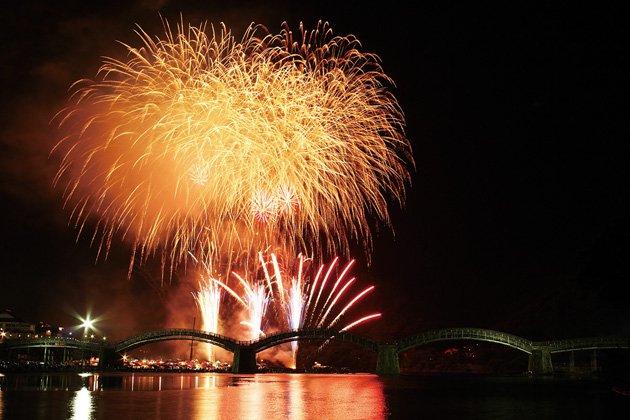
Date 2026: Mid-August — approximately 16 August 2026
Location: Kamo River, Kyoto
Scale: Approximately 10,000 shells
Attendance: Approximately 50,000 people
The Nishiki Fireworks Festival coincides with the O-Bon festival period in Kyoto — the annual festival of the dead when the spirits of ancestors are believed to return to the world of the living. The combination of the Hanabi with the O-Bon context gives the Kyoto festival a particular emotional depth — the fireworks understood not as entertainment but as light sent into the night sky to guide the spirits of the dead.
The setting — the Kamo River flowing through the heart of historic Kyoto, the machiya townhouses and temple rooftops providing a foreground of extraordinary cultural richness — makes the Nishiki festival the finest Hanabi Taikai for visitors who want to experience Japanese fireworks culture within the context of Japan’s most historically and culturally concentrated city.
The Festival Culture Around Hanabi
Understanding the Hanabi Taikai requires understanding the broader festival culture that surrounds and enriches the fireworks experience.
Yukata
The yukata — the lightweight cotton summer kimono — is the traditional dress of the Japanese summer festival and the clothing most closely associated with Hanabi Taikai attendance. Wearing a yukata to a fireworks festival is not a tourist affectation — it is a genuine cultural practice observed by millions of Japanese people of all ages.
Yukata rental is available in most major Japanese cities from approximately ¥3,000 to ¥6,000 including dressing assistance — the staff at rental shops are experienced at dressing non-Japanese visitors and the process takes approximately 20 to 30 minutes. Buying a yukata is also possible from ¥3,000 to ¥15,000 depending on quality.
Yatai — The Festival Food Stalls
The yatai food stalls that line every Hanabi Taikai site are an essential part of the festival experience — a concentrated expression of Japanese street food culture at its most festive and most varied.
Essential Hanabi yatai foods:
- Yakitori — grilled chicken skewers of extraordinary simplicity and extraordinary satisfaction
- Takoyaki — octopus balls from Osaka, now ubiquitous at festivals nationwide
- Yakisoba — fried noodles with vegetables and pork — the quintessential festival noodle dish
- Kakigori — shaved ice with flavoured syrup — the essential cooling food of the Japanese summer
- Taiyaki — fish-shaped pastry filled with sweet red bean paste
- Ramune — the iconic Japanese marble-stoppered lemonade that is the official soft drink of the Japanese summer festival
- Edamame — salted soybeans — the finest beer accompaniment available at any festival in the world
- Choco-banana — chocolate-dipped frozen banana on a stick — a festival classic
The Viewing Etiquette
Japanese Hanabi viewing has its own etiquette — understanding it makes you a more comfortable and more welcome participant in the experience.
Arrive early: Japanese festival crowds are enormous and arrive early. For any major festival the viewing areas begin filling 2 to 3 hours before the fireworks start. Arriving late means standing behind the crowd.
Blue sheet culture: Japanese festival-goers mark their viewing territory with blue picnic sheets (available at any convenience store for ¥300 to ¥500). Arriving early and laying your sheet is the standard practice — do not step on other people’s sheets.
The appreciation calls: When a particularly beautiful shell bursts the traditional response is to call “Tama-ya!” or “Kagi-ya!” — the names of the two ancient rival fireworks houses. Using these calls as a foreign visitor is always appreciated by Japanese audiences as a sign of genuine cultural engagement.
Silence during the display: Japanese Hanabi audiences are relatively quiet during the display itself — the appreciation is expressed through the traditional calls and the collective intake of breath rather than continuous shouting. Match the atmosphere of your neighbours.
Practical Guide: Planning Your Hanabi Taikai Visit
When to Book
Accommodation: Book 3 to 6 months in advance for the major festivals (Sumida, Nagaoka, Lake Suwa, Omagari). Festival dates cause complete sellouts of local accommodation — and prices increase significantly. Booking early is not optional for the most popular festivals.
Reserved seats: Book as soon as the official festival websites open reservations — typically 2 to 4 months before the festival date. The finest reserved seat positions sell out within hours of going on sale.
Transport: Shinkansen and limited express train tickets should be booked as early as possible for festival travel days — the trains to Nagaoka, Suwa, and Omagari on festival days are among the most in-demand in Japan.
Getting Around
The Japan Rail Pass provides excellent access to the majority of major Hanabi Taikai venues — Sumida (Tokyo), Nagaoka (Joetsu Shinkansen), Lake Suwa (Chuo Line), Miyajima (San’yo Shinkansen to Hiroshima then ferry), and Tsuchiura (Joban Line) are all directly accessible by JR services.
Budget Guide
| Item | Cost Range |
|---|---|
| Reserved festival seating | ¥1,500 to ¥5,000 per person |
| Yukata rental | ¥3,000 to ¥6,000 |
| Festival food (yatai) | ¥2,000 to ¥4,000 per person |
| Accommodation (festival night) | ¥8,000 to ¥30,000 (50-100% premium) |
| Transport (shinkansen) | ¥5,000 to ¥15,000 depending on distance |
Essential Japanese Phrases
| Japanese | Pronunciation | Meaning |
|---|---|---|
| 花火 | Hanabi | Fireworks |
| 花火大会 | Hanabi Taikai | Fireworks festival |
| 浴衣 | Yukata | Summer kimono |
| 玉屋 | Tama-ya | Traditional appreciation call |
| 鍵屋 | Kagi-ya | Traditional appreciation call |
| きれい | Kirei | Beautiful |
| すごい | Sugoi | Amazing / incredible |
| 屋台 | Yatai | Festival food stall |
A 10 Day Japan Hanabi Itinerary 2026
Day 1 — Arrive Tokyo Arrive Tokyo. Settle in. Evening walk through Asakusa — the historic shitamachi neighbourhood that is the heartland of Tokyo’s Hanabi culture.
Day 2 — Tokyo Exploration Senso-ji Temple, Nakamise shopping street, yukata shopping or rental arrangement for the festival.
Day 3 — Sumida River Fireworks Festival (25 July) Arrive at Sumida Park by 3 PM. Yatai dinner along the riverbank. Sumida River Fireworks Festival at 7 PM. The oldest Hanabi Taikai in Japan.
Day 4 — Tokyo to Nagaoka Shinkansen to Nagaoka (75 minutes from Tokyo). Explore Nagaoka — the city rebuilt from the 1945 bombing. Evening: First night of the Nagaoka festival. The Phoenix.
Day 5 — Nagaoka Second Night Second night of the Nagaoka Hanabi Taikai — the sanshaku-dama large shells and the full competitive programme.
Day 6 — Nagaoka to Suwa Train to Suwa via Nagano. Afternoon: Lake Suwa exploration — the Suwa Grand Shrine, the lake promenade.
Day 7 — Lake Suwa Fireworks Festival (15 August) Lake Suwa Hanabi Taikai. The Niagara Falls. The star mines. The extraordinary alpine lake setting.
Day 8 — Suwa to Kyoto Train to Kyoto via Nagoya. Afternoon: Settle in Kyoto. Evening: O-Bon preparations — the Kamo River in festival season.
Day 9 — Kyoto Nishiki Fireworks (16 August) Morning: Fushimi Inari, Gion district. Evening: Nishiki Fireworks Festival on the Kamo River — fireworks in the context of O-Bon memorial.
Day 10 — Kyoto to Hiroshima and Miyajima (13 August) (Adjust itinerary order based on actual 2026 dates) Shinkansen to Hiroshima. Peace Memorial Park and Museum. Ferry to Miyajima. Miyajima Water Fireworks above the floating torii gate.
Final Thoughts: Why Hanabi Is Worth Planning Your Entire Japan Trip Around
Japan has a hundred reasons to visit — the temples of Kyoto, the food culture of Tokyo, the mountain landscapes of the Japanese Alps, the extraordinary bullet train network that connects it all. But few experiences in Japan — or anywhere in the world — match the particular quality of sitting by a Japanese river on a warm summer night in yukata, eating yakitori from a festival stall, surrounded by hundreds of thousands of people sharing the same moment of collective aesthetic pleasure as the sky above fills with the most beautiful fireworks on earth.
The Japanese have spent 400 years perfecting this art. The shells that burst above the Sumida River and the Shinano River and Lake Suwa in the summer of 2026 are the product of 400 years of accumulated craft, accumulated knowledge, and accumulated love for the particular beauty of flower fire in a dark summer sky.
It is worth going to Japan for. It is worth planning your summer around.
Hanabi 2026. The flower fire is waiting.