Why Japan’s Nightlife Is Unlike Anywhere Else
Before exploring the specific experiences it is worth understanding what makes Japanese nightlife so distinctive and so genuinely rewarding for the curious traveller.
Japanese nightlife operates on a philosophy of extraordinary specialisation — the idea that any single activity, pursued with sufficient dedication and sufficient craft, produces an experience of depth and quality that generalisation can never match. This philosophy — the same one that produces the world’s finest sushi bars, the world’s finest tea ceremony, and the world’s finest bullet trains — applied to nightlife produces establishments and experiences of extraordinary quality and extraordinary character.
The standing bar (tachinomi) that serves only one style of sake from one prefecture. The jazz bar in a Shinjuku basement that plays only vinyl and serves only whisky. The ramen shop that has been perfecting a single broth recipe for 30 years and opens only from 11 PM to 3 AM. The izakaya where the same group of office workers has been occupying the same table on Friday evenings for a decade.
This is the world you enter when Japan goes dark. Here are its 12 finest expressions.
1. Izakaya Hopping — The Soul of Japanese Night Culture
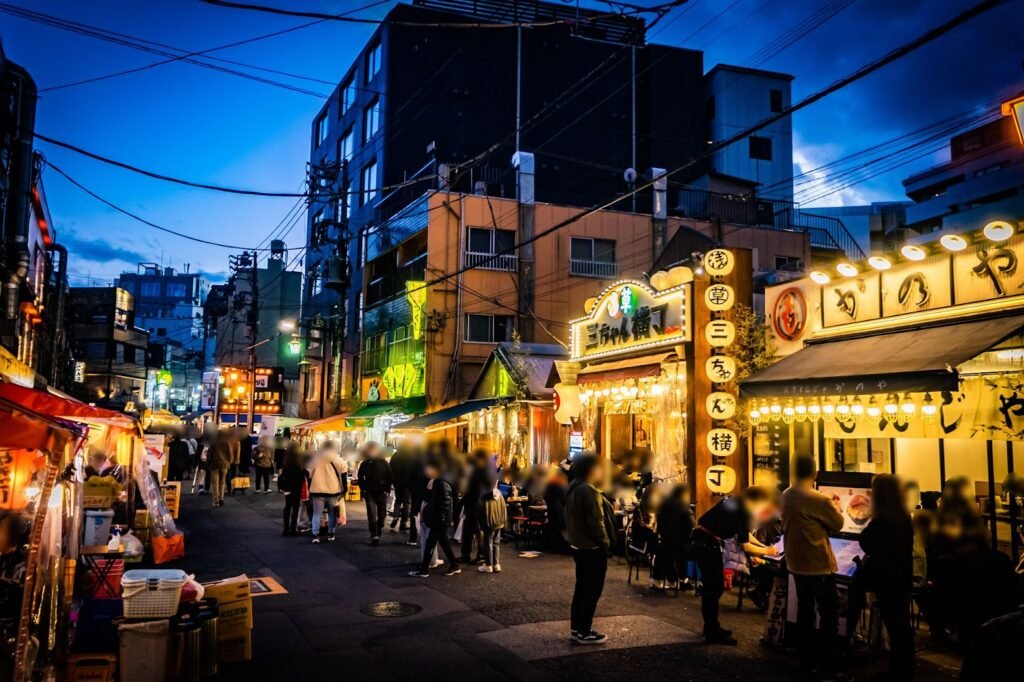
If you experience only one night activity in Japan make it the izakaya — the Japanese gastropub that is simultaneously a bar, a restaurant, a social club, and the most honest and most revealing expression of Japanese daily life available to the visitor.
The izakaya is not a tourist attraction. It is where Japan goes after work — the place where the precision and the formality of the Japanese working day dissolves into the warmth and the noise and the genuine human ease of people eating and drinking together in a state of comfortable relaxation.
What Is an Izakaya
The izakaya occupies a specific cultural space in Japan — more casual than a restaurant, more food-focused than a bar, and more socially intimate than either. The format is designed for sharing — dozens of small dishes ordered continuously throughout the evening, cold beer and sake arriving in an unbroken stream, the table accumulating empty glasses and small plates in a gradual archaeology of the evening’s pleasures.
The Food
Izakaya food is some of the finest casual food in the world — a comprehensive tour of Japanese small-plate cooking that spans every technique and every flavour tradition of the Japanese kitchen.
Essential izakaya dishes:
- Edamame — salted soybeans, the universal izakaya opener
- Karaage — Japanese fried chicken of extraordinary juiciness and extraordinary flavour, served with mayonnaise and lemon
- Yakitori — grilled chicken skewers in every configuration (thigh, breast, skin, cartilage, liver) over charcoal
- Agedashi tofu — deep-fried tofu in a delicate dashi broth
- Sashimi moriawase — a selection of the day’s finest raw fish
- Tamagoyaki — rolled egg omelette of extraordinary delicacy
- Gyoza — pan-fried dumplings of crispy base and juicy filling
- Okonomiyaki — the savoury Japanese pancake that is one of the finest comfort foods in the world
- Grilled onigiri — rice balls charred over charcoal until the exterior is crispy and smoky
Practical information:
- Budget approximately ¥2,500 to ¥4,000 per person for a full izakaya evening including food and drinks
- Many izakaya operate a table charge (otoshi) of ¥300 to ¥500 per person — this covers a small appetiser and is standard practice
- English menus are available at chain izakaya (Torikizoku, Watami, Shoya) — independent izakaya may require pointing at neighbouring tables or using a translation app
2. Shinjuku Golden Gai — 200 Bars in Six Alleys
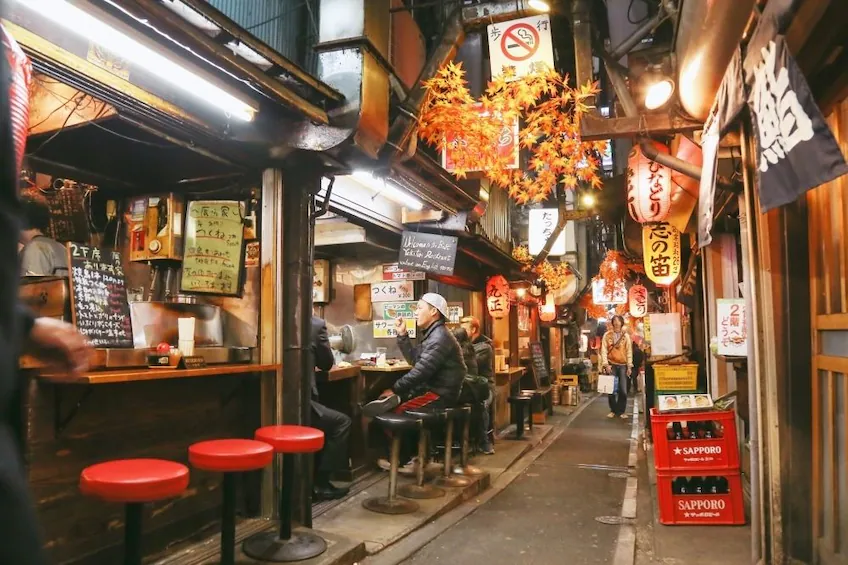
There is no bar district on earth quite like Shinjuku Golden Gai — a cluster of six narrow alleys in the heart of Tokyo’s most intense nightlife district containing approximately 200 tiny bars, each seating between 5 and 15 customers, each with its own completely individual character, its own completely individual owner, and its own completely individual collection of regulars who have been occupying the same stools for years or decades.
The Bars
Each Golden Gai bar is a specific and individual world — the owner’s personality, obsessions, and history expressed in a space of approximately 10 square metres. There are bars dedicated to specific music genres (jazz, punk, shoegaze, enka). Bars dedicated to specific film directors (Kurosawa, Lynch). Bars where the walls are covered floor to ceiling with books and the owner conducts book recommendations with his regulars. Bars where the only conversation topic is baseball.
How to choose a bar: Walk the alleys slowly — the atmosphere of each bar is visible through the door. Look for a bar whose character and whose current customers feel like your kind of people. Many bars post their speciality on a sign outside — use this as a guide.
The cover charge: Most Golden Gai bars charge a table charge (cover charge) of ¥500 to ¥1,000 per person — this is standard and covers the overhead of maintaining these extraordinary tiny establishments. It is not a tourist tax — Japanese regulars pay it too.
Practical information:
- Location: 1-chome, Kabukicho, Shinjuku — 5 minutes walk from Shinjuku station east exit
- Best time: 9 PM to 2 AM
- Budget: ¥1,500 to ¥3,000 per bar including drinks and cover charge
- Many bars are welcoming to foreign visitors — look for bars with English signs or with foreign customers already inside if you are uncertain
3. Tokyo’s Observation Decks at Night — The City From Above
Tokyo at night from above is one of the most extraordinary urban visual experiences available anywhere on earth — a city of 37 million people whose lights extend to every horizon in a continuous carpet of extraordinary density and extraordinary variety, the great arteries of the expressway system tracing orange lines through the darkness, the towers of Shinjuku and Shibuya and Marunouchi rising above the general level of the city in clusters of concentrated brilliance.
The Finest Observation Decks
Tokyo Skytree (634 metres): The tallest structure in Japan and the second tallest in the world — the Skytree’s two observation decks (Tembo Deck at 350 metres and Tembo Galleria at 450 metres) provide the highest and most comprehensive view of Tokyo available to the public. At night the view — the entirety of greater Tokyo spread below in every direction, Mount Fuji visible on clear evenings as a dark shadow against the western horizon — is genuinely overwhelming in its scale.
- Entry: ¥2,100 (Tembo Deck) + ¥1,000 (Tembo Galleria additional)
- Book tickets online in advance to avoid queues
- Best time: After 8 PM when the city lights are fully established
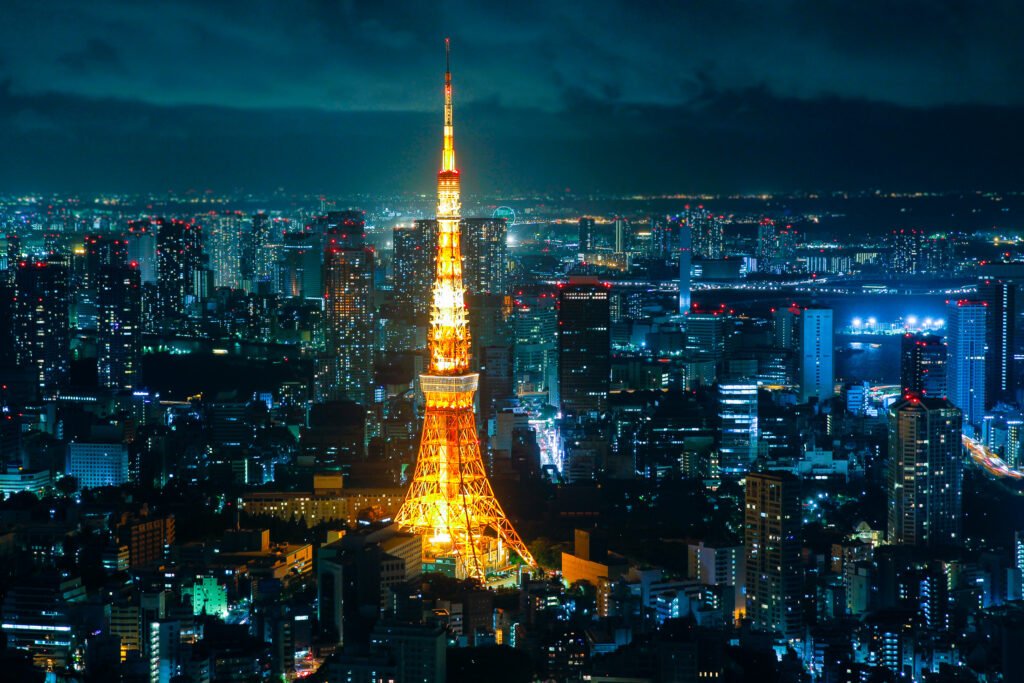
Tokyo Tower (333 metres): The older and more romantically designed observation tower — the red-and-white steel structure modelled on the Eiffel Tower that has been Tokyo’s most iconic skyline element since 1958. The Main Deck at 150 metres and Top Deck at 250 metres provide extraordinary views of the city with the particular intimacy of a smaller, less crowded venue.
- Entry: ¥1,200 (Main Deck) + ¥700 (Top Deck additional)
- The view of the Skytree from Tokyo Tower at night — the blue-lit newer tower visible across the city — is one of the finest architectural contrasts in Tokyo
Shibuya Sky (229 metres): The rooftop observation deck of the Scramble Square building in Shibuya — the finest outdoor observation experience in Tokyo, with an open rooftop that provides an unobstructed 360-degree view of the city and the extraordinary spectacle of the Shibuya Scramble Crossing directly below.
- Entry: ¥2,000
- Book in advance — the Shibuya Sky sells out regularly
- The view of Shibuya Scramble from above at night is the finest single urban view in Tokyo
4. Midnight Ramen — The Finest Late Night Food in the World
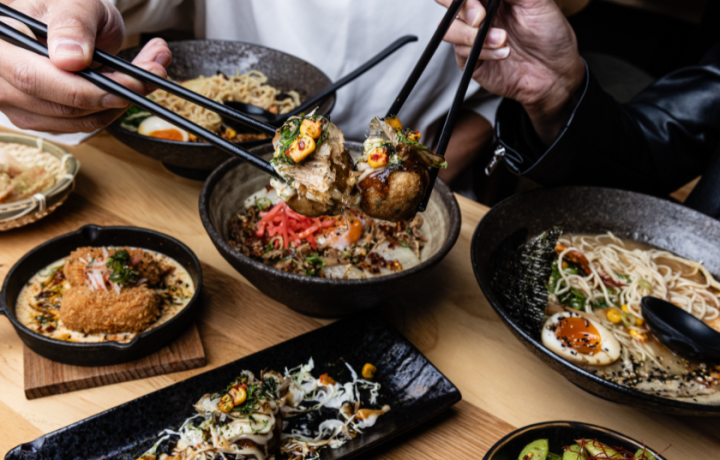
There is a specific quality of pleasure available only in Japan — the pleasure of eating extraordinary ramen at midnight or 1 AM in a small, warm, brightly lit shop after an evening of drinking, standing at a counter or sitting on a low stool, the broth so good and so deeply flavoured that the world temporarily contracts to the space between the bowl and your face.
Why Midnight Ramen Is Special
Ramen shops that operate late — some opening only after 11 PM and serving until the broth runs out at 3 or 4 AM — occupy a specific and honoured place in Japanese food culture. The late-night ramen shop is simultaneously a practical service (feeding the hungry, the drunk, and the working) and a cultural institution of considerable significance.
The finest late-night ramen shops develop a specific atmosphere — the combination of the hour, the hunger, and the extraordinary quality of food produced by a kitchen that has been perfecting a single recipe for years creates a dining experience of unusual intensity and unusual pleasure.
Ramen Styles to Seek at Night
Tonkotsu (Fukuoka-style): The rich, creamy pork bone broth that is the most popular ramen style in Japan — its richness and its fat content make it the most satisfying late-night ramen. Ichiran and Ippudo are the finest chain options; seek local independent tonkotsu shops for the finest versions.
Shoyu (soy sauce): The most traditional Tokyo ramen style — a clear, amber broth of extraordinary depth and clarity. Fuunji in Shinjuku (known for its tsukemen — dipping ramen) is the finest late-night shoyu option in Tokyo.
Miso: The thick, rich, complex broth of Hokkaido ramen — the most warming and most deeply flavoured ramen style. Junren in Sapporo is the definitive miso ramen experience.
Practical information:
- Budget: ¥800 to ¥1,500 per bowl
- Most ramen shops operate a ticket machine system — select your ramen from the machine before sitting
- Adding extras (chashu pork, soft-boiled egg, extra noodles) is standard practice and strongly recommended
5. Kyoto’s Gion District After Dark — The Most Atmospheric Night Walk in Japan
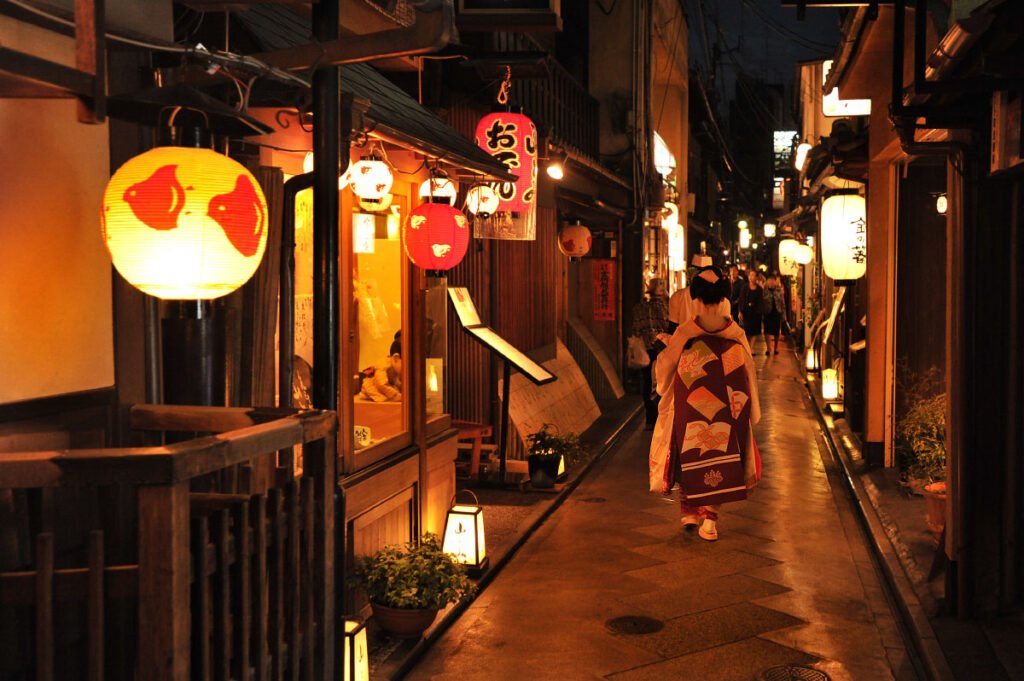
Kyoto’s Gion district — the historic geisha quarter of the ancient capital — is one of the most beautiful and most atmospheric urban environments in Asia at any time of day. After dark, when the tourist crowds have thinned and the stone-paved lanes of Hanamikoji and Shirakawa are lit by the warm light of paper lanterns, it becomes something more extraordinary — a living fragment of Edo-period Japan of such concentrated beauty and such genuine historical authenticity that walking through it at 10 PM feels like stepping directly into a woodblock print.
The Night Walk
The finest Gion night walk begins at the southern end of Hanamikoji street — the most famous street in Gion, lined with the traditional ochaya (teahouses) where geiko and maiko entertain their clients — and walks slowly northward through the lantern light. The lacquered facades of the teahouses, the sound of shamisen music drifting from a window, the occasional sight of a maiko moving quickly between appointments in full kimono — these are the specific sensory experiences of Gion after dark that create its extraordinary atmosphere.
Shirakawa Canal: The small canal that runs through the northern part of Gion — lined with cherry trees (extraordinary in April), stone lanterns, and traditional machiya townhouses — is the most beautiful single street in Kyoto at night. The reflection of the lanterns in the still water of the canal and the soft light on the cherry tree branches create an image of such pure and distilled Japanese beauty that it requires no context or explanation.
Practical information:
- Best time: 9 PM to 11 PM
- Dress quietly — the Gion residents take their privacy seriously and the district is a living neighbourhood, not a theme park
- Photography: Photographing geiko and maiko without permission is prohibited and deeply unwelcome — appreciate the experience with your eyes rather than your camera
6. Japanese Whisky Bar — The World’s Finest Whisky Culture
Japan produces the finest whisky in the world — a judgment now widely accepted in the global spirits industry following decades of international award wins for Yamazaki, Hibiki, Nikka, and the other expressions of Japanese whisky distilling excellence. And Japan’s whisky bars — the specialist establishments that have been collecting, preserving, and serving Japanese and international whisky with extraordinary knowledge and extraordinary dedication for decades — are the finest places on earth to explore this extraordinary spirit.
The Japanese Whisky Bar Experience
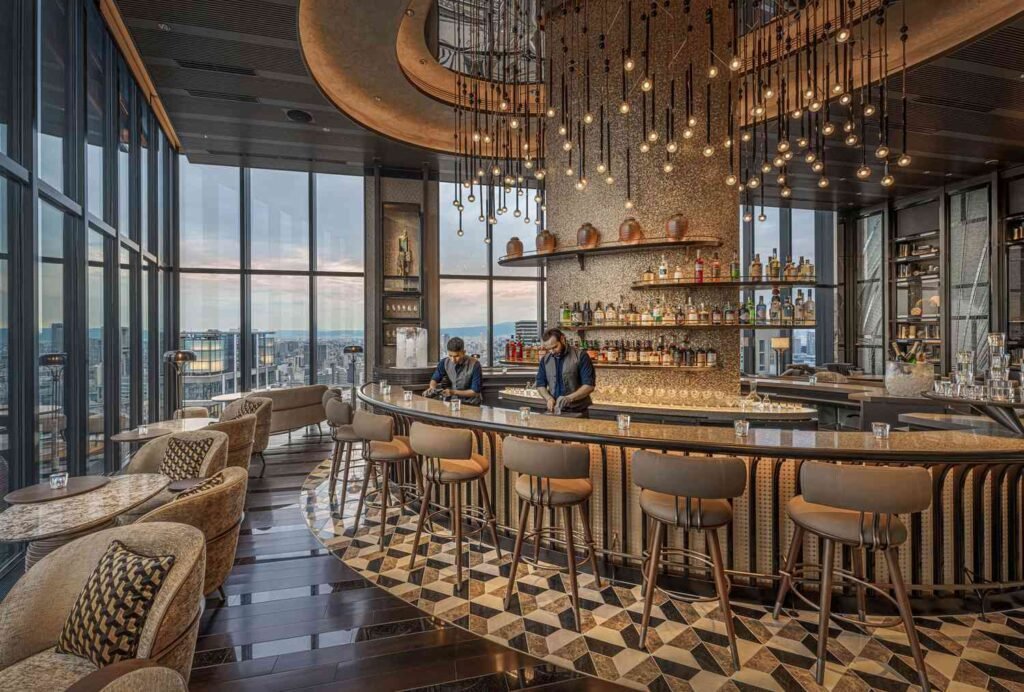
The Japanese whisky bar is a specific and extraordinary institution — typically a small, dimly lit basement space of complete calm, presided over by a bar master (mama-san or master) of considerable age and considerable knowledge whose relationship with their whisky collection spans decades.
The collection at the finest Japanese whisky bars is extraordinary — bottles of 30, 40, and 50-year-old Japanese whisky that are no longer in production and are available nowhere else in the world. Single malt expressions from closed distilleries. Limited releases from the 1960s and 1970s. The finest Scottish and Irish whiskies alongside the Japanese collection.
Practical information:
- Budget: ¥1,500 to ¥5,000 per glass for premium Japanese whisky
- Cover charge: ¥500 to ¥1,000 per person at most specialist bars
- Ask the bar master for a recommendation — their knowledge is extraordinary and their guidance is always worth following
7. Robot Restaurant and Kabukicho — Tokyo’s Most Extraordinary Spectacle
Shinjuku’s Kabukicho entertainment district — the largest and most concentrated entertainment zone in Asia, a city within a city of approximately 3,400 entertainment establishments operating simultaneously — is the most overwhelming and most genuinely extraordinary urban nightlife environment in the world.
Robot Restaurant
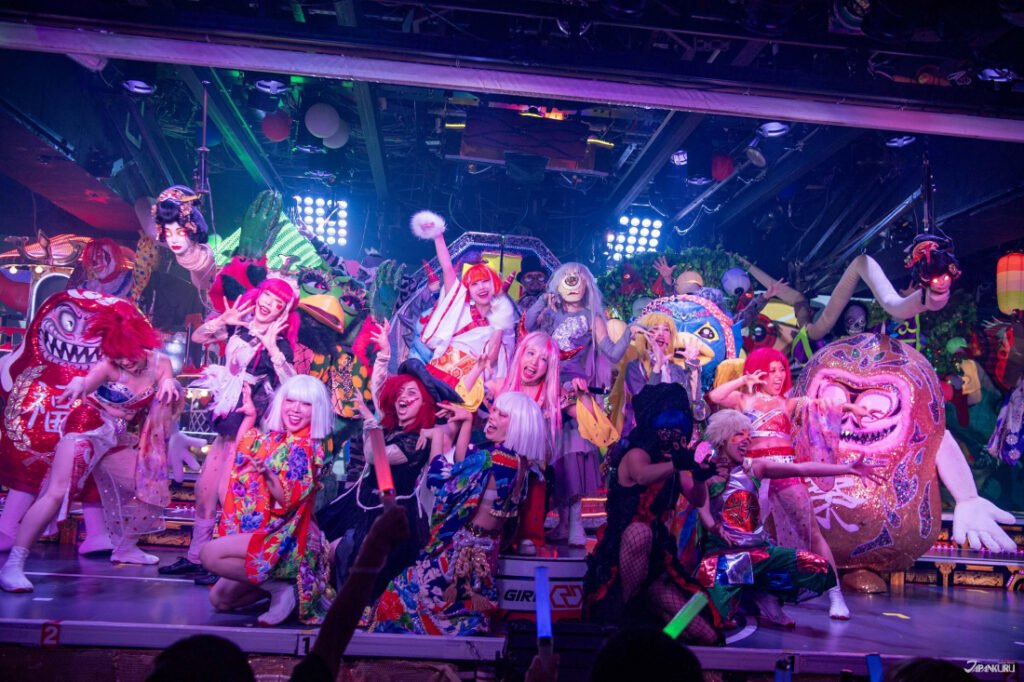
The Robot Restaurant — a Kabukicho institution of extraordinary and entirely intentional absurdity — is the most spectacular and most completely overwhelming entertainment experience available in Tokyo: a two-hour performance featuring enormous robots, laser lights, taiko drummers, dancers in extraordinary costumes, and a general atmosphere of cheerful and complete sensory overload that defies description and demands attendance.
The Robot Restaurant is not subtle. It is not sophisticated. It is not a window into traditional Japanese culture. It is a maximalist entertainment spectacle of extraordinary energy and extraordinary production value that is simultaneously ridiculous and genuinely thrilling — the kind of experience that produces involuntary laughter and genuine astonishment in approximately equal measure.
Practical information:
- Location: 1-7-1 Kabukicho, Shinjuku
- Shows: Multiple shows daily — book online in advance
- Entry: Approximately ¥8,000 per person
- Recommended: Yes — approach with the correct expectations (spectacular absurdity rather than cultural authenticity) and it delivers completely
8. Jazz Bars — The Deepest Night Culture in Japan
Japan has a relationship with jazz that is unlike that of any other country outside the United States — a deep, serious, decades-long love affair with the music that has produced the finest collection of jazz bars, jazz record shops, and jazz listening establishments outside New York City.
Why Japan and Jazz
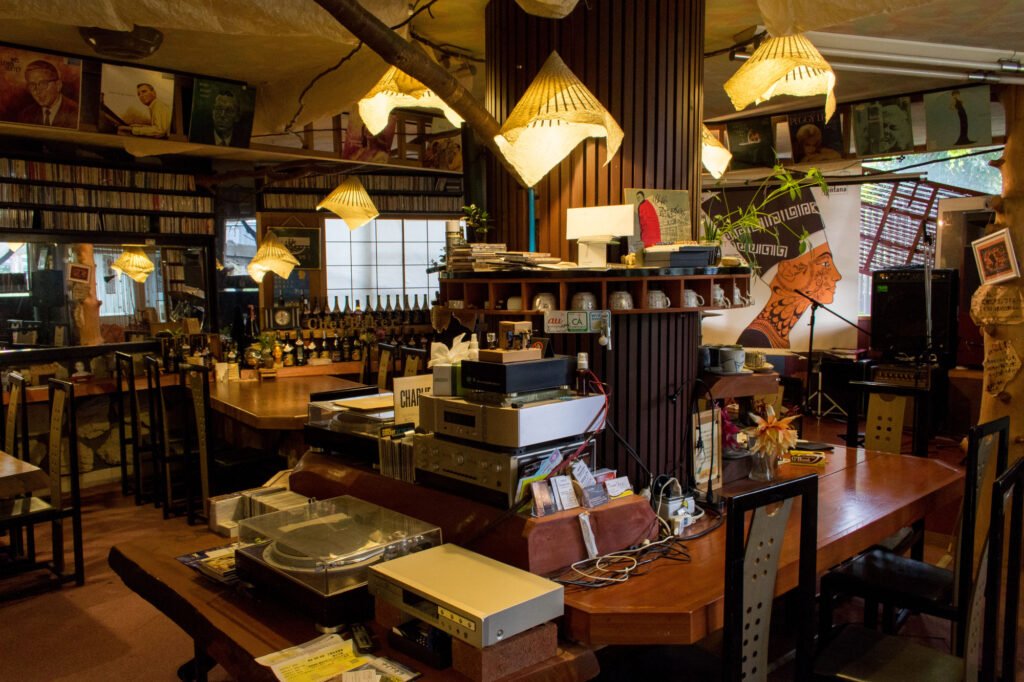
The Japanese relationship with jazz began in the post-war occupation years when American servicemen brought the music to Japan and Japanese musicians absorbed it with the characteristic Japanese combination of complete respect for the original tradition and complete determination to master it. The result — over 70 years — is a jazz culture of extraordinary depth and extraordinary seriousness: the specialist jazz kissaten (listening cafés) where the owner plays vinyl at high volume and conversation is discouraged, the live jazz clubs where Japanese musicians of international quality play every night, and the collector bars where walls lined floor to ceiling with original pressing vinyl records represent decades of passionate accumulation.
The Finest Jazz Experiences
Shinjuku DUG (Tokyo): The most legendary jazz bar in Tokyo — operating since 1961 in a Shinjuku basement and serving as the gathering place of Tokyo’s jazz community for over 60 years. The vinyl collection is extraordinary and the atmosphere is irreplaceable.
Ginza Swing (Tokyo): The finest jazz live venue in Ginza — small, intimate, and featuring genuinely excellent live music every evening.
Kyoto Candy (Kyoto): A small jazz bar in the Kawaramachi area of Kyoto — the most atmospheric jazz listening experience in the ancient capital.
Jazz Inn Lovely (Nagoya): The most celebrated jazz club in central Japan — a large venue featuring live jazz of exceptional quality seven nights a week.
9. Shibuya Scramble at Midnight — The World’s Greatest Intersection
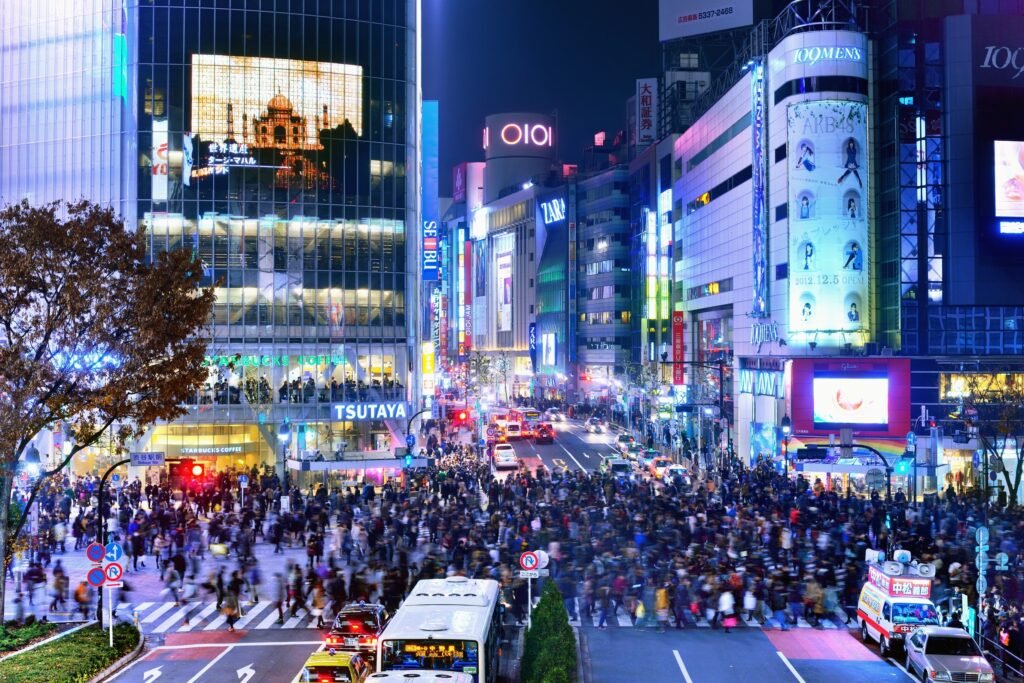
The Shibuya Scramble Crossing — the famous diagonal pedestrian crossing at the heart of Shibuya where up to 3,000 people cross simultaneously from every direction — is extraordinary at any time of day. At midnight it is something else entirely: the crowds thinner, the neon brighter against the dark sky, and the extraordinary geometry of the crossing — the simultaneous diagonal movement of hundreds of people in multiple directions — more visible and more beautiful than it is in the daytime rush.
The Midnight Scramble Experience
Standing on the corner of the Scramble at midnight — the massive screens of the surrounding buildings filling the visual field with colour and movement, the lights of Shibuya reflected in the wet pavement after rain, the continuous stream of people moving through the crossing in all directions — is one of the great urban experiences of the modern world.
The finest viewing positions:
- Shibuya Sky rooftop (229 metres) — the aerial view of the crossing from above
- Mag’s Park rooftop (free) — the most accessible elevated viewing position directly above the crossing
- Starbucks Shibuya Tsutaya — the second-floor window seats directly overlooking the crossing — arrive early to secure a window position
10. Osaka’s Dotonbori at Night — The Most Alive Street in Japan
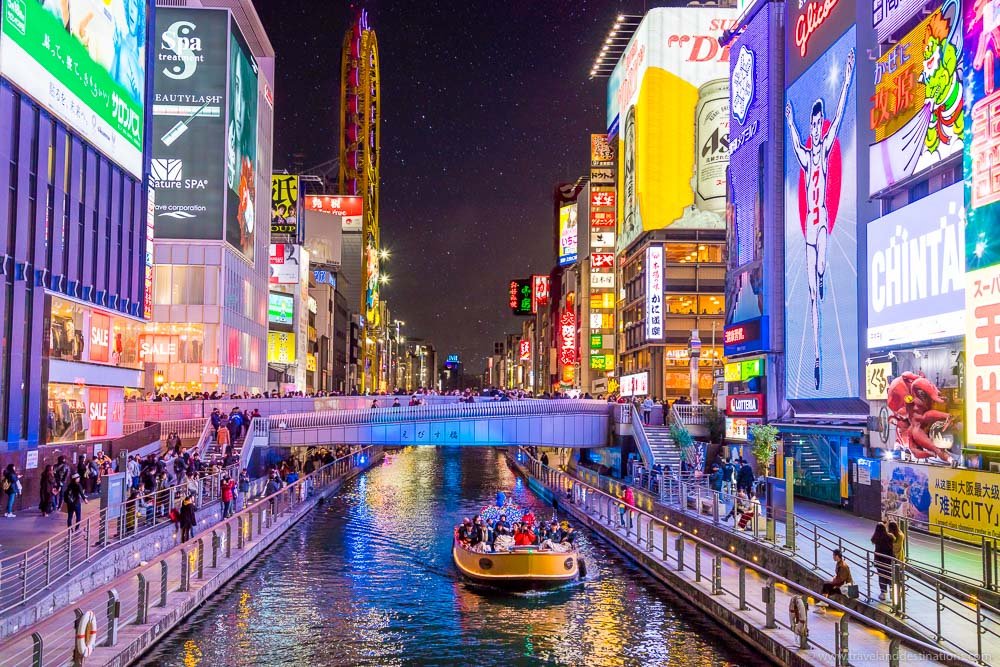
Osaka’s Dotonbori canal district — the heart of what Osakans call their kuidaore (eat until you drop) culture — is the most energetically alive night street in Japan and one of the most extraordinary urban night experiences in Asia.
The Dotonbori Night Experience
The combination of the canal, the extraordinary concentration of food establishments (takoyaki, okonomiyaki, kushikatsu, ramen, sushi, and the full extraordinary variety of Osaka’s food culture represented within a few hundred metres), the famous giant mechanical crab of the Kani Doraku restaurant, the Glico Running Man sign, the neon reflections in the canal below, and the general atmosphere of a city whose residents genuinely love food and genuinely love pleasure creates a night street experience of complete and joyful excess.
Essential Dotonbori night eating:
- Takoyaki at Aizuya — the oldest takoyaki shop in Osaka, operating since 1933
- Okonomiyaki at Fukutaro — the finest okonomiyaki in Dotonbori
- Kushikatsu at Daruma — the original kushikatsu (deep-fried skewers) restaurant, operating since 1929
- Ramen at Kinryu — the 24-hour ramen shop with the famous golden dragon sign
Tombori River Cruise
The evening cruise on the Dotonbori canal — a 20-minute boat ride through the heart of the neon-lit district — provides the finest single perspective on the Dotonbori night scene and one of the most enjoyable 20 minutes available in Osaka after dark.
- Departs from: Dotonbori Canal boat dock near Shinsaibashi
- Duration: 20 minutes
- Cost: ¥1,500 per person
11. Onsen Town Night Experience — Beppu, Hakone, and Kinosaki
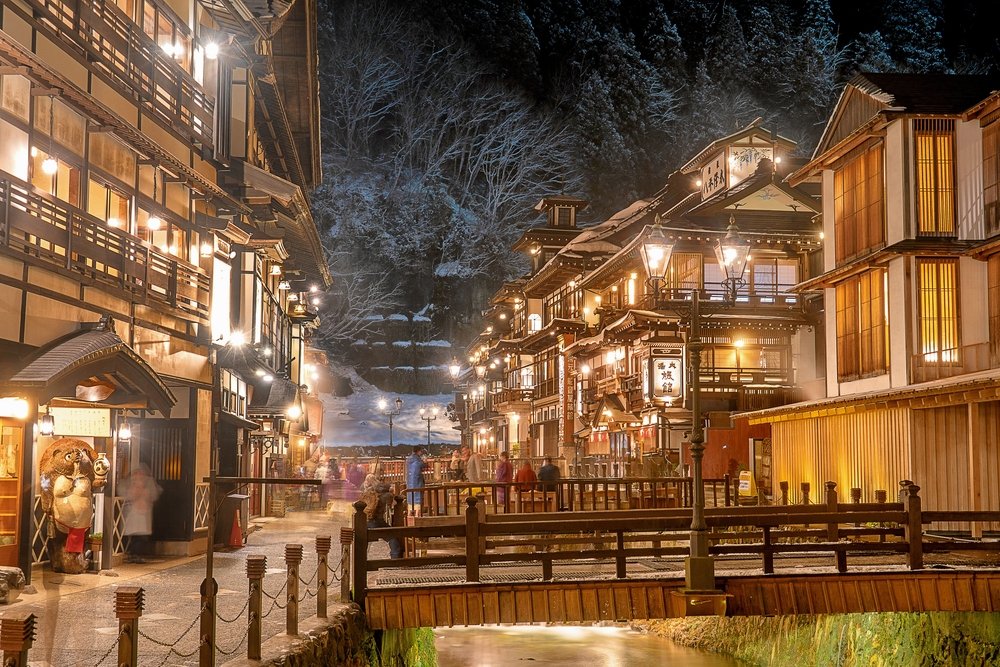
The onsen town — a Japanese hot spring resort community built around a natural hot spring source — offers the most deeply Japanese and most completely relaxing night experience available in the country: the combination of the communal hot spring bath (sento or rotenburo), the yukata-clad evening walk through the lantern-lit streets of the onsen town, the kaiseki dinner in the ryokan dining room, and the particular quality of complete physical and mental relaxation that only the Japanese onsen experience produces.
The Onsen Night Ritual
The pre-dinner bath: Arriving at the ryokan in the late afternoon and taking the first bath of the evening — the hot spring water drawing the tension of travel from the muscles, the steam filling the bath house with the mineral scent of the earth — is the beginning of the onsen night ritual.
The yukata walk: Dressed in the ryokan-provided yukata and wooden geta sandals, walking the streets of the onsen town in the evening — the sound of the geta on the stone pavement, the warm light of the paper lanterns, the steam rising from the public foot baths (ashiyu) at the roadside — is one of the most quintessentially Japanese and most genuinely pleasurable evening experiences available in the country.
The kaiseki dinner: The multi-course kaiseki dinner served in the ryokan — a sequential progression of small, beautifully presented dishes that represents the finest expression of Japanese seasonal cuisine — is the finest restaurant experience in Japan and one of the finest dining experiences in the world.
The midnight bath: The second bath of the evening — taken after dinner, often in the open-air rotenburo (outdoor bath) under the night sky — is the finest single physical experience Japan offers. Lying in 40-degree hot spring water under the stars in complete silence is a form of pleasure available in very few places on earth.
12. Convenience Store Night Culture — The Most Japanese Night Experience
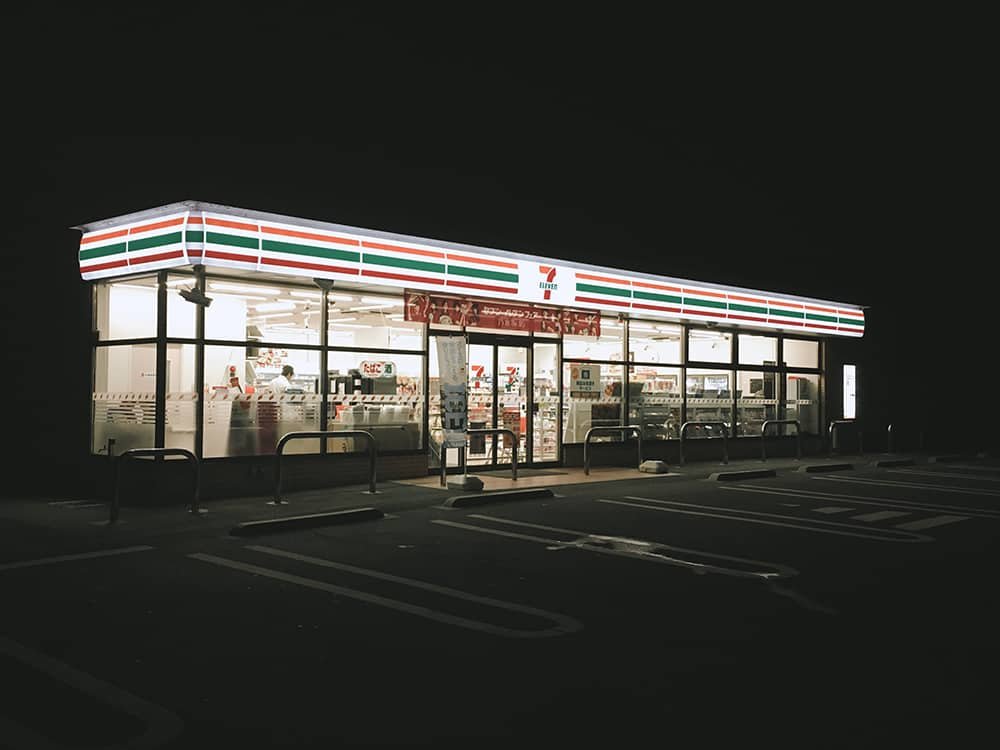
This final entry is not a spectacle. It is not a restaurant or a bar or a view or a performance. It is a convenience store. And it is on this list because the Japanese convenience store (konbini) — particularly at night — is one of the most genuinely Japanese and most genuinely extraordinary retail experiences available anywhere in the world.
Why the Konbini at Night Is Special
The Japanese convenience store operates 24 hours and at 2 AM it becomes something specific and something genuinely revealing of Japanese culture. The salarymen buying onigiri and canned beer on the way home. The students studying at the small eating counter with a hot coffee. The construction worker eating a heated bento at a standing table. The night-shift nurse buying her pre-dawn meal. The lone traveller exploring what Japanese convenience food actually means.
What to Buy at a Japanese Convenience Store at Night
7-Eleven Japan, FamilyMart, and Lawson are the three major konbini chains — each with their own specific food strengths.
Essential konbini night items:
- Onigiri (rice balls): The freshest and finest onigiri available at any price point — tuna mayo, salmon, umeboshi (pickled plum), kombu
- Hot foods: Fried chicken (from the heated counter), steamed buns (nikuman), corn dogs
- Heated bento: The full range of Japanese home cooking in a heated tray — curry rice, teriyaki chicken, oyakodon
- Ramen cup noodles: Prepared with the hot water machine available at every konbini — the finest cup noodles in the world at approximately ¥200
- Desserts: The konbini dessert section — premium puddings, strawberry shortcake, cream puffs — is genuinely extraordinary in quality
- Alcohol: Cold beer, sake, shochu, and Japanese highball in cans — the finest value alcohol retail in Japan
Practical information:
- Budget: ¥500 to ¥1,500 for a complete konbini meal including drink
- Available: Everywhere, always — there are approximately 55,000 convenience stores in Japan
Practical Guide: Japan Nightlife Tips
Safety
Japan is one of the safest countries in the world for night-time exploration — solo travellers, female travellers, and first-time visitors can navigate the nightlife districts of Tokyo, Osaka, and Kyoto with a level of personal safety that is unmatched in any comparable urban environment in the world. Exercise normal urban awareness and you will encounter no problems.
Transport
Japan’s train system — the finest in the world — stops running at approximately midnight in most cities. The last train is the critical deadline for nightlife planning — missing it means either a taxi home (expensive) or continuing until the first train at approximately 5 AM (the preferred option for many).
Night bus options: Most major Japanese cities operate limited night bus services — check the local transit authority website for your city.
Taxi: Japanese taxis are safe, reliable, and metered. The late-night surcharge (typically 20%) applies after midnight. Budget ¥2,000 to ¥5,000 for most urban journeys.
Budget Guide
| Activity | Cost Per Person |
|---|---|
| Izakaya evening | ¥2,500 to ¥4,000 |
| Golden Gai bar hopping | ¥3,000 to ¥6,000 |
| Observation deck (Tokyo Skytree) | ¥3,100 |
| Late night ramen | ¥800 to ¥1,500 |
| Japanese whisky bar | ¥3,000 to ¥8,000 |
| Robot Restaurant | ¥8,000 |
| Onsen ryokan (per night) | ¥15,000 to ¥50,000 |
| Konbini night meal | ¥500 to ¥1,500 |
Final Thoughts: Why Japan’s Nights Are Worth Staying Up For
Japan rewards the traveller who stays up late. The country that operates with such extraordinary discipline and such extraordinary precision during the day reveals something different after midnight — something warmer, stranger, more human, and more genuinely surprising than the daytime version of itself.
The standing bar where the owner has been pouring the same sake for 30 years and greets every returning customer by name. The ramen shop where the broth has been simmering since yesterday morning. The jazz bar where the Coltrane record has been playing in the basement since 1965. The onsen rotenburo where the hot spring water has been rising from the earth for ten thousand years and will continue long after every person currently soaking in it is gone.
Japan’s nights are long and Japan’s nights are deep. Stay up for them.