
If there is one place on Earth that stops you in your tracks — where every stone tells a story, every alley whispers history, and every corner holds spiritual significance for millions — it is Jerusalem’s Old City. Whether you are a history lover, a pilgrim, a foodie, or simply a curious traveler, Jerusalem’s Old City is unlike anywhere else in the world.
This complete travel guide will walk you through everything you need to know before your first visit — from the top landmarks and hidden gems to practical tips, food recommendations, and a ready-made itinerary.
Why Visit Jerusalem’s Old City?
Jerusalem Old City is one of the most historically and spiritually significant places on the entire planet. Covering just one square kilometer, this ancient walled city is home to sacred sites for three of the world’s major religions — Judaism, Christianity, and Islam. It is a UNESCO World Heritage Site and one of the oldest continuously inhabited cities in human history.
Walking through the Old City is not just sightseeing — it is stepping directly into thousands of years of human civilization. Nowhere else in the world can you walk from a Jewish synagogue to a Christian church to a Muslim mosque within minutes, all within walls that have stood for centuries.
If you are visiting Israel for the first time, the Old City of Jerusalem is absolutely non-negotiable.
Highlights of visiting the Old City include:
- Exploring historic quarters dating back thousands of years
- Visiting sacred religious landmarks
- Walking along ancient city walls
- Discovering vibrant markets and local food
- Experiencing centuries-old traditions and architecture
Understanding the 4 Quarters of Jerusalem’s Old City
The Old City is divided into four distinct quarters, each with its own unique character, culture, and landmarks. Understanding this layout before you arrive will make your visit far more meaningful.
1. The Jewish Quarter
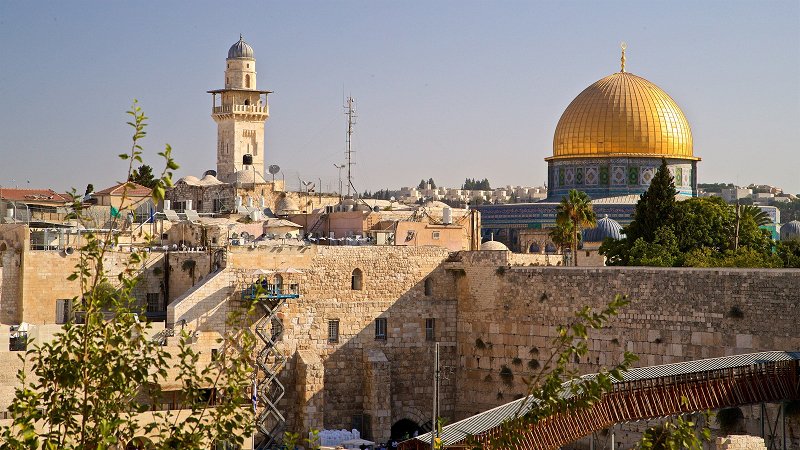
The Jewish Quarter is the most recently restored area of the Old City, having been rebuilt after 1967. It is home to the iconic Western Wall (Kotel) — the holiest site in Judaism — as well as the Cardo, an ancient Roman street that has been partially excavated and restored. The quarter is clean, organized, and filled with synagogues, Jewish heritage museums, and beautiful stone architecture. This is a great starting point for first-time visitors.
Walking through the Jewish Quarter feels like moving through layers of time. Beneath your feet lie Roman-era ruins, and above you rise golden Jerusalem stone buildings that blend ancient history with modern restoration. The quarter is calm and well-organized compared to the bustle of the other quarters, making it an ideal place to ease into the Old City experience.
Don’t miss in the Jewish Quarter:
- The Western Wall (Kotel) — Approach the wall, touch its ancient stones, and place a written prayer in the cracks
- The Hurva Synagogue — A stunning reconstructed synagogue with a rooftop offering sweeping Old City views
- The Cardo Excavations — Walk along the ancient Roman columns and imagine Jerusalem 2,000 years ago
2. The Muslim Quarter
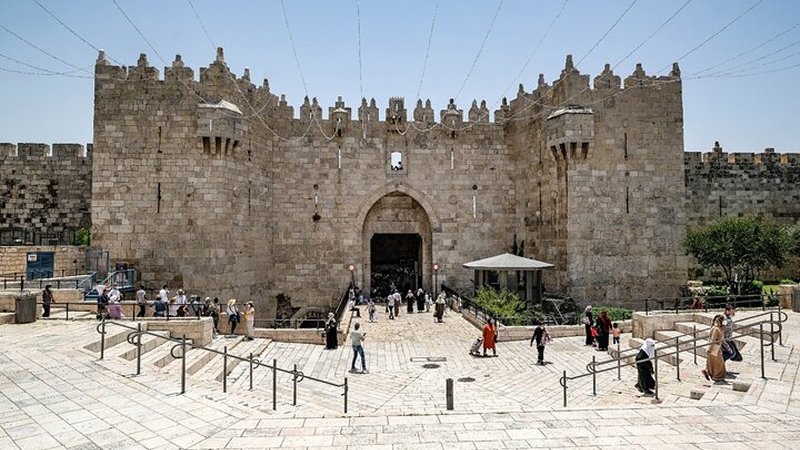
The Muslim Quarter is the largest and most densely populated quarter in the Old City. It is a vibrant, bustling area filled with colorful markets, street food stalls, spice shops, and local life. The famous Via Dolorosa — the path Jesus walked carrying the cross — runs through this quarter. The energy here is raw, authentic, and deeply atmospheric. Be prepared for a sensory overload in the best possible way.
The Muslim Quarter is where the Old City truly comes alive with everyday rhythm. Shop owners call out from doorways, the smell of freshly baked bread and roasting spices fills the narrow lanes, and local children weave through crowds of pilgrims and tourists alike. This quarter gives you the most authentic and unfiltered glimpse into daily life inside the Old City walls — it is chaotic, colorful, and absolutely unforgettable.
Don’t miss in the Muslim Quarter:
- The Via Dolorosa — Walk the 14 Stations of the Cross through ancient, winding alleyways
- Abu Shukri Restaurant — Home to what many consider the best hummus in all of Jerusalem
- The Souk (Market) Stalls — Try fresh pomegranate juice, warm ka’ak sesame bread, and sweet knafeh from street vendors
3. The Christian Quarter
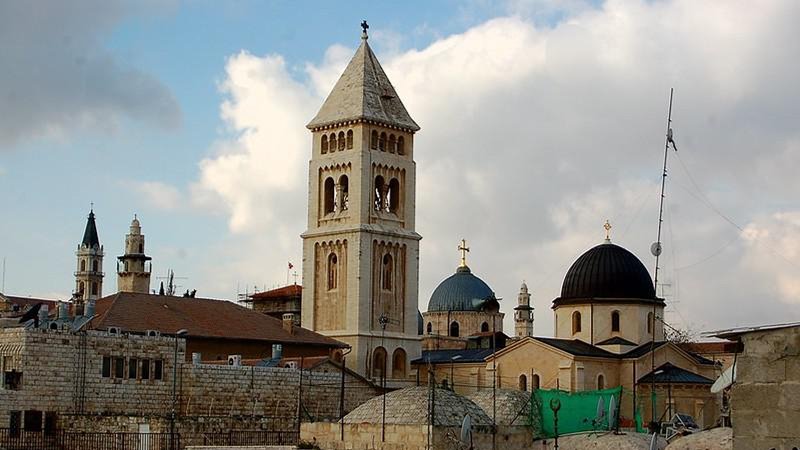
The Christian Quarter is home to the most sacred site in Christianity — the Church of the Holy Sepulchre, built on the site where Jesus was crucified, buried, and resurrected. The quarter is filled with churches, pilgrim hospices, and Christian-owned shops selling religious souvenirs. It tends to be quieter and more contemplative than the Muslim Quarter.
The Christian Quarter attracts pilgrims from every corner of the world, yet it manages to retain a deeply spiritual and peaceful atmosphere. Beyond the Church of the Holy Sepulchre, the quarter is full of smaller chapels, ancient courtyards, and centuries-old hospices that have welcomed weary travelers for generations. It is the kind of place where you slow down naturally — where the weight of history and faith is felt in the air itself.
Don’t miss in the Christian Quarter:
- Church of the Holy Sepulchre — Stand at Golgotha and visit the Edicule, the tomb of Jesus Christ
- The Ethiopian Monastery Rooftop — A hidden, peaceful monastery on the church’s rooftop that most tourists never find
- Muristan Plaza — A quiet open square perfect for resting, people-watching, and soaking in the quarter’s atmosphere
4. The Armenian Quarter
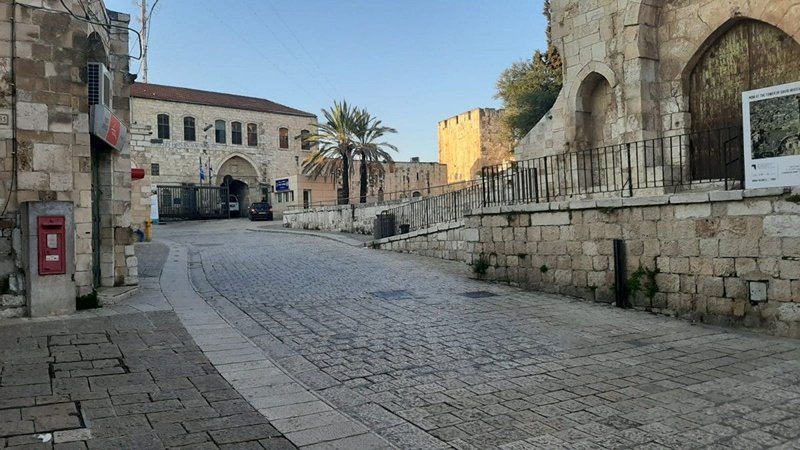
The smallest of the four quarters, the Armenian Quarter is a hidden gem that most tourists overlook. Home to a tight-knit Armenian Christian community, this quarter has a distinctly different atmosphere — quieter, more European, and deeply historic. The Cathedral of Saint James and the Armenian Museum are well worth a visit.
The Armenian community has been present in Jerusalem for over 1,600 years, making them one of the oldest continuous communities in the city. Stepping into the Armenian Quarter feels like entering a different world entirely — the streets are quieter, the architecture is more refined, and there is a sense of proud, quiet dignity that permeates every corner. It is the perfect quarter to explore when you need a peaceful escape from the energy of the rest of the Old City.
Don’t miss in the Armenian Quarter:
- Cathedral of Saint James — One of the most beautiful and atmospheric churches in all of Jerusalem, open during limited hours
- The Armenian Museum — A deeply moving museum documenting 1,600 years of Armenian presence in Jerusalem and the history of the Armenian Genocide
- The Armenian Tavern Restaurant — A beautifully atmospheric dining spot serving traditional Armenian and Middle Eastern cuisine inside ancient stone walls
Top Landmarks & Attractions in Jerusalem’s Old City
Jerusalem’s Old City packs an extraordinary number of world-famous landmarks into just one square kilometer. From the holiest sites in Judaism, Christianity, and Islam to ancient Roman streets and medieval citadels, every step you take here is a step through history. These are the must-visit attractions you simply cannot miss on your first visit.
The Western Wall (Kotel)
The Western Wall is the holiest place in Judaism and one of the most emotionally powerful sites you will ever visit. It is the last remaining wall of the Second Temple complex, destroyed by the Romans in 70 CE. Visitors of all faiths are welcome to approach the wall, touch its ancient stones, and place a written prayer in the cracks. The wall is divided into two sections — one for men and one for women. Dress modestly and bring a head covering if you plan to approach. The wall is open 24 hours a day, 7 days a week, and entrance is free.
Highlights at the Western Wall:
- Western Wall Tunnels
- Shabbat Evening Prayers
- The Prayer Notes
Church of the Holy Sepulchre
For Christians around the world, the Church of the Holy Sepulchre is the holiest site on Earth — the place where Jesus was crucified (Golgotha), anointed, and buried. The church is shared by six different Christian denominations, including Greek Orthodox, Roman Catholic, and Armenian Apostolic. The interior is dark, atmospheric, and deeply moving. Expect long queues, especially during peak pilgrimage seasons. Arrive early in the morning to avoid the largest crowds.
Highlights at the Church of the Holy Sepulchre:
- The Edicule (Tomb of Jesus)
- Golgotha (Calvary)
- The Stone of Anointing
Al-Aqsa Mosque & Dome of the Rock
The Temple Mount — known to Muslims as Haram al-Sharif — is home to two of Islam’s most iconic structures: the Al-Aqsa Mosque and the golden Dome of the Rock. The Dome of the Rock is one of the most photographed buildings in the world and a masterpiece of Islamic architecture. Non-Muslim visitors can access the Temple Mount compound (but not the mosque or dome interior) through the Mughrabi Gate. Access hours for non-Muslims are limited and subject to change, so check current schedules before your visit.
Highlights at Al-Aqsa & Dome of the Rock:
- The Dome of the Rock Exterior
- The Foundation Stone
- The Temple Mount Plaza Views
Via Dolorosa
The Via Dolorosa, Latin for “Way of Suffering,” is the path that Jesus walked carrying his cross from his trial to his crucifixion. The route passes through the Muslim Quarter and ends at the Church of the Holy Sepulchre. There are 14 Stations of the Cross along the way, each marked by a plaque or chapel. Every Friday afternoon, Franciscan friars lead a procession along the entire route — a deeply moving experience even for non-Christians.
Highlights on the Via Dolorosa:
- Friday Franciscan Procession
- The Chapel of Condemnation (Station 2)
- The Ecce Homo Arch
Tower of David (Citadel)
Located near the Jaffa Gate, the Tower of David is actually a medieval citadel (not a tower, and not built by David — but the name stuck). It houses an excellent museum tracing 4,000 years of Jerusalem’s history and offers stunning panoramic views from its rooftop. The night spectacular sound and light show projected onto the citadel walls is one of the best experiences in the entire city.
Highlights at the Tower of David:
- The Tower of David Museum
- The Rooftop Panorama
- The Night Spectacular Show
The Ramparts Walk
One of the most underrated experiences in the Old City is walking along the top of the ancient walls themselves. The Ramparts Walk lets you circumnavigate much of the Old City from above, offering incredible views into the quarters below and out across the surrounding landscape. It is one of the best ways to get a geographical sense of the city. A ticket is required and covers most of the route.
Highlights of the Ramparts Walk:
- Views Over the Temple Mount
- The Mount of Olives Panorama
- Hidden Rooftop Life
Hidden Gems Most Tourists Miss
The Rooftop of the Church of the Holy Sepulchre — A small door inside the church leads to an Ethiopian monastery on the rooftop, often completely empty of tourists and incredibly peaceful.
The Austrian Hospice Rooftop — Located on the Via Dolorosa, the Austrian Hospice offers rooftop access with one of the best panoramic views in the Old City. The café inside serves excellent Viennese coffee and apple strudel.
The Broad Wall — An ancient Israelite wall from the 8th century BCE, tucked away in the Jewish Quarter. Most visitors walk right past it.
Hezekiah’s Tunnel — Just outside the Old City walls in the City of David, this 2,700-year-old tunnel was carved through solid rock and still runs with water. You can walk through it — bring waterproof shoes.
The Muslim Quarter’s Side Streets — Step off the main souk and into the narrow residential alleyways. You will find crumbling Crusader arches, quiet courtyards, and local life completely untouched by tourism.
Best Food & Restaurants in Jerusalem’s Old City
Jerusalem’s Old City is a food lover’s paradise, with flavors drawn from Jewish, Arab, Armenian, and Mediterranean culinary traditions.
Abu Shukri (Muslim Quarter) — Widely regarded as serving the best hummus in all of Jerusalem. A local institution that has been operating for decades. Order the hummus with whole chickpeas, a drizzle of olive oil, and fresh pita. Do not miss it.
The Armenian Tavern (Armenian Quarter) — A beautifully atmospheric restaurant tucked inside the Armenian Quarter, serving traditional Armenian and Middle Eastern dishes. The setting alone is worth the visit.
Zalatimo Sweets (Muslim Quarter) — One of the oldest bakeries in Jerusalem, famous for their mutabbaq — a flaky pastry filled with cheese or nuts and drizzled with sweet syrup. A must-try.
Rossini’s Restaurant (Christian Quarter) — A charming Italian-Middle Eastern fusion restaurant near the Christian Quarter, popular with both tourists and locals.
The Old City Souk Food Stalls — Do not be afraid to eat from the market stalls in the Muslim Quarter souk. Fresh-squeezed pomegranate juice, warm sesame bagels (ka’ak), knafeh, and falafel sandwiches are all phenomenal and incredibly affordable.
Best Time to Visit Jerusalem’s Old City
Spring (March to May) is widely considered the best time to visit Jerusalem. The weather is warm and pleasant, the wildflowers are blooming, and the city is alive with energy. Passover and Easter both fall in spring, bringing large crowds to the city but also creating an extraordinary atmosphere.
Autumn (September to November) is the second-best window, with comfortable temperatures and beautiful golden light. The Jewish High Holidays (Rosh Hashanah, Yom Kippur, Sukkot) fall in this period — be aware that some businesses close.
Winter (December to February) is cooler and occasionally rainy, but the Christmas and Hanukkah season in Jerusalem is magical, with far fewer tourists than summer. It is also the best time to find lower hotel prices.
Summer (June to August) is the most popular tourist season but also the hottest, with temperatures regularly exceeding 35°C (95°F). If visiting in summer, plan your outdoor sightseeing for early morning and late afternoon.
Final Thoughts
Jerusalem Old City is not just a destination — it is an experience that stays with you for the rest of your life. The weight of history, the collision of cultures, the beauty of the architecture, and the raw spiritual energy of this place are impossible to fully describe in words. You simply have to go.
Come with an open heart, comfortable shoes, and plenty of time. Walk slowly. Look up. Look down. Step into the quiet alleyways. Talk to the locals. Let yourself get a little lost. That is when the Old City truly reveals itself.
There is nowhere else like it on Earth.