
Most visitors to Berlin arrive with a long list of things to see within the city — the Brandenburg Gate, the Berlin Wall memorial, Museum Island, the Reichstag, the Holocaust Memorial, the extraordinary neighbourhood culture of Prenzlauer Berg and Kreuzberg and Neukölln. And rightly so — Berlin’s own attractions are more than sufficient to occupy a week of serious exploration without ever boarding a train to leave the city.
But Berlin’s geographical position — in the flat northern German plain, surrounded by the lakes and forests of Brandenburg, within easy reach of the Elbe Valley and the Saxon highlands to the south and the Baltic coast to the north — makes it one of the finest day trip bases in Europe. The Deutsche Bahn intercity network connects Berlin to Dresden in 2 hours, to the Baltic coast in 2.5 hours, and to the extraordinary rock landscape of Saxon Switzerland in 2.5 hours. The regional train network connects Berlin to Potsdam in 25 minutes, to the Spreewald in 1 hour, and to the medieval towns of the Brandenburg March in under 2 hours.
The result is a city that serves simultaneously as one of Europe’s great urban destinations and as one of Europe’s great bases for regional exploration — a combination that rewards visitors who allow at least one or two days outside the city in their Berlin itinerary with experiences that are completely unlike anything available within the capital’s boundaries.
This guide covers the finest day trips from Berlin — organised by distance and travel time, honest about what each destination delivers, and specific about the practical information that makes the difference between a day trip that succeeds and one that disappoints.
Understanding Berlin’s Day Trip Geography
Before diving into the individual destinations it is worth understanding the geographical context of Berlin’s day trip landscape — because the variety of what is available within a 2 to 3 hour radius is genuinely extraordinary and understanding the options helps in choosing the right combination for a specific trip.
The Brandenburg Lakeland
Berlin sits in the middle of the Brandenburg March — a flat glacial plain of extraordinary beauty characterised by pine forests, numerous lakes formed by glacial action, and the slow brown rivers of the Spree and Havel systems. The Brandenburg lakeland immediately surrounding Berlin — particularly the Müggelsee to the east, the Havel Lakes to the west, and the Spreewald to the southeast — provides the most easily accessible natural escape from the city and the most characteristically Berlin outdoor experience.
The Brandenburg lakes and forests have served as Berlin’s recreational hinterland for centuries — the Prussian royal family built their summer palaces on the Havel lakes at Potsdam, the city’s middle classes cycled and sailed the Müggelsee on summer weekends, and the Spreewald’s network of waterways became one of the most unusual and most beloved natural landscapes in the Berlin region. These destinations are not dramatic — the flat Brandenburg landscape is gentle rather than spectacular — but they provide a quality of natural peace and natural beauty that is the perfect counterpoint to the intensity of the city.
The Elbe Valley and Saxon Highlands
To the south of Berlin — approximately 2 hours by train — the flat Brandenburg plain gives way to the extraordinary landscape of Saxony: the Elbe Valley with its extraordinary Baroque city of Dresden, the dramatic sandstone rock formations of Saxon Switzerland National Park, and the historic mining towns and medieval fortresses of the Erzgebirge foothills. This southern region provides the most dramatically beautiful and most historically rich day trip destinations from Berlin — destinations that rival anything available in better-known parts of Germany and that remain significantly less visited than their quality merits.
The Baltic Coast
To the north of Berlin — approximately 2 to 3 hours by train — the Baltic coast of Mecklenburg-Vorpommern offers one of the most beautiful and most architecturally extraordinary coastal landscapes in Germany: the chalk cliffs and beech forest of Rügen Island, the UNESCO Hanseatic town of Stralsund, the elegant 19th-century resort architecture of Binz and Sellin, and the wide sandy beaches of the Mecklenburg coast. The Baltic coast day trips are the longest and most demanding from Berlin but they deliver experiences of genuine distinction — particularly the extraordinary chalk cliff landscape of Rügen that has no equivalent elsewhere in Germany.
The Medieval Towns of Brandenburg and Saxony
Scattered throughout the Brandenburg and Saxon landscape within 1 to 2 hours of Berlin are medieval towns of extraordinary quality and extraordinary authenticity — towns that preserve their historic centres with a completeness that reflects the relative economic stagnation of the East German period, which inadvertently prevented the demolition and redevelopment that transformed many western German historic centres in the postwar economic boom. Brandenburg an der Havel, Tangermünde, Quedlinburg, and Görlitz are all destinations that reward the visitor who seeks genuine historic atmosphere without the tourist crowds of the more famous western German medieval towns.
The Best Day Trips from Berlin: The Complete Guide
1. Potsdam — The Royal City on the Havel
Distance from Berlin: 27 kilometres
Travel time: 25 to 40 minutes by S-Bahn or regional train
Best for: Palace and garden lovers, history enthusiasts, photographers
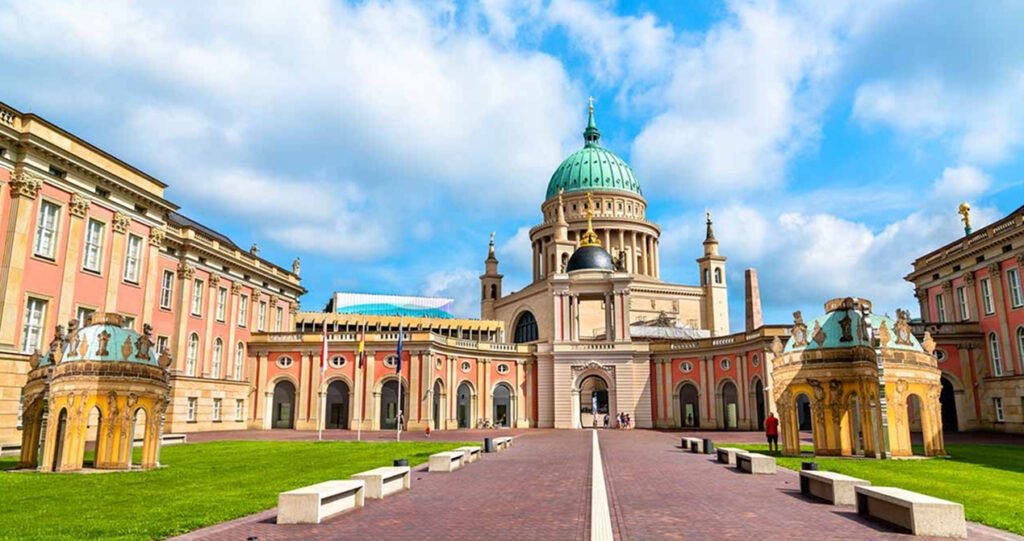
Potsdam is the finest and most rewarding day trip from Berlin — a royal city of extraordinary beauty and extraordinary historical significance that sits just 25 minutes from Berlin’s city centre on the banks of the Havel River. The city was the summer residence of the Prussian kings and German emperors for three centuries — and the extraordinary concentration of royal palaces, landscaped gardens, and historic architecture that accumulated during those three centuries makes Potsdam one of the finest collections of royal landscape architecture in Europe and a UNESCO World Heritage Site of the first order.
Sanssouci Palace and Park
Sanssouci is the masterpiece of Potsdam — the summer palace of Frederick the Great, built between 1745 and 1747 on a terraced hillside above vineyards and designed with a deliberate informality and human scale that distinguished it from the overwhelming grandeur of the great Baroque palaces of the period. The name — French for “without care” — reflects Frederick’s intention: a place where the warrior king could escape the formalities of the Berlin court and live as a philosopher and musician rather than as a monarch.
The palace is small by royal standards — a single-storey rococo building of just ten rooms running along the crest of the vineyard terraces — but the quality of every detail is extraordinary. The interiors represent the finest example of Frederician Rococo in Germany — a style uniquely associated with Frederick’s personal aesthetic, combining French Rococo forms with Prussian restraint and with the king’s own intellectual interests in philosophy, music, and French literature.
The Terraced Vineyards: The six terraces of fig trees and vines descending from the palace to the great fountain below are the most distinctive and most photographed element of the Sanssouci ensemble — a formal garden solution of extraordinary elegance that creates a south-facing microclimate warm enough to grow grapes and figs at this latitude.
Frederick’s Grave: Frederick the Great’s grave — at his own request, beside his favourite greyhounds on the upper terrace of the vineyard — is one of the most visited and most emotionally resonant sites in the entire Potsdam landscape. Visitors traditionally place potatoes on the grave — a tribute to Frederick’s introduction of the potato to Prussian agriculture, one of the most consequential agricultural policy decisions in European history.
The Park: The Sanssouci Park extends for approximately 3 kilometres from the New Palace in the west to the Charlottenhof Palace in the east — a landscape garden of extraordinary variety and extraordinary quality that contains over 150 historic buildings, garden structures, and monuments accumulated over two centuries of royal patronage. Walking the full length of the park — past the Chinese Tea House, the Orangery Palace, the Belvedere, and the Roman Baths — provides a full day of extraordinary garden exploration.
The New Palace (Neues Palais)
The New Palace at the western end of the Sanssouci Park is the most imposing building in the Potsdam landscape — a vast Baroque palace of 200 rooms built between 1763 and 1769 by Frederick the Great as a demonstration of Prussian power and Prussian financial resilience after the devastation of the Seven Years War. The palace was built not as a personal residence — Frederick preferred the intimate scale of Sanssouci — but as a statement: Prussia had survived the Seven Years War against a coalition of European powers and had the resources to build the most extravagant palace in Germany immediately afterward.
The Grottensaal (Grotto Hall) — a room whose walls and ceiling are entirely covered in shells, minerals, fossils, and semiprecious stones in an explosion of Baroque natural history — is the most extraordinary single interior in the New Palace and one of the most remarkable rooms in any German palace.
Cecilienhof Palace and the Potsdam Conference
Cecilienhof Palace — built in the style of an English country house between 1914 and 1917 for Crown Prince Wilhelm — is the site of the Potsdam Conference of 1945, where Churchill, Truman, and Stalin divided the postwar world between the Allied powers. The conference rooms are preserved essentially as they were during the conference — the large round table where the decisions were made, the separate delegation offices, and the personal quarters of the Allied leaders provide a genuinely extraordinary and genuinely sobering encounter with one of the most consequential diplomatic meetings of the 20th century.
The combination of the English country house architecture — completely at odds with the Prussian Baroque grandeur of the rest of Potsdam — and the world-historical significance of the 1945 conference makes Cecilienhof one of the most intellectually stimulating sites in the entire Potsdam landscape.
The Dutch Quarter (Holländisches Viertel)
The Dutch Quarter in the centre of Potsdam — a neighbourhood of 134 red-brick gabled houses built in the 1730s for Dutch craftsmen recruited by Frederick William I — is one of the most architecturally distinctive urban neighbourhoods in Germany. The quarter has been carefully restored and now houses galleries, cafés, restaurants, and shops in a setting of considerable charm — the combination of the Dutch architecture, the cobblestone streets, and the quality of the restoration creates an atmosphere entirely unlike the rest of Potsdam and entirely unlike anything in Berlin.
Practical Information for Potsdam
Getting there: S-Bahn S7 from Berlin Hauptbahnhof or Ostbahnhof to Potsdam Hauptbahnhof — 35 to 40 minutes. Regional train RE1 from Berlin Hauptbahnhof — 25 minutes. Both options are covered by the Berlin ABC zone ticket.
Entry fees: Sanssouci Palace EUR 14 per adult — timed entry tickets must be booked online in advance (the palace sells out months ahead in peak season). New Palace EUR 10 per adult. Cecilienhof EUR 8 per adult. The Sanssouci Park is free to enter and walk through at all times.
How much time: Potsdam deserves a full day — the park alone requires 3 to 4 hours for a thorough exploration and the palace interiors add several more hours. An early start from Berlin allows time for Sanssouci in the morning, the park in the afternoon, and the Dutch Quarter and dinner in the evening.
Honest assessment: Potsdam is genuinely extraordinary — the Sanssouci ensemble is one of the finest royal landscape experiences in Europe and the historical depth of the city rewards extended exploration. The crowds at Sanssouci Palace in peak season are significant — the timed entry system manages them reasonably well but the park itself can feel busy on summer weekends. Visit on a weekday in April, May, September, or October for the finest experience.
2. Saxon Switzerland National Park — The Dramatic Rock Landscape
Distance from Berlin: 200 kilometres
Travel time: 2 to 2.5 hours by train to Bad Schandau
Best for: Hikers, photographers, nature lovers, families with active children
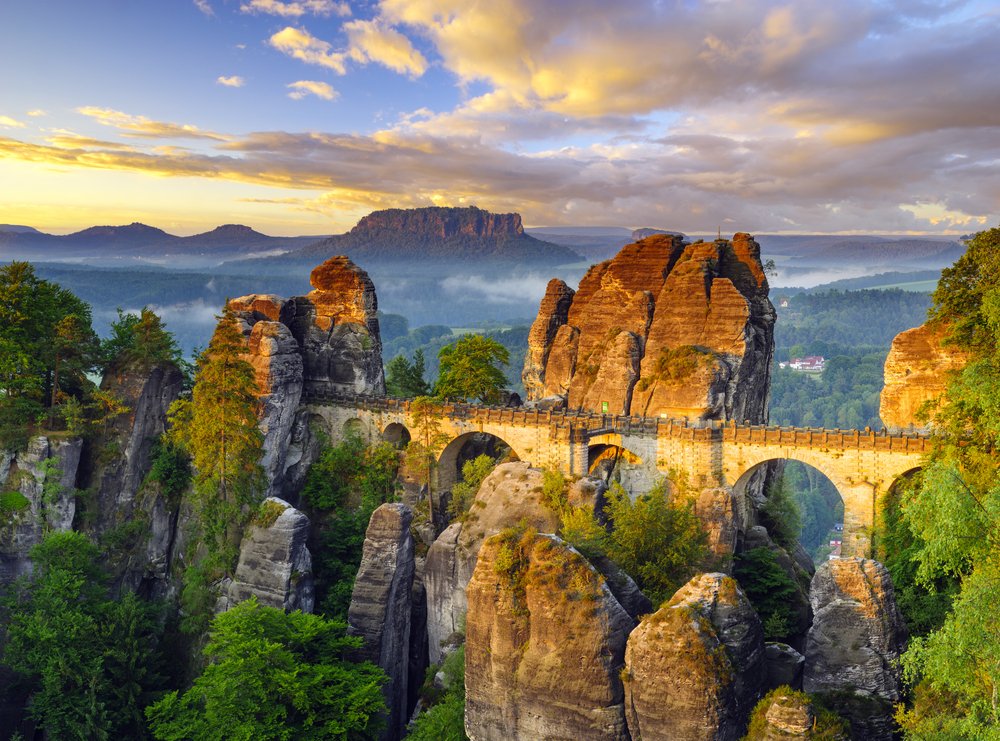
Saxon Switzerland National Park — the extraordinary sandstone rock landscape in the Elbe Valley southeast of Dresden — is the most dramatically beautiful natural destination within day trip distance of Berlin and one of the most visually extraordinary landscapes in Germany. The park’s characteristic formations — towers and table mountains of Cretaceous sandstone rising from the dense forest of the Elbe Valley, carved by millions of years of erosion into shapes of surreal and extraordinary beauty — create a hiking and photography destination of genuinely world-class quality that is surprisingly little known outside Germany.
The Bastei
The Bastei is the most famous viewpoint in Saxon Switzerland and one of the most photographed landscapes in all of Germany — a dramatic rock formation rising 194 metres above the Elbe River, connected by a sandstone bridge (the Basteibrücke, built in 1851) to the surrounding rock plateau and providing a panoramic view of extraordinary scope: the Elbe River curving through the valley below, the rock towers of the Affensteine and Schrammsteine visible in the distance, and the forest stretching to the horizon on every side.
The view from the Bastei is one of those landscapes that lives up completely to its photographic reputation — the combination of the vertical drama of the sandstone formations with the horizontal sweep of the river valley below creates a visual experience of genuine and sustained power. The morning light — when mist fills the valley and the rock formations emerge from the white above the fog — is one of the great photographic opportunities in Germany.
Getting to the Bastei: The Bastei is accessible from the town of Rathen — reached by ferry from Bad Schandau or by foot from the car park on the plateau above. The walk from Rathen to the Bastei takes approximately 30 minutes uphill through the forest.
The Malerweg — The Painters’ Way
The Malerweg (Painters’ Way) is the finest long distance hiking trail in Saxon Switzerland — a 112-kilometre marked route through the park’s most spectacular landscapes that follows the paths taken by the Romantic painters (particularly Caspar David Friedrich) who discovered the Saxon Switzerland landscape in the late 18th century and made it famous throughout Europe.
The full Malerweg takes 8 days to complete but individual sections provide extraordinary day hiking — the section between Schmilka and the Bastei (approximately 14 kilometres) passes through the Schrammsteine rock formations, the Affensteine plateau, and the Bastei itself, providing a full day of the finest hiking available in Saxon Switzerland.
The Schrammsteine and Affensteine
The Schrammsteine — a long ridge of sandstone towers northeast of Bad Schandau — and the Affensteine — an extraordinary plateau of rock formations in the centre of the park — are the finest hiking destinations in Saxon Switzerland for visitors who want to go beyond the Bastei viewpoint and experience the park’s interior landscape.
The Schrammsteine ridge walk — accessible from Bad Schandau via the Schrammsteinbaude — provides several kilometres of ridge hiking with extraordinary views of the Elbe Valley and the surrounding rock formations. The route involves some scrambling sections and iron rungs fixed to the rock faces (via ferrata style passages) that add a sense of adventure without requiring technical climbing skills.
Königstein Fortress
Königstein Fortress — the most impressive medieval and early modern fortress in Saxony, built on a flat-topped sandstone mesa rising 240 metres above the Elbe — is the finest historic site in the Saxon Switzerland region and one of the finest fortress experiences in eastern Germany.
The fortress has never been taken by military assault — its combination of the natural defensive strength of the mesa and the extensive fortifications added across five centuries made it impregnable to the military technology of every age. It served as the state treasury of the Electors of Saxony, as a political prison (Augustus the Strong’s alchemist Johann Friedrich Böttger — the man who discovered the secret of European porcelain manufacture — was imprisoned here while being forced to continue his research), and as a refuge for the Saxon royal family during times of crisis.
The fortress complex is extraordinarily extensive — the plateau covers approximately 9.5 hectares and contains over 50 historic buildings accumulated across five centuries of construction. The deep well (152 metres — the deepest castle well in Germany, requiring 11 horses working simultaneously to raise water from the sandstone) and the extraordinary network of subterranean passages and cisterns provide particularly fascinating exploration for visitors with an interest in the engineering of historic fortifications.
Getting there: Königstein is accessible by S-Bahn from Bad Schandau (approximately 10 minutes) — the fortress entrance is a 20-minute walk from the town.
Practical Information for Saxon Switzerland
Getting there: Regional express train from Berlin Hauptbahnhof to Bad Schandau — approximately 2.5 hours. Bad Schandau is the main gateway town for the national park — ferry services and local buses connect the town to the main hiking trailheads.
Entry fees: The national park itself is free — the Bastei rock formations are free to walk. Königstein Fortress entry EUR 12 per adult.
How much time: Saxon Switzerland rewards a full day — the combination of the Bastei visit, a section of the Malerweg, and Königstein Fortress comfortably fills 8 to 10 hours.
Honest assessment: Saxon Switzerland is one of the most genuinely impressive natural landscapes within reach of Berlin and one of the most undervisited by international tourists. The hiking infrastructure is excellent, the rock scenery is extraordinary, and the combination with Königstein Fortress provides a day of remarkable variety. The 2.5-hour train journey is the longest in this guide but entirely justified by what the destination delivers.
3. Dresden — The Florence of the Elbe
Distance from Berlin: 200 kilometres
Travel time: 2 hours by ICE train
Best for: Art lovers, architecture enthusiasts, history buffs, cultural travellers
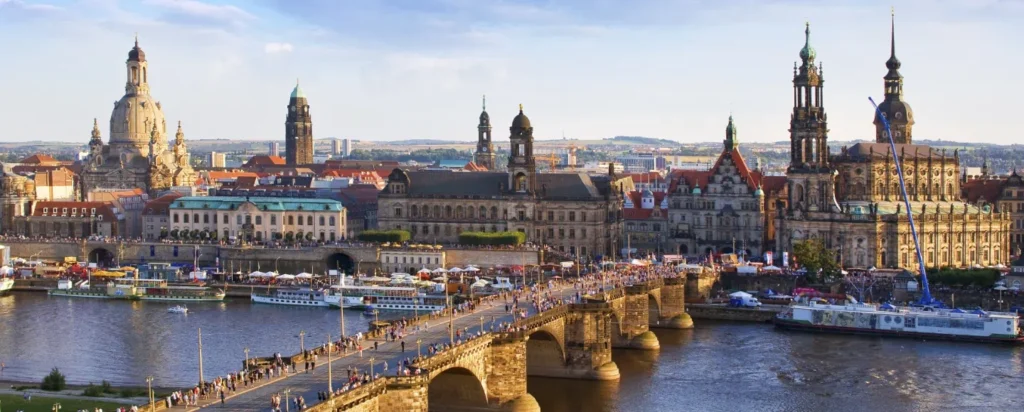
Dresden is one of the great cities of Europe — a Baroque masterpiece on the Elbe River whose extraordinary architectural heritage was almost entirely destroyed in the Allied bombing of February 1945 and has been painstakingly reconstructed over the subsequent seven decades in one of the most ambitious historic reconstruction projects in the world. The result is a city that simultaneously carries the weight of its destruction and the extraordinary beauty of its reconstruction — a place of genuine historical complexity and genuine architectural splendour that rewards a day of serious exploration.
The Zwinger Palace
The Zwinger is Dresden’s masterpiece — a Baroque palace complex of extraordinary beauty built between 1710 and 1728 by Augustus the Strong of Saxony, designed by Matthäus Daniel Pöppelmann and decorated by the sculptor Balthasar Permoser with a richness of ornamental detail that represents the apex of German Baroque decorative art.
The Zwinger was designed not as a residential palace but as an open-air arena for court festivities — its four wings enclosing a large courtyard that served as the stage for the tournaments, fireworks, and theatrical entertainments that Augustus used to demonstrate Saxon power and cultural prestige. The Kronentor (Crown Gate) — topped by a crown supported by four eagles and surrounded by the most elaborate carved decoration in the complex — is the finest single architectural element and one of the most photographed Baroque gateways in Germany.
The Old Masters Picture Gallery (Gemäldegalerie Alte Meister): The finest art collection in eastern Germany — housed in the Zwinger’s Semper Gallery wing — contains one of the most important collections of European painting assembled anywhere in the world. The collection’s highlight is Raphael’s Sistine Madonna — one of the most famous paintings in the world, whose two cherubs at the base of the composition have become one of the most reproduced images in art history. The collection also contains extraordinary works by Titian, Veronese, Rubens, Rembrandt, Vermeer, and the German masters — a collection of such consistent quality that it rewards several hours of careful looking.
The Porcelain Collection (Porzellansammlung): Augustus the Strong’s obsession with porcelain — he described himself as suffering from “porcelain sickness” and traded an entire regiment of Saxon cavalry for 151 Chinese vases — produced the most extraordinary porcelain collection in the world. The Zwinger’s porcelain collection displays over 20,000 pieces of Chinese, Japanese, and Meissen porcelain in a sequence of rooms whose scale and completeness provide a genuinely overwhelming experience of 18th-century collecting ambition.
The Frauenkirche
The Frauenkirche — the great Lutheran church whose dome dominated the Dresden skyline from its completion in 1743 until its destruction in the 1945 bombing — was reconstructed between 1994 and 2005 using surviving original stones wherever possible and replacing missing elements with new sandstone of identical material. The reconstruction is one of the finest examples of historic reconstruction in the world — the careful integration of original blackened stones with new pale sandstone creates a visual record of the destruction and the reconstruction that is simultaneously beautiful and historically honest.
The interior — restored to its extraordinary original Baroque richness — is one of the finest church interiors in Germany. The dome climb provides panoramic views of the Elbe Valley and the Dresden skyline that are among the finest urban panoramas in eastern Germany.
The Semperoper
The Semperoper — the Dresden State Opera — is one of the most beautiful opera house buildings in the world and one of the most historically significant cultural institutions in Germany. The building has been destroyed and rebuilt twice — most recently after the 1945 bombing — and the current restoration (completed in 1985) faithfully reproduces the extraordinary 19th-century interior of Gottfried Semper’s original design.
Guided tours of the Semperoper interior are available when performances are not scheduled — the auditorium, the royal boxes, and the stage machinery are all accessible and provide an extraordinary experience of 19th-century theatrical architecture at its most magnificent.
The Elbe Meadows and the Blue Wonder
The Dresden Elbe meadows — the broad floodplain of the Elbe on the south bank of the river between the historic centre and the Blaues Wunder bridge — provide one of the finest urban walking experiences in eastern Germany. The view of the Dresden skyline from the Elbe meadows — the Frauenkirche dome, the Hofkirche towers, the Semperoper, and the Brühlsche Terrasse all visible across the river — is one of the great urban panoramas of Germany.
The Blaues Wunder (Blue Wonder) — the extraordinary cantilever bridge of 1893, painted blue-green and preserved in its original condition — is one of the finest historic bridges in Germany and the starting point for walks through the vineyard villages of the Elbe Valley above Dresden.
Practical Information for Dresden
Getting there: ICE train from Berlin Hauptbahnhof to Dresden Hauptbahnhof — approximately 2 hours. Trains run frequently throughout the day — book in advance for the best prices.
Entry fees: Zwinger Old Masters Gallery EUR 14 per adult. Zwinger Porcelain Collection EUR 12 per adult. Frauenkirche dome climb EUR 8 per adult. Semperoper guided tour EUR 12 per adult.
How much time: Dresden is genuinely a full day destination — the Zwinger alone requires 3 to 4 hours for the galleries, the Frauenkirche and dome climb require 1.5 hours, and the Elbe meadow walk adds another hour. An early train from Berlin and a late evening return maximises the available time.
Honest assessment: Dresden is extraordinary — the combination of the architectural beauty of the reconstructed Baroque centre, the quality of the art collections, and the historical depth of a city carrying both the memory of its destruction and the achievement of its reconstruction makes it the finest single day trip destination from Berlin for cultural travellers. The 2-hour train journey is entirely justified.
4. The Spreewald — Berlin’s Enchanted Waterway
Distance from Berlin: 100 kilometres
Travel time: 1 to 1.5 hours by regional train to Lübbenau or Lübben
Best for: Nature lovers, kayakers, families, those seeking complete contrast to city life
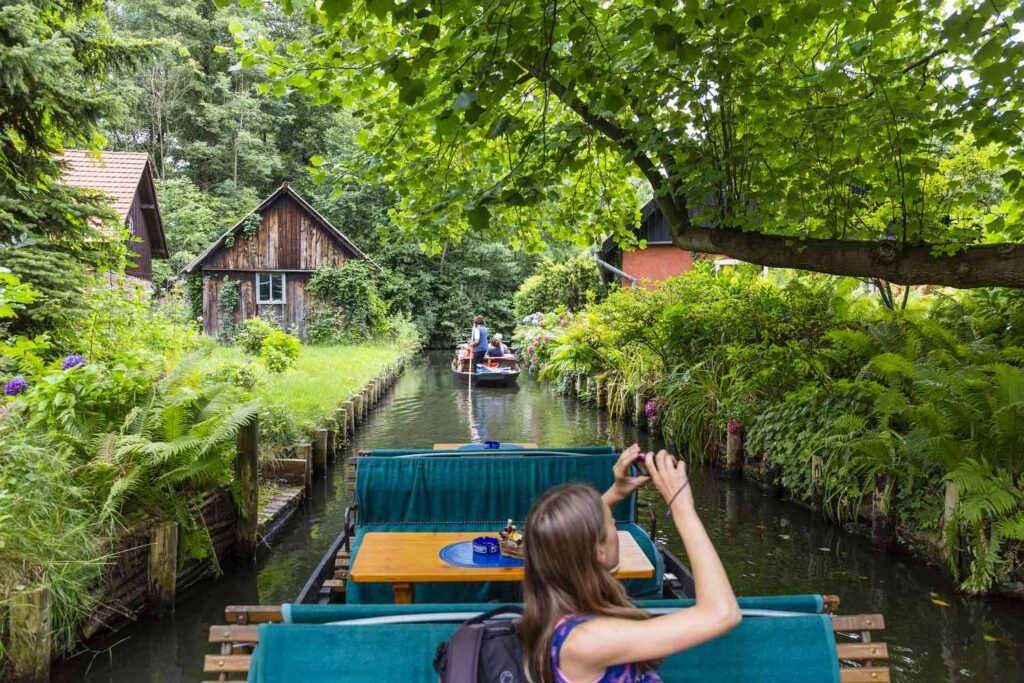
The Spreewald is one of the most extraordinary natural landscapes in the Berlin region — a UNESCO Biosphere Reserve where the Spree River divides into over 200 channels and streams in a flat forest and meadow landscape of extraordinary beauty and extraordinary tranquillity. The Spreewald’s network of waterways has been used for transport, agriculture, and daily life by the Sorbian people — a Slavic minority indigenous to the region — for over a thousand years, creating a cultural landscape of remarkable distinctiveness that is unlike anything else in Brandenburg.
Punting on the Spreewald Channels
The traditional way to experience the Spreewald is by punt (Kahn) — the flat-bottomed wooden boats that have served as the primary transport in the waterway network for centuries and that remain the most atmospheric and most comfortable way to explore the channels. Guided punt tours — operated by licensed Spreewald boat operators from Lübbenau and Lübben — range from 1-hour introductory tours to full-day expeditions through the most remote and most beautiful sections of the network.
The experience of punting through the Spreewald channels — the forest closing overhead, the water reflecting the trees and the sky, the complete silence except for the sound of the pole and the birds in the alders — is one of the most genuinely peaceful and most genuinely beautiful experiences available within day trip distance of Berlin.
Kayaking and Canoeing
The Spreewald channels are extensively navigable by kayak and canoe — hire is available from multiple operators in Lübbenau and the surrounding villages. The freedom of self-guided paddling — choosing your own route through the network, stopping at the traditional Spreewald restaurants (Gurkenradler — the cucumber cycling and paddling tradition of the region is one of its most distinctive cultural features) along the way — provides a more adventurous and more personal experience than the guided punt tours.
The Sorbian Cultural Landscape
The Spreewald is the heartland of the Lower Sorbian cultural region — one of two areas of Germany where the Sorbian language (a Slavic language related to Polish and Czech) is still spoken and where Sorbian cultural traditions are actively maintained. The traditional costume of the Spreewald Sorbs — worn by women on market days and festivals throughout the year — is one of the most distinctive folk costumes in Germany.
The Spreewald pickled gherkins (Spreewälder Gurken) — grown in the fertile alluvial soil of the floodplain and pickled in the traditional Sorbian manner — are one of the most famous regional food products in Germany and are available fresh from roadside stalls throughout the growing season.
Practical Information for Spreewald
Getting there: Regional train RE2 from Berlin Ostbahnhof to Lübbenau — approximately 1 hour 15 minutes.
Punt tour prices: Approximately EUR 10 to 15 per person for a 1-hour tour — full day tours EUR 25 to 35 per person.
How much time: A half day is sufficient for a punt tour and a walk through Lübbenau. A full day allows kayaking or a longer punt expedition plus a meal at a traditional Spreewald restaurant.
Honest assessment: The Spreewald provides the most complete contrast to Berlin of any day trip on this list — the combination of the flat water landscape, the forest silence, and the Sorbian cultural atmosphere is entirely unlike anything available in the city. Particularly recommended for visitors who feel overwhelmed by Berlin’s intensity and need a day of genuine natural peace.
5. Quedlinburg — The UNESCO Medieval Town
Distance from Berlin: 260 kilometres
Travel time: 2 to 2.5 hours by train via Halberstadt
Best for: Medieval history enthusiasts, architecture lovers, those seeking authentic German historic atmosphere
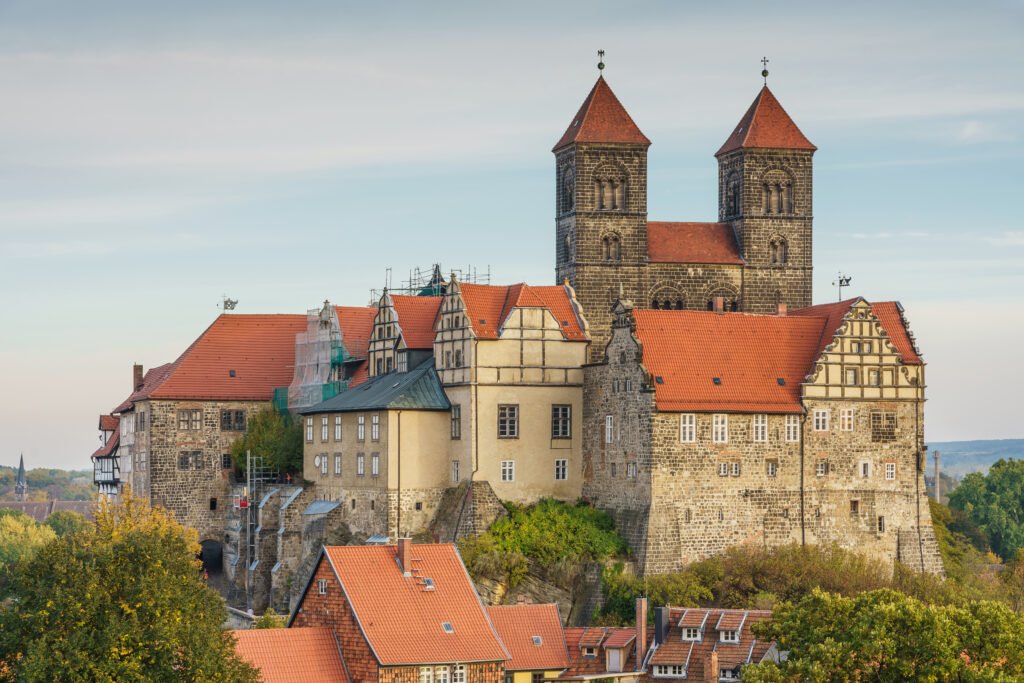
Quedlinburg is the finest medieval town within reach of Berlin and one of the most completely preserved historic urban landscapes in Germany — a UNESCO World Heritage Site whose half-timbered town centre contains over 1,300 half-timbered buildings spanning six centuries of construction, all arranged around the extraordinary collegiate church on the castle hill that dominates the town from above.
The Collegiate Church of St. Servatius
The Collegiate Church of St. Servatius — a Romanesque church of extraordinary quality built on the castle hill above Quedlinburg between the 10th and 12th centuries — is one of the finest Romanesque buildings in Germany and one of the most historically significant churches in the country. The church was founded by Queen Mathilde, wife of King Henry the Fowler (the first Saxon king of Germany), and served as the burial place of Henry and Mathilde and of their son Otto I — the first Holy Roman Emperor.
The crypt — where Henry the Fowler and Queen Mathilde are buried in sarcophagi of extraordinary beauty — is one of the most moving historic spaces in Germany: a low Romanesque vault of extraordinary atmosphere where the founders of the German nation rest in a space that has been visited by pilgrims, scholars, and travellers for a thousand years.
The Treasury: The church treasury contains objects of extraordinary quality and extraordinary historical significance — including the comb of Henry the Fowler, the reliquary of St. Servatius, and several pieces of Ottonian goldsmith work that rank among the finest examples of early medieval German craftsmanship surviving anywhere in the world.
The Half-Timbered Town
The lower town of Quedlinburg — spread across the valley below the castle hill — is one of the most completely preserved half-timbered urban landscapes in Germany. The town’s historic centre contains examples of half-timbered construction from every century between the 14th and the 20th — creating a visual history of German domestic architecture of extraordinary completeness.
The Wordgasse, the Breite Strasse, and the area around the Marktplatz provide the finest concentration of historic buildings — the variety of half-timbered construction techniques visible within a short walk is genuinely remarkable, from the earliest post-and-beam construction of the 14th and 15th centuries through the elaborate carved and painted timberwork of the Renaissance period to the more restrained classicising construction of the 18th century.
Practical Information for Quedlinburg
Getting there: Regional train from Berlin Hauptbahnhof to Halberstadt (approximately 2 hours), then local train to Quedlinburg (approximately 20 minutes).
Entry fees: Collegiate Church EUR 5 per adult. Treasury EUR 5 per adult.
How much time: A full day — the church and treasury require 2 hours, the town deserves 3 to 4 hours of walking.
Honest assessment: Quedlinburg is the finest medieval day trip from Berlin and one of the most authentically atmospheric historic towns in Germany — the combination of the extraordinary Romanesque church and the extensive half-timbered town centre provides a genuinely immersive medieval experience. The longer travel time is justified by the quality of what the destination delivers.
6. Rügen Island and the Chalk Cliffs — The Baltic Landscape
Distance from Berlin: 300 kilometres
Travel time: 2.5 to 3 hours by train to Binz or Sassnitz
Best for: Nature lovers, walkers, fans of Caspar David Friedrich, beach seekers
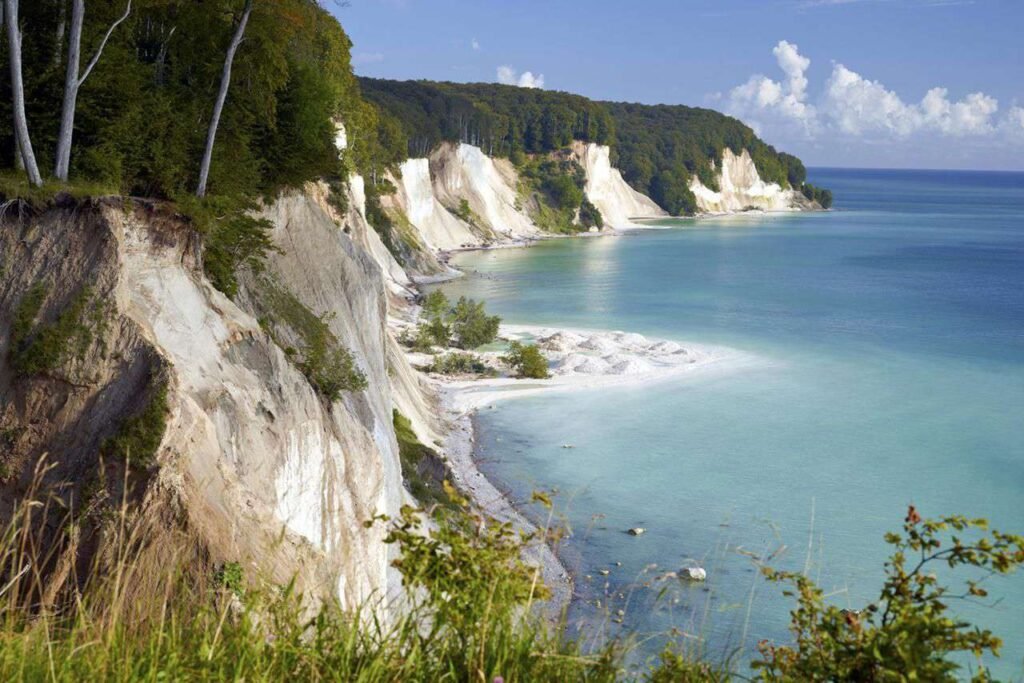
Rügen Island — Germany’s largest island, connected to the mainland by a causeway and by bridge — is one of the most beautiful and most distinctive natural landscapes in northern Germany: a Baltic island of chalk cliffs, beech forest, wide sandy beaches, 19th-century resort architecture, and the particular quality of light that Caspar David Friedrich captured in his paintings and that makes the northeastern corner of the island one of the most photographically extraordinary landscapes in Germany.
The Chalk Cliffs of Jasmund National Park
The chalk cliffs of Jasmund National Park — particularly the Königsstuhl (King’s Chair), a 118-metre chalk cliff face that is the highest point on Rügen — are the defining landscape feature of the island and one of the most extraordinary natural sights in Germany. The white chalk walls rising directly from the dark Baltic water, with the ancient beech forest of the Stubnitz plateau growing on the cliff top to the forest edge — are the landscape that Friedrich painted in his famous 1818 painting “Chalk Cliffs on Rügen” and that has drawn visitors to the island ever since.
The Hochuferweg (High Cliff Path): The finest walking route on Rügen follows the cliff top from the Königsstuhl visitor centre through the beech forest of the Stubnitz to the village of Sassnitz — a walk of approximately 12 kilometres that provides continuous views of the chalk cliffs and the Baltic below. The beech forest in autumn — the copper and gold of the leaves against the white chalk and the blue sea — is one of the great autumn landscapes of Germany.
The Königsstuhl Visitor Centre: The visitor centre at the top of the Königsstuhl cliff provides the most accessible view of the chalk face — a platform extending over the cliff edge that provides the famous view of the white chalk wall descending to the water below. The centre also houses an excellent exhibition on the geology and ecology of the chalk cliff landscape.
The Resort Architecture of Binz and Sellin
The southern part of Rügen — the Granitz peninsula and the resort towns of Binz, Sellin, and Baabe — contains one of the finest examples of 19th-century Baltic resort architecture in Germany. The white-painted villas with their characteristic carved verandas (Bäderarchitektur — “spa architecture”) line the beachfront in a style that is entirely characteristic of the late 19th-century Baltic resort tradition and entirely unlike anything in the rest of Germany.
The beach at Binz — a wide expanse of fine white sand with the characteristic blue and white striped Strandkorb (beach baskets) of the Baltic resort tradition — is one of the finest beaches in Germany and provides a genuinely extraordinary contrast to Berlin when the summer weather is good.
Practical Information for Rügen
Getting there: Direct regional express train from Berlin Hauptbahnhof to Binz or Sassnitz — approximately 3 hours. Trains run several times daily.
Entry fees: Jasmund National Park entry is free. Königsstuhl visitor centre EUR 9 per adult.
How much time: A full day — the chalk cliff walk and visitor centre require half a day, the resort architecture and beach another half.
Honest assessment: Rügen is the most beautiful natural day trip from Berlin — the chalk cliff landscape is genuinely extraordinary and entirely unlike anything available closer to the city. The 3-hour train journey is the longest on this list but the destination is worth it, particularly for visitors with a love of extraordinary natural landscapes.
7. Brandenburg an der Havel — The Medieval Water City
Distance from Berlin: 65 kilometres
Travel time: 35 to 50 minutes by regional train
Best for: History enthusiasts, walkers, those seeking an authentic German town without tourist crowds
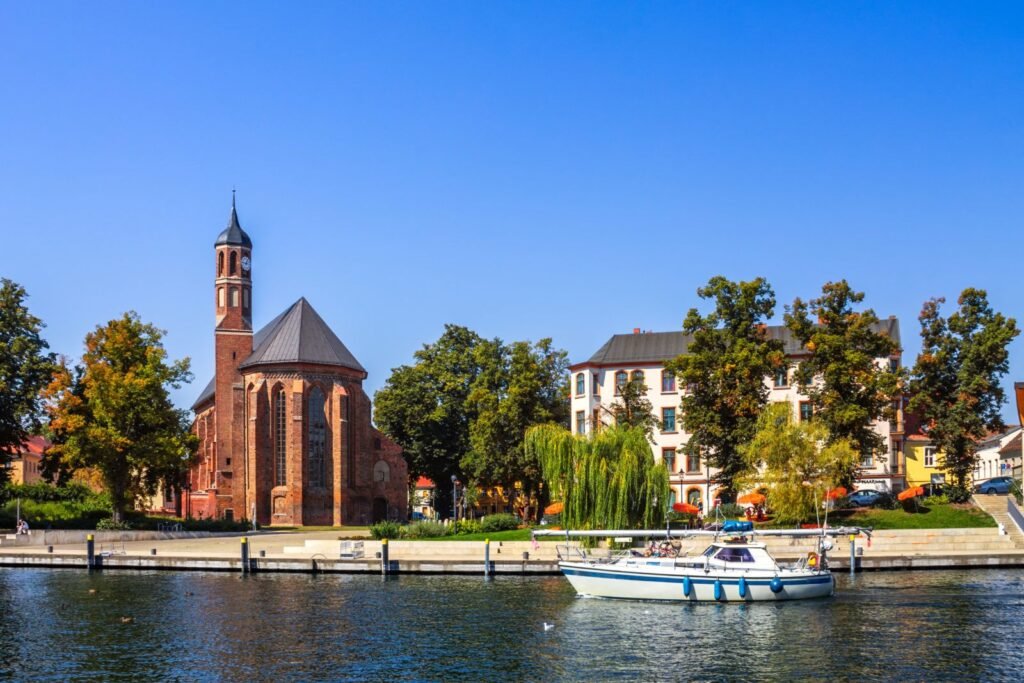
Brandenburg an der Havel — the city that gave the state of Brandenburg its name — is one of the most historically significant and most undervisited medieval towns in the Berlin region: a city of islands, lakes, and rivers whose extraordinary historic centre contains a cathedral of remarkable quality, extensive medieval architecture of genuine authenticity, and the particular atmosphere of a German river town that has evolved over a thousand years without significant tourist development.
The Brandenburg Cathedral
The Brandenburg Cathedral (Dom zu Brandenburg) — a Gothic brick church of extraordinary quality built between the 13th and 15th centuries — is the finest Gothic brick cathedral in the Berlin-Brandenburg region and one of the finest examples of North German Brick Gothic architecture in the country. The cathedral’s interior contains an extraordinary collection of medieval religious art — including the Bohemian Altar of approximately 1375, one of the finest examples of Bohemian panel painting in Germany — and a cloister of remarkable tranquillity and remarkable preservation.
The Old Town and New Town
Brandenburg an der Havel is actually three towns on three islands — the Cathedral Island, the Old Town (Altstadt), and the New Town (Neustadt) — connected by bridges across the Havel River. Each island retains its own historic centre and its own distinct character — the Cathedral Island dominated by the great church, the Old Town centred on the medieval Rolandfigur (one of the finest Roland statues in Germany), and the New Town with its well-preserved Gothic churches and half-timbered buildings.
Practical Information for Brandenburg an der Havel
Getting there: Regional train RE1 from Berlin Hauptbahnhof — approximately 50 minutes.
Entry fees: Cathedral EUR 4 per adult. Town is free to walk.
How much time: Half a day is sufficient — the cathedral requires 1.5 hours, the town walk 2 hours.
Honest assessment: Brandenburg an der Havel is the finest half-day trip from Berlin — close enough to combine with an afternoon back in Berlin, historically significant enough to reward serious attention, and refreshingly free of the tourist infrastructure that transforms some historic towns into theme parks of their own history.
8. Görlitz — The Most Beautiful Town in Germany
Distance from Berlin: 200 kilometres
Travel time: 2 hours by regional train
Best for: Architecture enthusiasts, photographers, those seeking the most perfectly preserved historic town in Germany
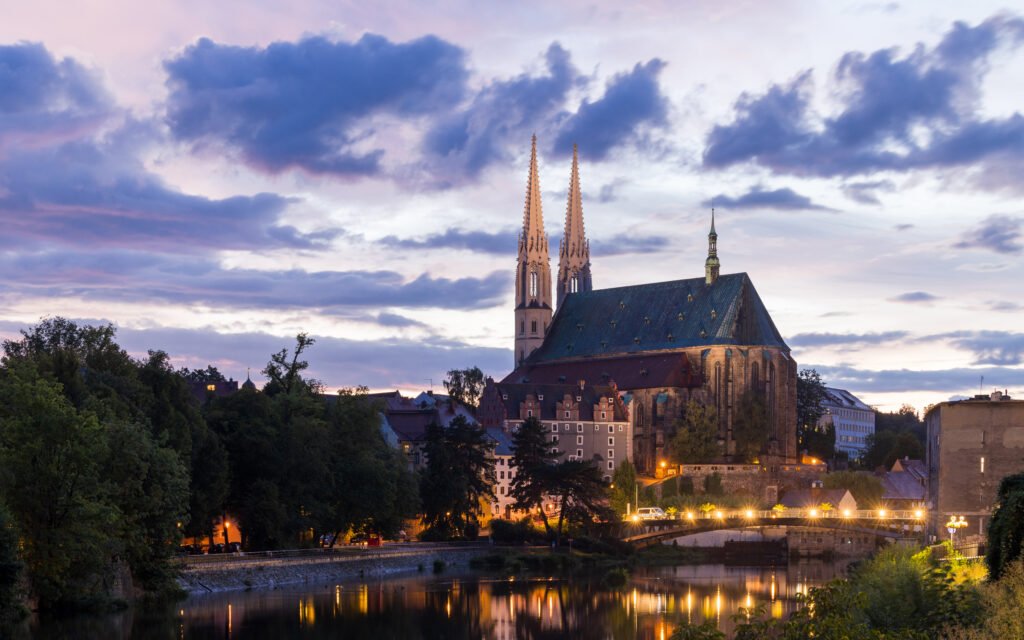
Görlitz — on the Polish border at Germany’s eastern extremity — is consistently described as the most beautiful and most completely preserved historic town in Germany: a city whose extraordinary architectural collection spans every major style from the late Gothic of the 15th century through Renaissance, Baroque, Classicism, Historicism, and Art Nouveau, all preserved with a completeness that reflects the combination of the town’s historical prosperity and its survival of the Second World War entirely without bomb damage.
The Architecture Collection
Görlitz contains over 4,000 listed historic buildings — the most concentrated collection of historic architecture in Germany by density. The Untermarkt (lower market square) — surrounded by an almost entirely intact ensemble of Renaissance and Baroque merchant houses — is one of the finest historic squares in central Europe. The Obermarkt (upper market square) provides a different architectural perspective — the Baroque Dreifaltigkeitskirche and the classical Rathaus providing the square’s primary architectural focus.
The six Gothic churches of Görlitz — of which the Peterskirche with its extraordinary Sunburst Organ is the finest — represent the most complete collection of late Gothic religious architecture in any German town.
The Polish Side — Zgorzelec
Görlitz sits on the Neiße River — the border between Germany and Poland — and the Polish town of Zgorzelec on the opposite bank was historically part of the same city. Crossing the bridge into Zgorzelec — a short walk from the German historic centre — adds an interesting cross-border dimension to the Görlitz visit and provides access to the old Görlitz town districts on the Polish side that are undergoing their own restoration.
Practical Information for Görlitz
Getting there: Regional train from Berlin Ostbahnhof to Görlitz — approximately 2 hours. Direct trains run several times daily.
Entry fees: Churches and squares are free to walk. Museum entry approximately EUR 5 per adult.
How much time: A full day — the architectural richness of Görlitz rewards slow walking and extended exploration.
Honest assessment: Görlitz is the most architecturally extraordinary day trip from Berlin — a town of genuinely exceptional historic quality that is known primarily to specialist architecture and photography travellers and that rewards the visitor with an experience of historic urban atmosphere that is simply unavailable anywhere closer to Berlin.
9. Wittenberg — Where the Reformation Began
Distance from Berlin: 100 kilometres
Travel time: 45 minutes by ICE train
Best for: History enthusiasts, those interested in the Protestant Reformation, religious heritage travellers
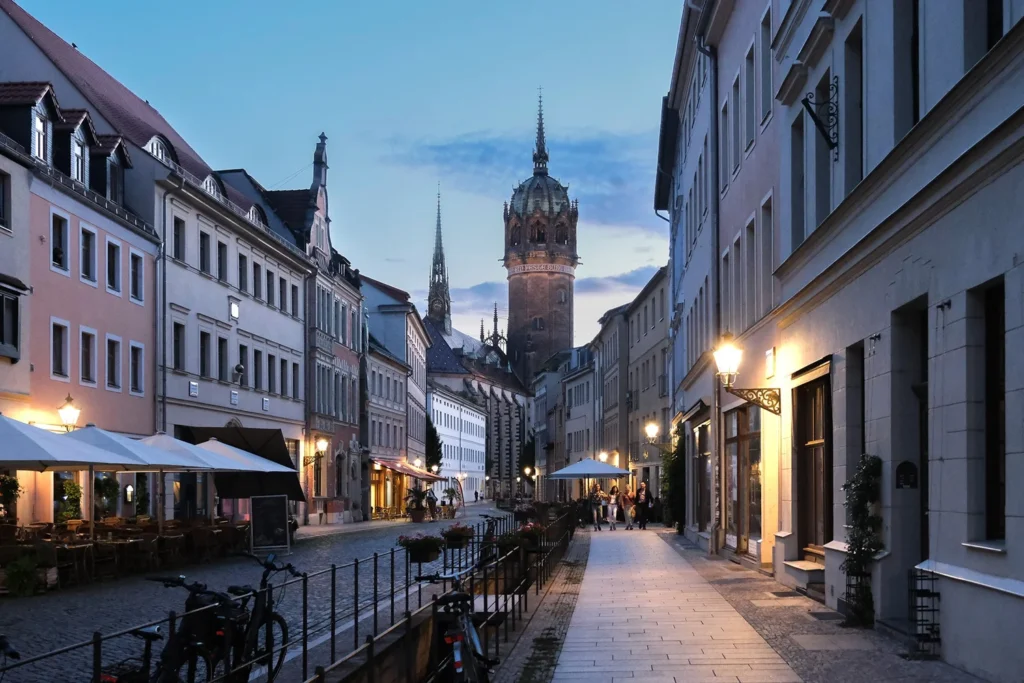
Lutherstadt Wittenberg — the small university town on the Elbe River where Martin Luther posted his 95 Theses on the door of the Castle Church in 1517 and changed the course of European history — is one of the most historically significant small towns in Germany and a UNESCO World Heritage Site of the first order.
The Castle Church (Schlosskirche)
The Castle Church door — where Luther is said to have posted his 95 Theses on 31 October 1517 — is the most historically significant door in German history and one of the most visited Protestant pilgrimage sites in the world. The original wooden door was destroyed by fire in 1760 — the current bronze door, cast in 1858, bears the full text of the 95 Theses in Latin. Luther and his colleague Philip Melanchthon are buried in the church beneath the altar.
The Luther House (Lutherhaus)
The Luther House — the Augustinian monastery where Luther lived from 1508 until his death in 1546 — is the most important Luther memorial site in Germany and houses the finest Luther museum in the world. The collection includes Luther’s personal Bible, his correspondence, the first editions of his major works, and the extraordinary collection of Lutheran art — particularly the paintings of Lucas Cranach the Elder, who lived in Wittenberg and whose portraits of Luther and Melanchthon are the most important documentary images of the Reformation.
Practical Information for Wittenberg
Getting there: ICE train from Berlin Hauptbahnhof to Lutherstadt Wittenberg — approximately 45 minutes.
Entry fees: Luther House EUR 10 per adult. Castle Church free.
How much time: Half a day is sufficient — a full day allows a thorough exploration of the Luther House and all the Reformation sites.
Honest assessment: Wittenberg is the finest historical day trip from Berlin for visitors with an interest in religious history or the history of ideas — the combination of the Luther House museum, the Castle Church, and the extraordinary historical significance of the town make it genuinely unmissable for anyone interested in the most consequential intellectual revolution of the European modern period.
10. Hamburg — The Grand Day Trip
Distance from Berlin: 290 kilometres
Travel time: 1 hour 45 minutes by ICE train
Best for: City lovers, harbour enthusiasts, architecture admirers, those wanting a complete change of atmosphere
Hamburg — Germany’s second largest city and its greatest port — is the most ambitious day trip from Berlin: a full city visit compressed into a single day that is entirely feasible given the extraordinary speed of the ICE connection and entirely rewarding given the extraordinary quality of what Hamburg offers.
The Speicherstadt and HafenCity
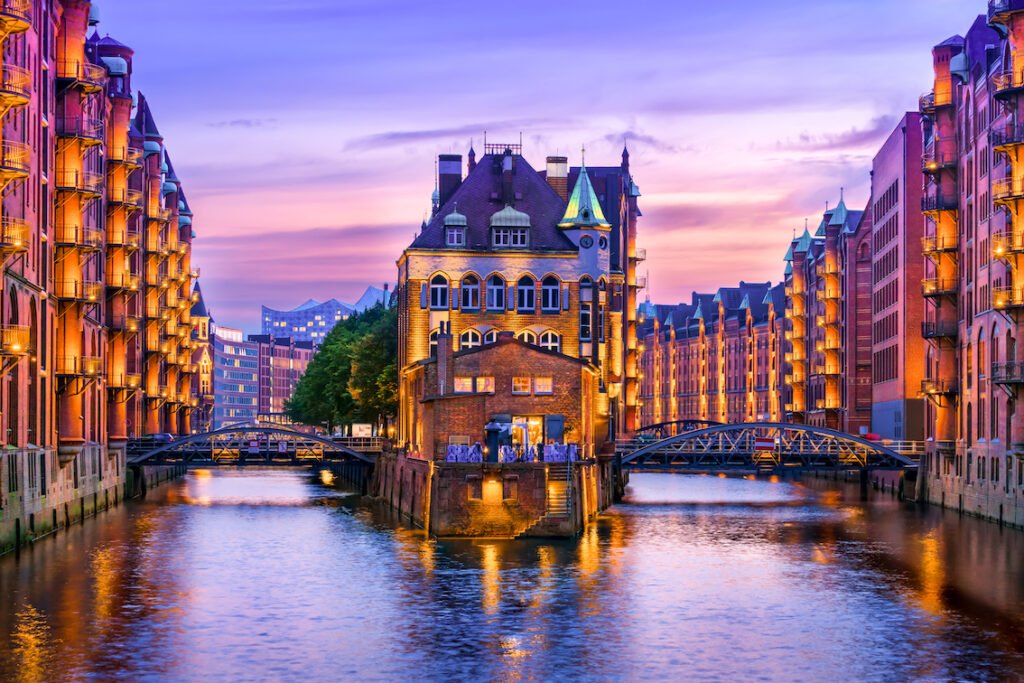
The Speicherstadt — the extraordinary red-brick warehouse district built between 1883 and 1927 on a series of islands in the Hamburg harbour — is the finest and most distinctive piece of urban industrial architecture in Germany and a UNESCO World Heritage Site. The combination of the Gothic Revival brick warehouses, the canals and bridges connecting the warehouse blocks, and the extraordinary scale of the complex creates an urban landscape of genuinely unique character.
The adjacent HafenCity — a new urban district built on reclaimed dockland — is the most ambitious urban development project in contemporary Germany and the home of the Elbphilharmonie: the extraordinary concert hall designed by Herzog and de Meuron that has become the most significant new building in Germany of the 21st century. The Elbphilharmonie’s public plaza — accessible by elevator from the street level and providing panoramic views of the harbour and the city — is one of the finest urban viewpoints in Germany and is entirely free to visit.
The Alster Lakes
The inner and outer Alster lakes — artificial lakes in the heart of Hamburg created by damming the Alster River in the medieval period — provide the most distinctive and most beautiful urban landscape in the city. The view of the Hamburg skyline across the inner Alster — the church towers, the town hall, and the Elbphilharmonie all visible across the water — is one of the finest urban panoramas in northern Germany.
Practical Information for Hamburg
Getting there: ICE train from Berlin Hauptbahnhof to Hamburg Hauptbahnhof — approximately 1 hour 45 minutes. Trains run frequently — book in advance for the best prices.
Entry fees: Speicherstadt and HafenCity are free to walk. Elbphilharmonie plaza free. Individual museums approximately EUR 10 to 15 per adult.
How much time: A full day — take the first morning train from Berlin (approximately 6 AM) and the last evening train back (approximately 10 PM) for maximum Hamburg time.
Honest assessment: Hamburg is the most ambitious and most rewarding single-city day trip from Berlin — the combination of the Speicherstadt architecture, the Elbphilharmonie, and the harbour atmosphere provides a completely different urban experience from Berlin in a city of comparable energy and comparable quality. The nearly 2-hour train journey is the price of admission and is entirely worth paying.
Practical Guide: Making the Most of Berlin Day Trips
Transport Tips
The Deutschland-Ticket: The EUR 49 per month Deutschland-Ticket covers all regional and local transport throughout Germany — an extraordinary value for visitors planning multiple day trips from Berlin. The ticket covers all S-Bahn, U-Bahn, regional express, and local train services but does not cover ICE or IC intercity express services. For day trips to Potsdam, the Spreewald, Brandenburg an der Havel, and Wittenberg the Deutschland-Ticket provides complete transport coverage. For Dresden, Saxon Switzerland, Görlitz, and Hamburg the faster ICE services require separate tickets.
Advance booking for ICE trains: ICE tickets booked 4 to 6 weeks in advance are significantly cheaper than same-day prices — the Berlin to Dresden ICE can cost as little as EUR 15 to 20 per person with advance booking versus EUR 40 to 60 at full price.
Berlin ABC Zone ticket: The Berlin ABC zone ticket covers all transport within Berlin and to Potsdam — the most useful standard ticket for the most popular day trip.
Timing and Seasons
Spring (April to May): The finest season for Potsdam and the Brandenburg landscape — the Sanssouci vineyards begin to green, the Spreewald channels are navigable from April, and the Saxon Switzerland forest is at its most beautiful in the spring light.
Summer (June to August): Ideal for the Baltic coast and Rügen — the chalk cliffs are at their most dramatic in summer light and the Binz beach is at its most enjoyable. Dresden and Saxon Switzerland are busy in summer — early starts are strongly recommended.
Autumn (September to October): The finest season for the chalk cliff beech forest on Rügen, the medieval towns of Quedlinburg and Görlitz, and the Saxon Switzerland forest. The autumn colour in the Stubnitz beech forest above the Rügen chalk cliffs is one of the great autumn landscapes of Germany.
Winter (November to March): Potsdam, Dresden, and Wittenberg all provide excellent winter day trip experiences — the Sanssouci park in winter snow, the Dresden Christmas market (one of the finest in Germany), and the atmospheric winter streets of Görlitz are all genuinely rewarding cold-weather experiences.
Final Thoughts: Berlin as a Base for Regional Exploration
The greatest mistake most visitors to Berlin make is to treat the city as a self-contained destination — arriving, exploring the city for several days, and departing without ever venturing into the extraordinary regional landscape that surrounds it.
Berlin’s day trip network is one of the finest in Europe — a collection of destinations as diverse as the chalk cliffs of the Baltic coast, the Baroque splendour of Dresden, the medieval completeness of Quedlinburg, the royal gardens of Potsdam, and the geological drama of Saxon Switzerland, all within 3 hours of the city centre by fast train.
The visitor who combines three or four days of Berlin city exploration with two or three carefully chosen day trips returns home with a richer and more complete understanding of eastern Germany than any amount of time spent within the city boundaries alone can provide. Potsdam for the royal landscape. Dresden for the Baroque culture and the weight of history. Saxon Switzerland for the natural drama. The Spreewald for the complete escape from urban intensity.
And perhaps most importantly — the perspective that each day trip provides on Berlin itself. Returning to the city after a day in the quiet medieval streets of Quedlinburg or the forest silence of the Spreewald or the Baltic light of Rügen, the particular energy and particular intensity of Berlin becomes visible again with a clarity that extended residence within it tends to obscure.
Leave the city. Come back to it. Understand both better for the contrast.