
Germany is far more than Berlin, Munich, and Neuschwanstein Castle. Beyond the tourist brochures lies a country dotted with fairy-tale villages, medieval walled towns, dramatic coastlines, and UNESCO-listed old towns that most travellers walk right past. If you’re ready to go off the beaten path, these 10 hidden gems in Germany will absolutely steal your heart.
1 Görlitz: Germany’s Most Beautiful Town You’ve Never Visited
Location: Saxony, on the Polish border
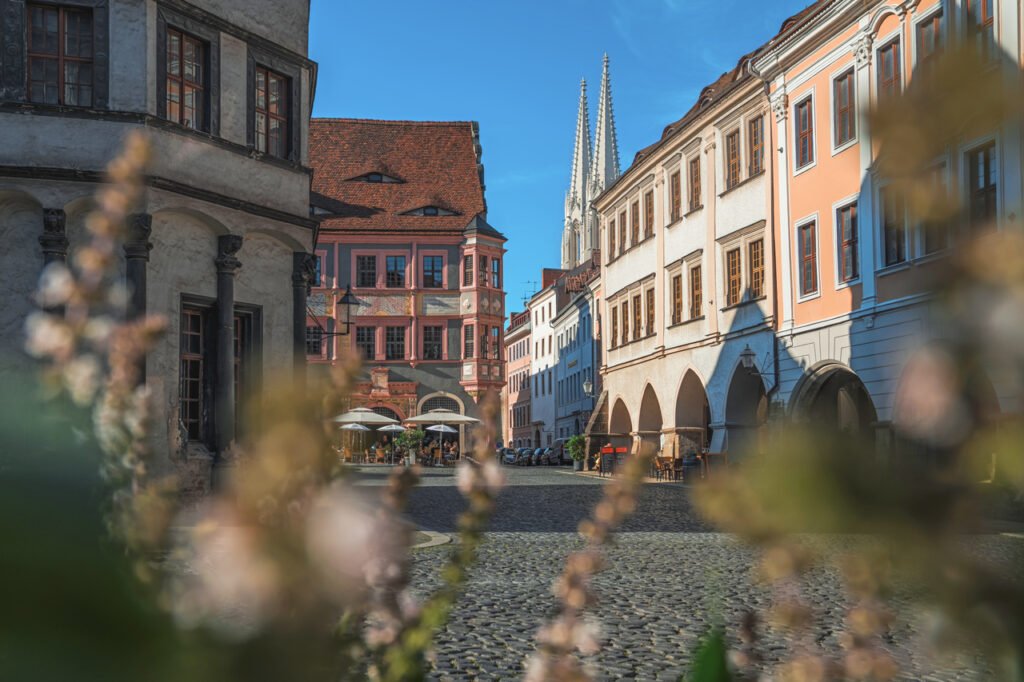
Nicknamed “Görliwood” by filmmakers, Görlitz is arguably Germany’s best-preserved historic town — and one of its biggest secrets. Sitting right on the border with Poland along the Neisse River, this extraordinary town was barely touched by World War II bombing, leaving behind an astonishing blend of Gothic, Renaissance, Baroque, and Art Nouveau architecture all in one compact old town.
Hollywood has noticed: films like The Grand Budapest Hotel and Inglourious Basterds were filmed here because the streets look like a perfectly preserved European movie set from the 1930s.
What to See & Do:
- Obermarkt (Upper Market Square) — One of Germany’s most beautiful market squares
- Walk the Peterstrasse, lined with Renaissance townhouses
- Visit the Nikolaikirche (St. Nicholas Church) with its stunning interior
- Cross the Old Town Bridge into Zgorzelec, Poland — a unique border-town experience
- Discover the Secret Library hidden inside a Baroque palace
- Explore the weekly market days that feel frozen in time
Best Time to Visit: May–September for warm weather; December for a magical, crowd-free Christmas market.
Getting There: Train from Dresden (~1.5 hours) or Berlin (~2.5 hours).
2 Quedlinburg: A Medieval Masterpiece in the Harz Mountains
Location: Saxony-Anhalt, Harz region
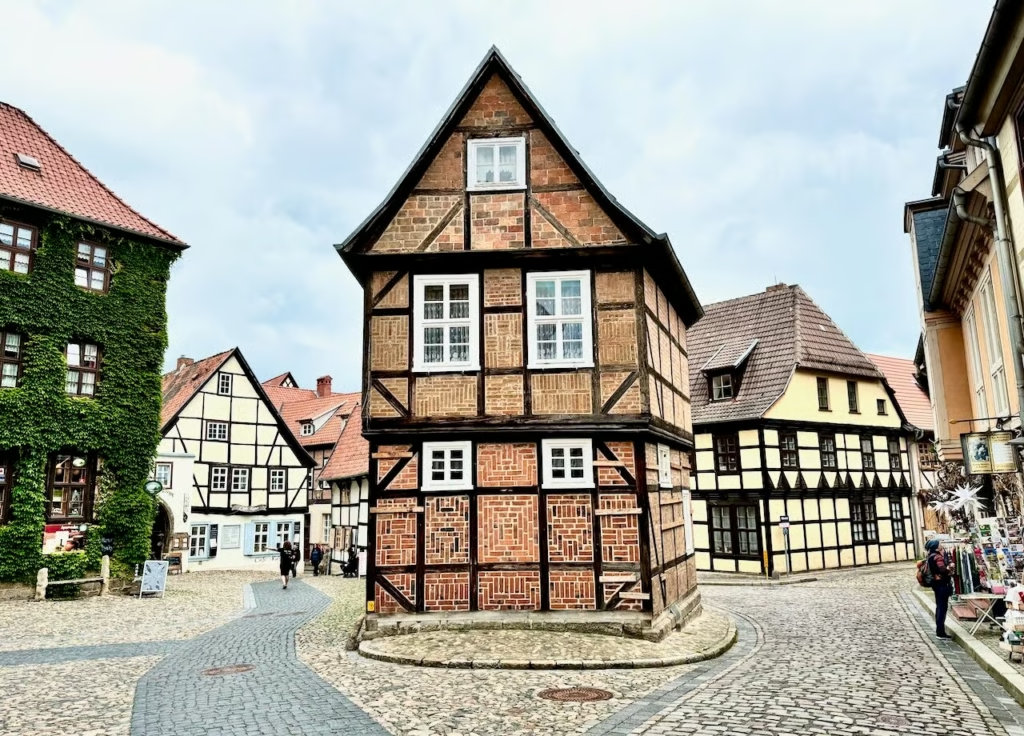
If you’ve never heard of Quedlinburg, you’re not alone — but you absolutely should have. This UNESCO World Heritage Site in the Harz Mountains is home to over 1,300 unique half-timbered houses spread across a perfectly preserved medieval town centre. Every alleyway is a postcard. Every corner reveals another colourful Fachwerk (timber-framed) house dating back hundreds of years.
The town sits dramatically beneath a hilltop castle and Romanesque abbey — the Church of St. Servatius — where German kings were once crowned. It is one of the most important Romanesque buildings in the whole of Europe.
What to See & Do:
- Quedlinburg Castle & Abbey (Stiftskirche) — The spiritual heart of medieval Germany
- Wander the Altstadt (Old Town) — 1,300+ half-timbered houses
- Browse the Market Square (Marktplatz) with its 16th-century Town Hall
- Visit the Münzenberg Hill for sweeping panoramic views
- Taste the local Quedlinburg sausage — the town even has its own unique recipe!
Best Time to Visit: Spring or autumn for fewer crowds; December for the enchanting Christmas market.
Getting There: Train from Magdeburg or Halle; about 1.5–2 hours from Berlin by car.
3 Monschau: The Fairytale Valley Town of the Eifel
Location: North Rhine-Westphalia, Eifel Nature Park
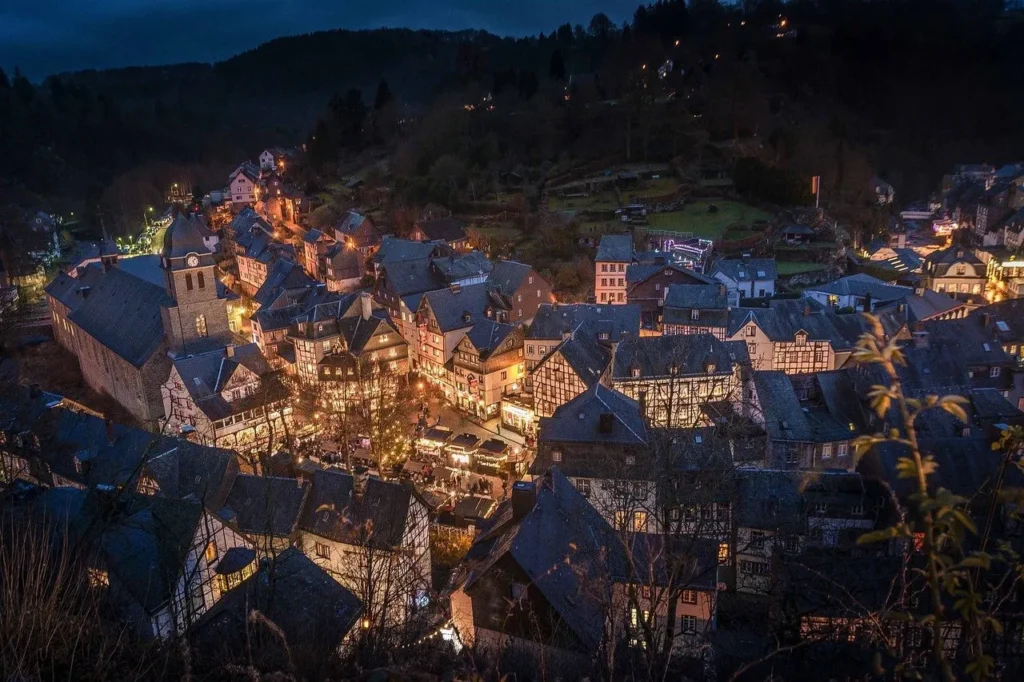
Tucked deep inside a narrow valley surrounded by lush green hills, Monschau is the kind of place that makes you stop mid-step and ask, “Is this real?” This medieval town dates back to the 13th century and boasts a collection of half-timbered houses so perfectly preserved it looks like it was frozen in time.
The town became wealthy in the 18th century through a thriving textile industry, and the elegant merchant houses still line the cobblestone streets of its Altstadt today. Monschau is located within the Eifel Nature Park, making it a perfect base for hiking, cycling, and nature exploration.
What to See & Do:
- Burg Monschau (Monschau Castle) — Perched dramatically above the valley
- Rotes Haus (Red House) — An 18th-century textile merchant’s house and museum
- Walk the cobblestone lanes and river walks along the Rur River
- Sample local Aachener Printen gingerbread at artisan bakeries
- Hike the High Fens National Park just a short drive away
Best Time to Visit: December — Monschau’s Christmas Market is one of Germany’s most romantic and intimate.
Getting There: 45-minute drive from Aachen; easily combined with a day trip from Belgium or the Netherlands.
4 Beilstein: The Sleeping Beauty of the Moselle
Location: Rhineland-Palatinate, Moselle Valley
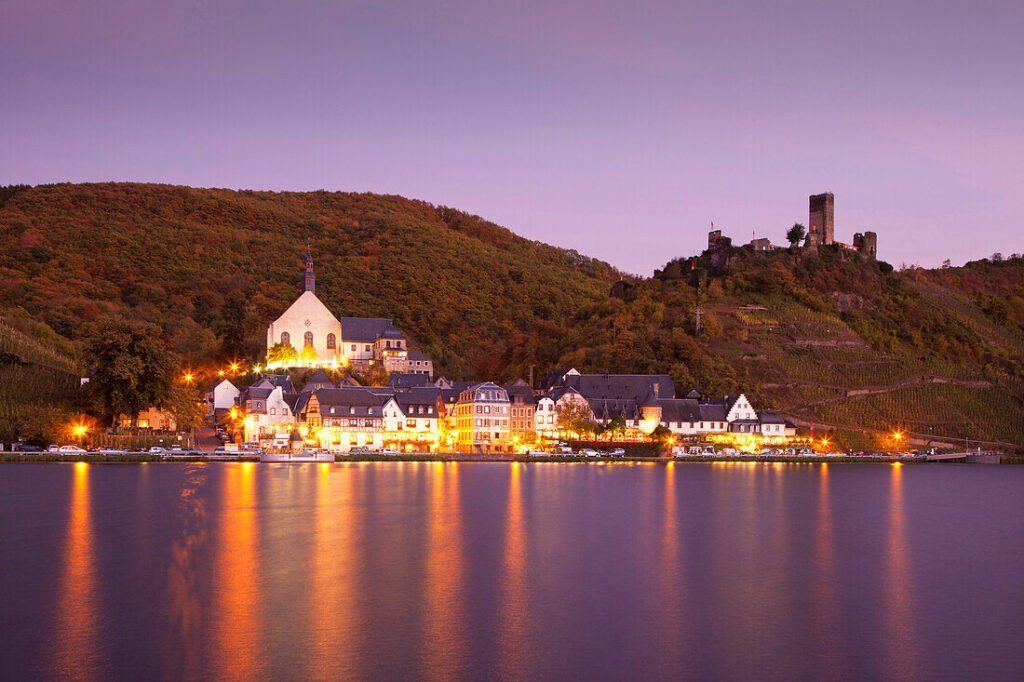
Beilstein is so small, so untouched, and so impossibly beautiful that it earned the nickname “The Sleeping Beauty of the Moselle.” This tiny village — with a permanent population of just around 150 people — sits on the banks of the Moselle River and looks exactly as it did 500 years ago.
Stone alleyways wind between ancient half-timbered houses draped in flowers. A ruined castle (Burg Metternich) watches over the valley from the hill above. Family-run wine taverns serve local Riesling straight from the barrel. There are no chain hotels, no chain restaurants — just pure, authentic German village life.
What to See & Do:
- Wine tasting at family-run Weinstuben (wine taverns) along the riverbank
- Climb to Burg Metternich ruins for panoramic Moselle Valley views
- Visit the Carmelite Monastery Church with its striking Black Madonna statue
- Take a Moselle River boat cruise to nearby Cochem
- Capture the iconic view of the village from across the river at sunset
Best Time to Visit: May–October for wine season; harvest festivals in September–October are magical.
Getting There: 15-minute drive from Cochem, 40 minutes from Burg Eltz, about 1.5 hours from Frankfurt.
5 Wernigerode: The Colourful Jewel of the Harz Mountains
Location: Saxony-Anhalt, Harz Mountains
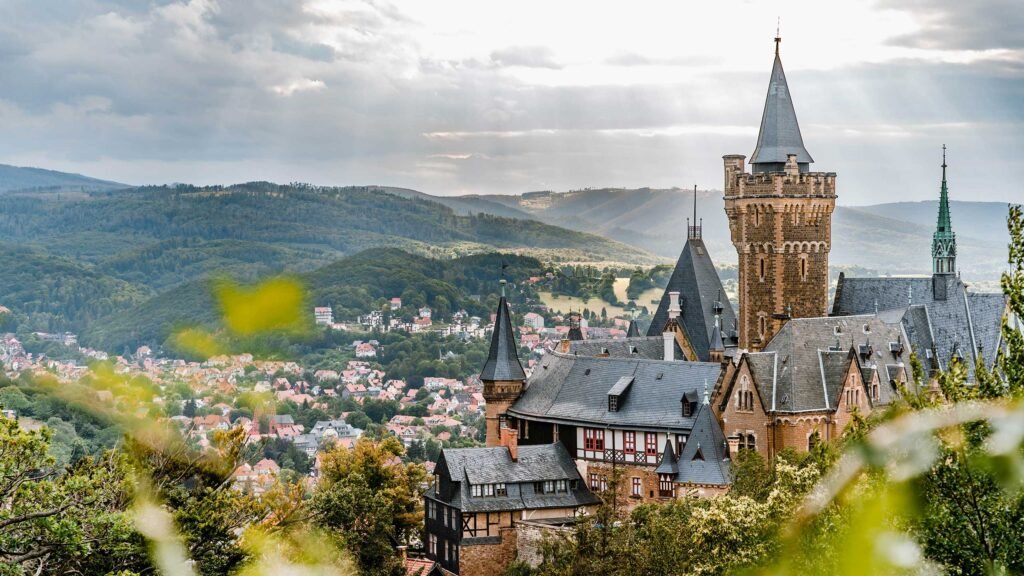
Wernigerode is one of those towns that genuinely makes you gasp when you round the corner and see it for the first time. Known as the “Colourful Town in the Harz,” it is packed with vibrantly painted half-timbered houses, a picture-perfect fairy-tale castle, and the iconic Harz Narrow-Gauge Steam Railway that puffs its way up to the Brocken — the highest peak in the Harz Mountains.
This is a town that offers both medieval charm AND dramatic mountain adventure in one visit.
What to See & Do:
- Wernigerode Castle — A stunning hillside castle with sweeping valley views; one of Germany’s most photographed
- Ride the Harzer Schmalspurbahn (HSB) steam train up to the Brocken (1,141m)
- Explore Wildpark Wernigerode — a wildlife park in the forest
- Wander through the colourful Altstadt to find Germany’s narrowest half-timbered house
- Visit in winter for a snow-capped fairy-tale atmosphere
Best Time to Visit: Year-round; winter with snow is spectacular; summer for hiking.
Getting There: Train from Magdeburg or Halle; reachable from Berlin by car in about 2.5 hours.
6 Bamberg: Bavaria’s Undiscovered UNESCO Treasure
Location: Upper Franconia, Bavaria
Bamberg is arguably one of the most underrated cities in all of Germany. While millions flock to nearby Nuremberg and Munich, Bamberg quietly sits with its entire old town declared a UNESCO World Heritage Site — one of only a handful of complete historic city centres in Germany to earn this status.
Built on seven hills like Rome, Bamberg’s old town is a masterpiece of medieval and Baroque architecture, threaded through by arms of the Regnitz River. It is also famous for its Rauchbier (smoked beer) — a uniquely Bamberg style of dark, malty beer with a distinctive smoky flavour you can only truly experience here.
What to See & Do:
- Bamberg Cathedral — Imperial cathedral with the famous “Bamberg Rider” equestrian statue
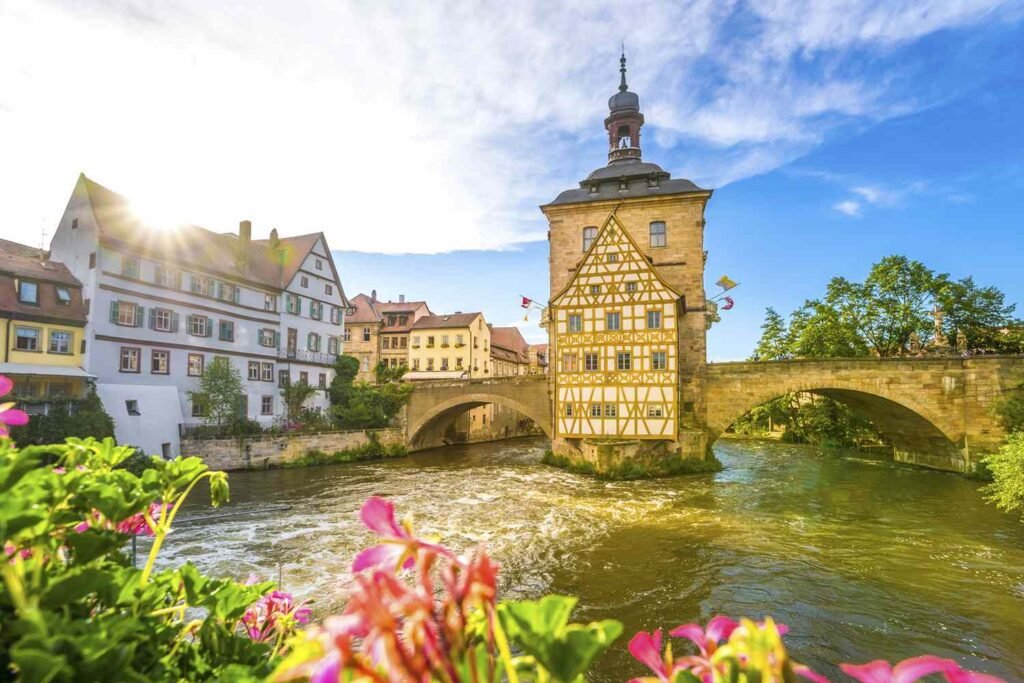
- Altes Rathaus (Old Town Hall) — Spectacularly built on an island in the middle of the river
- Visit Schlenkerla Brewery for authentic Rauchbier in a medieval tavern
- Explore the Klein-Venedig (Little Venice) fishermen’s houses along the riverbank
- Stroll through Altenburg Castle gardens for panoramic city views
Best Time to Visit: Spring–autumn; the Sandkerwa folk festival in August is a highlight.
Getting There: Train from Nuremberg (40 minutes) or Munich (2 hours).
7 Dinkelsbühl: The Perfectly Preserved Medieval Walled Town
Location: Middle Franconia, Bavaria (Romantic Road)
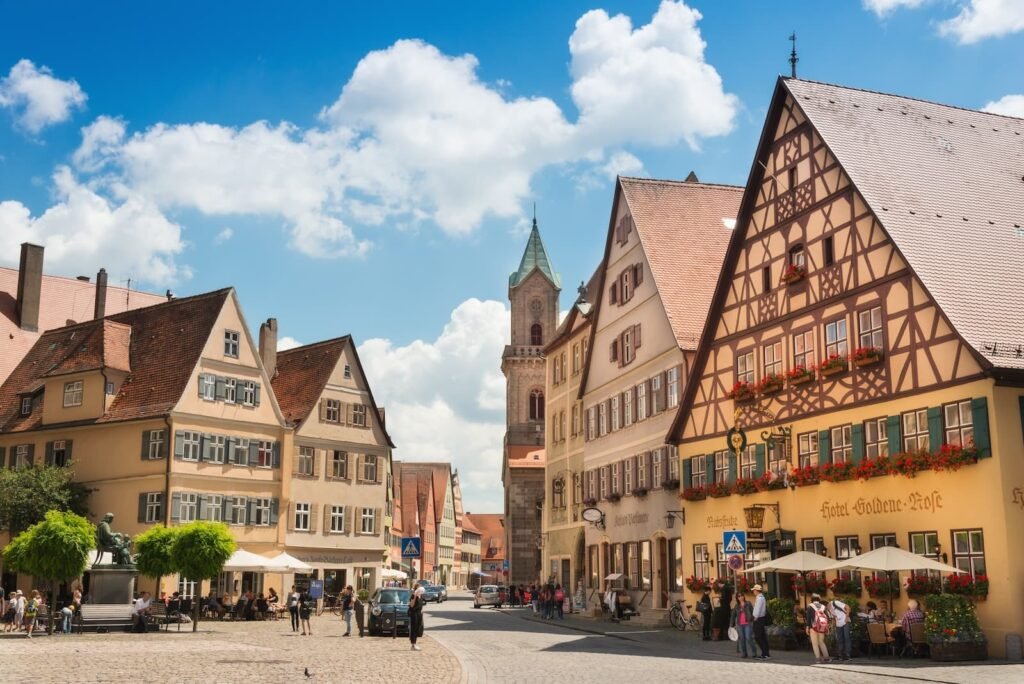
While Rothenburg ob der Tauber gets all the fame on the Romantic Road, Dinkelsbühl is arguably even more authentic — and has far fewer crowds. This perfectly preserved medieval walled town is completely encircled by its original 15th-century town walls, towers, and moat, creating a breathtaking living museum of medieval Germany.
Unlike Rothenburg, Dinkelsbühl was famously spared destruction during the Thirty Years’ War, according to legend, when the children of the town pleaded with the Swedish general for mercy — a story re-enacted every July at the famous Kinderzeche festival.
What to See & Do:
- Walk the entire medieval town walls — towers and battlements included
- Visit St. George’s Minster — a late Gothic masterpiece from the 15th century
- Attend the Kinderzeche Festival (July) — one of Germany’s oldest folk festivals
- Wander the Altstadt — every building dates from before the 18th century
- Stay in the unique Gatekeeper’s Lodge — a once-in-a-lifetime accommodation
Best Time to Visit: July for the Kinderzeche festival; December for the intimate Christmas market.
Getting There: Car recommended along the B25 Romantic Road; about 1 hour from Nuremberg.
8 Rügen Island: Germany’s Baltic Sea Secret
Location: Mecklenburg-Vorpommern, Baltic Sea
Germany has an island? Yes — and it’s absolutely stunning. Rügen is Germany’s largest island, sitting in the Baltic Sea off the north coast, and it remains one of the country’s best-kept travel secrets. The island is famous for its dramatic white chalk cliffs, wide sandy beaches, dense beech forests, and elegant Victorian seaside resort towns that feel like stepping into the Belle Époque.
Rügen was a favourite summer retreat for German Romantic painters, aristocracy, and even Hitler (who built an enormous — and still unfinished — resort complex at Prora). Today, it is home to Jasmund National Park, a UNESCO World Heritage Site.
What to See & Do:
- Königsstuhl (King’s Chair) — The iconic white chalk cliffs rising 118m above the Baltic Sea
- Hike through Jasmund National Park — UNESCO-listed ancient beech forests meeting dramatic cliffs
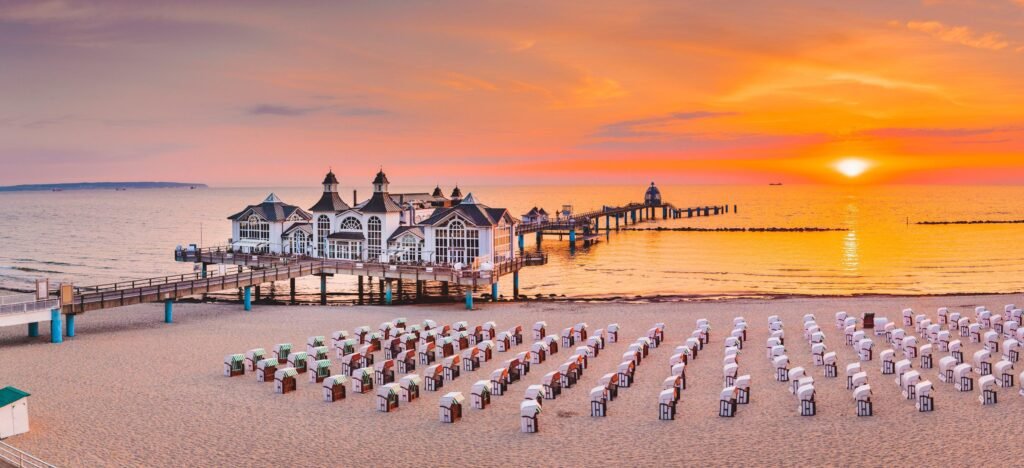
- Relax on the beaches of Binz — elegant white resort town with pier and seafront promenade
- Explore the eerie unfinished Prora Nazi resort — now a fascinating historical site
- Cycle through the island’s forests and coastal paths
Best Time to Visit: June–August for beach weather; September–October for autumn colours and fewer crowds.
Getting There: Train from Berlin to Stralsund (~3 hours), then bridge to Rügen.
9 Erfurt: The Magnificent Medieval Capital Nobody Talks About
Location: Thuringia, Central Germany
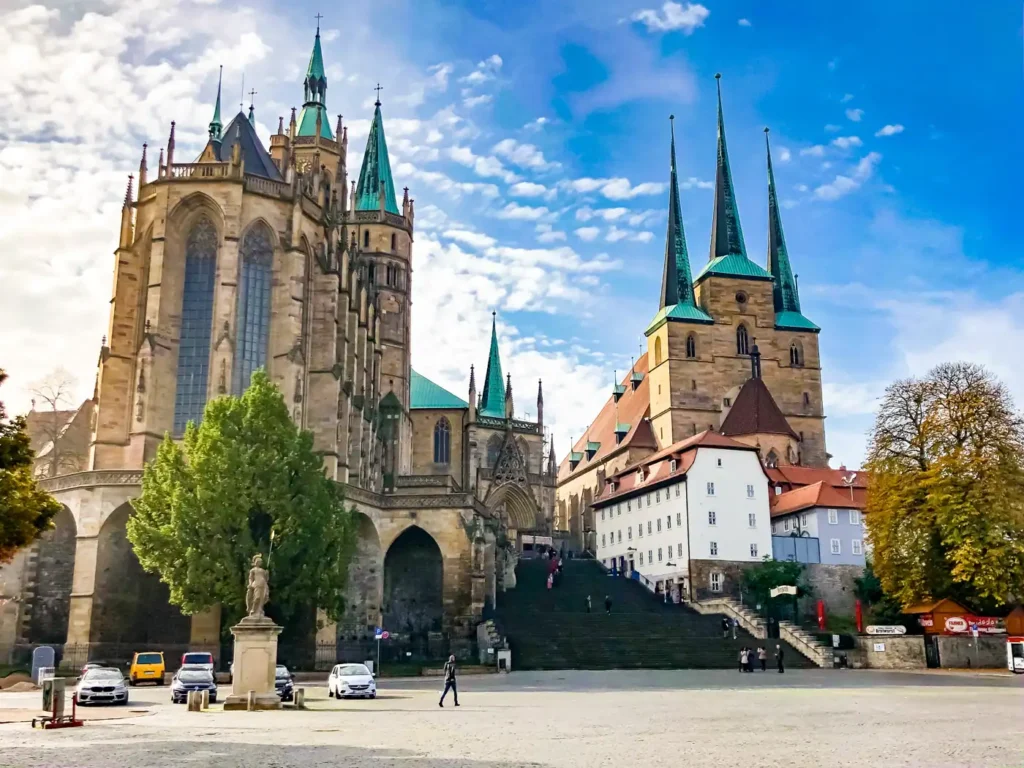
Erfurt is one of Germany’s most baffling oversights in tourism. As the capital of Thuringia, this city of 220,000 has an immaculately preserved medieval old town that rivals any in Europe — and was miraculously spared bombing in World War II. What makes Erfurt extraordinary is its sheer architectural diversity: a towering hilltop cathedral, a medieval merchants’ bridge lined with houses, sprawling Gothic churches, and colourful Baroque squares.
This is also the city where Martin Luther studied and became a monk before sparking the Protestant Reformation — giving it enormous historical significance.
What to See & Do:
- Erfurt Cathedral & St. Severi Church — Two magnificent Gothic structures side by side on the cathedral steps
- Krämerbrücke (Merchants’ Bridge) — A medieval bridge completely lined with half-timbered shops; one of the most unique in Europe
- Old Synagogue of Erfurt — One of the oldest and best-preserved medieval synagogues in Europe (UNESCO listed)
- Wander through Fischmarkt Square and the colourful lanes of the Altstadt
- Visit Luthers Augustinian Monastery — where the Reformation began
Best Time to Visit: Spring–autumn; the Erfurt Cathedral Steps Festival (Domstufen-Festspiele) in August is spectacular. Getting There: Train from Berlin (2 hours) or Munich (2.5 hours). Extremely well connected.
10 Meersburg: The Medieval Village Above Lake Constance
Location: Baden-Württemberg, Lake Constance (Bodensee)
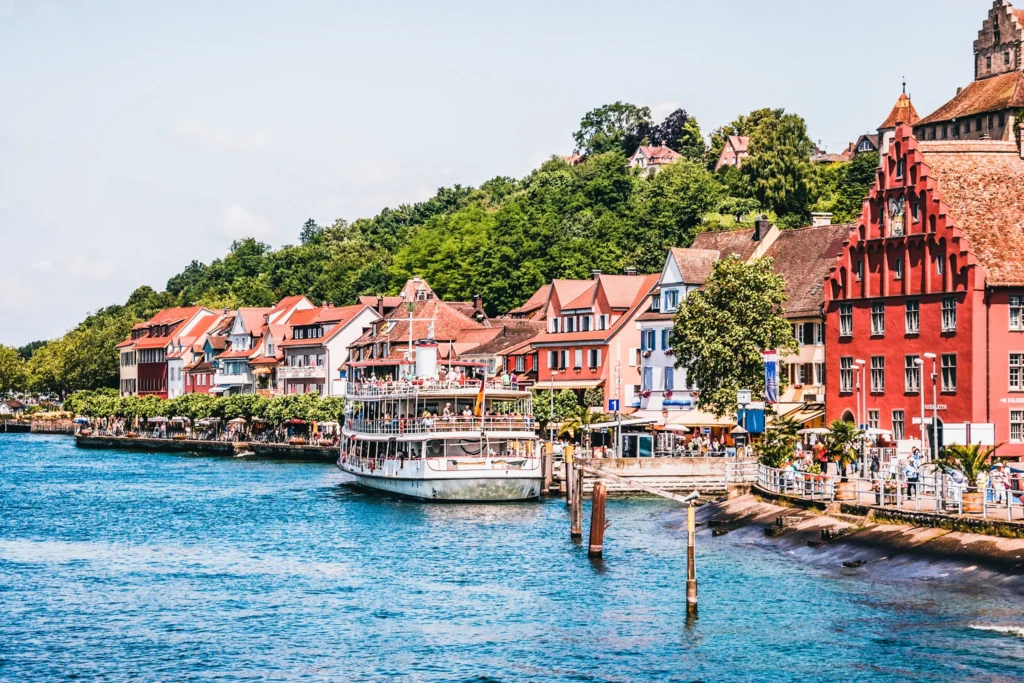
Last but absolutely not least — Meersburg is a breathtaking medieval village perched dramatically on a terraced bluff above the shimmering waters of Lake Constance (Bodensee), with views stretching to Switzerland and Austria on clear days. The village is home to the oldest inhabited castle in Germany, with origins tracing back to the 7th century, and its cobblestone lanes wind through a perfectly preserved Altstadt that has barely changed in centuries.
What makes Meersburg unique is its combination of medieval architecture, stunning lake views, vineyard-draped hillsides, and the gentle Mediterranean-like warmth that the lake provides to the region.
What to See & Do:
- Altes Schloss (Old Castle) — The oldest inhabited castle in Germany; tours available
- Walk the vineyard trails above the town with Lake Constance views
- Take a ferry across Lake Constance to Konstanz or to the Swiss side
- Swim and relax at Meersburg Therme — a lakeside spa with sauna world
- Taste local Spätburgunder and Müller-Thurgau wines at lakeside Weinstuben
Best Time to Visit: May–September for lakeside life; December for the intimate Christmas market.
Getting There: Train to Friedrichshafen or Überlingen, then bus or ferry to Meersburg (~1.5 hrs from Stuttgart).
Final Thoughts
Germany rewards the curious traveller who dares to look beyond the famous cities. Whether you’re standing on the white chalk cliffs of Rügen, sipping Rauchbier in a medieval Bamberg tavern, or getting lost in the cobblestone alleyways of Monschau, one truth becomes clear — Germany’s greatest treasures are often its most overlooked ones.
Pack your bags, leave the tourist trail behind, and let these hidden gems surprise you. 🇩🇪✨