
To eat well in France is to understand France. The country’s relationship with food goes far deeper than mere sustenance — it is woven into the fabric of French identity, history, philosophy, and daily life in a way that has no equivalent anywhere else on earth. France gave the world the restaurant as a concept, the brigade kitchen system, the Michelin Guide, the notion of terroir, and the idea that cooking could be an art form worthy of the same reverence as painting, music, or literature.
UNESCO recognised this when it inscribed the gastronomic meal of the French on its list of Intangible Cultural Heritage of Humanity in 2010 — acknowledging that the French art of dining together, from the careful selection of dishes and wines to the beauty of the table setting and the pleasure of conversation, represents a cultural achievement of global significance.
France currently holds more Michelin stars than any other country in the world. Its chefs — from the legendary Paul Bocuse, who transformed French cooking in the 20th century, to the contemporary generation of innovators redefining what French cuisine can be — have shaped the way the entire world cooks and eats. Its markets, its producers, its wine regions, and its centuries of culinary tradition provide a foundation of extraordinary raw material that chefs across the country transform into experiences of profound and lasting beauty.
This guide presents ten of the finest restaurant experiences in France — chosen not only for their culinary excellence but for the completeness of the experience they offer, the stories they tell, and the particular, unrepeatable pleasure of eating in them.
The Top 10 Restaurants in France
1. Guy Savoy — Paris
Location: Monnaie de Paris, 11 Quai de Conti, 75006 Paris
Michelin Stars: ⭐⭐⭐
Cuisine: Contemporary French Haute Cuisine
Reservation: Essential — book 2–3 months in advance
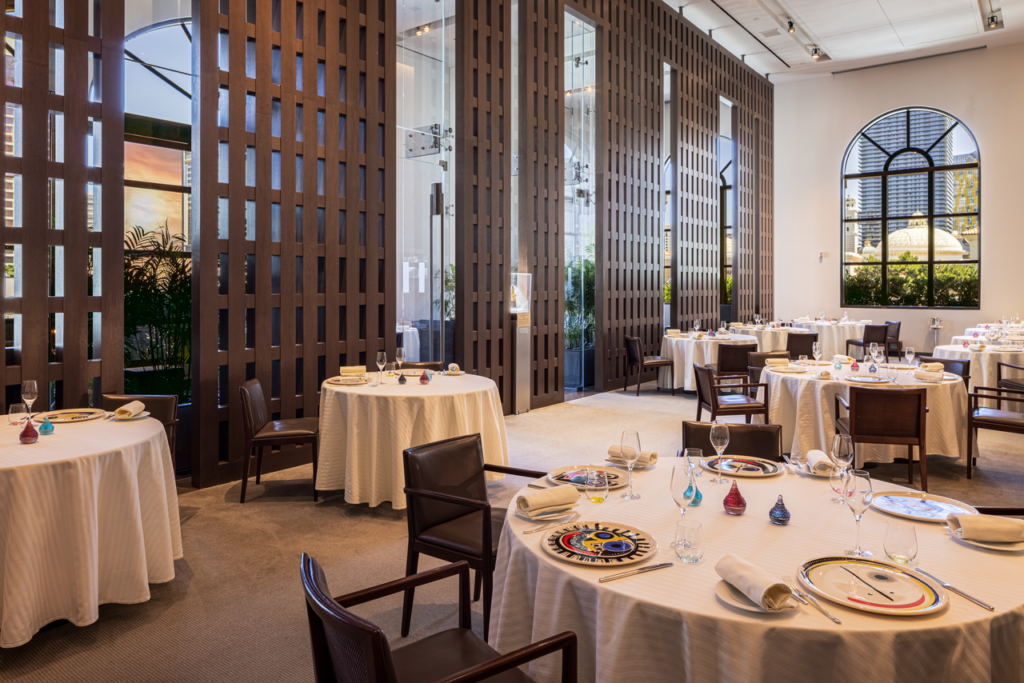
If there is a single restaurant that embodies the pinnacle of Parisian fine dining in the 21st century, it is Guy Savoy. Housed in the magnificent 18th-century Monnaie de Paris — the former French mint, one of the most beautiful historic buildings on the banks of the Seine — the restaurant combines a setting of extraordinary grandeur with cooking of supreme technical mastery and genuine creative originality.
Guy Savoy himself — one of the last great chefs of his generation to remain personally involved in the daily running of his flagship restaurant — trained under the legendary Paul Bocuse and has spent four decades refining a cuisine that is simultaneously deeply rooted in French classical tradition and unmistakably modern in its sensibility. The result is food that feels both inevitable and surprising — flavour combinations and textures that seem entirely natural once you taste them but that you could never have imagined beforehand.
Signature Dishes: The Artichoke Soup with Black Truffle Brioche and Mushroom and Truffle Tart is perhaps the most famous dish in the restaurant — a preparation of extraordinary elegance in which the earthiness of the artichoke and the volcanic intensity of the black truffle create a flavour combination of almost architectural precision. The Colours of Caviar — a multi-textured exploration of sturgeon caviar in different preparations — showcases Savoy’s ability to build a dish of genuine complexity from a single exceptional ingredient. Sea bass grilled with spices, soft potato cake and sauce “soufflée” demonstrates the classical technical mastery that underpins everything the kitchen produces.
The Experience: Dinner at Guy Savoy is a long, unhurried, and deeply pleasurable affair — typically lasting 3–4 hours for the full tasting menu, which runs to approximately €370 per person before wine. The sommelier team manages one of the finest wine cellars in Paris, with particular strength in Burgundy, Bordeaux, and the Rhône Valley. The service is formal without being cold — attentive, knowledgeable, and genuinely warm in a way that makes a long tasting menu feel celebratory rather than exhausting.
The setting deserves special mention — the dining rooms overlook the Seine and the Pont Neuf through tall windows, and eating in this room as the evening light fades over Paris is an experience that transcends the purely culinary.
2. Paul Bocuse — Lyon (L’Auberge du Pont de Collonges)
Location: 40 Rue de la Plage, 69660 Collonges-au-Mont-d’Or, Lyon
Michelin Stars: ⭐⭐⭐
Cuisine: Classic French Haute Cuisine
eservation: Essential — book 1–2 months in advance
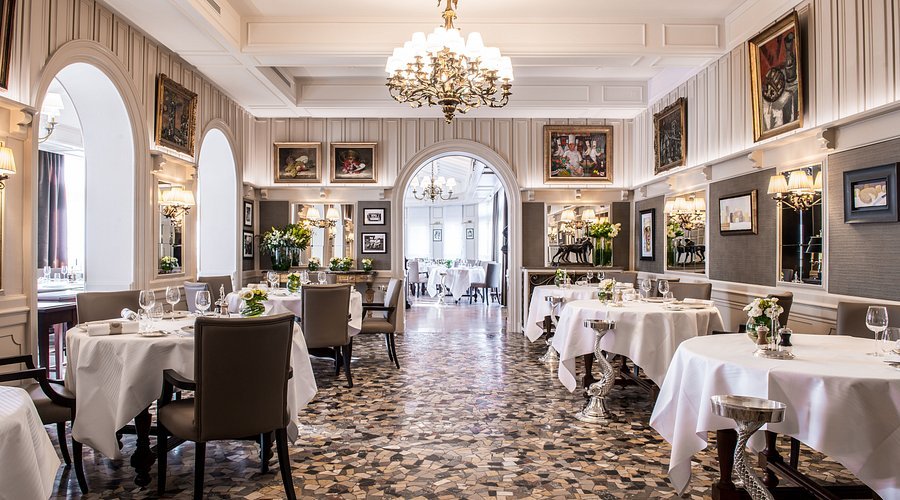
No list of France’s greatest restaurants can begin anywhere other than with Paul Bocuse — the chef who, more than any other individual in the 20th century, shaped the course of French and indeed global gastronomy. L’Auberge du Pont de Collonges, located in a magnificently decorated pink and yellow building on the banks of the Saône just north of Lyon, has held three Michelin stars continuously since 1965 — longer than any other restaurant in the world — a record of sustained excellence that is simply without parallel in the history of fine dining.
Paul Bocuse passed away in 2018 at the age of 91, but the restaurant he built continues under the stewardship of his former collaborators, maintaining the traditions, the dishes, and the philosophy that Bocuse established over six decades of cooking. Coming here is an act of culinary pilgrimage — a connection with the history of French gastronomy and the most celebrated chef of the modern era.
Signature Dishes: The Black Truffle Soup VGE — created by Bocuse in 1975 for a dinner at the Élysée Palace in honour of his being awarded the Légion d’Honneur by President Valéry Giscard d’Estaing — is the most famous soup in French culinary history. A rich consommé of black truffle, foie gras, and vegetables sealed under a dome of golden puff pastry and baked to order — it arrives at the table as a perfect golden hemisphere that must be broken open with a spoon, releasing a cloud of truffle-perfumed steam. The Bresse chicken cooked in a pig’s bladder (poulet de Bresse en vessie) — an extraordinary preparation in which the prized Bresse chicken is stuffed with foie gras and black truffles, sealed inside a pig’s bladder, and slow-cooked in a rich broth — is the most theatrically presented dish in French cuisine and one of the most delicious.
The Experience: Eating at Paul Bocuse is an experience of entering French culinary history. The dining rooms are magnificently decorated — stained glass, murals, elaborate table settings — in a style of unapologetic grandeur that reflects Bocuse’s personality and his belief that great cooking deserves a great stage. The menu has changed little since Bocuse’s heyday — and that is precisely the point. This is not a restaurant of constant reinvention. It is a monument to a specific, magnificent moment in French cooking — and that is its enduring greatness.
3. Mirazur — Menton
Location: 30 Avenue Aristide Briand, 06500 Menton
Michelin Stars: ⭐⭐⭐
World’s 50 Best: Ranked No. 1 in the World (2019)
Cuisine: Contemporary Mediterranean-French
Reservation: Essential — book 3–4 months in advance
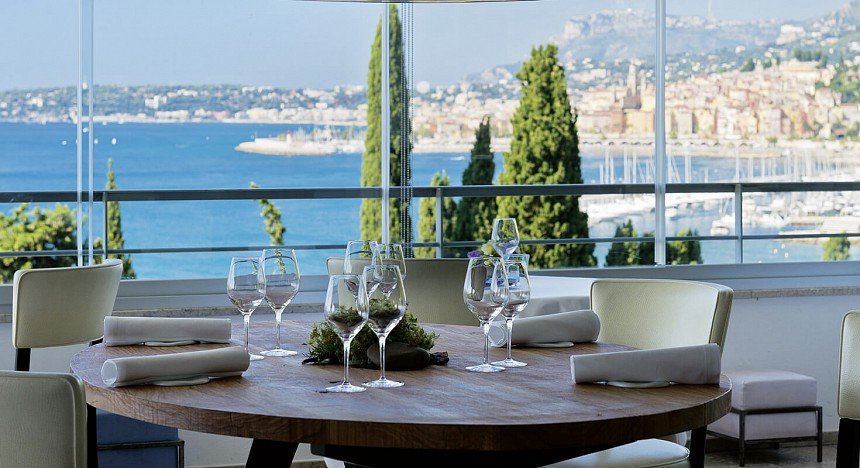
Mirazur occupies a position unlike any other restaurant in France — perched on a hillside above Menton on the French Riviera, overlooking the Mediterranean Sea and the Italian border, it is simultaneously a French restaurant, a Mediterranean restaurant, and a personal expression of Argentine-born chef Mauro Colagreco’s vision of a cuisine rooted in place, season, and the produce of the surrounding landscape.
When Mirazur was named the world’s best restaurant by the World’s 50 Best Restaurants in 2019, it confirmed what guests had known for years — that Colagreco’s cooking represented something genuinely new and genuinely extraordinary in the French fine dining landscape. The restaurant’s kitchen garden, the sea views from its terraces, and the extraordinary quality of the Mediterranean and Alpine produce that Colagreco sources form the foundation of a cuisine of breathtaking beauty and flavour.
The Garden Philosophy: Mirazur’s menus are organised around the biodynamic calendar — on flower days, menus feature dishes built around edible flowers and the produce of the restaurant’s extensive kitchen gardens; on root days, root vegetables and tubers take centre stage; on fruit days, the ripest and most extraordinary seasonal fruits define the menu. This cyclical, nature-driven approach to menu planning creates a restaurant experience that is genuinely different every time you visit — tied intimately to the rhythms of the Riviera’s extraordinary natural landscape.
Signature Dishes: The garden egg with caviar — a perfectly formed sphere of egg mousse resting in the shell, topped with a jewel of Kristal caviar — is one of the most visually perfect dishes in contemporary French cuisine. Beetroot cooked in beeswax, blood orange sorbet with olive oil and sea salt, and a stunning preparation of locally caught Mediterranean fish with coastal herbs and the first olive oil of the season are among the dishes that most eloquently express Mirazur’s particular and extraordinary vision.
The Setting: The views from Mirazur’s terraces — across the Menton bay to the Italian coastline on one side and up to the Maritime Alps on the other — are simply among the finest from any restaurant in the world. Eating a long lunch here on a clear summer day, with the Mediterranean shimmering below and the scent of citrus and rosemary drifting up from the garden terraces, is an experience of almost unbearable beauty.
4. Le Bernardin Style — Taillevent — Paris
Location: 15 Rue Lamennais, 75008 Paris
Michelin Stars: ⭐⭐
Cuisine: Classic French Haute Cuisine
Reservation: Essential — book 4–6 weeks in advance
Taillevent is one of the most historically significant restaurants in Paris — founded in 1946 and named after Guillaume Tirel, the 14th-century cook to the French royal court who wrote one of the earliest known cookbooks in the French language. For decades it held three Michelin stars and was considered the definitive address for classical French haute cuisine in the capital — a reputation built on absolute consistency, impeccable service, and cooking of the highest technical standard.
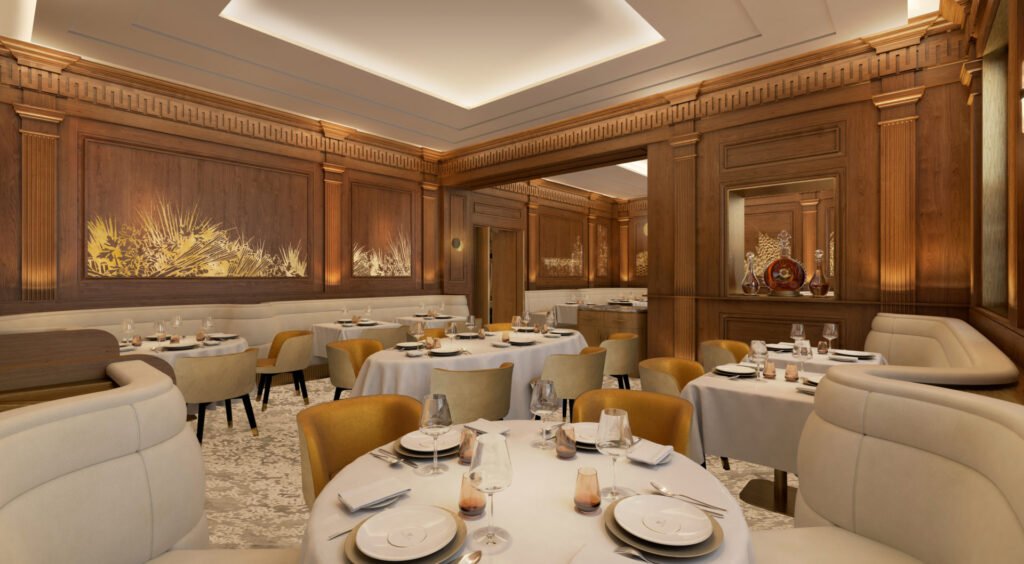
Today, under chef David Bizet, Taillevent continues to represent the very best of classical French fine dining — elegant, assured, and deeply satisfying in a way that more fashionable restaurants occasionally sacrifice for novelty. The dining room — panelled in warm wood with magnificent paintings and tables spaced with the generosity that has become a luxury in central Paris — is one of the most beautiful and comfortable formal dining environments in France.
Signature Dishes: Langoustine royale with caviar and champagne sauce represents French classical cooking at its most assured and elegant. Pigeon from Bresse with foie gras and black truffle demonstrates the kitchen’s mastery of the great French luxury ingredients. The soufflé — prepared to order and executed with absolute perfection — is among the finest versions of this demanding preparation in Paris.
The Wine Cellar: Taillevent’s wine cellar is arguably the finest in Paris — a collection of extraordinary depth and breadth built over eight decades of passionate acquisition. The sommelier team navigates it with expertise and genuine enthusiasm, making wine pairing at Taillevent one of the great pleasures of the Paris dining experience.
5. Le Chateaubriand — Paris
Location: 129 Avenue Parmentier, 75011 Paris
Michelin Stars: ⭐
Cuisine: Contemporary French Natural Wine Bistro
Reservation: Essential — book 2–3 months in advance
Le Chateaubriand represents something entirely different from the grand temples of haute cuisine — a small, buzzing bistro in the 11th arrondissement that has been one of the most influential restaurants in Europe for over a decade, pioneering a style of contemporary French cooking that is informal, creative, ingredient-driven, and utterly compelling.
Chef Iñaki Aizpitarte — Basque-born and Paris-trained — serves a single no-choice tasting menu that changes daily based on what he finds most interesting and inspiring at the market. The cooking is technically sophisticated but presented without ceremony — dishes arrive in a rapid, exhilarating succession that feels more like a conversation than a formal dinner, with each course surprising, provoking, and occasionally challenging in ways that three-star restaurants rarely dare.
The Natural Wine List: Le Chateaubriand was one of the first restaurants in Paris to build its list entirely around natural wines — wines made with minimal intervention, organic farming, and no added sulphites — and its cellar remains one of the finest and most exciting natural wine lists in France. Drinking from this list alongside Aizpitarte’s cooking creates a combination of flavour, texture, and intellectual stimulation that is unique in the Paris dining landscape.
Why It Matters: Le Chateaubriand has influenced a generation of Paris chefs and helped define the contemporary bistronomy movement — the democratisation of serious French cooking in informal, neighbourhood settings. Eating here feels genuinely exciting — the sense that something important is happening in the kitchen every evening is palpable and entirely justified.
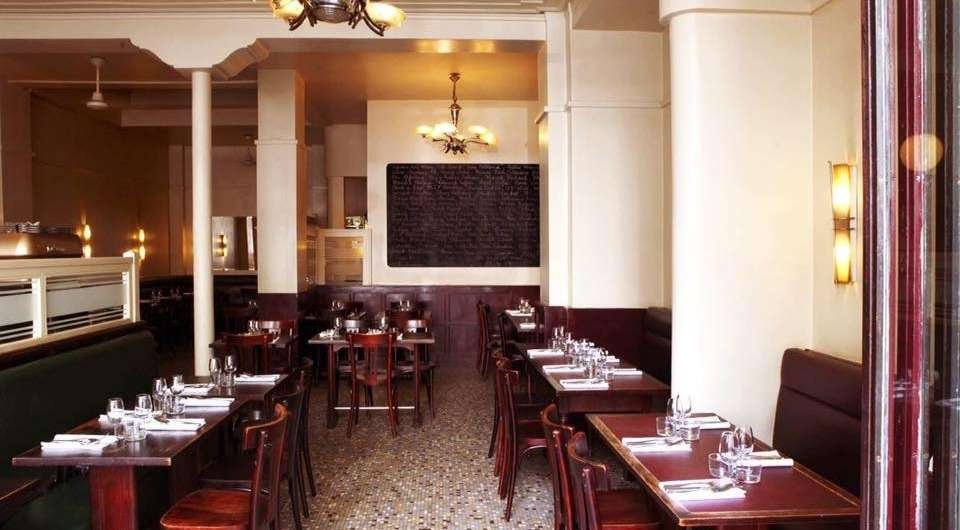
6. Maison Lameloise — Chagny, Burgundy
Location: 36 Place d’Armes, 71150 Chagny, Burgundy
Michelin Stars: ⭐⭐⭐
Cuisine: Contemporary Burgundian Haute Cuisine
Reservation: Essential — book 2–3 months in advance
To eat at Maison Lameloise is to experience the very soul of Burgundian cooking — a three-star restaurant of extraordinary quality located in the heart of the Côte Chalonnaise wine region, combining the finest produce of Burgundy’s farms, rivers, and forests with cooking of supreme technical mastery and a deep respect for the regional culinary traditions that have made this corner of France one of the most celebrated food destinations in the world.
The Lameloise family has cooked in Chagny since 1921 — four generations of the same family building a restaurant of international reputation in a small Burgundian market town. The current chef, Eric Pras, maintains this tradition with cooking that is simultaneously classical in its foundations and quietly innovative in its execution — dishes that feel deeply rooted in Burgundian terroir while expressing a contemporary sensibility that keeps them entirely relevant.
Signature Dishes: Burgundy snails with hazelnut butter, garlic, and parsley — the classic Escargots de Bourgogne elevated to three-star level through the quality of the snails, the precision of the butter, and the perfect balance of garlic and herbs. Charolais beef — the finest beef cattle breed in France, raised in the meadows of Burgundy — prepared with the simplicity that great ingredient quality demands and served with a sauce of extraordinary depth and complexity. The cheese trolley — featuring the finest Burgundian and French cheeses at perfect ripeness, accompanied by recommendations from a passionate fromager — is one of the great pleasures of the Lameloise experience.
The Wine Experience: Eating at Lameloise in the heart of Burgundy provides access to a wine list of extraordinary depth in the region’s greatest appellations — Chambolle-Musigny, Gevrey-Chambertin, Meursault, Puligny-Montrachet, and Corton-Charlemagne in vintages dating back decades. The opportunity to drink great Burgundy in Burgundy — with food that understands and honours those wines completely — is one of the most profound fine dining experiences France offers.
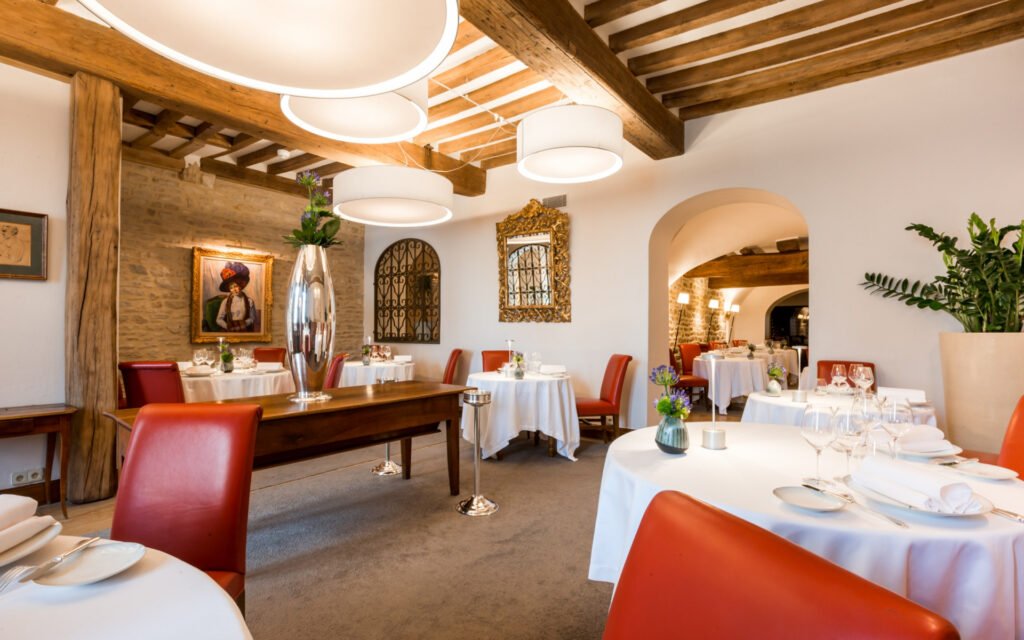
7. Pierre Gagnaire — Paris
Location: 6 Rue Balzac, 75008 Paris
Michelin Stars: ⭐⭐⭐
Cuisine: Contemporary Avant-Garde French
Reservation: Essential — book 2–3 months in advance
Pierre Gagnaire is the most intellectually adventurous chef in France — a restlessly creative mind who has spent four decades pushing the boundaries of what French cuisine can be, creating dishes of extraordinary complexity, originality, and technical ambition that have influenced chefs across the world. His restaurant on Rue Balzac in the 8th arrondissement is the laboratory and showcase for a cuisine that is unlike anything else in Paris.
Gagnaire’s cooking defies easy categorisation. A single dish might combine five or six separate preparations — each precisely made, each contributing a different flavour, texture, or temperature to a composition of almost musical complexity. Where most chefs seek simplicity and clarity, Gagnaire seeks accumulation and resonance — building flavour layers of extraordinary depth that reward attentive, thoughtful eating.
The Approach: Gagnaire has collaborated extensively with the molecular gastronomist Hervé This, and many of his dishes reflect a deep understanding of the chemistry of cooking — using techniques and transformations that create textures and flavour combinations impossible through conventional methods. But the science always serves the pleasure — Gagnaire’s cooking is never cold or cerebral. It is, at its best, thrilling, beautiful, and deeply satisfying in ways that more straightforward cooking rarely achieves.
The Experience: Dinner at Pierre Gagnaire is an adventure — a tasting menu of extraordinary length and variety that asks something of its guests in terms of attention and engagement while offering in return one of the most stimulating and memorable dining experiences in France. It is not the restaurant for those seeking the comfort of classical French cuisine. It is the restaurant for those who want to experience what one of the world’s most gifted and genuinely original culinary minds can do.
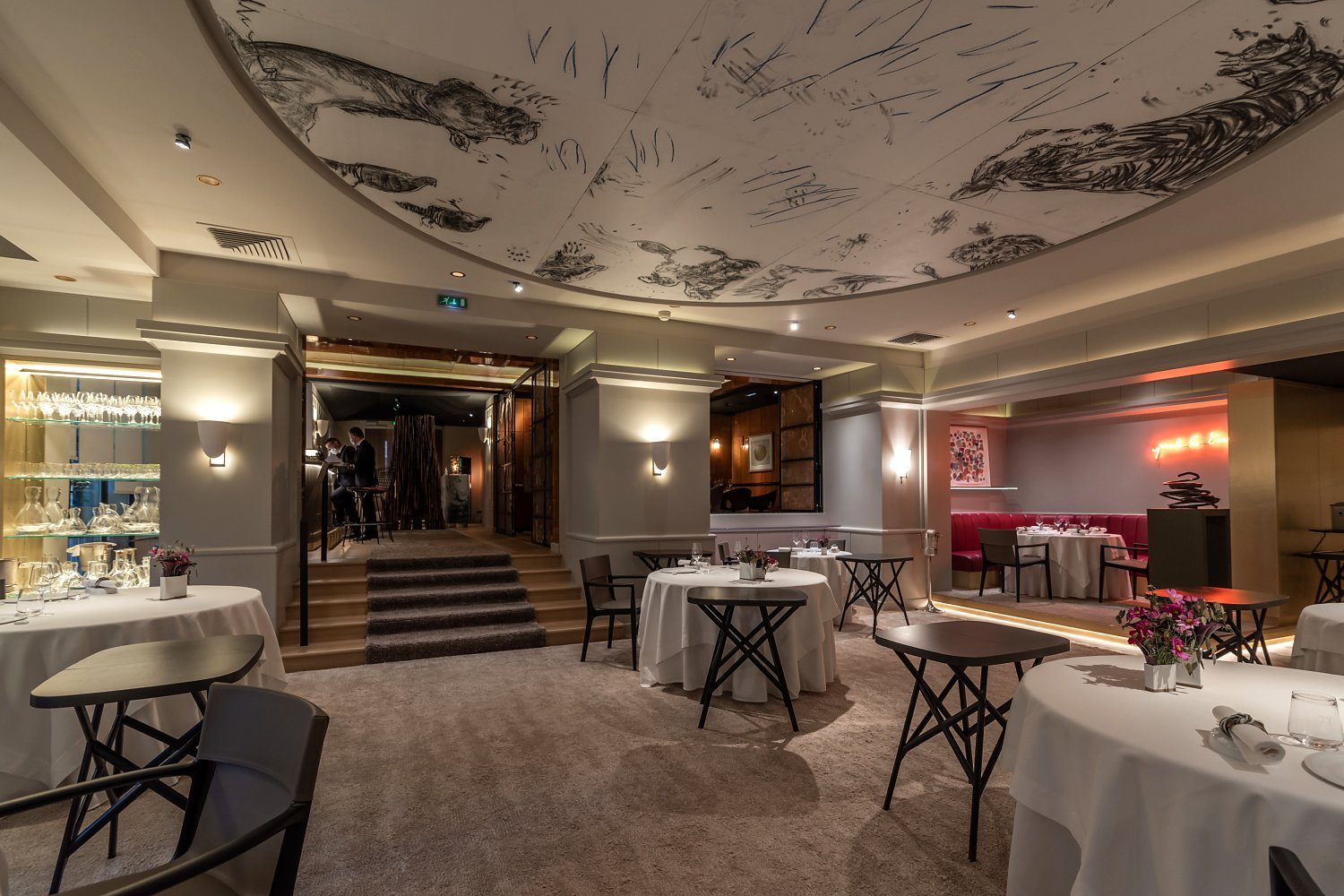
8. Septime — Paris
Location: 80 Rue de Charonne, 75011 Paris
Michelin Stars: ⭐
World’s 50 Best: Consistently ranked in the top 50
Cuisine: Contemporary French Market Cuisine
Reservation: Essential — one of the hardest reservations in Paris
Septime is the most talked-about and sought-after reservation in Paris — a small, beautifully designed restaurant in the 11th arrondissement where chef Bertrand Grébaut serves a short, precise tasting menu of contemporary French cooking that has made it one of the most influential restaurants in Europe.
The cooking at Septime is deceptively simple in appearance — clean, mineral, intensely seasonal, and built entirely around the finest produce Grébaut can source from small farms and artisan producers across France. A dish might be as visually understated as a single perfectly cooked vegetable resting in a pool of extraordinarily flavoured broth — but the quality of that vegetable and the precision of that broth will be unlike anything you have encountered before.
The Philosophy: Septime operates according to a philosophy of profound respect for produce and producer — working exclusively with sustainable, small-scale farms, fishing boats, and artisan food producers whose methods Grébaut trusts completely. The restaurant has its own market garden outside Paris, a natural wine bar next door (Septime La Cave), an oyster bar (Clamato), and a fish shop (La Poissonnerie) — a small ecosystem of food businesses built on the same values of quality, sustainability, and respect for natural flavour.
Why It’s Almost Impossible to Book: Septime releases its reservations online at a specific time each week — and they sell out in minutes. The most reliable strategy is to use the online reservation system at exactly the moment it opens, have multiple date options available, and be persistent. The effort is entirely justified — eating at Septime is one of the great Paris restaurant experiences of the current era.
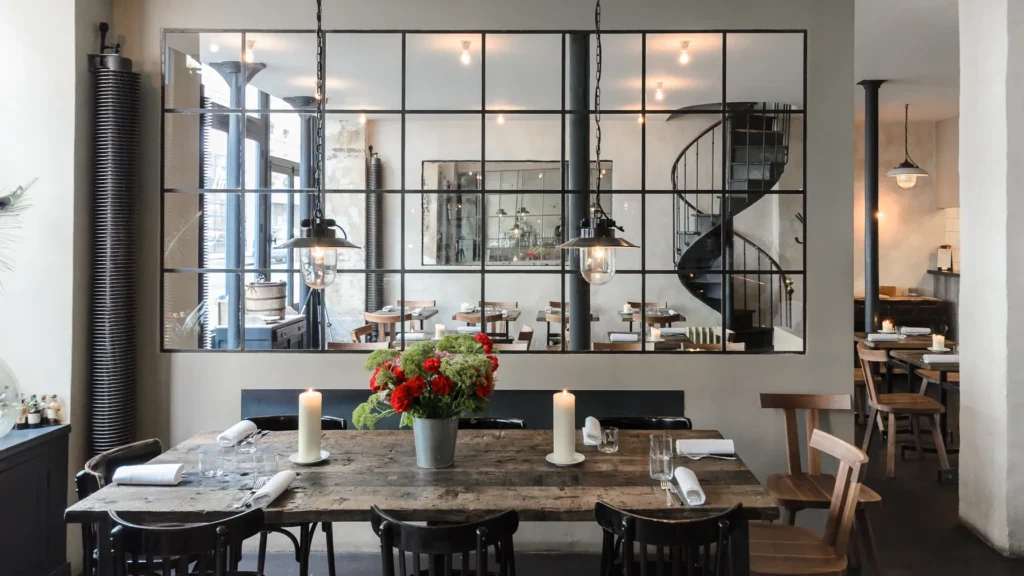
9. La Maison des Bois — Megève (Marc Veyrat)
Location: 330 Route du Leutaz, 74120 Megève
Michelin Stars: ⭐⭐⭐
Cuisine: Alpine French Molecular Cuisine
Reservation: Essential — book 3–4 months in advance
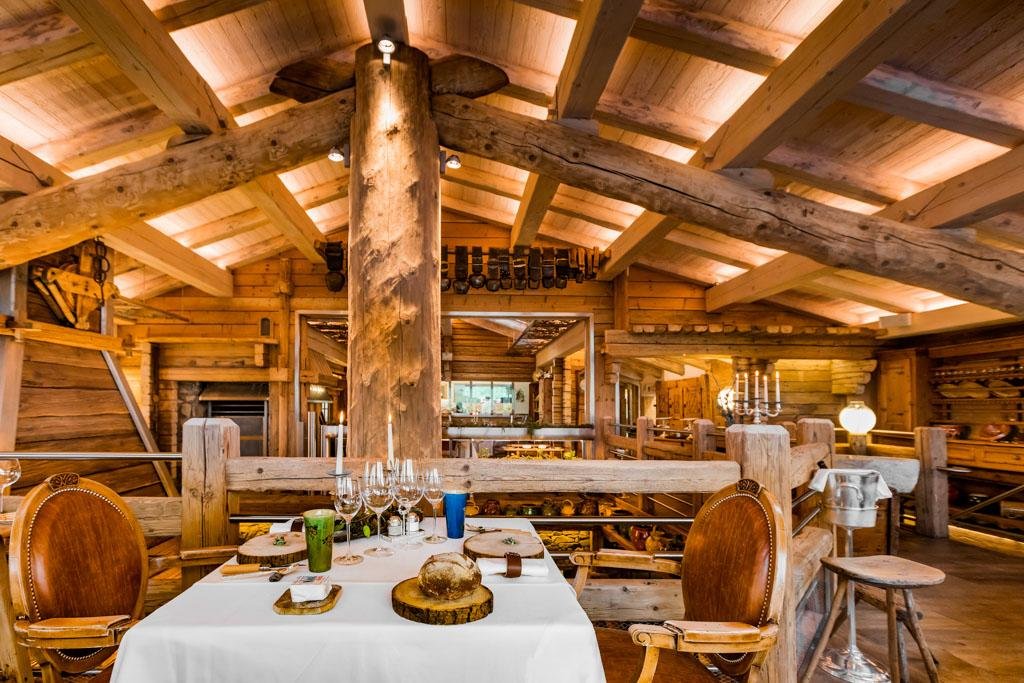
Marc Veyrat is the most eccentric, most passionate, and most deeply original chef in the French Alps — a self-taught cook from the Haute-Savoie who has built a cuisine of extraordinary singularity rooted entirely in the plants, fungi, flowers, and animals of the Alpine landscape surrounding his restaurant high above Megève.
Veyrat’s cooking is the most place-specific cuisine in France — every dish reflects the particular terroir of the French Alps with an intensity and specificity that no other restaurant in the country quite matches. He forages personally for many of his ingredients — mountain herbs, wild flowers, roots, and fungi collected from the slopes above the restaurant — and combines them with the finest Alpine dairy, game, and freshwater fish to create dishes that feel like edible translations of the mountain landscape.
The Alpine Experience: La Maison des Bois is a beautiful, chalet-style building set among the meadows and forests above Megève at 1,400 metres altitude. Arriving here — particularly in summer when the Alpine wildflowers are at their peak — and eating a meal built entirely from the surrounding landscape is one of the most complete and immersive restaurant experiences in France. In winter, the snow-covered landscape creates a different but equally extraordinary backdrop for one of Europe’s most unusual and compelling tasting menus.
Signature Approach: Veyrat uses molecular gastronomy techniques to transform his Alpine ingredients in ways that enhance rather than obscure their essential character — a meadow flower appears in multiple textures simultaneously, a freshwater crayfish is prepared to reveal flavour dimensions impossible through conventional cooking. The resulting dishes are simultaneously scientifically sophisticated and emotionally connected to the landscape in a way that makes the science feel entirely natural.
10. Le Cinq — Paris (Four Seasons George V)
Location: 31 Avenue George V, 75008 Paris
Michelin Stars: ⭐⭐⭐
Cuisine: Contemporary French Grand Hotel Cuisine
Reservation: Essential — book 4–6 weeks in advance
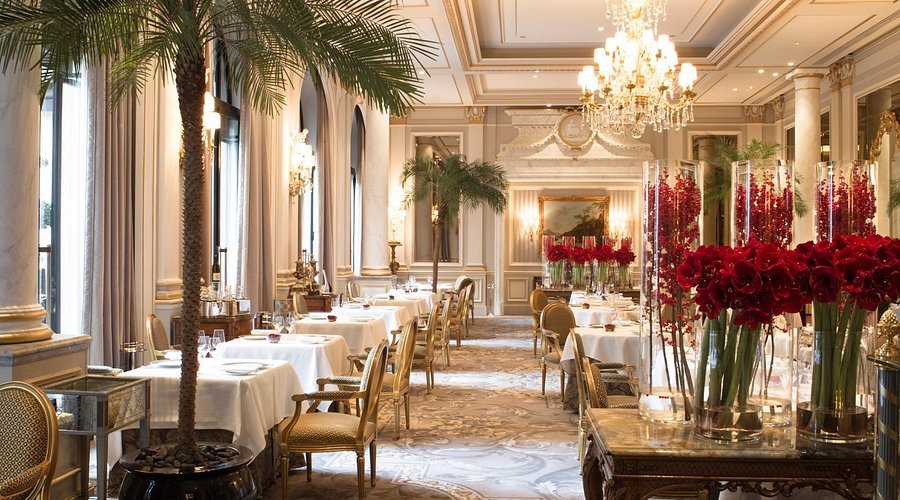
Le Cinq — the restaurant of the Four Seasons Hotel George V in Paris — represents French grand hotel dining at its most magnificent and most accomplished. Under chef Christian Le Squer, one of the most technically gifted chefs working in France today, Le Cinq has established itself as one of the genuinely great restaurants in Paris — combining the extraordinary setting of the George V’s most beautiful dining room with cooking of supreme classical mastery and quiet, confident modernity.
The dining room itself is one of the most beautiful in Paris — an 18th-century inspired space of extraordinary grandeur, with soaring ceilings, elaborate floral arrangements courtesy of the George V’s celebrated flower programme, and tables spaced with the magnificent generosity that only the finest Paris hotels can afford. Eating here for a long, celebratory lunch is one of the definitive Paris experiences.
Christian Le Squer’s Cooking: Le Squer trained in the classical French tradition and his cooking reflects that heritage in its technical precision, its respect for the great French luxury ingredients, and its insistence on flavour above all else. But within those classical foundations he brings a contemporary lightness and clarity — sauces of extraordinary flavour built without the weight and richness of the classical French tradition, preparations that reveal the essential character of each ingredient with extraordinary purity.
Signature Dishes: Line-caught sea bass with caviar, vermouth sauce and seaweed — a preparation of crystalline purity that showcases Le Squer’s ability to build a dish of great complexity and refinement from ingredients of impeccable quality. Brittany lobster with smoked butter and coastal herbs represents the finest expression of French luxury seafood cookery. The cheese trolley — one of the finest in Paris — and an extraordinary dessert programme make the full Le Cinq tasting experience one of the most complete and satisfying in the capital.
Honourable Mentions
France’s restaurant landscape is so extraordinarily rich that limiting this guide to ten restaurants requires leaving out many establishments of the highest quality. These additional restaurants deserve special recognition:
Arpège (Alain Passard, Paris) — Three Michelin stars. The world’s greatest vegetable-focused restaurant, where Alain Passard transforms the produce from his own farms in the Loire, Brittany, and Normandy into dishes of extraordinary beauty and flavour.
Auberge de l’Ill (Haeberlin Family, Illhaeusern, Alsace) — Three Michelin stars held since 1967. The greatest restaurant in Alsace — a family institution of extraordinary warmth, tradition, and culinary excellence on the banks of the River Ill.
Le Meurice (Alain Ducasse, Paris) — Two Michelin stars in the most beautiful dining room in Paris — the restored 18th-century salon of the Hôtel Meurice, overlooking the Tuileries Garden.
Troisgros (The Troisgros Family, Ouches) — Three Michelin stars held since 1968. The great family restaurant of Roanne, now relocated to the Ouches countryside, where Michel Troisgros continues his family’s extraordinary 60-year culinary legacy.
L’Astrance (Pascal Barbot, Paris) — A tiny, intimate restaurant in the 16th arrondissement where Pascal Barbot serves one of the most original and exciting tasting menus in Paris — no à la carte, no menu in advance, pure trust in the chef.
France’s Greatest Wine Regions to Pair with Your Dining
No restaurant experience in France is complete without the right wine — and the country’s extraordinary diversity of wine regions provides the perfect accompaniment to every style of French cooking.
Burgundy produces France’s greatest Pinot Noir and Chardonnay — wines of extraordinary complexity, elegance, and terroir expression that pair perfectly with the region’s rich, butter-based cuisine. The Côte de Nuits produces legendary red Burgundies from villages including Gevrey-Chambertin, Chambolle-Musigny, and Vosne-Romanée. The Côte de Beaune produces the world’s finest Chardonnay from Meursault, Puligny-Montrachet, and Chassagne-Montrachet.
Bordeaux is home to the world’s most famous red wine appellations — Pauillac (home of Château Pétrus, Mouton Rothschild, and Latour), Saint-Émilion, Pomerol, and Margaux — producing wines of extraordinary structure, longevity, and complexity that pair magnificently with the great red meat and game dishes of French cuisine.
Champagne — the world’s most celebrated sparkling wine — is the natural companion to the finest French seafood, foie gras, and the opening courses of any great tasting menu. The grandes maisons of Reims and Épernay — Krug, Dom Pérignon, Louis Roederer — produce the finest expressions of this extraordinary wine.
The Rhône Valley produces the greatest Syrah in the world at Hermitage and Côte-Rôtie, and the magnificent Grenache-based blends of Châteauneuf-du-Pape — wines of extraordinary power, warmth, and complexity that pair magnificently with the robust, herb-driven cooking of Provence and the Languedoc.
Alsace produces France’s most distinctive white wines — Riesling, Gewürztraminer, Pinot Gris, and Muscat of extraordinary aromatic complexity that pair perfectly with the rich, spice-inflected cooking of the Alsatian table.
Planning Your French Restaurant Journey
Reservations are Essential: For every restaurant on this list — and for most serious restaurants in France — reservations are not optional. The most sought-after tables (Septime, Mirazur, Guy Savoy) may require booking 2–4 months in advance, particularly for weekend dining. Use the restaurant’s own website or official reservation platforms (The Fork / LaFourchette is widely used in France) rather than third-party resellers who may charge premiums.
Dress Appropriately: France’s finest restaurants expect guests to dress with care. Business casual is the minimum acceptable standard at most starred establishments — jacket and tie are appreciated (and occasionally required) at the grandest restaurants including Taillevent and Le Cinq. When in doubt, overdress rather than underdress — the effort shows respect for the restaurant, the chef, and the other guests.
Embrace the Tasting Menu: The full tasting menu (menu dégustation) represents the most complete expression of any French restaurant’s cooking and philosophy. While à la carte dining is perfectly acceptable at most establishments, the tasting menu allows the kitchen to take you on a journey — building flavour, texture, and emotional resonance across the full arc of a long and carefully considered meal. Allow 3–5 hours for the finest tasting menus and resist the urge to rush.
Learn Basic French Food Vocabulary: Understanding the basic vocabulary of French menus — entrée (starter), plat (main course), fromage (cheese), dessert, amuse-bouche (one-bite pre-starter), mignardise (petit fours with coffee) — enhances the dining experience significantly and demonstrates a basic respect for French culinary culture that is always appreciated.
Consider Lunch: Many of France’s finest restaurants offer lunch menus at significantly lower prices than dinner — sometimes representing 40–50% savings for equivalent quality. A three-course lunch menu at a two or three-star restaurant for €80–120 represents genuinely outstanding value by international standards. Several restaurants on this list are significantly more accessible at lunch than at dinner.
Practical Tips for Dining in France
Service is included. In France, service charge (service compris) is legally required to be included in restaurant prices — you will see “SC” or “service compris” on the bill. Additional tipping is not obligatory but is appreciated — rounding up or leaving 5–10% for exceptional service is standard practice at fine dining restaurants.
Meal times matter. French restaurants typically serve lunch between 12:00 and 14:30 and dinner from 19:30 to 22:00. Arriving outside these times will frequently result in finding the kitchen closed — France takes its meal times seriously in a way that visitors from more flexible food cultures occasionally find surprising.
Water is free. Ask for une carafe d’eau (a jug of tap water) — French tap water is excellent and will be provided at no charge. Bottled mineral water will be offered as a paid alternative.
Cheese before dessert. In France, the cheese course comes before dessert — not after, as in the British tradition. The fromage trolley at the finest French restaurants represents one of the great pleasures of the dining experience — take the time to engage with your fromager, ask about the cheeses, and approach the course with the same curiosity and attention you bring to the food.
Conclusion
To eat at France’s greatest restaurants is to understand why French cuisine has occupied its position at the apex of world gastronomy for three centuries — and why, despite the rise of extraordinary food cultures across the globe, it continues to set the standard by which all other serious cooking is measured. From the classical grandeur of Paul Bocuse to the ingredient-driven minimalism of Septime, from the Alpine singularity of Marc Veyrat to the Mediterranean luminosity of Mirazur — France’s finest restaurants represent the full, extraordinary spectrum of what cooking can achieve when it is treated as both a craft and an art form.
Reserve a table. Dress with care. Arrive with an open heart and a genuine appetite. And eat — slowly, attentively, and with the full attention that France’s greatest chefs deserve.
Bon appétit.