
Every country has its romantic moments. France has built an entire civilisation around them.
The candlelit bistro where the waiter knows your name by the second evening. The vineyard at golden hour where the light turns the Bordeaux red and the silence is absolute. The Provençal lavender field in full July bloom, purple to every horizon. The Seine at midnight from a bridge you found by wandering without a map. The ryokan — no, the chambres d’hôtes — where the hostess leaves wildflowers on the pillow and the breakfast takes two hours because there is no reason to rush.
France is the world’s most visited country for reasons that go beyond the Eiffel Tower and the Louvre. It is a country of extraordinary regional diversity — each corner with its own cuisine, its own wine, its own landscape, its own particular beauty — held together by a national conviction that life should be lived well, slowly, and with full attention to pleasure.
For a honeymoon, this philosophy is not just appropriate. It is exactly right.
This guide covers the best honeymoon destinations in France — Paris, Provence, the French Riviera, Bordeaux, the Loire Valley, Normandy, the Dordogne, and the French Alps — with honest advice on where to stay, what to do, when to go, and how to make every day feel like the best day of your life together.
Paris: The City That Invented Romance
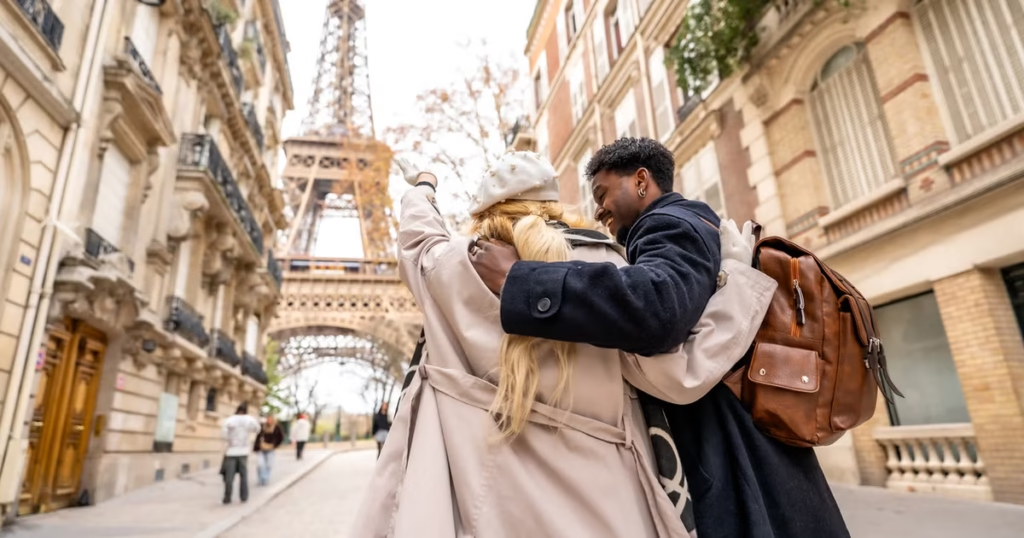
No honeymoon guide to France can begin anywhere else. Paris is the most romanticised city on earth and — unlike most things that are heavily romanticised — it genuinely lives up to its reputation. The difference is in the details: the quality of the light in the late afternoon, the sound of the city from a sixth-floor window at night, the smell of a boulangerie at 7 AM, the way the Seine reflects the streetlamps in a way no other river in any other city does.
The Neighbourhoods That Matter for Honeymooners
Le Marais is the most beautiful neighbourhood in Paris for walking — medieval streets, Renaissance mansions, the Place des Vosges (Paris’s oldest planned square and one of its most beautiful spaces), excellent restaurants, and a concentration of art galleries and independent boutiques. Stay here for the most authentic and most atmospheric Paris experience.
Saint-Germain-des-Prés is the intellectual heart of Paris — the neighbourhood of Hemingway, Simone de Beauvoir, and the great Left Bank cafes. Café de Flore and Les Deux Magots are tourist institutions but genuinely beautiful spaces. The neighbourhood has some of the finest boutique hotels in the city and is within walking distance of the Musée d’Orsay and the Luxembourg Gardens.
Île Saint-Louis is the smaller of Paris’s two Seine islands — a quiet, almost village-like enclave in the middle of the city with beautiful 17th-century townhouses, one extraordinary ice cream shop (Berthillon), and a romance that comes from being surrounded by the river on all sides.
Montmartre for the view — the Sacré-Cœur at dawn before the tourists arrive, the Place du Tertre in the early morning, and the winding streets of the Butte offer a Paris that feels more intimate and more village-like than the grand boulevards below.
What to Do in Paris on a Honeymoon
The Seine at night — a private boat cruise on the Seine after dark, with the illuminated bridges and the Eiffel Tower sparkling on the hour, is one of the great romantic experiences in European travel. Several operators offer intimate small-boat dinner cruises that are genuinely special.
The Eiffel Tower at midnight — not from below in the crowd, but from the Trocadéro across the river, with the tower reflected in the fountains. Arrive at 11:55 PM for the midnight light show — the tower sparkles with thousands of lights for five minutes on the hour every hour after dark.
Picnic in the Luxembourg Gardens — buy wine, cheese, bread, and fruit from the Marché d’Aligre or any good fromagerie and charcuterie, find a spot in the Luxembourg Gardens on a sunny afternoon, and do nothing but eat and talk for two hours. This is Paris at its most honest and most romantic.
The Musée d’Orsay — the Impressionist collection in a converted Belle Époque railway station is one of the great art experiences in the world. Go on a weekday morning when it opens, spend two hours with the Monets and Renoirs, and have lunch in the museum’s extraordinary restaurant under the original station clock.
A cooking class — numerous Paris cooking schools offer couples’ classes in French cuisine — pastry, classic sauces, bistro cooking. Learning to make a perfect beurre blanc or a proper crème brûlée together is both educational and genuinely fun.
The Palais Royal gardens — one of Paris’s best-kept secrets, a formal garden enclosed by 18th-century arcades, completely hidden from the street, quiet and beautiful and visited primarily by locals. The perfect place for a slow afternoon walk.
Where to Stay in Paris
Hôtel Le Pavillon de la Reine — Place des Vosges, Le Marais. A 17th-century mansion on Paris’s most beautiful square, with 56 rooms and suites of extraordinary elegance. One of the most romantic hotels in the city. From €350/night.
Hôtel Bel Ami — Saint-Germain-des-Prés. A beautifully designed boutique hotel in the heart of the Left Bank — contemporary design, exceptional service, and a location that puts you at the centre of the most intellectually and gastronomically rich neighbourhood in Paris. From €280/night.
Hôtel du Petit Moulin — Le Marais. A former 17th-century boulangerie converted into a 17-room boutique hotel designed by Christian Lacroix — every room different, every room extraordinary. One of the most characterful places to stay in Paris. From €250/night.
Splurge: Le Bristol Paris on Rue du Faubourg Saint-Honoré — one of the great palace hotels of Europe, with a rooftop pool, three-Michelin-star restaurant, and a level of service that makes you feel like the world has been arranged specifically for your comfort. From €900/night.
Where to Eat in Paris on a Honeymoon
Le Grand Véfour — one of Paris’s oldest and most beautiful restaurants, operating in the arcades of the Palais Royal since 1784. The interior — gilt mirrors, painted ceilings, velvet banquettes — is one of the most extraordinary dining rooms in the world. Two Michelin stars. Special occasion dining at its finest.
Septime — the most celebrated modern bistro in Paris, run by chef Bertrand Grébaut. The food is seasonal, inventive, and rooted in French tradition. Book 6–8 weeks in advance — this is one of the hardest tables in the city to secure.
Au Passage — a natural wine bar and small plates restaurant in the 11th arrondissement that represents the best of contemporary Parisian dining — informal, delicious, and the kind of place where the evening extends naturally because nobody wants it to end.
Ladurée on the Champs-Élysées — for afternoon tea and macarons, because some things are done perfectly in Paris and Ladurée’s macarons are one of them.
Provence: Lavender, Light, and the Art of Doing Nothing
Provence is the France that lives in the imagination of everyone who has not yet been — lavender fields, olive groves, hilltop villages, markets overflowing with colour, rosé wine drunk in the shade of a plane tree, and a quality of afternoon light that painters have been chasing for two centuries.
The reality lives up entirely to the imagination. And for a honeymoon, Provence offers something Paris cannot — space, slowness, and the extraordinary pleasure of having nowhere particular to be.
Where to Go in Provence
Les Baux-de-Provence is one of the most dramatically beautiful villages in France — perched on a rocky spur above the Alpilles mountains, with medieval ruins at the summit and the extraordinary Carrières de Lumières (an immersive art installation inside ancient limestone quarries) below. Stay in or near Les Baux for the most concentrated experience of Provençal beauty.
Gordes is frequently cited as the most beautiful village in Provence — a hillside settlement of golden stone that catches the late afternoon light in a way that makes photographers weep. The surrounding Luberon landscape — lavender fields, cherry orchards, truffle oak forests — is extraordinary.
Roussillon is the village built from ochre — the surrounding cliffs are naturally red, orange, and yellow, and the village buildings echo these colours in a way that makes the entire settlement look painted. Walking the ochre trail at sunset is one of the great colour experiences in France.
Arles — Van Gogh’s city — is the cultural capital of Provence, with Roman amphitheatre, excellent museums, the finest photography festival in France (Les Rencontres d’Arles in summer), and a food scene built around the extraordinary produce of the Camargue and the Rhône delta.
The Luberon is the most romantic region within Provence — a range of low mountains between Avignon and Manosque, dotted with villages of extraordinary beauty (Ménerbes, Lacoste, Bonnieux, Lourmarin) and surrounded by lavender fields, vineyards, and truffle forests.
The Lavender Season
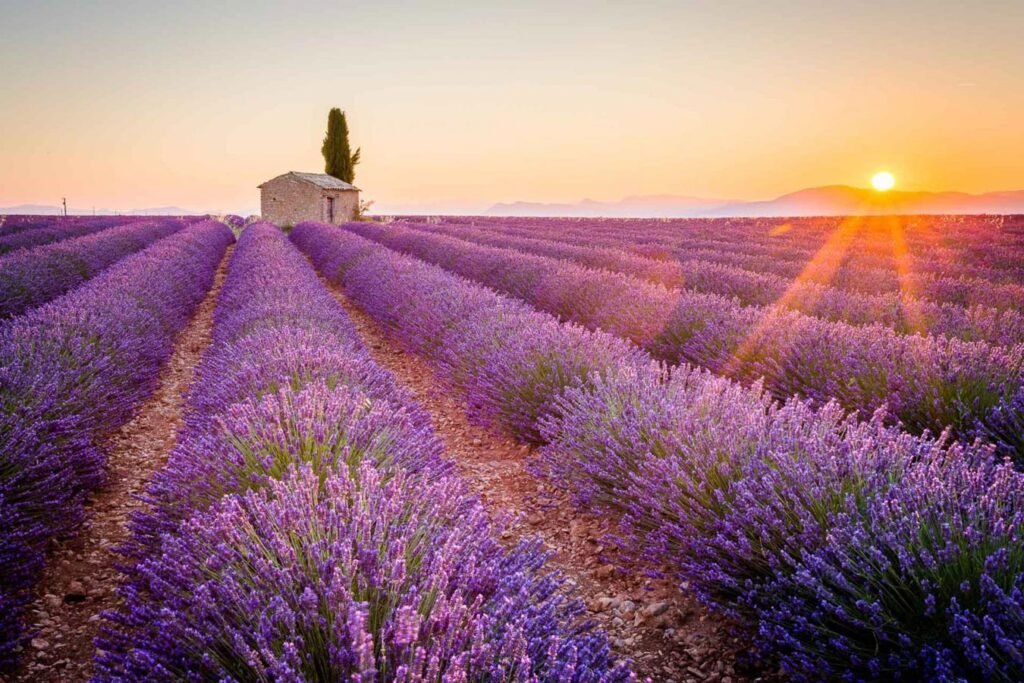
The lavender of Provence blooms from mid-June through July — the Valensole Plateau east of the Luberon is the most accessible and most spectacular lavender landscape, with fields extending to every horizon in shades of purple that seem impossible under the Provençal sun.
If your honeymoon falls within this window, do not miss it. Drive through the Valensole Plateau at dawn or in the late afternoon — the light at these hours makes the lavender glow — and stop in the village of Valensole for coffee and lavender honey at a local cafe.
The Markets of Provence
Provence’s markets are among the finest in France — open-air celebrations of regional produce that are worth planning your itinerary around. The best: Isle-sur-la-Sorgue on Sunday morning (antiques and food in one of Provence’s most beautiful towns), Apt on Saturday (the Luberon’s finest weekly market), and Arles on Saturday morning (one of the largest and most colourful in the region).
Where to Stay in Provence
La Bastide de Gordes — a 16th-century bastide perched above the village of Gordes, with panoramic views over the Luberon valley, a spectacular infinity pool, and rooms of great beauty and comfort. One of the finest hotels in Provence. From €400/night.
Le Hameau des Baux — a collection of beautiful stone cottages in the olive groves below Les Baux-de-Provence, with a Michelin-starred restaurant and the most peaceful setting imaginable. From €350/night.
Mas de la Beaume — a smaller, more intimate mas (Provençal farmhouse) near Gordes — family-run, beautifully restored, and the kind of place that feels like staying in the house of very elegant friends. From €200/night.
Where to Eat in Provence
Oustau de Baumanière — one of the great restaurants of France, set in a medieval mas below Les Baux-de-Provence with two Michelin stars and a wine list of extraordinary depth. The terrace dinner in summer — surrounded by olive trees, with the Alpilles above — is a once-in-a-lifetime dining experience.
La Chassagnette — an organic farm restaurant in the Camargue near Arles, where chef Armand Arnal grows much of what he cooks in the restaurant’s extraordinary kitchen garden. The lunch here — surrounded by vegetable beds and herbs, with the flat Camargue landscape beyond — is deeply romantic.
The French Riviera: Glamour, Sea, and the Mediterranean Light
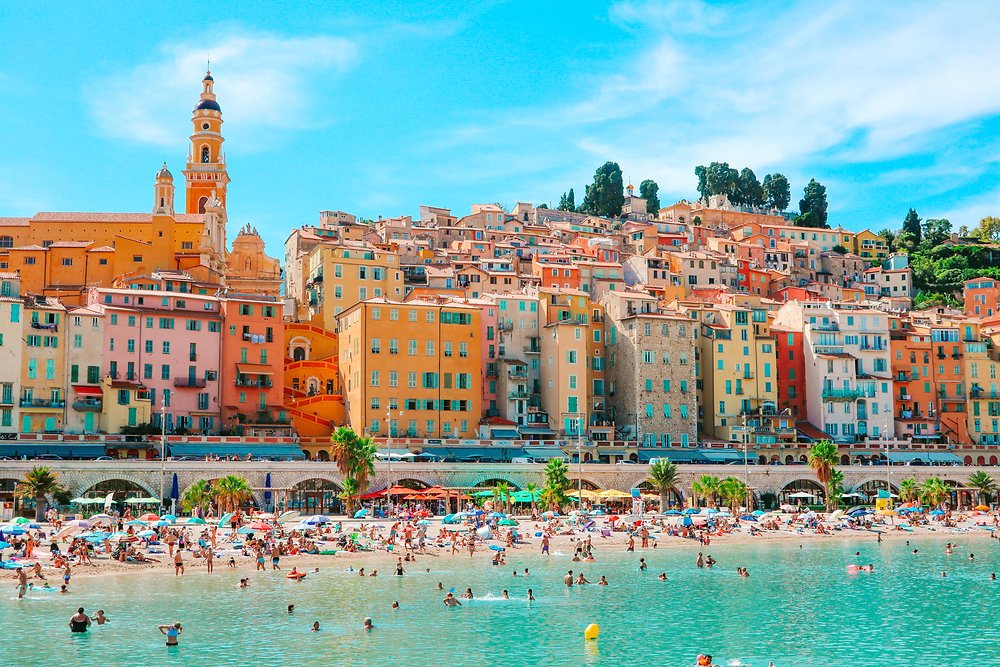
The Côte d’Azur — the French Riviera — stretches from Nice to the Italian border and contains some of the most glamorous and most beautiful coastline in Europe. It is also, on its quieter stretches and in its less famous towns, one of the most romantic.
The Towns Worth Knowing
Nice is the capital of the Riviera and its most characterful city — the old town (Vieux-Nice) has a warmth and colour that belongs more to Italy than to France, the Promenade des Anglais is one of the great seafront walks in Europe, and the food market at the Cours Saleya is extraordinary every morning except Monday.
Èze is a medieval village perched 427 metres above the Mediterranean — the most dramatically situated village on the entire Riviera, accessible from Nice by a winding cliff road, with views over the sea that are simply not available anywhere else. The Jardin Exotique at the summit is extraordinary.
Antibes and Juan-les-Pins offer a less crowded and more authentic Riviera experience than Nice or Cannes — the old town of Antibes, with its Picasso Museum and beautifully preserved ramparts, is one of the most enjoyable places on the coast.
Saint-Paul-de-Vence — a medieval hilltop village above the coast, long associated with artists and writers (Matisse, Picasso, Chagall all lived and worked nearby), with excellent galleries, beautiful streets, and the legendary Hôtel La Colombe d’Or — where artists historically paid their bills with paintings, leaving a collection that now includes works by Picasso, Matisse, and Miró hanging in the restaurant and on the terrace walls.
Villefranche-sur-Mer is the most beautiful bay on the Riviera — a tiny, brilliantly coloured fishing village with a harbour deep enough to anchor cruise ships, excellent seafood restaurants on the waterfront, and a pace of life that feels completely separated from the glamour of the coast nearby.
Where to Stay on the French Riviera
Hôtel du Cap-Eden-Roc, Cap d’Antibes — the most legendary hotel on the Riviera, set in 10 acres of grounds on a rocky cape jutting into the Mediterranean. The swimming pool carved into the rocks above the sea is one of the great hotel amenities in the world. The clientele throughout its history has included every significant figure in 20th-century culture. From €700/night.
La Colombe d’Or, Saint-Paul-de-Vence — 26 rooms in a medieval inn whose walls are hung with original Picassos, Matisses, and Mirós. Staying here is sleeping inside one of the most extraordinary private art collections in the world. From €350/night.
Château Eza, Èze — a collection of medieval buildings perched 427 metres above the sea, converted into a luxury hotel of extraordinary drama and beauty. The terrace restaurant, cantilevered over the cliff with the Mediterranean 400 metres below, is one of the most romantic dining settings in Europe. From €450/night.
Bordeaux and the Wine Country: Romance in Every Glass
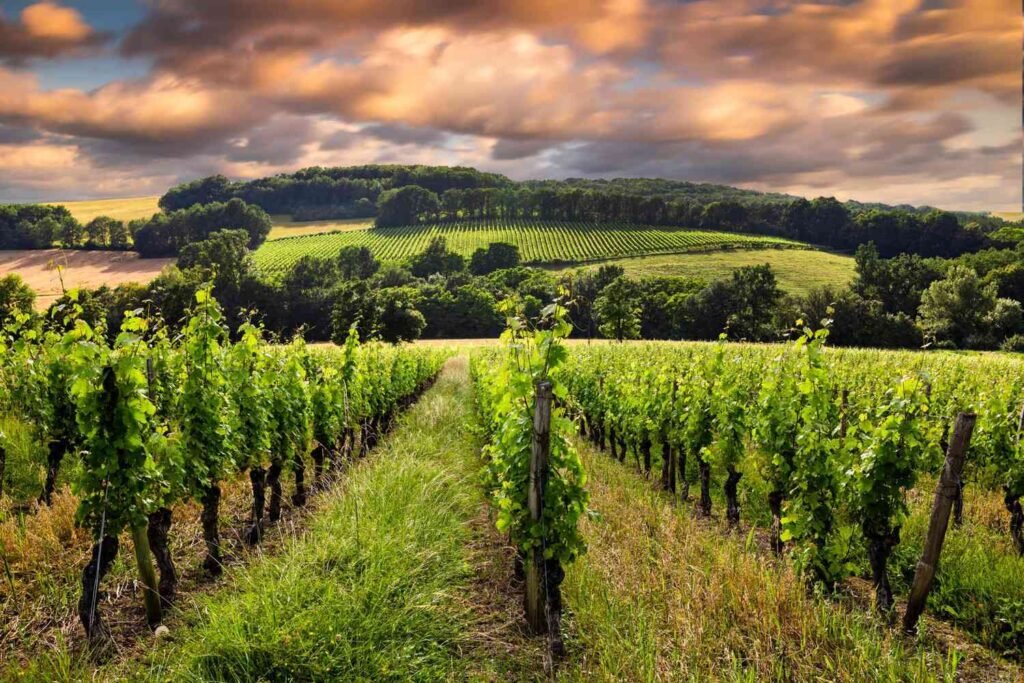
Bordeaux is France’s wine capital — a city of extraordinary 18th-century architecture, world-class gastronomy, and the most celebrated wine region on earth surrounding it on all sides. For couples who love wine, food, and the particular pleasure of moving slowly through a beautiful landscape, the Bordeaux region is one of the great honeymoon destinations in France.
Bordeaux City
The city itself is magnificent — a UNESCO World Heritage city with a perfectly preserved 18th-century centre, the extraordinary mirror of water (Miroir d’eau) at the Place de la Bourse, excellent restaurants, a thriving food market at the Marché des Capucins, and the remarkable Cité du Vin — a stunning piece of contemporary architecture housing a world-class wine museum with extraordinary views over the Garonne.
The Wine Châteaux
The Médoc — the strip of gravelly land west of Bordeaux producing the world’s most celebrated Cabernet Sauvignon-based wines — contains a concentration of magnificent wine estates that can be visited by appointment. Château Margaux, Château Léoville-Las Cases, and Château Pichon Baron all receive visitors. The experience of tasting a great Bordeaux in the cellar of the estate that made it, surrounded by vines, is something that no wine shop or restaurant can replicate.
Saint-Émilion — a medieval village east of Bordeaux, entirely surrounded by vineyards and classified as a UNESCO World Heritage site — is one of the most beautiful wine villages in the world. The underground cellars, the limestone church carved entirely from the rock, and the village streets lined with wine shops and excellent restaurants make it a perfect day trip or overnight from Bordeaux.
Where to Stay in the Bordeaux Region
Les Sources de Caudalie — a vineyard spa hotel and thermal resort in the Graves wine region south of Bordeaux, surrounded by the vines of Château Smith Haut Lafitte. The vinotherapy spa — treatments based on grape extracts and polyphenols — is unique in the world. The two restaurants (one Michelin-starred) source from the estate and the surrounding region. One of the great luxury experiences in all of France. From €400/night.
Château Cordeillan-Bages — a 17th-century chartreuse in the village of Pauillac, at the heart of the Médoc, with a two-Michelin-star restaurant and rooms of great elegance surrounded by the famous Pauillac vineyards. From €350/night.
The Loire Valley: Châteaux, Gardens, and Royal Romance
The Loire Valley — a UNESCO World Heritage landscape stretching 280 km along the Loire River between Orléans and Angers — is known as the Garden of France and contains the highest concentration of Renaissance châteaux anywhere in the world. For a honeymoon, it offers a particular kind of romance — the romance of history, of extraordinary architecture, of beautiful river landscapes, and of exceptional food and wine.
The Châteaux Worth Visiting
Château de Chambord — the largest and most extraordinary of the Loire châteaux, built for François I as a hunting lodge in the 16th century. The double-helix staircase (attributed in part to Leonardo da Vinci) and the roofline — a forest of turrets, chimneys, and lanterns — are among the most remarkable architectural achievements of the Renaissance. Visit at dawn when the mist rises from the forest and the château appears through it like something from a fairy tale.
Château de Chenonceau — the most beautiful of the Loire châteaux — a Renaissance masterpiece built across the Cher River on a series of arches, with formal gardens on both banks and an extraordinary interior. It is known as the Château des Dames for the succession of remarkable women who owned and shaped it. Visiting at dusk, when the château reflects in the still river, is one of the great visual experiences in France.
Château de Villandry — famous not for its architecture but for its extraordinary formal gardens — six hectares of Renaissance gardens with geometric vegetable beds, ornamental gardens, and water gardens that are maintained to a standard of perfection. In summer the colour and precision are breathtaking.
Where to Stay in the Loire Valley
Château de Marçay — a 15th-century fortress near Chinon, converted into a luxury hotel with 34 rooms, a Michelin-starred restaurant, and a setting in the Chinon vineyards that is deeply romantic. From €200/night.
Domaine des Hauts de Loire — a 19th-century hunting lodge in the Sologne forest between Blois and Amboise, with exceptional cuisine and beautiful grounds. From €250/night.
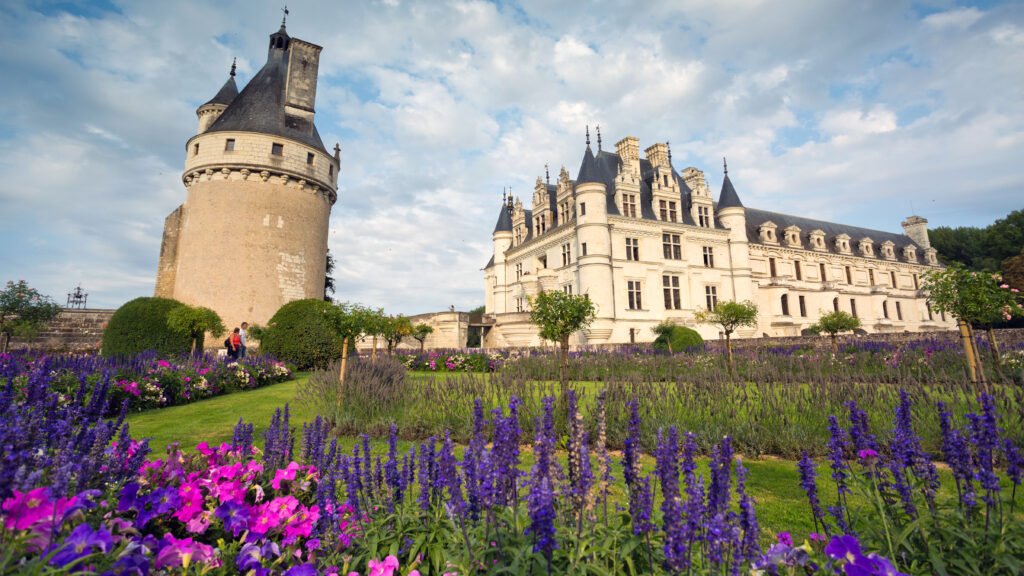
Normandy: Dramatic Coastline and Romantic Simplicity
Normandy is not the first region that comes to mind for a honeymoon — it is better known for D-Day beaches and cider than for romance. But the Normandy coast — specifically the Côte Fleurie and the area around Étretat — offers a dramatic beauty and a quiet intimacy that makes it genuinely extraordinary for couples who want something off the beaten romantic track.
Étretat
The chalk cliffs of Étretat — three enormous natural arches carved from the white rock by the sea — are among the most dramatic natural features in France. Monet painted them obsessively. Walking the cliff path above them at dusk, with the English Channel silver below and the arches framing the horizon, is one of the great coastal experiences in Europe.
The village itself is small and charming — good seafood restaurants, a covered market, and a pace of life entirely appropriate to a honeymoon that wants to breathe.
Mont-Saint-Michel
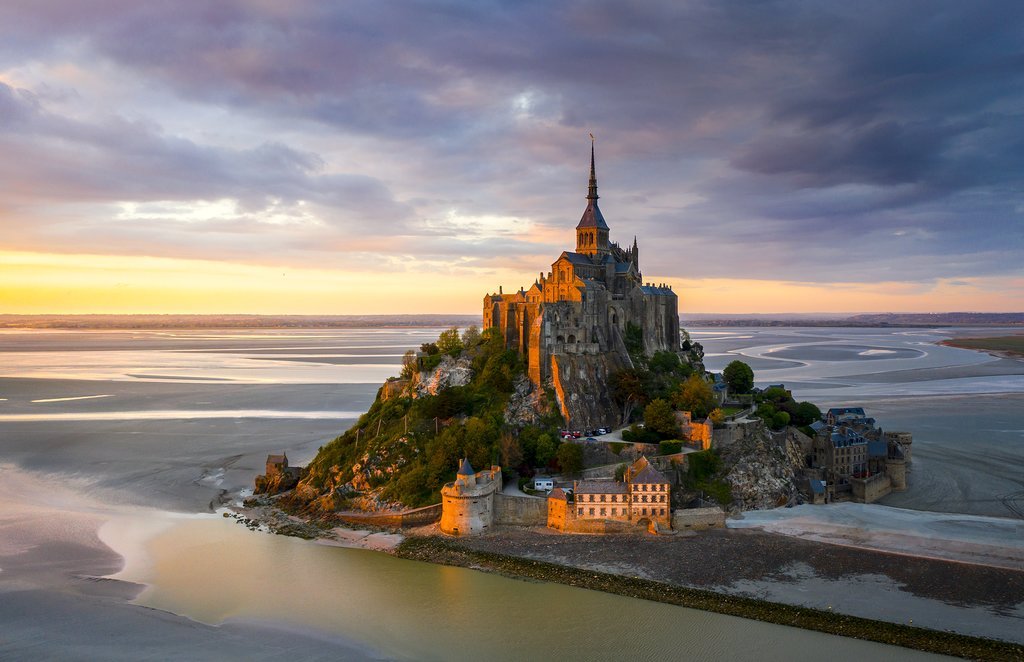
The tidal island of Mont-Saint-Michel — a Gothic abbey rising from a sandflat off the Normandy coast, surrounded by the highest tides in Europe — is one of the most extraordinary places in France. It is also one of the most visited — the approach road can be overwhelmed with tourists in summer.
The solution: stay on the island overnight. When the day visitors leave and the gates close at dusk, Mont-Saint-Michel becomes something else entirely — silent, lit by the floodlights, with the tide moving through the sandflats and the Abbey above you in the dark. Several small hotels on the island allow this experience. It is genuinely unlike anything else in France.
Where to Stay in Normandy
Les Manoirs des Portes de Deauville — a collection of beautiful Norman manor houses near Deauville, with a spa, indoor pool, and the most peaceful setting on the Normandy coast. From €200/night.
La Mère Poulard, Mont-Saint-Michel — staying on the island itself, in the famous auberge that has been welcoming visitors since 1888. The famous omelettes at dinner, the silence after the gates close, and the extraordinary atmosphere of the island at night make this one of the most romantic overnight experiences in France. From €180/night.
The Dordogne: Medieval Villages and the Most Beautiful River in France
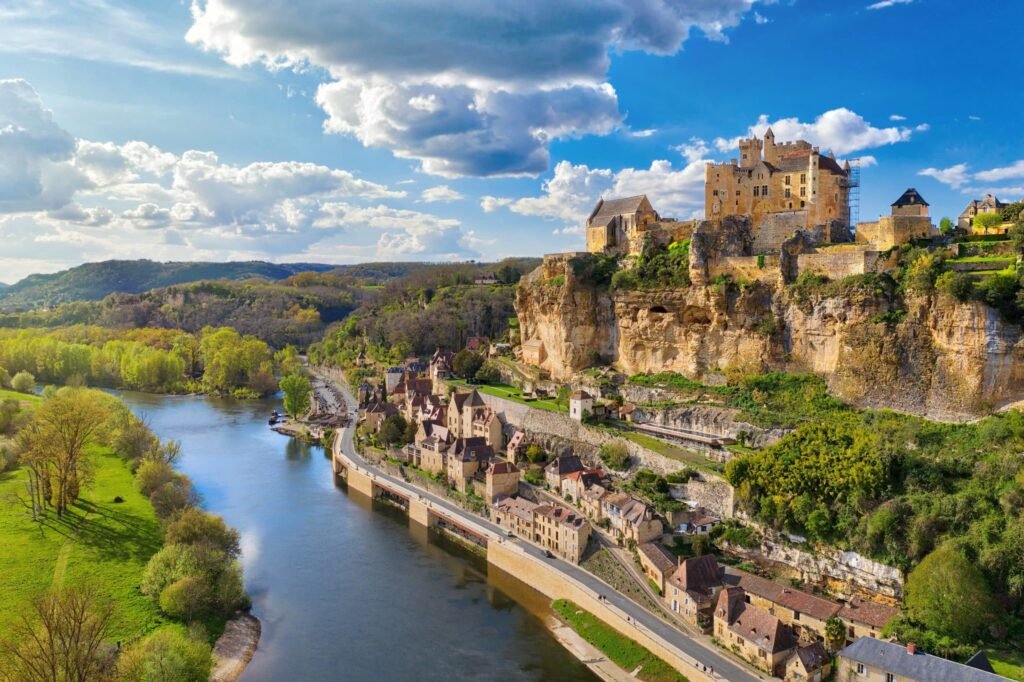
The Dordogne — a region of southwest France centred on the river of the same name — is one of the most quietly beautiful parts of the country. Medieval cliff-top châteaux, the golden stone villages of the Périgord, prehistoric cave art, truffle markets, duck confit, and the most beautiful river valley in France make it an extraordinary honeymoon destination for couples who want depth, beauty, and the pleasure of discovery.
What to Do in the Dordogne
The villages: La Roque-Gageac — built into a cliff above the river with troglodyte caves above — is among the most beautiful villages in France. Beynac with its clifftop château. Domme on its limestone plateau above a bend in the river. Sarlat-la-Canéda — the golden medieval town that is the gastronomic capital of the region.
Canoeing the Dordogne — renting a canoe and spending a day paddling the river between villages, pulling up on riverbanks for picnics, is one of the great outdoor pleasures in France. The river is calm, the scenery extraordinary, and the châteaux appear around every bend.
The Lascaux caves — the most significant prehistoric cave paintings in the world, created 17,000 years ago, are in the Vézère Valley just north of the Dordogne. The original cave is closed (to preserve the paintings) but the replica — Lascaux IV — is an extraordinary experience and worth an afternoon.
Truffle season — the Périgord Noir is one of the world’s great truffle regions. The winter truffle markets at Sarlat and Périgueux (December–February) are extraordinary — tables covered with the most expensive fungus on earth, handled with the reverence usually reserved for jewellery.
Where to Stay in the Dordogne
La Métairie, Mauzac — a beautiful stone manor house hotel above the Dordogne river, with an excellent restaurant, pool, and the most peaceful setting imaginable. From €180/night.
Hôtel Entraygues, La Roque-Gageac — a small hotel in one of France’s most beautiful villages, right on the riverbank with extraordinary views. From €120/night.
The French Alps: Mountain Romance
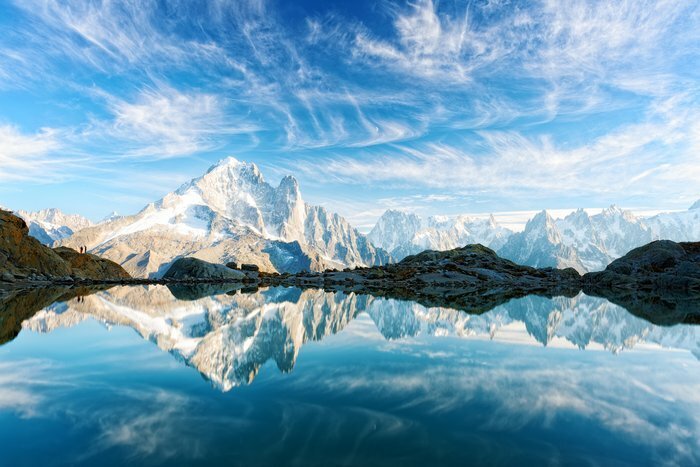
For honeymooners who want dramatic scenery, outdoor adventure, and the extraordinary atmosphere of the high mountains, the French Alps offer a honeymoon completely unlike anything available in the rest of France.
Chamonix
At the foot of Mont Blanc — the highest peak in the Alps — Chamonix combines extraordinary mountain scenery with excellent restaurants, a lively town, and access to some of the most dramatic landscapes in Europe. The Aiguille du Midi cable car takes you to 3,842 metres in 20 minutes — above the clouds, in a world of ice and rock and silence. Summer hiking on the Tour du Mont Blanc. Winter skiing on the most challenging terrain in the Alps.
Annecy
The most beautiful mountain town in France — a medieval old town threaded with canals, directly on the edge of a lake of extraordinary clarity, surrounded by Alpine peaks. Annecy has excellent restaurants, beautiful cycling and hiking, boat trips on the lake, and a quality of light — the blue of the lake against the green of the mountains against the white of the snow — that is unique in France.
Where to Stay in the French Alps
Le Hameau Albert 1er, Chamonix — a Michelin-starred hotel at the foot of Mont Blanc, with beautiful chalet-style rooms, a spa, and the best restaurant in the Chamonix valley. From €350/night.
Le Clos du Lac, Annecy — a beautiful lakeside hotel with direct water access, mountain views, and the most romantic setting in the Annecy region. From €200/night.
Practical Information for a France Honeymoon
Best Time to Visit
Paris: Year-round. Spring (April–June) for blossom and the best light. September–October for fewer crowds and beautiful autumn colour. December for Christmas markets and a magical atmosphere.
Provence: May–September for the best weather. Mid-June to mid-July for the lavender. Avoid August if possible — it is the most crowded month across all of France.
French Riviera: May–June and September–October for the best combination of warm weather and manageable crowds. July and August are intensely crowded and hot.
Loire Valley: May–June and September for the best weather and the most beautiful garden displays.
Dordogne: May–June and September–October — the summer peak (July–August) is crowded and very hot.
French Alps: June–September for hiking and summer scenery. December–March for skiing.
Getting Around France
Train: France has one of the finest rail networks in Europe — TGV high-speed trains connect Paris to Lyon in 2 hours, Paris to Marseille in 3 hours, Paris to Bordeaux in 2 hours. The train is faster than flying for most domestic journeys and the most romantic way to move through the country.
Car: Essential for Provence, the Dordogne, the Loire Valley, and Normandy — the most beautiful experiences in these regions are on back roads between villages that no train reaches. Rent a car in the nearest major city and drive slowly.
Domestic flights: Only worth considering for the furthest corners — Nice to Paris if time is short, or accessing Corsica.
Budget Guide
Paris luxury: €300–600/night for hotels. €150–300 per person for special occasion dining. €50–80/day for normal dining and activities.
Provence mid-range: €150–300/night for mas and bastide hotels. €40–80 per person for excellent restaurant dining. Wine directly from estates at a fraction of restaurant prices.
French Riviera: €200–500/night for quality hotels in season. Eating well is possible at €40–60 per person at non-tourist-facing restaurants.
Loire/Dordogne: €100–250/night for château hotels and manor houses. Excellent value for the quality of accommodation available.
Honeymoon Enhancements Worth Arranging in Advance
- Private wine tasting at a Bordeaux château — most require appointment but are deeply rewarding.
- Cooking class in Paris or Provence — La Cuisine Paris and Les Petits Farcis in Nice are excellent.
- Hot air balloon over the Loire Valley — one of the most romantic experiences France offers.
- Private boat on the Dordogne — several operators offer sunset cruises between the cliff villages.
- Truffle hunting in the Périgord — October to February with a truffle dog and local guide.
- Dinner at a Michelin-starred restaurant — book 4–8 weeks in advance for the most sought-after tables.
A Suggested Two-Week France Honeymoon Itinerary
Days 1–3: Paris Arrive. Check into Le Marais. Explore on foot — the Île Saint-Louis, the Luxembourg Gardens, Montmartre at dawn. Seine dinner cruise on day 2. Musée d’Orsay on day 3.
Days 4–5: Loire Valley TGV from Paris to Tours (1 hour). Château de Chenonceau on day 4. Château de Chambord at dawn on day 5. Hot air balloon over the châteaux at sunset.
Days 6–8: Bordeaux and Wine Country TGV from Tours to Bordeaux (1 hour 30 min). City exploration on day 6. Saint-Émilion and wine tasting on day 7. Médoc château visit on day 8.
Days 9–11: Provence Fly or TGV from Bordeaux to Marseille, then drive to the Luberon. Gordes and the lavender fields on day 9. Roussillon and the ochre trail on day 10. Les Baux-de-Provence and dinner at Oustau de Baumanière on day 11.
Days 12–14: French Riviera Drive from Provence to Nice (2 hours). Nice old town on day 12. Èze village and Villefranche-sur-Mer on day 13. Saint-Paul-de-Vence and La Colombe d’Or on day 14. Fly home from Nice.
Final Thoughts: What a France Honeymoon Gives You
A honeymoon in France gives you something that most destinations — for all their beauty and luxury — cannot: a model for how to live together well.
The French art de vivre — the art of living — is not a tourist attraction. It is a daily practice of attention to pleasure, to quality, to slowness, to the people you are with. The long lunch that becomes the afternoon. The wine chosen not for its label but for what it does with the food on the table. The walk after dinner that has no destination. The morning that begins not with a schedule but with coffee and a croissant and the day stretching open ahead.
These are not merely romantic gestures. They are a philosophy — and spending a honeymoon inside that philosophy, in the country that invented it, is one of the best possible ways to begin a life together.
Go slowly. Eat well. Drink better. And pay attention to every moment.
France will reward you for the rest of your life.