
Let’s be honest about Denmark from the start. It is expensive. Consistently ranked among the top five most expensive countries in the world for travellers, Denmark can feel financially intimidating before you’ve even booked your flights. A cup of coffee costs €5. A beer in a Copenhagen bar costs €8–10. A sit-down lunch in a decent restaurant will set you back €20–30 per person without drinks. A single night in a mid-range Copenhagen hotel during summer can easily exceed €200.
And yet — Denmark is also one of the most rewarding, beautiful, and culturally rich travel destinations in Europe. Its cities are extraordinarily liveable and visually stunning. Its countryside is quietly spectacular. Its food culture is genuinely world-class. Its history — from the Vikings to Hans Christian Andersen to the architects of New Nordic cuisine — is fascinating and deep. And its people are among the most welcoming, open, and effortlessly stylish in the world.
The good news is that Denmark’s reputation for expense is not entirely deserved when you know how to navigate it. Free museums, excellent free cycling infrastructure, affordable supermarkets with outstanding food, free beaches, free public spaces of extraordinary beauty, and a well-developed culture of outdoor socialising that costs nothing — Denmark rewards the smart, prepared budget traveller far more generously than its prices initially suggest.
This guide will show you exactly how to do it.
Understanding the Cost of Travel in Denmark
Before diving into the money-saving strategies, it helps to understand where Denmark’s costs are concentrated — and where they are not.
Where Denmark is genuinely expensive: Restaurants and cafés, bars and alcohol, hotel accommodation in Copenhagen, taxis and Uber, tourist attraction entry fees, and organised tours all carry prices that will feel high to most international visitors. These are the areas where smart planning makes the biggest difference.
Where Denmark is surprisingly affordable: Public transport (particularly with the right passes), supermarket food and drink, free museums and attractions, cycling (Denmark has the best free cycling infrastructure in the world), free beaches and public spaces, and budget accommodation options including hostels and camping all offer genuine value that offsets the more expensive aspects of Danish travel.
Daily Budget Benchmarks: A realistic daily budget for Denmark, broken down by travel style:
Backpacker/Budget: €60–80 per day — hostel dorm, supermarket meals, free attractions, public transport
Mid-Range: €120–160 per day — budget hotel or private hostel room, one restaurant meal per day, mix of paid and free attractions
Comfortable: €200–300 per day — mid-range hotel, restaurant lunch and dinner, paid attractions and tours.
This guide focuses primarily on the backpacker and mid-range budget levels — showing you how to experience Denmark fully at €60–120 per day.
Getting There: Finding Affordable Flights to Denmark
Copenhagen Airport (CPH) is one of the best-connected airports in Northern Europe and serves as a major hub for Scandinavian and European travel. Finding affordable flights requires flexibility and forward planning.
Budget Airlines: Ryanair, easyJet, Wizz Air, and Norwegian all operate routes to Copenhagen from numerous European cities. Prices can be exceptionally low — particularly if booked 2–3 months in advance and with flexible travel dates. Midweek flights (Tuesday and Wednesday) are consistently cheaper than weekend departures.
Alternative Entry Points: Flying into Billund Airport in Jutland — served by Ryanair, easyJet, and other budget carriers — can be significantly cheaper than Copenhagen for visitors planning to explore western Denmark. Malmö Airport in Sweden (just across the Øresund Bridge from Copenhagen) occasionally offers competitive fares worth considering.
From the UK: Train travel from London to Copenhagen via Eurostar and onward rail connections is increasingly popular and competitively priced when booked in advance — typically taking 14–16 hours but offering a genuinely scenic and enjoyable journey through France, Belgium, Germany, and Denmark.
Booking Tips: Use Google Flights’ price calendar to identify the cheapest travel dates. Set fare alerts for your preferred route 3–4 months before travel. Avoid travelling during Danish school holidays (particularly the summer weeks of late June through early August) when both flights and accommodation prices peak significantly.
Budget Accommodation in Denmark
Accommodation is where most visitors feel Denmark’s expense most acutely — but there are genuinely good budget options if you know where to look.
Hostels
Denmark has an excellent network of independent and HI-affiliated hostels (vandrehjem) throughout the country — offering clean, well-maintained dormitory and private room accommodation at prices that represent the best value in the Danish accommodation market.
Copenhagen Hostels: Generator Copenhagen in the Frederiksberg neighbourhood offers modern dormitory beds from approximately €25–35 per night in a stylish, well-located setting. Steel House Copenhagen — arguably the finest hostel in Scandinavia — offers rooftop pools, cinema rooms, and outstanding facilities at prices of €30–45 per dorm bed. Danhostel Copenhagen City, located directly on the waterfront, is the largest hostel in Scandinavia with private rooms available from €70–90 per night.
Outside Copenhagen: In Aarhus, Odense, Aalborg, and most other Danish cities and towns, HI-affiliated vandrehjem offer reliable budget accommodation from €25–40 per dormitory bed and €65–90 for private rooms — typically including breakfast, which adds significant value at Danish food prices.
Booking Advice: Book hostels as far in advance as possible for summer travel — the best budget hostels in Copenhagen sell out weeks or months ahead during peak season. Hostelworld and Booking.com both offer comprehensive Danish hostel listings.
Camping
Denmark has one of the finest camping infrastructures in Europe — with over 500 approved campsites (campingpladser) across the country, most of which are clean, well-maintained, and beautifully located. Camping is an excellent budget option, particularly for those travelling in summer and willing to embrace the outdoor lifestyle.
Camping prices typically range from €12–20 per person per night at most sites, with many offering excellent facilities including kitchens, bathrooms, laundry, and often swimming pools and children’s play areas. Many campsites are located in stunning natural settings — on clifftops above the sea, in forest clearings, beside lakes and fjords — that add genuine value beyond the simple cost saving.
Primitive Camping: Denmark permits free primitive camping (teltning) in designated forest areas and on some public coastal land under the Danish Outdoor Recreation Act (Naturbeskyttelsesloven). This is an extraordinary resource for budget travellers willing to carry camping equipment — allowing completely free overnight stays in some of Denmark’s most beautiful natural landscapes. Consult the Danish Environmental Protection Agency website for designated free camping areas before planning overnight stays.
Couchsurfing & House Sharing
Couchsurfing has an active community in Denmark, particularly in Copenhagen and Aarhus, and represents a completely free accommodation option while also providing the opportunity to connect with local Danes and gain insider knowledge of the places you’re visiting. Create a detailed, honest profile and send personalised requests well in advance for the best response rates.
Airbnb private room listings in Copenhagen and other Danish cities can occasionally offer competitive rates compared to hotels — particularly for longer stays. Filter by private room rather than entire apartment for the most affordable options.
Getting Around Denmark on a Budget
Copenhagen Public Transport
Copenhagen’s public transport system — operated by Movia and DSB — is efficient, extensive, and far more affordable than taxis or ridesharing. The Metro runs 24 hours a day, 7 days a week, and connects all major areas of the city.
City Pass Copenhagen: The Copenhagen City Pass (CityPass Copenhagen) covers unlimited travel on all buses, Metro lines, S-trains, and regional trains within Copenhagen for a fixed daily price. The 24-hour pass costs approximately €14, the 48-hour pass approximately €23, the 72-hour pass approximately €30, and the 120-hour (5-day) pass approximately €47. For most visitors spending more than one day in Copenhagen and using public transport regularly, the City Pass offers excellent value.
Rejsekort: For longer stays, the Rejsekort — Denmark’s national contactless travel card — offers discounted fares compared to single tickets across the entire Danish public transport network, including trains, buses, and Metro. Available at DSB stations and online, it requires a small deposit and is rechargeable. An excellent option for visitors planning to travel extensively across Denmark.
Single Tickets: For occasional journeys, single Metro and bus tickets in Copenhagen are zone-based and start at approximately €3 for a 2-zone journey. Avoid buying single tickets if you’re making more than 3–4 journeys per day — the City Pass will be better value.
Cycling — Denmark’s Greatest Free Transport Gift
Denmark is the finest cycling country in the world — and cycling in Denmark is not merely a transport option but a genuinely joyful cultural experience. Copenhagen alone has over 400 km of dedicated cycling lanes, and the infrastructure across the entire country is exceptional — with clearly marked routes, cyclist priority at junctions, and a cycling culture so deeply embedded that it simply feels like the most natural way to move through the country.
Free City Bikes in Copenhagen: Bycyklen — Copenhagen’s electric city bike sharing system — allows you to rent bikes by the hour (approximately €4 per hour) from stations throughout the city. For budget travellers planning to cycle extensively, this is more expensive than renting a standard bike by the day.
Bike Rental: Numerous rental shops in Copenhagen and other Danish cities offer standard bicycle rentals from approximately €15–20 per day or €60–80 per week — representing outstanding value for a transport mode that accesses almost all of the city’s attractions, requires no fuel, and provides the most authentic Danish experience available to a visitor.
Long-Distance Cycling Routes: Denmark’s national cycling route network (Nationale Cykelruter) covers over 4,000 km of signposted long-distance routes connecting the entire country. Route 5 — the Oxen Way (Hærvejen) — follows a historic drovers’ road the length of Jutland for approximately 450 km, offering one of the most rewarding and affordable ways to experience the Danish countryside. Cycling between towns and staying at campsites or budget hostels along the way represents perhaps the ultimate Danish budget travel experience.
Trains Between Cities
DSB (Danske Statsbaner) operates Denmark’s intercity rail network — comfortable, punctual, and reasonably priced when booked in advance. The main routes connect Copenhagen with Odense (1 hour 15 minutes), Aarhus (3 hours), and Aalborg (4 hours 20 minutes).
Orange Tickets: DSB’s “Orange” advance purchase tickets offer significant discounts on standard fares — prices as low as €15–25 for Copenhagen to Aarhus when booked 2–4 weeks in advance. Orange tickets have fixed seat reservations and are non-refundable but represent outstanding value on the main intercity routes.
InterRail/Eurail Pass: For visitors planning to travel extensively across Denmark and neighbouring Scandinavian or European countries, an InterRail Global Pass (for European residents) or Eurail Pass (for non-European visitors) can offer good value — particularly for multi-country itineraries that include Denmark, Germany, Sweden, and Norway.
The Øresund Bridge: The iconic bridge connecting Copenhagen with Malmö in Sweden is served by regular trains (approximately 35 minutes) and is included in the Copenhagen City Pass — making a day trip to Malmö essentially free for pass holders and an excellent way to add Swedish experience to a Danish trip at minimal cost.
Buses
Long-distance bus services — operated by FlixBus and Kombardo Expressen — connect Copenhagen with Aarhus, Aalborg, Odense, and other major cities at prices significantly lower than trains, particularly for journeys booked in advance. FlixBus Copenhagen to Aarhus tickets can be found for as little as €10–15 when booked early.
Free Things to Do in Denmark
Denmark is remarkably generous with free attractions — particularly in Copenhagen, where a significant proportion of the city’s finest museums and cultural institutions offer free admission.
Free Museums in Copenhagen
The National Museum of Denmark (Nationalmuseet) — Denmark’s largest and most comprehensive museum, covering Danish history from the Stone Age to the present day, is completely free to enter. The Viking Age collection and the collection of Danish prehistory are world-class and would justify a significant entrance fee anywhere else in Europe.
The Statens Museum for Kunst (SMK) — Denmark’s national gallery, housing an extraordinary collection of Danish and international art spanning seven centuries, is free for visitors under 27 and on specific free admission days. Check the SMK website for current free admission arrangements before visiting.
The Copenhagen Museum (Københavns Museum) — Telling the story of Copenhagen from its medieval origins to the present day, this excellent museum is completely free to enter and provides invaluable context for exploring the city.
Ny Carlsberg Glyptotek — One of the finest art museums in Scandinavia, housing an extraordinary collection of ancient Mediterranean art alongside an outstanding collection of 19th-century Danish and French painting, offers free admission on Tuesdays — making Tuesday the single best day to visit this world-class institution at no cost.
The Danish Architecture Centre (DAC) — Located in a stunning new building on the Copenhagen waterfront, DAC offers free access to its ground floor exhibitions and the extraordinary rooftop walkway with panoramic views over the city.
Free Outdoor Experiences in Copenhagen
The Copenhagen Harbour Baths (Islands Brygge Havnebad) — Free open-air swimming pools built directly in the harbour, offering one of the most enjoyable and quintessentially Copenhagen summer experiences at absolutely no cost. The harbour water is clean enough to swim in — a remarkable achievement for a major European capital.
Superkilen Park — One of the most extraordinary public parks in Europe, Superkilen is a 750-metre urban park in the Nørrebro neighbourhood containing 108 objects collected from 60 countries around the world — a global collection of urban furniture, playground equipment, and cultural artefacts embedded in a brilliantly designed public space. Completely free and genuinely unlike anything else in Europe.
The King’s Garden (Kongens Have) — The oldest royal garden in Denmark, surrounding Rosenborg Castle in the heart of Copenhagen, is a magnificent free public park perfect for picnics, relaxation, and people-watching in the shadow of a 17th-century royal palace.
Assistens Cemetery — The famous cemetery in Nørrebro where Hans Christian Andersen and Søren Kierkegaard are buried is also one of Copenhagen’s most beloved and atmospheric public parks — locals jog, cycle, and picnic among the graves in a way that is uniquely Danish and genuinely charming.
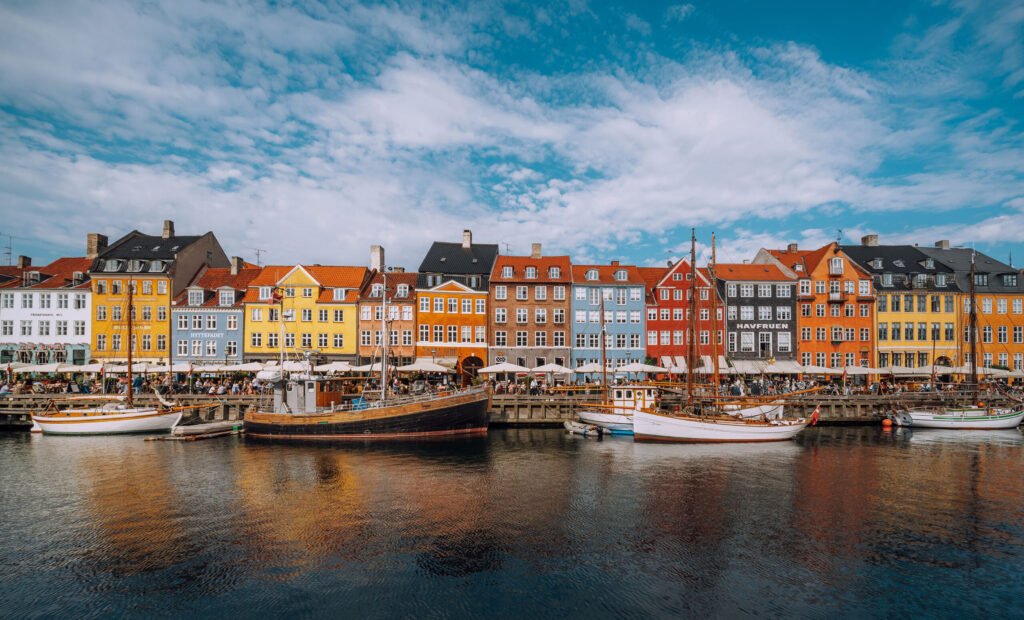
The Copenhagen Waterfront & Nyhavn — Walking the entire Copenhagen waterfront from Nyhavn to the Opera House and beyond costs nothing and provides some of the finest urban scenery in Northern Europe. The famous coloured houses of Nyhavn are completely free to admire and photograph — just avoid the overpriced restaurants on the canal itself.
Free Attractions Outside Copenhagen
Møns Klint (White Cliffs of Møn) — One of Denmark’s most spectacular natural landscapes — 128-metre white chalk cliffs dropping dramatically to the Baltic Sea — is completely free to visit and access. The GeoCenter Møns Klint museum charges entry, but the cliffs, walking trails, and beaches below are accessible without cost and are genuinely breathtaking.
Rold Skov (Rold Forest) — Denmark’s largest forest in northern Jutland is free to explore and offers exceptional hiking, cycling, and wildlife experiences in a beautiful natural setting.
Skagen’s Beaches — The northernmost tip of Denmark, where the North Sea and the Kattegat meet in visible swirling currents at Grenen Point, is free to visit and one of the most dramatically beautiful natural experiences in the country.
Jelling Runestones — Denmark’s most important Viking monuments — the Jelling Stones, erected by Harald Bluetooth in the 10th century and considered the birth certificate of Denmark — stand in the small Jutland town of Jelling and are free to see and photograph. The adjacent Kongernes Jelling museum charges entry but the stones themselves are fully accessible without cost.
Ribe’s Medieval Streets — Denmark’s oldest town is a free open-air museum of medieval architecture — wandering its cobbled streets, admiring the Viking Museum (partially free), and sitting by the river costs nothing and provides one of the most atmospheric historical experiences in Denmark.
Eating Well on a Budget in Denmark
Food is where most budget travellers in Denmark struggle most — and where smart strategies make the biggest difference.
Supermarkets — The Budget Traveller’s Best Friend
Danish supermarkets offer an extraordinary range of high-quality food at prices that, while not cheap by global standards, are significantly lower than restaurant eating. The major chains — Netto, Fakta, Lidl, Aldi, and Rema 1000 — are the most affordable options, while Irma and Føtex offer higher quality at slightly higher prices.
A supermarket lunch of freshly baked bread, Danish cheese (one of the great underrated food products of northern Europe), cold cuts, and a piece of fruit costs €5–8 and can be eaten in one of Copenhagen’s many beautiful parks or public squares. A supermarket dinner of fresh pasta, sauce ingredients, and a bottle of Danish beer costs €8–12. Eating supermarket meals for two out of three daily meals and reserving one restaurant meal per day for a genuine Danish dining experience is the single most effective budget strategy for Denmark.
Netto is the most affordable mainstream supermarket — found in virtually every Danish town and neighbourhood.
Rema 1000 offers excellent quality at competitive prices and has an outstanding range of fresh produce and dairy.
Lidl and Aldi offer the lowest prices of all major chains and have significantly improved their quality in recent years.
Yellow Sticker Deals
All Danish supermarkets apply yellow discount stickers to food approaching its use-by date — typically reducing prices by 30–50%. Shopping in the late afternoon or evening — when the day’s remaining discounted items are most plentiful — can yield remarkable savings on high-quality fresh food. This is a completely accepted and widely practised form of smart shopping in Denmark, entirely free of any stigma.
Too Good To Go
The Too Good To Go app — invented in Denmark and now operating globally — allows users to collect unsold food from restaurants, bakeries, and cafés at the end of the day for a fraction of the original price. A bag of food worth €15–25 typically costs €4–6 through the app. In Copenhagen, hundreds of restaurants and food businesses participate — making it possible to eat extremely well from excellent establishments at budget prices simply by collecting at closing time. Download the app before you arrive and browse the listings in your area.
Budget Eating Options
Smørrebrød at markets and stalls — Denmark’s iconic open-faced sandwiches, while expensive at traditional smørrebrød restaurants, can be found at very reasonable prices at market stalls, food halls, and some casual cafés. The Torvehallerne food market in Copenhagen offers excellent smørrebrød from several vendors at €5–8 per piece — a genuinely affordable way to experience one of Denmark’s most important culinary traditions.
Street food markets — Copenhagen Street Food on Refshalevej (formerly Paper Island) and Aarhus Street Food in the Latin Quarter offer excellent variety at prices of €8–12 per dish — significantly cheaper than sit-down restaurants while maintaining high quality.
Ethnic restaurants — Copenhagen’s Nørrebro and Vesterbro neighbourhoods are home to excellent Turkish, Middle Eastern, Vietnamese, and South Asian restaurants offering generous portions at prices of €10–15 per main course — representing outstanding value by Danish standards.
Lunch specials (Dagens ret) — Many Danish restaurants offer a dagens ret (dish of the day) at lunchtime for €12–18 — significantly cheaper than their evening à la carte prices and often representing the best value hot meal available in a sit-down setting. Look for the chalkboard signs outside restaurants indicating the day’s lunch special.
Bakeries — Danish bakeries (bageri) are one of the country’s great cultural institutions and offer remarkably good value for the quality of product. A freshly baked wienerbrød (Danish pastry) costs €2–3, a lunch roll with fillings €4–6, and a slice of rugbrød (dense rye bread) with toppings €3–5. Starting every morning at a local bakery rather than a café saves significant money while providing a more authentic and enjoyable breakfast experience.
Alcohol on a Budget
Alcohol in Denmark is expensive everywhere — but least expensive at supermarkets. A bottle of Danish craft beer from a supermarket costs €2–3. The same beer in a bar costs €7–10. Buying beer, wine, or spirits from supermarkets and drinking in parks, on harbour fronts, or in public spaces is entirely legal and widely practised in Denmark — the concept of hygge (cosy, convivial social experience) translates perfectly to an outdoor evening with supermarket beer and good company.
If you do want the bar experience — which is genuinely excellent in Copenhagen — happy hour deals (typically 4–7pm) offer two-for-one or discounted drinks at many bars throughout the city. The Vesterbro and Nørrebro neighbourhoods have the highest concentration of good-value bars with character.
Budget Itinerary: Denmark in 10 Days for Under €700
Here is a realistic 10-day Denmark itinerary demonstrating how to see the country’s highlights on a genuine budget of approximately €70 per day including accommodation, food, transport, and activities.
Days 1–4: Copenhagen
Arrive in Copenhagen and check into a hostel dormitory (€30–35 per night). Spend the first morning walking the city for free — Nyhavn, the waterfront, the King’s Garden, and the old city centre. Visit the completely free National Museum in the afternoon. Eat a supermarket picnic lunch in the King’s Garden and cook dinner in the hostel kitchen.
Day two — rent a bicycle (€18) and cycle the entire city: Frederiksberg Gardens, the Lakes, Nørrebro, the Street Art of Vesterbro, and the Copenhagen Harbour Baths for a free swim. Visit Superkilen Park in Nørrebro — one of the most extraordinary free public spaces in Europe.
Day three — take the free Christianshavn walking tour and explore the alternative community of Christiania. Visit the free Copenhagen Architecture Centre. Take the S-train to Humlebæk (included in City Pass) for the Louisiana Museum of Modern Art — one of the finest art museums in the world, with a full-day ticket of approximately €25 representing outstanding value.
Day four — day trip to Malmö, Sweden on the Øresund Bridge (free with City Pass) for a completely different urban experience. Evening street food at Copenhagen Street Food market.
Daily Cost Estimate: €65–75 including hostel, food, bike rental, and transport
Days 5–6: North Zealand — Castles & Coast
Take the S-train north from Copenhagen (City Pass valid to Klampenborg — purchase extension for Helsingør, approximately €8 each way) to explore the castle country of North Zealand. Kronborg Castle in Helsingør (the castle of Shakespeare’s Hamlet) charges approximately €18 entry — worth every krone. Frederiksborg Castle in Hillerød charges approximately €20 but is one of the most spectacular Renaissance castles in Northern Europe. Sleep at the Danhostel Hillerød (approximately €30 per dorm bed) to avoid the cost of returning to Copenhagen each evening.
Daily Cost Estimate: €60–70 including budget accommodation outside Copenhagen
Days 7–8: Aarhus
Take an Orange ticket train from Copenhagen to Aarhus (book in advance for €15–20). Check into a budget hostel (€25–35 per dorm bed). Explore the completely free ARoS Aarhus Art Museum rooftop rainbow panorama — actually visible from outside the building at no cost. Visit the free open-air museum Den Gamle By (Old Town) — entry approximately €20 but representing excellent value for a full day’s exploration of reconstructed Danish urban history. Cycle the Aarhus harbour waterfront and the Botanical Garden (free) on day two.
Daily Cost Estimate: €55–65
Days 9–10: Jutland — Viking History & Natural Beauty
Take a regional train or FlixBus from Aarhus to the Jutland heartland. Visit the free Jelling Runestones — Denmark’s most important Viking monument. Continue to Ribe — Denmark’s oldest town — where simply walking the medieval streets costs nothing. Sleep at the Ribe Vandrehjem hostel (approximately €28 per dorm bed, breakfast included). On the final day, cycle or bus to the North Sea coast for the experience of standing on Denmark’s western edge — wild, windswept, and completely free.
Daily Cost Estimate: €50–60 (lower costs outside major cities)
Total 10-Day Estimated Cost: €620–700 including all accommodation, food, transport, and paid attractions — demonstrating that Denmark is entirely achievable on a genuine budget with the right planning.
Top Money-Saving Tips for Denmark
Get the Copenhagen Card for museum-heavy visits. If you plan to visit multiple paid museums and use public transport extensively in Copenhagen, the Copenhagen Card — which includes free entry to over 90 museums and attractions plus unlimited public transport — can offer significant savings. Calculate whether your planned itinerary justifies the cost (approximately €55 for 24 hours, €85 for 48 hours) before purchasing.
Cook in hostel kitchens. Almost all Danish hostels and many campsites offer well-equipped shared kitchens. Cooking even one meal per day in a hostel kitchen — using supermarket ingredients — saves €15–20 compared to eating out and allows for genuinely good home-style Danish cooking.
Travel off-peak. May, June, and September offer excellent weather, significantly lower accommodation prices than July and August, and fewer crowds at major attractions. The shoulder season represents the best value-to-experience ratio for Denmark travel.
Use the Copenhagen Free Walking Tour. Several companies offer free (tip-based) walking tours of Copenhagen departing daily from Rådhuspladsen. These tours provide an excellent introduction to the city’s history and neighbourhoods and are an invaluable orientation tool for budget travellers arriving in the city for the first time.
Drink water from the tap. Danish tap water is some of the cleanest and best-tasting in the world. Carry a reusable water bottle and refill it freely throughout the day rather than purchasing bottled water — saving €3–5 per day.
Use student and youth discounts. Denmark offers consistent discounts for students and young people under 25 or 26 at museums, attractions, transport, and cultural events. Always carry valid student ID and ask about discounts before paying full price anywhere.
Visit free beaches. Denmark has over 7,000 km of coastline and the vast majority of its beaches are freely accessible public land. The beaches at Amager Strandpark (easily accessible by Metro from central Copenhagen), Hornbæk on the North Zealand coast, and countless locations throughout Jutland and the Danish islands offer world-class swimming and beach experiences at absolutely no cost.
Embrace picnic culture. Danes are enthusiastic picnickers — taking full advantage of the country’s beautiful parks, harbour fronts, and public spaces for outdoor eating and socialising. Joining this tradition with a supermarket-sourced picnic of excellent Danish bread, cheese, and fruit is one of the most authentically Danish and budget-friendly experiences available.
Conclusion
Denmark is expensive — there is no point pretending otherwise. But it is expensive in ways that smart, prepared travellers can work around with relative ease. The country’s extraordinary generosity with free public spaces, free museums, free cycling infrastructure, free beaches, and free natural landscapes means that the raw material of an outstanding Danish travel experience costs very little. The challenge — and the skill — lies in knowing where to invest your budget for maximum reward and where to make intelligent savings that sacrifice nothing of the experience.
Follow the strategies in this guide, embrace the Danish outdoor lifestyle, eat at supermarkets and street food markets rather than tourist restaurants, cycle everywhere you possibly can, and take full advantage of the remarkable number of world-class free attractions that Denmark quietly offers. The result will be a travel experience that feels rich, full, and genuinely Danish — at a cost that might just surprise you.
God rejse — have a great trip.