
There is a reason Denmark consistently ranks among the best countries in the world for children — and it is not simply the welfare state, the free education, or the excellent healthcare system, though all of these contribute. It is something more fundamental — a cultural attitude toward children and childhood that permeates every aspect of Danish life and that visitors with children experience almost immediately upon arrival.
Denmark takes children seriously. Not in the precious, overprotective way that treats childhood as a fragile state requiring constant adult management — but in the Danish way, which is to say the way that gives children genuine agency, genuine freedom, and genuine respect as people whose needs and perspectives are worth designing around. Danish playgrounds are extraordinary — genuinely challenging, slightly risky, and enormously stimulating — because Danish child development philosophy believes that risk and challenge are essential to healthy development. Danish museums have genuinely excellent children’s programmes — not as an afterthought but as a core part of their institutional identity. Danish restaurants welcome children without the performative enthusiasm of places that actually find them inconvenient.
The country’s physical geography also works exceptionally well for family travel. Denmark is compact — the distances between major attractions are manageable, the public transport system is excellent and child-friendly, and the flat terrain makes cycling with children genuinely accessible even for families who do not cycle regularly at home. The coastline is extensive and the beaches — particularly on the west coast of Jutland and on the island of Bornholm — are among the finest in northern Europe. The cities are safe, clean, and navigable. The food — despite its reputation for expense — has options at every price point and the Danish tradition of smørrebrød and pastries gives even the most selective young eaters something to work with.
And then there is the specific collection of family attractions that makes Denmark uniquely compelling for travelling families — LEGO House in Billund, Tivoli Gardens in Copenhagen, the extraordinary Viking Ship Museum in Roskilde, the Hans Christian Andersen connections in Odense, and a castle landscape of remarkable richness that fires the imagination of children with a reliability that few other European destinations can match.
This guide covers all of it — the cities, the islands, the beaches, the specific attractions, and the practical information that makes the difference between a family holiday that is merely good and one that the children remember for the rest of their lives.
Why Denmark Is Perfect for Family Travel
Before diving into the specific destinations and attractions it is worth understanding the structural reasons why Denmark works so well for families — because understanding these reasons helps you plan a trip that takes full advantage of what the country uniquely offers.
The Safety Factor
Denmark is one of the safest countries in the world — consistently ranking in the top five globally for safety and security. For families travelling with children the practical implications are significant — you can allow children considerably more independence than in most travel destinations, the public transport system is safe and reliable at all hours, and the general social environment is one of genuine civic trust and mutual respect.
Danish cities in particular have a quality of pedestrian safety that is rare in major European capitals — the cycling infrastructure means that streets are designed around human movement rather than vehicle movement, the public spaces are well-maintained and well-lit, and the culture of communal responsibility for public space means that parks, playgrounds, and public areas are genuinely pleasant environments for families.
The Cycling Culture
Denmark is the most cycle-friendly country in Europe — possibly in the world — and Copenhagen is consistently ranked as the world’s best city for cycling. For travelling families the cycling culture has practical benefits that go well beyond getting from one place to another.
Cycling with children in Denmark is genuinely easy — the infrastructure of dedicated cycle lanes, traffic signals specifically designed for cyclists, and a road culture that gives cyclists genuine priority makes family cycling accessible even for families who would never attempt to cycle in most other European cities. Copenhagen has an excellent system of hire bikes and cargo bikes (the long-fronted bikes that carry children in a box at the front) — and exploring the city by cargo bike with children in the front is one of the most memorable and most distinctively Danish experiences available to visiting families.
The flat terrain of most of Denmark — with the exception of parts of Jutland — makes cycling with children physically accessible for families of all fitness levels. Even young children who are not yet confident on their own bikes can be carried in cargo bikes or child seats for the full day without excessive effort from the adult riders.
The Hygge Factor
Hygge — the Danish concept of cosiness, warmth, and convivial comfort — is not simply a marketing concept. It is a genuine cultural value that shapes the design of Danish spaces, the pace of Danish social life, and the particular quality of ease and welcome that visiting families experience in Danish homes, restaurants, cafes, and public spaces.
Hygge for families means that Danish restaurants genuinely welcome children — there is no performative tolerance of young guests but a genuine integration of children into the social environment of eating out. It means that Danish museums provide genuinely comfortable spaces for families — places to sit, to slow down, to engage rather than rush through. It means that Danish accommodation — from the excellent family hostels to the holiday cottage (sommerhus) tradition — is designed with the practical needs of families in mind.
The sommerhus tradition deserves specific mention — Denmark has tens of thousands of holiday cottages available for weekly rental throughout the country, particularly near the coast. Renting a sommerhus for a week — cooking family meals, cycling to the beach, exploring the surrounding landscape at a pace set by the children rather than an itinerary — is the most genuinely Danish family travel experience available and one of the most relaxed and most rewarding forms of family holiday in Europe.
The Child-Centred Design Philosophy
Denmark’s design tradition — one of the most influential in the world — has been applied to children’s spaces and children’s products with extraordinary results. The playgrounds are genuinely extraordinary — designed by landscape architects and play specialists rather than safety committees, they provide the kind of physical challenge, creative stimulation, and genuine risk that makes play meaningful rather than merely safe. The children’s furniture, toys, and books produced in Denmark are of exceptional quality — LEGO being the most famous example but far from the only one.
This design philosophy extends to the visitor experience — Danish museums, attractions, and public spaces have been designed with children’s engagement as a genuine priority, producing visitor experiences that work for children as effectively as they work for adults.
Copenhagen with Kids: The Complete City Guide
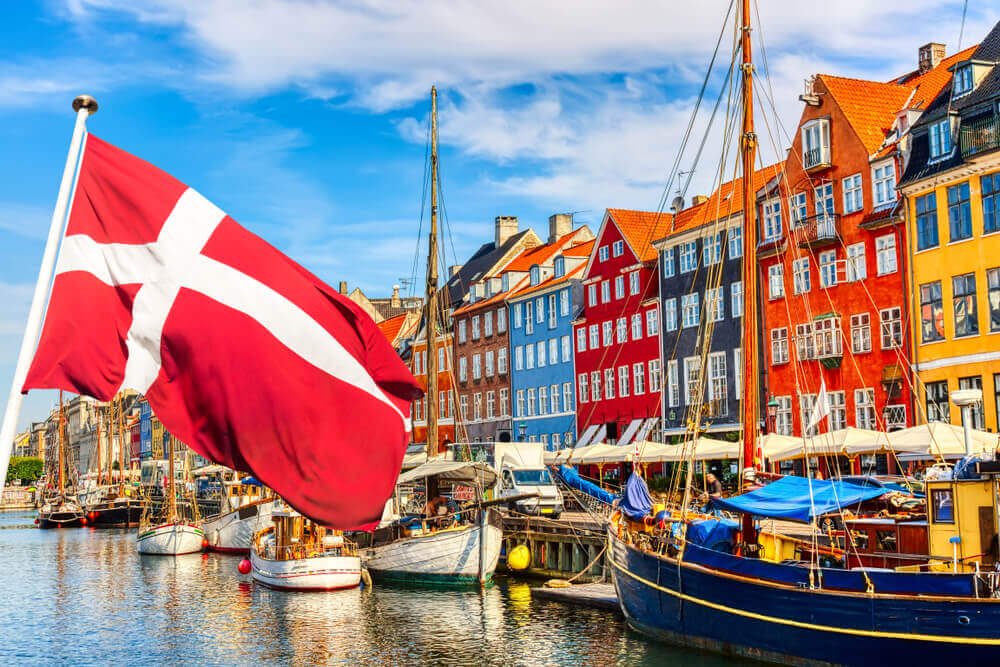
Copenhagen is one of the finest family cities in Europe — compact enough to explore on foot or by bike, rich enough in genuinely excellent attractions to occupy a week of family time, and designed with a quality of public space and a pedestrian infrastructure that makes moving around the city with children genuinely pleasant rather than merely manageable.
Tivoli Gardens — The World’s Second Oldest Amusement Park
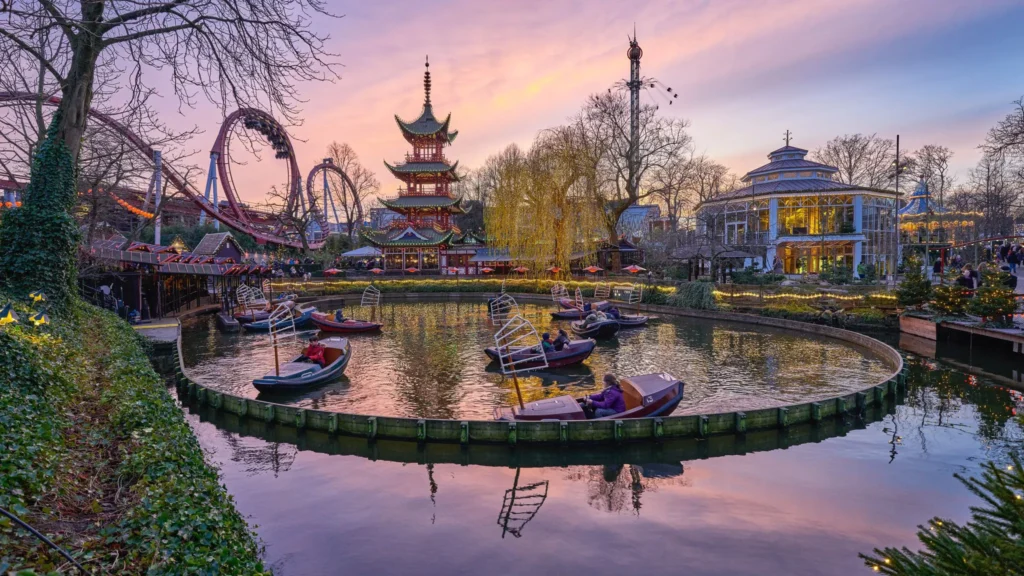
Tivoli Gardens is the most important single attraction in Copenhagen for families with children — a historic amusement park in the heart of the city that has been operating since 1843 and that manages to combine genuine fairground thrills with extraordinary beauty, excellent food, and a quality of atmosphere that is entirely unlike any modern theme park.
Tivoli is not Disneyland. It does not have the scale, the marketing sophistication, or the immersive world-building of the major theme park brands. What it has instead is something rarer and more valuable — a genuine historic character, a physical beauty (the gardens are extraordinarily lovely, particularly in summer and during the Christmas season), and a collection of rides and attractions that spans every age group from toddlers to teenagers without pandering to any of them.
The rides: Tivoli’s ride collection is genuinely diverse — ranging from gentle carousels and a classic wooden roller coaster (the Rutschebanen, built in 1914 and still running with a brakeman on board) to more modern thrill rides including the Vertigo (a spinning ride that reaches 100 km/h), the Demon (a modern steel coaster), and the Aquila (a swinging ship ride). The mix of historic and modern rides — the oldest and the newest in close proximity — gives Tivoli a layered character that appeals to different age groups simultaneously.
The Rutschebanen deserves specific mention — it is one of the oldest operating wooden roller coasters in the world and the experience of riding a coaster that has been thrilling Danish children since 1914, with a human brakeman manually controlling the speed on the descents, is genuinely irreplaceable. It is not the fastest or the most dramatic coaster in existence — it is something more interesting than that.
For younger children: Tivoli has an excellent collection of attractions specifically designed for younger children — the Tivoli Boy area has gentle rides appropriate for children from approximately 2 years old, and the pantomime theatre (one of the oldest in the world, dating to the park’s founding in 1843) provides entertainment of extraordinary charm for children of all ages.
The food: Tivoli has an excellent food offering — far superior to the standard theme park fare. The restaurants within the park range from casual hot dog stands (the Danish pølse — hot dog — is genuinely excellent and children universally love it) to proper restaurants with good Danish and international food. The Grøften — the park’s oldest restaurant, serving traditional Danish food in a lakeside setting — is one of the finest places to eat in Copenhagen with children.
Practical information:
- Opening hours vary by season — Tivoli is open from April through September, during the Halloween season in October, and during the Christmas season from November through January
- Entry fee: approximately DKK 150 (EUR 20) per person — rides require additional tokens or an unlimited ride wristband
- The unlimited ride wristband is worth purchasing for families planning to spend a full day — individual ride tokens become expensive quickly
- Tivoli at night — particularly in summer when the park is illuminated and the gardens are at their most beautiful — is a genuinely magical experience that is worth timing a Copenhagen evening around
The National Museum of Denmark — History Made Accessible
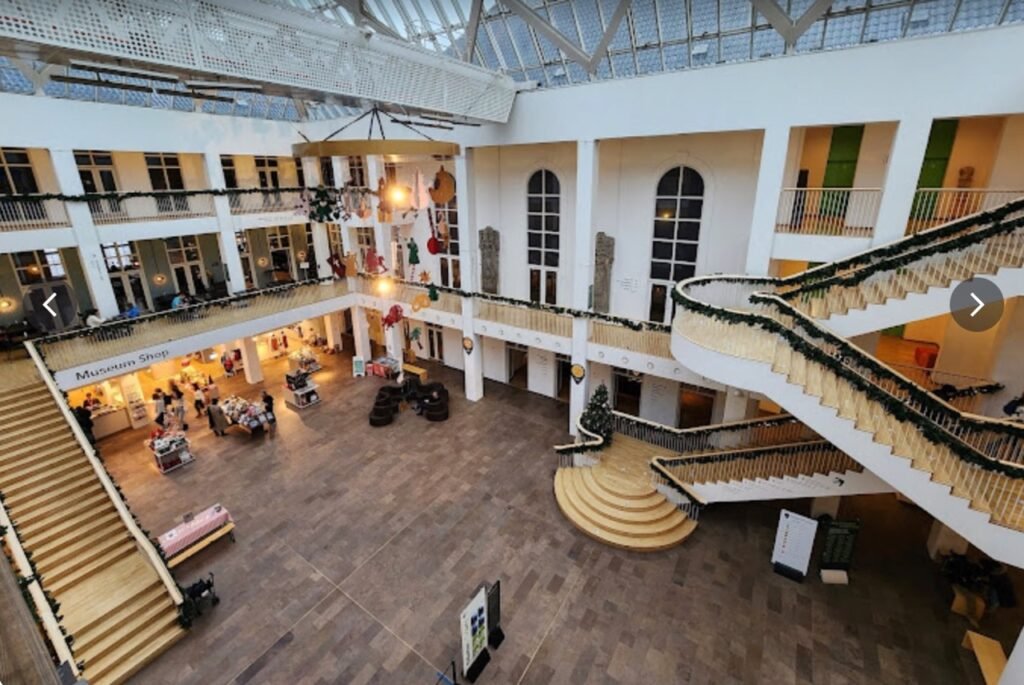
The National Museum of Denmark (Nationalmuseet) in Copenhagen is one of the finest national museums in Europe for family visitors — a comprehensive collection of Danish and world history presented with extraordinary skill and genuine accessibility for visitors of all ages including young children.
The museum’s children’s wing — the Children’s Museum — is one of the best children’s museum spaces in Scandinavia. Rather than being a simplified version of the adult collection it is a genuinely designed space where children can engage physically and imaginatively with historical themes — trying on Viking clothing, exploring a recreated medieval town, handling archaeological objects, and participating in activities that make history tangible rather than merely displayed.
The main collection includes extraordinary objects — the Sun Chariot from 1400 BC (one of the most beautiful Bronze Age objects in existence), the Gundestrup Cauldron (an extraordinary silver vessel decorated with mythological scenes), and an extensive Viking collection that contextualises the Viking Ship Museum at Roskilde with the cultural and material world of the Vikings.
Practical information:
- Free entry for all visitors — one of the finest free attractions in Copenhagen
- Located in central Copenhagen, walking distance from Tivoli and the city’s main sights
- The Children’s Museum section is genuinely excellent and worth allowing at least 2 hours for families with children aged 4 to 12
The Natural History Museum of Denmark — Dinosaurs and Wonders
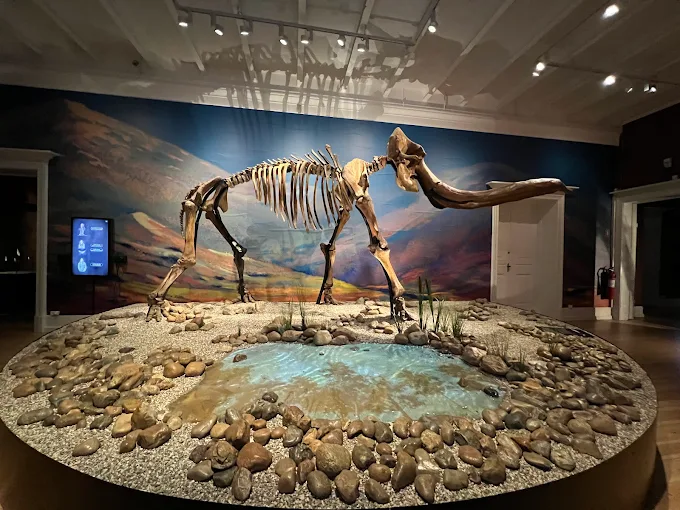
The Natural History Museum of Denmark (Statens Naturhistoriske Museum) — located in the beautiful botanical gardens near the university — is one of Copenhagen’s finest attractions for children with an interest in natural science, with an excellent collection of geological specimens, taxidermied animals, and — most importantly for most children — dinosaur skeletons and fossil displays of considerable quality.
The botanical gardens surrounding the museum provide an extraordinary outdoor environment for family exploration — the large glass palm house (one of the finest in Europe), the extensive collection of Scandinavian and international plant species, and the simply beautiful garden landscape make the botanical gardens one of the finest free outdoor attractions in Copenhagen.
Practical information:
- Located in the Østerbro district — a short cycle or bus ride from central Copenhagen
- Combined visit with the botanical gardens provides a full half-day of family exploration
- Entry fee: approximately DKK 130 (EUR 17) for adults — children under 17 free
The Copenhagen Zoo — One of Europe’s Finest
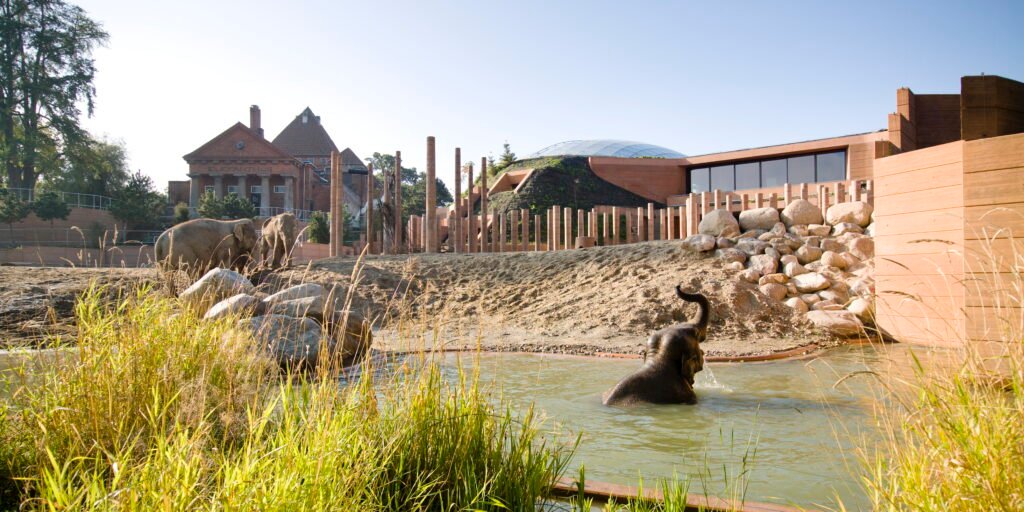
Copenhagen Zoo (Zoologisk Have) is consistently ranked among the finest zoos in Europe — a historic institution (founded 1859) that has been continuously developed and improved to provide genuinely excellent animal habitats and genuinely excellent visitor experiences.
The zoo’s elephant house — designed by the renowned architect Norman Foster — is one of the most extraordinary zoo buildings in the world and the elephant habitat it contains is among the finest in Europe. The polar bear section — with underwater viewing of the bears swimming — is one of the most popular attractions for children and is genuinely spectacular. The giraffe house, the great ape section, and the extensive African savanna area are all of very high quality.
Copenhagen Zoo is one of the leaders in European zoo conservation — its breeding programmes for endangered species and its commitment to genuine animal welfare make it one of the most ethically credible major zoos in the world.
Practical information:
- Located in Frederiksberg — accessible by metro and bus from central Copenhagen
- Entry fee: approximately DKK 250 (EUR 33) per adult, DKK 140 (EUR 19) for children aged 3 to 11 — family tickets available
- Allow a full day for a comprehensive visit
Experimentarium — The Science Museum That Changes Everything
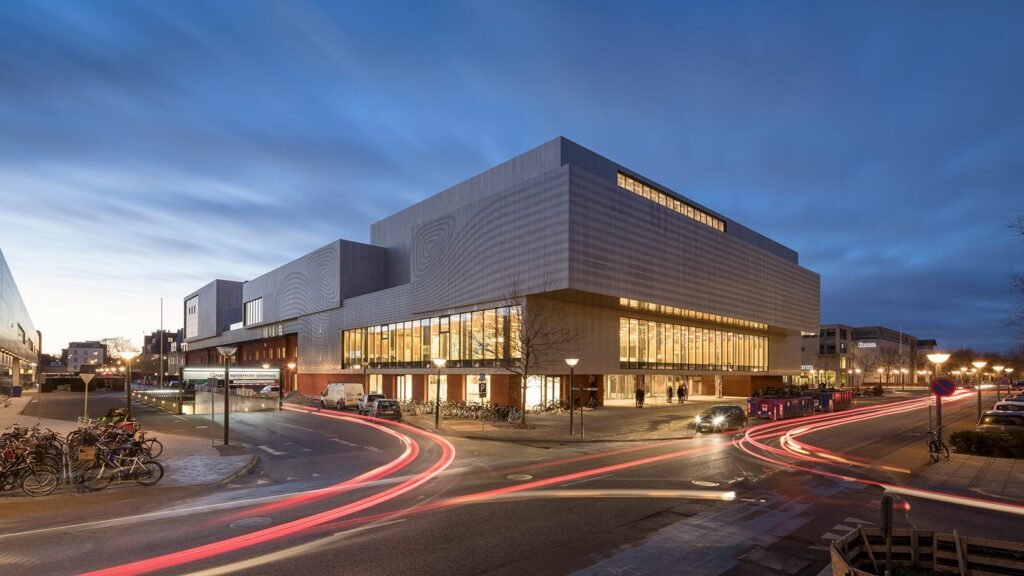
Experimentarium is Copenhagen’s science and technology museum — located in the Hellerup district north of the city centre — and it is one of the finest interactive science museums in Europe. The museum is built around the principle that science is something you do rather than something you observe — virtually every exhibit is interactive, hands-on, and designed to produce genuine scientific understanding through personal experience rather than passive reading of information panels.
The exhibits cover an extraordinary range of scientific subjects — from basic physics and chemistry through biology, technology, environmental science, and the science of the human body — in ways that are genuinely engaging for children from approximately 4 years old through teenage years. The sports science section — where children can test their own physical capabilities against scientific measurement — is particularly popular.
Experimentarium is one of the finest rainy day options in Copenhagen — a full day can be spent without any sense of having run out of things to explore.
Practical information:
- Located in Hellerup — accessible by S-train from Copenhagen Central Station (approximately 15 minutes)
- Entry fee: approximately DKK 220 (EUR 29) per person — family tickets available
- Allow a full day for families with children aged 4 to 14
Danish Design Museum — Even Kids Get It
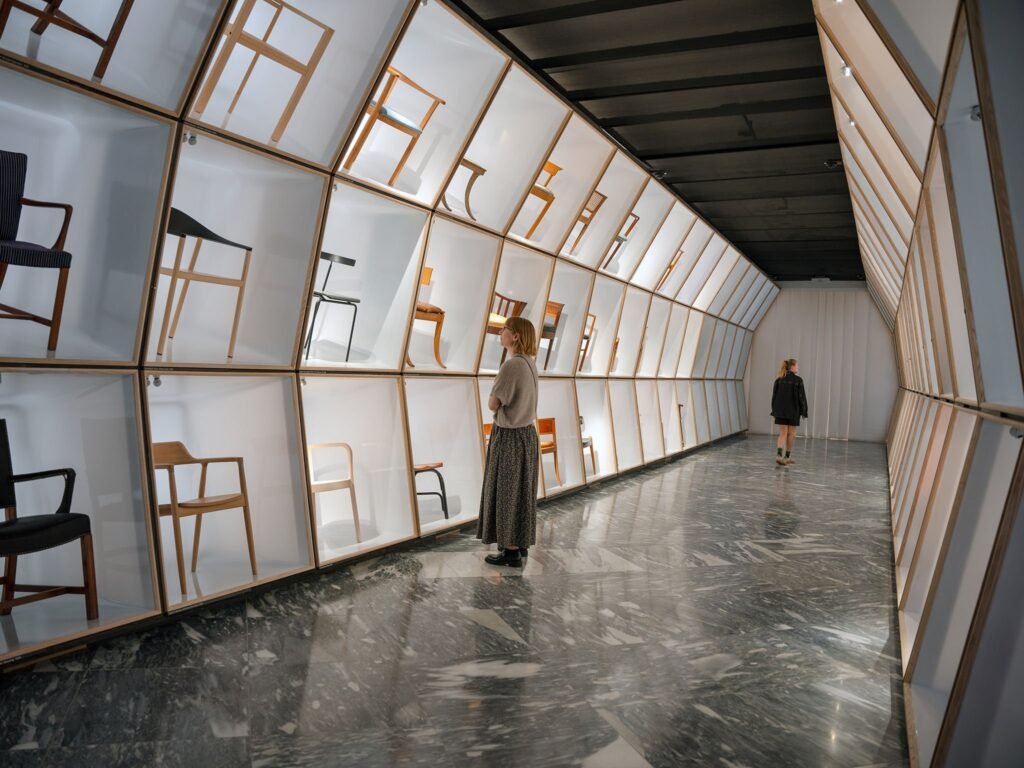
The Designmuseum Danmark — located in a beautiful 18th-century hospital building in central Copenhagen — is one of the world’s finest design museums and one of the most accessible for family visitors. The collection spans furniture, fashion, graphic design, industrial design, and applied arts from the 18th century to the present — presented in a way that emphasises the relationship between design and daily life rather than treating design as a specialised art form.
For families the museum’s approach — showing how the objects of everyday life have been designed and redesigned over centuries — is genuinely accessible for children who can see the connection between the museum’s objects and the things they use every day. The classic Danish furniture designs — the Egg Chair by Arne Jacobsen, the Wishbone Chair by Hans Wegner, the Series 7 chair that appears in virtually every Danish home — are recognisable to children who have grown up in Danish-influenced design environments.
Practical information:
- Located in central Copenhagen, near the Amalienborg Palace
- Entry fee: approximately DKK 130 (EUR 17) for adults — children under 17 free
- The museum café is one of the finest in Copenhagen — excellent for a family lunch break
Amalienborg Palace and the Changing of the Guard
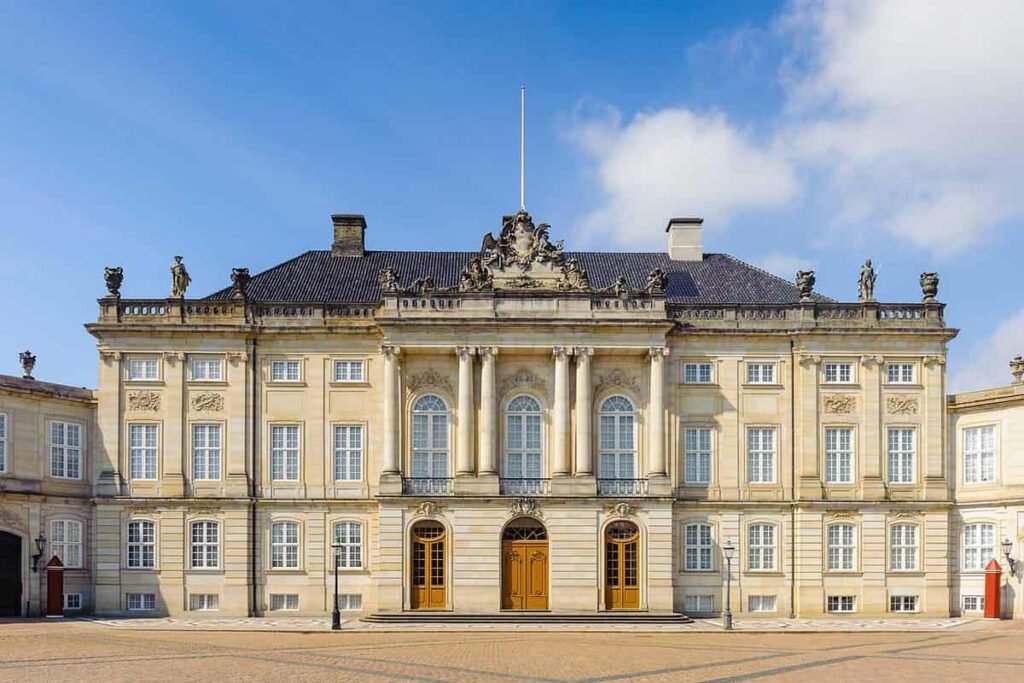
The Amalienborg Palace — the winter residence of the Danish Royal Family — is one of the finest examples of Rococo architecture in northern Europe and the site of one of the most accessible and most child-friendly royal ceremonies in Europe — the daily changing of the guard.
The changing of the guard at Amalienborg takes place at noon every day — a ceremonial procession of the Royal Life Guards from the Rosenborg Castle to Amalienborg that passes through the streets of central Copenhagen and culminates in the formal changing ceremony in the palace square. The ceremony is free to watch, takes place in an open public square with good sightlines from multiple positions, and is genuinely entertaining for children — the elaborate uniforms, the military music, and the formal ceremony provide a theatrical spectacle that holds children’s attention consistently well.
The Amalienborg Museum — inside one of the palace’s four mansions — provides an interior view of Danish royal life across several centuries of history with exhibits of genuine quality and genuine accessibility.
Practical information:
- Changing of the guard: daily at noon, free to watch
- Museum entry: approximately DKK 115 (EUR 15) for adults, DKK 60 (EUR 8) for children
- Combined with a walk through the surrounding Frederiksstaden district and a visit to the nearby Marble Church provides a full morning of family exploration
Rosenborg Castle and the Crown Jewels
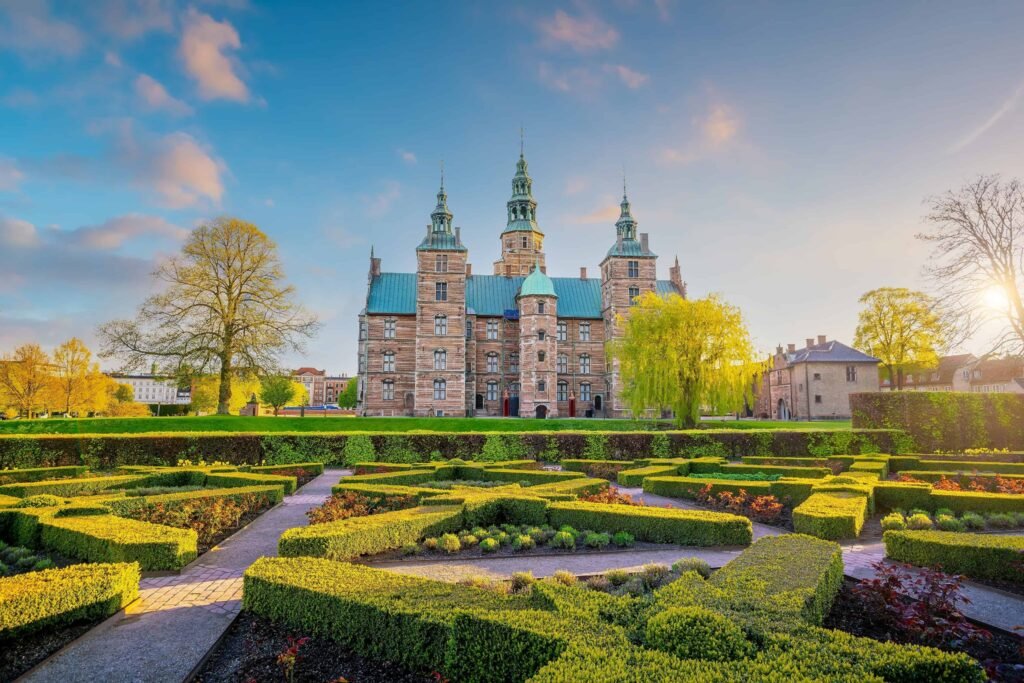
Rosenborg Castle — a Renaissance palace in the centre of Copenhagen surrounded by the King’s Garden (Kongens Have) — is the finest historic building in Copenhagen for family visits, combining an extraordinary interior with the enormous pleasure of the surrounding park.
The castle was built between 1606 and 1624 as the summer residence of King Christian IV — one of the most ambitious and most colourful monarchs in Danish history — and the interior retains much of its original decoration, furnishing, and royal atmosphere. The Crown Jewels are displayed in the castle’s basement treasury — the Danish crown jewels are among the most beautiful in Europe and the presentation in the vaulted basement rooms is genuinely dramatic.
The King’s Garden surrounding the castle is one of the finest public parks in Copenhagen — a beautifully maintained formal garden with large open lawns, rose gardens, historic statuary, and the particular quality of a royal park that has been open to the public since the 17th century. The park is one of the finest free outdoor spaces in Copenhagen for family picnics, ball games, and the simple pleasure of unstructured time in a beautiful environment.
Practical information:
- Entry fee: approximately DKK 130 (EUR 17) for adults, DKK 70 (EUR 9) for children aged 5 to 17
- The King’s Garden is free and open year-round
- Allow 2 to 3 hours for the castle and garden combined
Beyond Copenhagen: The Best Family Destinations in Denmark
LEGO House Billund — The Greatest Children’s Attraction in Denmark
LEGO House in Billund is the single most extraordinary children’s attraction in Denmark and one of the finest dedicated children’s attractions in the world — a building designed by the Danish architect Bjarke Ingels that houses an extraordinary collection of LEGO-based experiences, interactive zones, and creative play environments that make it genuinely unmissable for any family visiting Denmark with children who have any interest whatsoever in the world’s most famous building toy.
The building itself is extraordinary — a stack of interlocking white cubes that resembles an enormous LEGO construction, designed by the same principle of interlocking elements that defines the toy itself. The 12,000 LEGO bricks that form the iconic Tree of Creativity at the building’s heart — a towering sculpture of LEGO bricks in every colour — is one of the most spectacular interior spaces in Denmark.
The Experience Zones:
LEGO House organises its visitor experience into four colour-coded zones — each representing a different type of creative play and a different aspect of the LEGO universe.
The Red Zone — Creative Play
The Red Zone is dedicated to free creative building — tables of LEGO bricks in every size, shape, and colour, arranged around themes that stimulate imagination without constraining it. Children can build anything — a city, a creature, a vehicle, an abstract sculpture — and the resulting creations can be scanned and digitally displayed on the surrounding screens, bringing the physical build into a digital environment. The Red Zone is where the youngest children spend most of their time and where the most uninhibited creative play happens.
The Blue Zone — Cognitive Play
The Blue Zone focuses on cognitive and problem-solving play — LEGO Technic and LEGO Mindstorms builds that require engineering thinking, logical sequencing, and technical problem-solving. Older children — particularly those aged 8 and above — find the Blue Zone the most stimulating environment in the building. The fish creation station — where children build a LEGO fish and watch it swim in a digital aquarium — is one of the most satisfying single experiences in the entire building.
The Green Zone — Social Play
The Green Zone focuses on social and collaborative play — large scale builds that require multiple children to work together, role-playing environments, and cooperative games built around LEGO elements. The LEGO city environment in the Green Zone — a large scale model city that children can build into and interact with — is one of the most popular spaces for children aged 5 to 10.
The Yellow Zone — Emotional Play
The Yellow Zone is dedicated to storytelling and narrative — LEGO Friends environments, character-based building, and the emotional dimensions of creative play. For children who are interested in storytelling, character creation, and narrative building the Yellow Zone provides the richest environment in the building.
LEGO House Restaurant:
The restaurant at LEGO House is one of the finest theme attraction restaurants in Europe — the food is genuinely good (Danish-influenced, fresh, and varied) and the dining environment is designed with the same creativity and attention to detail as the rest of the building. The LEGO minifigure burger — served with a LEGO minifigure on top that children keep — is the most popular menu item and entirely lives up to its reputation.
Practical information:
- Location: Billund — approximately 2.5 hours by car from Copenhagen, accessible by bus from Billund Airport
- Entry fee: approximately DKK 299 (EUR 40) per person — children under 2 free. Entry is by timed ticket — book in advance as LEGO House regularly sells out, particularly during school holidays
- Allow a full day — 5 to 6 hours minimum for a family with children who want to engage properly with all four zones
- The LEGO Vault in the basement — a collection of every LEGO set ever produced, displayed in a spectacular circular room — is accessible by a separate ticket and is genuinely extraordinary for adult LEGO enthusiasts and older children
LEGOLAND Billund:
LEGOLAND Billund — the original LEGOLAND park, opened in 1968 — is located directly adjacent to LEGO House and can be combined with a LEGO House visit for a full Billund family day or a two-day Billund family experience. LEGOLAND Billund is the finest of the LEGOLAND parks worldwide — the original location has the deepest collection of LEGO model landscapes, the most historically interesting rides, and the particular quality of a place that has been evolving and improving for over fifty years.
The Miniland section of LEGOLAND Billund — where famous world landmarks and scenes of Danish life are recreated in extraordinary detail from millions of LEGO bricks — is the finest single section of any LEGOLAND park in the world and worth the visit independently of the rides.
Practical information for LEGOLAND:
- Entry fee: approximately DKK 399 (EUR 53) per person — family tickets and combination tickets with LEGO House available
- Open from April through October — check the website for exact opening dates and hours
- Allow a full day — LEGOLAND Billund can genuinely occupy a full day for families with children aged 3 to 12
The Viking Ship Museum Roskilde — History That Comes Alive
The Viking Ship Museum (Vikingeskibsmuseet) in Roskilde is one of the finest history museums in Europe for family visitors — a museum built around five original Viking ships raised from the Roskilde Fjord in 1962, presented in a beautifully designed waterside building that allows visitors to see the ships in the context of the fjord from which they came.
The five ships — ranging from a small fishing boat to a large ocean-going longship — were deliberately sunk in the Roskilde Fjord in approximately 1070 AD to block the fjord entrance and protect Roskilde from seaborne attack. Their preservation in the fjord mud and their subsequent excavation and restoration is one of the great achievements of Scandinavian archaeology.
The Museum Harbour:
The outdoor museum harbour — where the museum’s fleet of reconstructed Viking ships is moored — is the finest part of the Viking Ship Museum experience for families with children. The reconstructed ships are full-size, seaworthy replicas built using traditional Viking shipbuilding techniques, and during the summer season visitors can sail on the ships in the Roskilde Fjord — one of the most extraordinary family experiences available anywhere in Denmark.
Sailing on a reconstructed Viking ship — helping to row, handling the sail, and feeling the extraordinary responsiveness and speed of a Viking vessel on open water — is the kind of experience that children talk about for years. The sailing programme operates from May through September and must be booked in advance.
The harbour also includes an active boatbuilding workshop where traditional Viking shipbuilding techniques are demonstrated year-round — watching craftspeople build Viking ships using iron-age tools and techniques is genuinely fascinating for children and adults alike.
Practical information:
- Location: Roskilde — approximately 30 minutes by train from Copenhagen Central Station
- Entry fee: approximately DKK 165 (EUR 22) for adults, DKK 85 (EUR 11) for children aged 6 to 17
- Sailing on the fjord: additional fee, book in advance for summer visits
- Allow a full day for the museum, harbour, and sailing experience combined
Odense — The World of Hans Christian Andersen
Odense — the capital of the island of Funen and Denmark’s third largest city — is one of the most rewarding family destinations in Denmark for a reason that is universally understood by children across the world: it is the birthplace of Hans Christian Andersen, the author of The Little Mermaid, Thumbelina, The Ugly Duckling, The Snow Queen, and dozens of other fairy tales that have shaped the imaginative lives of children for nearly two centuries.
Hans Christian Andersen Museum:
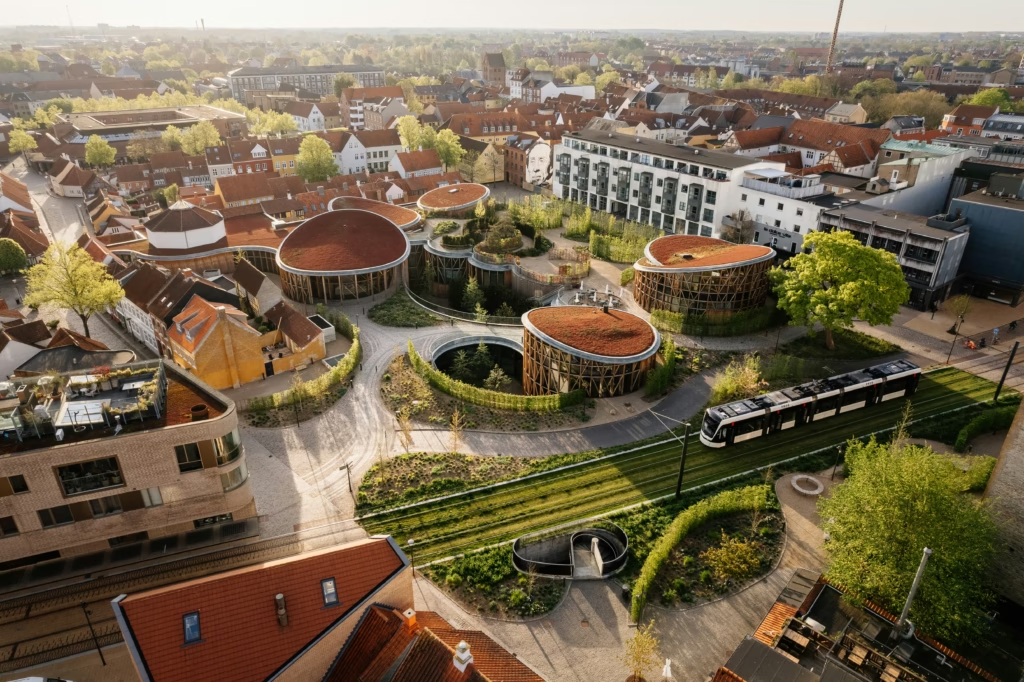
The Hans Christian Andersen Museum — completely rebuilt and reopened in 2021 in a new building designed by the Japanese architect Kengo Kuma — is one of the finest literary museums in Europe and one of the most extraordinary family museum experiences in Denmark. The new building — a landscape of curved pathways, gardens, and indoor spaces that reflect the dreamlike quality of Andersen’s fairy tale worlds — is a work of architectural imagination that perfectly suits its subject.
The museum’s interior spaces are designed to immerse visitors in the world of Andersen’s fairy tales — the displays combine biographical information about Andersen’s extraordinary life (he was born in poverty in Odense in 1805 and became one of the most celebrated writers in the world by the time of his death in 1875) with imaginative recreations of the fairy tale worlds he created. Children who know the stories respond to the museum with the particular excitement of recognition — seeing the physical world of stories they know and love brought into tangible form.
The Fairy Tale Garden:
The museum’s outdoor fairy tale garden — a sequence of themed garden spaces connected by winding paths — is one of the finest children’s outdoor spaces in Denmark. The garden spaces reference specific fairy tales — the Little Mermaid’s underwater world, the Snow Queen’s ice palace, the Ugly Duckling’s pond — in ways that stimulate imaginative play and creative engagement without the heavy-handed literalism of theme park attractions.
HC Andersen’s Childhood Home:
The small house in the centre of Odense’s old town where Andersen was born and spent his early childhood is preserved as a museum — a tiny, low-ceilinged dwelling that makes the poverty of his childhood vividly real. For older children the contrast between the cramped childhood home and the global fame that emerged from it provides a genuinely moving lesson in the relationship between imagination and circumstance.
Funen Village (Den Fynske Landsby):
The Funen Village open-air museum on the edge of Odense is one of the finest open-air folk museums in Denmark — a collection of historic farm buildings relocated from across Funen and reassembled into a working historic village that demonstrates Danish rural life in the 18th and 19th centuries. The museum is particularly excellent for families — the working farm animals, the seasonal demonstrations of traditional crafts and agricultural practices, and the extraordinary landscape of historic buildings provide a full afternoon of genuinely engaging family exploration.
Practical information for Odense:
- Location: Funen Island — approximately 1.5 hours by train from Copenhagen
- The Hans Christian Andersen Museum entry fee: approximately DKK 175 (EUR 23) for adults, DKK 60 (EUR 8) for children aged 4 to 17
- Allow 2 days for a comprehensive Odense family visit — the museum, the childhood home, the fairy tale garden, and the Funen Village comfortably fill two days
Bornholm Island — The Family Beach and Nature Island
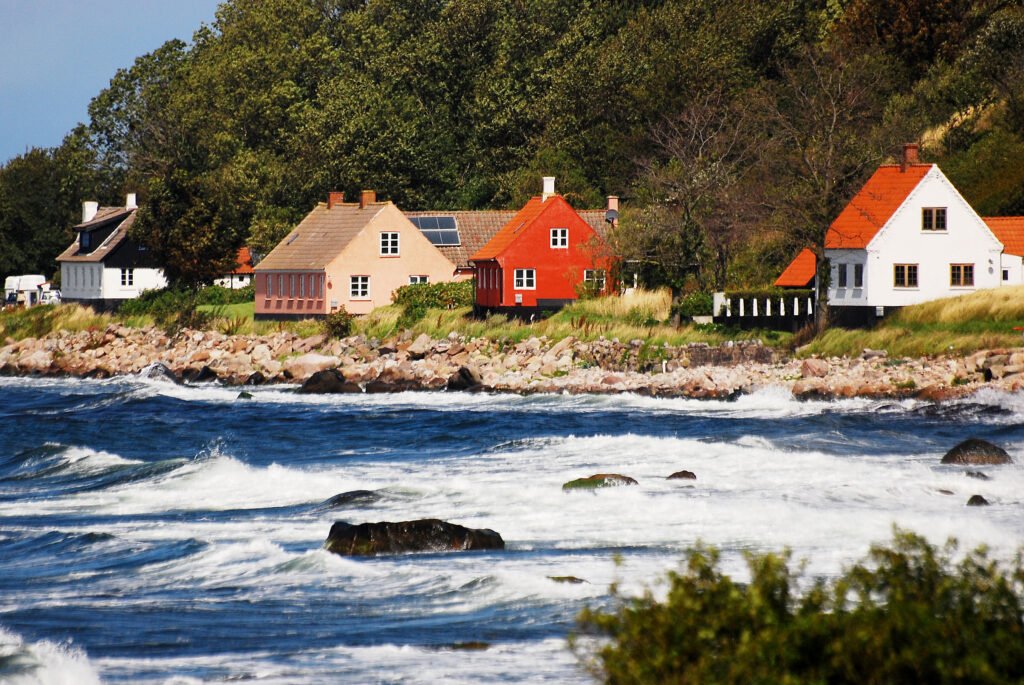
Bornholm is Denmark’s sunshine island — a Baltic Sea island approximately 150 kilometres east of Copenhagen that receives more sunshine hours than any other part of Denmark and offers a combination of extraordinary beaches, dramatic coastal landscapes, medieval round churches, historic smokehouse culture, and a general quality of relaxed island life that makes it one of the finest family holiday destinations in Denmark.
The Beaches:
Bornholm’s beaches are among the finest in the Baltic — the south coast beaches of Dueodde and Balka are particularly outstanding, with fine white sand, shallow warm water, and an absence of the strong currents and large waves that make some other Danish coastal beaches less suitable for young children. Dueodde beach — a vast expanse of fine white sand backed by pine forest — is one of the most beautiful beaches in Denmark and one of the finest family beaches in the Baltic region.
Cycling:
Bornholm is the most cycle-friendly island in Denmark — a network of dedicated cycling paths connects the island’s major towns and attractions, and the relatively flat terrain of the southern and central parts of the island makes family cycling accessible for children from approximately 5 years old. Bike hire is available at the ferry terminal and in all major towns.
The Round Churches:
Bornholm has four medieval round churches — unique architectural structures that exist nowhere else in Denmark in such concentration — that are genuinely fascinating for children who can see in them the combination of church and fortress that reflects the medieval reality of a coastal community needing to defend itself while also worshipping. The round churches are all open to visitors and the climb to the upper levels (where the defensive function becomes clear) is a highlight for adventurous children.
Hammershus Castle:
Hammershus — the ruins of the largest medieval castle in northern Europe, perched dramatically on a cliff above the Baltic on the island’s northwest coast — is one of the most extraordinary castle ruins in Scandinavia and one of the finest family destinations on Bornholm. The scale of the ruins — extensive walls, towers, and defensive structures spread across a large hilltop site — combined with the dramatic coastal setting and the complete freedom to explore the ruins without barriers or restrictions makes Hammershus one of the most genuinely exciting historic sites in Denmark for children.
Getting to Bornholm:
- Ferry from Copenhagen (Rønne harbour) — approximately 6 hours overnight or 5.5 hours day crossing — family cabins available
- Flight from Copenhagen — approximately 35 minutes — several daily departures
North Zealand — Castles and Coastal Beauty
North Zealand — the area of Zealand Island north of Copenhagen along the Øresund coast — contains the highest concentration of magnificent castles in Denmark and one of the finest collection of family day trips from the Danish capital.
Frederiksborg Castle:
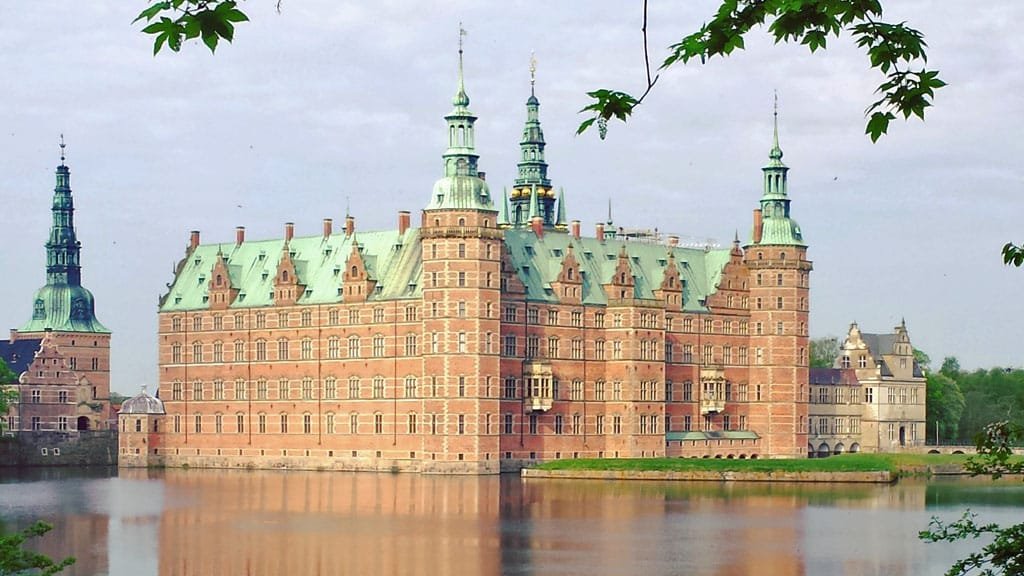
Frederiksborg Castle at Hillerød — approximately 35 kilometres north of Copenhagen — is the most beautiful Renaissance castle in Scandinavia and one of the most spectacular historic buildings in northern Europe. Built between 1600 and 1620 for King Christian IV the castle sits on three islands in a lake, its copper spires and sandstone façade reflected in the water in a scene of extraordinary beauty.
The interior houses the Museum of National History — a comprehensive collection of Danish royal portraits and historical paintings that provides a genuinely accessible introduction to Danish history for older children. The baroque garden that descends from the castle’s south façade to the lake is one of the finest historic gardens in Denmark.
Kronborg Castle:
Kronborg Castle at Helsingør — 45 kilometres north of Copenhagen — is the most famous castle in Denmark internationally, known across the world as the setting of Shakespeare’s Hamlet and listed as a UNESCO World Heritage Site. The castle sits dramatically at the narrowest point of the Øresund strait — less than 4 kilometres from the Swedish coast — in a position of extraordinary strategic and visual power.
The castle’s casemates — the underground passages and chambers beneath the castle — are one of the finest adventure spaces in any Danish castle for children. The legendary figure of Holger Danske — a mythological Danish hero who is said to sleep in the casemates until Denmark needs him — is represented by a famous statue in the deepest chamber and is genuinely exciting for children who have been told the legend before visiting.
Getting to North Zealand:
- Helsingør: approximately 45 minutes by train from Copenhagen Central Station
- Hillerød: approximately 50 minutes by train from Copenhagen Central Station
- Both destinations are easily combined in a single day trip from Copenhagen
The Wadden Sea — Nature’s Greatest Tidal Show
The Danish Wadden Sea — a UNESCO World Heritage Site and National Park on the west coast of Jutland — offers one of the most extraordinary and most undervisited natural family experiences in Denmark: the mussel walk (vadetur) across the exposed tidal flats at low tide.
The Wadden Sea is the world’s largest unbroken system of intertidal mudflats — an ecosystem of extraordinary biological productivity that supports millions of migratory birds, extensive populations of seals, and an extraordinary variety of marine life exposed at each low tide. Walking across the exposed mudflats at low tide — feeling the mud between your toes, observing the marine life left by the retreating water, and understanding the extraordinary scale of the tidal movement — is one of the most genuinely educational and most genuinely fun outdoor experiences available to families in Denmark.
The Mudflat Walk (Vadetur):
Guided mudflat walks are available from several Wadden Sea towns — particularly from Ribe, Fanø Island, and Esbjerg — led by certified Wadden Sea guides who provide expertise in the ecology, wildlife, and safety of the tidal flats. The walks are completely safe when conducted with a certified guide who knows the tide patterns and the safe crossing routes.
The experience of walking out across the exposed mudflat for several kilometres, with the water retreating to the horizon and the birds gathering in extraordinary concentrations on the exposed banks, is one that children universally find remarkable — a genuinely alien landscape that makes the natural world feel more extraordinary and more varied than any amount of television or internet content can communicate.
Seal watching:
The Danish Wadden Sea has a large population of both common seals and grey seals — the seal colonies are visible from several vantage points along the coast and from boat trips operating from the major Wadden Sea towns. Seal watching with children — the animals are abundant, relatively close to the viewing points, and sufficiently human-curious to provide excellent observation opportunities — is one of the finest wildlife experiences available in Denmark.
Practical Guide: Everything Families Need to Know
Getting Around Denmark with Children
By Train:
Denmark’s rail network (DSB) is excellent for family travel — trains are clean, comfortable, punctual, and child-friendly. Children under 15 travel free when accompanied by an adult paying the standard fare — a significant practical benefit for family travel budgets. The intercity trains between Copenhagen, Odense, Aarhus, and Aalborg are comfortable and fast — the Copenhagen to Odense journey takes approximately 1.5 hours, Copenhagen to Aarhus approximately 3 hours.
The S-tog (suburban train) network in Copenhagen connects the city centre with the surrounding suburbs and several major family attractions — the Experimentarium at Hellerup, the Zoo at Frederiksberg, and the shopping and beach destinations of the North Zealand coast are all accessible by S-tog without needing to navigate the city by car.
By Car:
Denmark is an easy country to drive in — the road network is excellent, signage is clear in both Danish and often English, and the distances between major destinations are manageable for family road trips. A car is strongly recommended for families visiting Bornholm (where the cycling network is the primary transport), the Wadden Sea region (where the national park areas are spread across a large coastal zone), and the North Jutland destinations north of Aalborg.
By Bike:
Copenhagen’s cycling infrastructure makes bike travel with children genuinely easy and genuinely rewarding. Cargo bike hire (available from several operators including Baisikeli and Cykelens Dag) allows families to transport young children comfortably while covering the city at a pace that is faster than walking and more flexible than public transport. For families with older children (7 and above) who can cycle independently the city’s extensive cycle lane network makes self-powered family exploration of Copenhagen genuinely safe and genuinely accessible.
Where to Stay with Children
Family Hotels:
Denmark has excellent family hotels — the Scandic hotel chain (present throughout Denmark) has particularly good family room configurations and a consistent standard of family friendliness. In Copenhagen the Scandic Falkoner and Scandic Spectrum both offer excellent family room options at reasonable prices for a Scandinavian capital.
The Legoland Hotel in Billund — located directly adjacent to LEGOLAND — is one of the finest themed family hotels in Europe. The rooms are decorated in LEGO themes, there is a LEGO play area in every room, and the hotel’s LEGO experience extends from check-in to breakfast (where LEGO bricks are provided at the table). For families visiting LEGOLAND and LEGO House staying at the Legoland Hotel for one or two nights is genuinely worthwhile.
Holiday Cottages (Sommerhus):
The sommerhus rental tradition is the finest accommodation option for families visiting Denmark — particularly for visits of a week or more. Tens of thousands of holiday cottages are available for weekly rental throughout the country through agencies including DanCenter, Novasol, and Sol og Strand.
A well-chosen sommerhus provides space, a kitchen for family cooking, a garden for children to play in, and a base from which to explore the surrounding area at a pace set by the children rather than an itinerary. The coastal sommerhus areas — particularly the Jutland west coast near Blåvand, the North Zealand coast near Tisvildeleje, and the Bornholm coastline near Dueodde — are the finest for families combining beach access with natural landscape exploration.
Camping:
Danish camping facilities are among the finest in Europe — the national camping network maintains consistently high standards of cleanliness, facilities, and family infrastructure. Danish campsites typically provide children’s playgrounds, family bathroom facilities, and a social atmosphere that is particularly welcoming for travelling families. Several coastal campsites — particularly on Bornholm and along the west Jutland coast — have direct beach access that makes them genuinely excellent family camping destinations.
Food and Eating with Children in Denmark
The Danish Approach to Children in Restaurants
Danish restaurants genuinely welcome children — not with the performative enthusiasm that masks actual inconvenience but with a matter-of-fact inclusivity that reflects the Danish cultural assumption that children are members of society whose needs are worth accommodating. High chairs are universally available. Children’s menus are common but not compulsory — Danish food culture encourages children to eat adult food rather than a parallel children’s menu of simplified dishes.
What Children Love to Eat in Denmark
The pølse — Danish hot dog — is the single most universally appreciated Danish food for children of all ages. The Danish hot dog is not a simple hot dog — it is a carefully constructed combination of a good quality sausage (typically a rødpølse — a bright red boiled sausage — or a grillpølse — a grilled sausage), served in a soft bun with a choice of condiments (mustard, ketchup, remoulade, crispy onions, raw onion, and pickled cucumber) that are added to order. The pølsevogn — the hot dog cart — is found throughout Danish cities and is one of the most affordable and most child-friendly food options in Denmark.
Smørrebrød — the open sandwich that is Denmark’s most distinctive food tradition — is surprisingly accessible for children, particularly the simpler combinations of good Danish bread with butter and cheese, or with the legendary Danish leverpostej (liver pâté) that most Danish children eat from an early age.
Danish pastries — wienerbrød — are universally loved by children and are of extraordinary quality throughout Denmark. The morning pastry stop at a Danish baker (bageri) is one of the finest small pleasures of family travel in Denmark — the selection of cinnamon rolls (kanelsnegle), custard pastries (spandauer), and almond pastries (tebirkes) is consistently good and the prices are reasonable.
Budget eating with children:
Denmark has a reputation for expense and the reputation is not entirely unwarranted — restaurant meals in Copenhagen are genuinely expensive by most international standards. But several strategies make family eating in Denmark manageable at reasonable cost.
The lunch tradition in Denmark — where even restaurants that are expensive in the evening serve genuinely good food at significantly lower lunchtime prices — is particularly useful for families. A smørrebrød lunch at a good Copenhagen restaurant provides excellent Danish food at prices considerably lower than an equivalent evening meal.
The street food markets — particularly Reffen (Copenhagen’s largest street food market, on the Refshaleøen island) and the Torvehallerne (Copenhagen’s covered food market near Nørreport station) — provide excellent food at accessible prices in environments that are genuinely enjoyable for families.
Self-catering from Danish supermarkets (Netto, Lidl, Rema 1000, and Fakta are the most affordable chains) is the most effective budget strategy for families — Denmark’s supermarkets stock excellent quality produce, excellent dairy, and excellent bread at prices significantly below restaurant levels.
Health and Safety for Families
Denmark is one of the safest countries in the world for family travel — the healthcare system is excellent, the general safety environment is among the best in Europe, and the specific family safety considerations are minimal compared to most travel destinations.
Emergency healthcare: EU citizens with a valid European Health Insurance Card (EHIC) receive emergency healthcare in Denmark at no cost. Non-EU visitors should ensure comprehensive travel insurance covering medical expenses before departure. Danish hospitals are excellent and English is universally spoken by healthcare professionals.
Sun protection: Denmark’s summer sun — particularly in June and July when the days are very long — is significantly stronger than its northerly latitude might suggest. SPF 50 sunscreen, hats, and UV-protective clothing are recommended for children spending extended time outdoors in the summer months.
Water safety: Danish beaches are generally safe for swimming — the east coast beaches (particularly in the Øresund and the inner fjords) have calm water and gentle conditions suitable for young children. The west coast Jutland beaches face the North Sea and can have strong currents and larger waves — swimming conditions should be checked locally before allowing young children into the water on North Sea beaches.
Best Time to Visit Denmark with Children
Summer (June to August) — The Family Peak Season
Summer is the finest season for family travel in Denmark — the long daylight hours (Copenhagen in June has daylight until approximately 10 PM), the warm temperatures (averaging 20 to 23°C), the beach season, and the full operation of all family attractions make June through August the most popular and most rewarding family travel period. School holiday timing (particularly the Danish summer holidays from late June through early August) means that some attractions are busy — book LEGO House, LEGOLAND, and Tivoli well in advance for summer visits.
Spring (April to May) — The Excellent Alternative
Spring is an excellent and significantly less crowded alternative to summer for family visits — the temperatures are warm enough for outdoor exploration (15 to 18°C), the attractions are fully operational, and the visitor numbers are dramatically lower than the summer peak. The Copenhagen Tivoli opening season begins in April and the experience in April and May — before the summer crowds arrive — is significantly more relaxed than the peak summer version.
Autumn (September to October) — The Underrated Option
Early autumn is a genuinely excellent time for family travel in Denmark — particularly for families with school-age children who can travel outside the main school holiday periods. The temperatures remain pleasant through September (18 to 20°C), the summer crowds have dispersed, and the Danish countryside produces extraordinary autumn colour in October that is genuinely beautiful. The Tivoli Halloween season in October — when the park is decorated for Halloween with particular creativity — is one of the most enjoyable Tivoli visits of the year for children who enjoy the spooky season.
Winter (November to January) — The Christmas Magic
The Danish Christmas season — from late November through early January — is one of the most magical times to visit Copenhagen with children. The Christmas markets, the Tivoli Christmas season (when the park is transformed with extraordinary illuminations, Christmas decorations, and seasonal attractions), the hygge atmosphere of the dark Nordic winter, and the particular quality of Danish Christmas culture — juletræer (Christmas trees), æbleskiver (traditional Christmas pancakes), nisser (Christmas elves) — create a family experience of genuine enchantment.
The Denmark Family Itinerary: 10 Days
Days 1 to 3 — Copenhagen
Day 1: Arrive Copenhagen. Afternoon at Tivoli Gardens — first impressions of the park in the afternoon and early evening when the illuminations begin.
Day 2: National Museum (Children’s Museum section in the morning), King’s Garden and Rosenborg Castle in the afternoon. Evening canal boat tour — one of the finest ways to see Copenhagen with children.
Day 3: Experimentarium (full day). Evening in Nyhavn — the colourful canalside district with good restaurants and a magical evening atmosphere.
Day 4 — Roskilde Day Trip
Day trip from Copenhagen by train. Viking Ship Museum in the morning — sailing on the fjord if booked in advance. Roskilde Cathedral in the afternoon. Return to Copenhagen for dinner.
Day 5 — North Zealand Castles
Day trip from Copenhagen by train. Frederiksborg Castle at Hillerød in the morning. Kronborg Castle at Helsingør in the afternoon. Return to Copenhagen for dinner.
Days 6 to 7 — Billund (LEGO)
Train and bus or car to Billund. Day 6: LEGO House — full day. Day 7: LEGOLAND Billund — full day. Evening return to Copenhagen or overnight in Billund.
Days 8 to 9 — Odense
Train to Odense. Day 8: Hans Christian Andersen Museum and fairy tale garden. Day 9: Funen Village open-air museum and Odense city exploration. Train return to Copenhagen.
Day 10 — Copenhagen Farewell
Copenhagen Zoo in the morning. Last pastry at a favourite bageri. Departure.
Final Thoughts: Why Denmark Belongs on Every Family’s Travel List
Denmark is not the first destination most families think of when planning a European family holiday — Italy, France, and Spain attract far more family visitors despite offering no single attraction as extraordinary as LEGO House, no castle landscape as richly child-stimulating as North Zealand, and no beach culture as safe and accessible as the Danish coastline.
The families who discover Denmark discover a country that has thought about children with more intelligence and more genuine care than almost anywhere else on earth — a country where the playgrounds are extraordinary, where the museums treat children as genuine participants rather than tolerant guests, where the cycling infrastructure makes family exploration genuinely easy, where the beaches are safe and beautiful, and where the cultural tradition of hygge means that family comfort and family warmth are built into the design of the country rather than being incidental to it.
Denmark rewards the family that arrives without fixed expectations — that is willing to cycle through the rain to a Viking ship museum, to let the children spend four hours at LEGO House rather than ticking off a predetermined list of sights, to sit in a Copenhagen café for an hour over excellent coffee and hot chocolate simply because the children are happy and there is nowhere else that needs to be reached.
That quality of unhurried family contentment — of children who are genuinely engaged rather than merely entertained, of adults who are genuinely relaxed rather than merely managing — is what Denmark offers to travelling families. And it is rarer and more valuable than any theme park, any beach resort, or any collection of famous sights.
Go to Denmark with your children. Let the country work its particular magic. And come home with memories that neither you nor they will forget.