
When people think of European food destinations, Italy, France, and Spain tend to dominate the conversation. Austria, quietly and confidently, deserves to be part of that list. The country’s cuisine is a rich tapestry woven from centuries of imperial influence, Alpine tradition, and neighbouring cultures — shaped by the vast Habsburg Empire that once stretched across much of Central Europe.
Austrian food is honest, warming, and deeply satisfying. It’s the kind of cooking that fills a table with slow-braised meats, golden pastries, buttery dumplings, and rich soups — food designed to nourish body and soul through cold Alpine winters. But it’s also a cuisine of extraordinary refinement, best experienced in the legendary coffee houses and grand restaurants of Vienna, where elegance and tradition have been perfected over hundreds of years.
Whether you’re planning a trip to Austria or simply want to understand one of Europe’s most underappreciated food cultures, this guide has everything you need.
The Classics: Austria’s Most Iconic Dishes
1. Wiener Schnitzel — The National Dish
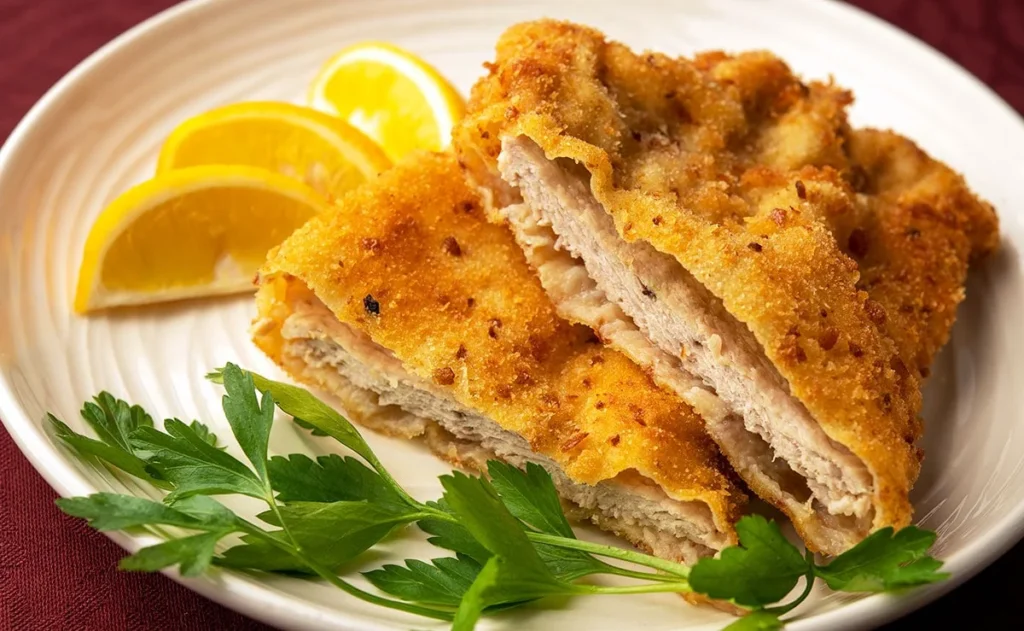
No dish defines Austrian cuisine more completely than Wiener Schnitzel. A thin slice of veal, pounded flat, coated in breadcrumbs, and pan-fried in clarified butter until perfectly golden — it sounds simple, and in the right hands, it is simply perfect.
The name “Wiener” means Viennese, and a true Wiener Schnitzel must be made with veal (Kalb) by Austrian law. If it’s made with pork — which is common and equally delicious — it must legally be called “Schnitzel Wiener Art” (Schnitzel in the Viennese style). This distinction matters enormously to Austrians and is a point of genuine culinary pride.
The schnitzel should be thin enough to see light through before cooking, fried in enough butter to allow it to “swim” freely, and served immediately with a wedge of lemon, a sprig of parsley, and either potato salad, buttered parsley potatoes, or cranberry sauce on the side. The coating should be light, airy, and slightly ruffled — never flat, never greasy.
Where to eat the best Wiener Schnitzel: Figlmüller in Vienna is perhaps the most famous schnitzel restaurant in the world, serving schnitzels so large they overflow the plate. Gasthaus Pöschl and Zum Wohl are also excellent traditional choices in the capital.
2. Tafelspitz — The Emperor’s Favourite
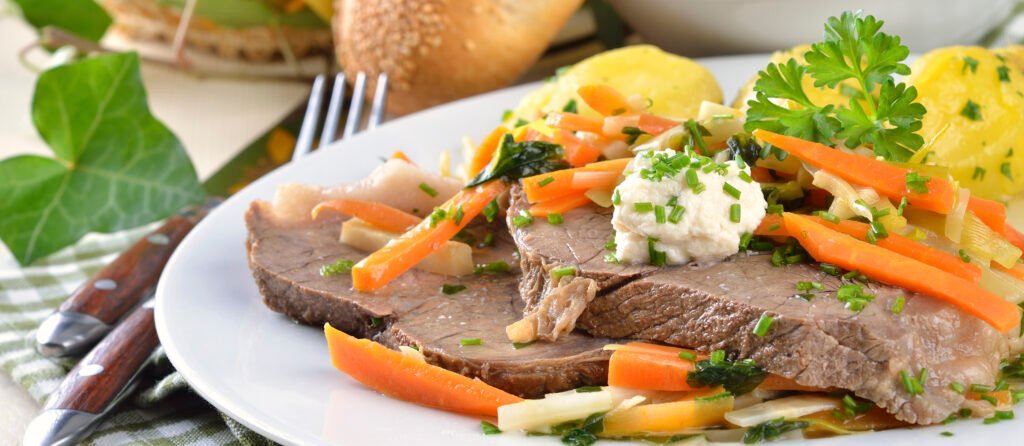
If Wiener Schnitzel is Austria’s most famous dish, Tafelspitz is arguably its most refined. A gently boiled prime cut of beef — typically the rump or top sirloin — simmered for hours in a rich vegetable broth with root vegetables, leeks, and spices until it reaches a sublime tenderness.
The dish was the favourite of Emperor Franz Joseph I, who reportedly ate it almost every day, and it remains a cornerstone of Viennese haute cuisine. It is traditionally served with the broth as a starter soup, followed by the sliced beef accompanied by apple and horseradish sauce (Apfelkren), chive sauce (Schnittlauchsauce), and fried grated potatoes (Röstkartoffeln).
Tafelspitz is the kind of dish that reveals itself slowly — understated at first glance, but deeply complex and satisfying with every bite. It is the definitive expression of Viennese cooking at its most elegant.
Where to eat the best Tafelspitz: Plachutta Wollzeile in Vienna is considered the definitive address for Tafelspitz, with multiple cuts available daily and an atmosphere that perfectly captures old Vienna.
3. Gulasch — Austria’s Hungarian Legacy
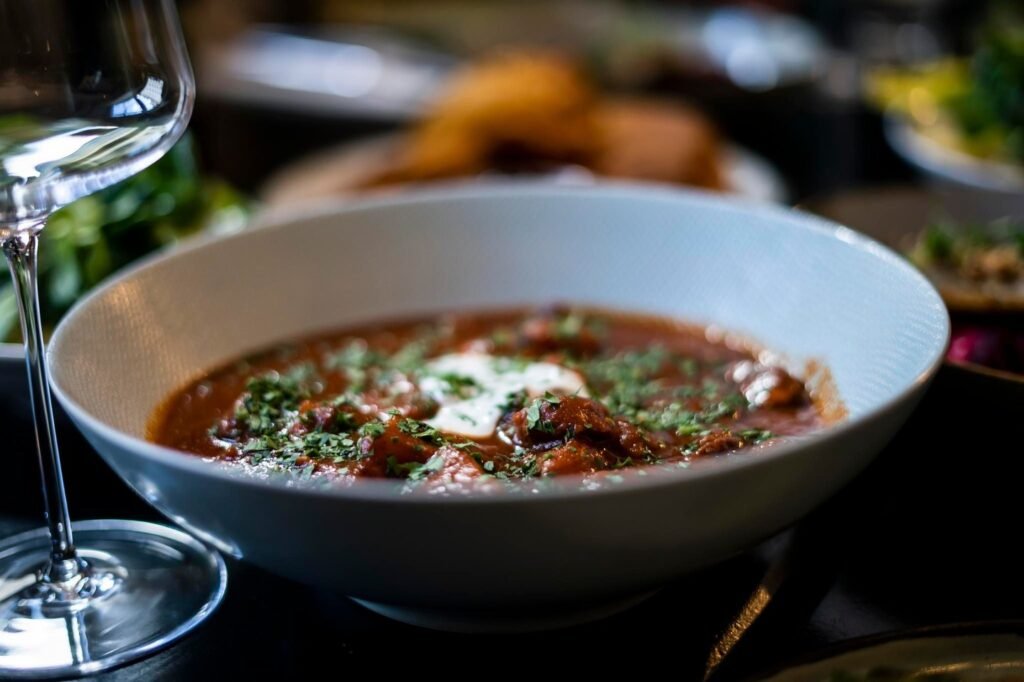
One of the most beloved dishes in Austrian cuisine arrived via Hungary, carried westward through the Habsburg Empire and embraced so completely that it now feels entirely Austrian. Gulasch is a slow-cooked beef stew built on a foundation of onions, paprika, caraway seeds, garlic, and marjoram — deep red, richly spiced, and intoxicatingly aromatic.
Viennese Gulasch differs subtly from its Hungarian cousin. It tends to have a thicker, glossier sauce, is typically served with a bread roll (Semmel) rather than noodles or potatoes, and is often enjoyed as a late-night meal after a long evening out. In Vienna, Gulasch is available around the clock at traditional Beisl (neighbourhood taverns) and has the comfort and familiarity of a dish that has been feeding the city for centuries.
Variations include Saftgulasch (a juicier version), Fiakergulasch (topped with a fried egg and sausage), and Erdäpfelgulasch (a vegetarian potato version equally popular across the country).
Where to eat the best Gulasch: Zum Wohl and Gasthaus Pöschl in Vienna serve excellent traditional versions. For a late-night bowl, Gulaschmuseum in the 1st district is a Vienna institution open until the early hours.
4. Zwiebelrostbraten — Roast Beef with Crispy Onions
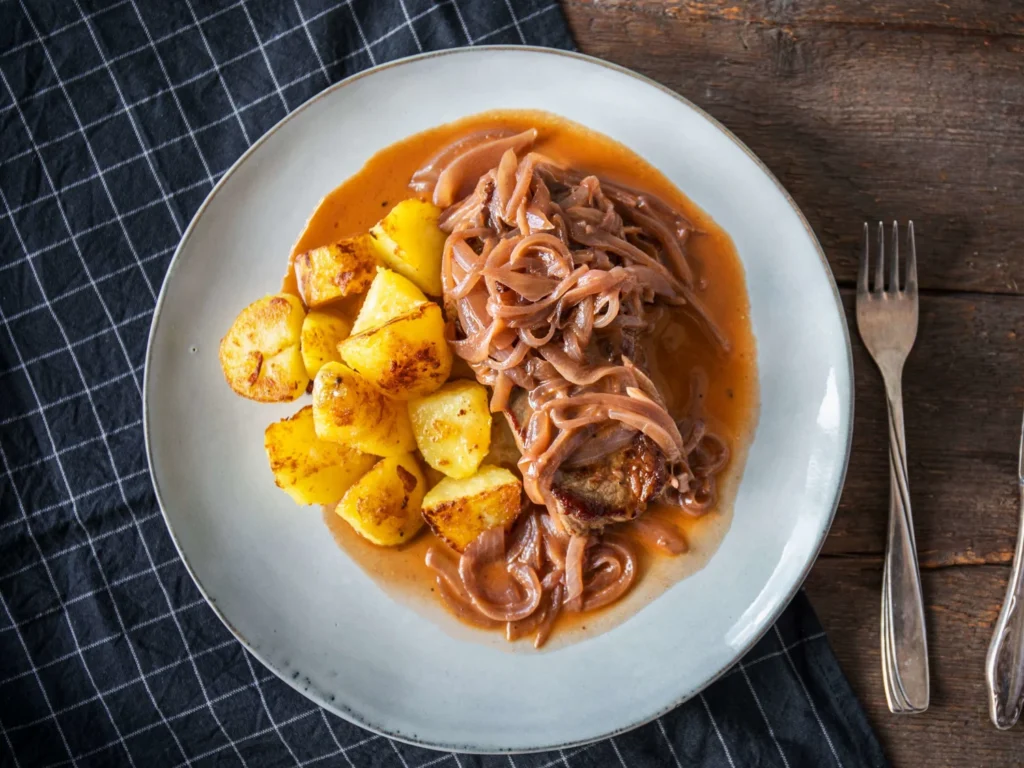
A Sunday classic in Austrian households and a staple of traditional restaurants, Zwiebelrostbraten is a pan-roasted beef sirloin smothered in a rich onion gravy and topped with a generous pile of crispy fried onion rings. Served alongside buttery roasted potatoes or Semmelknödel (bread dumplings), it is one of the most satisfying plates of food you will encounter anywhere in Central Europe.
The contrast between the tender, juicy beef and the crunchy, caramelised onions is what makes this dish exceptional. It’s comfort food elevated to an art form — humble in origin but deeply delicious in execution.
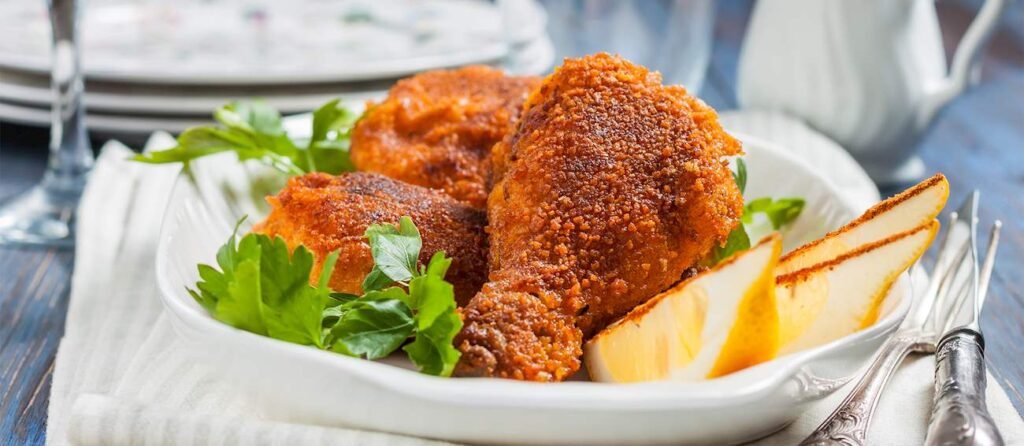
5. Backhendl — Viennese Fried Chicken
Long before fried chicken became a global phenomenon, Vienna had Backhendl. A whole chicken — or more commonly individual pieces — marinated, coated in seasoned breadcrumbs, and fried until deeply golden and irresistibly crispy. Originally a dish of the Viennese bourgeoisie in the 19th century, Backhendl fell out of fashion for decades before experiencing a well-deserved revival in recent years.
Served with potato salad, lingonberry jam, and a wedge of lemon, it shares its DNA with Wiener Schnitzel but offers a juicier, more substantial eating experience. Many of Vienna’s best traditional restaurants now proudly feature Backhendl as a signature dish.
Dumplings, Noodles & Sides
Knödel — Austria’s Beloved Dumplings
No discussion of Austrian food is complete without Knödel — the country’s beloved dumplings that appear in countless forms across every region and season. Light and pillowy or dense and filling, sweet or savoury, served in broth or alongside a main course — Knödel are the backbone of Austrian home cooking.
Semmelknödel are made from stale bread rolls soaked in milk, mixed with eggs, butter, and parsley, then formed into large round dumplings and simmered in salted water. They are the perfect accompaniment to Gulasch, roast pork, or any dish with a rich sauce.
Speckknödel from Tyrol add crispy bacon to the bread dumpling mixture and are traditionally served in beef broth or alongside sauerkraut and melted butter — a dish that speaks directly of the Alps.
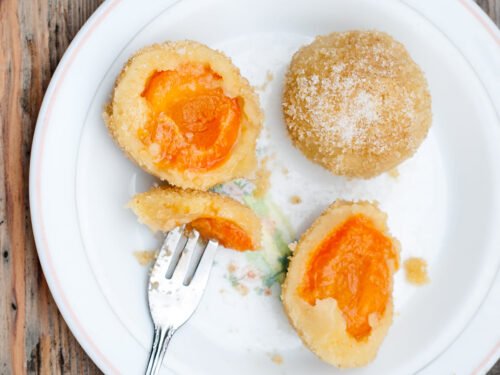
Zwetschkenknödel are sweet plum dumplings made from a potato dough, wrapped around a whole plum with a sugar cube inside, and served dusted with toasted breadcrumbs and melted butter. They occupy that delicious grey area between side dish and dessert and are one of the great seasonal treats of Austrian autumn.
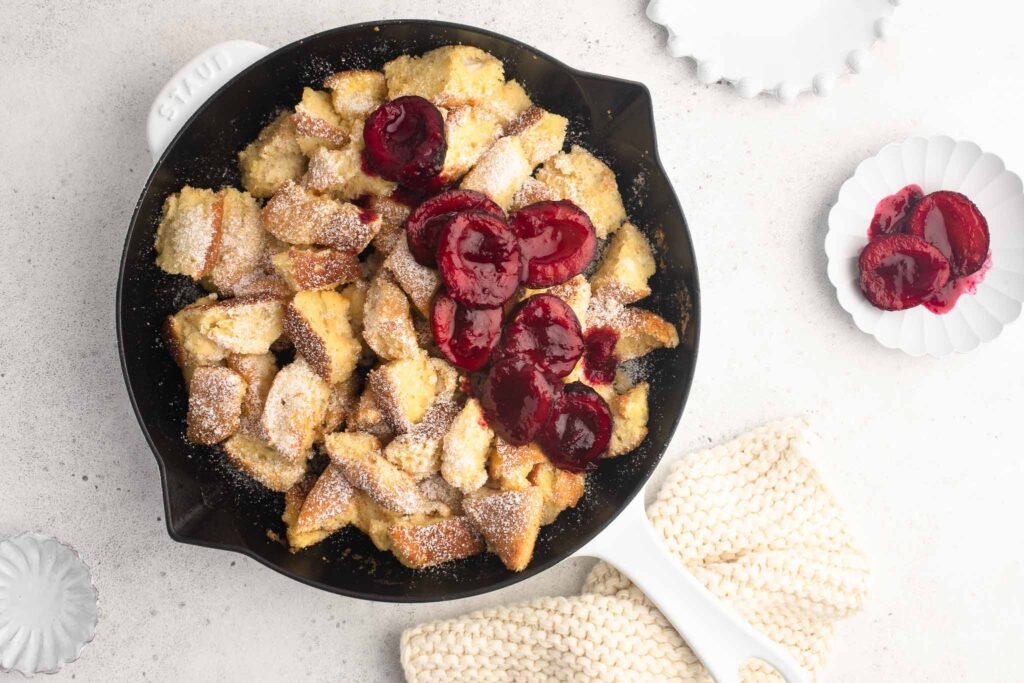
Kaiserschmarrn — The Emperor’s Pancake
Originally created — according to legend — for Emperor Franz Joseph I, Kaiserschmarrn is a fluffy, caramelised shredded pancake dusted with icing sugar and served with plum compote or apple sauce. The batter is enriched with egg whites beaten to stiff peaks, giving it an extraordinary lightness, before being torn into irregular pieces and tossed in butter and sugar until golden and lightly caramelised around the edges.
Kaiserschmarrn sits firmly at the intersection of breakfast, dessert, and snack — and Austrians eat it unapologetically at any time of day. In mountain huts across the Alps, it is the definitive post-hike reward. In Viennese coffee houses, it arrives at the table as a refined dessert. In both settings, it is magnificent.
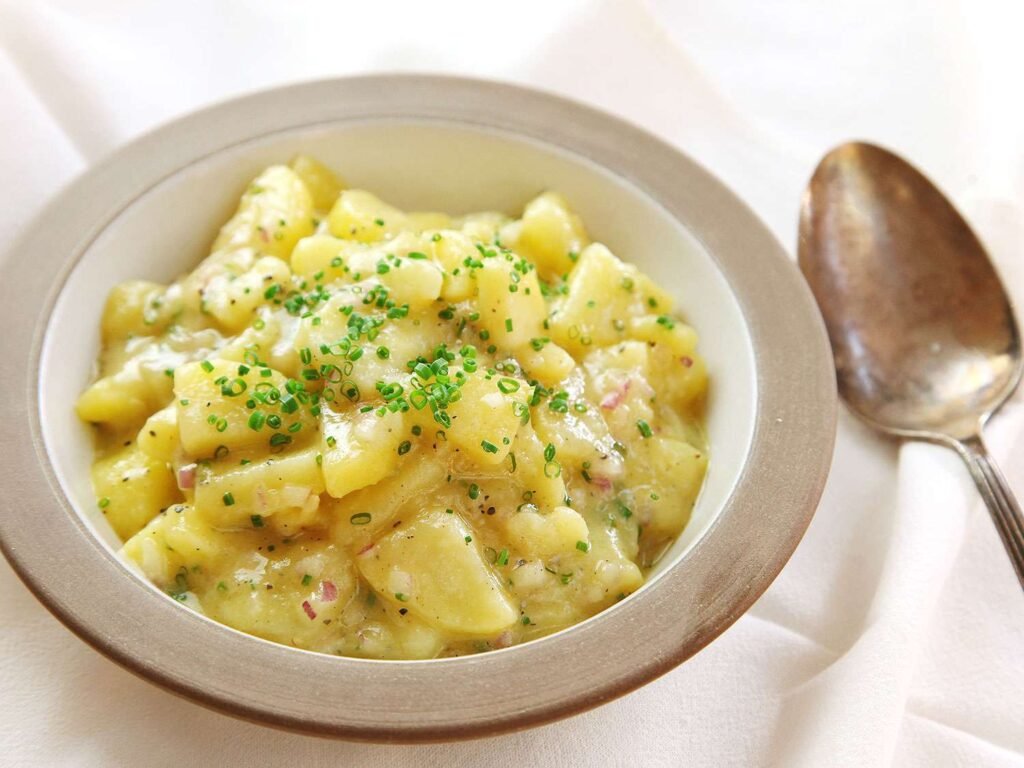
Erdäpfelsalat — Austrian Potato Salad
Austrian potato salad is fundamentally different from its German or American counterparts and deserves recognition in its own right. Made with waxy potatoes sliced while still warm, dressed in a light vinaigrette of white wine vinegar, beef broth, sunflower oil, mustard, and finely sliced onions — it is tangy, silky, and utterly addictive.
No mayonnaise. No heaviness. Just clean, bright flavours that cut through the richness of a schnitzel or roast meat perfectly. It is one of the great unsung achievements of Central European cooking.
Austrian Pastries & Desserts
Sachertorte — The Most Famous Cake in the World
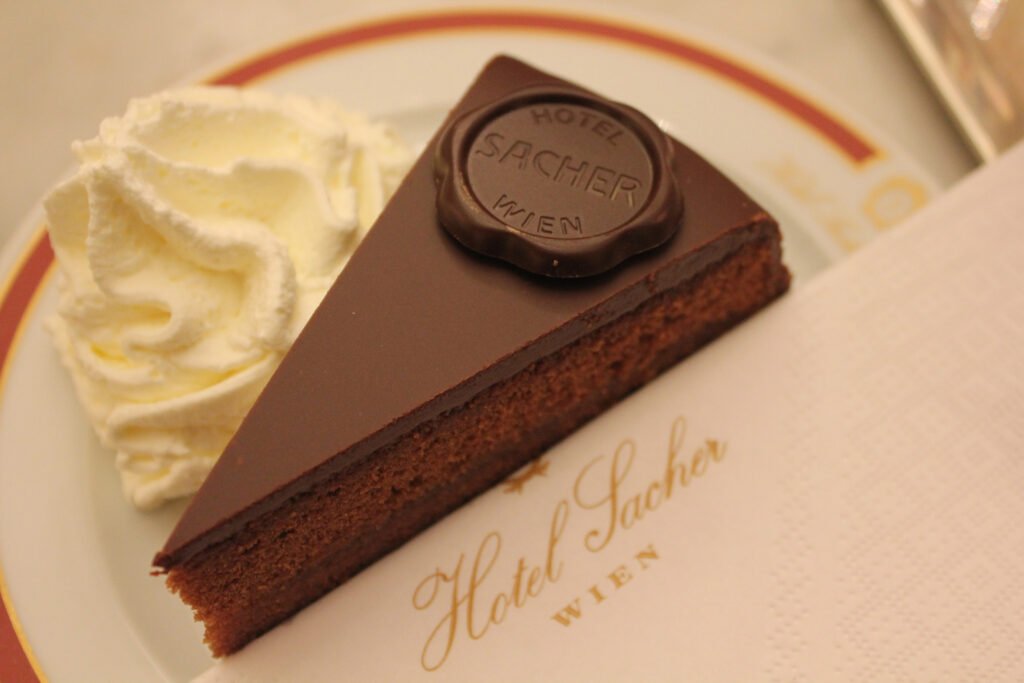
Few cakes carry the weight of history that the Sachertorte does. Created in 1832 by 16-year-old apprentice chef Franz Sacher for Prince Metternich, this dense chocolate sponge cake layered with apricot jam and enrobed in a smooth dark chocolate glaze has become the most iconic symbol of Viennese patisserie — and the subject of one of the most famous legal disputes in culinary history.
The “Sacher Torte Dispute” between Hotel Sacher and Demel bakery lasted from 1954 to 1963, with both establishments claiming the right to call their version the “Original Sachertorte.” Hotel Sacher ultimately won, and their version — distinguished by a layer of apricot jam both beneath and beneath the chocolate glaze — remains the gold standard.
A proper Sachertorte is deliberately dense and slightly dry, designed to be eaten with an unsweetened Schlagobers (whipped cream) alongside a cup of Viennese Melange coffee. The combination is one of the defining pleasures of any visit to Vienna.
Where to eat the best Sachertorte: Hotel Sacher Vienna is the original and most famous address. Demel on the Kohlmarkt offers the rival version in equally magnificent surroundings. Both are essential experiences.
Apfelstrudel — Apple Strudel
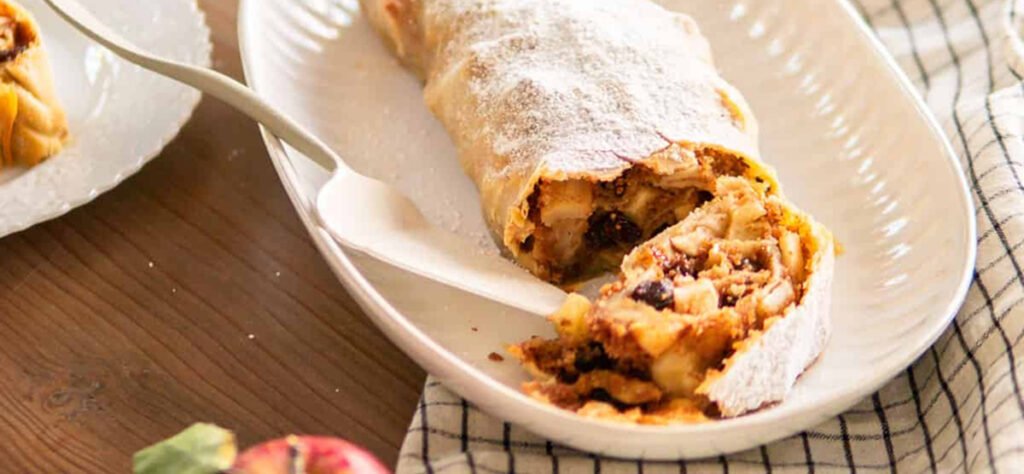
If Sachertorte is Austria’s most famous cake, Apfelstrudel is its most beloved everyday pastry. Wafer-thin layers of hand-stretched strudel dough wrapped around a filling of thinly sliced apples, cinnamon, sugar, raisins, and breadcrumbs — then baked until golden and dusted generously with icing sugar.
The art of stretching strudel dough is one of the most impressive skills in the Austrian pastry kitchen. The dough must be stretched by hand over a large floured table until it is thin enough to read a newspaper through — a technique that takes years to master and produces a pastry of extraordinary delicacy.
Apfelstrudel is served warm with vanilla sauce or Schlagobers and is available in virtually every coffee house, bakery, and restaurant in Austria. The best versions have a crisp, flaky exterior that shatters at the touch of a fork to reveal a fragrant, steaming apple filling within.
Linzer Torte — The World’s Oldest Cake Recipe
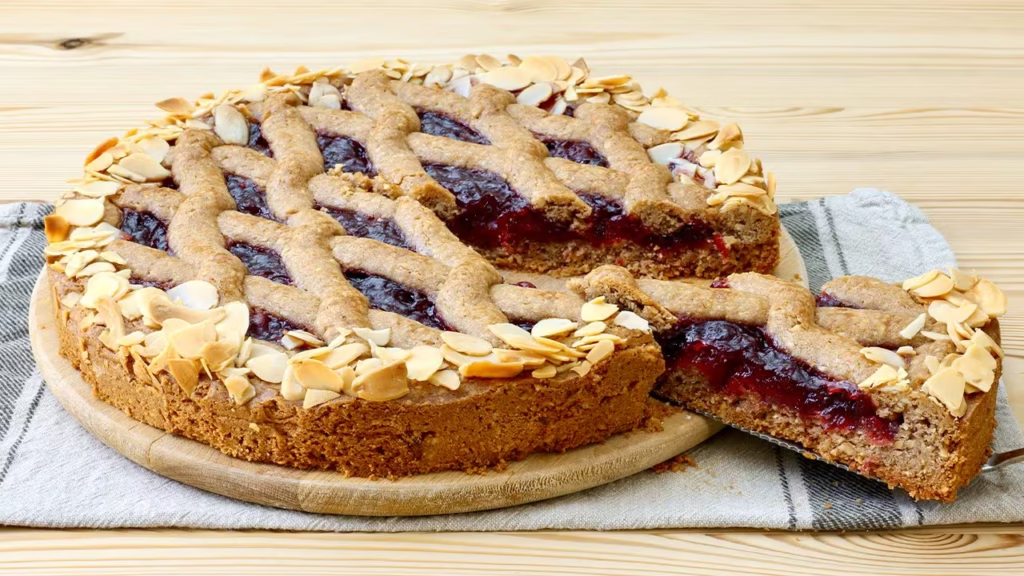
The Linzer Torte holds the remarkable distinction of being the oldest known cake recipe in the world, with a recipe dating back to 1653 found in an Austrian monastery. Named after the city of Linz, it consists of a rich, buttery shortcrust pastry made with ground almonds or hazelnuts and spiced with cinnamon and lemon zest, filled with redcurrant or raspberry jam, and decorated with a characteristic lattice topping.
It is denser and spicier than most cakes, with a complexity of flavour that rewards slow eating. A slice of Linzer Torte with a strong Viennese coffee is one of the great small pleasures of Austrian culinary life.
Topfenstrudel — Cream Cheese Strudel
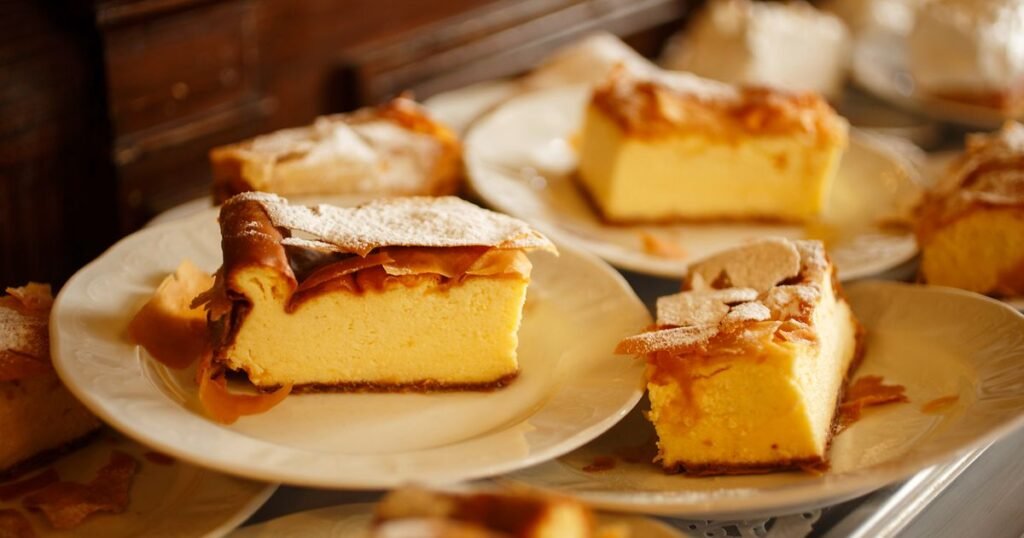
A lighter, creamier cousin to Apfelstrudel, Topfenstrudel is filled with sweetened Topfen (a fresh Austrian curd cheese similar to quark), raisins, lemon zest, and vanilla — wrapped in the same gossamer-thin strudel dough and baked until golden. It has a softer, more delicate texture than apple strudel and a gently tangy sweetness that makes it dangerously easy to eat more than one slice of.
Palatschinken — Austrian Crêpes
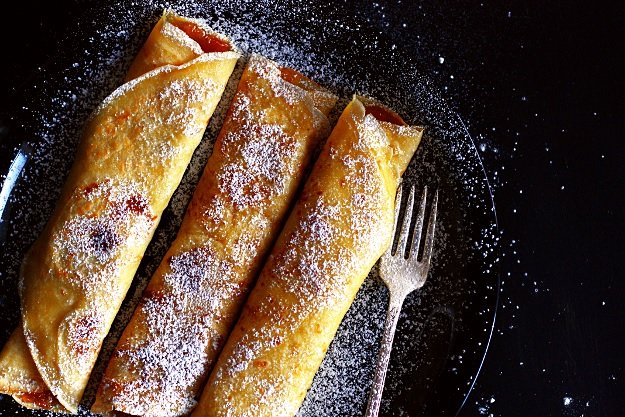
Thinner and more delicate than French crêpes, Palatschinken are paper-thin pancakes rolled around a variety of sweet fillings — apricot jam, Nutella, cream cheese, or ground walnuts with sugar — and served dusted with icing sugar. They are a staple of Austrian home cooking, a favourite school lunch, and a beloved dessert in traditional restaurants. Simple, elegant, and deeply comforting.
Vienna’s Coffee House Culture
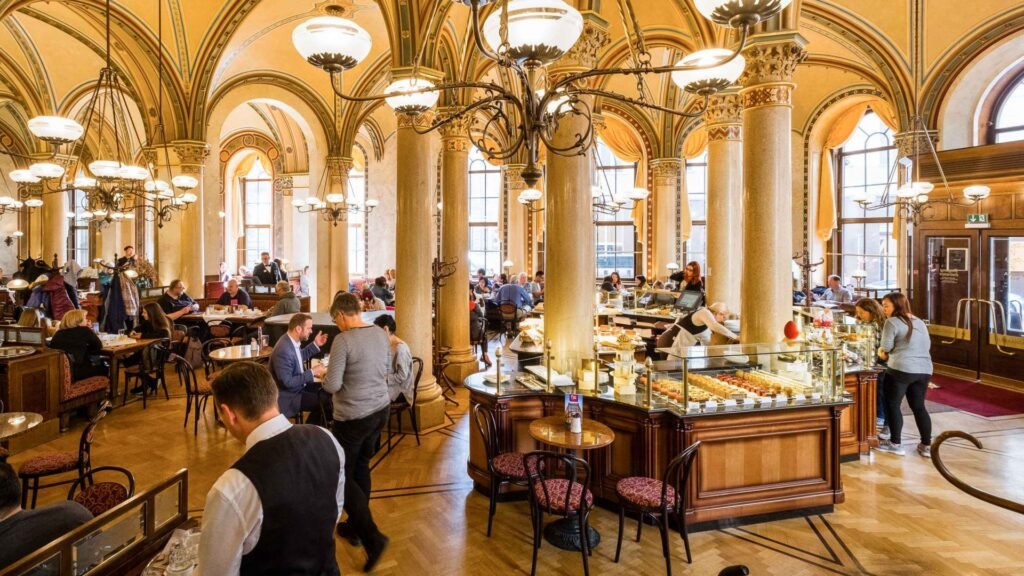
No Austrian food guide would be complete without addressing the country’s extraordinary coffee house tradition — a cultural institution so significant that UNESCO added Viennese coffee house culture to its list of Intangible Cultural Heritage in 2011.
The Viennese coffee house is not merely a place to drink coffee. It is a way of life — a place to read the newspaper, meet friends, conduct business, argue about politics, write novels, and linger for hours over a single cup without ever feeling rushed. The tradition dates to the 17th century, when the first coffee houses opened in Vienna following the Ottoman siege of 1683.
Essential Viennese coffees to know:
Melange — Austria’s signature coffee drink. Equal parts espresso and steamed milk, topped with milk foam — similar to a cappuccino but gentler and slightly larger. The morning coffee of choice for most Viennese.
Einspänner — A double espresso served in a glass, topped with a generous mountain of unsweetened whipped cream. The cream is not stirred in but sipped through, creating a beautiful contrast between the bitter coffee and the sweet cream. Named after the one-horse carriages whose drivers needed a coffee they could drink with one hand.
Verlängerter — A “lengthened” espresso diluted with hot water, similar to an Americano but served with a small jug of warm milk on the side.
Schwarzer — Simply a black espresso, ordered as either a Kleiner Schwarzer (single) or Großer Schwarzer (double).
Where to experience the best Viennese coffee houses: Café Central, Café Landtmann, Café Hawelka, and Café Schwarzenberg are among Vienna’s most historic and atmospheric establishments. Each has its own distinct character and history, but all embody the timeless spirit of Viennese coffee house culture.
Austrian Wine & Beer
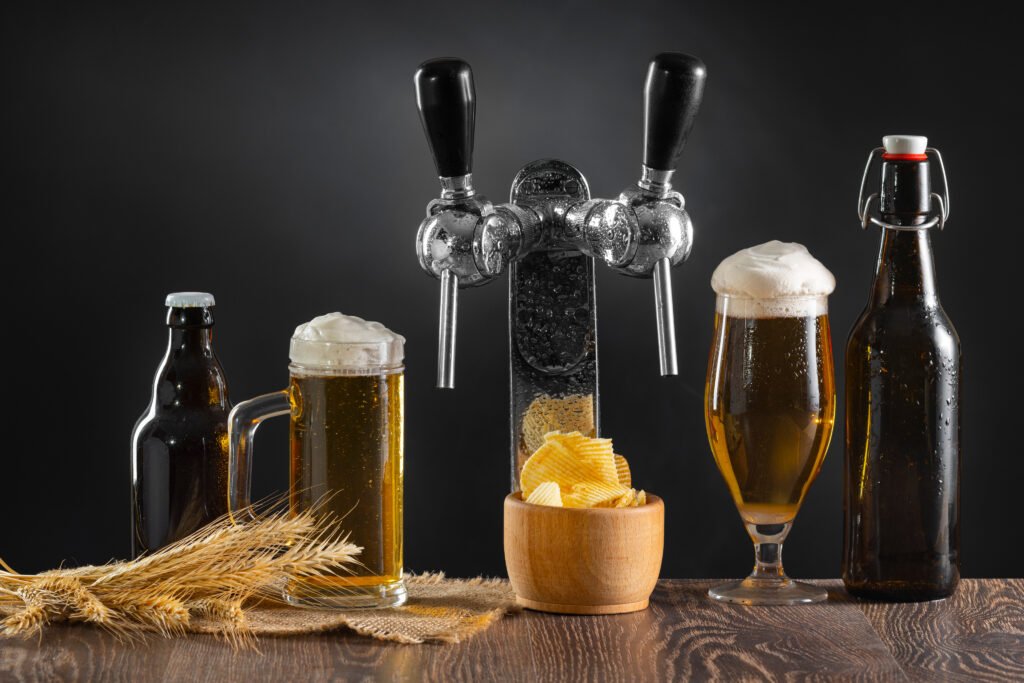
Wine plays a central role in Austrian food culture, particularly in Vienna and Lower Austria. Austria produces some of Europe’s most exciting white wines, led by Grüner Veltliner — a crisp, peppery white with notes of green herbs and white pepper that pairs beautifully with Wiener Schnitzel and fish dishes — and Riesling from the Wachau Valley, considered among the finest examples of the grape anywhere in the world.
The Heuriger — a traditional Viennese wine tavern licensed to sell the current vintage of the owner’s wine — is one of the great Austrian institutions. On the hillsides of Grinzing, Gumpoldskirchen, and Neustift am Walde, Heurigen open their courtyards in warmer months, serving cold buffets of bread, cheese, and cold meats alongside carafes of young wine. It is one of the most pleasurable ways to spend an afternoon in Austria.
Beer is equally important, particularly in western Austria and Salzburg, where the brewing tradition is centuries old. The Augustiner Bräustübl in Salzburg — a monastery brewery operating since 1621 — is one of the most atmospheric places to drink beer in Europe, serving its unfiltered lager in ceramic mugs in a cavernous beer hall surrounded by chestnut trees.
Austrian Food Markets Worth Visiting
Naschmarkt, Vienna — Vienna’s most famous open-air market stretches for over 1.5 kilometres along the Wienzeile and offers everything from fresh produce, cheese, and charcuterie to spices, olives, and international street food. Saturday mornings, when the flea market is also running, are the best time to visit.
Grüner Markt, Salzburg — A charming daily market in the heart of the old town selling local cheeses, cured meats, seasonal vegetables, and freshly baked breads. One of the most picturesque food markets in Austria.
Benediktinermarkt, Klagenfurt — Carinthia’s best market, held daily in the main square and particularly excellent for local specialties including smoked meats, lake fish, and Carinthian Kasnudeln (cheese-filled pasta parcels).
Austrian Food by Region
Austrian cuisine varies significantly from region to region, reflecting the country’s diverse geography and cultural influences.
Vienna is the home of imperial cuisine — refined, elegant, and rooted in the traditions of the Habsburg court. Schnitzel, Tafelspitz, Gulasch, and the great coffee house pastries all find their most polished expression in the capital.
Tyrol is the heartland of Alpine cooking — robust, filling, and built for mountain life. Tiroler Gröstl (a pan-fry of potatoes, bacon, and onions topped with a fried egg), Speckknödel, and Käsespätzle (cheesy egg noodles) are the defining dishes of this rugged mountain region.
Salzburg and the Salzkammergut are known for freshwater lake fish — particularly Reinanke (whitefish) and trout — served simply with butter and lemon, as well as Salzburger Nockerl, a spectacular baked soufflé dessert shaped into three golden peaks representing the hills surrounding the city.
Carinthia is famous for Kasnudeln — large half-moon shaped pasta parcels filled with a mixture of Topfen cheese, potatoes, mint, and chives, boiled and served with melted butter and crispy onions. They are one of the most distinctive and delicious regional dishes in the entire country.
Styria is Austria’s culinary garden — the source of some of the country’s finest ingredients, including pumpkin seed oil (Kürbiskernöl), a dark, nutty, intensely flavoured oil drizzled over salads and soups. Styrian cuisine emphasises fresh vegetables, game, and the outstanding local wines of the South Styrian Wine Road.
Top Austrian Food Experiences Not to Miss
Eating a Wiener Schnitzel at Figlmüller in Vienna’s Wollzeile — one of the great iconic restaurant experiences in Central Europe. Taking a coffee and Sachertorte at Hotel Sacher or Demel and spending an unhurried hour watching Vienna go by. Visiting the Naschmarkt on a Saturday morning and grazing through the stalls. Spending an evening at a Heuriger on the hills above Vienna drinking young Grüner Veltliner and eating cold buffet platters as the sun sets over the city. Eating Kaiserschmarrn at a mountain hut in the Alps after a morning hike. Trying Tiroler Gröstl in a traditional wood-panelled Gasthaus in Innsbruck. And finishing any meal in Salzburg with a slice of Salzburger Nockerl — the city’s most theatrical dessert, baked to order and served immediately before the golden soufflé deflates.
Tips for Eating Well in Austria
Lunch is the main meal of the day for most Austrians — restaurants offer their best value and most complete menus at lunchtime, often with a fixed-price Mittagsmenü (lunch menu) that includes soup, main course, and sometimes dessert for a very reasonable price. Dinner tends to be lighter and can be more expensive à la carte.
A Beisl is the Austrian equivalent of a neighbourhood bistro or pub — informal, unpretentious, and almost always serving honest, well-cooked traditional food at fair prices. Seek them out over tourist-facing restaurants for the most authentic experience.
Tipping in Austria is appreciated but not mandatory. Rounding up the bill or adding 5–10% is standard practice in restaurants and coffee houses.
Water is not automatically served at tables in Austrian restaurants and will be charged for. Ask for tap water (Leitungswasser) if you’d prefer not to pay for bottled mineral water, though not all establishments will serve it.
Conclusion
Austrian cuisine is a profound and deeply rewarding culinary tradition — one built on centuries of imperial history, Alpine mountain life, and a genuine passion for the pleasures of the table. From the crispy golden perfection of a Wiener Schnitzel to the bittersweet luxury of a Sachertorte in a grand Viennese coffee house, every dish tells a story of a culture that takes its food seriously and eats it with joy. Come hungry, stay curious, and eat everything.