
There is a specific type of place that exists only in Vienna — and that, despite the best efforts of café designers and hospitality consultants in cities across the world, has never been successfully replicated anywhere else. It is the Viennese Kaffeehaus — the traditional coffee house — and it is one of the great contributions of Austrian culture to the art of civilised daily life.
The Viennese coffee house is not primarily about coffee. It is about time. About the extraordinary and increasingly rare permission to sit — really sit, unhurried and unrushed — in a beautiful room with good light and a marble table and a newspaper on a wooden holder, and to remain there for as long as you wish without any pressure whatsoever to move, order again, or justify your continued presence.
The waiter — the Herr Ober — will bring your coffee on a small silver tray with a glass of water. He will refill the water without being asked. He will not hover. He will not present the bill until you request it. He will leave you entirely alone to read, write, think, argue, or simply sit and watch the room around you for as many hours as you choose. This is not indifference — it is a form of profound hospitality that the Viennese perfected over three centuries and that the rest of the world’s café culture has never quite managed to replicate.
UNESCO recognised the Viennese coffee house culture as an Intangible Cultural Heritage in 2011 — acknowledging that what happens in these rooms is not simply the consumption of coffee but the practice of a specific and irreplaceable way of being in the world.
The great writers, philosophers, artists, and politicians of Vienna’s extraordinary cultural golden age — Sigmund Freud, Arthur Schnitzler, Stefan Zweig, Gustav Klimt, Leon Trotsky, Adolf Loos, Karl Kraus — all spent significant portions of their working lives in Vienna’s coffee houses. The coffee house was their office, their library, their salon, their debating chamber, and their refuge. The ideas that shaped the 20th century were debated, refined, and sometimes first written down at the marble tables of Vienna’s Kaffeehäuser.
This guide covers the finest and most significant of those coffee houses — their history, their character, their coffee, their food, and the honest practical information you need to experience them properly.
A Brief History: How Vienna Became the Coffee House Capital of the World
The Origins — 1683 and the Siege of Vienna
The history of Vienna’s coffee house culture begins with one of the most dramatic moments in European history — the Ottoman siege of Vienna in 1683. When the Ottoman army was defeated and retreated from the city walls they left behind, among other things, large quantities of coffee beans. A Polish merchant named Jerzy Franciszek Kulczycki — who had served as a spy and messenger during the siege and spoke Turkish — was granted the coffee beans as part of his reward and used them to open what is traditionally considered Vienna’s first coffee house.
The historical accuracy of this story is debated by modern historians — coffee had been arriving in Vienna through trade routes for years before 1683 and the first documented Viennese coffee house licence predates the siege. But the story has persisted because it captures something true about the coffee house’s place in Viennese cultural identity — it is associated with triumph, with cultural exchange, and with the transformation of something foreign and exotic into something definitively and irreplaceably Viennese.
The Golden Age — 18th and 19th Centuries
The Viennese coffee house reached its cultural apex in the late 18th and throughout the 19th century — the period of the Habsburg Empire’s greatest cultural confidence. Coffee houses proliferated across the city, each developing its own character, its own clientele, and its own identity within the social geography of Vienna.
By the mid-19th century Vienna had hundreds of coffee houses — each one serving a specific social function. The literary coffee houses attracted writers and journalists. The political coffee houses attracted activists and agitators. The artists’ coffee houses attracted painters and architects. The chess coffee houses attracted players who would spend entire days at the board. The billiard coffee houses attracted a different crowd entirely.
The coffee house was, in effect, the public living room of Viennese intellectual and cultural life — the space where the city’s creative and intellectual class conducted their professional and social lives in a setting that was neither fully public nor fully private, that provided all the amenities of a comfortable home without any of its domestic obligations.
The Literary Coffee House Tradition
The relationship between Viennese literature and the coffee house is one of the most extraordinary cultural connections in European history. The great writers of fin-de-siècle Vienna — the period of extraordinary cultural creativity between approximately 1890 and the First World War — conducted their professional lives almost entirely in coffee houses.
Peter Altenberg — the Viennese writer and bohemian who is perhaps the most perfectly representative figure of the coffee house culture at its most extreme — had his mail delivered to Café Central and spent virtually every waking hour there. His registration address for official purposes was listed as Café Central, Herrengasse 14. He ate there, wrote there, received visitors there, and considered it more genuinely his home than any apartment he ever rented.
Stefan Zweig described the coffee house as an institution of incomparable democratic generosity — a place where for the price of a single cup of coffee a man of no means could sit in warmth and comfort for an entire day, reading every newspaper and magazine published in Europe, conducting his correspondence, receiving his friends, and pursuing his intellectual life with complete equality alongside the wealthiest patrons in the room.
This democratic quality — the coffee house as a great leveller of social difference — is one of the most important and most enduring aspects of the Viennese coffee house tradition. The marble tables treat everyone equally. The Herr Ober serves the struggling writer with the same unhurried courtesy as the imperial minister. The newspapers are available to all.
The Decline and Revival
The coffee house culture suffered catastrophically in the 20th century — the First World War, the collapse of the Habsburg Empire, the rise of fascism, the Second World War, and the postwar economic rebuilding of Austria all disrupted the social conditions that had made the coffee house so central to Viennese life.
Many of the great coffee houses closed permanently. Others survived in diminished form. The literary and intellectual coffee house culture that had made Vienna’s cafés legendary largely disappeared — the writers and artists who had defined the tradition were dead, exiled, or working in contexts that no longer centred on the coffee house.
The revival of Viennese coffee house culture began in earnest in the 1980s and 1990s — a combination of deliberate cultural preservation, tourism interest, and a genuine Viennese rediscovery of what had been lost. Many of the great historic coffee houses were restored to something close to their original form. New coffee houses opened in the traditional style. And the UNESCO recognition in 2011 gave the culture an international validation that accelerated its revival further.
Today Vienna’s coffee houses exist in a fascinating dual state — genuinely used by Viennese people as part of their daily life, and simultaneously recognised as one of the city’s most important cultural attractions for visitors. The best of them manage to be both things simultaneously, which is a delicate balance and one that the finest Viennese coffee houses maintain with remarkable skill.
The Coffee: Understanding What to Order
Before visiting Vienna’s coffee houses it is essential to understand that ordering coffee in Vienna is nothing like ordering coffee anywhere else. The Viennese coffee menu is an elaborate and specific system of preparations that has evolved over three centuries and that the Herr Ober expects you to navigate with at least basic competence.
Asking for a coffee in Vienna without specifying which type is not quite as socially catastrophic as ordering a cappuccino after noon in Italy — but it is not far off.
The Essential Viennese Coffee Orders
Kleiner Schwarzer — A small black coffee. The closest Viennese equivalent to an espresso — a small, strong, black coffee served without milk. The foundation of the Viennese coffee system.
Großer Schwarzer — A large black coffee. Two shots of espresso served black in a larger cup. For those who need more volume without milk.
Kleiner Brauner — A small brown coffee. A small black coffee served with a small jug of cream or milk on the side — the Viennese prefer cream to milk and the result is a coffee of extraordinary richness.
Großer Brauner — A large brown coffee. The most commonly ordered coffee in traditional Viennese coffee houses — two shots with cream on the side, allowing the drinker to add as much or as little as they prefer.
Melange — The most quintessentially Viennese coffee of all. Half coffee, half steamed milk — similar to a café au lait or a flat white but with its own specific character that the Viennese consider entirely distinct from both. The Melange is the morning coffee of Vienna — the coffee that begins the day, that is drunk over a newspaper, that represents the coffee house experience in its most everyday and most characteristic form.
Verlängerter — A lengthened coffee. An espresso diluted with hot water to produce a longer, milder drink — somewhere between an espresso and an Americano in strength and character.
Einspänner — One of the most theatrical Viennese coffee presentations — a strong black coffee served in a glass and topped with a generous layer of whipped cream. The cream is not stirred in — it is drunk through, the cold sweetness of the cream against the hot bitterness of the coffee producing a combination of extraordinary pleasure. Named after the one-horse carriage whose drivers used the glass format because it could be held with one hand.
Fiaker — A strong black coffee served in a glass with a generous measure of rum and topped with whipped cream. Named after the Viennese horse-drawn carriage. The most indulgent standard coffee order in Vienna and one of the most pleasurable.
Kapuziner — A small coffee with a small amount of cream — producing a colour similar to the brown robes of Capuchin monks, hence the name. The historical ancestor of the cappuccino — the Italian version took the name from the Viennese original.
Pharisäer — A strong black coffee served with rum and whipped cream in a large cup, typically sprinkled with chocolate. Richer and more substantial than the Fiaker.
Türkischer — Turkish coffee — served in a small copper pot with the grounds, strong and sweet. A reminder of the Ottoman origins of Viennese coffee culture.
Eiskaffee — Cold coffee served over ice cream — a summer preparation of extraordinary richness and one of the great pleasures of a Vienna summer.
The Water
Every coffee in a Viennese coffee house is served with a glass of cold water on a small silver tray. This is not a courtesy addition — it is an essential part of the coffee house ritual. The water is refilled without being asked. It cleanses the palate between sips of coffee and provides hydration during what may be several hours of sitting. Never leave a Viennese coffee house without drinking the water — and never feel that accepting the refill commits you to ordering again.
The Food: What to Eat in a Viennese Coffee House
The food of the Viennese coffee house is not an afterthought — it is a cuisine of its own, specific to the café context and of genuine quality in the finest establishments.
Breakfast — The Viennese Frühstück
The Viennese coffee house breakfast is one of the great breakfast experiences in Europe — a carefully assembled combination of bread, butter, preserves, cheese, and egg that arrives on a small wooden board or a carefully arranged plate and is consumed unhurriedly over the first coffee of the day.
The classic Viennese breakfast — the Wiener Frühstück — consists of a soft white roll (the Semmel), butter, a selection of preserves (typically apricot, as the Wachau Valley apricot is one of Austria’s finest regional ingredients), a slice or two of cheese or ham, and an egg prepared to order. Accompanied by a Melange this is one of the most satisfying and most civilised morning meals available in any European city.
Pastries — The Konditorei Tradition
The pastry tradition of Vienna — developed over centuries in the great Konditorei (pastry shop) culture of the city — is one of the finest in the world, and the best coffee houses maintain it at its highest standard.
Kipferl — The crescent-shaped pastry that gave the croissant its form. The Viennese Kipferl is denser and more bread-like than the French croissant — made with a yeast dough rather than laminated butter pastry — and is the quintessential Viennese morning pastry. It is eaten plain or with butter and jam.
Apfelstrudel — Apple strudel — the most quintessentially Austrian of all pastries. Wafer thin strudel pastry wrapped around a filling of spiced apple, raisins, and breadcrumbs, served warm with vanilla sauce or whipped cream. Every coffee house in Vienna serves apple strudel and the quality varies enormously — the finest versions use hand-stretched pastry of extraordinary thinness and a filling of properly seasoned, not overly sweet apple.
Topfenstrudel — A strudel filled with Topfen — Austrian quark — rather than apple. Lighter and more delicate than the apple version and arguably more sophisticated.
Palatschinken — Thin Austrian pancakes similar to French crêpes — served either sweet with jam and cream or savoury with cheese or meat fillings. One of the most versatile and most satisfying dishes on the coffee house menu.
Gugelhupf — A ring-shaped cake of Austro-Hungarian origin — a yeast or baking powder cake baked in a distinctive fluted ring mould and dusted with icing sugar. The Emperor Franz Joseph I was reportedly devoted to Gugelhupf and ate it daily at Café Zauner in Bad Ischl.
Linzer Torte — A tart of ground almond pastry filled with redcurrant or raspberry jam and topped with a lattice of the same pastry. Named after the Austrian city of Linz and considered one of the oldest cake recipes in the world — documented recipes date to the 17th century.
The Sachertorte — Vienna’s Most Famous Cake
The Sachertorte deserves its own mention because it is simultaneously Vienna’s most famous cake and the subject of one of the most extraordinary legal disputes in the history of confectionery.
The Sachertorte is a dense chocolate sponge cake filled with a thin layer of apricot jam and covered in a smooth chocolate glaze — a creation of apparent simplicity that is actually extremely technically demanding to execute correctly. The balance of the chocolate sponge — dense but not dry, rich but not cloying — against the sharpness of the apricot jam and the smoothness of the glaze requires considerable skill and extremely high-quality ingredients.
The cake was created in 1832 by Franz Sacher — a 16-year-old apprentice chef — for Prince Metternich, one of the most powerful politicians in Europe. The recipe was passed down through the Sacher family and the Hotel Sacher — opened by Franz’s son Eduard in 1876 — claims to serve the original authentic Sachertorte.
The Demel confectionery — which also claimed to possess the original recipe — and the Hotel Sacher engaged in a legal dispute over the right to call their cake the Original Sachertorte that lasted from 1954 to 1963 — seven years of Austrian legal proceedings over a chocolate cake — before the court ruled in favour of the Hotel Sacher. The Demel’s version — which uses two layers of apricot jam rather than one — continues to be served as the Demel Sachertorte.
Both are extraordinary. The argument about which is better has not been resolved in the subsequent six decades and shows no sign of resolution.
The Best Coffee Houses in Vienna: The Complete Guide
1. Café Central — The Literary Giant
Address: Herrengasse 14, 1010 Vienna
Founded: 1876
District: 1st District (Innere Stadt)
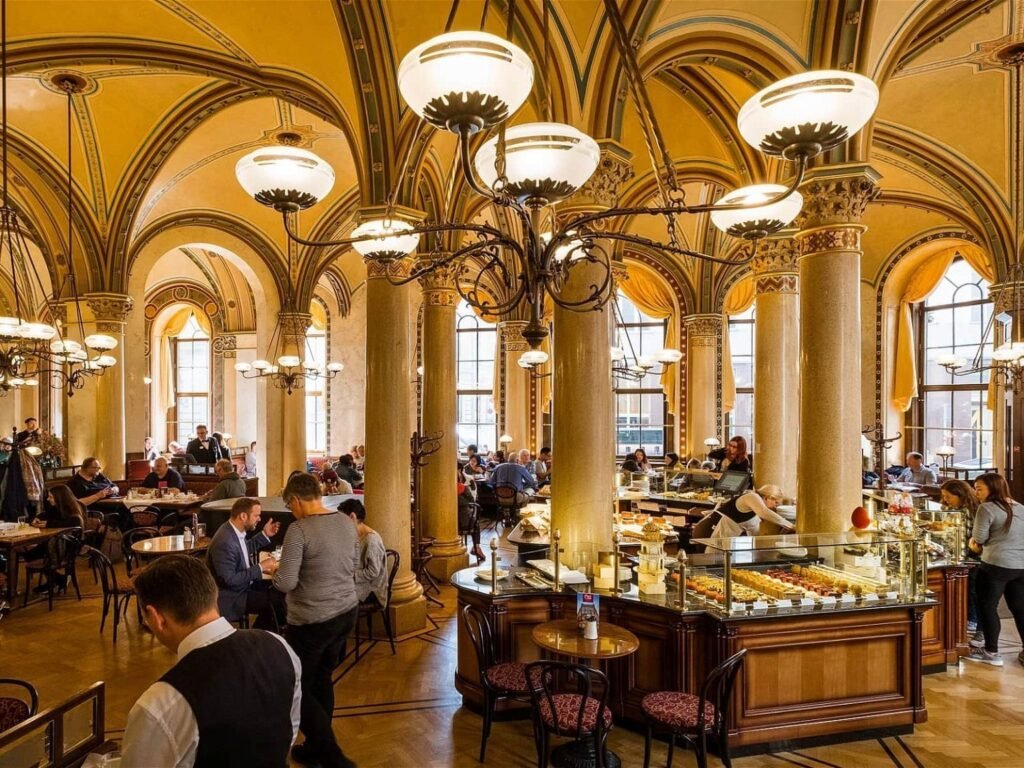
Café Central is the most famous coffee house in Vienna and one of the most famous cafés in the world — a vast, vaulted space of extraordinary architectural beauty housed in the ground floor of the Palais Ferstel, designed by the architect Heinrich Ferstel in a neo-Gothic style that produces a room of cathedral-like grandeur.
The vaulted ceilings rise to extraordinary heights above the marble tables and bentwood chairs. The central nave of the café is flanked by arched side aisles, each creating intimate spaces within the larger grandeur of the room. Natural light enters through the glass roof of the central atrium, filling the space with a quality of light that changes throughout the day in ways that are consistently beautiful.
Café Central’s literary history is the richest of any coffee house in Vienna. Peter Altenberg — the poet and bohemian who made the coffee house his permanent address — sat here daily. A figure of Altenberg sits at a table near the entrance, a permanent reminder of his legendary presence. Leon Trotsky played chess here in the years before the Russian Revolution. Sigmund Freud was a regular. Arthur Schnitzler came here to argue about literature. The coffee house was the intellectual centre of fin-de-siècle Vienna’s extraordinary cultural life.
The coffee at Café Central is excellent — prepared with care and served with the traditional Viennese ceremony. The pastries are among the finest in Vienna. The Apfelstrudel is outstanding. The breakfast menu is comprehensive and beautifully executed.
The honest warning: Café Central is extremely popular with tourists — the queues at peak times can be substantial and the room is rarely as quiet as the literary legends would suggest. The best time to visit is on a weekday morning — the room is quieter, the service more relaxed, and the atmosphere closer to what the coffee house tradition actually promises.
Order: Melange and Apfelstrudel in the morning. Großer Brauner and a slice of Linzer Torte in the afternoon.
Best for: First-time visitors to Vienna, architecture enthusiasts, literary history, the full Viennese coffee house experience.
2. Café Sacher — Imperial Chocolate and the World’s Most Famous Cake
Address: Philharmoniker Strasse 4, 1010 Vienna
Founded: 1876
District: 1st District (adjacent to the Vienna State Opera)
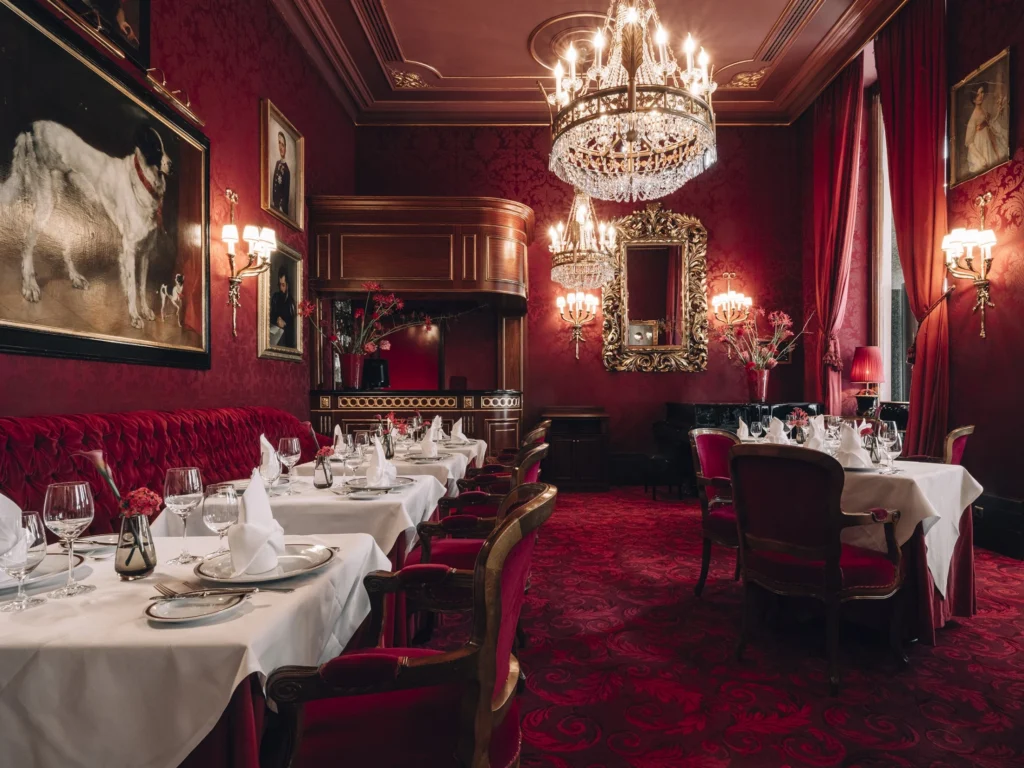
Café Sacher occupies the ground floor of the Hotel Sacher — one of Vienna’s great imperial hotels, situated directly behind the Vienna State Opera on the Philharmonikerstrasse. The café is decorated in the deep red and dark wood that characterises the hotel’s interior — an atmosphere of imperial warmth and considerable elegance that reflects the hotel’s position at the very centre of Viennese cultural and social life since 1876.
Café Sacher is, inevitably and primarily, the place to eat the Original Sachertorte — the chocolate cake whose recipe and name were the subject of seven years of Austrian legal proceedings and whose quality, in its original home, is as extraordinary as the legend suggests.
The Sachertorte at Café Sacher is served at room temperature — never refrigerated — with a generously sized portion of unsweetened whipped cream (Schlagobers) that is not optional but integral to the experience. The combination of the dense, rich chocolate sponge, the sharpness of the apricot jam, the smooth glaze, and the cold unsweetened cream is one of the great taste experiences in Viennese food culture.
The coffee is excellent — the Einspänner in particular is outstanding, the whipped cream of exceptional quality. The breakfast service is comprehensive and beautifully presented.
The atmosphere at Café Sacher is more formal and more hotel-oriented than the great literary coffee houses — it feels like the café of a great hotel rather than the democratic public room of the traditional Kaffeehaus. This is neither a criticism nor a recommendation — it is simply a different type of experience, and for the Sachertorte alone it is entirely worth the visit.
Order: The Original Sachertorte with Schlagobers and an Einspänner. There is no more Viennese afternoon available.
Best for: The Sachertorte experience, proximity to the Vienna State Opera, visitors who want the most famous café in Vienna.
3. Café Hawelka — The Living Legend
Address: Dorotheergasse 6, 1010 Vienna
Founded: 1939
District: 1st District
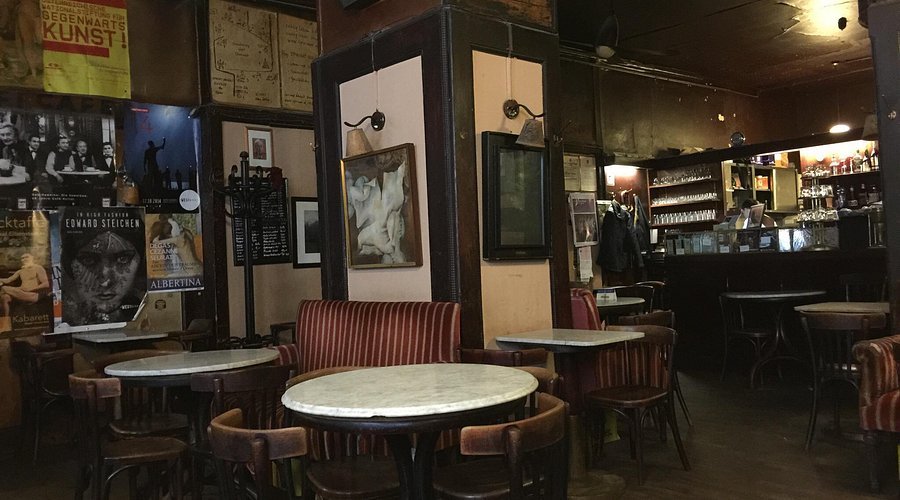
Café Hawelka is the most authentic, most atmospheric, and most genuinely Viennese of all the great coffee houses — a small, dark, deliberately unrenovated room that has remained essentially unchanged since the 1950s and that represents the coffee house tradition in its most pure and most uncompromising form.
The Hawelka was opened in 1939 by Leopold and Josefine Hawelka — a couple who became two of the most beloved figures in Viennese cultural life and who ran the café together for over six decades. Leopald Hawelka — known simply as the Herr Hawelka — served coffee at the same café until shortly before his death in 2011 at the age of 100. His wife Josefine had died in 2005. The café continues today, run by the family.
The room is small, crowded, and deliberately unglamorous — bentwood chairs, dark wood panelling, faded photographs, accumulated decades of atmosphere. There are no marble columns, no vaulted ceilings, no architectural grandeur. What the Hawelka has instead is something more valuable — authenticity. This is a coffee house that has never been renovated to appeal to tourists, never been redesigned to look more like what a coffee house is supposed to look like. It looks exactly like what it is — a room where people have been sitting and talking for eighty years.
The artistic and literary clientele of the Hawelka in the postwar decades was extraordinary — Friedensreich Hundertwasser, Ernst Fuchs, Friedrich Gulda, and virtually every significant figure in Viennese cultural life in the second half of the 20th century came here. The Hawelka was the coffee house that kept the tradition alive during the years when it might otherwise have died.
The Buchteln — sweet yeast buns filled with plum jam, served warm from the oven — are the most famous single food item in Viennese coffee house culture. They are available only in the evening at the Hawelka, prepared to a family recipe that has not changed since Josefine Hawelka first served them. They are extraordinary — the soft warm dough, the sweet jam filling, dusted with icing sugar — and eating them at a table in the Hawelka in the evening is one of the most genuinely memorable food experiences available in Vienna.
Order: Melange in the morning. Großer Brauner in the afternoon. And if you are there in the evening — the Buchteln. Always the Buchteln.
Best for: Authentic atmosphere, literary and artistic history, the Buchteln experience, visitors who want the real coffee house rather than the famous version.
4. Café Landtmann — The Politician’s Table
Address: Dr.-Karl-Lueger-Ring 4, 1010 Vienna
Founded: 1873
District: 1st District (on the Ringstrasse, beside the Burgtheater)
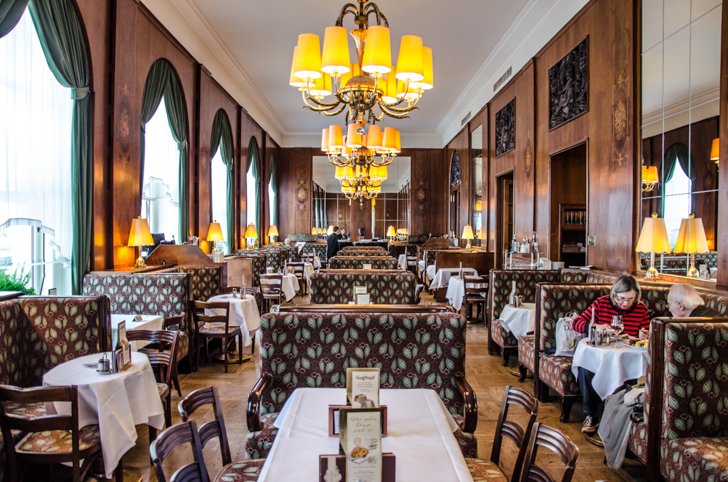
Café Landtmann has been called the most distinguished coffee house in Vienna — a claim supported by its location on the Ringstrasse directly beside the Burgtheater, its extraordinarily distinguished clientele over 150 years of operation, and its position as the coffee house of choice for Vienna’s political and theatrical establishment.
Sigmund Freud was a regular — he lived nearby on the Berggasse and came to the Landtmann daily to read the newspapers and drink his coffee. The Burgtheater’s actors have used the Landtmann as their backstage canteen since the theatre opened in 1888. Austrian politicians from across the political spectrum have conducted their informal business here for a century and a half.
The room is beautiful — high ceilings, elegant proportions, a terrace on the Ringstrasse that in summer offers one of the finest outdoor café settings in Vienna. The service is formal, courteous, and entirely professional — this is a coffee house that takes its own traditions seriously and maintains them with genuine care.
The coffee is outstanding. The food menu is more comprehensive than most coffee houses — full lunch and dinner service in addition to the traditional coffee house fare. The Frühstück is one of the best in Vienna.
Order: Großer Brauner and the Viennese breakfast in the morning. In the afternoon a Melange and a slice of whatever the pastry of the day happens to be.
Best for: Political history, theatrical atmosphere, proximity to the Burgtheater and the Kunsthistorisches Museum, the Ringstrasse setting.
5. Demel — The Imperial Confectionery
Address: Kohlmarkt 14, 1010 Vienna
Founded: 1786
District: 1st District (on the Kohlmarkt, steps from the Hofburg)
Demel is not strictly a coffee house in the traditional Kaffeehaus sense — it is a Konditorei, a confectionery, that also serves coffee in a beautiful historic room. But it is so central to Viennese café culture and so extraordinary in the quality of its pastries that no guide to Vienna’s coffee houses is complete without it.
Demel was founded in 1786 and holds the title of k.u.k. Hofzuckerbäcker — Imperial and Royal Court Confectioner — a designation granted by Emperor Franz Joseph I that places it in the very highest rank of Viennese culinary tradition. The shop occupies a building on the Kohlmarkt — the most elegant shopping street in Vienna — steps from the Hofburg Imperial Palace.
The display of cakes, pastries, chocolates, and confections in the Demel windows is one of the most beautiful and most tempting food displays in Europe — an array of extraordinary skill and craftsmanship that changes daily and reflects both the classical Viennese pastry tradition and the seasonal calendar of Austrian ingredients.
The Demel Sachertorte — the rival to the Hotel Sacher’s Original Sachertorte in the great legal dispute — is served here with the characteristic double apricot jam layer. Both versions are outstanding. The Demel’s version is marginally lighter and the apricot flavour more prominent — a different interpretation of the same fundamental recipe that is equally worth experiencing.
The Anna Torte — a Demel creation of chocolate buttercream layers — is one of the finest cakes in Vienna. The seasonal cakes — particularly the chestnut preparations in autumn and the Easter and Christmas specialties — are extraordinary.
Order: The Demel Sachertorte with Schlagobers and an Einspänner. Then walk slowly along the Kohlmarkt trying to decide which box of chocolates to take home.
Best for: The finest pastries in Vienna, the imperial confectionery tradition, proximity to the Hofburg, window shopping on the Kohlmarkt.
6. Café Schwarzenberg — The Ringstrasse Original
Address: Kärntner Ring 17, 1010 Vienna
Founded: 1861
District: 1st District (on the Ringstrasse)
Café Schwarzenberg holds the distinction of being the oldest surviving coffee house on the Vienna Ringstrasse — the great imperial boulevard that Emperor Franz Joseph I commissioned in the 1850s and 1860s as the centrepiece of his ambition to make Vienna the most beautiful capital in Europe.
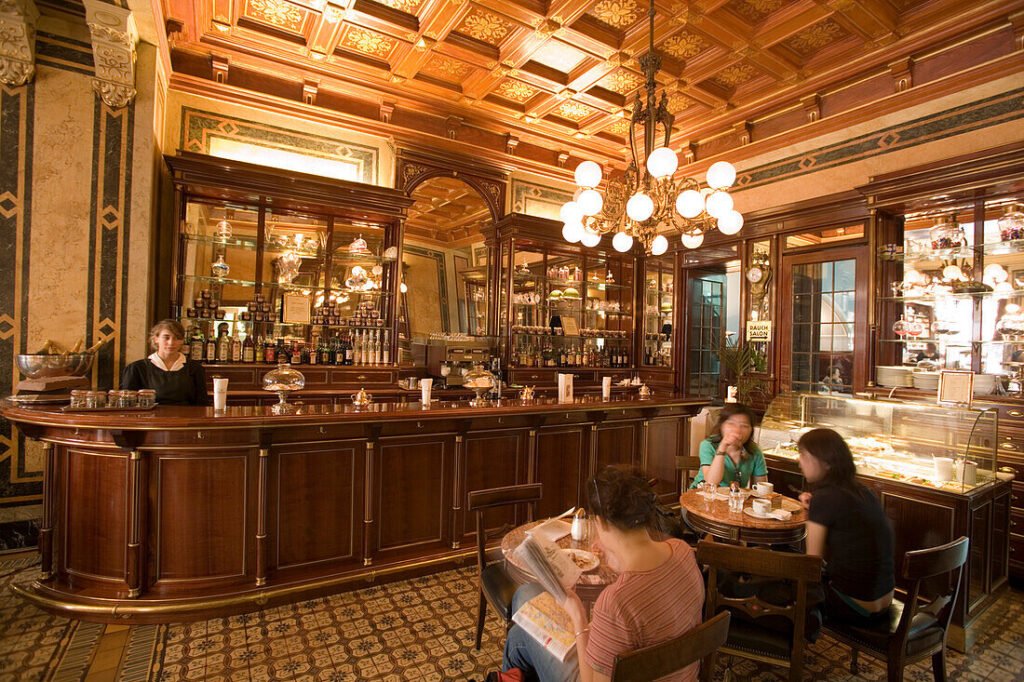
The Schwarzenberg opened in 1861 — before the Ringstrasse was completed — and has witnessed the entire history of Vienna’s most famous avenue from its beginning. The room is a masterpiece of 19th-century café design — tall windows looking out onto the Ringstrasse, crystal chandeliers, mirrored walls, marble tables, and the particular golden quality of light that the great Ringstrasse coffee houses all seem to share.
The coffee is excellent and the pastry selection outstanding. The Schwarzenberg is less famous than the Central or the Sacher but it is, for the committed coffee house visitor, one of the most genuinely rewarding rooms in Vienna — beautiful, historically significant, and not overwhelmed by tourism to the same degree as the most famous establishments.
Order: Kleiner Brauner and the Apfelstrudel. Sit by the window and watch the Ringstrasse traffic — trams, cyclists, and pedestrians in the shadow of the great 19th-century buildings.
Best for: Ringstrasse history, architectural beauty, a quieter alternative to the most famous coffee houses.
7. Café Griensteidl — The Reborn Literary Café
Address: Michaelerplatz 2, 1010 Vienna
Founded: Original 1847, reopened 1990
District: 1st District (on the Michaelerplatz, opposite the Hofburg)
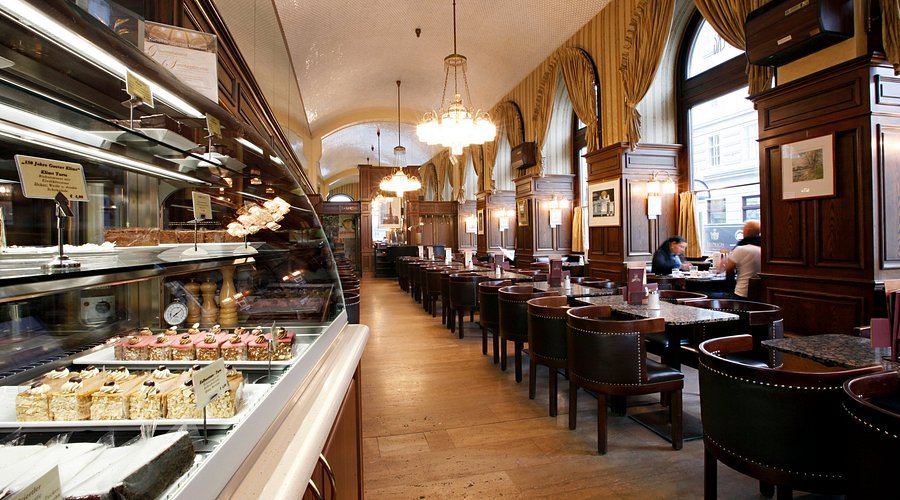
Café Griensteidl occupies one of the most extraordinary locations in Vienna — directly on the Michaelerplatz, facing the great circular façade of the Michaelertor entrance to the Hofburg Imperial Palace and Adolf Loos’s famous Looshaus — the modernist building whose plain façade caused such outrage when it was completed in 1911 that the Emperor Franz Joseph I reportedly had the curtains of his palace windows drawn so he would not have to look at it.
The original Café Griensteidl — founded in 1847 — was one of the most famous literary coffee houses in Vienna’s history, associated with the Young Vienna literary movement of the 1890s and with writers including Hugo von Hofmannsthal, Arthur Schnitzler, and Hermann Bahr. The original café was demolished in 1897 — an act of destruction that Karl Kraus, the great Viennese satirist, marked with a ferocious satirical pamphlet. The current café is a reconstruction opened in 1990 that captures something of the original’s spirit if not its precise historical atmosphere.
The location alone makes the Griensteidl worth visiting — the view across the Michaelerplatz to the Hofburg from the café’s terrace is one of the finest in Vienna.
Order: Verlängerter and the Frühstück on the terrace in the morning sun, looking across to the Hofburg.
Best for: Location, Hofburg proximity, the Young Vienna literary connection, terrace coffee in good weather.
8. Café Prückel — The Unchanged Fifties
Address: Stubenring 24, 1010 Vienna
Founded: 1903, current design 1955
District: 1st District (near the MAK — Museum of Applied Arts)
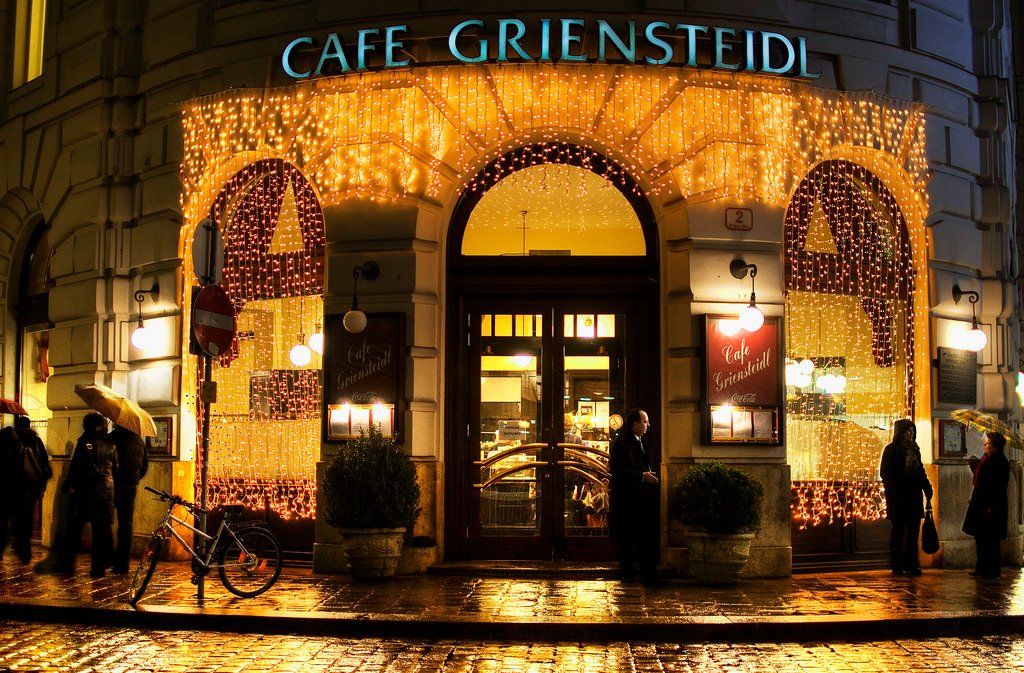
Café Prückel is one of Vienna’s most extraordinary coffee houses for a reason that has nothing to do with imperial history or literary legend — it is a perfectly preserved example of 1950s Viennese café design, unchanged since its postwar renovation and representing a completely different but equally fascinating chapter of Viennese coffee house history.
The interior of the Prückel is a time capsule of mid-century Austrian design — bentwood chairs, geometric light fittings, dark wood panelling, and a particular quality of slightly faded elegance that is entirely authentic and entirely unreproducible. This is what the Viennese coffee house looked like in 1955 and what it still looks like today — not because it has been preserved as a museum piece but because nobody has felt the need to change it.
The Prückel is one of the most genuinely local of Vienna’s great coffee houses — less dominated by tourism than the first-district landmarks, used daily by Viennese people from the surrounding neighbourhood and from the cultural institutions nearby. The atmosphere is relaxed, unhurried, and genuinely authentic.
The coffee is excellent. The food menu includes a good selection of traditional coffee house dishes. Bridge is played here regularly — the Prückel maintains the old coffee house tradition of card games with a dedicated bridge programme.
Order: Großer Brauner and the Topfenstrudel. Read a newspaper. Stay for two hours. This is the coffee house as the Viennese actually use it.
Best for: Authentic local atmosphere, 1950s design, avoiding the tourist crowds of the first district landmarks.
9. Café Sperl — The Graz Billiards Champion
Address: Gumpendorfer Strasse 11, 1060 Vienna
Founded: 1880
District: 6th District (Mariahilf)
Café Sperl is widely considered the finest traditional coffee house in Vienna outside the first district — a beautifully preserved 19th-century establishment in the Mariahilf district that has maintained its original interior essentially unchanged since 1880 and that was used as a filming location in the 1995 film Before Sunrise, bringing it to international attention among a generation of travellers who may not previously have associated Vienna with coffee house culture.
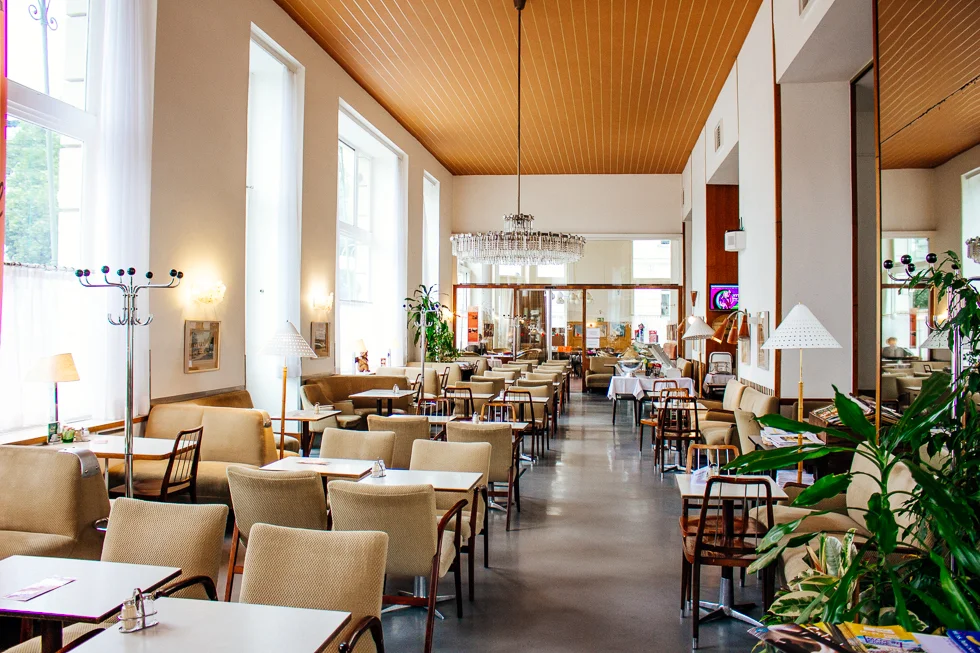
The room is outstanding — one of the most beautiful coffee house interiors in Vienna. High ceilings, elaborate plasterwork, the original billiard tables that remain in use, bentwood chairs, marble tables, newspaper holders on the walls, and the particular quality of golden afternoon light that the great Viennese coffee houses all seem to generate regardless of the direction they face.
The Sperl is genuinely used by locals — the Mariahilf district is a residential and commercial neighbourhood rather than a tourist centre and the café’s clientele reflects the surrounding community rather than the sightseeing routes of the first district. The atmosphere is consequently more relaxed, more authentically everyday, and more genuinely representative of what the coffee house tradition means in Viennese daily life.
The coffee is excellent. The pastries are outstanding — the Sperl’s Apfelstrudel is among the finest in Vienna. The billiard tables are still in use and watching a game being played while drinking a Melange in the afternoon is one of the most precisely Viennese experiences available in the city.
Order: Melange in the morning. Großer Brauner and the Apfelstrudel in the afternoon. And if you are there at the right moment, watch the billiards.
Best for: The most authentic coffee house experience in Vienna, beautiful original interior, local atmosphere, the Before Sunrise film connection.
10. Café Bräunerhof — Bernhard’s Table
Address: Stallburggasse 2, 1010 Vienna
Founded: 1900s
District: 1st District
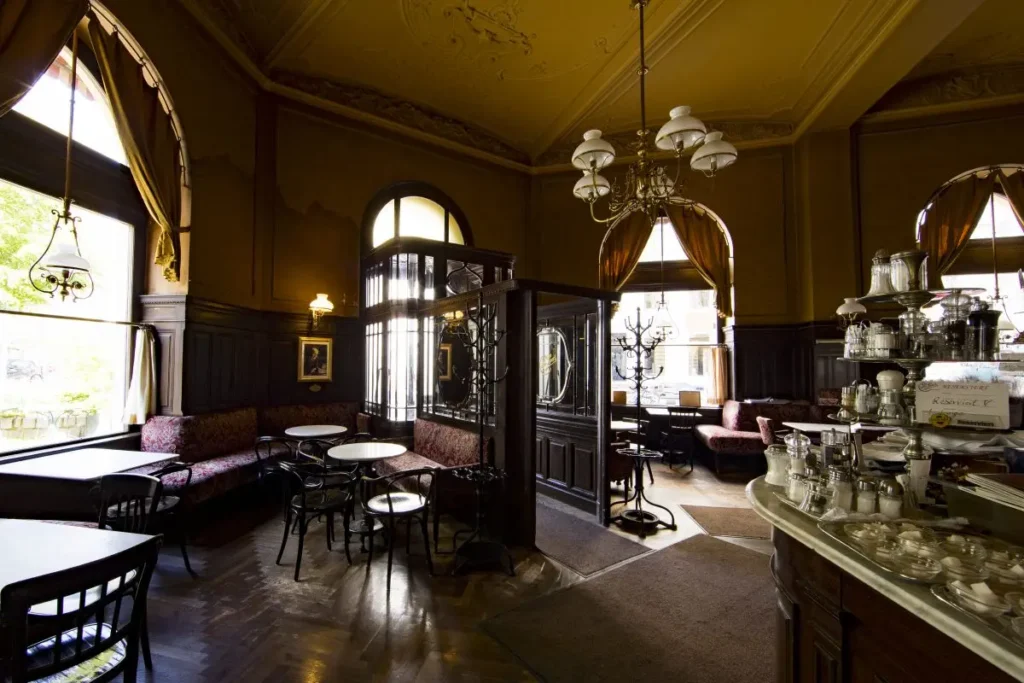
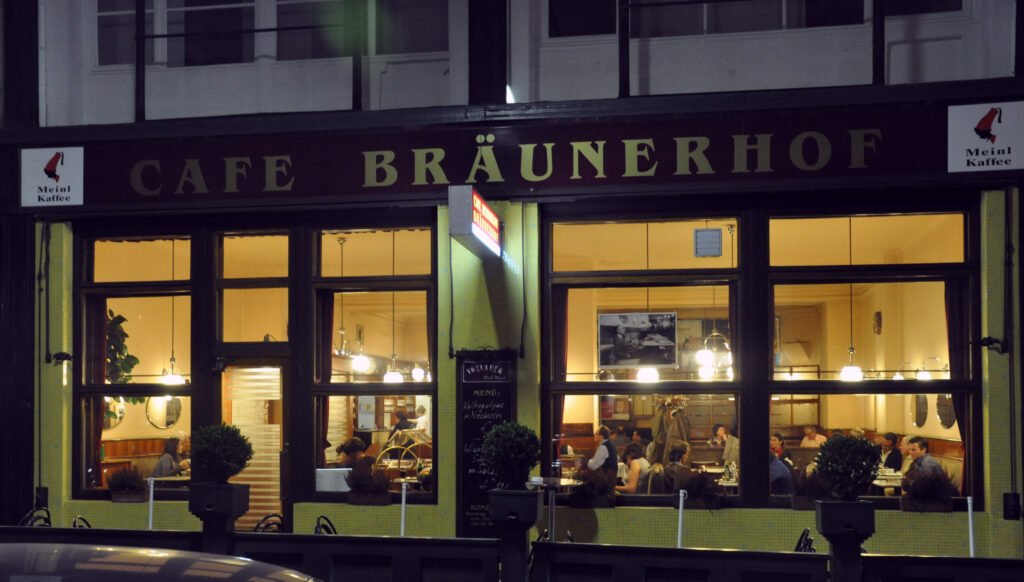
Café Bräunerhof is the least famous of the great Vienna coffee houses on this list and the most authentically, most uncompromisingly traditional. It has not been renovated to appeal to tourists. It has not been featured in travel guides to the degree that its quality deserves. It does not have a famous cake named after it or a legal dispute to its credit. What it has is the atmosphere of the genuine Viennese Kaffeehaus in its most undiluted form — and for visitors who understand what they are looking for it is one of the finest coffee house experiences in the city.
The Austrian writer Thomas Bernhard — one of the great literary figures of 20th-century Austrian culture, whose novels are characterised by a ferocious, darkly comic misanthropy that is entirely characteristic of a certain Viennese intellectual tradition — made the Bräunerhof his regular table for decades. He sat here, read the newspapers, drank his coffee, and wrote. The association gives the café a literary credential of genuine distinction.
The room is small, quiet, and unremarkable in its decoration — which is precisely the point. The Bräunerhof asks nothing of you. It simply offers the table, the coffee, the water, the newspaper, and the time. What you do with them is your own affair.
Order: Kleiner Brauner. The newspaper of your choice. As much time as you need.
Best for: The purest coffee house experience in Vienna, Thomas Bernhard literary connection, quiet contemplation, visitors who want the genuine article without the crowds.
11. Café Residenz — Schönbrunn’s Royal Café
Address: Schönbrunner Schlossstrasse 47, 1130 Vienna
Founded: Within the Schönbrunn Palace complex
District: 13th District (Hietzing)
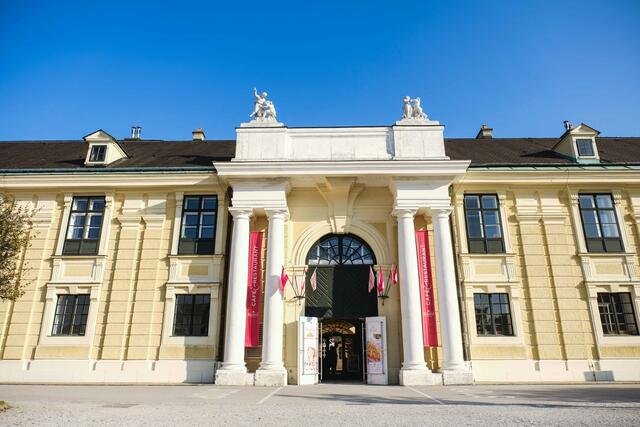
Café Residenz is located within the Schönbrunn Palace complex — the great Habsburg summer palace that is Vienna’s most visited tourist attraction — and offers the most imperial of all Viennese coffee house settings.
The café occupies rooms of the palace that were used for imperial functions and the decoration reflects this heritage — high ceilings, elaborate ornamentation, and the particular quality of Habsburg grandeur that the Schönbrunn Palace maintains throughout its extraordinary complex.
The coffee and pastry quality are excellent — the Sachertorte and Apfelstrudel served here are among the finest available anywhere in Vienna. The imperial setting adds a dimension to the coffee house experience that no other café in the city can match.
Order: The Sachertorte and an Einspänner after the palace tour. The combination of imperial surroundings and excellent cake is hard to improve upon.
Best for: Combining with a Schönbrunn Palace visit, the most imperial coffee house setting in Vienna.
12. Café Diglas — The Hidden Gem
Address: Wollzeile 10, 1010 Vienna
Founded: 1923
District: 1st District
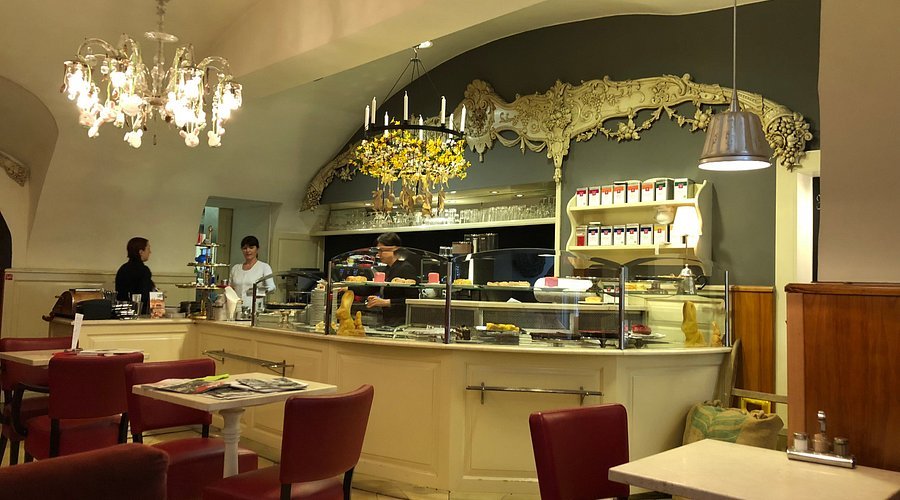
Café Diglas is one of the least known and most genuinely rewarding of Vienna’s first-district coffee houses — a beautifully preserved establishment that maintains the full traditional coffee house atmosphere without the queues and tourist concentration of the most famous establishments.
The room is elegant — original wooden panelling, traditional seating, good light, and the unhurried atmosphere that the coffee house tradition promises and that the more famous establishments sometimes struggle to deliver under the pressure of visitor numbers. The Diglas is used daily by Viennese people from the surrounding neighbourhood and the atmosphere reflects this — relaxed, genuine, and entirely unpretentious.
The coffee is excellent and the pastry selection outstanding — the Diglas takes its Konditorei tradition seriously and the quality of the cakes reflects this commitment. The Frühstück is one of the most enjoyable in the first district.
Order: Verlängerter and the full Viennese breakfast in the morning. Return in the afternoon for the Topfenstrudel.
Best for: Avoiding the tourist crowds while remaining in the first district, authentic atmosphere, excellent pastries.
Practical Guide: How to Use a Viennese Coffee House
The Rules — Written and Unwritten
Ordering: When you sit down a waiter will approach — usually within a few minutes. Order your coffee by its specific name. If you want food order it at the same time.
Paying: Never pay at the counter. The bill is brought to your table when you request it — say Zahlen bitte (pay please) or simply catch the waiter’s eye and make a writing gesture. Attempting to pay before you are ready to leave is unnecessary and slightly unusual.
Tipping: Round up the bill to the nearest euro or add approximately 10 percent. Hand the money directly to the waiter rather than leaving it on the table — say the amount you wish to pay and the waiter will return change if applicable.
Time: You may stay as long as you wish. No Viennese coffee house will ask you to leave or make you feel unwelcome for sitting over a single coffee for two hours. This is the fundamental promise of the institution and it is kept.
Newspapers: Most traditional coffee houses provide a selection of newspapers on wooden holders — take one to your table and return it when you leave. This is one of the great pleasures of the coffee house and entirely free.
Smoking: Some traditional Viennese coffee houses maintain smoking sections — Austria’s smoking regulations in hospitality venues have been debated and changed several times in recent years. Check the current situation before visiting if this is relevant to your experience.
Getting There
Vienna’s great coffee houses are concentrated in the first district — the historic centre of the city within the Ringstrasse. All are within comfortable walking distance of each other and of Vienna’s major attractions. The U-Bahn (underground) stations Stephansplatz, Herrengasse, Stadtpark, and Schwedenplatz provide access to the first district from across the city.
When to Visit
Morning (8–11 AM): The coffee house at its most atmospheric — quiet, civilised, the Viennese beginning their day. The best time for breakfast and for experiencing the coffee house as Viennese people actually use it.
Midday (11 AM–2 PM): Busier, particularly in the most famous establishments. Lunch menus available in coffee houses that offer full food service.
Afternoon (2–6 PM): The golden hour of the coffee house — the time traditionally associated with Kaffee und Kuchen (coffee and cake) and the most leisurely and most pleasurable period of the coffee house day.
Evening (6 PM onwards): Many coffee houses are open late — some until midnight or beyond. The evening coffee house has its own atmosphere — quieter, more intimate, particularly pleasant in the smaller and less tourist-oriented establishments.
Beyond the First District: Coffee Houses Worth the Journey
Café Ritter — Ottakring’s Living Room
Address: Ottakringer Strasse 85, 1160 Vienna A traditional neighbourhood coffee house in the working-class 16th district — unpretentious, genuine, and entirely representative of the coffee house as a democratic community institution rather than a tourist attraction.
Café Hummel — The 8th District Classic
Address: Josefstädter Strasse 66, 1080 Vienna A beautifully preserved traditional coffee house in the residential 8th district — beloved by the local neighbourhood and by visitors who have discovered that the best coffee house experiences in Vienna are sometimes found away from the famous first-district landmarks.
Café Westend — The Westbahnhof Tradition
Address: Mariahilfer Strasse 128, 1150 Vienna A large, traditional coffee house opposite the Westbahnhof station — used by travellers and locals alike for generations and maintaining the full coffee house tradition with particular reliability.
Final Thoughts: What the Viennese Coffee House Actually Is
The writer Stefan Zweig described the Viennese coffee house as a democratic club — a place where for the price of a single modest cup of coffee a person of any background or means could sit in warmth and comfort for an entire day, reading every newspaper published in Europe, receiving their correspondence, meeting their friends, and pursuing their intellectual life with perfect equality alongside the wealthiest and most distinguished patrons in the room.
This description was written over a century ago and it remains, in its essential truth, accurate today. The Viennese coffee house still offers time at a fair price. It still treats everyone at its marble tables with equal courtesy and equal patience. It still provides the newspapers, the water, the warmth, and the unhurried atmosphere that Zweig described. It still keeps its fundamental promise — that when you sit down here you may stay as long as you wish and no one will make you feel unwelcome for doing so.
In a world that increasingly treats public space as something to be monetised, that measures the value of a café seat in revenue per hour, that has replaced the marble table and the newspaper holder with the charging point and the wifi password, the Viennese coffee house is something genuinely radical — a room that still believes your time has value and that sitting still is not wasted time but a way of being alive.
Go to Vienna. Find the coffee house that suits you. Order the Melange. Accept the water. Take the newspaper. And stay as long as you wish.
That is what Vienna is offering. It would be a shame to refuse.