
Every Indian family that visits Singapore says the same thing on the flight home — why did we wait so long to come here?
Singapore works for Indian families in a way that almost no other international destination does. The reasons are both practical and deeply personal.
Practically, Singapore is one of the shortest international flights from most Indian cities. English is an official language spoken everywhere — by taxi drivers, shopkeepers, hotel staff, and hawker centre vendors. The MRT metro system is so clean, safe, and logically designed that children can navigate it independently after one or two journeys. The food options range from world class hawker centres serving food from across Asia to some of the finest Indian restaurants outside India. Medical facilities are world class. The streets are extraordinarily clean. Crime is almost nonexistent. And the entire city is air conditioned in ways that make tropical heat manageable even for elderly grandparents travelling with the family.
Personally and emotionally, Singapore has one of the largest Indian diaspora communities in the world. Approximately nine percent of Singapore’s population is of Indian origin and the Indian presence is woven into the city’s identity at every level — in the food, the temples, the festivals, and the neighbourhoods. Little India in Singapore is one of the most extraordinary Indian communities outside India — a neighbourhood of ornate temples, fragrant spice shops, sari boutiques, banana leaf restaurants, and the particular warmth of a community that has maintained its culture while building something entirely new. For Indian families, particularly those travelling internationally for the first time, Singapore offers the comfort of the deeply familiar alongside the genuine excitement of the foreign.
And then there are the attractions. Universal Studios Singapore. The Singapore Zoo, widely considered the finest in Asia. The Night Safari, the world’s only nocturnal wildlife park. Gardens by the Bay. Sentosa Island. The ArtScience Museum. The S.E.A. Aquarium. Adventure Cove Waterpark. All within a city small enough to cross end to end in under an hour on the MRT.
Singapore does not ask families to choose between comfort and excitement, between safety and adventure, between the familiar and the genuinely new. It offers all of them simultaneously, in one compact, extraordinarily well-organised city. That is why it is the best international family destination for Indian travellers.
Before You Go: Visa and Documents
Singapore Visa for Indian Families
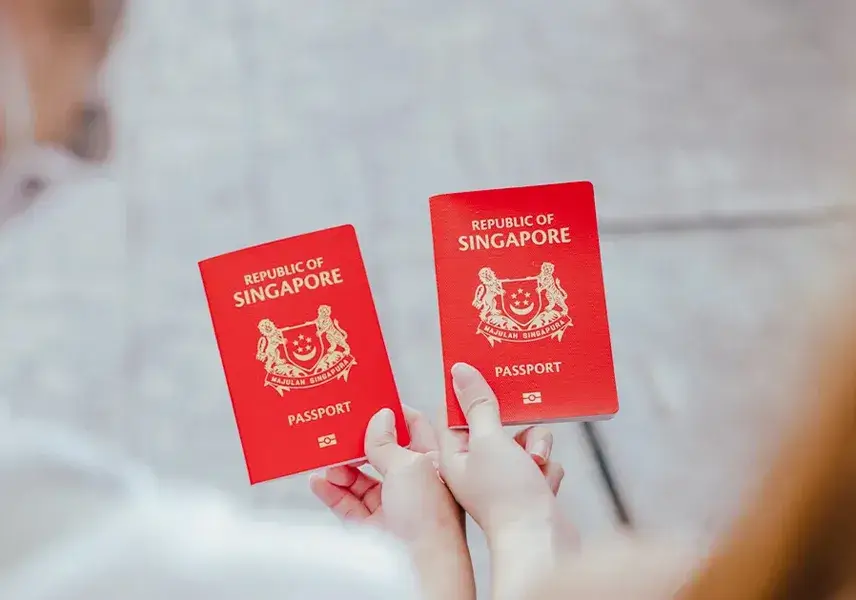
Indian passport holders require a visa to enter Singapore. The good news is that the process is straightforward, relatively quick, and well-supported by Indian travel agents who handle Singapore visa applications routinely.
The Singapore Tourist Visa can be applied through the Immigration and Checkpoints Authority of Singapore online, or through an authorised visa agent. For most Indian families, using an authorised agent — MakeMyTrip, Thomas Cook, Cox and Kings, and SOTC all handle Singapore visa applications — is the most convenient approach, particularly when booking flights and hotels through the same platform.
Documents Required:
Every family member including children requires their own visa. The standard documents required are a valid passport with at least six months validity remaining, recent passport size photographs on a white background, confirmed return flight tickets, confirmed hotel bookings, bank statements showing sufficient funds for the trip, and income proof such as salary slips or income tax returns. For employed applicants a leave letter from the employer is required. For children, birth certificates and school documents are needed.
Processing Time:
Standard processing takes three to five working days. During peak Indian holiday seasons such as May, October, and December, processing can take longer. Always apply at least two weeks before your travel date and ideally three to four weeks in advance during busy periods.
Important: Apply for all family members simultaneously rather than separately — this makes the process smoother and ensures all visas arrive together.
Documents to Carry When Travelling
Carry original passports for every family member, printed visa approvals, printed return flight tickets, hotel booking confirmations, travel insurance documents, and a note of your country’s embassy contact number in Singapore in case of emergency. Keep physical copies of all documents separate from the originals — in a different bag or with a different family member.
Getting There: Flights from India to Singapore
Which Cities Have Direct Flights
Direct flights to Singapore’s Changi Airport are available from Mumbai, Delhi, Bangalore, Chennai, Hyderabad, Kolkata, Ahmedabad, and Kochi. From cities without direct service such as Surat, the most common routing is via Mumbai or Ahmedabad with a connecting flight.
The flight duration ranges from approximately three and a half hours from Kolkata and Chennai to just over five and a half hours from Mumbai and Delhi — making Singapore one of the most accessibly located international destinations for Indian families.
Airlines operating from India to Singapore:
IndiGo offers the widest network of direct routes from Indian cities at competitive prices and is the most popular choice for budget-conscious families. Air India provides full service with checked baggage included and is a comfortable option particularly for families travelling with elderly members. Singapore Airlines is the premium option — exceptional service, superb in-flight entertainment for children, and a travel experience that genuinely sets the tone for the trip. Scoot, Singapore Airlines’ budget carrier, offers a middle-ground option with lower prices than the parent airline and decent service.
Booking Tip:
Book return flights at least two to three months in advance for the best availability and prices. During Indian school holiday periods — particularly the May summer break and the October Diwali break — Singapore flights fill up quickly and prices rise significantly. Use Google Flights or Skyscanner to compare all airlines and dates, then book directly on MakeMyTrip or EaseMyTrip using an Indian credit card for the best cashback offers.
Changi Airport: Your First Singapore Experience
Singapore’s Changi Airport is consistently rated the world’s finest airport — and arriving here with children for the first time is an experience that sets the tone for everything that follows. The airport is so extraordinary that it has become an attraction in its own right, and most experienced Singapore travellers build deliberate time at Changi into their itinerary.
Jewel Changi
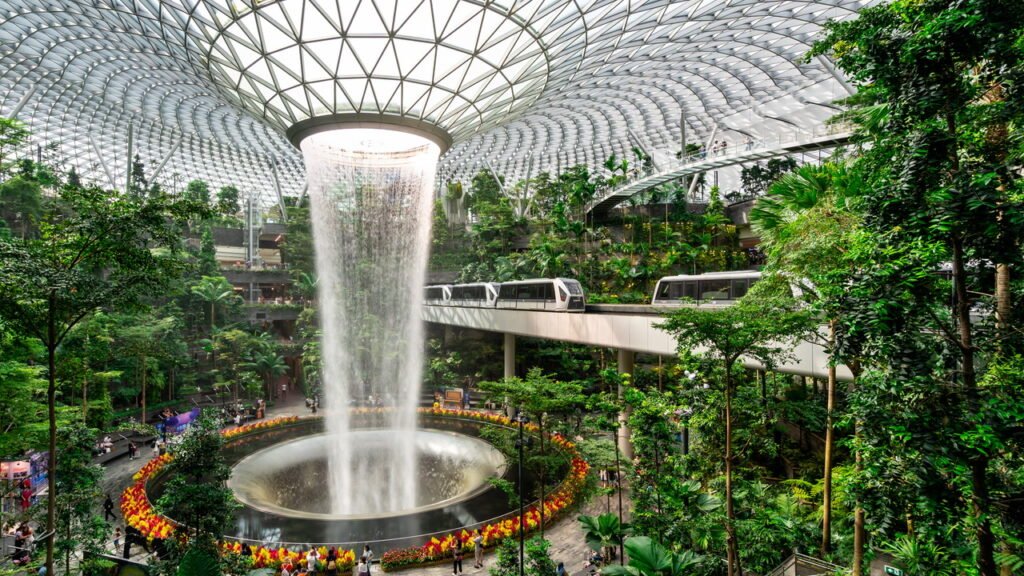
Jewel Changi is the extraordinary doughnut-shaped retail and entertainment complex connected to Terminal 1 and accessible from all terminals via covered walkways. Its centrepiece is the Rain Vortex — a 40-metre indoor waterfall that is the tallest in the world, plunging from a circular aperture in the glass roof through the five-storey atrium, surrounded by terraced gardens and retail. It is completely free to view and genuinely spectacular.
The fifth floor of Jewel houses the Canopy Park — a collection of paid activities including a hedge maze, mirror maze, bouncing net, and sky nets walking trails suspended above the atrium. For families with children who are arriving early and waiting for a hotel check-in, or departing with time to spare, the Canopy Park is an excellent way to spend two to three hours in an extraordinary environment.
Practical advice: Build at least two hours into your airport arrival or departure schedule specifically for Jewel. Attempting to rush through it does it no justice and leaves children disappointed.
Getting From the Airport to Your Hotel
MRT: The East-West MRT line connects Changi Airport directly to the city centre with no changes required. From Changi to Orchard Road takes approximately 40 minutes and costs a very small amount per person. Children under seven travel free. This is the most recommended option for families with older children and manageable luggage.
Grab: Singapore’s primary rideshare app provides a comfortable, air-conditioned, door-to-door service from the airport to your hotel. For families with very young children, heavy luggage, or elderly members, Grab is worth the additional cost for the convenience and comfort it provides. Book through the Grab app immediately on arrival — the pickup point is clearly signed in the arrival hall.
Hotel Shuttle: Many mid-range and luxury hotels offer airport shuttle services. Check with your hotel before arrival — this is the most convenient option for families unfamiliar with the MRT and removes any navigation complexity on arrival day.
The Attractions: What Every Indian Family Must Experience
Universal Studios Singapore — The Non-Negotiable
Universal Studios Singapore on Sentosa Island is the most visited attraction in Singapore and the only Universal Studios theme park in Southeast Asia. With 28 rides and attractions across seven themed zones it is genuinely world class — comparable in quality to the Universal parks in Orlando and Hollywood, in a more compact and more manageable format that suits families with a range of ages.
The Zones and What Matters Most:
Sci-Fi City is the highlight zone for older children and teenagers — home to the TRANSFORMER The Ride 3D, which is the park’s centrepiece and one of the finest theme park rides in Asia. A motion simulator ride of extraordinary technical quality that puts guests inside the world of the Transformers films. The Battlestar Galactica dual coasters — one seated, one hanging — are the most intense rides in the park for true thrill seekers.
Ancient Egypt houses the Revenge of the Mummy — an indoor psychological coaster in complete darkness with fire effects and sudden reversals of direction. The finest family ride in the park for children above the minimum height requirement — genuinely exhilarating without being overwhelming.
The Lost World contains the Jurassic Park Rapid Adventure — the essential family water ride that ends with a significant drop and guarantees everyone gets completely soaked. The Waterworld live action stunt show is also here — a spectacular 20-minute show with genuine pyrotechnics and stunt work that is completely free with park entry.
Far Far Away is the zone designed for younger children — the Shrek-themed area with gentle rides, the Enchanted Airways junior coaster (a perfect first coaster for children who have never ridden one), and elaborate character environments that the youngest family members find genuinely magical.
Madagascar provides the youngest children’s zone with carousel rides and gentle attractions suitable for toddlers.
The Strategy for Indian Families:
Arrive at park opening. Head immediately to Revenge of the Mummy and then the TRANSFORMER ride before the queues build. These two have the longest waits and completing them in the first hour saves significant time. The Jurassic Park water ride is best mid-morning before it becomes the most popular hot-weather choice. Build the Waterworld show into your schedule — check the daily schedule at the entrance and plan around it. Leave Far Far Away for the afternoon when younger children’s energy flags and the zone’s gentler pace suits the time of day.
Express Pass: The park’s queue-skip option allows one express entry per attraction. For families visiting during peak seasons or on weekends, purchasing Express Pass for the two or three most popular rides makes a significant difference to the overall experience.
The park can be completed in one full day if you arrive at opening and manage your time well. Two days allows a more relaxed experience with repeat rides on favourites and time for shows and character meets that a single-day visit might rush.
Singapore Zoo — Genuinely the Best in Asia
The Singapore Zoo is consistently ranked among the finest zoological parks in the world and the ranking is fully deserved. What distinguishes it from every other zoo most Indian families will have visited is its open concept design — most animals are separated from visitors by moats and natural barriers rather than cages, creating an environment that feels more like a wildlife sanctuary than a traditional zoo.
The zoo occupies 28 hectares of genuine rainforest on the edge of the Upper Seletar Reservoir — a beautifully landscaped setting where 300 species of animals live in environments that closely resemble their natural habitats. Walking through the zoo feels like moving through a rainforest that happens to contain extraordinary animals rather than through a series of enclosures.
The Jungle Breakfast With Wildlife:
The single most beloved family experience in all of Singapore — a buffet breakfast served in an open-air restaurant while free-ranging animals move through the trees nearby. Named after Ah Meng — a famous Sumatran orangutan who lived at the zoo for 48 years and met prime ministers, presidents, and celebrities — the breakfast continues under the spirit she established. Orangutans, squirrel monkeys, and other animals move freely through the trees above and around the dining area during breakfast service.
For children this is a genuinely extraordinary experience — watching a wild animal at close range in a natural setting over breakfast is unlike anything available in India and unlike anything available at a conventional zoo anywhere. The combination of good food, extraordinary wildlife, and the open-air rainforest setting makes this the most universally loved experience in Singapore for Indian families.
Book this the moment you confirm your Singapore travel dates. It sells out weeks and sometimes months in advance during Indian school holiday periods. Visiting the Singapore Zoo without the Jungle Breakfast is leaving the finest experience on the table.
The Free-Ranging Orangutans:
Singapore Zoo’s most famous feature is the population of Bornean orangutans who move freely through the rainforest canopy above the visitor walkways throughout the day. Seeing an orangutan directly overhead in a genuine forest setting — not in a cage, not behind glass, but in the trees above your head — is one of the great wildlife encounters available anywhere in Asia.
The Frozen Tundra:
Singapore Zoo maintains genuine Arctic temperatures for its polar bear habitat in the middle of tropical Singapore. The viewing area puts visitors face-to-face with polar bears through a glass panel. For children who have grown up in India and have never seen a polar bear in any setting, this is genuinely astonishing.
Jungle Splash:
A water play area within the zoo grounds — essential for families with young children who need to cool down in Singapore’s tropical heat. Build time for this into every zoo visit.
Animal Shows:
The zoo runs several daily shows including the Rainforest Fights Back conservation show and the High Flyers bird of prey show. Check the daily schedule at the entrance and plan your zoo route around the show times — they are included in the entry ticket and genuinely excellent.
The Night Safari — A World That Exists Nowhere Else
The Night Safari is the world’s first nocturnal wildlife park — open only after dark, with animals in large naturalistic habitats illuminated by specially designed lighting that mimics natural moonlight. It is unlike any other wildlife experience on earth and represents one of Singapore’s most genuinely extraordinary contributions to the world of zoological parks.
The park houses over 900 animals from 100 species across eight geographical zones — accessed by a tram ride included in the ticket that takes approximately 40 minutes, or on foot along four walking trails that allow closer exploration of specific habitat areas.
What makes it extraordinary:
Nocturnal animals are active after dark in a way they never are during the day at a conventional zoo. The leopards pace their territory. The fishing cats hunt along the stream bank. The giant flying squirrels glide between trees directly overhead. The babirusa root through their forest enclosures. Moving through a darkened rainforest with animals active all around you — separated only by invisible barriers — is genuinely unlike anything a daytime zoo can provide.
The Creatures of the Night show — included in the ticket — features nocturnal animals demonstrating natural behaviours in an outdoor amphitheatre. Civets, otters, pythons, and other species perform instinctive behaviours in front of a live audience with gentle, non-intrusive lighting. Excellent for children aged five and above.
Practical Tips for Indian Families:
Arrive at seven PM when the park opens — tram queues build quickly after eight PM and the first tram of the evening is always the least crowded. Bring mosquito repellent without exception — the Night Safari is a genuine rainforest environment and insects are present. No flash photography anywhere in the park — it disturbs the animals and ruins the experience for other visitors. Follow the marked walking trails carefully after the tram ride — the trails are lit only by ambient lighting and the darkness is genuine.
The food at the Night Safari is good — the Ulu Ulu Safari Restaurant has a reasonable Indian food section for families who want familiar food after the excitement of the evening.
Gardens by the Bay — Where Nature Meets the Future
Gardens by the Bay is one of the most visually extraordinary public spaces in Asia — 101 hectares of reclaimed land on Marina Bay transformed into a futuristic botanical garden of remarkable ambition and beauty. It is simultaneously a world class botanical collection, an architectural landmark, and one of the finest free public spaces in any city in the world.
The Cloud Forest:
The more dramatic of the two climate-controlled conservatories — a 35-metre indoor mountain covered in cloud forest vegetation, surrounded by the world’s tallest indoor waterfall at 35 metres. A walkway spirals around the mountain from summit to base, passing through different altitudinal zones of genuine cloud forest, with spectacular views of the interior and the city skyline through the glass walls at every level.
The experience of standing at the summit walkway looking down through artificial mist at the waterfall and the gardens below, with Marina Bay visible through the glass beyond, is one of the most visually extraordinary interior experiences in Singapore.
The Flower Dome:
The world’s largest glass greenhouse — a Mediterranean climate maintained in tropical Singapore, housing plants from five Mediterranean-climate regions of the world. The seasonal floral displays change every few months and are extraordinary in scale and colour. Children respond to the sheer visual impact of thousands of flowers arranged in displays of remarkable creativity.
The Supertree Grove:
The 18 vertical garden towers that have become Singapore’s most recognisable skyline feature — steel trees 25 to 50 metres tall covered in living plants, with solar panels and rainwater collection systems that make them genuine functional structures as well as extraordinary visual spectacles. Walking through the grove at ground level and looking up at the canopy of living plants against the Singapore sky is genuinely memorable.
Garden Rhapsody:
The free evening light and music show at Supertree Grove runs twice every evening — a ten-minute spectacular combining coloured lights, music, and the extraordinary forms of the Supertrees. One of Singapore’s finest free experiences and a magical ending to any day in the Gardens. Arrive 15 minutes early and position yourself in the grove itself for the best experience.
Do not under any circumstances leave Singapore without seeing Garden Rhapsody. It costs nothing, takes ten minutes, and is one of the most genuinely beautiful free experiences available anywhere in Asia.
Sentosa Island — The Entertainment Island
Sentosa Island is Singapore’s dedicated leisure and entertainment island — connected to the mainland by monorail, cable car, and pedestrian boardwalk, containing Universal Studios, beaches, the S.E.A. Aquarium, Adventure Cove Waterpark, Skyline Luge, and numerous other family attractions within a compact, easily navigable area.
S.E.A. Aquarium:
One of the largest aquariums in the world — over 100,000 marine animals across 50 exhibits. The Open Ocean habitat is the centrepiece — a single tank of 18.7 million litres viewed through what was at the time of construction the world’s largest viewing panel. Manta rays, bull sharks, and thousands of reef fish are simultaneously visible through a 36-metre wide acrylic panel. For children who have never seen ocean creatures at this scale and proximity the experience is genuinely astonishing.
Adventure Cove Waterpark:
A full day water theme park with slides of every kind, a wave pool, a lazy river, and a unique snorkelling experience where guests swim through a purpose-built reef with 20,000 tropical fish. The RainFortress family play structure is excellent for children aged four to ten. On a hot Singapore day — which is every Singapore day — Adventure Cove is one of the finest ways a family can spend six to eight hours.
Skyline Luge:
A gravity-powered cart ride down a 688-metre track through the Sentosa hillside, with a ski-lift style chairlift returning riders to the top. Simple, enormously fun, suitable for children aged six and above, and repeatable on the same session ticket. Children consistently want to ride it again immediately after finishing. Budget time for at least two or three runs.
Palawan and Siloso Beaches:
Free access. Calm, clean, warm water year-round. Food stalls, beach volleyball, and water sports equipment rental. The water is completely safe for children and warm enough to be genuinely comfortable. The best free family activity on Sentosa Island and a perfect complement to a morning at a paid attraction.
Little India — The Indian Family’s Most Emotional Experience
For Indian families, Little India is not simply a tourist attraction. It is a neighbourhood that produces an emotional response unlike anything else in Singapore — simultaneously foreign and deeply familiar, modern and ancient, Singaporean and unmistakably Indian.
Sri Veeramakaliamman Temple:
One of the finest Hindu temples in Southeast Asia — an ornate Dravidian-style temple on Serangoon Road dedicated to Goddess Kali, with elaborate gopuram tower decoration, vivid painted sculptures of deities, and a devotional atmosphere that connects Indian families to something much older and deeper than any theme park experience. Free to enter. Follow temple etiquette — remove footwear at the entrance, dress modestly, and be respectful of ongoing worship.
Tekka Centre:
A wet market and hawker centre at the intersection of Serangoon Road and Buffalo Road that serves some of the finest South Indian food in Singapore. Roti prata with fish curry, banana leaf rice, biryani, dosai, and fresh coconut water — all prepared by Tamil Indian vendors who have been doing this for decades, at prices that make eating here several times per day completely reasonable.
Mustafa Centre:
A legendary 24-hour department store in Little India that sells literally everything — Indian groceries, spices, fresh Indian sweets, electronics, jewellery, luggage, clothing, cosmetics, and more — across several connected floors of extraordinary commercial density. For Indian families Mustafa is both useful — a genuinely good place to buy electronics and gifts at competitive prices — and deeply entertaining as a shopping experience unlike anything available elsewhere in Singapore.
Little India on Sunday Evening:
The most atmospheric and most emotionally resonant experience that Singapore offers Indian families. On Sunday evenings the South Asian migrant worker community — largely Tamil, Bangladeshi, and North Indian workers who form a large part of Singapore’s construction and service workforce — fills the neighbourhood on their weekly day off. The restaurants overflow. The streets fill with conversation in Hindi, Tamil, and Bengali. The spice shops are busy. The temples are full of worshippers. The atmosphere has a warmth, energy, and familiarity that moves Indian visitors in a way that is difficult to articulate but impossible to forget.
Gardens by the Bay Children’s Garden — Free and Extraordinary
The Jacob Ballas Children’s Garden within the Singapore Botanic Gardens is a dedicated children’s garden of exceptional quality — treehouses, a water play area, suspension bridges, interactive plant science exhibits, and beautifully designed play spaces in a genuine tropical garden setting. Completely free to enter. One of Singapore’s finest free family experiences and one of the most undervisited by tourists.
Combine the Children’s Garden with a morning at the Botanic Gardens proper — a UNESCO World Heritage Site with spectacular tropical gardens, a National Orchid Garden containing the world’s largest display of tropical orchids, and the extraordinary experience of walking through a genuine rainforest fragment that has been preserved in the middle of a major city since the 1860s.
ArtScience Museum — Future World
The ArtScience Museum at Marina Bay Sands houses the permanent Future World exhibition — a collaboration with teamLab, the Japanese digital art collective, creating immersive digital art environments that respond to the physical presence and movement of visitors.
Children wade through a projected ocean that parts around their feet. They draw fish or flowers on paper, photograph them, and watch their creations released into a shared animated world displayed across an entire wall where thousands of other visitors’ creations swim or bloom alongside theirs. They move through a space of floating digital flowers that bloom and shed petals in response to touch. The boundaries between the physical and the digital dissolve in ways that genuinely astonish children and adults equally.
It is one of the most intelligently designed interactive experiences available in any museum in Asia and consistently produces the widest range of emotional responses — wonder, laughter, stillness, and creative excitement — from every age group simultaneously.
Marina Bay Sands SkyPark — The View That Defines Singapore
The Marina Bay Sands hotel — the three towers connected by the famous boat-shaped SkyPark — is Singapore’s most recognisable landmark. The SkyPark Observation Deck is open to non-hotel guests and provides the finest panoramic view of the city available anywhere — the full sweep of Marina Bay, Gardens by the Bay, the harbour, Sentosa Island, and the city skyline in every direction.
Visit at dusk for the transition from daylight to the city’s extraordinary night illumination. The view of Gardens by the Bay from above — with the Supertrees and the two conservatories laid out below — is genuinely extraordinary and provides a perspective on the gardens that ground-level exploration cannot offer.
Where to Stay: Hotels for Indian Families
Choosing the Right Area
Orchard Road is the most recommended area for Indian families — the most central location in Singapore, with the best MRT connections to every major attraction, a wide range of mid-range and luxury hotel options, and excellent food and shopping in every direction. Most families staying on Orchard Road can reach any major attraction within 30 to 45 minutes by MRT.
Little India and Bugis is the best area for families who want to be immersed in the Indian community atmosphere, who are visiting on a budget, or who are travelling internationally for the first time and want the comfort of familiar food and faces immediately outside the hotel. The MRT access is excellent and the atmosphere of the neighbourhood itself is one of Singapore’s best experiences.
Sentosa Island is recommended specifically for families whose entire focus is Universal Studios and the island’s other attractions. Staying on Sentosa eliminates the morning MRT journey with children and allows the most convenient access to early park entry. The trade-off is that Sentosa is more isolated from the rest of Singapore’s experiences.
Marina Bay puts families within walking distance of Gardens by the Bay and the ArtScience Museum and provides the most spectacular hotel views available in Singapore. The Marina Bay Sands hotel itself is both the finest view and the finest hotel pool in the city — the infinity pool on the 57th floor is for hotel guests only and is genuinely one of the most extraordinary hotel amenities in the world.
Clarke Quay offers a riverside location with excellent restaurants, a lively evening atmosphere, and convenient MRT access. A good choice for families who enjoy a vibrant neighbourhood environment.
What to Look for in a Singapore Family Hotel
For Indian families specifically, look for hotels that provide family connecting rooms or suites rather than separate rooms — this is both more economical and more convenient with children. Check whether the hotel has a dedicated family floor or children’s amenities. A hotel swimming pool is worth prioritising — children need to cool down each afternoon and a hotel pool provides this without additional expense. Proximity to an MRT station should be a priority — even one additional MRT stop of walking distance matters significantly over multiple days with young children.
Food: Singapore Is a Paradise for Indian Families
The Hawker Centre Philosophy
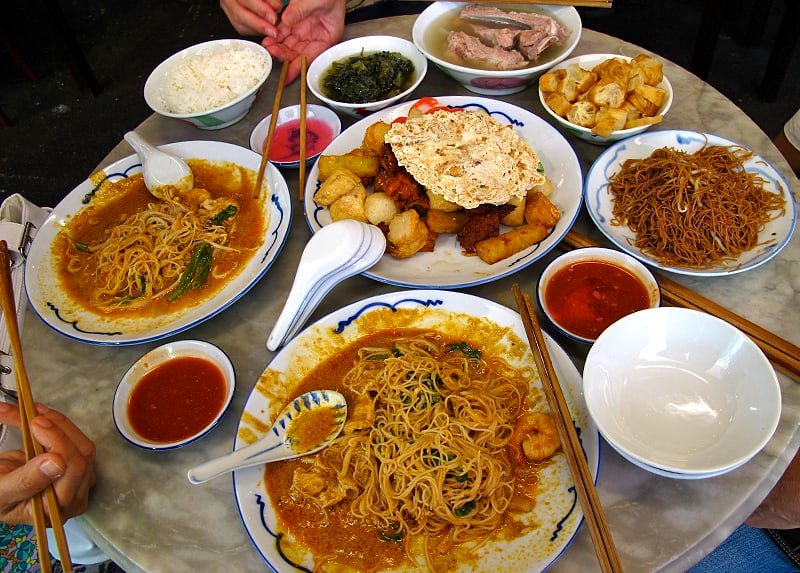
The hawker centre is Singapore’s greatest cultural institution and the food experience that every Indian family must embrace fully. An open-air food court with dozens of individual stalls, each specialising in a single dish, serving food of extraordinary quality at prices that seem impossible given the standard — the hawker centre is both a meal and an experience.
Singapore’s hawker culture was inscribed on UNESCO’s Intangible Cultural Heritage list in 2020 — a recognition that it represents something genuinely significant in the world’s food culture. A hawker master who has been perfecting a single dish for 40 years brings a level of craft and dedication to that dish that expensive restaurants rarely match. This is not fast food. It is specialised food at accessible prices.
The Best Hawker Centres for Indian Families:
Maxwell Food Centre in Chinatown is the most celebrated — home to Tian Tian Hainanese Chicken Rice, one of Singapore’s most famous single dishes, alongside dozens of excellent stalls covering Chinese, Malay, Indian, and Peranakan food. A complete introduction to Singapore’s food culture in one space.
Lau Pa Sat in the CBD occupies a beautiful Victorian cast-iron market building converted into a hawker centre — the most atmospheric dining environment in Singapore. In the evenings Satay Street outside the building comes alive with vendors grilling satay over charcoal, filling the surrounding streets with smoke and the smell of grilling meat. Sitting at a long table with satay and cold drinks on a Singapore evening is one of the city’s finest experiences.
Newton Food Centre near Newton MRT is the most internationally famous hawker centre — featured in the film Crazy Rich Asians — and more tourist-facing than Maxwell but still excellent and very atmospheric at night.
Old Airport Road Food Centre in Kallang is the local favourite — less visited by tourists, more concentrated with stalls that have been perfecting single dishes for decades, and the most authentic hawker experience available in Singapore.
Indian Food in Singapore
Singapore’s Indian food scene is one of the genuine revelations of the trip for Indian families — not a diluted or adapted version of Indian cuisine, but authentic Tamil, North Indian, Punjabi, and Indian Muslim cooking at a standard that rivals the finest restaurants in India.
Banana Leaf Apolo in Little India is the most famous South Indian restaurant in Singapore — a sprawling, always-packed dining room serving fish head curry, banana leaf rice, and masala dosai to a loyal clientele. The fish head curry is a Singapore institution — a massive fish head in a rich, spiced gravy served with rice and accompaniments on a genuine banana leaf. Eating it here, in this specific restaurant, in this specific neighbourhood, is one of the most complete Singapore food experiences available to Indian families.
Komala Vilas on Serangoon Road has been operating since 1947 and serves some of the finest pure vegetarian South Indian food in Singapore — thali, idli, dosai, uttapam, and sweets at prices that make eating here twice a day entirely reasonable. For vegetarian Indian families this is the single most important restaurant recommendation in Singapore.
Allauddin’s Biryani at Tekka Centre is the most celebrated biryani stall in Singapore — operating from the Tekka Centre hawker centre, serving mutton and chicken biryani of extraordinary quality at hawker prices. Arrive before the lunch rush — the biryani regularly sells out.
Zam Zam Restaurant on Arab Street is one of Singapore’s oldest Indian Muslim restaurants, operating since 1908, serving murtabak — the stuffed flatbread with egg and meat filling that is one of Singapore’s most beloved foods — alongside biryani and Indian Muslim specialities of exceptional quality.
What to Eat Beyond Indian Food
For Indian families willing to explore Singapore’s broader food culture, these are the dishes that should be tried at least once:
Hainanese Chicken Rice is Singapore’s national dish — poached chicken served over fragrant rice cooked in chicken stock, with chilli sauce and ginger paste. Simple, perfectly balanced, and one of the great dishes of Southeast Asian food culture.
Laksa is a spicy coconut curry noodle soup of Peranakan origin — rich, complex, and utterly distinctive. One bowl of good laksa explains immediately why Singapore food culture deserves its international reputation.
Char Kway Teow is stir-fried flat rice noodles with egg, Chinese sausage, prawns, and bean sprouts — cooked over fierce heat in a wok that gives it a distinctive smoky flavour that no other cooking method replicates.
Satay — grilled meat skewers served with peanut sauce, cucumber, and compressed rice — is one of the great street food experiences in Southeast Asia and the dish most Indian families find immediately accessible and deeply enjoyable.
Roti Prata is the Indian flatbread that crossed over into Singaporean mainstream food culture — available at Indian hawker stalls across the city and eaten by Singaporeans of every ethnic background as a breakfast and supper staple. For Indian families, eating Singapore’s roti prata and comparing it to the roti at home is one of the food trip’s most interesting moments.
Getting Around Singapore With Family
The MRT — Learn It and Love It
Singapore’s MRT is one of the finest metro systems in the world — clean, air-conditioned, punctual, and covering virtually every major attraction in the city. For Indian families the MRT is the single best way to move around Singapore and mastering it early in the trip transforms the overall experience.
The system uses stored-value EZ-Link cards available at every MRT station. Top up at station machines as needed. Children under seven travel free. The stations are impeccably signed in English and the electronic information boards show next trains and journey times clearly. Most first-time users find the system entirely intuitive within one or two journeys.
Key Stations for Family Attractions:
HarbourFront on the Circle and North-East lines connects directly to VivoCity shopping mall and the Sentosa Express monorail for Sentosa Island and Universal Studios. Bayfront on the Circle and Downtown lines is the station for Gardens by the Bay, the ArtScience Museum, and Marina Bay Sands. Little India on the North-East line puts families at the entrance to Serangoon Road and Tekka Centre. Newton on the North-South line is the closest MRT station to Newton Food Centre. The Zoo and Night Safari are served by the Thomson-East Coast line to Mandai station with a short shuttle bus connection.
Grab — For Convenience and Comfort
Grab is Singapore’s primary rideshare service — reliable, air-conditioned, clearly metered, and available everywhere within minutes of booking through the app. The GrabFamily option within the app provides vehicles equipped with car seats for infants and young children — book this option when travelling with children under four.
For families with heavy strollers, multiple large bags, or elderly members for whom MRT navigation is challenging, Grab is worth using as the primary transport. For families comfortable with the MRT, Grab is best reserved for evening journeys when children are tired, early morning departures with luggage, and journeys to the Zoo and Night Safari which require a shuttle bus connection from the MRT.
Sentosa Access
The Sentosa Express monorail from VivoCity (connected to HarbourFront MRT) to Sentosa Island is free and the standard family access route to Universal Studios and the island’s other attractions. The Singapore Cable Car provides a spectacular alternative arrival experience — gondolas traveling from Mount Faber on the mainland to Sentosa with views over the harbour and city. It costs a small amount per person but the experience and views make it worth doing at least once during the trip.
Best Time to Visit Singapore for Indian Families
Singapore is a year-round destination — the climate is consistently tropical with temperatures between 26 and 33 degrees throughout the year and rain possible in any month. There is genuinely no bad time to visit. However, certain months offer better combinations of weather, crowd levels, and atmosphere.
April and May are among the best months for Indian families — the weather is good, the May school holiday period means children are free without the peak crowd levels of the European summer, and the city is in full swing. Book flights and the Zoo Breakfast well in advance for the May holiday period.
October is an excellent month — the weather is pleasant, the Diwali celebrations in Little India are extraordinary, and the crowd levels at attractions are more manageable than the peak summer period. Visiting Little India during Diwali — with the neighbourhood decorated with lights, the temples busy with worshippers, and the festive atmosphere at its most vibrant — is one of the most moving experiences Singapore offers Indian families.
November, February, and March are the quietest and most affordable months — excellent for families who want shorter queues, more relaxed experiences, and the best hotel and flight availability.
December brings Christmas decorations that transform Orchard Road and the city centre into a genuinely spectacular display — Singapore’s Christmas illuminations are among the finest in Asia. However December is also one of the most expensive and most crowded months. Book everything significantly in advance if travelling in December.
June and July are the most crowded months — European and Australian school summer holidays combine with continued Indian visitor traffic to create the highest crowd levels of the year at Universal Studios and the Zoo. Manageable with good planning but the queues at major attractions are at their longest.
5 Day Singapore Family Itinerary
Day 1 — Arrival and Little India
Morning and Afternoon: Arrive at Changi Airport. Explore Jewel Changi — Rain Vortex, Canopy Park for children, lunch at the food hall. Check into hotel. Rest.
Evening: Little India for dinner. Sri Veeramakaliamman Temple visit. Komala Vilas or Banana Leaf Apolo for dinner. Serangoon Road evening walk. If arriving on a Sunday, experience the extraordinary Sunday evening atmosphere of the neighbourhood.
Day 2 — Universal Studios Singapore
Full Day: Arrive at Universal Studios at opening. Revenge of the Mummy first, then TRANSFORMER The Ride. Jurassic Park Rapids mid-morning. Waterworld show after lunch. Far Far Away zone for younger children in the afternoon. Evening return to hotel.
Dinner: VivoCity food court or Resorts World Sentosa dining area.
Day 3 — Singapore Zoo and Gardens by the Bay
Early Morning: Jungle Breakfast with Wildlife at Singapore Zoo — book months in advance. Full zoo exploration until early afternoon including Free Ranging Orangutans, Frozen Tundra, and Jungle Splash.
Afternoon: MRT to Bayfront. Cloud Forest and Flower Dome at Gardens by the Bay — allow at least two to three hours for both.
Evening: OCBC Skyway at sunset. Dinner at the Marina Bay area. Garden Rhapsody light show — the free evening spectacular at Supertree Grove. Do not miss this.
Day 4 — Sentosa and Chinatown
Morning: Adventure Cove Waterpark — full morning of slides, wave pool, and snorkelling with tropical fish.
Afternoon: S.E.A. Aquarium — the Open Ocean habitat. Palawan Beach for the late afternoon.
Evening: MRT to Chinatown. Buddha Tooth Relic Temple. Sri Mariamman Temple. Maxwell Food Centre for dinner — Tian Tian Chicken Rice and hawker stalls. Pagoda Street evening market.
Day 5 — Night Safari and Departure Preparation
Morning: Singapore Botanic Gardens — National Orchid Garden and Jacob Ballas Children’s Garden. Both extraordinary and the Botanic Gardens is completely free. Lunch at a nearby cafe.
Afternoon: ArtScience Museum Future World exhibition. Marina Bay Sands SkyPark Observation Deck at dusk.
Evening: Night Safari — arrive at seven PM. Creatures of the Night show then the tram ride through all eight zones then the walking trails. Dinner at the Night Safari food stalls.
Day 6 — Shopping and Departure
Morning: Orchard Road shopping — ION Orchard, Paragon, and Ngee Ann City. Mustafa Centre in Little India for Indian groceries, electronics, and gifts.
Afternoon: Last hawker centre lunch — Newton Food Centre or Maxwell. MRT to Changi Airport with time for Jewel. Departure.
Practical Tips That Make All the Difference
Money and Currency
The Singapore Dollar is the local currency. The best exchange rates for Indian travellers are available by ordering Singapore Dollars from BookMyForex or Thomas Cook India before departure — significantly better rates than exchanging at the airport. Carry some Singapore Dollar cash for hawker centres, many of which are cash only. Use a Wise or Niyo Global card for card payments at the best live exchange rate. Avoid exchanging money at airport counters where rates are consistently the worst available.
Shopping Guide for Indian Families
Mustafa Centre in Little India is the most important shopping destination for Indian families — a 24-hour department store selling Indian groceries and spices unavailable elsewhere in Singapore, electronics at competitive prices, jewellery, luggage, and clothing. Many Indian families budget significant time at Mustafa.
Orchard Road has the highest concentration of shopping malls in Asia — ION Orchard, Paragon, Wisma Atria, and Ngee Ann City contain every international brand available.
Bugis Street is the best destination for budget shopping and souvenir buying — a covered street market with hundreds of stalls selling clothing, accessories, and souvenirs at negotiable prices.
Sim Lim Square near Rochor MRT is Singapore’s dedicated electronics market — excellent for cameras, phones, lenses, and accessories at competitive prices. Always compare prices between multiple stalls and clarify warranty details before purchasing.
Health and Safety
Singapore is one of the safest cities in the world. Violent crime is extremely rare. Children can move through the city with a freedom that is simply not available in most Asian and Indian cities. The tap water is safe to drink — one of the few cities in Southeast Asia where this is genuinely true. Food hygiene standards at all restaurants and hawker centres are strictly regulated and publicly displayed — every food establishment is graded by the National Environment Agency with grades displayed at the entrance.
The heat requires constant attention with children. Singapore’s tropical humidity makes 30 degrees feel significantly hotter than 30 degrees in a dry climate. Carry water constantly. Build regular air-conditioned breaks into every day. Children dehydrate and overheat faster than adults in this climate and the attraction queues in direct sun are genuinely exhausting. The MRT, the shopping malls, and the air-conditioned interiors of all major attractions provide relief that should be used strategically rather than waited out.
Useful Apps for Indian Families
Grab for taxis and food delivery. Google Maps for navigation. Klook for booking and managing attraction tickets. XE Currency for real-time SGD to INR conversion. MRT Map SG for metro route planning. Google Translate for occasional language assistance.
Common Mistakes Indian Families Make in Singapore
Not booking the Zoo Breakfast in advance is the single biggest and most common mistake. This experience sells out months ahead during Indian school holiday periods. Book it the moment travel dates are confirmed without exception.
Underestimating the heat is the second most common issue. Singapore’s humidity is relentless and families consistently underestimate how quickly children tire in this climate. Every day needs planned air-conditioned recovery time built in — not as a failure of planning but as an essential part of the itinerary.
Trying to do too much leads to exhausted children and rushed experiences that leave everyone unsatisfied. One major attraction per day is the correct pace for families with young children. Universal Studios, the Zoo, and Gardens by the Bay each need a full day or half day of genuine attention to be experienced properly rather than ticked off a list.
Using only Grab and never trying the MRT is an understandable response to the unfamiliarity of a new metro system but it is also significantly more expensive and means missing one of Singapore’s most impressive features. The MRT is genuinely easy, fast, and air-conditioned. Learn three or four key routes on the first day and use it confidently for the rest of the trip.
Only eating Indian food is entirely understandable but means missing one of Singapore’s greatest attractions — the extraordinary diversity of its food culture. Trying Hainanese Chicken Rice at Maxwell, laksa at a Katong hawker centre, and satay at Lau Pa Sat costs almost nothing and provides some of the most memorable food moments of the entire trip.
Not visiting Little India on Sunday evening is the most emotionally costly omission. No other experience in Singapore connects Indian families to both their own culture and to Singapore’s extraordinary multicultural story in the way that Sunday evening in Little India does.
Final Thoughts: Why Singapore Will Become Your Family’s Favourite Trip
Every Indian family that visits Singapore has the same experience on the flight home. The children are already asking when they can come back before the aircraft has reached cruising altitude. The parents are quietly calculating whether they could come back next year. The grandparents — who were perhaps the most uncertain before the trip about travelling so far for a holiday — are the most effusive about wanting to return.
Singapore earns this response because it genuinely delivers on every promise simultaneously. The theme parks are world class. The zoo is extraordinary. The food is exceptional at every price point. The city is clean and safe in ways that allow families a freedom and relaxation that few other destinations provide. The Indian community makes it feel like home while the rest of the city makes it feel like a genuinely different world.
For families travelling internationally for the first time Singapore is the destination that combines the most excitement with the least logistical stress. For families who have travelled widely it remains the destination that offers the most consistent quality across every dimension simultaneously.
The moment the orangutan moves through the trees directly above a child’s breakfast table at the Zoo. The moment the TRANSFORMER ride begins in the dark at Universal Studios. The moment the Garden Rhapsody music starts and the Supertrees light up against the Singapore night sky. The moment of walking into Little India on a Sunday evening and hearing Tamil and Hindi and the temple bells and smelling the jasmine garlands and the incense and feeling the particular warmth of being somewhere that is both foreign and completely familiar.
These are the moments that stay. These are the moments that bring families back.
Go soon. Go prepared. And discover why Singapore is the best family trip you will ever take.