
Every April, the Kingdom of Cambodia transforms into something extraordinary. Schools close, city streets empty, temples overflow with devotion, and villages erupt in laughter, music, and the unmistakable sound of water splashing everywhere. This is Khmer New Year — the most important, most joyful, and most deeply cherished celebration in all of Cambodia.
Whether you are planning your first trip to Southeast Asia or you are a seasoned traveller looking for an authentic cultural experience, understanding Khmer New Year will open a window into the very soul of the Cambodian people. This ultimate guide covers everything — the history, the dates, the day-by-day traditions, traditional food and games, the best places to celebrate, and practical travel tips to help you experience it all.
What Is Khmer New Year?
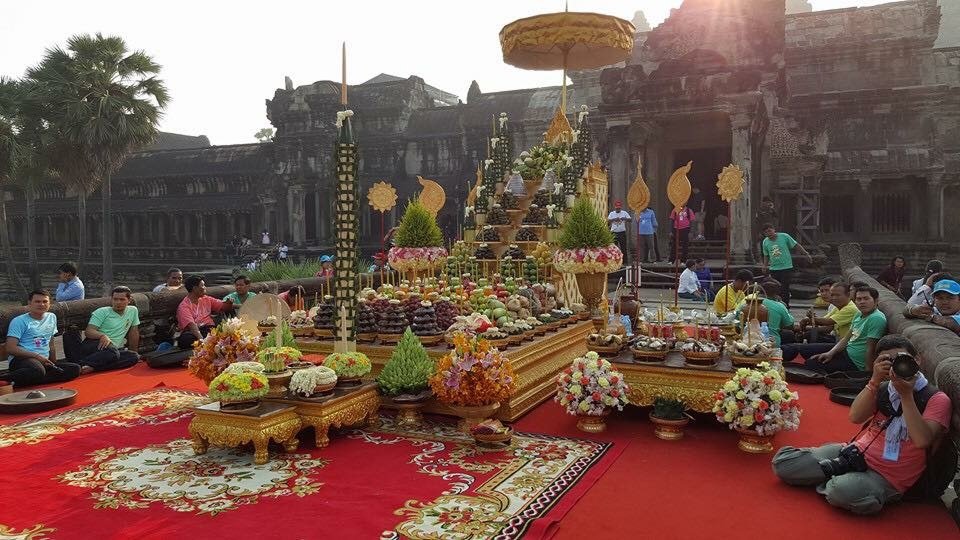
Khmer New Year, known in the Khmer language as Choul Chnam Thmey (ចូលឆ្នាំថ្មី), is the traditional new year celebration of the Khmer people of Cambodia. The name translates directly as “Enter the New Year” and marks the beginning of a new year according to the ancient Buddhist solar calendar.
Unlike the Western New Year on January 1st or the Chinese Lunar New Year in January or February, Khmer New Year falls in mid-April — a date chosen to coincide with the end of the rice harvest season, when farmers have brought in their crops and the land rests before the arrival of the monsoon rains.
The Cambodian New Year is also connected to a deeply spiritual belief — that each year, a new celestial deity called Tevoda descends from heaven to protect life and humanity on earth, while the deity of the previous year ascends back to the heavens. This cosmic transition is what the three days of celebration honour and welcome.
Khmer New Year is not just a public holiday. It is a homecoming. It is the moment when millions of Cambodians — from factory workers in Phnom Penh to students studying abroad — return to their villages and family homes to celebrate together.
Khmer New Year Date — When Is It Celebrated?
Khmer New Year is celebrated every year in mid-April, spanning three official days. The exact dates are determined annually by the royal astrologers of Cambodia based on the solar calendar.
Khmer New Year 2026 will be celebrated from April 14 to April 16, 2026.
| Year | Dates |
|---|---|
| Khmer New Year 2025 | April 14–16, 2025 |
| Khmer New Year 2026 | April 14–16, 2026 |
| Khmer New Year 2027 | April 14–16, 2027 |
Khmer New Year is an official national public holiday in Cambodia, with government offices, banks, schools, and most businesses closed for the full three days. In reality, most Cambodians extend celebrations for an entire week, making it the longest and most widely observed holiday season in the country.
The History and Origins of Khmer New Year
The roots of Khmer New Year stretch back more than a thousand years to the height of the Khmer Empire, one of the most powerful and culturally sophisticated civilisations in all of Southeast Asia.
The Khmer New Year celebration is rooted in both the ancient Hindu astrological traditions inherited from India and the Theravada Buddhist faith that later became central to Khmer identity. Over centuries, the celebration evolved into the unique blend of Buddhist ceremony, animist tradition, and joyful communal festivity that it is today.
The timing of the festival in April reflects its agricultural origins. After months of cultivating rice paddies, Cambodian farmers complete their harvest in early April. With the hard work done and the monsoon rains not yet arrived, the community has both the time and the reason to gather, give thanks, and celebrate before the next growing season begins.
Even through the darkest chapter of Cambodia’s history — the Khmer Rouge genocide of 1975 to 1979, during which traditional festivals were brutally suppressed — the spirit of Khmer New Year survived. Since the restoration of peace, it has come back stronger than ever, reclaimed as a powerful symbol of Khmer cultural identity and resilience.
The Three Days of Khmer New Year — Traditions Explained
Each of the three days of Khmer New Year has its own name, spiritual significance, and associated rituals. Understanding what happens on each day helps you appreciate just how richly layered this celebration truly is.
Day 1 — Maha Sangkran (The Day of the New Angel)
The first day of Khmer New Year is called Maha Sangkran. In Khmer tradition, it is believed to be the day a new celestial angel arrives to take over protection of the earth for the coming year.
To welcome this heavenly being, people clean and decorate their houses thoroughly and wear brand new clothes. Offerings of fruits, incense, lotus flowers, and drinks are placed at spirit houses that guard entrances to homes.
On this day, people wash their faces with holy water in the morning, their chests at noon, and their feet in the evening before bed — each act symbolising purification and renewal for the year ahead.
Families gather at Buddhist temples from early morning, dressed in traditional white or pastel-coloured clothing. The air is thick with incense, the sound of monks chanting, and the quiet click of prayer beads. It is one of the most serene and beautiful sights in all of Southeast Asia.
Day 2 — Veareak Vanabat (The Day of Giving)
Veareak Vanabat is dedicated to charity and generosity. People contribute to the poor, servants, and low-income families, embodying the Buddhist principles of compassion and dana — the practice of giving.
On this day, gifts are given to parents and elders as a sign of respect and gratitude. Children receive new clothes and toys, and visits are made to pagodas to offer prayers and attend ceremonies dedicated to deceased ancestors.
This is the most spiritually reflective of the three days — a time to count blessings, express gratitude to those who came before, and reaffirm the bonds of family and community.
Day 3 — Veareak Laeung Sak (The Day of Purification)
On the third and final day, Buddhists gather at temples to wash the statues of the Buddha and their elders with perfumed water. This ritual cleansing symbolises washing away past wrongdoings and bad luck, and is believed to bring longevity, good fortune, happiness, and prosperity in the year ahead.
Also on this day, people erect a sand hillock at temple grounds — a pointed mound of sand representing the sacred stupa, surrounded by four smaller mounds representing the stupas of the Buddha’s most beloved disciples. Cambodians believe that every grain of sand carried into the temple grounds earns the giver a unit of merit.
Traditional Khmer New Year Games
One of the most charming aspects of Khmer New Year is the revival of traditional Khmer games played by all ages in temple grounds, open fields, and village streets. These games are a living thread connecting modern Cambodians to their ancient heritage.
Chol Chhoung Chol Chhoung is played especially on the first night of Khmer New Year, with two groups of boys and girls standing in lines and tossing a “chhoung” — a rolled krama scarf — back and forth. When a player catches the chhoung, they must throw it to hit a member of the opposite group.
Chab Kon Kleng In this playful game, one person acts as a hen guarding her chicks while another acts as a crow trying to snatch them away. It is fast-paced, hilarious, and beloved by children and adults alike.
Klah Klok Klah Klok is a traditional dice game where players bet on which of six pictures — a stag, a gourd, a rooster, a fish, a crab, or a prawn — will appear on three rolled dice. If a player’s chosen symbol appears on multiple dice, the winnings multiply accordingly.
Leak Kanseng Similar to the Western game of Duck Duck Goose, Leak Kanseng involves players sitting in a circle while one person circles the group with a knotted krama scarf, dropping it behind an unsuspecting player who must then give chase.
These games are played with genuine enthusiasm and delight — and as a tourist, joining in is always warmly welcomed.
Traditional Khmer New Year Food
Food is inseparable from Khmer New Year. Families prepare elaborate feasts to share with relatives and make offerings to the temple. Many dishes are prepared only at this time of year, making the flavours of the festival completely unique.
Kralan Kralan is one of the most iconic Khmer New Year treats — a sweet sticky rice cake made from glutinous rice mixed with beans, grated coconut, and coconut milk, packed tightly inside a section of bamboo and roasted slowly over an open fire until perfectly caramelised. You will smell Kralan being cooked in villages across the country during the festival.
Other festive foods to try:
- Num Banh Chok — Khmer rice noodles topped with fresh green fish curry, banana flowers, and fresh herbs
- Samlor Kako — a rich, complex Cambodian stew made with prahok (fermented fish paste), vegetables, and pork
- Amok Trey — Cambodia’s national dish of steamed fish curry cooked in banana leaves
- Cha Houy Teuk — brightly coloured Khmer jelly desserts served with coconut cream
- Bai Sach Chrouk — grilled pork over broken rice, a beloved Cambodian breakfast eaten daily during the holiday
Sharing food during Khmer New Year is an act of love, community, and spiritual merit. If a Cambodian family invites you to eat with them during the festival, accept without hesitation — it is one of the most generous gestures of welcome you will ever receive.
Water Fights — The Joyful Heart of Khmer New Year
Ask any traveller who has experienced Khmer New Year what they remember most and the answer is almost always the same — the water.
Water is believed to wash away the bad luck of the previous year and welcome you fresh and clean into the new one. During Khmer New Year, expect to have buckets poured over your head, hoses fired into your tuk-tuk, and water pistols aimed directly at your face — all accompanied by joyful laughter and the smearing of white talcum powder on your cheeks.
The water fights begin on the first day and build in intensity through the second and third days. No one is safe — young or old, tourist or local. The best strategy is to embrace it completely, keep your valuables in a waterproof bag, and carry an extra set of dry clothes.
Khmer New Year vs Songkran — How Are They Different?
Travellers planning a Southeast Asia trip in April often ask about the difference between Cambodia’s Khmer New Year and Thailand’s Songkran, which falls around the same time.
The new year celebrations in Cambodia, Thailand, Laos, and southern Vietnam all fall in mid-April and share common roots in ancient Khmer and Hindu astrological tradition. However, each country’s celebration has developed its own distinct character and customs over the centuries.
The key differences are that Songkran in Thailand is internationally famous for enormous street-party water fights, with a more carnival atmosphere. Khmer New Year places greater emphasis on Buddhist temple rituals, ancestral ceremonies, traditional games, and family reunions, with water fights being one element among many rather than the dominant feature.
Both are wonderful. But if authentic cultural depth is what you seek, Khmer New Year offers an experience that goes far beyond the water bucket.
Final Thoughts — Why Khmer New Year Is Worth Every Moment
Khmer New Year is not simply a festival on a calendar. It is the beating heart of Cambodian culture — a moment when the entire country exhales, comes together, and reconnects with what matters most: family, faith, community, and gratitude.
For travellers, it represents something increasingly rare in our fast-moving world: a celebration that has remained genuinely authentic across thousands of years. The rituals performed at temples today are the same ones performed by Cambodian ancestors centuries ago. The games children play in village streets are the same games their great-grandparents once played.
If you have the opportunity to experience Khmer New Year in Cambodia, take it. It will be among the most meaningful and memorable experiences of your life.
Thinking of visiting Cambodia for Khmer New Year? Leave your questions in the comments below — we are here to help you plan the perfect trip!