
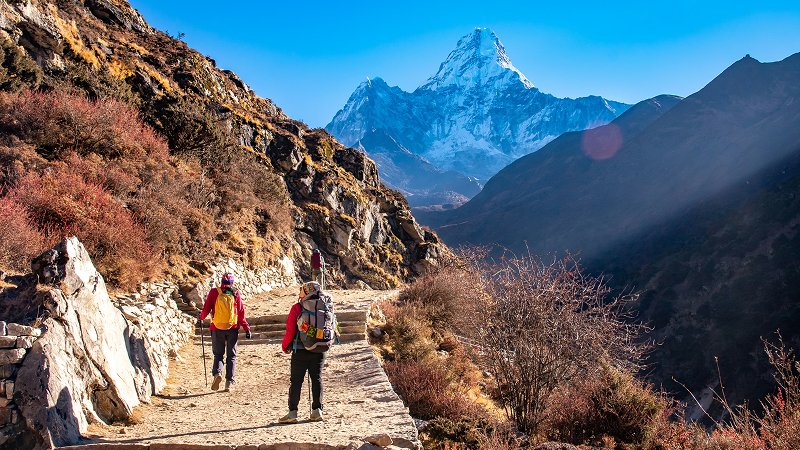
The Everest Base Camp Trek is one of the most iconic trekking adventures in the world. Set in the breathtaking Himalayas of Nepal, this legendary journey takes you to the foot of the world’s highest mountain, Mount Everest. For many travelers, completing the Everest Base Camp Trek is not just about reaching a destination — it’s about experiencing the raw beauty, culture, and spirit of the mountains.
Each year, thousands of trekkers make their way to Everest Base Camp to witness dramatic glaciers, towering snow-covered peaks, and unforgettable Himalayan landscapes. The trail winds through the stunning Khumbu region, crossing suspension bridges, dense pine forests, and traditional Sherpa villages that offer a glimpse into local mountain life.
A major highlight of the Everest Base Camp Trek is acclimatizing in Namche Bazaar, a vibrant mountain town surrounded by panoramic views. Along the journey, trekkers also visit ancient monasteries and enjoy warm Sherpa hospitality, making the experience both culturally enriching and spiritually inspiring.
What is the Everest Base Camp Trek?
The Everest Base Camp Trek is a 12–14 day high-altitude trekking route in the Khumbu region of northeastern Nepal. The trail starts from Lukla airport and winds through rhododendron forests, glacial moraines, and traditional Sherpa villages before reaching the base of the world’s tallest mountain.
Everest Base Camp Trek Overview
- Duration: 12–14 Days
- Starting Point: Kathmandu
- Trek Distance: ~130 km round trip
- Maximum Elevation: 5,364 meters
- Difficulty Level: Moderate to Challenging
This trek combines adventure, culture, and natural beauty in one unforgettable experience.
Everest Base Camp Trek Route & Itinerary (14 Days)
A well-planned Everest Base Camp Trek itinerary is essential for proper acclimatization.
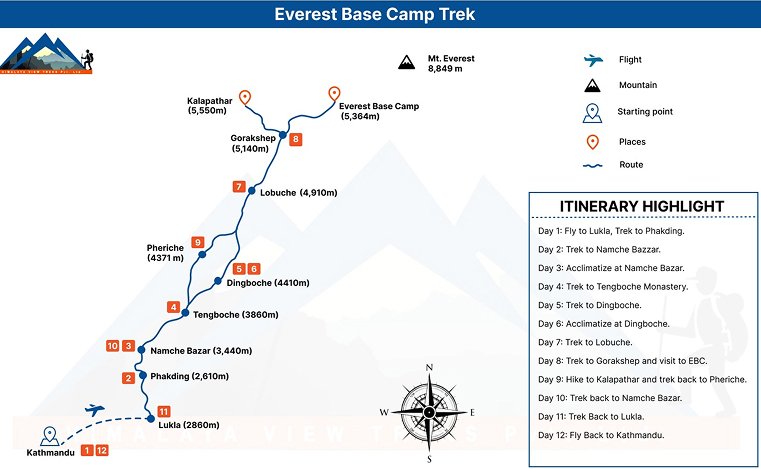
Day 1: Fly to Lukla – Trek to Phakding (2,610m)
Your Everest Base Camp Trek begins with a scenic mountain flight from Kathmandu to Lukla (2,860m). This short yet thrilling flight offers breathtaking views of Himalayan peaks.
After landing, start an easy downhill trek to Phakding. The trail follows the Dudh Koshi River and passes through charming Sherpa villages, helping your body gradually adjust to the altitude.
Day 2: Trek to Namche Bazaar (3,440m)
Today’s hike takes you across suspension bridges and through pine forests before entering Sagarmatha National Park. This is one of the most scenic sections of the Everest Base Camp Trek.
After a steady uphill climb, you reach Namche Bazaar, the vibrant Sherpa capital and main trading hub of the Khumbu region.
Day 3: Acclimatization at Namche Bazaar
Acclimatization is essential during the Everest Base Camp Trek to prevent altitude sickness. Spend the day exploring Namche and taking short hikes to nearby viewpoints.
Optional hikes offer panoramic views of Mount Everest and surrounding peaks. This rest day improves oxygen adaptation and prepares you for higher elevations.
Day 4: Trek to Tengboche Monastery (3,860m)
The trail continues along ridge paths with stunning views of Everest, Ama Dablam, and other Himalayan giants. The Everest Base Camp Trek becomes more dramatic as you gain elevation.
Arrive at Tengboche, home to the famous Tengboche Monastery — the largest monastery in the Khumbu region, surrounded by breathtaking mountain scenery.
Day 5: Trek to Dingboche (4,410m)
Leaving Tengboche, the landscape becomes more alpine and rugged. The trail climbs gradually with magnificent glacier and mountain views.
Dingboche is a beautiful high-altitude village where trekkers begin feeling the effects of thinner air. Proper hydration and slow walking are key during this stage of the Everest Base Camp Trek.
Day 6: Acclimatization at Dingboche
Another important acclimatization day helps your body adjust before crossing 5,000 meters. Short hikes to higher viewpoints are recommended.
This strategic rest improves your chances of successfully completing the Everest Base Camp Trek without altitude complications.
Day 7: Trek to Lobuche (4,910m)
The trail ascends gradually past memorials dedicated to climbers. The terrain becomes rocky and glacial as you approach higher elevations.
Lobuche offers stunning views of surrounding Himalayan peaks and marks a significant milestone on the Everest Base Camp Trek.
Day 8: Trek to Gorakshep – Visit Everest Base Camp (5,364m)
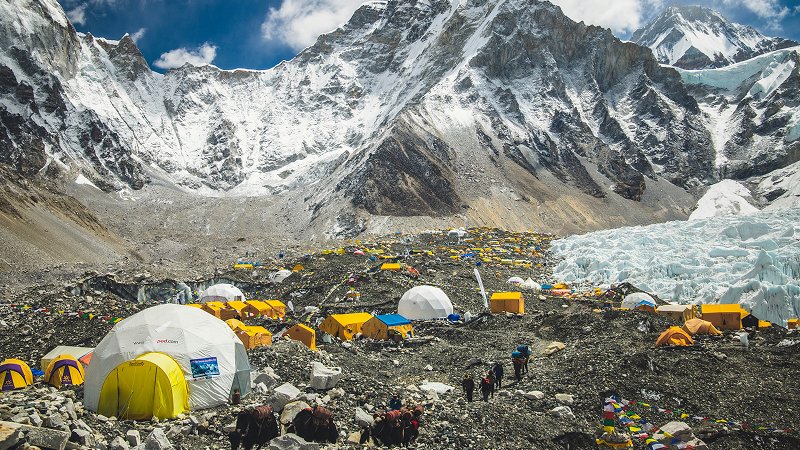
Today is the highlight of your Everest Base Camp Trek. Trek to Gorakshep (5,140m), the final settlement before base camp.
From there, hike to Everest Base Camp and stand at the foot of Mount Everest. This achievement is a proud and emotional moment for every trekker.
Day 9: Hike to Kala Patthar – Trek to Pheriche (4,371m)
Wake early for a sunrise hike to Kala Patthar (5,550m). This viewpoint offers the best panoramic views of Mount Everest and surrounding peaks.
After capturing unforgettable photos, descend to Pheriche. The lower altitude provides noticeable relief and better sleep.
Day 10: Trek Back to Namche Bazaar
Descending through familiar trails feels easier as oxygen levels increase. The return journey allows you to appreciate the landscapes from a new perspective.
Namche Bazaar welcomes you again with warm tea houses and lively atmosphere.
Day 11: Trek Back to Lukla
This final trekking day retraces the scenic route along the Dudh Koshi River. Crossing suspension bridges one last time marks the near completion of your Everest Base Camp Trek.
Celebrate your achievement with your trekking team in Lukla.
Day 12: Fly Back to Kathmandu
Take a morning flight back to Kathmandu. The Everest Base Camp Trek officially concludes, leaving you with lifelong memories of Himalayan adventure.
Best Time for Everest Base Camp Trek
Choosing the best time for the Everest Base Camp Trek is important for clear mountain views.
Spring (March–May)
- Mild temperatures
- Clear skies
- Rhododendron blooms
Autumn (September–November)
- Stable weather
- Best visibility
- Peak trekking season
Winter (December – February)
- Very Cold
- Fewer Crowds
- Possible Snowfall
Monsoon (June – August)
- Heavy Rain
- Leeches
- Poor Visibility
Everest Base Camp Trek Cost
The Everest Base Camp Trek cost depends on your travel style.
Budget Trek: $1,100 – $1,400
- Basic tea house stays
- Local guide
- Domestic flights
Standard Trek: $1,500 – $2,000
- Experienced guide
- Better accommodations
Luxury Trek: $3,000+
- Premium lodges
- Helicopter return option
Your Everest Base Camp Trek cost includes permits, flights, accommodation, and meals.
Everest Base Camp Trek Difficulty
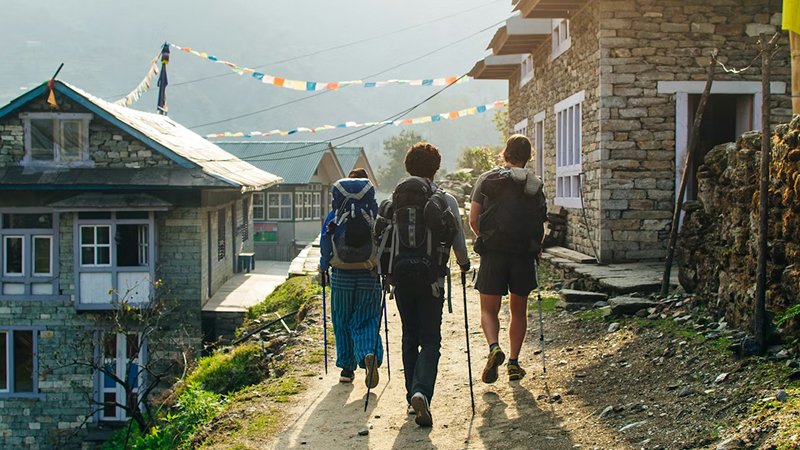
The Everest Base Camp Trek difficulty mainly comes from high altitude.
Challenges include:
- Walking 5–7 hours daily
- Altitude above 5,000m
- Cold temperatures
However, beginners can complete the Everest Base Camp Trek with training, slow pacing, and proper acclimatization.
Everest Base Camp Trek Permits
To complete the Everest Base Camp Trek, you need:
- Sagarmatha National Park Entry Permit
- Khumbu Rural Municipality Permit
These permits are available in Kathmandu or at the entry point.
Accommodation & Food During Everest Base Camp Trek
Tea houses along the Everest Base Camp Trek offer:
- Basic twin-sharing rooms
- Shared bathrooms
- Warm meals like dal bhat, noodles, soup, and tea
Food prices increase as altitude rises.
Why the Everest Base Camp Trek is Worth It
The Everest Base Camp Trek is not just a hike — it’s a life-changing adventure. Standing at the base of Mount Everest and witnessing sunrise from Kala Patthar is an unforgettable moment.
From snow-capped peaks to Sherpa hospitality, the Everest Base Camp Trek offers one of the most rewarding trekking experiences in the world.