
Standing at the heart of Mexico’s Yucatán Peninsula, Chichén Itzá is one of the most awe-inspiring places on Earth. A UNESCO World Heritage Site and one of the New Seven Wonders of the World, this ancient Mayan city draws millions of visitors every year — and for good reason. From the towering El Castillo pyramid to the mysterious Sacred Cenote, every corner of the site tells a story that is thousands of years old.
But visiting Chichén Itzá without a plan? That is a recipe for long lines, blazing midday heat, and overcrowded photo spots. This complete 2026 travel guide gives you everything you need to plan a smooth, memorable, and well-timed visit — including updated ticket prices, transport options, the best time to arrive, and insider tips that most tourists simply do not know.
What Is Chichén Itzá? A Quick Historical Background
Chichén Itzá was one of the most powerful cities of the ancient Mayan civilization. Founded around the 6th century AD, the city rose to become the dominant political and religious center of the entire Yucatán Peninsula. At its peak, historians estimate that as many as 50,000 people called Chichén Itzá home.
The name itself means “at the mouth of the well of the Itzaes” in Mayan — a reference to the sacred cenote (natural sinkhole) located within the site. The city was invaded by the Toltecs around the 10th century and was eventually abandoned around 1250 AD, though it continued to serve as an important pilgrimage destination long after its decline.
Today the site covers approximately 4 square miles and contains dozens of well-preserved structures, temples, platforms, and ball courts — all connected by sacbes, the ancient Mayan roads. The most iconic of all is El Castillo, also known as the Temple of Kukulcán, a massive stepped pyramid that rises roughly 98 feet into the Yucatán sky.
Where Is Chichén Itzá Located?
Chichén Itzá sits almost exactly in the center of the northern Yucatán Peninsula, placing it within comfortable day-trip distance from several major tourist hubs. It is approximately 75 miles (120 km) east of Mérida and around 125 miles (200 km) west of Cancún. The nearest town is Pisté, just a few minutes away, while the charming colonial city of Valladolid is only 30 minutes by road and makes an excellent base for an overnight stay.
Chichén Itzá Opening Hours 2026
Chichén Itzá is open every single day of the year, including public holidays.
- Opening time: 8:00 AM
- Closing time: 5:00 PM
- Last admission: 4:00 PM
Security staff begin clearing the site at around 4:45 PM, so plan to wrap up your visit well before then. Re-entry is not permitted with a standard daytime ticket, so make sure you see everything in one visit.
Pro tip: Arriving right at 8:00 AM is the single best thing you can do. The first 30–45 minutes after opening are the quietest and coolest of the entire day. Tour buses from Cancún and Playa del Carmen do not typically arrive until 10:30 AM or later, giving early arrivals a magical, crowd-free experience.
What to See at Chichén Itzá: Top Highlights
1. El Castillo — Temple of Kukulcán
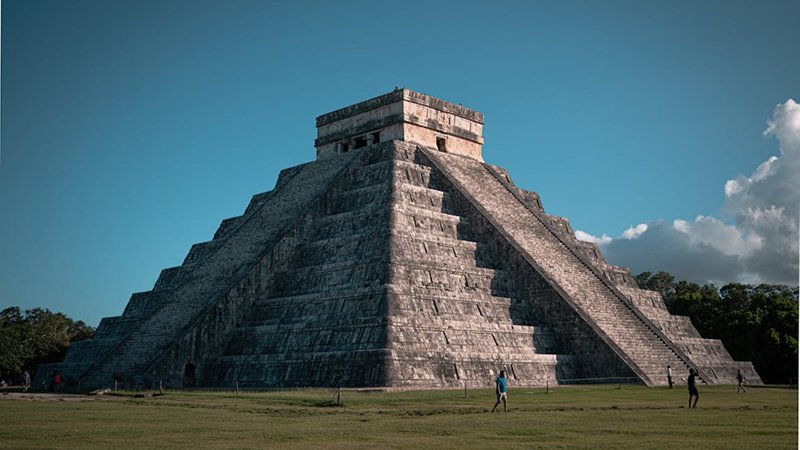
The unmistakable centrepiece of the entire site, El Castillo is the first thing you see when you walk through the entrance — and it stops you in your tracks every single time. This massive stepped pyramid rises approximately 98 feet (30 metres) above the jungle floor and dominates the main plaza with an authority that no photograph can fully prepare you for. Built by the Maya between the 9th and 12th centuries, it was dedicated to Kukulcán, the feathered serpent deity worshipped across Mesoamerica.
What makes El Castillo truly remarkable is not just its size, but the extraordinary astronomical intelligence embedded into its design. The pyramid was engineered as a giant calendar with 365 steps in total — one for each day of the solar year. During the spring and autumn equinoxes, the setting sun casts a shadow that creates the illusion of a serpent slithering down the northern staircase — one of the most breathtaking spectacles in all of archaeology.
Key facts to know before you visit:
- Built between the 9th and 12th centuries, dedicated to the feathered serpent god Kukulcán
- Contains a smaller, older pyramid hidden inside, discovered by archaeologists
- Climbing is strictly prohibited to protect the ancient stone structure
- Best photographed at 8:00 AM when the plaza is empty and the light is golden
2. The Great Ball Court
The Great Ball Court is one of the most dramatic and historically significant structures at Chichén Itzá — and it is far larger than most visitors expect. Stretching an incredible 168 metres in length and 70 metres wide, it is the largest ancient ball court ever discovered anywhere in Mesoamerica. The two towering parallel walls rise 8 metres high on either side, creating an enclosed, almost arena-like atmosphere that still carries enormous presence centuries later.
The ball game played here was far more than sport — it was a deeply religious and political ritual. Carvings along the lower walls depict players in elaborate ceremonial costumes, and some panels show a decapitation scene, suggesting the stakes of the game were sometimes a matter of life and death. The acoustics are genuinely astounding: a single clap spoken at one end travels clearly to the other end more than 150 metres away without any amplification whatsoever.
Key facts to know before you visit:
- The largest ancient ball court in all of Mesoamerica at 168 metres long
- Wall carvings depict ritual ceremonies and dramatic decapitation scenes
- Acoustics allow a whisper to travel the full length of the court clearly
- Seven other smaller ball courts exist elsewhere within the Chichén Itzá complex
3. The Sacred Cenote
The Sacred Cenote is one of the most hauntingly atmospheric spots in the entire archaeological zone. Located at the northern end of the site and reached by walking along a wide raised stone road stretching roughly 300 metres from the main plaza, this enormous natural sinkhole measures approximately 60 metres in diameter and drops around 20 metres to the dark green water below. It was never a place for swimming — it was a place of offering, prayer, and sacrifice.
For the ancient Maya, the cenote was considered a portal directly to Xibalba — the underworld and the realm of the rain god Chaac. During times of drought or crisis, the Maya cast precious objects and sometimes people into the water as gifts to the gods. Archaeologists have recovered hundreds of artefacts from the cenote’s depths including jade ornaments, gold discs, pottery, and human skeletal remains. Standing at the edge and looking down into the murky green water, the weight of that history is truly palpable.
Key facts to know before you visit:
- Diameter of approximately 60 metres, dropping 20 metres to the water surface
- Archaeologists recovered jade, gold, copper, pottery and human remains from the depths
- The Maya considered it a sacred portal to the underworld realm of Chaac
- Swimming is strictly forbidden — this is a protected and sacred site
4. Temple of the Warriors and the Court of a Thousand Columns
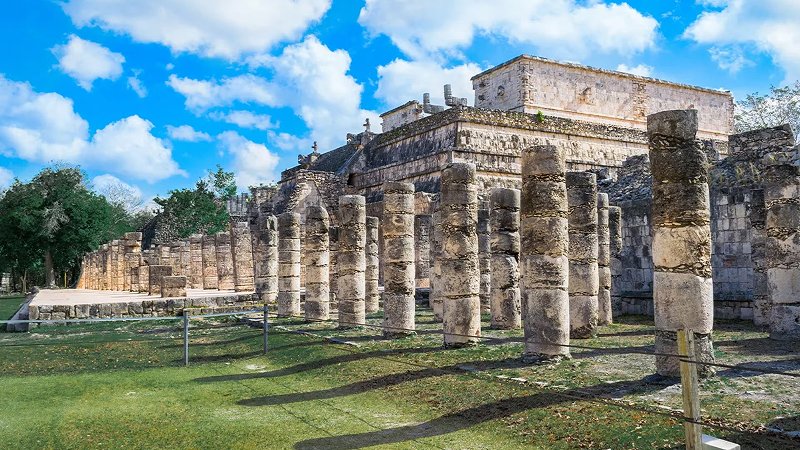
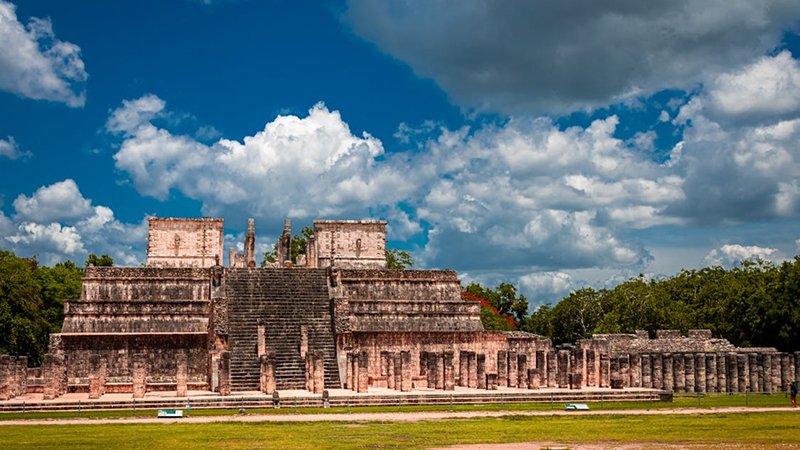
The Temple of the Warriors is one of the most visually striking structures at the site and one that many first-time visitors overlook in favour of El Castillo. Rising in stepped tiers above the eastern edge of the main plaza, the temple is fronted by row upon row of carved stone columns. At the very top of the staircase sits the iconic Chac Mool — a reclining stone figure with its head turned sharply to one side and a flat stone on its stomach where offerings were once placed.
Directly adjacent to the temple, the Court of a Thousand Columns once supported a massive flat roof, creating what was likely a marketplace or grand gathering hall for the city. While the roof has long since collapsed, the columns still stand in remarkable condition, creating a forest of stone you can walk through and explore up close. The entire complex shows strong Toltec architectural influence, pointing to the cultural exchange that occurred when Toltec culture from central Mexico merged with the Maya here in the Yucatán.
Key facts to know before you visit:
- The Chac Mool figure at the summit is one of the most iconic sculptures on the entire site
- Strong Toltec architectural influence visible throughout the columns and carvings
- The colonnade once supported a massive roof, likely used as a marketplace or hall
- Best viewed from the south side of the plaza for a full perspective of the column field
5. El Caracol — The Observatory
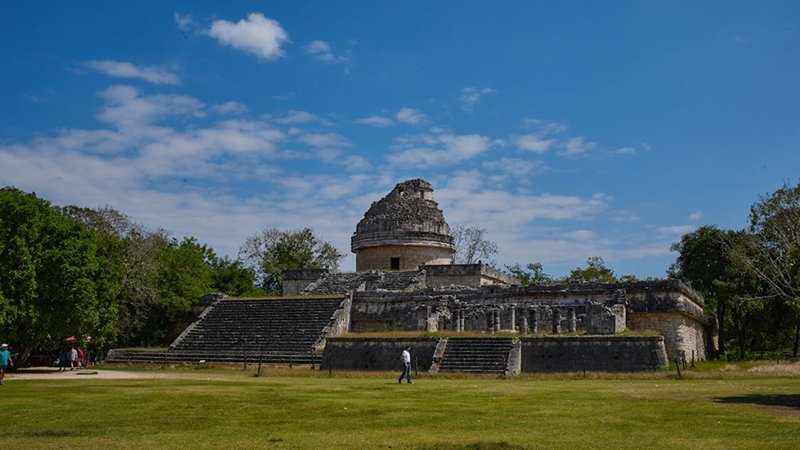
El Caracol — meaning “the snail” in Spanish, named for the spiral staircase hidden inside — is one of the most intellectually fascinating structures at Chichén Itzá. Unlike the angular pyramid-based architecture of most Mayan buildings, El Caracol is a round tower that stands on two rectangular platforms, giving it a strikingly different silhouette. It was used by Mayan astronomers to track the movements of the sun, moon, and the planet Venus, which held enormous religious significance in Mayan cosmology.
The precision embedded in El Caracol’s construction is nothing short of astonishing. Several of the tower’s windows align with specific astronomical events — including the northernmost setting positions of Venus, the spring equinox sunset, and certain lunar cycles. This was deliberate, painstaking scientific observation carried out without any modern instruments. Standing here and considering the knowledge generated in this building over a thousand years ago is one of the most quietly moving experiences the entire site has to offer.
Key facts to know before you visit:
- One of the only round structures in the entire Mayan architectural tradition
- Windows align precisely with Venus’s orbital positions and equinox sunsets
- The Maya calculated the length of the solar year to extraordinary accuracy from here
- Interior is closed to visitors but the exterior platforms are fully accessible
6. Temple of the Jaguars
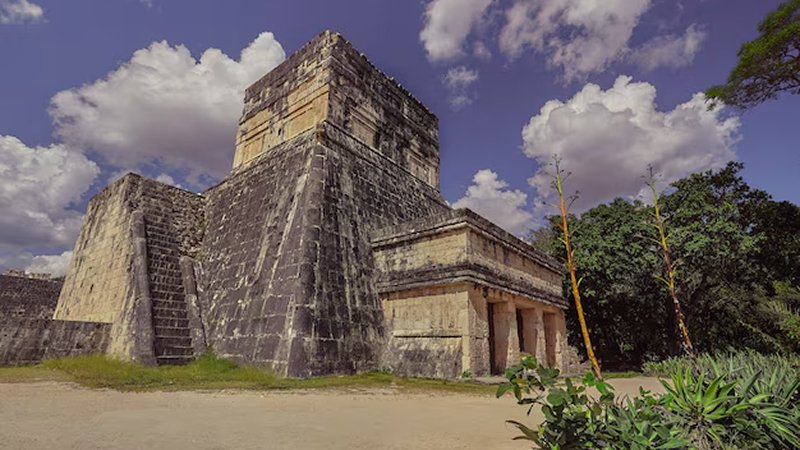
The Temple of the Jaguars sits directly adjacent to the Great Ball Court and is one of those structures that rewards slow, close inspection. The temple is divided into an upper and lower section — the lower temple faces the ball court and contains some of the site’s most intricate carved reliefs, while the upper temple looks out over the main plaza and offers one of the best elevated views of El Castillo in the entire complex.
The jaguar was one of the most powerful symbols in Mayan culture, representing strength, the night, the underworld, and the ruling elite. Inside the upper temple, faded remnants of brilliantly coloured murals survive, depicting battle scenes and ceremonial processions that give a rare glimpse into the daily world of the ancient Maya. The Temple of the Jaguars is often rushed past by visitors heading to or from the ball court — but it absolutely deserves your full attention.
Key facts to know before you visit:
- Carved jaguars and eagles throughout the temple symbolise royal power and Mayan warrior culture
- Upper temple contains some of the only surviving interior murals at the entire site
- Offers one of the best elevated views of El Castillo from the upper level
- Located directly on the eastern wall of the Great Ball Court — easy to miss, impossible to regret
How to Get to Chichén Itzá
There are four main ways to reach Chichén Itzá depending on your budget, base city, and travel style.
By Rental Car Driving is the most flexible option and the best way to arrive early. From Cancún, take Highway 180 west — the toll road is fast and well-maintained, though tolls for the round trip cost around 800–900 pesos. The drive takes approximately 2.5 hours. From Mérida, it is about 1.5 hours east on the same highway. If you plan to drive, consider spending the night before in Valladolid or Pisté so you can be at the gates right at 8:00 AM.
By ADO Bus The ADO bus is the most affordable independent option. Buses depart daily from Cancún, Playa del Carmen, Tulum, and Mérida, and go directly to Chichén Itzá. From Cancún the journey takes around 3 hours and costs approximately $28–33 USD. From Tulum, expect to pay around $19–21 USD. One key downside: the earliest bus from Cancún does not arrive until around 11:20 AM, by which time the site is already crowded and hot. Seats sell out quickly in high season, so book online via the ADO website at least a day or two ahead.
By Colectivo (from Valladolid) If you are based in Valladolid, this is the cheapest and most efficient option. Shared minivans (colectivos) run between Valladolid and Chichén Itzá multiple times throughout the day, departing every 30 minutes from Calle 39 between Calle 46 and 48, just a few blocks from the main plaza. The ride costs around $2–3 USD (40 pesos) one way. Drivers depart once the van is full — typically around 12 passengers.
By Tren Maya The Tren Maya has been running since late 2023 and services have significantly expanded. Travelers can now reach Chichén Itzá by train from Mérida, Cancún, and Valladolid, making this a scenic and increasingly popular option. Check current schedules and fares directly on the Tren Maya official website, as timetables continue to be updated.
By Organized Tour Joining a guided day trip from Cancún, Playa del Carmen, Tulum, or Mérida is the most hassle-free option and great for first-time visitors. Tours typically include transport, entrance tickets, a bilingual guide, lunch, and a visit to a nearby cenote. The trade-off is that group tours arrive mid-morning when crowds are already building. Opting for a private tour gives you more flexibility on timing and a more personal experience.
Best Time to Visit Chichén Itzá
Timing your visit to Chichén Itzá correctly can be the difference between a magical, peaceful experience and a hot, overcrowded ordeal. With millions of visitors passing through the site every year, knowing exactly when to go — and when to avoid — is just as important as buying your ticket. Here is everything you need to know to plan your perfect visit.
| Period | Weather | Crowds | Price | Verdict |
|---|---|---|---|---|
| November | Warm & dry | Low | Moderate | ⭐ Best overall |
| Dec – Feb | Cool & dry | High | High | Great but busy |
| March – April | Warm & dry | High | High | Good, avoid equinox |
| May | Hot, some rain | Moderate | Moderate | Good value |
| June – Aug | Very hot & humid | Moderate | Low | Budget only |
| Sept – Oct | Hottest & wettest | Low | Lowest | Avoid if possible |
November to April (Dry Season) — The best time of year to visit Chichén Itzá is during the dry season, from November to April. These months offer the most pleasant weather, with daytime temperatures typically ranging between 26°C and 30°C (79°F–86°F) and lower humidity.
November — The Sweet Spot The area sees the fewest tourists around November, giving you a more intimate experience of the ancient city. The weather is cooling down, the rainy season has just ended, and hotel prices are still reasonable. November is genuinely the best single month to visit if avoiding crowds is your top priority.
December to February — Cool, Beautiful, But Busy Temperatures at the ruins drop to 25–28°C (77–82°F) during the day, with mornings that can be genuinely cool. The dry season means no rain delays. This is peak tourist season, so the site is busier — but if you arrive at 8:00 AM, the crowds are still very manageable. Book accommodation well in advance if travelling over Christmas or New Year.
March to April — Warm, Mostly Dry, Watch for the Equinox Temperatures rise to 30–33°C by April, though conditions remain relatively dry. Early March is a great time to visit — however, the March 21 equinox brings massive crowds, and the week around spring break in mid-March also attracts more visitors from the US.
Cenote Ik Kil: The Perfect Add-On
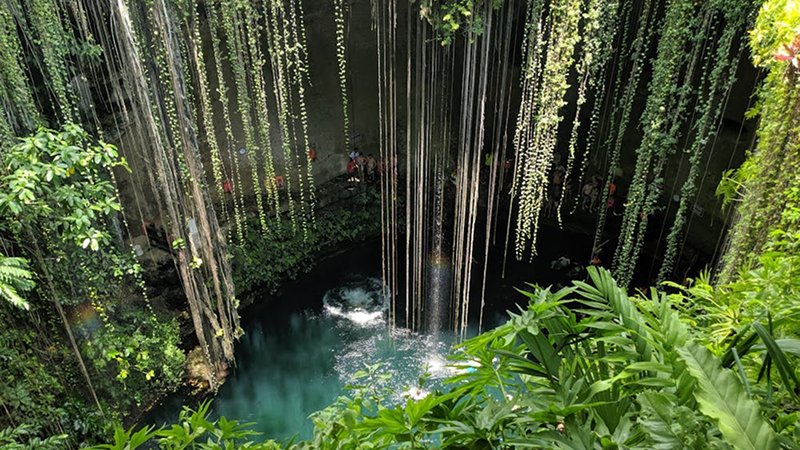
Just 3 kilometres from the main entrance of Chichén Itzá, Cenote Ik Kil is one of the most beautiful and photographed cenotes in all of Mexico. A circular, vertical sinkhole dropping around 25 metres, it is draped with hanging vines and greenery and opens to a stunning swimming area below. Entrance costs around 180 pesos separately. Most guided tours from the coast include a stop here, making it an easy and highly rewarding combo visit.
After a morning walking around the ruins in the Yucatán heat, a swim in the cool, turquoise waters of Cenote Ik Kil feels absolutely incredible. Bring your swimwear.
Where to Stay Near Chichén Itzá
Valladolid (recommended): Staying overnight in Valladolid, just 30 minutes from the site, is highly recommended. It is a stunning colonial city with excellent restaurants, boutique hotels, and its own cenotes. Arriving at Chichén Itzá from Valladolid in the morning is the single best strategy for beating the Cancún crowds.
Pisté: The small town immediately adjacent to the site. Basic hotels and guesthouses are available here at budget prices — ideal if you want the absolute earliest possible start.
Mérida: A beautiful, vibrant city about 1.5 hours from the site. A great base if you are also planning to explore other Yucatán highlights.
Cancún / Riviera Maya: If you are staying on the coast, Chichén Itzá is very doable as a day trip, but you will inevitably arrive later in the morning and deal with bigger crowds.
Chichén Itzá Night Show: Noches de Kukulcán
For a completely different experience, Chichén Itzá also hosts a spectacular evening light and sound show called Noches de Kukulcán. The show projects light, colour, and historical narratives directly onto the Temple of Kukulcán after dark, bringing the ancient city to life in a dramatic and memorable way. Arrive at least 30 minutes before the show begins to secure a good position near the base of the pyramid. Check current schedules and book tickets in advance, as the show is popular and seats fill up quickly.
Final Thoughts: Is Chichén Itzá Worth Visiting in 2026?
Without question, yes. Despite the crowds, despite the heat, and despite the fact that you can no longer climb El Castillo, Chichén Itzá remains one of those rare places that genuinely lives up to the hype. The moment you step into the main plaza and the pyramid comes into full view, the scale and precision of what the Maya built here is immediately, viscerally clear.
Go early. Go prepared. Go with curiosity. And you will leave with memories that last a lifetime.