
Norway is one of the most breathtaking countries in the world — a land of dramatic fjords, snow-capped mountains, vibrant cities, and natural wonders that change with every season. But with such extreme seasonal shifts, choosing the best time to visit Norway can make or break your trip.
Whether you dream of dancing auroras in a winter sky, hiking to iconic viewpoints under the Midnight Sun, or cruising through glassy fjords in the golden light of autumn — timing your visit right is everything.
This complete guide breaks down every season, every month, and every type of traveler so you can plan your perfect Norwegian adventure.
Norway in Winter (December – February)
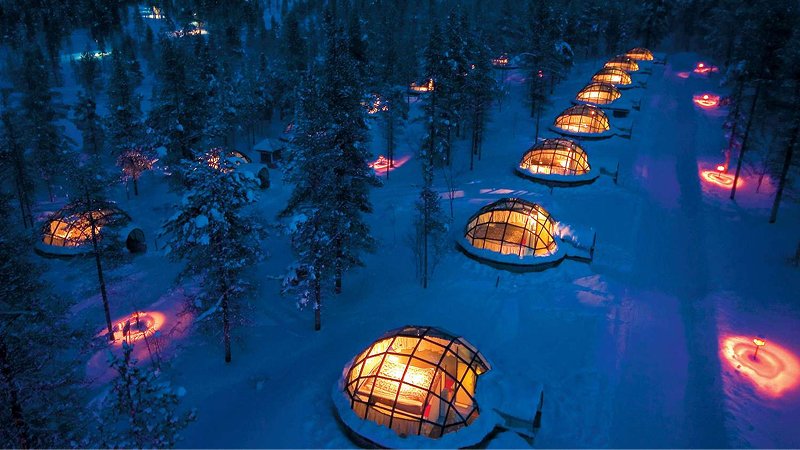
What to Expect
Norwegian winters are cold, dark — and absolutely magical. In the far north, the sun barely rises above the horizon, creating the famous Polar Night. But this darkness is the perfect backdrop for the Northern Lights (Aurora Borealis), which dance across the sky in shades of green, purple, and pink.
Temperatures in northern Norway drop to -10°C to -20°C (14°F to -4°F), while Oslo and the south stay milder at around -5°C to 2°C (23°F to 35°F).
Why Visit Norway in Winter?
- Northern Lights: The peak season for Aurora Borealis is from October to March. Tromsø is the most popular base for Northern Lights hunting.
- Dog Sledding & Snowmobiling: Experience authentic Arctic adventures in Svalbard, Tromsø, and Finnmark.
- Skiing: Norway has world-class ski resorts. Geilo, Trysil, and Hemsedal offer excellent slopes and snow conditions from January to March.
- Christmas Markets: Oslo and Bergen come alive with festive markets, warm drinks, and cozy Norwegian hygge from late November.
- Fewer Tourists: Major attractions are less crowded, hotels are cheaper, and you can enjoy a more authentic Norway.
Winter Drawbacks
- Very limited daylight (as few as 4–5 hours in the south, zero in the far north)
- Some hiking trails and fjord tours are closed
- Travel can be disrupted by snowstorms in rural areas
Best Places to Visit in Winter
- Tromsø — the Northern Lights capital of Norway
- Svalbard — Arctic wilderness and polar night experience
- Oslo — Christmas markets, museums, and ski jumps
- Geilo / Trysil — skiing and snowboarding
Norway in Spring (March – May)
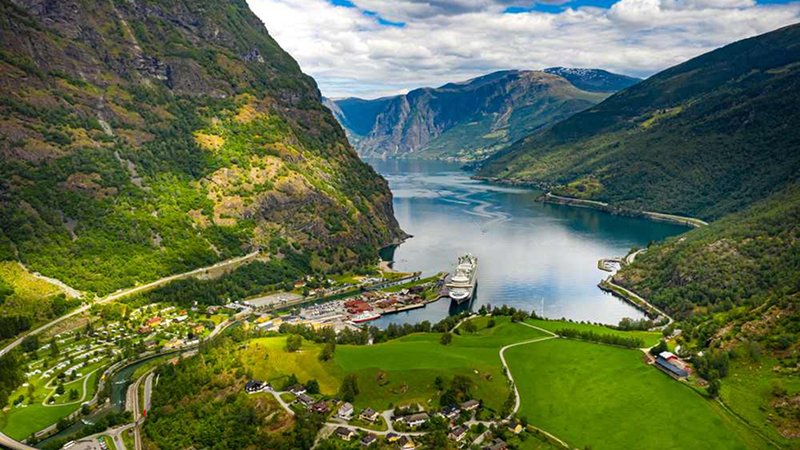
What to Expect
Spring is arguably the most underrated time to visit Norway. The snow begins to melt, rivers rush with snowmelt, and the landscapes explode in shades of green. Days get longer rapidly — by May, you’re getting 16–18 hours of daylight in southern Norway.
Temperatures rise from -2°C to 10°C (28°F to 50°F) in March, climbing to a pleasant 15°C–18°C (59°F–64°F) by late May.
Why Visit Norway in Spring?
- Fewer Crowds: Spring sits between ski season and summer tourism, so popular sites are refreshingly quiet.
- Lower Prices: Flights and accommodations are significantly cheaper than in peak summer.
- Cherry Blossoms in Oslo: The Botanical Garden and Bygdøy peninsula bloom beautifully in late April and May.
- Easter Celebrations: Norwegians celebrate Easter (Påske) enthusiastically — skiing, outdoor gatherings, and traditional foods are all part of the culture.
- Still Possible to See Northern Lights: March still offers decent chances of auroras, especially in northern Norway.
Spring Drawbacks
- Weather can be unpredictable — snow in March, rain in April
- Some hiking trails are still snow-covered or icy until late May
- Fjord cruise schedules may be limited in early spring
Best Places to Visit in Spring
- Oslo — city exploration, parks, and cherry blossoms
- Bergen — colorful Bryggen wharf with smaller crowds
- Tromsø — last chance for Northern Lights before the Midnight Sun takes over
- Hardangerfjord — famous for its apple and cherry blossom scenery in May
Norway in Summer (June – August)
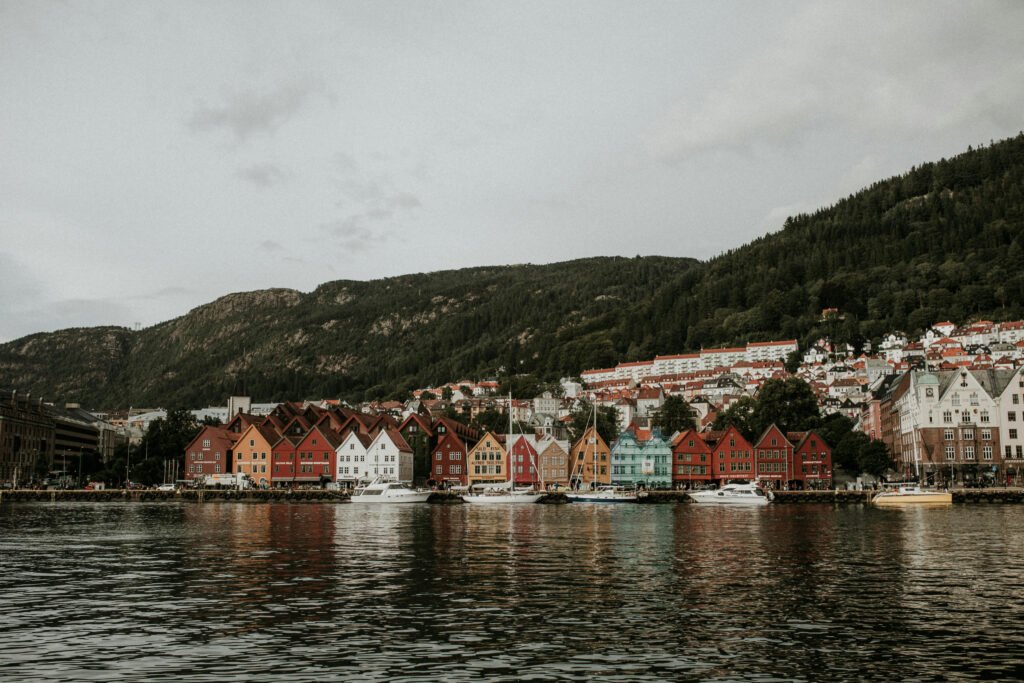
What to Expect
Summer is the most popular time to visit Norway — and for very good reason. The weather is warm, the fjords are fully accessible, and the legendary Midnight Sun keeps the sky bright around the clock. This is peak tourist season, and Norway truly comes alive.
Temperatures range from 18°C to 25°C (64°F to 77°F) in southern Norway, though the north stays cooler at 15°C–20°C (59°F–68°F).
Why Visit Norway in Summer?
- Midnight Sun: Above the Arctic Circle, the sun does not set from late May to late July. It’s a surreal and unforgettable experience.
- Fjord Cruises: All fjord cruise routes are fully operational. The Nærøyfjord, Geirangerfjord, and Sognefjord are at their most spectacular.
- Iconic Hikes: The famous trails — Trolltunga, Preikestolen (Pulpit Rock), Besseggen Ridge — are fully accessible and safe.
- Festivals & Events: Norway’s summer is packed with outdoor music festivals, food markets, and cultural events.
- Long Days: With nearly 24 hours of daylight in the north, you can pack in an incredible amount of activities every day.
- Lofoten Islands: The Lofoten archipelago is at its most beautiful in summer — perfect for hiking, kayaking, fishing, and photography.
Summer Drawbacks
- Peak tourist season — popular sites can be very crowded
- Higher prices — hotels, flights, and tours are at their most expensive
- Booking required well in advance — especially for fjord cruises and popular hiking areas
Best Places to Visit in Summer
- Geirangerfjord — one of Norway’s most iconic fjords, listed as a UNESCO World Heritage Site
- Lofoten Islands — dramatic scenery, fishing villages, and midnight sun photography
- Trolltunga — a challenging but rewarding hike with unbeatable views
- Preikestolen (Pulpit Rock) — one of Norway’s most photographed viewpoints
- Flåm — starting point of the world-famous Flåm Railway
Norway in Autumn (September – November)
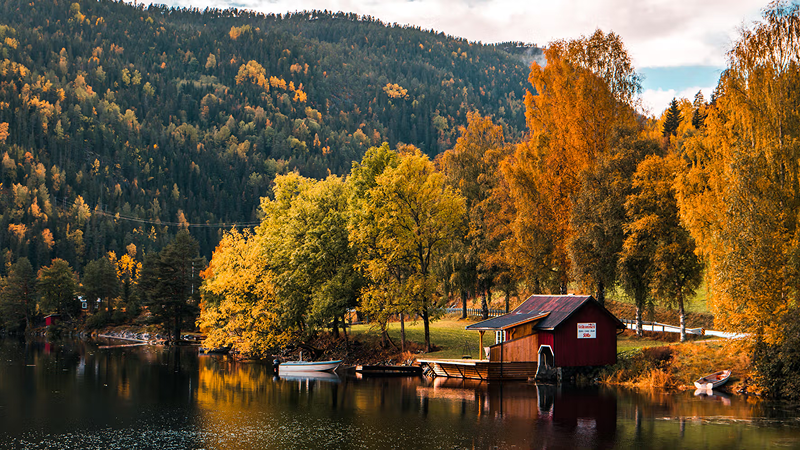
What to Expect
Autumn is Norway’s hidden gem season. The summer crowds disappear, prices drop, and the landscapes transform into a breathtaking palette of gold, orange, and red. The Northern Lights begin to return in September and October, and the weather is still mild enough for outdoor activities.
Temperatures range from 10°C to 15°C (50°F to 59°F) in September, dropping to 0°C–5°C (32°F–41°F) by November.
Why Visit Norway in Autumn?
- Fall Foliage: Norway’s forests, fjords, and mountain valleys are stunning draped in autumn colors — especially in the Telemark region and around Hardangerfjord.
- Northern Lights Return: September and October offer the first real chances for aurora sightings after the bright summer nights.
- Fewer Tourists: Major attractions are quieter, and the experience feels more authentic and peaceful.
- Lower Costs: Accommodation and flight prices fall sharply after the summer peak.
- Hiking Still Possible: Lower trails and fjord hikes remain accessible through most of September.
Autumn Drawbacks
- Higher-altitude hikes may close by September or October due to snow
- Weather becomes wetter and windier, especially in western Norway
- Daylight shortens rapidly — only 6–8 hours by November
Best Places to Visit in Autumn
- Tromsø — early aurora hunting from September onwards
- Hardangerfjord — spectacular fall foliage and harvest festivals
- Oslo — comfortable city sightseeing with mild temperatures
- Ålesund — art nouveau architecture surrounded by autumn color
Month-by-Month Breakdown
| Month | Season | Highlights | Best For |
|---|---|---|---|
| January | Winter | Cold & dark, ideal for Northern Lights. Skiing in full swing. | Aurora seekers & winter sports lovers |
| February | Winter | Peak skiing season. Northern Lights still active. Days getting longer. | Winter adventure travelers |
| March | Winter | Last great month for Northern Lights. Snow abundant in the north. Cherry blossoms begin in the south. | Northern Lights + early spring |
| April | Spring | Spring arrives in southern Norway, Oslo parks bloom. Some trails still snowy. | Budget travelers & city explorers |
| May | Spring | One of the best months to visit. Warm weather, long days, lower prices, fewer crowds. | Budget-conscious travelers & hikers |
| June | Summer | Summer begins. Midnight Sun appears in the north. Fjord cruises fully open. | Fjord tours, hiking & midnight sun |
| July | Summer | Peak summer — warmest weather, longest days, most tourists. | Families & first-time visitors |
| August | Summer | Still summer but crowds begin to thin. Great weather continues. | Hiking & fjord experiences |
| September | Autumn | Autumn colors begin. Northern Lights return. Fewer tourists, lower prices. | Photography & aurora hunting |
| October | Autumn | Full autumn foliage. Northern Lights season peaks. Cooler and wetter. | Northern Lights & fall scenery |
| November | Winter | Getting dark and cold. Early winter feel. Northern Lights active. | Budget travelers & aurora enthusiasts |
| December | Winter | Christmas markets & festive atmosphere. Snow in many areas. | Christmas travel & winter magic |
Best Time to Visit Norway on a Budget
Norway is one of the most expensive countries in Europe — but timing can save you a significant amount of money.
Cheapest months to visit: May, September, and November
During these shoulder and off-peak months you can expect:
- Flights to be 30–50% cheaper than summer prices
- Hotel rates to drop considerably, especially outside Oslo
- Tours and fjord cruises to offer early or late-season discounts
- Restaurants and local markets to be less overpriced in tourist-heavy areas
Most expensive months: June, July, and August — book at least 3–6 months in advance if you plan to visit during peak season.
Best Time to Visit Norway for Hiking
Norway has some of Europe’s most spectacular hiking trails, but they are highly season-dependent.
- Trolltunga: Best from late June to mid-September. The trail is officially open July–August. Attempting it in snow is extremely dangerous.
- Preikestolen (Pulpit Rock): Accessible April through October. Best from May to September.
- Besseggen Ridge: Open July to September. Snow can persist on the ridge into early July.
- Romsdalseggen Ridge: Best from June to September.
Always check trail conditions on VisitNorway.com before heading out.
Best Time to See the Northern Lights in Norway
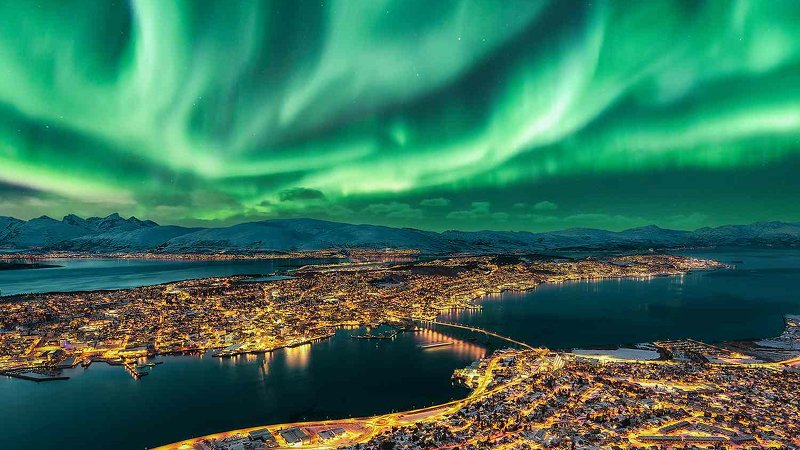
The Northern Lights are one of the main reasons people visit Norway — and timing is critical.
Best months: October, November, February, and March Best locations: Tromsø, Alta, Svalbard, Senja Island, and the Lofoten Islands Best conditions: Clear skies, away from city lights, and high solar activity
The Northern Lights are not visible during the summer months because of the Midnight Sun — the sky simply never gets dark enough.
Final Verdict: The Best Time to Visit Norway
There is no single “best” time to visit Norway — it truly depends on what you want to experience:
- For the Midnight Sun and hiking: Visit in June or July
- For the Northern Lights: Visit from October to February, with Tromsø as your base
- For the best overall experience with good weather and fewer crowds: Visit in May or September
- For skiing and winter adventures: Visit from January to March
- For budget travel: Visit in May, September, or November
Norway rewards every traveler, in every season. The key is matching your visit to your interests — and this guide has everything you need to do exactly that.