
If you have been dreaming of exploring one of the most extraordinary islands on Earth, this Madagascar 10 day itinerary is exactly what you need. Madagascar is not just a destination — it is a once-in-a-lifetime experience that combines rare wildlife, ancient landscapes, tropical beaches, and a culture unlike anywhere else in the world.
Planning a trip to Madagascar requires careful thought. The island is large, the roads are rough in many areas, and distances take longer to cover than you might expect. This step-by-step Madagascar 10 day itinerary has been designed to give you the best possible experience — balancing wildlife, nature, adventure, and culture — without rushing or wasting precious travel days.
Whether you are a first-time visitor or a returning traveler looking to explore deeper, this guide will walk you through every single day of your Madagascar journey.
Why Visit Madagascar?
Madagascar is one of the most biologically unique destinations on Earth. Around 90% of its wildlife species exist nowhere else, making it a dream destination for wildlife enthusiasts and photographers.
Highlights of traveling in Madagascar include:
- Seeing lemurs in their natural habitat
- Exploring remote rainforests and national parks
- Visiting unique geological landscapes
- Discovering pristine beaches and coral reefs
- Experiencing vibrant Malagasy culture
A well-planned itinerary ensures you can explore the country’s top attractions efficiently despite the island’s large size and travel distances.
Why 10 Days Is the Ideal Length for Madagascar
Ten days gives you enough time to experience Madagascar’s most iconic highlights without feeling overwhelmed. You will have time to explore the eastern rainforests, the dramatic highland landscapes, the world-famous Avenue of the Baobabs, and the wild national parks of the south — all in a logical, well-paced route.
Shorter trips of five to seven days force you to choose only one or two regions. Longer trips of two weeks or more allow you to add northern destinations like Nosy Be or Diego Suarez. But for most travelers, ten days is the sweet spot — rich, rewarding, and beautifully balanced.
Best Time to Follow This Madagascar 10 Day Itinerary
The best time to follow this Madagascar 10-day itinerary is during the dry season, which runs from April to October. During these months, roads are passable, national parks are fully open, and wildlife is easier to spot because vegetation is less dense.
If you are traveling between November and March, be aware that heavy rainfall can make some roads impassable, particularly in the west and south. For the absolute best experience following this itinerary, aim to travel between June and October.
Quick Overview: Madagascar 10 Day Itinerary At a Glance
| Day | Destination | Main Activity |
|---|---|---|
| Day 1 | Antananarivo | Arrive in the capital, explore Rova Palace & Zoma Market |
| Day 2 | Andasibe | Travel east, afternoon forest walk & night wildlife walk |
| Day 3 | Andasibe-Mantadia National Park | Full day lemur tracking & indri encounter |
| Day 4 | Ranomafana | Highland drive, stop in Fianarantsoa, hot springs evening |
| Day 5 | Ranomafana National Park | Full day rainforest wildlife & night walk |
| Day 6 | Isalo National Park | RN7 road journey, Anja Reserve lemurs, arrive Isalo |
| Day 7 | Isalo National Park | Canyon hiking, natural pool swim, ring-tailed lemurs |
| Day 8 | Morondava | Fly west, sunset at Avenue of the Baobabs |
| Day 9 | Morondava & Kirindy Forest | Sunrise baobabs, fossa search, coastal farewell dinner |
| Day 10 | Antananarivo | Morning flight, souvenir shopping, international departure |
Day 1: Arrive in Antananarivo — Welcome to Madagascar
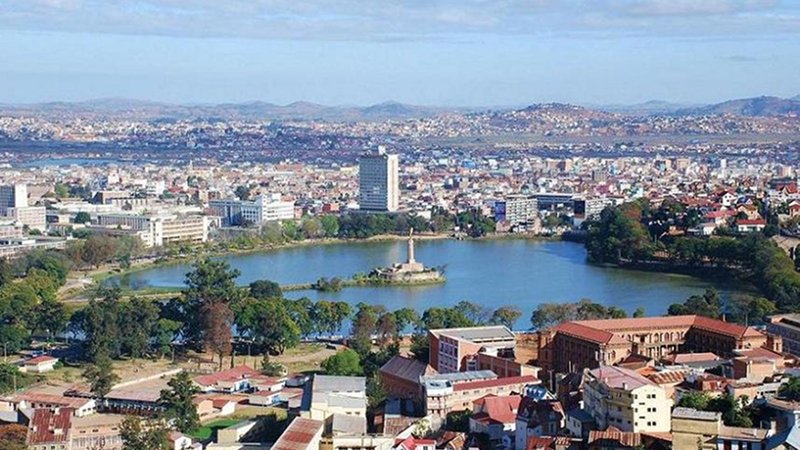
Your Madagascar adventure begins in Antananarivo, the capital city known locally as Tana. Most international flights arrive at Ivato International Airport, located about 15 kilometers from the city center. After a long journey, the city greets you with a mix of French colonial architecture, bustling street markets, and hillside views that immediately tell you this is somewhere completely different.
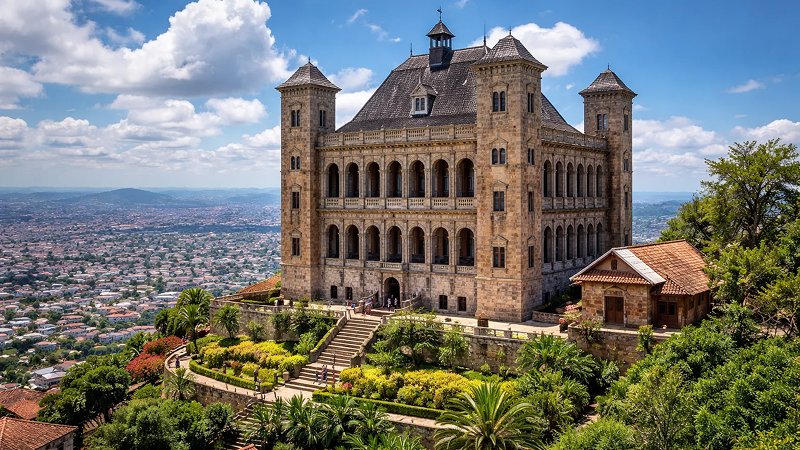
In the late afternoon, take a short walk through the Upper Town area. The hilltop Rova Palace complex offers sweeping views over the city and surrounding rice paddies. For dinner, try traditional Malagasy food — look for romazava, a classic beef and greens stew, or ravitoto, a rich pork dish made with crushed cassava leaves.
Highlight :
- Visit the historic Rova Palace for panoramic city views
- Explore the vibrant Zoma market area
- Taste traditional Malagasy dishes for the first time
- Pick up a local SIM card and exchange currency
Where to Stay: Hotel Colbert, Citizen Hotel, or Sakamanga Hotel are all well-regarded options in the city center.
Practical Tip: Exchange money at the airport or a bank in Tana. The local currency is the Malagasy Ariary (MGA). US dollars and euros are accepted at many tourist hotels, but having local currency is essential for markets, transport, and smaller establishments.
Day 2: Antananarivo to Andasibe — Into the Rainforest
The drive from Antananarivo to Andasibe takes approximately three hours along the RN2 national road. The journey is scenic, passing through highland rice terraces, small villages, and gradually descending into lush forest as you approach the eastern escarpment. You can hire a private driver, join a shared taxi-brousse, or arrange transport through your hotel.
Arrive in Andasibe by early afternoon and check into your lodge. In the late afternoon, take a guided walk in the Mitsinjo Community Forest for chameleons, tree frogs, and smaller lemur species. As darkness falls, join a guided night walk to discover sleeping chameleons, darting mouse lemurs, and colorful frogs that only come alive after dark.
Highlights :
- Scenic three-hour drive through highland rice terraces
- Afternoon guided walk in Mitsinjo Community Forest
- First chameleon and tree frog sightings
- Guided night walk revealing nocturnal forest creatures
Where to Stay: Andasibe Hotel, Vakona Forest Lodge, or Feon’ny Ala — all located near the park entrance and offering good jungle atmosphere.
Practical Tip: Book your national park guided walks through the Madagascar National Parks office near the park entrance. Early morning visits are strongly recommended for the best wildlife activity.
Day 3: Full Day in Andasibe-Mantadia National Park — Lemurs & Indri

Wake up early — ideally before 6:00 AM — and head into Andasibe-Mantadia National Park for the morning wildlife walk. The forest at dawn is cool, misty, and alive with birdsong. This is where you are almost guaranteed to hear the indri — the largest living lemur on Earth — whose haunting, whale-like call echoes through the trees in the early morning in a way you will never forget.
Your guide will lead you along forest trails in search of indri family groups, diademed sifakas, black-and-white ruffed lemurs, and bamboo lemurs. In the afternoon, visit the Andasibe botanical garden near the village for close-up chameleon and gecko encounters that are perfect for photography.
Highlights :
- Hear the haunting early morning call of the indri lemur
- Track indri family groups through the rainforest canopy
- Spot diademed sifakas and bamboo lemurs on forest trails
- Visit the botanical garden for close-up chameleon and gecko encounters
Practical Tip: Hire the best available local guide, not the cheapest. Experienced guides know individual indri family territories and can dramatically improve your wildlife encounters. The additional cost is absolutely worth it.
Day 4: Andasibe to Ranomafana — Highlands & Rainforest
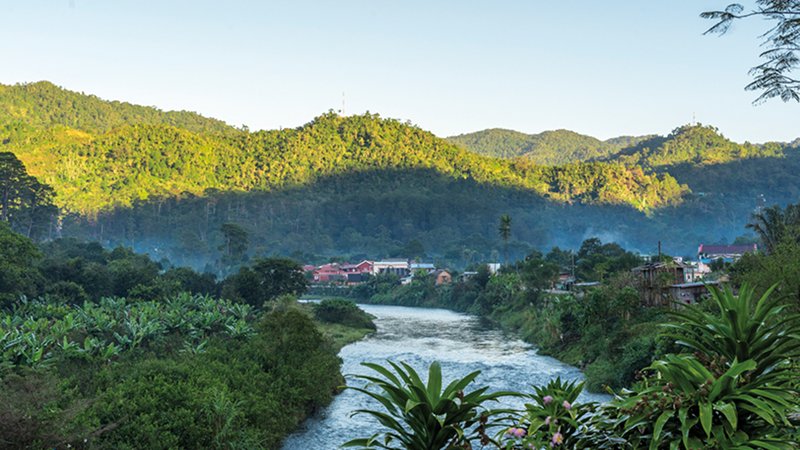
The journey from Andasibe to Ranomafana takes approximately six to seven hours by road, passing through the central highlands town of Fianarantsoa. The route takes you through stunning scenery — terraced rice fields, eucalyptus forests, and traditional red mud brick villages that seem unchanged for centuries.
If you depart by 7:00 AM, make a brief stop in Fianarantsoa for lunch and a short walk through the historic old town with its cobblestone streets and hilltop churches. Arrive in Ranomafana in the late afternoon, check into your lodge, and soak in the natural hot springs to relax after the long travel day.
Highlight :
- Scenic highland drive through terraced rice fields and villages
- Lunch stop and walking tour in historic Fianarantsoa
- Relax in Ranomafana’s natural hot springs after travel
- Cool river valley evening atmosphere at 1,000 meters altitude
Where to Stay: Hotel Thermal, Setam Lodge, or Manja Hotel.
Practical Tip: Ranomafana means “hot water” in Malagasy. After a long travel day, soaking in the natural hot springs near the village is a perfect way to relax tired muscles.
Day 5: Full Day in Ranomafana National Park — Madagascar’s Biodiversity Crown
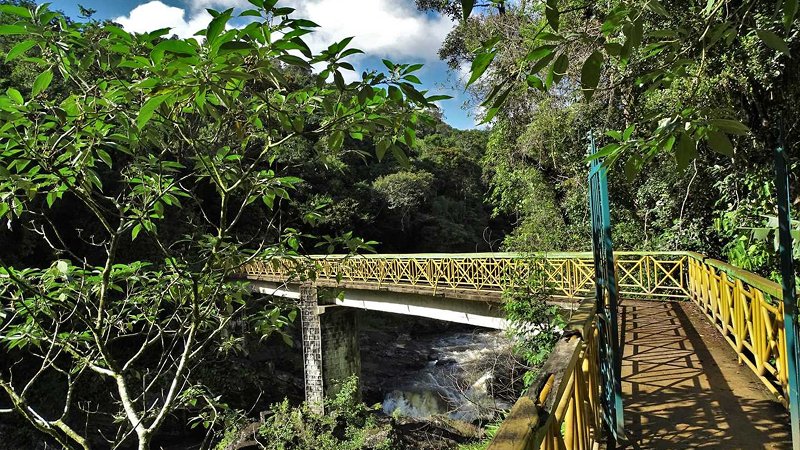
Begin with an early morning guided walk into Ranomafana’s dense montane rainforest. The park is home to twelve lemur species, and your morning walk will likely produce sightings of the golden bamboo lemur, the greater bamboo lemur, and the magnificent Milne-Edwards’ sifaka — a large chocolate-brown lemur with white patches that is one of the most beautiful primates in Madagascar.
In the afternoon, walk to the park’s waterfall viewpoint for dramatic views over the forest canopy and surrounding hills. As evening falls, join a night walk to discover sleeping chameleons, nocturnal lemurs, and an extraordinary variety of frogs that are completely invisible during daylight hours.
Highlight :
- Track the rare golden bamboo lemur in its natural habitat
- Spot Milne-Edwards’ sifaka along the main forest trails
- Find chameleons and rare frogs on a guided forest walk
- Night walk revealing Ranomafana’s extraordinary nocturnal world
Where to Stay: Hotel Thermal, Setam Lodge, or Manja Hotel.
Practical Tip: Ranomafana’s trails can be muddy and steep. Wear proper hiking boots and bring a waterproof jacket regardless of the weather forecast.
Day 6: Travel Day — Ranomafana to Isalo via the RN7
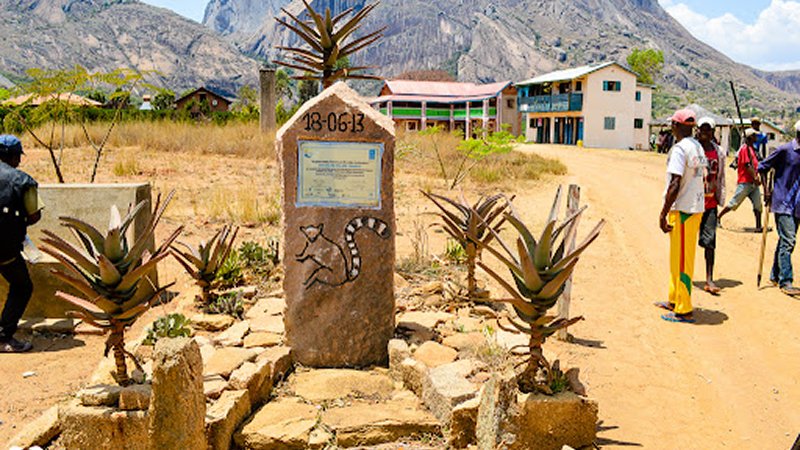
Today is a travel day along Madagascar’s famous RN7 road — one of the great road journeys in Africa. The drive to Isalo takes four to five hours through a landscape that gradually transforms from highland rainforest to dry savanna and dramatic sandstone massifs. Along the route, stop at the Antemoro paper factory in Ambalavao to watch craftsmen produce beautiful handmade paper embedded with dried flowers and plants.
Just outside Ambalavao, spend one hour at the Anja Community Reserve, where completely habituated ring-tailed lemurs will approach within arm’s reach. Arrive at Isalo in the late afternoon as the towering sandstone cliffs glow orange and red in the fading light — your first dramatic preview of tomorrow’s full exploration.
Highlight :
- Scenic RN7 road journey through changing highland landscapes
- Visit the Antemoro handmade paper factory in Ambalavao
- Meet habituated ring-tailed lemurs at Anja Community Reserve
- First dramatic views of Isalo’s sandstone massifs at sunset
Where to Stay: Isalo Rock Lodge, Le Relais de la Reine, or Satrana Lodge.
Practical Tip: Start early from Ranomafana to make the most of the stops along the RN7. Leaving by 7:00 AM gives you comfortable time at both Ambalavao and Anja Reserve.
Day 7: Full Day in Isalo National Park — Canyons, Pools & Ring-Tailed Lemurs
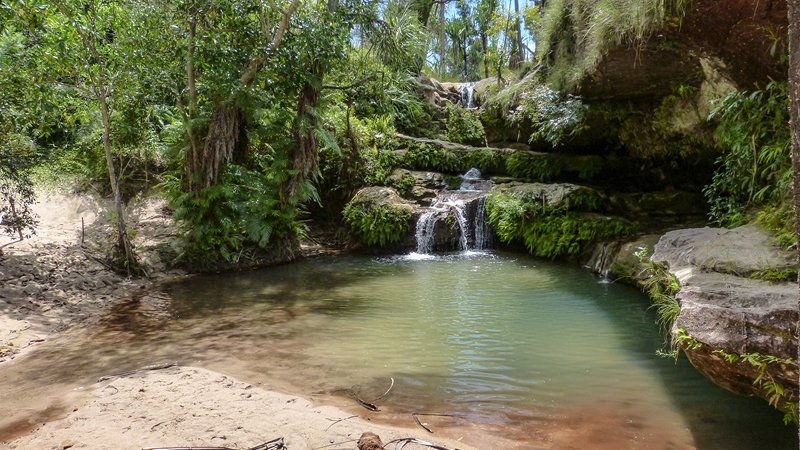
Begin the day with the Canyon des Makis trail, walking through a shaded canyon where ring-tailed lemurs are almost always present. These striking primates with their bold black-and-white striped tails are among the most photogenic animals in Madagascar, and Isalo’s dramatic sandstone backdrop makes every photograph look extraordinary.
The highlight of the day is the Piscine Naturelle — a stunning natural swimming hole fed by crystal-clear freshwater, surrounded by lush vegetation in the middle of the dry sandstone landscape. Swimming here after a morning of hiking is one of the most refreshing and joyful experiences of the entire trip. In the afternoon, hike to the
Highlight :
- Walk through Canyon des Makis among ring-tailed lemurs
- Swim in the crystal-clear Piscine Naturelle natural pool
- Hike to panoramic viewpoints over the sandstone massif
- Watch lemurs sunbathe on warm rocks in the afternoon light
Practical Tip: Carry at least two liters of water per person for full-day hikes in Isalo. The sun is intense and shade is limited on several trails.
Day 8: Isalo to Morondava — Avenue of the Baobabs at Sunset
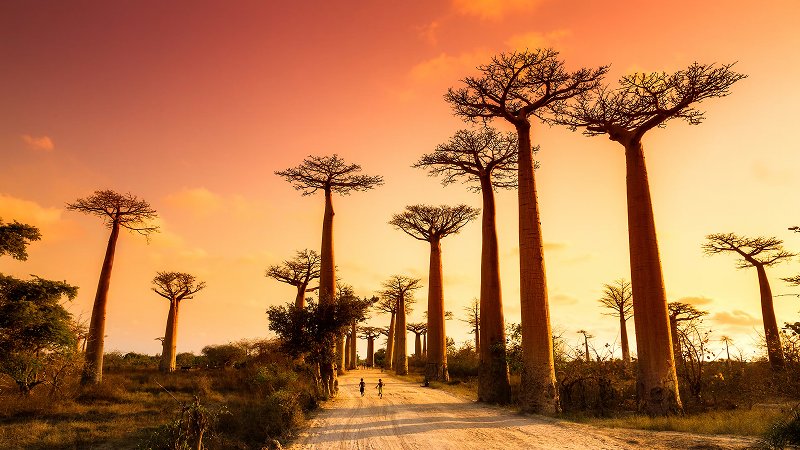
Take the morning domestic flight from Isalo to Morondava — approximately one hour in the air compared to twelve or more hours by road. Arrive in the early afternoon, check into your hotel, and rest briefly before the most anticipated moment of your entire Madagascar 10-day itinerary.
At around 4:00 PM, make your way to the Avenue of the Baobabs, seven kilometers north of Morondava. Here, towering Grandidier’s baobabs estimated to be between 800 and 1,200 years old line both sides of a dirt road. As the sun descends, the light transforms these ancient giants into glowing columns of amber, copper, and gold — silhouettes against a blazing sky that you will carry in your memory for the rest of your life.
Highlight :
- Domestic flight with aerial views over western Madagascar
- First breathtaking encounter with the Avenue of the Baobabs
- Sunset photography among 800-year-old Grandidier’s baobabs
- Magical golden hour light turning the avenue amber and copper
Where to Stay: Palissandre Côte Ouest, La Girafe Hotel, or Chez Maggie.
Practical Tip: Arrive at the Avenue at least 90 minutes before sunset to secure a good viewing position and walk the full length before the light peaks.
Day 9: Morning Baobabs & Kirindy Forest — Wildlife Finale
Wake up before dawn and return to the Avenue of the Baobabs for sunrise. The morning light is softer, the crowds are thinner, and a golden mist sometimes settles between the ancient trees creating an ethereal, dreamlike atmosphere. Sunrise here is arguably even more beautiful than sunset and experiencing both gives you a truly complete picture of this iconic landscape.
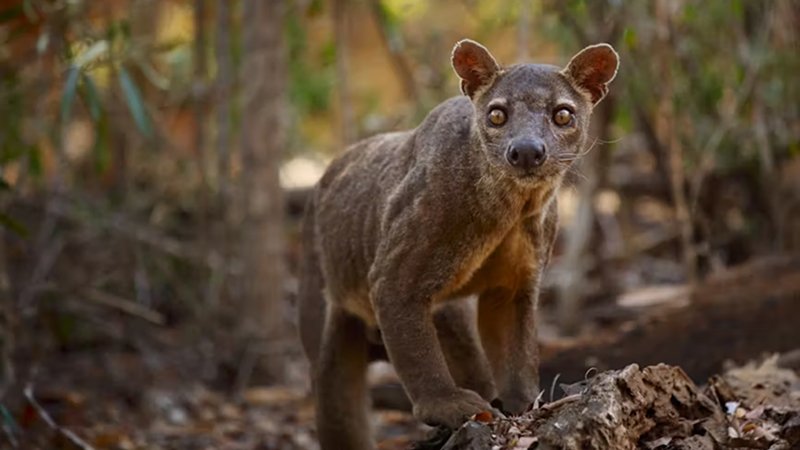
After breakfast, head to Kirindy Forest — approximately 60 kilometers north of Morondava — for an afternoon wildlife walk. Kirindy is one of the best places in Madagascar to spot the fossa, the island’s sleek and elusive apex predator. The forest also delivers sightings of red-fronted brown lemurs, Verreaux’s sifakas, and various reptiles before you return to Morondava for a final seafood dinner on the Mozambique Channel coast.
Highlight :
- Ethereal sunrise mist at the Avenue of the Baobabs
- Search for the elusive fossa in Kirindy Forest
- Spot red-fronted brown lemurs and Verreaux’s sifakas
- Final farewell dinner on the Mozambique Channel coast
Practical Tip: October and November are the best months for fossa sightings at Kirindy, as this is their mating season when the animals are most active and visible during daylight hours.
Day 10: Return to Antananarivo — Departure Day
Fly from Morondava to Antananarivo on the morning domestic flight — one hour in the air giving you one last aerial view of the extraordinary western landscapes below. If your international flight departs in the evening, use the extra hours in the capital for final souvenir shopping at the Marché Artisanal, where you will find handmade Antemoro paper, carved zebu figurines, silk lambas, and certified semi-precious gemstones.
Have a final French-Malagasy fusion lunch at one of Antananarivo’s better restaurants — a slow, unhurried farewell meal that gives you time to reflect on ten extraordinary days. Then head to Ivato International Airport carrying memories that no photograph can fully capture — the call of an indri at dawn, a baobab glowing at sunset, and the feeling of standing in one of the most unique places on Earth.
Highlight :
- Morning flight back to Antananarivo with aerial western views
- Final souvenir shopping at the Marché Artisanal
- French-Malagasy farewell lunch in the capital
- Departure from Ivato International Airport with unforgettable memories
Is Madagascar Safe to Visit in 2026?
Madagascar is a safe destination for tourists when you travel with common sense and proper planning. Most risks are concentrated in specific areas rather than being a general threat across the entire island. Tourist areas, national parks, and established lodges are all very safe and well-managed environments where travelers feel completely comfortable.
The most common concern is petty theft and pickpocketing in busy areas of Antananarivo. Keep your phone, camera, and wallet secured in crowded markets and avoid walking alone at night in the capital. Outside the city, most travelers in national parks and tourist destinations feel completely safe throughout their trip.
Health is the most important practical safety consideration in Madagascar. Malaria is present across the island, so anti-malarial medication is strongly recommended before departure. Always drink bottled water, carry a basic medical kit, and ensure your travel insurance covers emergency medical evacuation — medical facilities outside the capital are very limited.
Final Thoughts: Is This Madagascar 10 Day Itinerary Right for You?
This Madagascar 10- day itinerary is designed for travelers who want to experience the very best of the island in a well-paced, logistically sensible route. It covers rainforest wildlife, highland landscapes, dramatic national parks, and the world-famous baobab scenery — all in ten days without ever feeling rushed.
Madagascar is not the easiest destination in the world. The roads test your patience, the logistics require planning, and unexpected delays are part of the experience. But every challenge is forgotten the moment you hear an indri call through the morning mist, or watch the last light fade behind a row of ancient baobabs against a burning orange sky.
There is nowhere on Earth quite like Madagascar. And this itinerary will take you right to its extraordinary heart.