
Marrakech is one of those rare cities that grabs you the moment you arrive and never fully lets go. The narrow alleyways of the ancient medina, the hypnotic call to prayer echoing across rooftops, the smell of spices drifting from a souk stall, the explosion of color at every turn — it is sensory overload in the most beautiful way possible.
Whether you are visiting for the first time or returning for another dose of the magic, Marrakech delivers experiences that stay with you long after you leave. But with so much packed into this incredible city, knowing where to start can feel overwhelming.
This guide cuts through the noise. Here are the 15 best things to do in Marrakech in 2026 — the iconic, the hidden, and everything in between.
Why Marrakech Should Be on Your Travel List in 2026
Marrakech is on fire right now — and we mean that in the best possible way. Morocco is gearing up to co-host the FIFA World Cup 2030 alongside Spain and Portugal, and the energy and investment pouring into the country is palpable. New hotels are opening, historic landmarks are being restored, transport links are improving, and the entire country feels like it is stepping confidently onto the world stage.
Marrakech sits at the heart of all of it. In 2026, the city offers a more polished visitor experience than ever before — without losing any of the raw, intoxicating character that makes it so special.
Here is why 2026 is a great year to visit:
- Newly restored landmarks and expanded museum experiences
- A booming wellness, hammam, and eco-tourism scene
- Incredible new restaurants pushing Moroccan cuisine forward
- World-class riads and boutique hotels at every budget level
- Growing international flight connections making it easier to reach than ever
Best Time to Visit Marrakech
Timing your visit right can make a huge difference to your experience.
Spring (March to May) remains the sweet spot. Temperatures sit comfortably between 20°C and 28°C, the city is lively, and the surrounding countryside is green and beautiful.
Autumn (September to November) is equally pleasant, often a little quieter than spring, and great for combining a city visit with hiking in the Atlas Mountains.
Summer (June to August) brings intense heat that regularly exceeds 40°C. It is manageable if you plan your sightseeing early in the morning and late in the evening, but not ideal for first-time visitors.
Winter (December to February) is mild, peaceful, and affordable — fewer tourists, lower prices, and perfectly comfortable daytime temperatures. Cool evenings call for a warm riad and a pot of mint tea.
15 Best Things to Do in Marrakech in 2025
1. Experience the Magic of Jemaa el-Fnaa
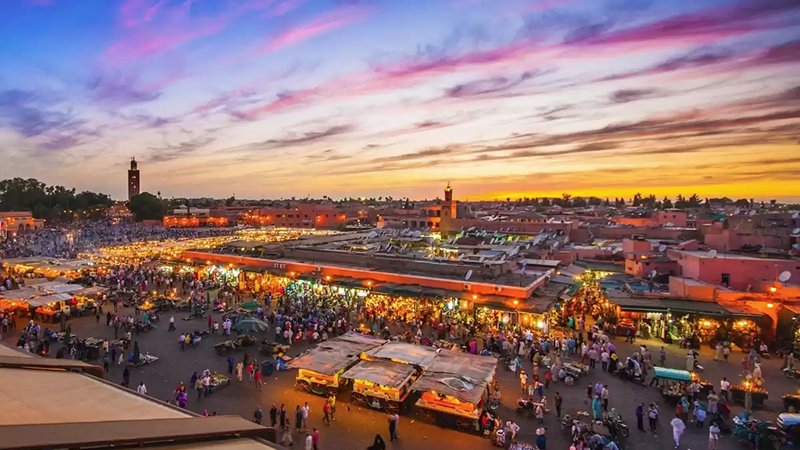
Jemaa el-Fnaa is the beating heart of Marrakech and the single most essential experience the city offers. This UNESCO-listed square has been the social and cultural center of Marrakech for centuries — a living, breathing stage that performs a different show every hour of the day.
By day you will find orange juice vendors, henna artists, fortune tellers, and snake charmers filling the square with color and noise. As the sun drops, the transformation begins — food stalls rise from the cobblestones, musicians take their positions, and the air fills with the scent of grilling meat and cumin.
The evening atmosphere is pure theater and something no first-time visitor to Marrakech should ever miss. Visit it more than once — it is different every single time.
The Majorelle Garden is one of the most photographed and most beloved places in all of Morocco — and the moment you step inside, you understand exactly why. Created by French painter Jacques Majorelle in the 1920s and later restored by fashion icon Yves Saint Laurent, this botanical garden is breathtakingly beautiful.
The signature cobalt blue of the garden buildings — a shade now known worldwide as Majorelle Blue — pops brilliantly against the deep greens of towering cacti, bamboo, and lily-covered ponds. It is a pocket of calm and beauty in a city that rarely slows down.
Within the complex, the Berber Museum showcases a stunning collection of Amazigh jewelry and artifacts, while the YSL Museum next door is a world-class institution dedicated to the designer who loved Marrakech more than anywhere on earth.
What to know before you visit:
- Best visited both in the morning and again at sunset for the full experience
- Rooftop cafés like Café de France offer perfect bird’s-eye views over the square
- Fresh orange juice stalls charge around 4 dirhams per glass — always agree the price first
- Snake charmers and henna artists will charge for photos — agree a price before engaging
- The square is safe but stay aware of your belongings in the evening crowds
2. Wander the Souks of the Medina
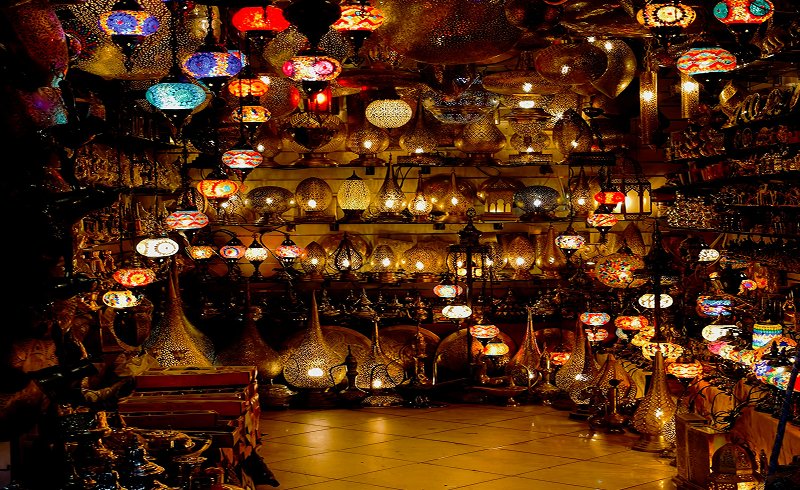
The souks of Marrakech are legendary for good reason — a vast, winding labyrinth of market streets stretching deep into the heart of the medina, where artisans and traders have done business for hundreds of years. No two visits are ever the same.
Each section of the souk specializes in a different trade. Souk Semmarine is the main artery, lined with textiles and souvenirs. Souk el-Attarine is the fragrant spice and perfume market. Souk des Teinturiers — the dyers’ souk — dazzles with hanks of freshly dyed wool in vivid reds, blues, and yellows hanging above the narrow alleyway.
Go without a plan and without your phone in your hand. Getting genuinely lost is the whole point, and the best discoveries always happen when you least expect them.
What to know before you visit:
- Bargaining is expected — start at 40 to 50 percent of the asking price
- The souks are organized loosely by trade, making it easier to find specific items
- Avoid anyone who approaches you offering to be your “free guide”
- Morning visits are quieter and cooler — afternoons get very busy
- Cash is essential — souk vendors do not accept cards
3. Lose Yourself in the Majorelle Garden
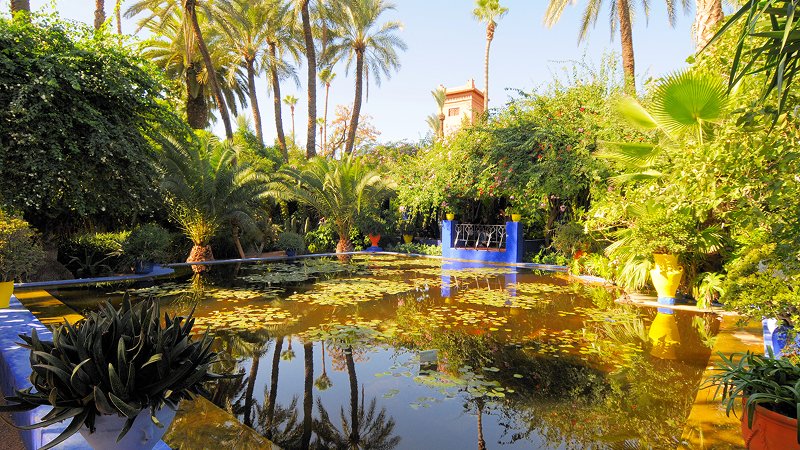
The Majorelle Garden is one of the most photographed and most beloved places in all of Morocco — and the moment you step inside, you understand exactly why. Created by French painter Jacques Majorelle in the 1920s and later restored by fashion icon Yves Saint Laurent, this botanical garden is breathtakingly beautiful.
The signature cobalt blue of the garden buildings — a shade now known worldwide as Majorelle Blue — pops brilliantly against the deep greens of towering cacti, bamboo, and lily-covered ponds. It is a pocket of calm and beauty in a city that rarely slows down.
Within the complex, the Berber Museum showcases a stunning collection of Amazigh jewelry and artifacts, while the YSL Museum next door is a world-class institution dedicated to the designer who loved Marrakech more than anywhere on earth.
What to know before you visit:
- Book tickets online in advance — it sells out regularly throughout 2026
- Arrive at opening time (9am) for the best light and smallest crowds
- Combined tickets for both the garden and YSL Museum are available and worth it
- Photography is permitted throughout the garden — golden hour light is spectacular
- The garden gift shop sells high-quality Moroccan design pieces at fair prices
4. Explore the Bahia Palace
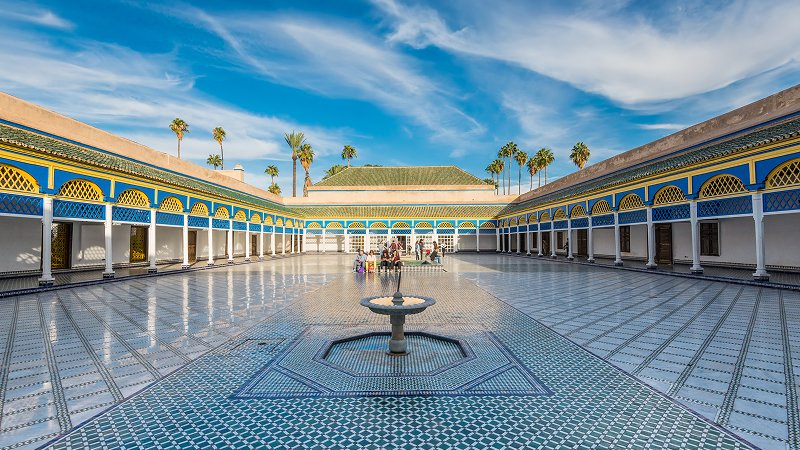
The Bahia Palace is one of the finest examples of Moroccan palatial architecture anywhere in the country and an absolute must on any Marrakech itinerary. Built in the late 19th century for Grand Vizier Ba Ahmed, it was designed with one gloriously ambitious goal — to be the most magnificent palace of its era.
Wander through a succession of beautifully proportioned rooms and courtyards, each more elaborately decorated than the last. The zellij tilework is immaculate, the carved plasterwork extraordinary, and the painted cedarwood ceilings are some of the finest examples of traditional Moroccan craftsmanship you will encounter anywhere.
The interior gardens — fragrant with orange blossom and jasmine, shaded by ancient trees — are among the most peaceful and beautiful spaces in the entire medina.
What to know before you visit:
- Arrive early — tour groups fill the courtyards by mid-morning
- Entrance fee is very affordable, around 70 dirhams per person
- Audio guides are available and add excellent historical context
- The palace covers 8 hectares — wear comfortable shoes
- Photography is permitted throughout the palace and gardens
5. Marvel at the Ben Youssef Madrasa
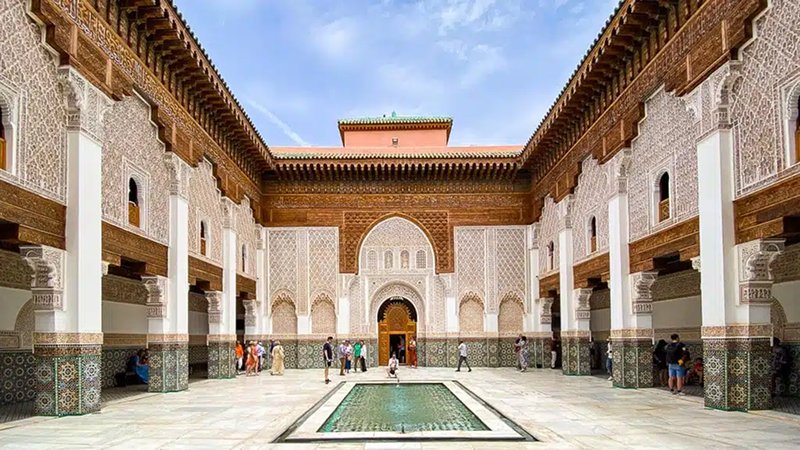
The Ben Youssef Madrasa is, by near-universal agreement, the most beautiful interior space in all of Marrakech. This 14th-century Islamic school — once the largest in North Africa — is an overwhelming showcase of Moroccan architectural genius that leaves virtually every visitor speechless.
The central courtyard is the masterpiece — a vast marble-floored space surrounded by walls of intricately carved plaster, deep zellige tilework, and delicate cedarwood lattice balconies rising three stories above. Every single surface has been worked with extraordinary precision by craftsmen whose skill seems almost impossible to comprehend.
Following a meticulous multi-year restoration, the madrasa is now fully open in 2026 and more stunning than ever. Stand in the center of the courtyard and simply look up — it is one of those rare travel moments where everything else fades away.
What to know before you visit:
- Go early — by late morning it becomes very crowded
- Look beyond the courtyard and explore the upper floors and student cells
- The detail in the carved plaster and cedarwood is best seen up close
- Entrance is around 70 dirhams and worth every dirham
- Combine it with a visit to Bahia Palace nearby for a full historic morning
6. Indulge in a Traditional Hammam
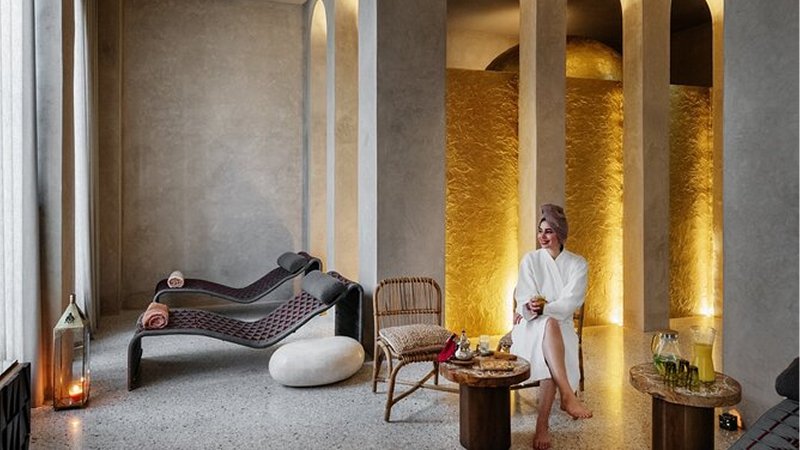
A hammam is far more than a spa treatment — it is a centuries-old cultural cornerstone of Moroccan life and one of the most authentic experiences you can have anywhere in the country. Experiencing one is an absolute must during any visit to Marrakech.
The ritual involves a steam room to open the pores, an exfoliating scrub with a kessa mitt, a treatment with savon beldi — traditional Moroccan black olive oil soap — and a thorough massage. You will emerge feeling genuinely transformed, completely relaxed, and noticeably cleaner than you have ever felt in your life.
Options in Marrakech range from historic public hammams to world-class luxury spa experiences, covering every budget and preference.
What to know before you visit:
- Hammam El Bacha is the best historic public option — over 100 years old and magnificent
- Les Bains de Marrakech is ideal for tourists wanting an English-friendly experience
- La Mamounia and Royal Mansour spas offer the ultimate luxury hammam
- Bring your own towel and flip-flops to a public hammam
- Ask your riad host for their personal neighborhood hammam recommendation
7. Take a Moroccan Cooking Class
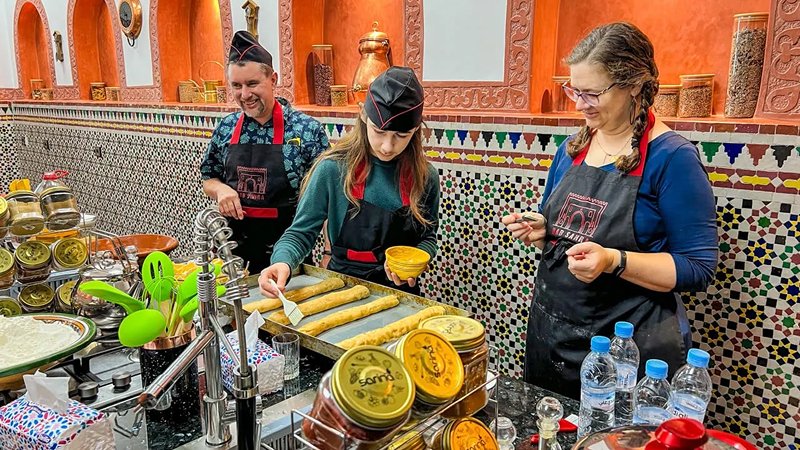
Moroccan cuisine is one of the great food cultures of the world — aromatic, deeply layered, and rich with centuries of tradition. Taking a cooking class in Marrakech is the most personal and immersive way to connect with that culture, and it is an enormous amount of fun from start to finish.
Most classes begin with a guided walk through the medina to shop for fresh ingredients — visiting the spice souk, selecting herbs, choosing preserved lemons — before heading to a traditional kitchen to cook a full Moroccan meal. You will typically prepare a tagine, a spread of Moroccan salads, and a dessert, then sit down and eat everything you have made.
La Maison Arabe runs polished, well-organized classes in a beautiful riad setting. Souk Cuisine offers a more intimate, home-cooking-focused experience that many travelers rate as one of their absolute highlights of Morocco.
What to know before you visit:
- Choose a class that includes the souk shopping trip for the full experience
- Classes typically last 3 to 4 hours including the meal at the end
- Book at least a few days ahead — popular classes fill up quickly
- Dietary requirements including vegetarian options are widely catered for
- You will leave with recipes to recreate the dishes at home
8. Discover the Saadian Tombs
The Saadian Tombs are one of the most historically significant and visually stunning sites in Marrakech — and one that far too many visitors walk straight past. This is a mistake you do not want to make.
Dating to the reign of Sultan Ahmad al-Mansur in the late 16th century, the tombs house the ornate mausoleums of Saadian royalty. They were deliberately sealed by a later ruler and lay hidden for nearly three centuries until rediscovered via French aerial photography in 1917.
The main chamber is breathtaking — twelve columns of Italian Carrara marble supporting a carved cedarwood ceiling of extraordinary intricacy, surrounded by deep zellige tilework in blues and greens. It is remarkably well preserved and carries a quiet, powerful atmosphere unlike anywhere else in the city.
What to know before you visit:
- Arrive at opening time — the site is small and fills quickly
- Entrance fee is around 70 dirhams per person
- The main mausoleum chamber is the highlight — take time to study the ceiling detail
- Combine with a visit to El Badi Palace ruins just a short walk away
- Photography is permitted throughout the site
9. Watch Sunset from a Rooftop Café
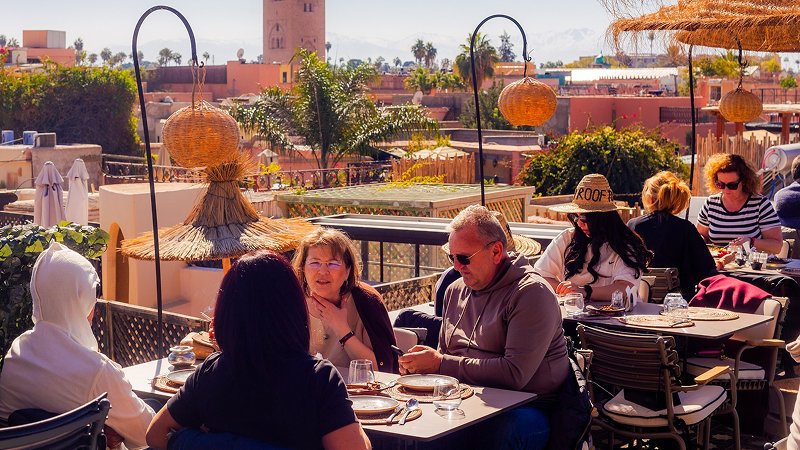
Watching the sun set over the Marrakech medina from a rooftop terrace — the Koutoubia minaret cutting the golden sky, the call to prayer rising from mosques across the city — is one of the defining travel experiences of North Africa. It is the kind of moment you will still be talking about years later.
The rooftop café scene in Marrakech is excellent and has expanded significantly in recent years. Whether you want an affordable casual drink or a full evening dinner with cocktails, the city has a rooftop for every mood and budget.
Go at least once for drinks and once for a proper dinner. Two completely different atmospheres, both completely wonderful.
What to know before you visit:
- Café des Épices is the best affordable option with great views over Rahba Kedima square
- Nomad offers stylish cocktails, creative food, and a beautifully designed terrace
- Le Jardin is perfect for a long, relaxed dinner as the evening light fades
- Arrive 30 to 40 minutes before sunset to secure the best table
- Most rooftop cafés serve both alcohol and non-alcoholic mint tea and juices
10. Explore the El Badi Palace Ruins
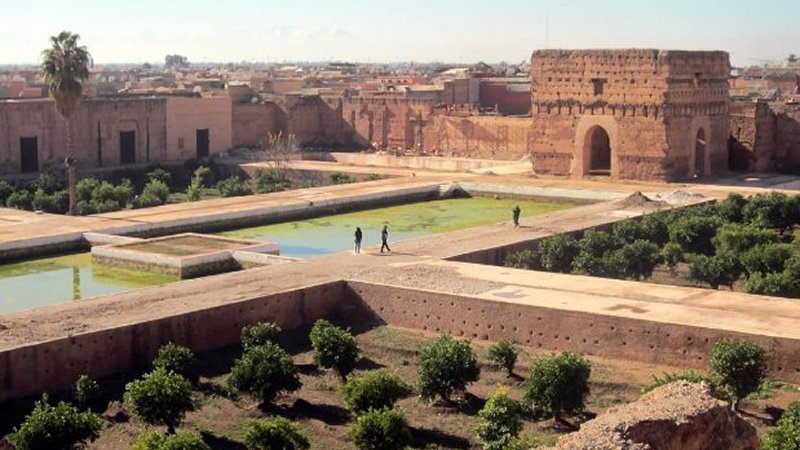
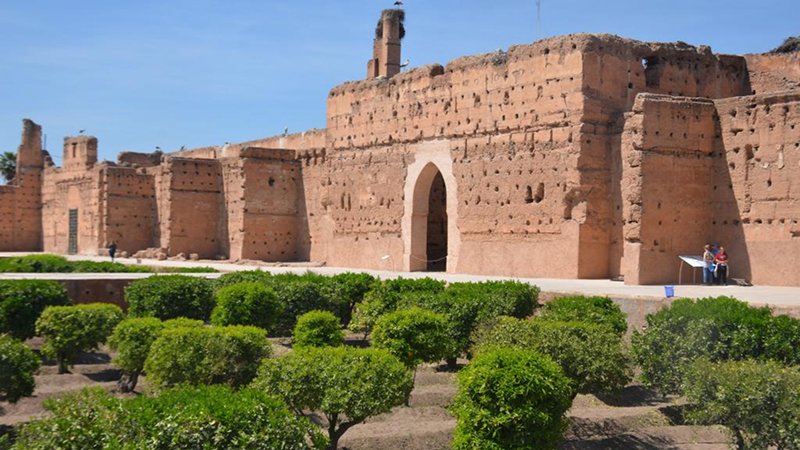
El Badi Palace is one of the most compelling and atmospheric historic sites in Marrakech — a vast, haunting ruin that speaks powerfully of past glory and the relentless passage of time. It is far less visited than it deserves to be.
Built by Sultan Ahmad al-Mansur in the 1590s to celebrate his military victory over Portugal, El Badi was once celebrated as one of the most magnificent palaces in the medieval world. Its 360 rooms were decorated with gold leaf, Italian marble, and onyx imported at staggering expense. Contemporary visitors wrote of it in terms of pure wonder.
Today it stands stripped of its treasures and gloriously ruined. The vast central courtyard, crumbling towers, sunken gardens, and nesting storks create an atmosphere that is genuinely unlike anywhere else in the city.
What to know before you visit:
- Climb the ramparts for panoramic views over the medina and Atlas Mountains
- Visit in the late afternoon when the light on the pisé walls is extraordinary
- Nesting storks are visible on the towers from around March through summer
- Entrance is around 70 dirhams per person
- Combine with the Saadian Tombs nearby for an excellent historic afternoon
11. Take a Hot Air Balloon Ride at Sunrise
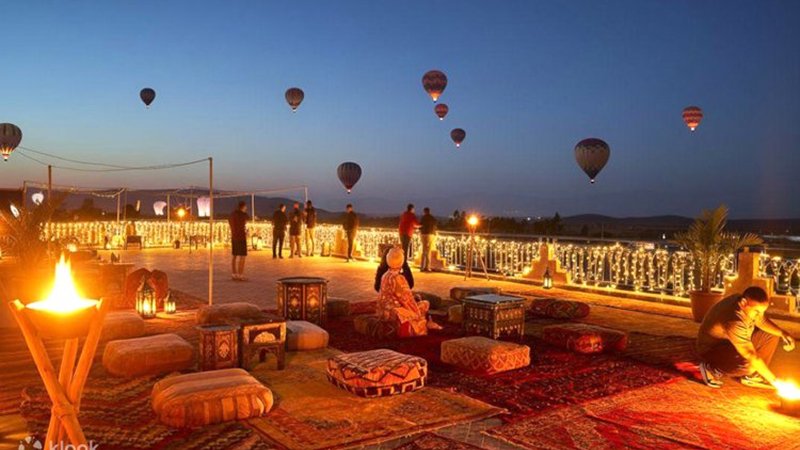
A hot air balloon ride over Marrakech at sunrise is the single most spectacular experience the city has to offer — and one that will stay with you for the rest of your life. Drifting silently above the medina as the early morning light turns the rooftops gold, with the Atlas Mountains on the horizon, is simply extraordinary.
Most rides last approximately one hour and depart very early — around 5:30am — to catch the sunrise and ideal flying conditions. After landing in the countryside outside the city, a traditional Berber breakfast awaits: mint tea, fresh bread, argan oil, honey, and amlou paste served in a beautiful camp setting.
Prices typically range from $180 to $220 per person. It is the most expensive experience on this list, but the memories it creates are priceless.
What to know before you visit:
- Book several weeks in advance — spots fill up fast in spring and autumn
- Flights are weather-dependent and can be rescheduled at short notice
- Choose an operator with a flexible cancellation and rebooking policy
- The Berber breakfast after landing is included in most packages
- Dress warmly — early morning temperatures at altitude can be surprisingly cool
12. Day Trip to the Atlas Mountains
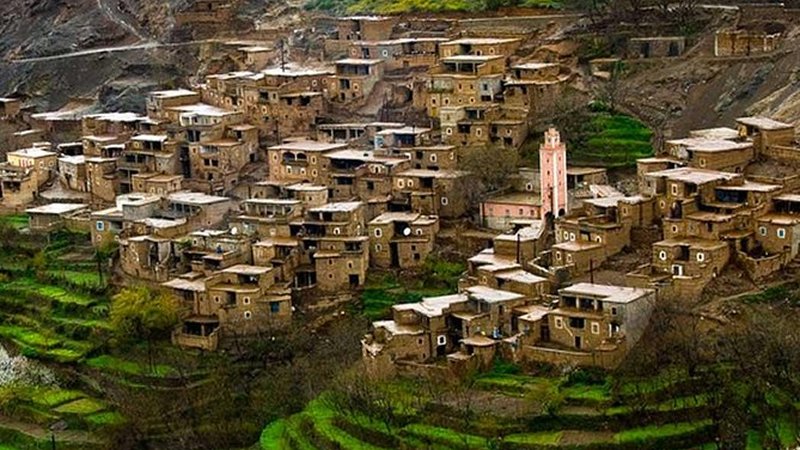
The fact that you can be standing in the middle of one of Africa’s great mountain ranges less than an hour after leaving the Marrakech medina is one of this city’s most remarkable advantages. A day trip into the Atlas Mountains is one of the best decisions you can make during your visit.
The Ourika Valley is the most popular and accessible option — a stunning green valley carved by a rushing river, lined with Berber villages, terraced gardens, and small waterfalls. Imlil is the gateway village for serious trekkers heading toward Jebel Toubkal, North Africa’s highest peak at 4,167 meters, and is beautiful even without a hiking agenda.
Both destinations offer a genuinely different side of Morocco — quieter, cooler, greener, and deeply connected to Berber culture and tradition.
What to know before you visit:
- Hire a private driver for the day rather than joining a large tour group
- The Ourika Valley is best in spring when the blossom is out C
- arry layers — mountain temperatures are significantly cooler than Marrakech
- Local Berber restaurants in the valley serve excellent tagine lunches
- The drive itself through the foothills is beautiful and worth enjoying slowly
13. Taste Everything at the Night Market
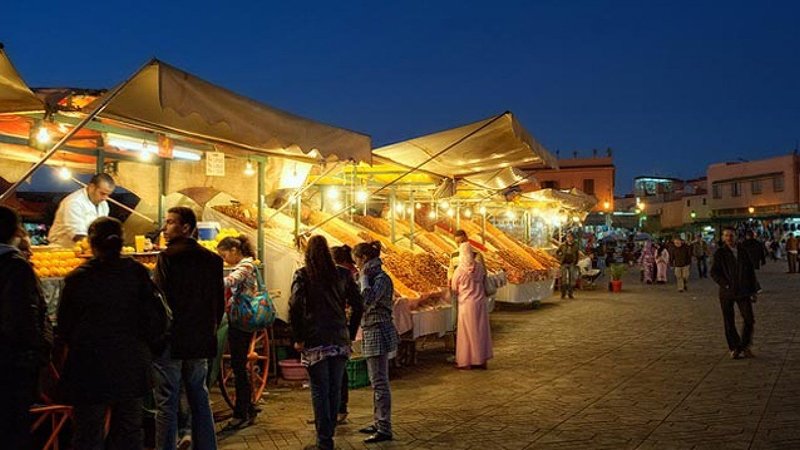
Every evening without fail, as darkness falls over Jemaa el-Fnaa, one of the world’s most spectacular open-air food markets comes to life. Dozens of numbered stalls appear in the center of the square, each with its enthusiastic tout, its handwritten menu board, and its enormous pots bubbling over open flames.
The food is varied, generous, and genuinely delicious. Mechoui — slow-roasted whole lamb carved fresh from the carcass — is the star of the show. Merguez sausages sizzle on charcoal grills alongside tagines, harira soup, fried squid, and great mounds of fluffy couscous. At the edges of the square, vendors sell freshly fried doughnuts, honey-drenched chebakia pastries, and cold orange juice for just a few dirhams.
Eating at the night market is not just a meal — it is one of the great communal dining experiences anywhere in the world.
What to know before you visit:
- Always check the menu board and confirm prices before sitting down
- Stalls 14 and 32 are consistently recommended by locals for the best grilled meats
- Orange juice stalls at the square edges are excellent value — around 4 dirhams a glass
- The market runs every night of the year regardless of weather
- Eat early (around 7pm) to avoid the biggest crowds and longest queues
14. Visit the Koutoubia Mosque and Gardens
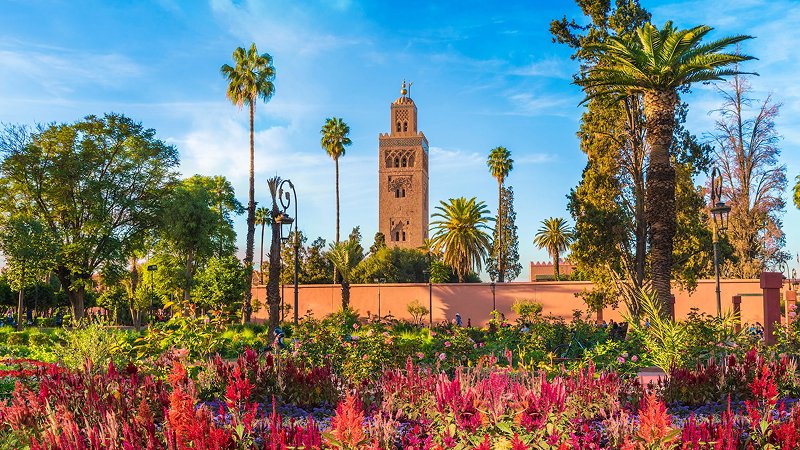
The Koutoubia Mosque is the most iconic landmark on the Marrakech skyline and one of the architectural masterpieces of the medieval Islamic world. Its 70-meter minaret, built in the 12th century, was so perfectly designed that it directly inspired the Giralda tower in Seville and the Hassan Tower in Rabat — two of the most famous structures in the entire Mediterranean world.
Non-Muslim visitors cannot enter the mosque, but the surrounding Koutoubia Gardens are free, beautiful, and genuinely worth visiting. Well-maintained lawns, fragrant rose bushes, orange trees, and fountains create a calm, shaded retreat just minutes from the intensity of Jemaa el-Fnaa.
At dusk the mosque is at its most powerful — the minaret illuminated against the darkening sky, the call to prayer rising above the rooftops. It is one of those sounds and sights that defines Marrakech completely.
What to know before you visit:
- The gardens are free to enter and open throughout the day
- Visit at dusk for the most atmospheric and beautiful experience
- The minaret is best photographed from the gardens in the late afternoon light
- The gardens are a perfect spot to rest and decompress after a busy day
- Non-Muslims may not enter the mosque itself — respect this at all times
15. Stay in a Traditional Riad
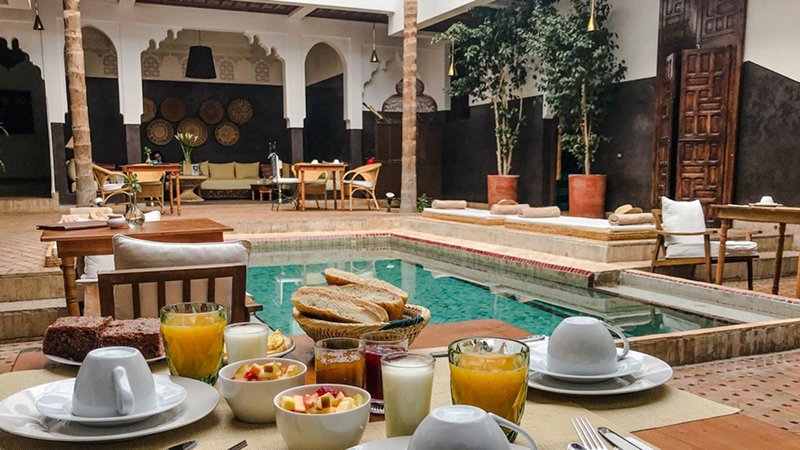
Staying in a riad is one of the defining experiences of any trip to Marrakech — not just accommodation, but a complete immersion into the architecture, culture, and hospitality of the city. It shapes the entire texture of your visit in a way that no conventional hotel ever could.
From the street, riads reveal nothing — a plain door in a blank medina wall. Step through and the transformation is total. A central courtyard with a tiled fountain, orange trees, carved plasterwork, and a rooftop terrace with sweeping medina views. The level of personal hospitality you receive in a well-run riad is extraordinary and deeply Moroccan.
In 2026 the riad scene covers every budget — from beautiful budget options to some of the finest hotels in the world.
What to know before you book:
- Book directly through the riad’s website for the best rates and personal service
- Budget picks: Riad Dar Zellige and Riad Zinoun offer great character at low prices
- Mid-range picks: El Fenn and Riad BE Marrakech are stylish and beautifully run
- Luxury picks: La Mamounia and the Royal Mansour are world-class in every sense
- Stay in the medina for the most authentic and centrally located experience
Perfect 3-Day Marrakech Itinerary for 2026
Day 1 — The Medina: Morning at Jemaa el-Fnaa, explore the souks, visit Ben Youssef Madrasa, lunch at Café des Épices, afternoon at Bahia Palace and Saadian Tombs, evening at the night market.
Day 2 — Gardens, Culture and Wellness: Morning at Majorelle Garden and YSL Museum, lunch in Gueliz, afternoon at El Badi Palace ruins, traditional hammam, sunset rooftop drinks at Nomad.
Day 3 — The Mountains: Full day private car trip to the Atlas Mountains and Ourika Valley, Berber village lunch, back to Marrakech for a final sunset from your riad rooftop.
Final Thoughts
Marrakech is a city that rewards curiosity. The more you wander, the more you discover — a hidden courtyard behind an unmarked door, a rooftop terrace with a view that stops you in your tracks, a conversation with a carpet weaver who has been perfecting his craft for forty years.
These 15 things to do in Marrakech will give you an outstanding foundation for your trip. But leave room for the unexpected. Some of the greatest experiences this city offers are the ones you never planned for.
Have you visited Marrakech? We would love to hear about your favorite moments in the comments below. And if you found this guide helpful, share it with someone who needs a little Marrakech magic in their life.