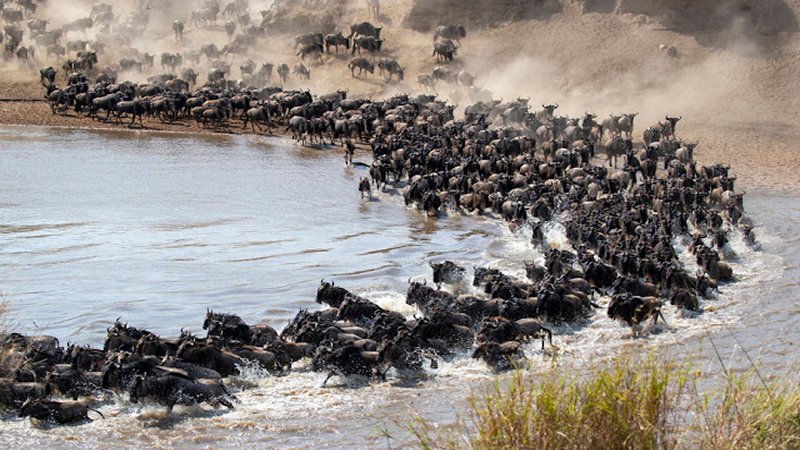
The Great Wildebeest Migration is often called the greatest wildlife spectacle on the planet. Each year, more than 1.5 million wildebeest, along with hundreds of thousands of zebras and gazelles, travel across the vast plains between Tanzania and Kenya in one of nature’s most powerful and awe-inspiring journeys.
The migration reaches its most dramatic and breathtaking moment in the world-famous Maasai Mara National Reserve in Kenya, where massive herds bravely cross crocodile-filled rivers while some of Africa’s most fearsome predators — lions, cheetahs, hyenas, and leopards — wait patiently on the banks for their opportunity.
For wildlife lovers, photographers, and adventure travelers from around the world, witnessing this extraordinary natural event is a truly unforgettable, once-in-a-lifetime experience. If you are planning an African safari and want to witness the raw power of nature up close, this complete guide covers everything you need to know about the Great Wildebeest Migration 2025 — from the best time to visit, top viewing spots, safari costs, and expert travel tips to make your Kenya safari truly extraordinary.
What Is the Great Wildebeest Migration?
The Great Wildebeest Migration 2025 is without question the largest overland animal movement on the entire planet. Every single year, approximately 1.5 million wildebeest, 400,000 zebras, and 200,000 Thomson’s gazelles complete a massive circular journey of around 1,800 miles across Tanzania’s Serengeti and Kenya’s Maasai Mara ecosystem, driven purely by rainfall patterns and the search for fresh grazing land and water.
This is not a single one-time wildlife event. The Great Wildebeest Migration is a continuous, year-round cycle that never truly stops. However, the most dramatic, most photographed, and most searched moment of the entire Kenya safari experience is the Mara River crossing, when enormous herds of wildebeest plunge into the crocodile-infested Mara River between July and October each year.
The wildebeest migration is officially listed as one of the Seven Natural Wonders of Africa and is universally recognized as one of the greatest Kenya wildlife experiences available to any traveler on earth. If you are searching for the best African safari destination in 2025, the Maasai Mara during the Great Wildebeest Migration is simply unmatched.
The migration involves:
- Over 1.5 million wildebeest
- Nearly 300,000 zebras
- Thousands of gazelles
Why Kenya Is the Best Place to Watch the Migration
While the migration covers both Tanzania and Kenya, the Maasai Mara in Kenya is widely regarded as the best place in the world to witness the river crossings. Here is why:
The Mara River crossings are the most dramatic and photogenic moments of the entire migration cycle. Thousands of wildebeest leap into the fast-flowing river, battling strong currents and lurking Nile crocodiles, while lions wait on the banks. It is raw, powerful, and utterly unforgettable.
Kenya’s Maasai Mara also offers exceptional year-round game viewing. Even outside the peak migration months, the Mara is home to the Big Five — lion, leopard, elephant, buffalo, and rhino — making it one of the finest wildlife destinations in all of Africa.
Additionally, Kenya’s tourism infrastructure around the Maasai Mara is world-class, with luxury safari camps, budget tented camps, experienced guides, and excellent access via small airstrips from Nairobi.
Best Time to See the Great Wildebeest Migration in Kenya 2025
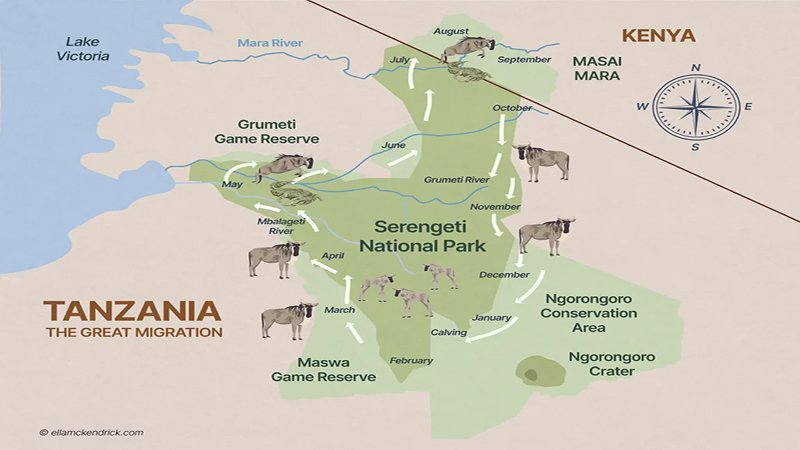
The best time to witness the Great Wildebeest Migration 2025 in Kenya is between July and October, when the herds reach the Masai Mara region.
January to March — Calving Season in Tanzania
During these months, the Great Wildebeest Migration herds are in the southern Serengeti in Tanzania, where the spectacular calving season takes place. Around 400,000 to 500,000 wildebeest calves are born in a remarkably short window of just a few weeks. This is not the best time to visit Kenya for the migration specifically, but it remains an incredible time to visit Tanzania’s Serengeti for wildlife viewing.
April to May — Herds Moving North
The wildebeest herds begin their long northward trek through the central Serengeti toward Kenya. This period coincides with the long rains across East Africa, making travel conditions occasionally challenging. However, the landscape turns lush and beautifully green, and there are significantly fewer tourists competing for the best Kenya safari spots.
June — Migration Arrives at the Maasai Mara
By June, the leading edge of the Great Wildebeest Migration begins arriving at the Maasai Mara in Kenya. Game viewing becomes increasingly exciting with each passing day, and early Mara River crossings can occasionally be spotted. June is an excellent month to book your Kenya safari as it offers great wildlife action ahead of the peak season crowds and higher prices.
July to August — Peak River Crossings Begin
This is when the Great Wildebeest Migration action in Kenya reaches its thrilling peak. The massive wildebeest herds begin crossing the Mara River in large numbers, and the incredible drama of predator and prey plays out daily across the plains. July and August are the most popular months for Kenya safari 2025, and Maasai Mara camps fill up extremely quickly. Booking well in advance is absolutely essential.
September to October — The Very Best Months for the Migration
September and October are widely considered by experienced safari guides to be the absolute best months to witness the Great Wildebeest Migration in Kenya. The Mara River crossings are at their most frequent and intense, the herds are at their largest, and predator activity — lions, cheetahs, leopards, and enormous Nile crocodiles — is at its highest concentration anywhere in Africa. If you can plan only one Kenya safari in your lifetime, target September or October for the ultimate wildebeest migration experience.
November to December — Migration Returns South
As the short rains arrive across East Africa, the wildebeest herds begin their southward return journey back toward Tanzania. By December, the majority of the herds have departed the Maasai Mara. However, Kenya wildlife viewing remains outstanding throughout this period with excellent Big Five sightings continuing across the reserve.
Top Locations in Kenya to Watch the Migration
1. Maasai Mara National Reserve — The Heart of the Kenya Safari Experience
The Maasai Mara National Reserve is the undisputed crown jewel of Kenya safari destinations and the absolute heart of the Great Wildebeest Migration 2025 experience. Covering approximately 1,500 square kilometers of open savannah, the Mara is home to an extraordinarily dense and diverse population of African wildlife. The Mara Triangle, located in the western section of the reserve, is particularly renowned for spectacular wildebeest river crossings and is managed separately with strict vehicle limits that ensure a far more exclusive and premium game viewing experience.
Highlights include:
- Massive wildebeest herds
- Lion and cheetah sightings
- Stunning African sunsets
- Luxury safari camps
2. Mara North Conservancy — Exclusive Kenya Safari Without the Crowds
Located directly on the northern boundary of the Maasai Mara, Mara North is a premier private conservancy offering exclusive, completely crowd-free game viewing during the Great Wildebeest Migration. Only guests staying at lodges within the conservancy are permitted entry, making it one of the most intimate and luxurious ways to experience the Kenya wildebeest migration up close.
3. Naboisho Conservancy — Best for Luxury Kenya Safari
Naboisho is another outstanding private conservancy directly adjacent to the Maasai Mara ecosystem. With very low vehicle density and off-road driving fully permitted, it delivers a genuinely exclusive Kenya safari experience with exceptional lion and cheetah sightings year-round. Night game drives are also permitted here, which are strictly prohibited inside the main Maasai Mara National Reserve.
4. Olare Motorogi Conservancy — Big Cat Capital of the Maasai Mara
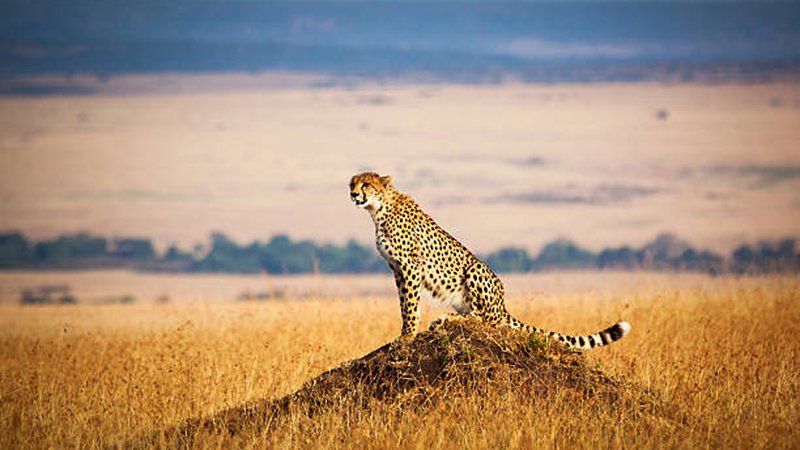
Olare Motorogi is widely regarded by wildlife experts and professional photographers as having some of the finest big cat populations anywhere in the entire Maasai Mara ecosystem. This premium conservancy is particularly famous for its resident leopard population and well-known cheetah families, all set against the backdrop of the annual wildebeest migration herds passing through.
5. Mara River Crossing Points — Where the Magic Happens
The main Mara River crossing points most frequently used by the wildebeest migration herds include crossings near the Mara Serena Safari Lodge, the famous Mara Triangle crossings, and Lookout Hill. Experienced Kenya safari guides know these crossing points intimately and will position your vehicle perfectly for the most dramatic and photogenic views of the Great Wildebeest Migration.
How to Get to the Maasai Mara for Your Kenya Safari
By Air from Nairobi — Fastest and Most Convenient The most popular, convenient, and widely recommended option for Kenya safari travelers is to fly from Wilson Airport in Nairobi to one of several small grass airstrips located within and around the Maasai Mara, including Keekorok, Ol Kiombo, and Mara Serena airstrips. Flight time is approximately 45 minutes to one hour. Airlines including SafariLink, AirKenya, and Fly540 operate scheduled daily flights throughout the year. Flying is the strongly preferred option for most international visitors planning a Great Wildebeest Migration safari in Kenya.
By Road from Nairobi — Budget-Friendly Kenya Safari Option For travelers on a tighter Kenya safari budget, driving to the Maasai Mara is a perfectly viable option. The journey takes approximately 4 to 5 hours from Nairobi, covering around 270 kilometers via the B3 highway through Narok town. Roads can be rough and challenging in certain sections, particularly during the rainy season, so a reliable 4WD vehicle is strongly recommended for the journey.
What to Expect on a Kenya Safari
Game Drives
The core and most essential activity of any Kenya safari experience is the guided game drive. Conducted in open-sided 4WD safari vehicles with an experienced professional guide, you will venture out into the Maasai Mara in the early morning and again in the late afternoon, precisely when Kenya wildlife activity reaches its daily peak. Professional Kenya safari guides are highly skilled at tracking animals, interpreting animal behavior, and positioning the vehicle for the most optimal wildlife sightings and photography opportunities.
Hot Air Balloon Safaris
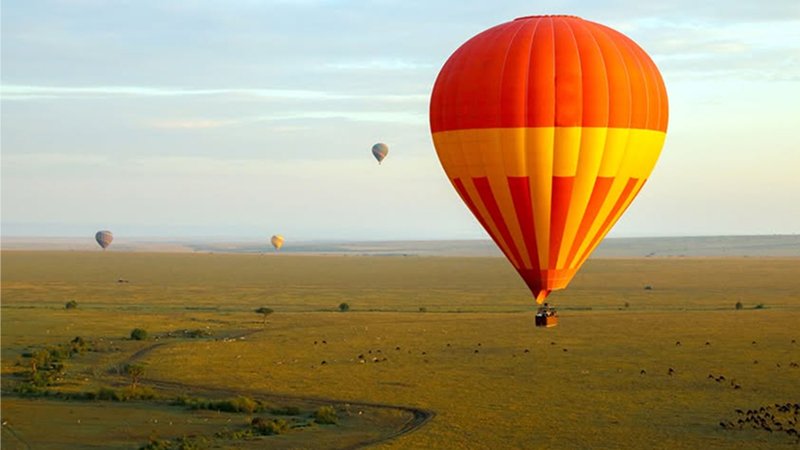
One of the most magical and deeply memorable experiences available during a Great Wildebeest Migration Kenya safari is a hot air balloon flight at dawn over the Maasai Mara. Drifting silently above the golden plains as the African sun rises, with massive herds of wildebeest and zebra stretching to the horizon far below, is a profoundly moving and utterly unique experience. Balloon safaris typically last approximately one hour and conclude with a traditional champagne bush breakfast. Prices currently range from $450 to $600 per person and must be booked in advance through your safari lodge or operator.
Walking Safaris
Several top-rated lodges and private conservancies within the Maasai Mara ecosystem offer guided walking safaris accompanied by armed Kenya Wildlife Service rangers and experienced Maasai guides. Walking through the African bush on foot, at ground level and in complete silence, provides an entirely different and profoundly immersive perspective on the Kenya landscape and its incredible wildlife that no game drive vehicle can replicate.
Cultural Maasai Village Visits
The Maasai Mara takes its historic name from the Maasai people, who have inhabited and protected these extraordinary lands for many centuries. Many Kenya safari camps and lodges offer guided visits to authentic traditional Maasai villages, where you can learn directly about Maasai culture, age-old customs, traditional music, warrior dances, and intricate beadwork — adding a deeply rich cultural dimension to your Kenya safari 2025 experience.
How Much Does a Kenya Safari Cost?
Kenya safari costs vary enormously depending on accommodation type, travel season, and the level of exclusivity you choose.
Budget Safari — $100 to $250 per person per night Budget options include basic tented camps and budget lodges with shared facilities. Game drives are included, and the wildlife experience is essentially the same as more expensive options. Ideal for backpackers and young travelers.
Mid-Range Safari — $250 to $600 per person per night Mid-range options offer comfortable en-suite tented camps or lodges with excellent food, private facilities, and professional guiding. This is the sweet spot for most travelers seeking a high-quality experience without the top-end price tag.
Luxury Safari — $600 to $2,500+ per person per night Luxury and ultra-luxury safari camps in the private conservancies offer exclusive, intimate experiences with exceptional guiding, gourmet dining, private plunge pools, and limited guest numbers. Prices at the very top end include all meals, drinks, and game activities.
Park Fees Non-resident entry fees for the Maasai Mara National Reserve are currently around $80 per person per day for adults. Private conservancy fees vary and are typically included in lodge rates.
Why the Great Wildebeest Migration Should Be on Your Bucket List
There are very few experiences in life that compare to witnessing the raw power and scale of the Great Wildebeest Migration in Kenya. Standing at the banks of the Mara River as thousands of wildebeest launch themselves into the churning water, with crocodiles surging and dust rising against a golden African sky, is something that stays with you forever.
Kenya is a destination that rewards every type of traveler — from the budget backpacker seeking adventure to the luxury traveler looking for an exclusive, once-in-a-lifetime experience. The Maasai Mara is not simply a national park. It is one of the last great wild places on earth, and the wildebeest migration is nature at its most powerful, most dramatic, and most honest.
In 2025, give yourself the gift of witnessing it firsthand. You will never look at the world the same way again.
Final Thoughts — Start Planning Your Kenya Safari Today
The Great Wildebeest Migration waits for no one. Peak safari camps in the Maasai Mara book up 6 to 12 months in advance, particularly for July, August, September, and October. If you are serious about experiencing the migration in 2025, now is the time to start planning.
Research reputable Kenya safari operators, compare lodge options across different price points, check visa requirements for your country, speak to your travel health clinic, and start building the itinerary of a lifetime.
Kenya is calling. The wildebeest are already on the move.