
Iceland sits on top of some of the most accessible glaciers in the world. Roughly 11% of the country’s entire surface is covered in glacial ice, and several of these glaciers are within a few hours’ drive of Reykjavík. That accessibility is what makes Iceland the single best place on earth to have a genuine glacier experience — not through glass, not from a viewing platform, but on foot, crampons biting into ancient ice, with walls of blue towering around you.
But “glacier hiking” and “ice cave tours” are terms that get thrown around loosely, and the reality of each experience is quite different. This guide breaks down exactly what both involve, what no travel blog prepares you for, and how to make sure you come away with the experience of a lifetime rather than a story about how cold and disappointed you were.
The Two Main Glacier Experiences
Before diving in, it’s worth separating the two experiences most visitors have:
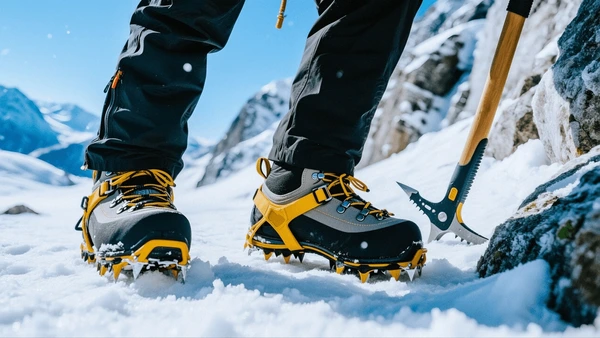
Glacier hiking means strapping crampons onto your boots and walking across the surface of a glacier. You’ll see crevasses, ice formations, moulins (vertical tunnels carved by meltwater), and sweeping views across the ice field. This is done in all seasons.
Ice cave tours take you inside the glacier itself — into naturally formed tunnels and chambers carved by meltwater beneath the ice. The walls glow blue. The silence is total. These tours are typically only available from November through March, when the ice is frozen solid enough to be safe.
Many visitors do both on the same trip. If you can, you should.
What Glacier Hiking Actually Feels Like
The First Steps on Ice
Nothing quite prepares you for the moment you step from rock onto glacier. The crampons grip the ice with a satisfying crunch, and your brain — wired to expect slipping — takes a few minutes to trust that you’re actually stable. Most people spend the first ten minutes walking with exaggerated caution, arms slightly out, eyes fixed on their feet.
Then the guide tells you to look up.
The view from the surface of a glacier is one of the most disorienting and beautiful things you will ever see. In every direction: white and grey and blue ice stretching to the horizon, broken by crevasses that glow turquoise at their depths. The scale is incomprehensible until you’re standing inside it.
The Ice Is Alive
This is the thing no photo communicates. A glacier is not static. It moves — slowly, constantly — and the sounds it makes are extraordinary. You’ll hear deep groans and cracks from somewhere beneath you as the ice shifts. You’ll see rivers of meltwater cutting channels through the surface, even in winter. You’ll notice the ice is layered — dark bands of volcanic ash from eruptions hundreds of years ago, trapped in the glacier like rings in a tree trunk.
Your guide will point these out and explain what they mean. Pay attention. It transforms what could be a simple walk into something genuinely geological, genuinely ancient.
The Physical Reality
Glacier hiking is more physically demanding than it looks in photos. The surface is uneven — a landscape of ridges, dips, and ice formations that requires constant attention underfoot. The crampons add weight to each step. At altitude, even moderate exertion leaves you breathing harder than expected.
Most guided surface hikes last 2–3 hours and cover 3–5 km. That’s not a long distance, but on glacier terrain with full gear, it’s a solid workout. People with reasonable fitness handle it comfortably. The biggest challenge is usually the cold, not the distance.
What Ice Cave Tours Actually Feel Like
The Entrance
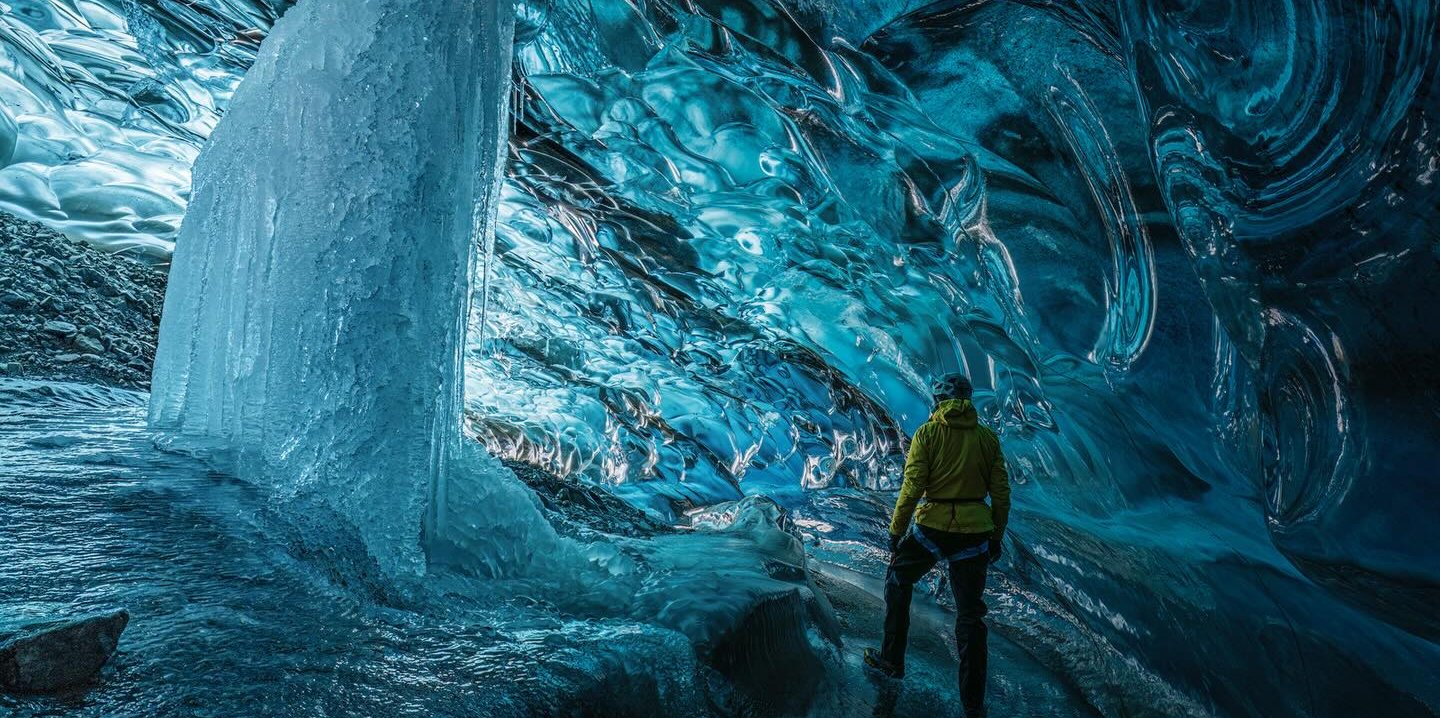
Ice cave entrances are often surprisingly small — a low, narrow opening in the side of a glacial wall that you duck through before the cave opens up around you. That transition, from grey Icelandic daylight into the blue interior of the glacier, is one of the most startling sensory experiences travel has to offer.
The blue is the first thing that overwhelms you. It comes from the way glacial ice absorbs all wavelengths of light except blue, which it scatters back. The deeper the ice — the more compressed and ancient it is — the more intensely blue it glows. In some chambers, the walls emit a light so vivid it seems artificial, like someone installed LEDs behind the ice.
The Silence
The second thing you notice is the silence. Outside, Iceland is a windy, dynamic, noisy landscape. Inside the glacier, the ice absorbs almost all sound. Your own breathing becomes loud. Footsteps echo softly. Voices carry strangely. Many visitors describe feeling a profound stillness that is rare in modern life — the silence of something that has existed for thousands of years, indifferent to everything happening above it.
The Cold
Ice caves maintain a constant temperature just below freezing. It is cold, but it is a still cold — no wind, no moisture in the same way as outside. Most people find it more manageable than the windswept surface. That said, the cold is relentless and seeps in slowly. By the end of a 1.5–2 hour cave tour, you will feel it in your fingers and toes regardless of how well you dressed.
What You’ll Actually See Inside
Depending on the cave and the season, you may encounter:
- Cathedral chambers — vast open spaces where the ceiling soars and the blue walls glow on all sides
- Moulins — vertical shafts drilled through the ice by meltwater, sometimes dropping 30–40 metres straight down
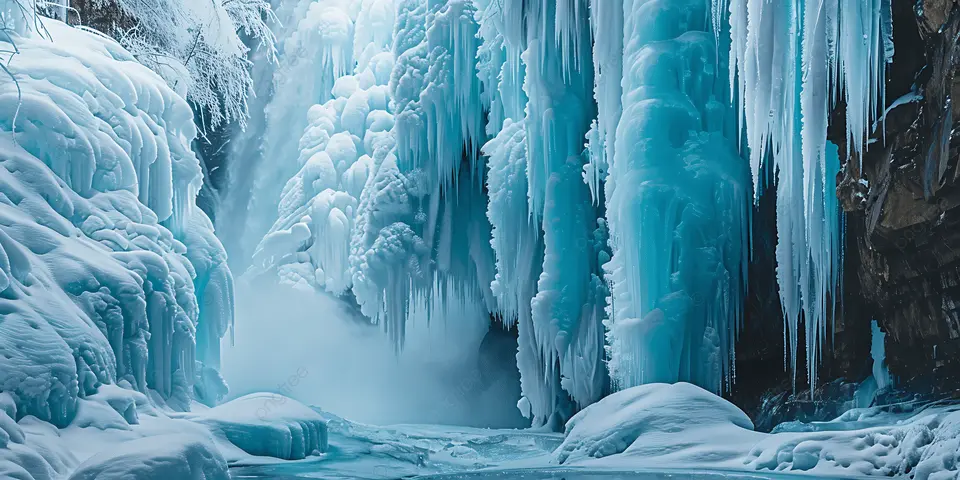
- Ice waterfalls — frozen mid-flow, captured at the moment meltwater stopped moving
- Volcanic ash layers — dark horizontal bands running through the ice, each representing a specific eruption in Iceland’s history
- Crystal formations — ice that has refrozen in intricate patterns on cave walls and ceilings
No two ice caves are identical, and no cave looks the same from one season to the next. The glacier reshapes them constantly.
Where to Go: The Best Glaciers in Iceland
Vatnajökull — The Giant
Vatnajökull is Europe’s largest glacier by volume and the most visited for ice cave tours. The crystal ice caves near Jökulsárlón glacial lagoon are world-famous, and for good reason — the blue ice here is among the most vivid and photogenic anywhere on earth. Tours operate from the Jökulsárlón area, around 4.5 hours from Reykjavík on the Ring Road.
Best for: Ice cave tours, maximum wow factor, dramatic photography.
Sólheimajökull — The Accessible One
Sólheimajökull is an outlet glacier of Mýrdalsjökull, about 2.5 hours from Reykjavík on the South Coast. It’s the most popular glacier for surface hiking due to its accessibility and the dramatic contrast between the grey ash-streaked ice and the black volcanic landscape around it. It is also, sadly, one of the glaciers retreating most visibly — markers show how far the ice has pulled back over the past decades, which adds a sobering dimension to any visit.
Best for: Glacier hiking, day trips from Reykjavík, first-time glacier experiences.
Snæfellsjökull — The Mythic One
Sitting at the tip of the Snæfellsnes Peninsula, Snæfellsjökull is the glacier Jules Verne chose as the entrance to the centre of the earth in his 1864 novel. It crowns a dormant volcano and on clear days is visible from Reykjavík, 120 km away. Hiking here carries a weight of mythology that the other glaciers lack.
Best for: Adventure hikers, literary travellers, those who want a glacier experience combined with dramatic coastal scenery.
Langjökull — The Ice Tunnel
Langjökull offers something unique: a man-made ice tunnel carved into the glacier’s interior, accessible year-round. It’s not a natural ice cave, and purists will note the difference, but it’s a remarkable feat of engineering and genuinely stunning to walk through. It’s also accessible to visitors who can’t manage the physical demands of natural ice cave tours.
Best for: Families, year-round visits, accessible glacier interiors.
What to Wear: The Honest Packing List
Most tour operators provide crampons, helmets, and harnesses. What they don’t always provide adequately is warmth. Here’s what you actually need:
- Thermal base layer, top and bottom — merino wool is ideal
- Fleece mid-layer — don’t skip this
- Waterproof and windproof outer shell — the glacier surface is wet and wind-exposed
- Waterproof hiking boots with ankle support — trainers are not appropriate
- Thick wool or synthetic socks — at least one spare pair
- Insulated gloves — not fashion gloves, proper insulated ones
- Beanie and neck gaiter — you’ll use both
- Sunglasses or goggles — ice reflects UV intensely; snow blindness is real
If you don’t have the right gear, rent it in Reykjavík or from your tour operator before departure. Arriving underprepared is the single most common reason visitors have a miserable glacier experience.
Choosing a Tour: What to Look For
Not all glacier tours are equal. Here’s what separates a good one from a great one:
Small group size matters enormously. In a group of 6–8, your guide can take you to spots larger groups can’t reach, give you real information, and ensure genuine safety. Groups of 20+ are common on budget tours — you’ll spend most of your time waiting and see a fraction of what’s possible.
Guide knowledge transforms the experience. The difference between a guide who points at blue ice and says “pretty” and one who explains the physics of glacial compression, reads the ash layers like a history book, and knows where the most extraordinary formations are hiding is the difference between a nice walk and a profound experience.
Reputable operators for ice caves: Local Guide of Vatnajökull, Glacier Guides, and Arctic Adventures are consistently well-reviewed. For Sólheimajökull surface hikes, Midgard Adventure and Troll Expeditions come highly recommended.
Cost range: Surface glacier hikes typically run ISK 9,000–14,000 (~$65–$100 USD). Natural ice cave tours run ISK 15,000–25,000 (~$110–$180 USD). Anything significantly cheaper warrants scrutiny.
When to Go
For ice caves: November through March only. The caves form when temperatures drop and meltwater freezes, and they are closed when spring warming makes them structurally unstable. Peak months for the most vivid blue ice are December and January.
For glacier hiking: Year-round, though summer offers longer daylight hours and the surreal experience of hiking in the midnight sun. Winter hikes have a dramatic, elemental quality that summer can’t replicate.
Book in advance: Ice cave tours in December and January sell out weeks ahead. Don’t assume you can book on arrival.
The Environmental Reality
Iceland’s glaciers are retreating. Sólheimajökull has lost over 1 km of length in the past 25 years. Snæfellsjökull has lost significant volume. Okjökull, once a glacier, was officially declared dead in 2019 — Iceland held a funeral for it.
Walking on a glacier in 2024 is walking on something that may not exist in its current form within your lifetime. That awareness colours the experience in ways that are worth sitting with. It makes the blue ice more beautiful and more heartbreaking simultaneously. It makes the silence inside the glacier feel more precious.
Go. Witness it. Understand what you’re seeing. And support operators who offset their environmental impact.
Final Thoughts: Nothing Else Feels Like This
Glacier hiking and ice cave exploration sit in a category of travel experiences that are genuinely impossible to replicate elsewhere. The blue, the silence, the cold, the scale, the ancientness of it — these things combine into something that stays with you long after the flight home.
You will be cold. You will be humbled by the scale. You may feel the strange, quiet grief of watching something irreplaceable in the process of disappearing.
You will also feel more alive than you have in years.
That’s what walking on ice actually feels like.