
Bhutanese cuisine is deeply connected to the country’s mountainous geography, Buddhist traditions, and agricultural lifestyle. Food in Bhutan is seasonal, locally sourced, and designed to provide warmth and energy in a cool climate. Chilies are considered a vegetable rather than a spice, cheese is a staple ingredient, and meals are typically simple yet full of strong, memorable flavors. For travelers, tasting local dishes is an essential part of understanding Bhutan’s culture. Below is a detailed guide to the most important traditional foods you should not miss.
Must-Try Dishes
- Ema Datshi (Chili and Cheese Stew)
- Kewa Datshi (Potato and Cheese)
- Shakam Paa (Dried Beef with Chilies)
- Jasha Maru (Spicy Chicken Stew)
- Phaksha Paa (Pork with Red Chilies)
- Red Rice
- Momos (Bhutanese Dumplings)
- Suja (Butter Tea)
- Ara (Traditional Alcoholic Beverage)
Ema Datshi (Chili and Cheese Stew)
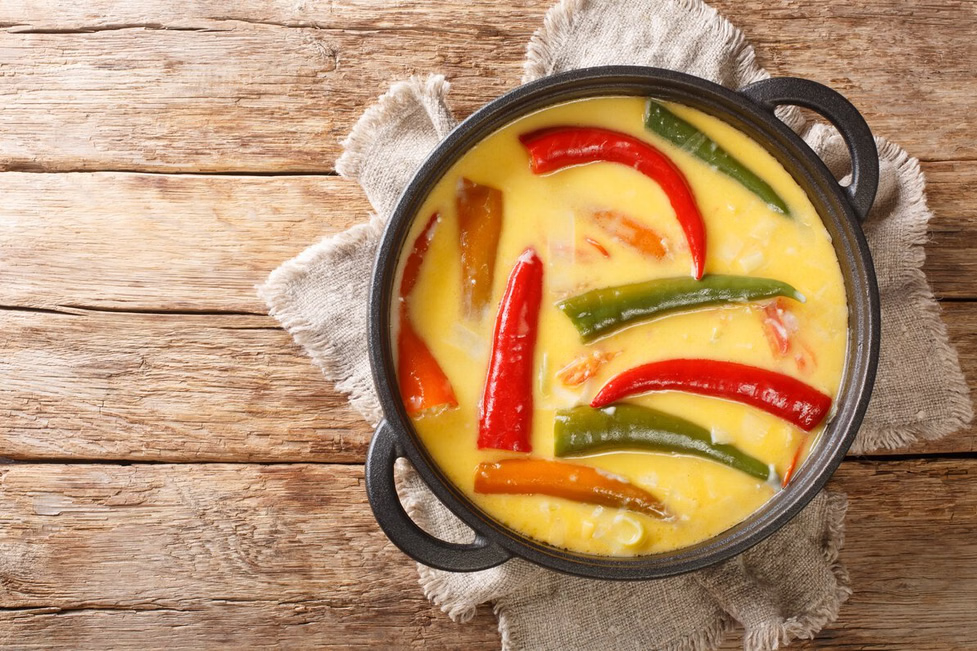
Ema Datshi is the heart of Bhutanese cuisine and is eaten almost daily in households across the country. The dish is made with large green or red chilies, sliced lengthwise, simmered in water with onions and Bhutanese cheese known as datshi.
The cheese is traditionally made from yak or cow’s milk, giving the dish a rich, slightly tangy flavor. Despite its simple ingredients, Ema Datshi is intensely spicy, creamy, and comforting.
It is usually served with red rice and often accompanied by other side dishes, forming the core of a traditional Bhutanese meal.
Kewa Datshi (Potato and Cheese)
Kewa Datshi is one of the most popular variations of datshi-based dishes and is especially loved by visitors.
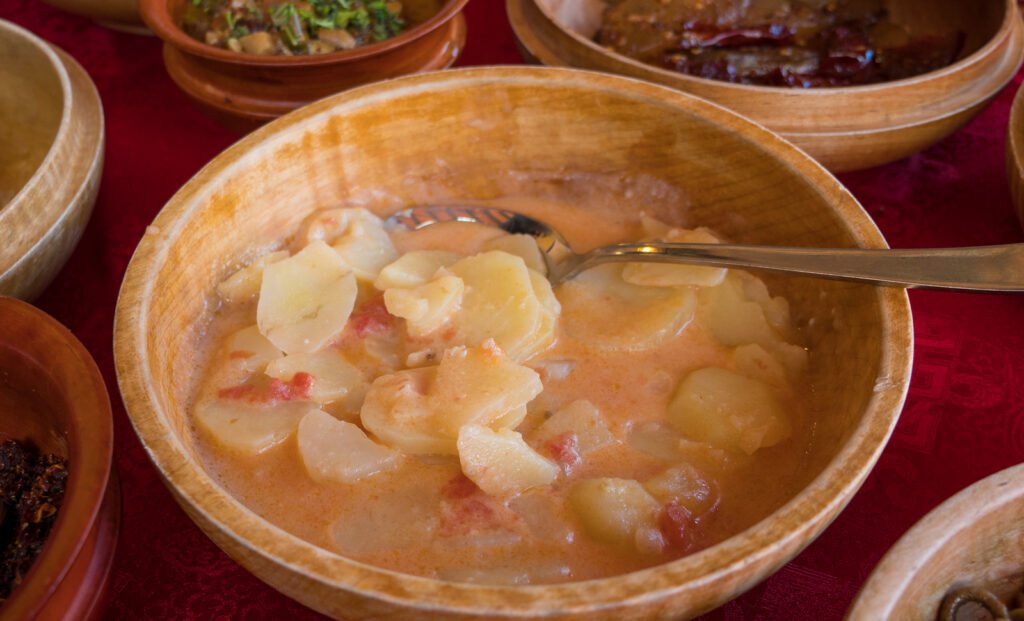
Thinly sliced potatoes are cooked until tender and then mixed with melted cheese and mild green chilies. Unlike Ema Datshi, this dish is less spicy and more creamy, making it suitable for those new to Bhutanese food.
The potatoes soak up the cheese sauce, creating a smooth and hearty texture. Kewa Datshi is commonly prepared at home and served during family meals and small gatherings.
Shakam Paa (Dried Beef with Chilies)
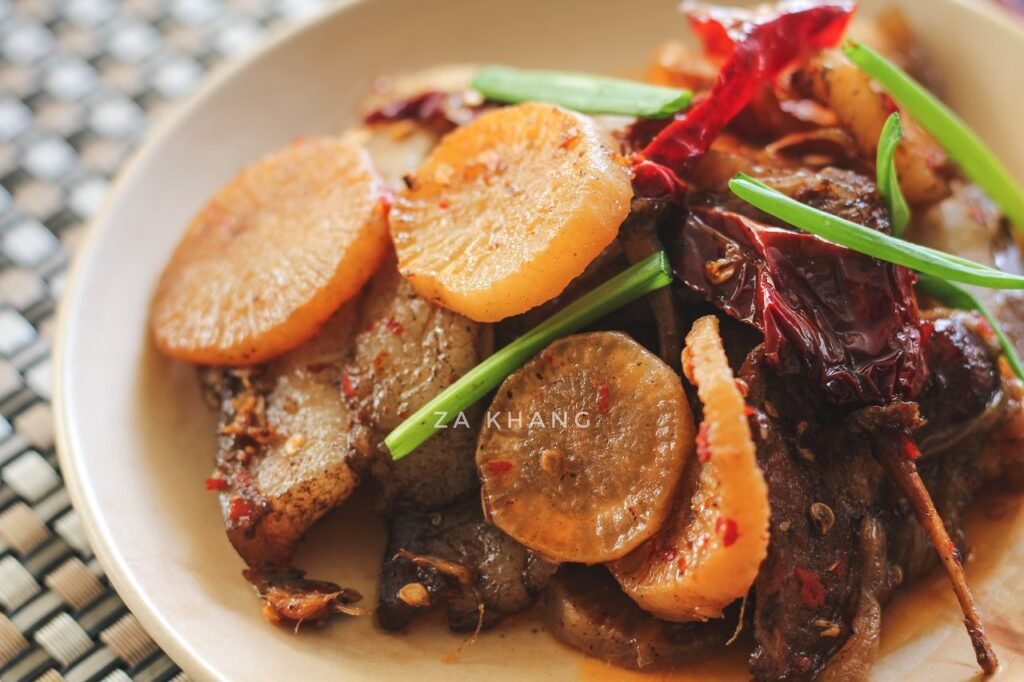
Shakam Paa showcases Bhutan’s traditional method of preserving meat by air-drying it in the sun. The dried beef is cut into strips and cooked with dried red chilies, radishes, or turnips.
This cooking process creates a deep, smoky flavor that fresh meat cannot replicate. Shakam Paa is usually stir-fried first and then simmered until tender. The dish is rich, spicy, and protein-packed, making it ideal for Bhutan’s cold climate. It is typically served with red rice and often enjoyed during winter months.
Jasha Maru (Spicy Chicken Stew)
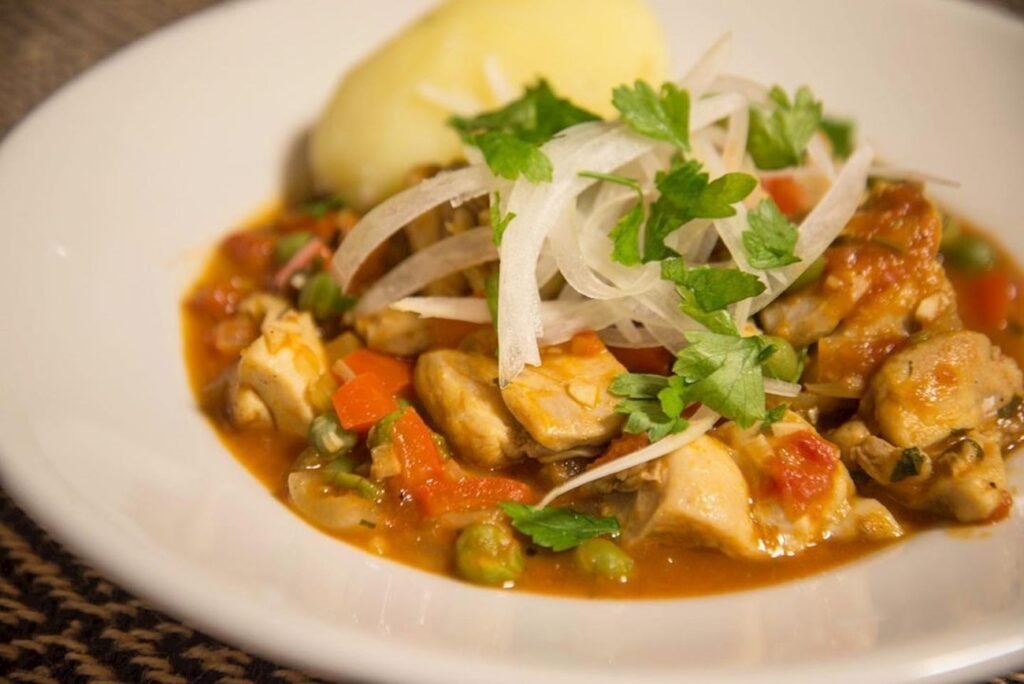
Jasha Maru is a beloved chicken dish found in homes and local restaurants throughout Bhutan. Small pieces of chicken are cooked with garlic, ginger, onions, tomatoes, and green chilies. Unlike creamy datshi dishes, Jasha Maru has a lighter broth with a strong balance of heat and freshness.
The tomatoes add a subtle tanginess, while the chilies bring warmth. This dish is commonly eaten during lunch or dinner and is considered a comfort food that represents everyday Bhutanese cooking.
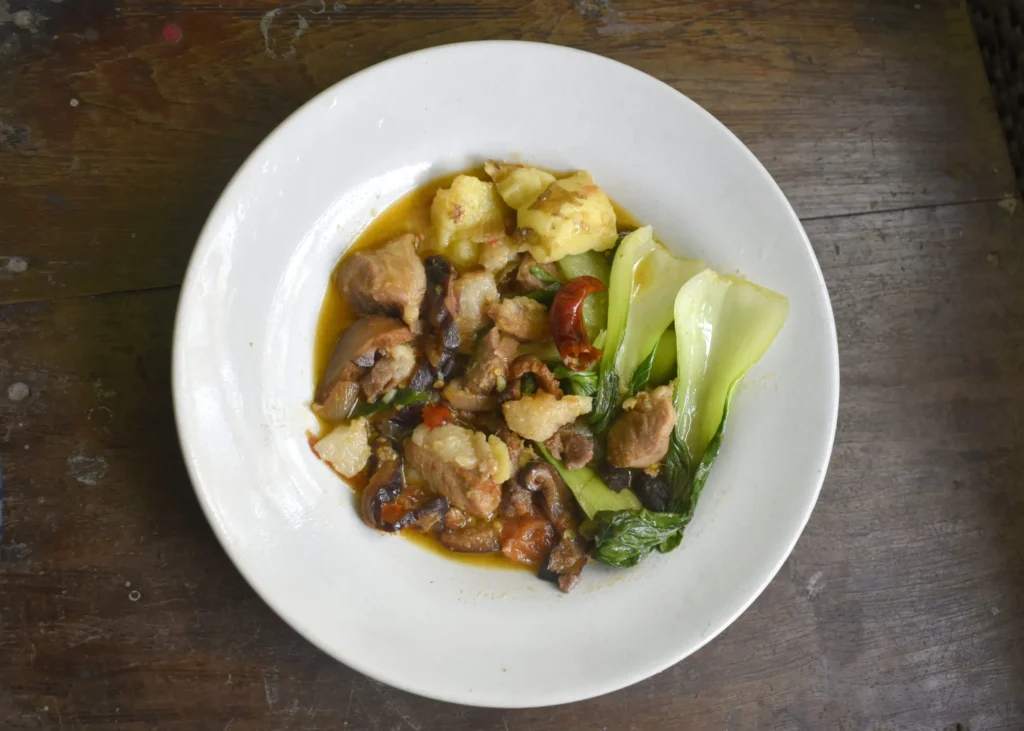
Phaksha Paa (Pork with Red Chilies)
Phaksha Paa is a traditional pork dish that highlights Bhutan’s fondness for bold, spicy flavors. The pork is often stir-fried or simmered with dried red chilies and sometimes combined with radishes or spinach.
In some regions, a small amount of fermented cheese or ginger is added for extra depth. The pork fat blends with the chilies to create a rich and satisfying dish. Phaksha Paa is especially popular in rural areas and is often served during festivals or family celebrations.
Red Rice
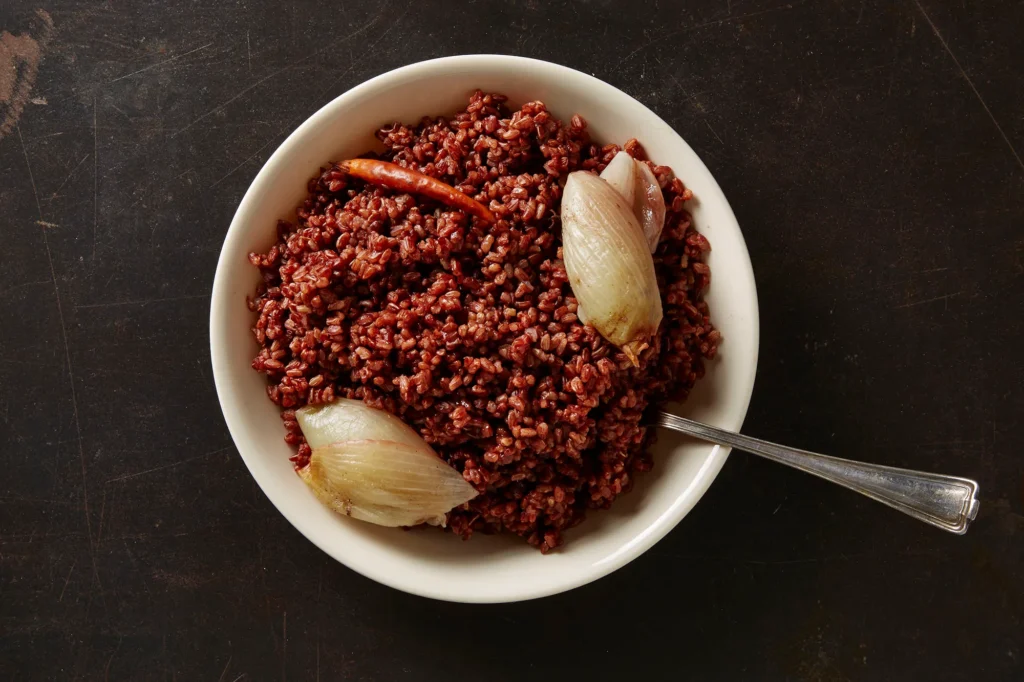
Red rice is the foundation of Bhutanese meals and is grown in the fertile valleys of the country. It has a distinctive reddish-brown color, nutty aroma, and slightly chewy texture.
Compared to white rice, red rice is more nutritious, containing higher levels of fiber and minerals. It pairs perfectly with spicy and cheesy dishes, helping balance strong flavors. Almost every Bhutanese meal includes red rice, making it an essential part of the country’s culinary identity.
Momos (Bhutanese Dumplings)
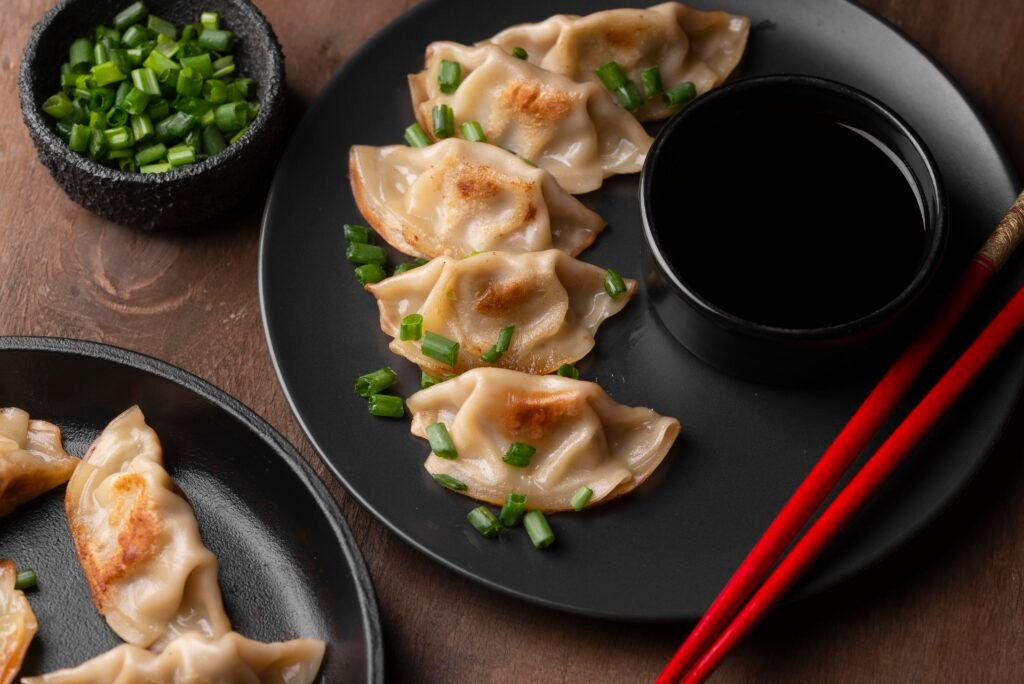
Momos are a favorite snack and street food in Bhutan, enjoyed by people of all ages. These dumplings are usually filled with minced vegetables, cheese, pork, or beef and then steamed or fried.
Bhutanese momos often include local cheese and green chilies, giving them a distinct flavor compared to other Himalayan versions. They are typically served with a fiery chili sauce called ezay, which adds an extra layer of heat. Momos are commonly eaten during social gatherings, festivals, and casual meals.
Suja (Butter Tea)
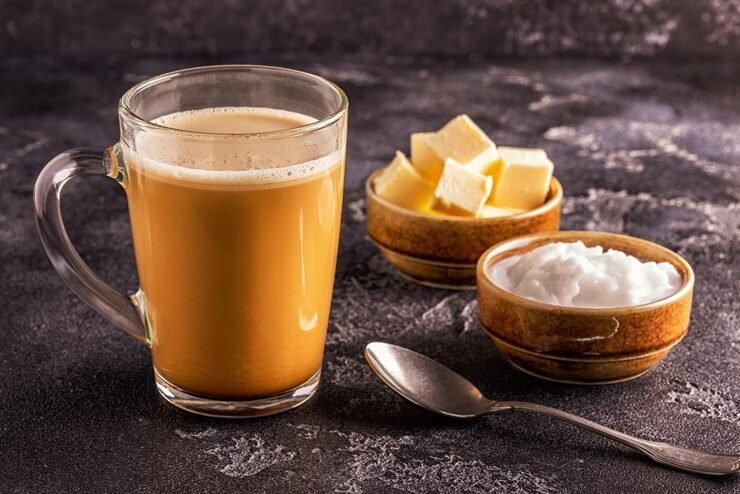
Suja, or butter tea, is a traditional beverage deeply rooted in Bhutanese daily life. Made by churning tea leaves with butter, salt, and water, Suja is thick, savory, and warming. It provides energy and helps people stay warm in high-altitude regions.
While the taste may be unusual for first-time visitors, Suja is an important symbol of hospitality and is often served to guests upon arrival at a home or monastery.
Ara (Traditional Alcoholic Beverage)
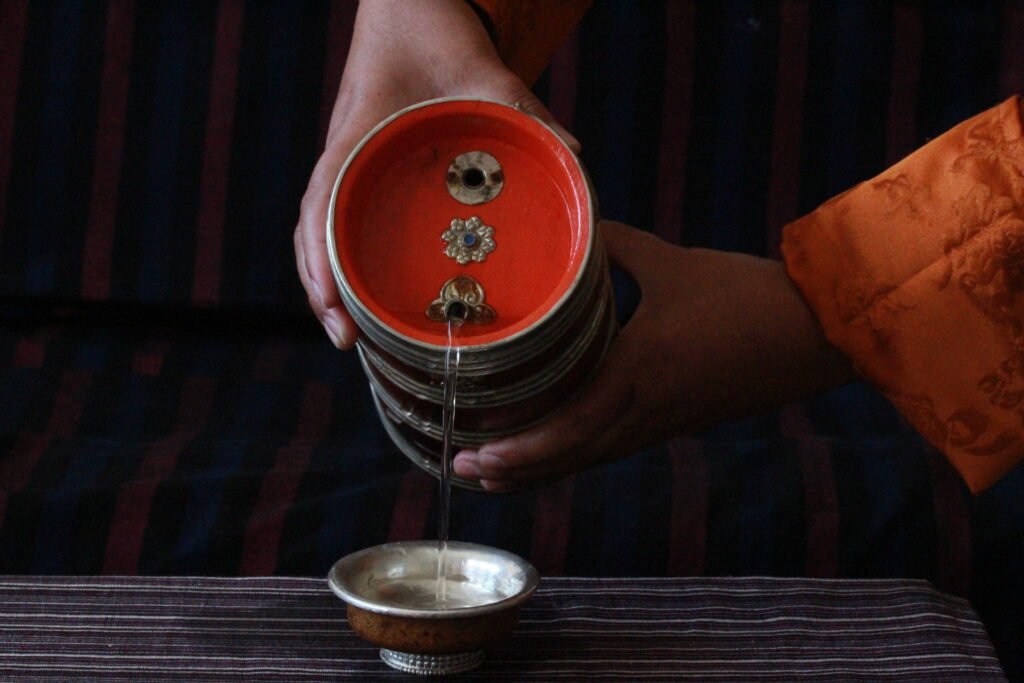
Ara is Bhutan’s traditional alcoholic drink, usually made from fermented rice, maize, wheat, or barley. It can be clear or cloudy and is often served warm, especially in colder regions. Ara plays an important role in Bhutanese festivals, religious ceremonies, and family celebrations.
Locally produced and homemade, the taste and strength of Ara can vary from region to region. Drinking Ara is often a communal experience, reflecting Bhutan’s strong sense of community and tradition.
The food of Bhutan offers a powerful sensory experience shaped by nature, spirituality, and tradition. Every dish—from fiery chilies and creamy cheese to dried meats and warming drinks—tells a story of resilience and cultural pride. Exploring Bhutanese cuisine allows travelers to connect deeply with the country’s way of life, making food an unforgettable part of the journey through the Land of the Thunder Dragon.