
Are you dreaming of exploring Vietnam but don’t know where to start? You’re in the right place. This 2-week Vietnam itinerary is your complete, step-by-step travel guide to experiencing the very best of this incredible Southeast Asian country — from the misty streets of Hanoi in the north to the electric energy of Ho Chi Minh City in the south.
Vietnam is one of the most rewarding travel destinations in the world. In just 14 days, you can cruise through the UNESCO-listed waters of Ha Long Bay, wander lantern-lit streets in Hoi An, taste some of Asia’s finest street food, and dive deep into one of the most fascinating histories on the planet.
Whether you’re a first-time visitor, a backpacker on a budget, or a traveler seeking a mix of culture, nature, and adventure — this Vietnam travel guide 2025 has everything you need to plan the perfect trip.
Why Vietnam Should Be Your Next Travel Destination
Vietnam is a country that checks every box. It offers stunning natural landscapes, world-class food, rich history, warm and welcoming people, and incredible value for money. Compared to other Southeast Asian destinations, Vietnam delivers an unmatched variety of experiences packed into a relatively compact geography.
From north to south, the country stretches over 1,600 kilometers — yet with affordable domestic flights, modern trains, and well-connected buses, getting around is easier than ever. A 2-week Vietnam trip gives you just enough time to cover the highlights without feeling rushed.
Here’s what makes Vietnam truly special:
- Food culture that is among the best in the world
- UNESCO World Heritage Sites including Ha Long Bay, Hoi An Ancient Town, and Hue’s Imperial Citadel
- Extremely affordable travel costs compared to Western countries
- Diverse landscapes — beaches, mountains, rice paddies, and bustling cities
- Friendly locals who are genuinely welcoming to international visitors
- Rich history spanning thousands of years, from ancient dynasties to modern conflict
Best Time to Visit Vietnam
Vietnam’s climate varies significantly from north to south, so the best time to visit depends on where you’re headed.
February to April is widely considered the best overall time to visit Vietnam. The weather is pleasant across most of the country — the north is cool and dry, central Vietnam is warm and sunny, and the south is hot but manageable.
November to January is excellent for central and southern Vietnam, with clear skies and low humidity. However, the north can be cool and misty during these months.
May to August brings hot and dry conditions to the north and south, making it a great time for beach destinations like Phu Quoc and Da Nang. Central Vietnam experiences its rainy season from September to November, so avoid Hoi An and Hue during those months if possible.
For this 2-week Vietnam itinerary, we recommend traveling between February and April for the best weather across all destinations.
Is 2 Weeks Enough to See Vietnam?
Yes — two weeks is the ideal amount of time to experience Vietnam’s top destinations comfortably. You won’t be able to see every corner of the country (that would take months), but a well-planned 2-week Vietnam itinerary allows you to visit the key cities and natural wonders while still having time to slow down, explore, and truly enjoy each place.
The classic route runs from Hanoi in the north to Ho Chi Minh City in the south (or vice versa). This north-to-south direction works perfectly for a 14-day trip because you can fly into Hanoi and out of Ho Chi Minh City, avoiding the need to backtrack.
2-Week Vietnam Itinerary Overview
Here is a quick overview of the complete itinerary:
| Days | Destination | Highlights |
| Day 1–3 | Hanoi | Old Quarter, Hoan Kiem Lake, Temple of Literature |
| Day 4–5 | Ha Long Bay | Overnight cruise, kayaking, limestone karsts |
| Day 6–7 | Hue | Imperial Citadel, Royal Tombs, Perfume River |
| Day 8–10 | Hoi An | Ancient Town, lanterns, beaches, cooking class |
| Day 11–12 | Da Lat | Highland scenery, coffee farms, adventure sports |
| Day 13–14 | Ho Chi Minh City | War Museum, Cu Chi Tunnels, street food |
From sacred temples and colonial towns to misty mountains and tropical coastlines, this guide covers the top tourist attractions in Sri Lanka along with the best things to do in each destination.
Day 1–3: Hanoi — The Soul of the North
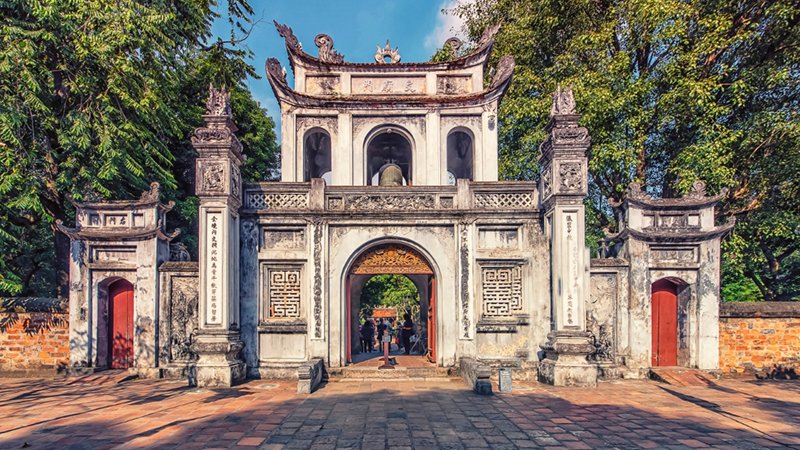
Your 2-week Vietnam itinerary begins in Hanoi, Vietnam’s capital city and cultural heartbeat. Hanoi is a city of beautiful contradictions — ancient pagodas sit beside French colonial mansions, and chaotic traffic flows past serene lakes and quiet courtyards. It’s loud, charming, overwhelming, and utterly captivating all at once.
Day 1 :
Start with a morning walk around Hoan Kiem Lake, the spiritual center of Hanoi. Visit the iconic Ngoc Son Temple on its small island, then lose yourself in the Old Quarter — 36 narrow streets each historically dedicated to a different trade. In the evening, grab a cold beer at Bia Hoi Corner sitting on tiny plastic stools alongside locals.
Day 2 :
Explore Hanoi’s history at the Ho Chi Minh Mausoleum and the stunning Temple of Literature, Vietnam’s first university founded in 1070. Don’t miss the Vietnam Museum of Ethnology for insight into the country’s 54 ethnic groups.
Day 3 :
Take a day trip to Ninh Binh (Ha Long Bay on land), where limestone karsts rise dramatically from emerald rice paddies. Explore Tam Coc by rowing boat and hike up to the ancient capital of Hoa Lu.
Must-Eat in Hanoi :
- Pho Gia Truyen (Bat Dan St) — Hanoi’s most famous pho
- Bun Cha Huong Lien — Made famous by Barack Obama and Anthony Bourdain
- Banh Mi 25 — Fresh Vietnamese sandwiches at unbeatable prices
Day 4–5: Ha Long Bay — A UNESCO World Wonder
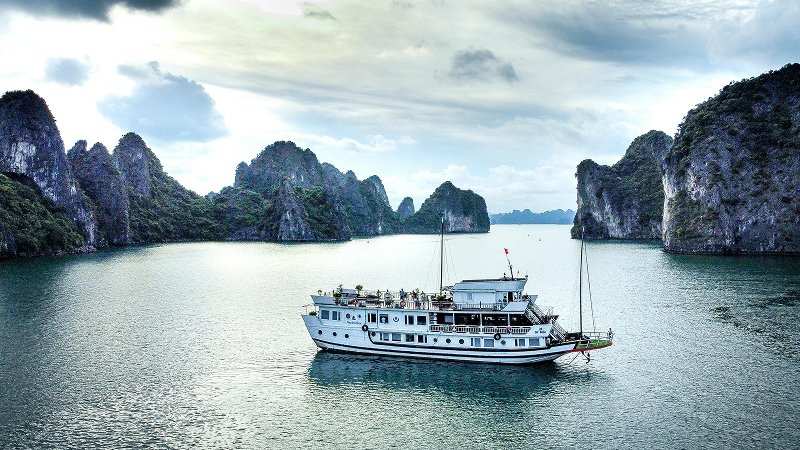
No Vietnam itinerary is complete without Ha Long Bay. This UNESCO World Heritage Site is home to over 1,600 dramatic limestone islands rising from emerald green waters — scenery so extraordinary it feels almost surreal.
The best way to experience Ha Long Bay is on an overnight cruise. Mid-range cruises ($80–$150 USD) offer the best value — comfortable cabins, good food, kayaking, and cave tours included. Upgrade to a 3-day/2-night cruise if your budget allows, taking you to the quieter Lan Ha Bay.
Top Activities :
- Kayaking through hidden lagoons and floating fishing villages
- Sung Sot Cave — Ha Long Bay’s largest and most impressive cave
- Sunrise from the deck with Vietnamese coffee in hand — absolutely unforgettable
Day 6–7: Hue — Vietnam’s Imperial Capital
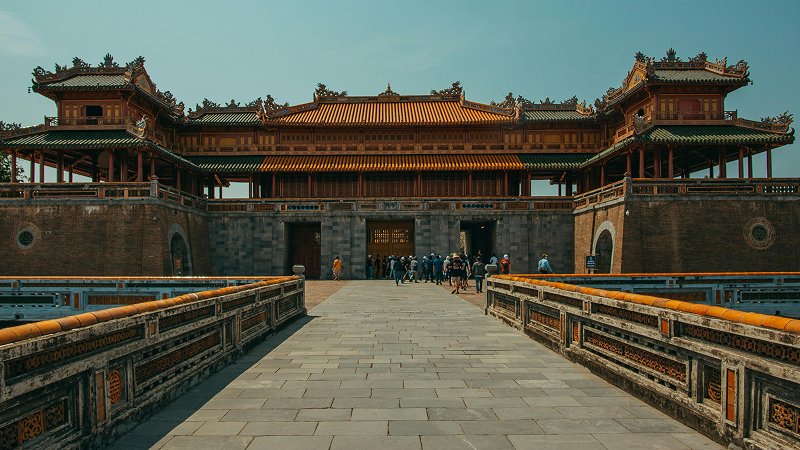
Fly or take an overnight train south to Hue, Vietnam’s former imperial capital sitting along the Perfume River. Hue is a city of deep history, refined cuisine, and a quieter, more reflective atmosphere than other Vietnamese cities.
The Imperial Citadel is the must-see centerpiece — a UNESCO-listed complex modeled after Beijing’s Forbidden City, serving as the seat of the Nguyen Dynasty for over 140 years. Spend a half-day exploring the Royal Tombs scattered across the surrounding hills — each one architecturally unique. End with a boat ride along the Perfume River to the iconic Thien Mu Pagoda.
Must-Eat in Hue:
- Bun Bo Hue — Spicy beef noodle soup considered by many to be superior to pho
- Banh Khoai — Crispy Vietnamese pancake with peanut dipping sauce
- Banh Beo — Steamed rice cakes with dried shrimp and crispy shallots
Day 8–10: Hoi An — The Most Charming Town in Southeast Asia
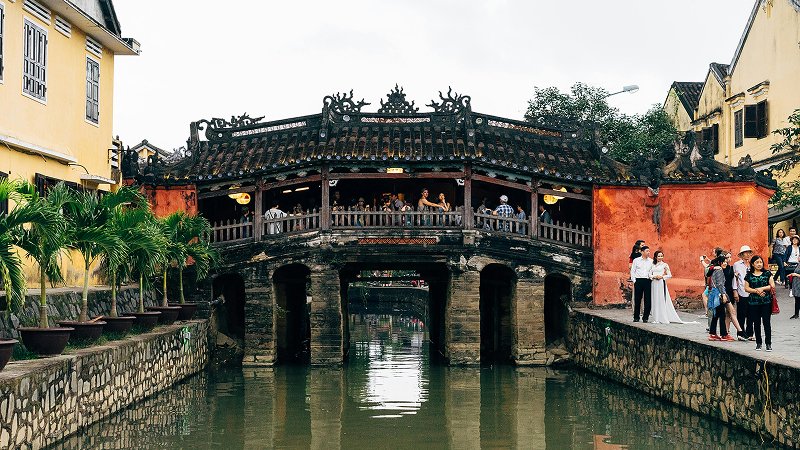
Just 2.5 hours south of Hue, Hoi An is arguably the most beautiful town in all of Southeast Asia. Its UNESCO-listed Ancient Town is a perfectly preserved 15th-century trading port — narrow streets lined with silk lanterns, merchant houses, art galleries, and incredible food.
Day 8 :
Explore the Ancient Town early morning or evening for the best atmosphere. Must-see landmarks include the Japanese Covered Bridge, Tan Ky Merchant House, and the Fujian Chinese Assembly Hall. In the evening, release paper lanterns on the Thu Bon River.
Day 9 :
Cycle to An Bang Beach for a relaxing morning, then join a Vietnamese cooking class in the afternoon — a hands-on market visit followed by making traditional dishes. One of the best experiences in Vietnam.
Day 10 :
Day trip to Da Nang to visit the Marble Mountains, stunning My Khe Beach, and the famous Dragon Bridge.
Must-Eat in Hoi An :
- Cao Lau — Thick noodles with pork and crispy croutons, authentic only in Hoi An
- White Rose Dumplings — Delicate steamed rice dumplings filled with shrimp
- Banh Mi Phuong — Made internationally famous by Anthony Bourdain
Day 11–12: Da Lat — Vietnam’s City of Eternal Spring
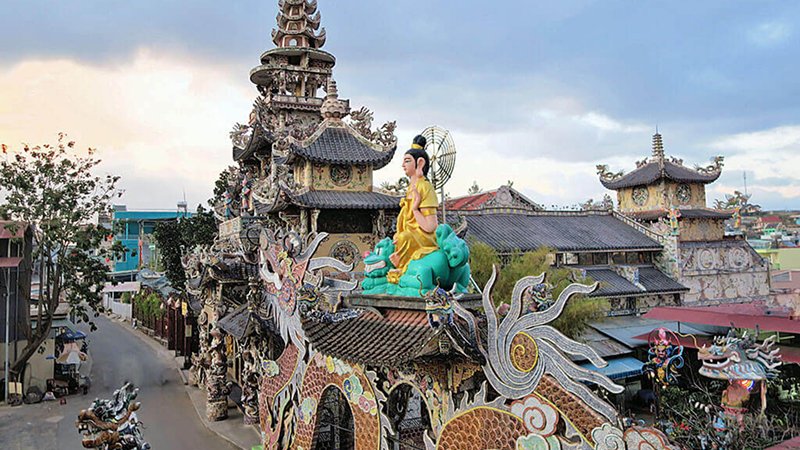
Fly south to Da Lat, a cool highland city at 1,500 meters above sea level. Unlike anywhere else in Vietnam — refreshingly cool year-round, covered in pine forests and flower farms, with charming French colonial architecture.
Visit Xuan Huong Lake in the city center, explore the surrealist Crazy House (a Gaudi-inspired guesthouse that’s become one of Vietnam’s most unique attractions), and tour a coffee farm to discover Da Lat’s world-class Arabica beans. Adventure seekers can try canyoning, mountain biking, or trekking Lang Biang Mountain for panoramic highland views.
Day 13–14: Ho Chi Minh City — The City That Never Sleeps
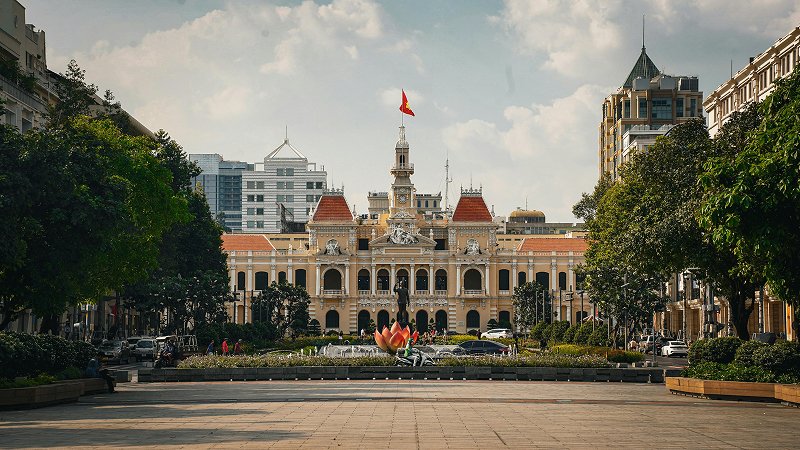
Your final stop is Ho Chi Minh City (still widely known as Saigon), the largest and most energetic city in Vietnam. HCMC is a city of relentless forward momentum — skyscrapers and rooftop bars rise above Buddhist temples and colonial-era post offices, and the streets are a constant symphony of motorbike horns and street food sizzling.
Day 13 :
Begin at the powerful War Remnants Museum, then walk to the Reunification Palace where the Vietnam War effectively ended on April 30, 1975. Spend the afternoon in District 1 exploring the Notre-Dame Cathedral, Saigon Central Post Office, and Ben Thanh Market.
Day 14 :
Take a morning trip to the Cu Chi Tunnels — an extraordinary 250km underground network used by Viet Cong fighters during the war. Return to the city and end your Vietnam adventure at Chill Skybar with panoramic sunset views over Saigon.
Must-Eat in Ho Chi Minh City :
- Com Tam (Broken Rice) — HCMC’s signature dish with grilled pork and fish sauce
- Banh Mi Huynh Hoa — Widely considered the best banh mi in the city
- Hu Tieu Nam Vang — Clear broth noodle soup, a true Saigon specialty
Essential Vietnam Travel Tips
Currency – Vietnamese Dong (VND). Always carry cash as smaller restaurants and rural areas rarely accept cards.
Visa – Many nationalities can enter Vietnam visa-free for 45 days. Others can apply for an e-visa online before travel. Always check the latest requirements based on your nationality.
Budget – Vietnam is very affordable. Budget travelers can get by on $30–40 USD per day including accommodation, food, and transport. Mid-range travelers should budget $60–100 per day for more comfortable hotels and tours.
Safety – Vietnam is very safe for tourists. Be mindful of bag snatching in busy streets and always use Grab over unlicensed taxis.