Peru is a land of sacred trails. Every mountain path, every ancient stone road, every jungle river route tells a story of civilizations that lived in deep harmony with the earth beneath their feet. To travel Peru is to walk in the footsteps of the Incas — to follow the sacred trails they carved through some of the world’s most dramatic landscapes and discover a world that has been calling to travelers for centuries.
The Sacred Trails of the Inca Empire
The Incas were the greatest road builders of the ancient Americas. Their vast network of sacred trails — known as the Qhapaq Ñan, or the Andean Road System — stretched over 30,000 kilometers across mountains, deserts, valleys, and jungles. These were not merely roads. They were sacred corridors of power, commerce, communication, and ceremony — the living veins of an empire that once ruled over 12 million people.
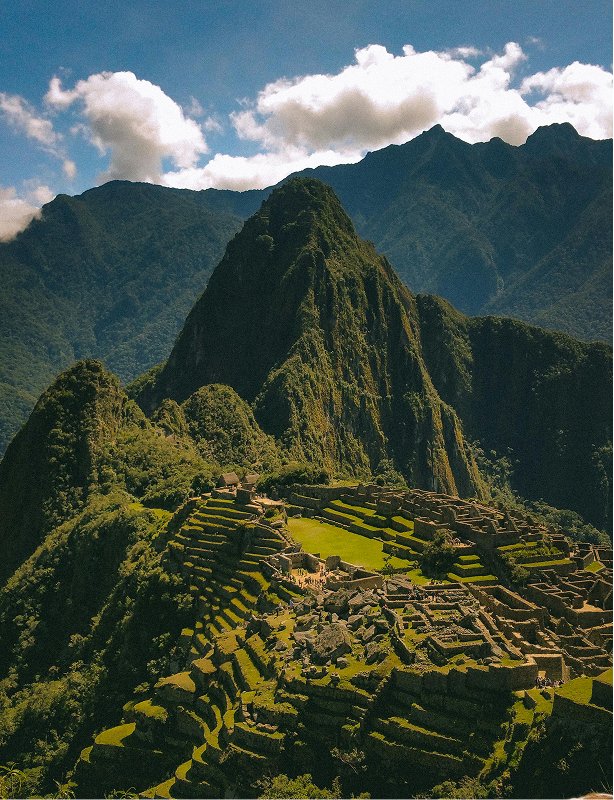
Today, portions of these sacred trails are still walked by travelers from around the world. The most famous is the Classic Inca Trail — a four-day trek through cloud forests, high mountain passes, and ancient Inca ruins that culminates in the legendary Sun Gate above Machu Picchu. Walking this sacred trail is one of the most profound travel experiences on earth. As the early morning mist lifts from the mountains and the citadel of Machu Picchu slowly reveals itself below, every step of the journey suddenly makes sense.
The Qhapaq Ñan was designated a UNESCO World Heritage Site in 2014 — a recognition of its extraordinary cultural significance not just for Peru, but for all of humanity.
Machu Picchu: The Sacred Trail’s Greatest Reward
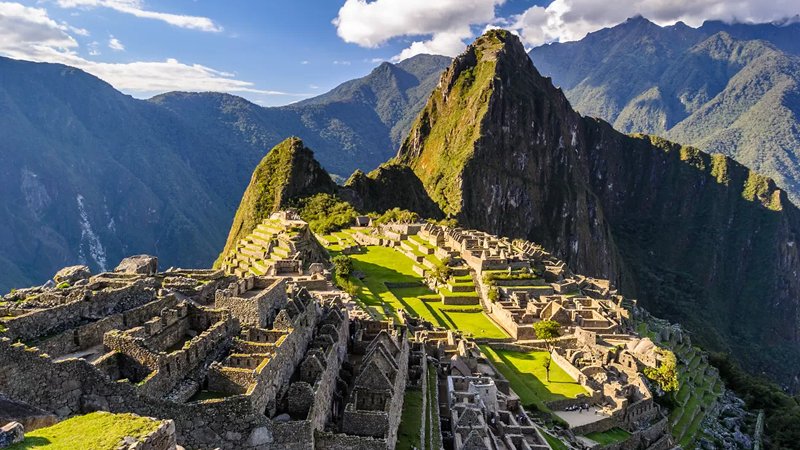
All sacred trails in Peru lead, in one way or another, to Machu Picchu. Perched at 2,430 meters above sea level in the Cusco region, this extraordinary Inca citadel is the crown jewel of Peru’s ancient world. Built in the 15th century under the reign of the Inca emperor Pachacuti, Machu Picchu served as a royal estate and sacred religious site before being quietly abandoned and lost to the outside world for centuries.
When American historian Hiram Bingham rediscovered it in 1911, the world stood in awe. And today, nearly a million visitors a year still feel that same awe as they step through the Sun Gate and behold the terraces, temples, and towers of Machu Picchu rising dramatically against a backdrop of cloud-wrapped mountains.
The sacred trails that lead to Machu Picchu are varied and suited to all levels of traveler. The Classic Inca Trail is the most iconic. The Salkantay Trek is longer and more challenging, crossing a high mountain pass at nearly 5,000 meters before descending into the cloud forest. The Lares Trek passes through remote highland villages where Quechua communities still live much as their ancestors did. And for those who prefer a more comfortable approach, the scenic train journey from Cusco through the Sacred Valley to Aguas Calientes is a beautiful experience in its own right.
However you arrive, Machu Picchu will leave its mark on you permanently.
The Sacred Valley: Walking Between Worlds
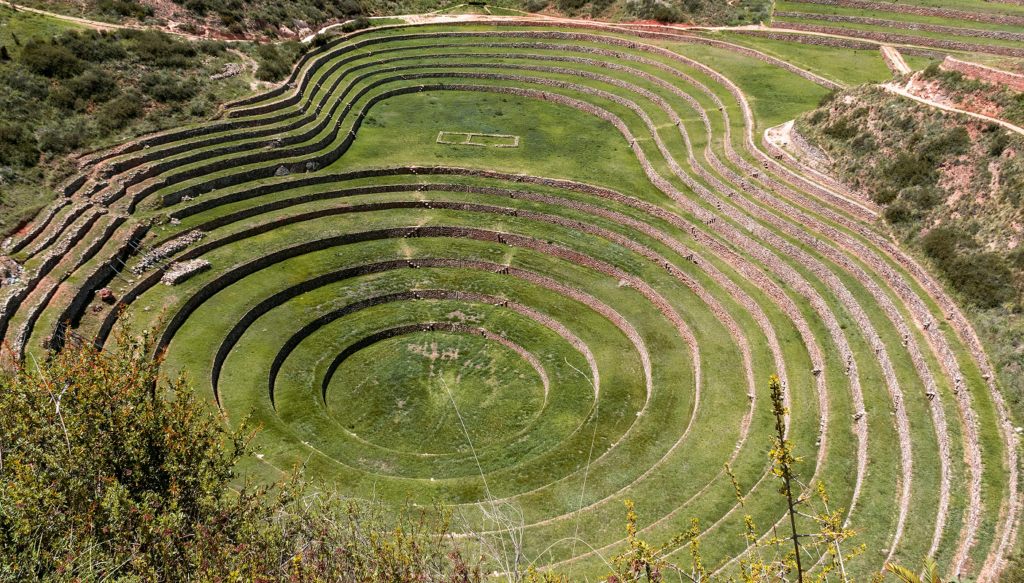
The Sacred Valley of the Incas stretches between Cusco and Machu Picchu, and is itself a network of sacred trails connecting ancient towns, hilltop fortresses, and agricultural terraces that have fed people for thousands of years. The Urubamba River — known to the Incas as the Willkamayu, or Sacred River — flows through the valley floor, and the Incas believed it was the earthly reflection of the Milky Way above.
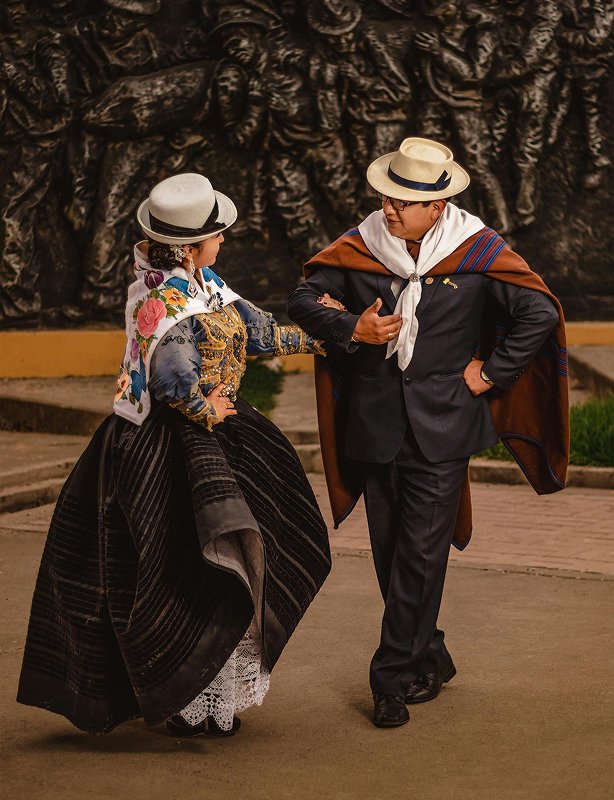
The town of Pisac sits at the entrance to the Sacred Valley and is crowned by one of the finest examples of Inca architecture in Peru. The sacred trail up to the Pisac ruins winds through terraced hillsides and past ancient ritual baths before arriving at the hilltop temple complex with its sweeping views over the valley below. Below, in the town market, artisans from surrounding villages gather to sell handwoven textiles, carved gourds, and silver jewelry — a market tradition that has continued in this valley for generations.
Further down the valley, the fortress town of Ollantaytambo guards the western entrance to the Sacred Valley with its massive stone terraces and imposing sun temple. The sacred trails around Ollantaytambo lead through the living Inca town — one of the only places in Peru where people still inhabit buildings constructed by the Incas themselves — and up through the terraces to the Temple of the Sun, where the stonework is so precise that not even a blade of grass can fit between the blocks.
The Andes: Sacred Trails Through the Roof of the World
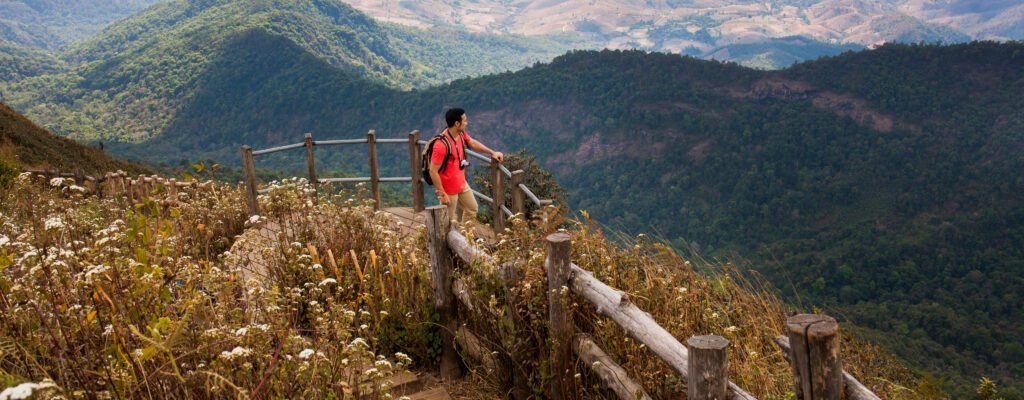
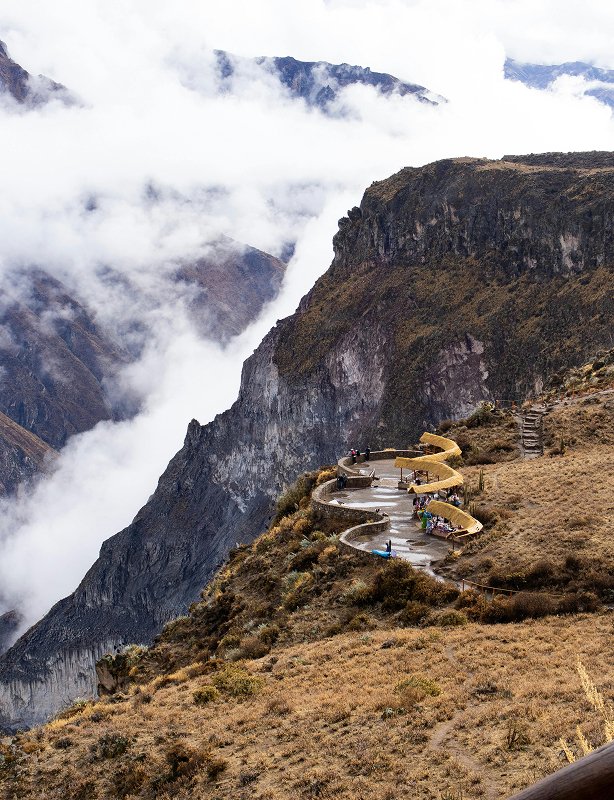
Beyond the Sacred Valley and the trails to Machu Picchu, Peru’s sacred trails extend deep into the Andes — the longest mountain range on earth and one of the most spiritually significant landscapes in all of South America. For the Andean people, the mountains themselves are sacred beings, known as Apus, whose spirits watch over the communities in their shadow.
The Ausangate Trek is one of Peru’s most spectacular and least-visited sacred trails. Circling the holy mountain of Ausangate — at 6,384 meters, one of the highest peaks in Peru — this multi-day trek passes through landscapes of extraordinary beauty: turquoise glacial lakes, towering ice walls, herds of wild vicuña grazing on the altiplano, and traditional Quechua communities where shamans still perform ancient mountain ceremonies.
Near Ausangate, the Rainbow Mountain — known in Quechua as Vinicunca — has emerged as one of Peru’s most stunning natural attractions. The sacred trail to Rainbow Mountain rises to over 5,000 meters above sea level and reveals a mountain streaked with vivid bands of red, yellow, green, and purple — the result of mineral-rich sediments exposed by retreating glaciers. It is a landscape that looks almost painted, and stands as yet another reminder of the extraordinary natural artistry that defines Peru’s Andean highlands.
Lake Titicaca: Sacred Trails on the Water
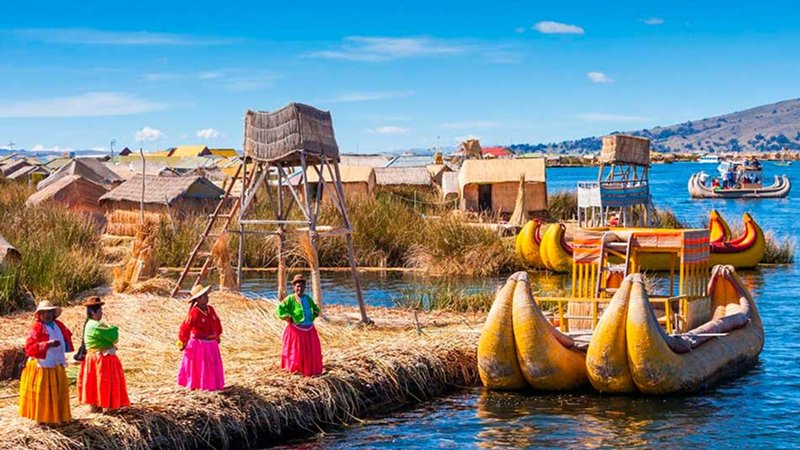
High on the altiplano, at 3,812 meters above sea level, lies Lake Titicaca — the sacred heart of Andean cosmology and one of the most extraordinary places in the world. For the Incas, Lake Titicaca was the birthplace of the sun, the moon, and the first Inca — a place of supreme spiritual power whose waters were believed to hold the origins of all life.
The sacred trails around Lake Titicaca lead to floating reed islands, hilltop temples, and ancient burial towers known as chullpas that stand silent against the wide altiplano sky. The Uros people, who have lived on floating islands made entirely from totora reeds for centuries, welcome visitors to their unique communities and share the story of a way of life that has adapted and survived against extraordinary odds.
The sacred trails of Taquile Island lead through terraced fields and stone-walled paths to the hilltop plaza at the center of the island, where the views over the lake and into Bolivia beyond are simply unforgettable. Taquile is also famous for its extraordinary textile tradition — the men of the island weave some of the finest cloth in the world, a craft recognized by UNESCO as a cultural treasure.
The Amazon: Sacred Trails Through the Green Cathedral
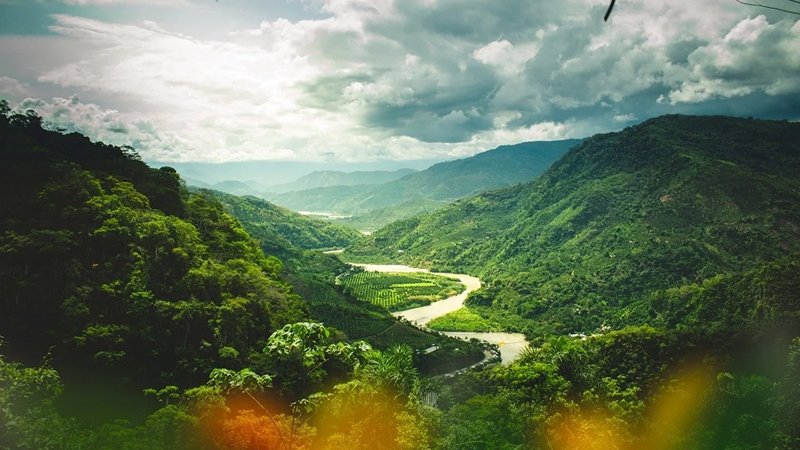
Peru’s sacred trails do not end at the mountains. In the east, beyond the last Andean ridgeline, the land descends into the world’s greatest tropical rainforest — the Amazon. For the indigenous communities who have lived in the Peruvian Amazon for thousands of years, the forest is a sacred landscape of profound spiritual meaning, where every plant, animal, and river holds its own spirit and its own story.
The sacred trails of the Amazon are the river channels themselves — waterways that wind through an endless cathedral of green, connecting communities, ecosystems, and worlds that most travelers never see. From the jungle city of Iquitos, travelers can follow these sacred water trails deep into the forest, staying in remote eco-lodges, learning from indigenous guides, and encountering wildlife that exists nowhere else on earth.
The sacred trails of the Amazon lead to ceremonies of healing with master plant medicines, to communities where ancient knowledge of the forest is still passed from elder to child, and to landscapes of such overwhelming beauty and biological richness that they quietly rearrange your understanding of what the natural world truly is.
Cusco: Where All Sacred Trails Begin
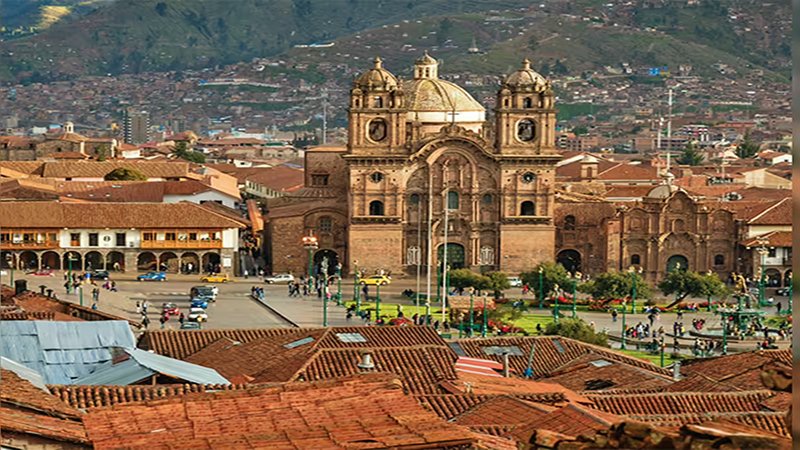
Every journey along Peru’s sacred trails begins in Cusco — the ancient Inca capital, the navel of the world, the city the Incas called Qosqo. Sitting at 3,400 meters above sea level in a broad Andean valley, Cusco is one of the most remarkable cities in the Americas — a living fusion of Inca stonework and Spanish colonial architecture, of ancient ceremony and modern life, of mountain silence and festival noise.
The sacred trails of Cusco wind through the narrow cobblestone streets of the historic center, past the curved walls of the Coricancha — once the most sacred temple in the Inca Empire — and up the hillside to the fortress of Sacsayhuamán, whose enormous stone blocks, some weighing over 100 tonnes, fit together without mortar in a feat of engineering that still baffles modern architects.
From Cusco, all of Peru’s sacred trails radiate outward — to the Sacred Valley, to Machu Picchu, to Lake Titicaca, to the Amazon, to the high passes of the Andes. Cusco is not just a starting point. It is a living monument to one of the greatest civilizations the world has ever known, and the perfect place to begin your own sacred journey.
Walk the Sacred Trails of Peru
Peru’s sacred trails are waiting for you. They wind through cloud forests and high mountain passes, past ancient temples and living indigenous communities, along river banks and up into the thin air of the altiplano. They are trails walked by millions of feet over thousands of years — trails that connect the past to the present, the human to the natural, the ordinary to the sacred.
Whether you are an experienced trekker seeking the challenge of the Classic Inca Trail, a cultural traveler drawn to the living heritage of the Quechua people, a wildlife enthusiast dreaming of the Amazon, or simply a traveler in search of beauty and meaning, Peru’s sacred trails have something extraordinary to offer you.