1. Tagine — The Heart of Moroccan Cooking
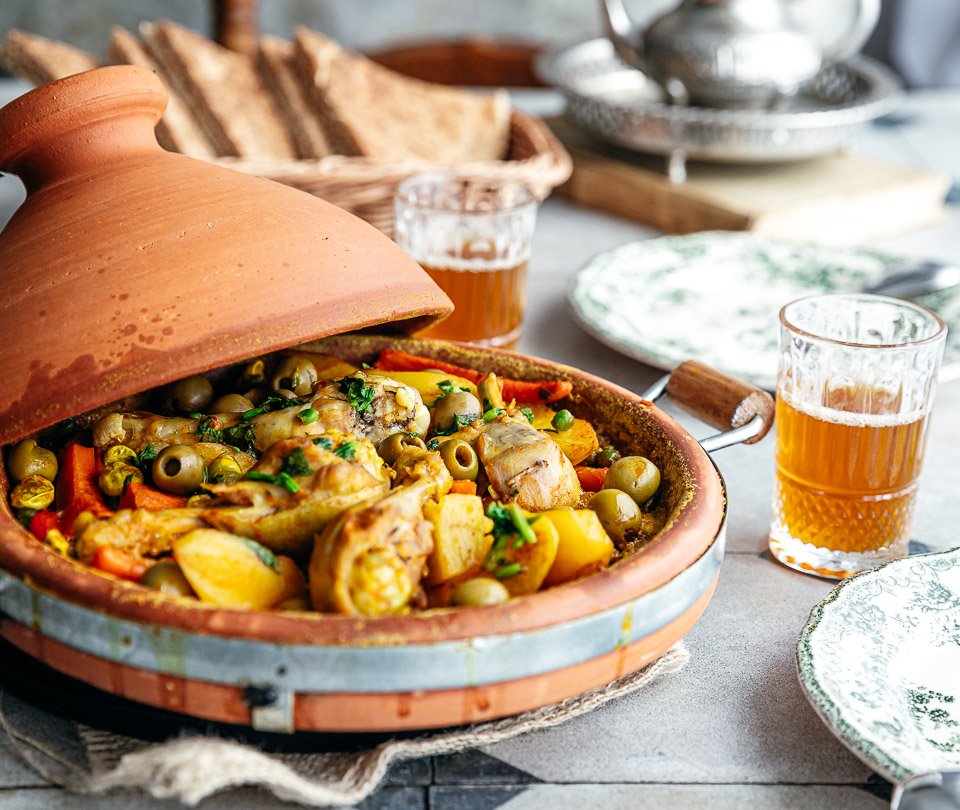
If Moroccan cuisine had a single ambassador it would be the tagine — the slow-cooked stew named after the extraordinary conical clay pot in which it is prepared. The tagine pot is not simply a cooking vessel — it is a piece of culinary engineering of genuine brilliance. The conical lid traps the steam produced by the slow-cooking ingredients, condenses it, and returns it continuously to the pot — creating a self-basting environment of extraordinary moisture and extraordinary flavour concentration that no conventional pot can replicate.
The Three Essential Tagines
Chicken with Preserved Lemon and Olives
Lamb with Prunes and Almonds
Kefta with Eggs
Where to eat tagine: Everywhere — but the finest versions are found in the traditional home-cooking restaurants of the Fez medina and in the riads of Marrakech where the kitchen has been perfecting the same recipe for decades.
Price: From MAD 60 to MAD 200 (USD 6 to 20) depending on the establishment.
2. Couscous — The Friday Dish
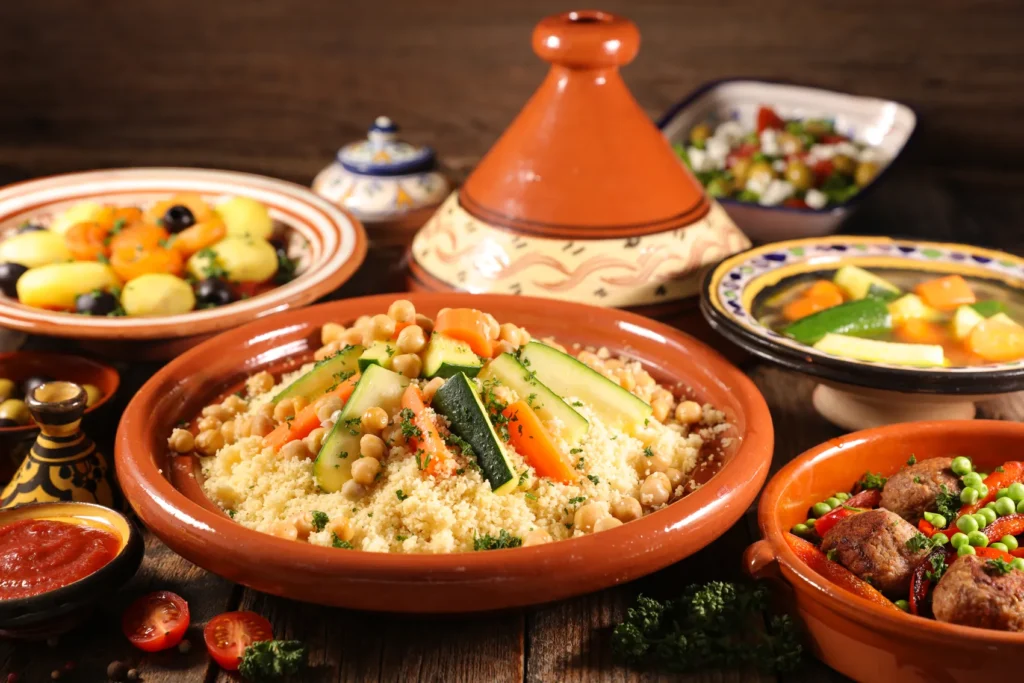
Couscous in Morocco is not simply a grain — it is a weekly ritual, a social institution, and an expression of Moroccan family and community values so deeply rooted that the Friday couscous lunch has been observed in Moroccan households across every social class and every region for over a thousand years. The tradition is simple and absolute: every Friday after the midday prayer the Moroccan family gathers for the communal couscous lunch. The couscous is hand-rolled — the semolina worked between the palms with water and olive oil into tiny, perfectly uniform grains — and steamed three times in the upper chamber of a couscoussier (a double-boiler specific to couscous preparation) until it achieves the extraordinary light, fluffy texture that distinguishes properly prepared Moroccan couscous from the mediocre quick-cook versions that have given the dish an undeserved reputation for blandness outside of Morocco.
The Seven Vegetable Couscous
The Tfaya Couscous
Where to eat couscous: At a Moroccan family home if you are fortunate enough to receive an invitation — this is always the finest version. The next best option is a traditional restaurant that makes couscous fresh daily rather than using instant grain.
Honest tip: Never order couscous at a tourist restaurant on any day other than Friday — the authentic version requires all-morning preparation and is only made with genuine care on the day of the traditional weekly ritual.
3. Bastilla — The Most Extraordinary Dish in Morocco
Bastilla is the dish that most surprises first-time visitors to Moroccan cuisine — a large circular pie of extraordinary complexity and extraordinary beauty that combines the seemingly incompatible flavours of sweet and savoury in a combination so completely harmonious and so completely original that it has no genuine parallel in any other cuisine in the world.
What Is Bastilla
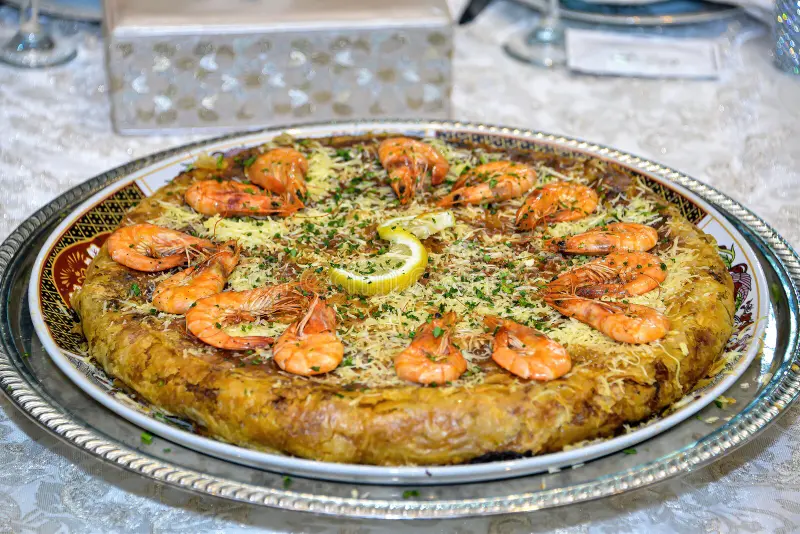
The traditional bastilla is made with pigeon (though chicken is now more commonly used) — slow-cooked with onions, saffron, ginger, and cinnamon until the meat falls from the bone and is mixed with beaten eggs scrambled into the richly spiced sauce. This filling is wrapped in layers of warqa — the extraordinarily thin, almost translucent Moroccan pastry that resembles phyllo but is lighter and more delicate — and deep-fried or baked until golden and crispy. The finished pie is dusted with icing sugar and cinnamon, creating a surface of extraordinary visual beauty — the golden pastry, the white sugar, and the brown cinnamon creating a pattern of complete elegance.
The first bite — the shattering crunch of the pastry giving way to the warm, spiced, slightly sweet filling — is one of the most extraordinary single mouthful experiences available in Moroccan food.
The Seafood Bastilla
The coastal cities of Morocco — particularly Essaouira and Casablanca — have developed a seafood version of bastilla that replaces the pigeon filling with prawns, fish, and vermicelli noodles in a spiced cream sauce. The combination of the crispy warqa pastry with the savoury seafood filling is equally extraordinary and provides a genuinely different but equally rewarding eating experience.
Where to eat bastilla: The finest bastilla in Morocco is found in the traditional restaurants of Fez — the city where the dish originated and where the craft of warqa pastry-making is most deeply embedded in the culinary culture.
Riad Fes restaurant and the medina restaurants around the Bou Inania Madrasa serve bastilla of exceptional quality.
Price: MAD 80 to MAD 200 (USD 8 to 20)
4. Harira — The Soup That Feeds Morocco
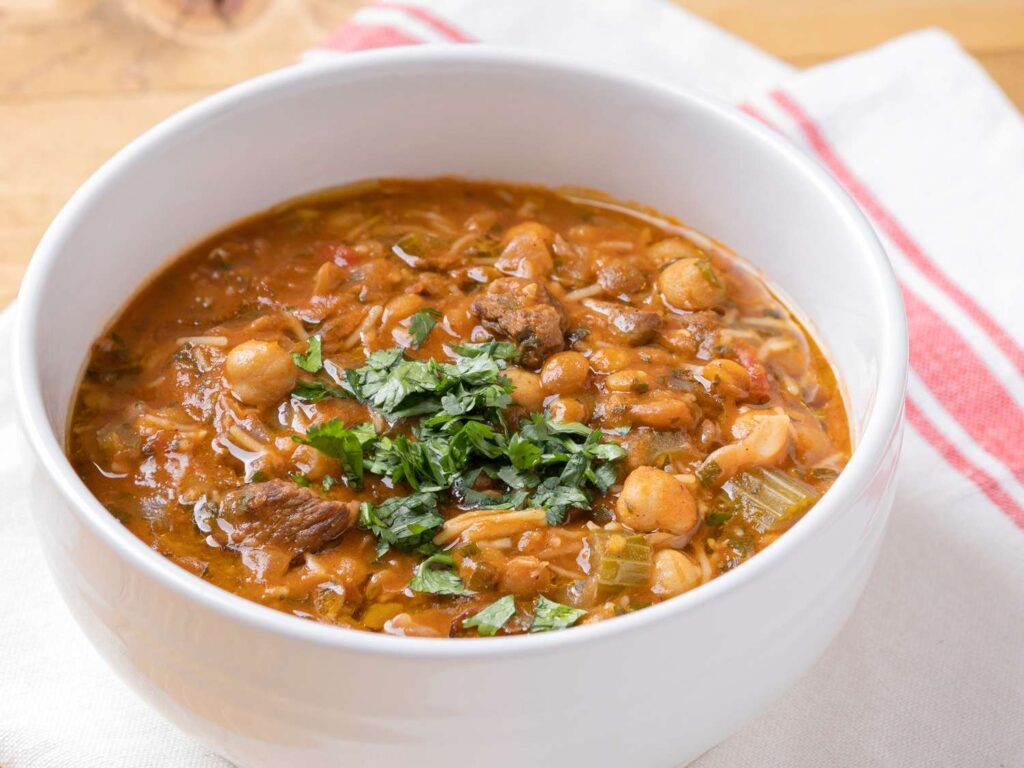
Harira is the most important soup in Morocco — a thick, nourishing, deeply flavoured soup of tomatoes, lentils, chickpeas, lamb, and fresh herbs that is simultaneously the soup that breaks the Ramadan fast every evening at sunset across the entire country and the everyday soup of Moroccan domestic life throughout the year.
What Makes Harira Special
The extraordinary depth of flavour in harira comes from its complexity — the combination of tomato, lemon juice, fresh coriander, fresh parsley, turmeric, cinnamon, ginger, and the distinctive addition of a flour and water mixture (tedouira) that gives the soup its characteristic thick, slightly glutinous texture. The soup is finished at the last moment with beaten eggs stirred in to create silky threads of cooked egg throughout the broth — a finishing technique that adds richness and body to the finished soup.
Harira and Ramadan
During Ramadan the harira takes on a significance that goes far beyond its qualities as a soup. After a day of complete fasting the smell of harira cooking in every kitchen as the sun approaches the horizon is one of the most emotionally powerful olfactory experiences in Morocco — the scent of the soup carrying within it the anticipation of relief, the warmth of community, and the particular quality of pleasure that only genuine hunger can produce. The traditional Ramadan iftar (breaking of the fast) begins with a date and a glass of milk — then harira, then chebakia (the sesame and honey pastry of Ramadan), then the gradual progression through the evening meal.
Where to eat harira: At any traditional café or medina restaurant — harira is inexpensive, universally available, and the quality at humble establishments is frequently equal to or better than at expensive restaurants. A bowl with a sfenj (Moroccan doughnut) on the side costs approximately MAD 15 to 25 (USD 1.50 to 2.50).
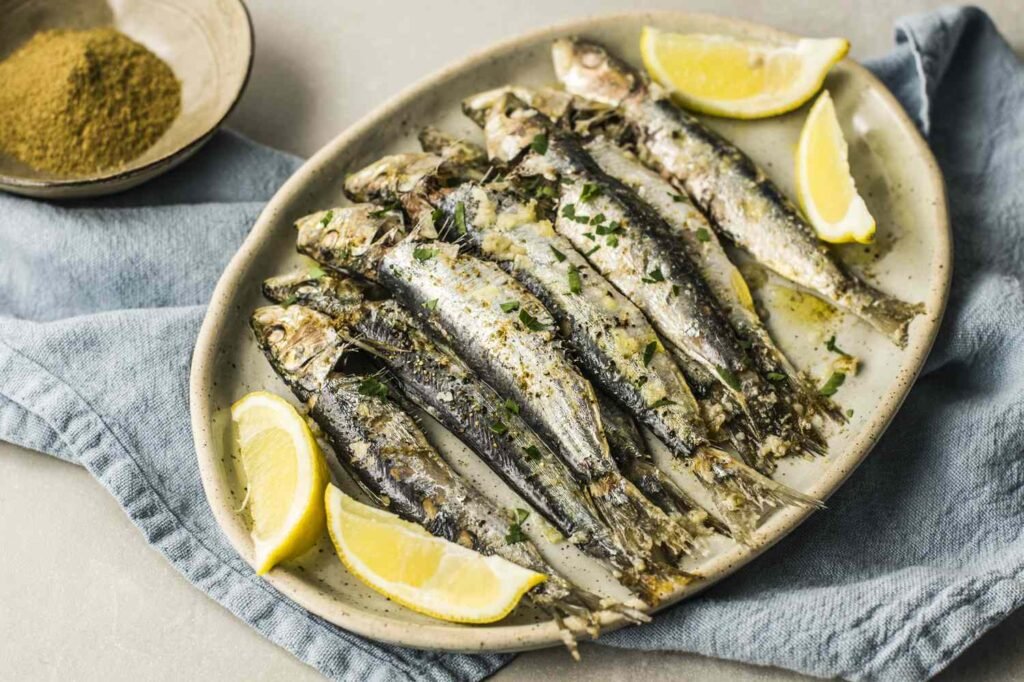
5. Moroccan Grilled Sardines — The Street Food of the Coast
The Moroccan grilled sardine — butterflied, stuffed with a chermoula paste of fresh coriander, garlic, cumin, paprika, and preserved lemon, then grilled over charcoal until the skin is crispy and the flesh is just cooked — is one of the finest and most completely satisfying simple fish dishes in the world.
The Essaouira Harbour Experience
The finest place to eat Moroccan grilled sardines is at the fishing harbour of Essaouira — where the boats arrive with the morning catch and the harbour-side grill restaurants (some operating from little more than a charcoal grill and a few plastic tables) cook the fish within hours of it leaving the water. The combination of the extraordinary freshness of the fish, the simple chermoula stuffing, the charcoal grill, and the setting — the Atlantic wind, the old Portuguese ramparts, the smell of salt and fish and charcoal smoke — creates an eating experience of complete and uncomplicated joy.
Price: MAD 20 to MAD 50 (USD 2 to 5) for a plate of four to six sardines with bread and salad.
6. Mechoui — The Celebration Lamb
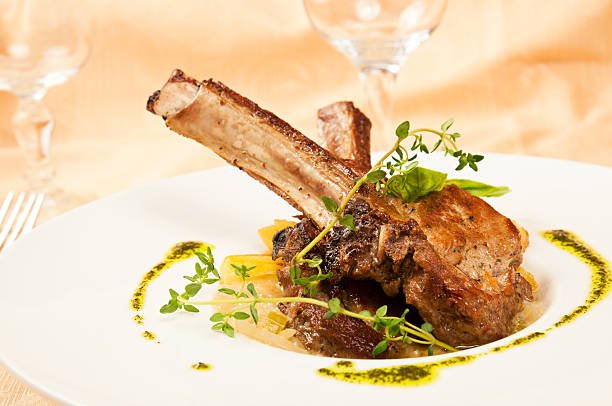
Mechoui is the most celebratory dish in Moroccan cuisine — a whole lamb slow-roasted in a traditional underground or clay oven (mechoui pit) for four to six hours until the meat achieves a state of such complete tenderness that it falls from the bone at the touch and the skin crisps into a crackling of extraordinary flavour and extraordinary texture.
How to Eat Mechoui
Mechoui is eaten in the most direct and most honest way possible — with the fingers, pulling pieces of the extraordinarily tender meat directly from the carcass and dipping them in small dishes of cumin and salt. No fork, no plate, no ceremony beyond the fundamental pleasure of the finest possible roasted lamb eaten with the hands.
Where to eat mechoui: The Djemaa el-Fna square in Marrakech has dedicated mechoui vendors — the lamb slow-roasted in underground pits since the morning and sold by the portion throughout the day. The Mechoui Alley (Souk Ahl Fes, near the square) is the finest concentration of mechoui vendors in Morocco. Arrive by noon — the finest cuts sell out quickly.
Price: MAD 60 to MAD 120 (USD 6 to 12) per portion
7. Zaalouk — The Essential Moroccan Salad
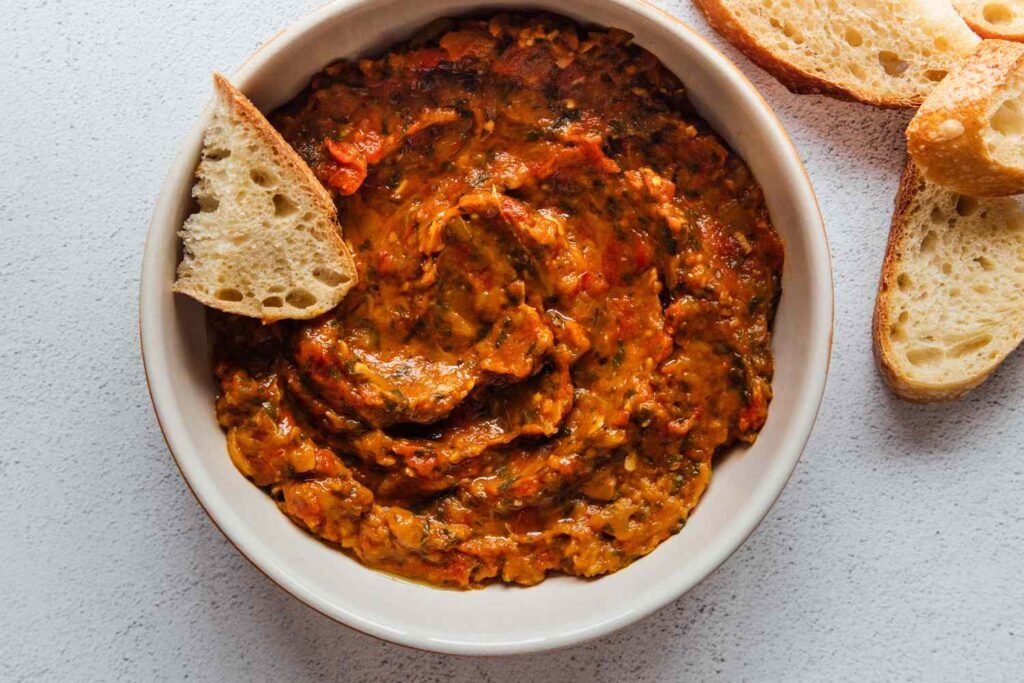
Zaalouk is the most important and most completely Moroccan of the salads that open every traditional meal — a warm salad of roasted aubergine and tomato, slow-cooked with garlic, cumin, paprika, and olive oil until the vegetables collapse into a thick, smoky, richly flavoured paste of extraordinary depth and extraordinary versatility.
Zaalouk is simultaneously a salad, a dip, a sauce, and a spread — eaten with khobz bread as a starter, served alongside tagine as an accompaniment, spread on a Moroccan sandwich as a filling, or simply eaten with a spoon directly from the pan as a cook’s snack. Its versatility and its depth of flavour make it the single most important preparation in the Moroccan culinary repertoire after the tagine itself.
The key to great zaalouk is patience — the aubergine and tomato must be cooked down slowly over low heat for 30 to 45 minutes until they lose all their moisture and the flavours concentrate into the thick, intensely smoky paste that distinguishes the finest zaalouk from the hurried versions. The final drizzle of good Moroccan olive oil and the scattering of fresh coriander over the finished dish adds freshness and brightness to the deep, smoky base.
Where to eat zaalouk: At any traditional Moroccan restaurant as part of the opening salad selection — the finest versions are served at room temperature with excellent olive oil and fresh bread. It is also found at every street food stand in the medina cities as a sandwich filling.
8. Moroccan Mint Tea — The Drink You Cannot Refuse
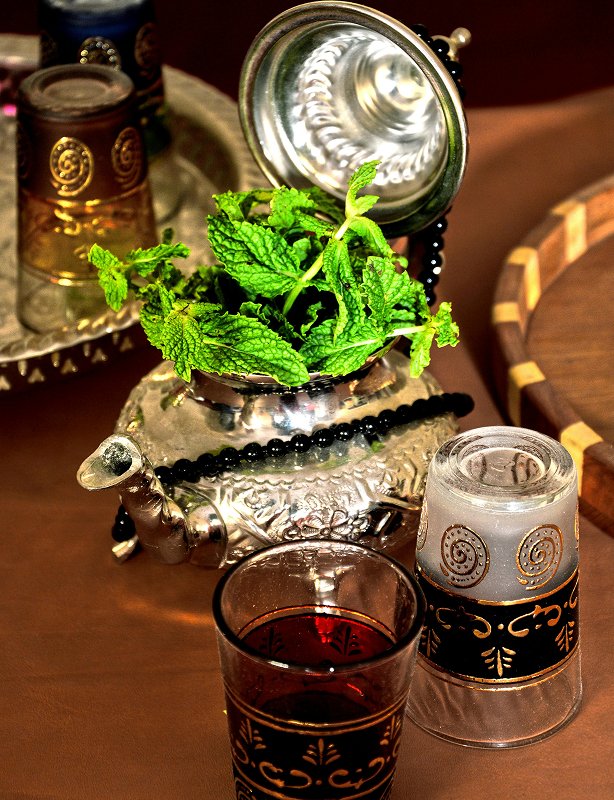
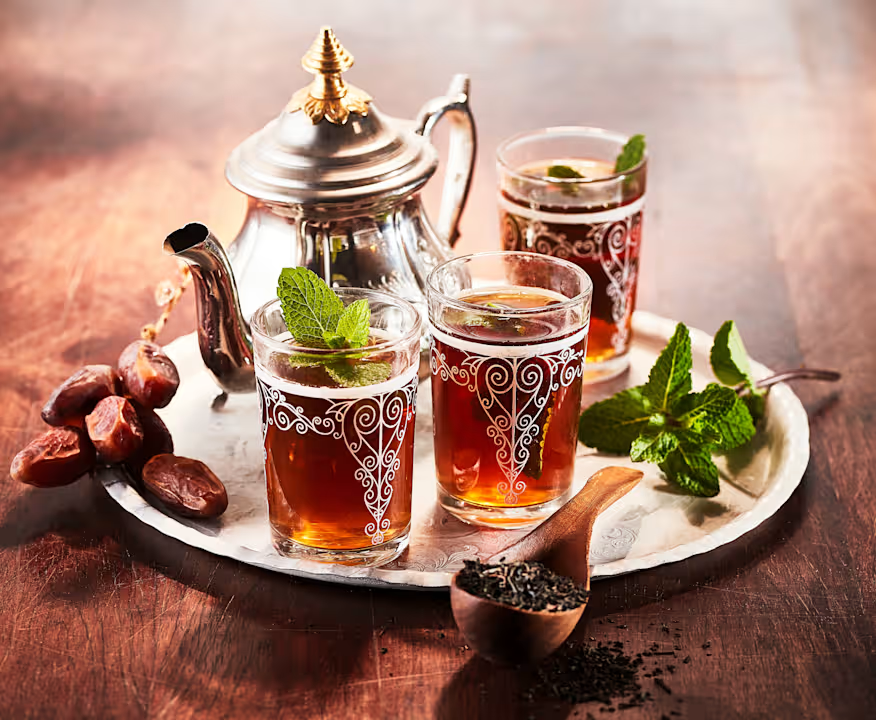
Moroccan mint tea is not simply a beverage — it is the primary expression of Moroccan hospitality, the social lubricant of every business transaction and every personal visit, and one of the most pleasurable drinks in the world when made correctly.
The tea — Chinese gunpowder green tea steeped with fresh spearmint and sweetened with an extraordinary quantity of sugar — is poured from a height of 30 to 40 centimetres above the glass to create a froth on the surface that indicates correct preparation and adds a texture of lightness to the drink. The pouring from height is not theatrical — it serves the practical purpose of mixing the tea, cooling it slightly, and aerating it to develop the flavour.
The Three Glasses Rule
The traditional Moroccan saying about the three glasses of mint tea is one of the most quoted pieces of Moroccan food wisdom:
The first glass is as gentle as life. The second is as strong as love. The third is as bitter as death.
Each successive glass is poured from the same pot but tastes progressively stronger and more bitter as the gunpowder tea continues to steep — creating a progression of flavour across the three traditional glasses that is intentional and entirely correct.
Honest tip: The sugar in Moroccan mint tea is not negotiable at traditional establishments — asking for less sugar is possible but the tea is designed around its sweetness and the full version is the correct introduction to the drink.
Price: MAD 10 to MAD 25 (USD 1 to 2.50)
9. Chebakia — The Ramadan Pastry
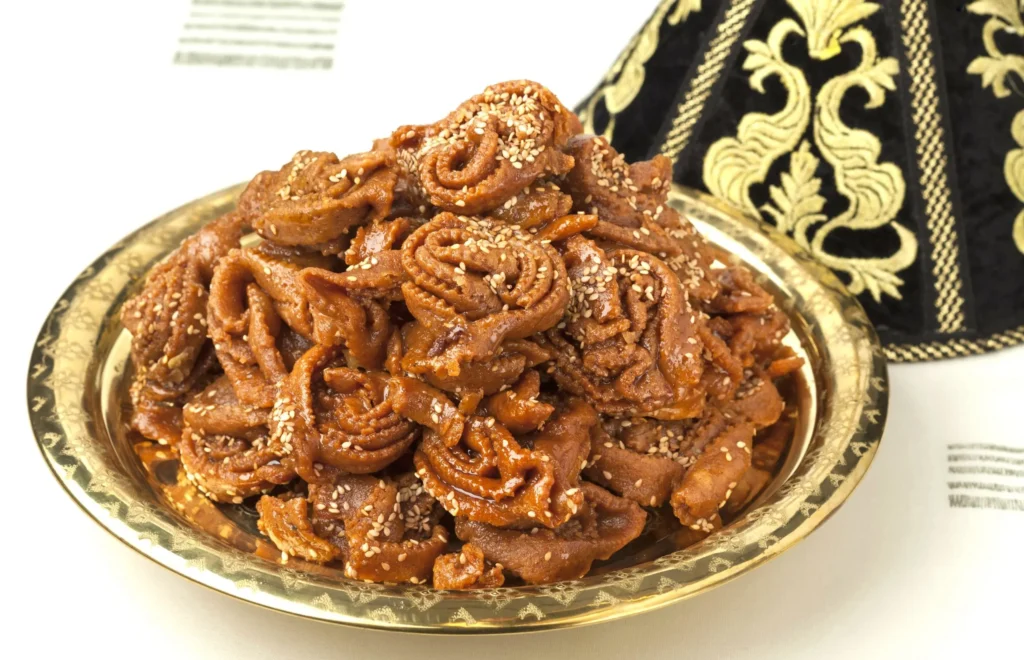
Chebakia is the most important sweet in Morocco — a flower-shaped pastry of sesame-studded dough that is deep-fried in oil, immediately coated in warm honey and orange flower water, and left to cool into a sticky, golden, intensely flavoured confection of extraordinary addictiveness.
The preparation of chebakia is one of the great communal food rituals of the Moroccan calendar — in the weeks before Ramadan women gather in family kitchens to make chebakia together in the quantities needed for a month of daily iftar celebrations, the work requiring skilled hands and considerable time but producing pastries of a quality and a freshness that the commercial versions sold in pastry shops cannot replicate.
The flavour of a freshly made chebakia — the crunch of the fried sesame pastry, the sweetness of the honey, the floral fragrance of the orange flower water, and the warmth of the cinnamon and anise that season the dough — is one of the most distinctively and most completely Moroccan flavour experiences available.
Where to eat chebakia: At any Moroccan pastry shop (patisserie marocaine) in any city — but the finest versions are found in the medina pastry shops of Fez and Marrakech. During Ramadan chebakia is sold from street stalls throughout the day in anticipation of the evening iftar.
Price: MAD 5 to MAD 10 (USD 0.50 to 1) per piece
10. Khobz — The Bread That Anchors Everything
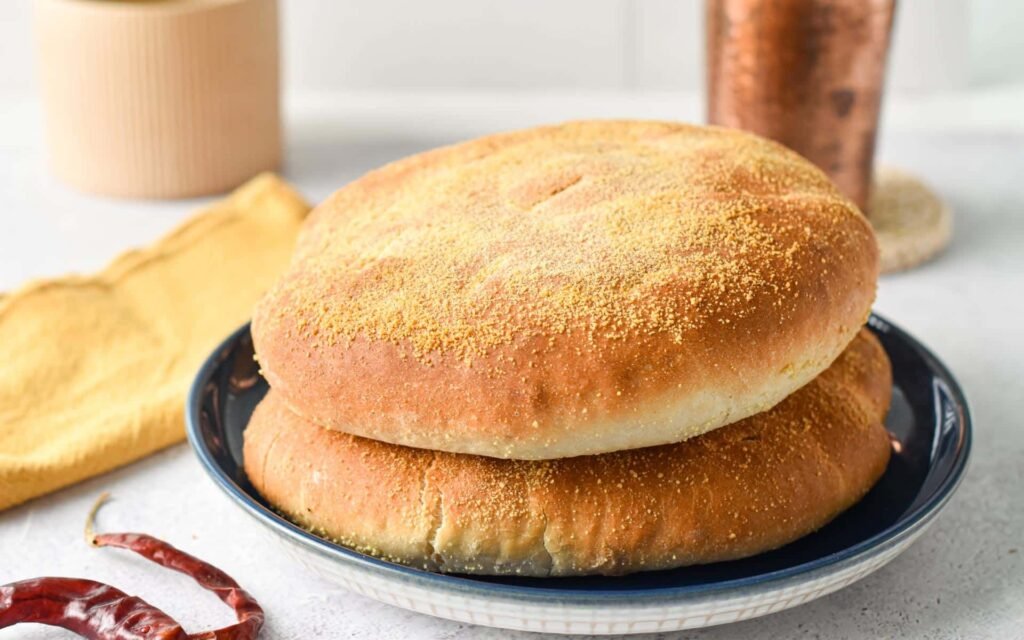
No list of essential Moroccan foods is complete without khobz — the round, slightly leavened flatbread that accompanies every meal, replaces every utensil, and anchors the Moroccan food culture more completely than any single ingredient or any single dish.
Khobz is not remarkable bread in the conventional sense — it is not sourdough of extraordinary complexity or enriched bread of extraordinary indulgence. What makes khobz extraordinary is its complete rightness for its purpose — the slight chew of the crumb, the golden crust, and the specific texture that makes it simultaneously perfect for scooping tagine sauce, dipping in zaalouk, wrapping around kefta, and simply eating with Moroccan olive oil and a pinch of cumin as a snack.
The Communal Oven
The traditional Moroccan neighbourhood has a communal oven — the ferran — where families bring their unbaked dough each morning to be baked by the oven keeper. The ferran is one of the most important social institutions in the medina — the morning gathering place where the women of the neighbourhood collect their daily bread and exchange the news of the quarter in a daily ritual that has been repeating in the lanes of the Moroccan medina for centuries.
Where to eat khobz: Everywhere — fresh khobz is available at every bakery, every café, and every restaurant in Morocco. The finest versions are bought directly from the communal oven in the medina in the morning — still warm, still fragrant, and eaten immediately with Moroccan olive oil.
Price: MAD 1 to MAD 3 (USD 0.10 to 0.30) per loaf — the finest food value in Morocco
11. Moroccan Salad Spread — The Opening Act
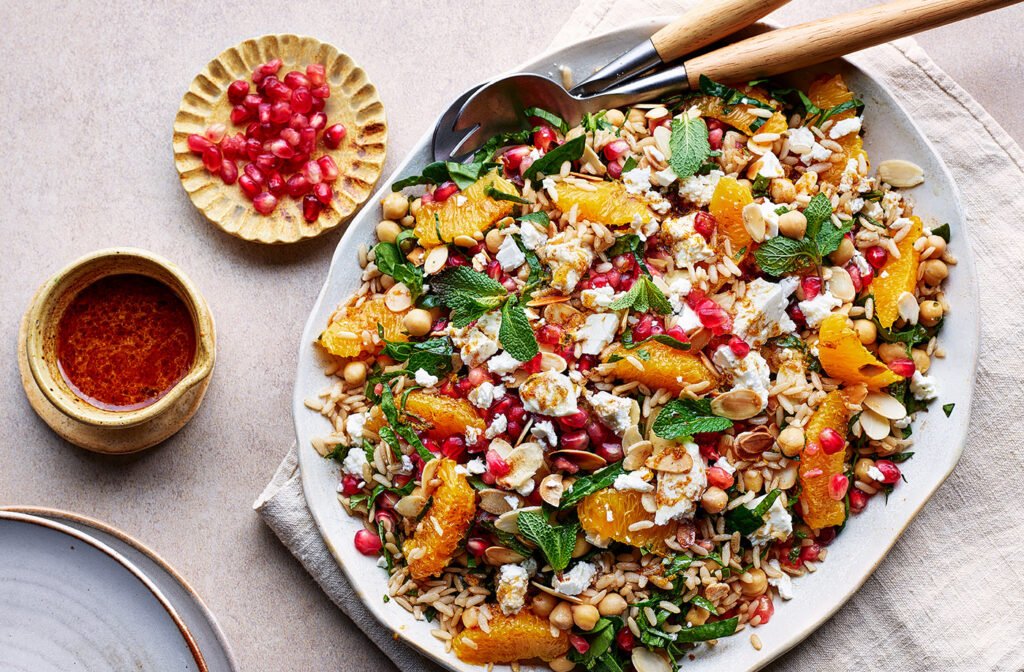
Before the tagine, before the couscous, before any main dish arrives at the Moroccan table — the salads come. A traditional Moroccan meal begins with a generous spread of small salads served simultaneously — five, seven, sometimes ten small dishes covering the table in a display of colour and variety that is itself a statement of Moroccan hospitality and Moroccan culinary generosity.
The Essential Salads
Taktouka: Roasted green pepper and tomato slow-cooked with garlic, cumin, and paprika — similar to zaalouk in technique but completely different in character, the pepper giving the dish a sweetness and a freshness that the aubergine-based zaalouk does not have.
Moroccan Carrot Salad: Boiled carrots dressed with cumin, paprika, lemon juice, olive oil, and fresh coriander — the simplest salad on the Moroccan table and consistently one of the most satisfying, the sweetness of the carrot balanced perfectly by the earthy warmth of the cumin.
Bakoula: Slow-cooked mallow greens (or spinach) with preserved lemon, olives, garlic, and cumin — the most deeply flavoured of the Moroccan green salads and the one that most clearly demonstrates the Moroccan genius for transforming simple vegetables into complex and deeply satisfying dishes through patient cooking and intelligent spicing.
Moroccan Beet Salad: Roasted beetroot with cumin, orange juice, and fresh mint — the most visually beautiful of the Moroccan salads, the deep crimson of the beetroot dressed with the orange and the green of the mint creating a colour combination of extraordinary visual pleasure.
12. Bissara — The Winter Comfort Bowl
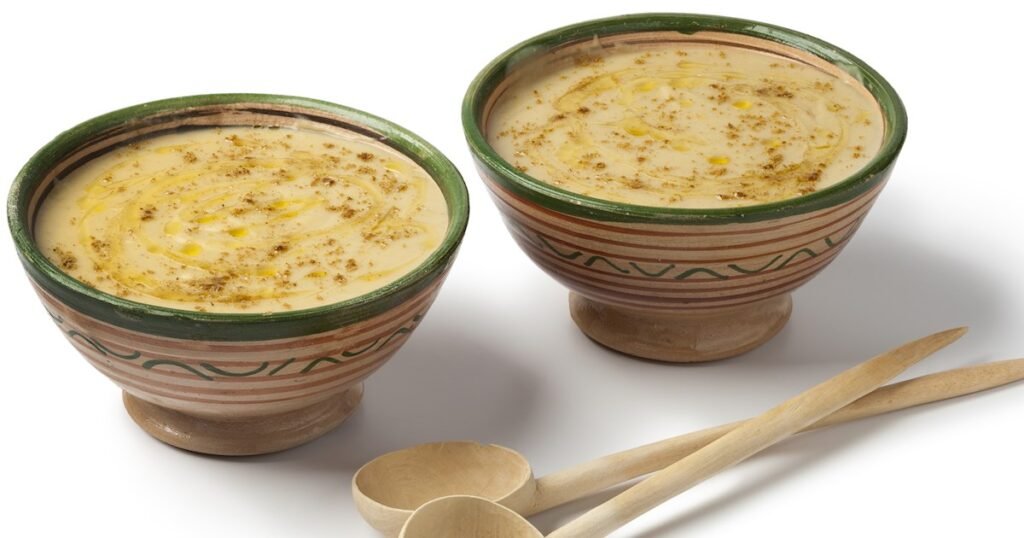
Bissara is the most humble and most deeply comforting dish in the Moroccan kitchen — a thick, creamy soup of dried split fava beans slow-cooked with garlic until they dissolve into a smooth, rich purée, served in a bowl with a generous drizzle of good Moroccan olive oil, a dusting of cumin and paprika, and a thick slice of khobz bread for dipping.
Bissara is the food of the Moroccan winter — sold from street stalls in the cold months from large copper pots, the steam rising from the soup in the cold morning air, the vendors serving it in ceramic bowls to the workers and students and early risers who have been eating this soup for breakfast in the medina cities for generations.
The flavour of bissara is one of those flavours that is simultaneously completely simple and completely satisfying — the earthiness of the fava bean, the warmth of the garlic, the richness of the olive oil, and the gentle heat of the cumin and paprika creating a combination of complete and uncomplicated comfort.
Where to eat bissara: From the street stalls of the medina cities in the early morning — Fez and Marrakech both have excellent bissara vendors in the older parts of the medina. Look for the large copper pots and the queue of locals — this is always the correct signal.
Price: MAD 5 to MAD 10 (USD 0.50 to 1) — the finest value breakfast in Morocco
Quick Reference Guide
| Dish | Best City | Price Range | Must Order When |
| Chicken Tagine | Marrakech | MAD 80 to 150 | Any lunch or dinner |
| Lamb Tagine | Fez | MAD 100 to 200 | Special occasion dinner |
| Couscous | Anywhere | MAD 60 to 120 | Friday lunch only |
| Bastilla | Fez | MAD 80 to 200 | Special occasion |
| Harira | Anywhere | MAD 15 to 25 | Morning or Ramadan evening |
| Grilled Sardines | Essaouira | MAD 20 to 50 | Harbour lunch |
| Mechoui | Marrakech | MAD 60 to 120 | Midday — sells out fast |
| Zaalouk | Anywhere | MAD 10 to 20 | As starter or snack |
| Mint Tea | Everywhere | MAD 10 to 25 | Always — never refuse |
| Chebakia | Fez or Marrakech | MAD 5 to 10 | Ramadan or afternoon snack |
| Khobz | Everywhere | MAD 1 to 3 | Every meal |
| Bissara | Fez or Marrakech | MAD 5 to 10 | Winter breakfast |
Final Thoughts
Moroccan food does not require a Michelin star restaurant or an expensive dining experience to be extraordinary. The finest food experiences in Morocco — the harira from the medina stall, the grilled sardines at the Essaouira harbour, the mechoui eaten with fingers in the Djemaa el-Fna, the mint tea poured from a height in a carpet shop while the vendor pretends not to be selling you a carpet — cost almost nothing and deliver almost everything.
The cuisine is generous in the way that the country is generous — it gives you more than you asked for, surprises you with combinations you did not expect, and leaves you wanting more long after the meal is finished.
Eat everything. Refuse nothing. Ask for the recipe.